-

Due to the high interest in this event, we have moved it to a larger room.  It is now in the Oksenberg Conference Room, Encina Hall, 3rd floor.


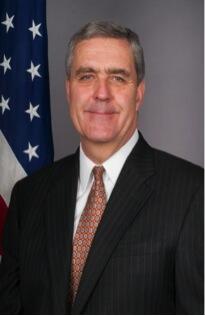
The February Minsk II agreement introduced a fragile ceasefire in eastern Ukraine, following a year of crisis and conflict between Kyiv and Moscow.  Ukrainian President Poroshenko needs to grapple with a daunting list of critical economic and political reforms.  Russian President Putin, however, appears intent on destabilizing the Ukrainian government and has the means, including military force, to do so.  What can we expect next in the Ukraine-Russia stand-off, and how should the West respond?

Image
Steven Pifer


Steven Pifer is a senior fellow at the Brookings Institution, where his work focuses on arms control, Ukraine and Russia. A retired Foreign Service officer, his more than 25 years with the State Department included assignments as deputy assistant secretary of state with responsibilities for Russia and Ukraine (2001-2004), ambassador to Ukraine (1998-2000), and special assistant to the president and senior director for Russia, Ukraine and Eurasia on the National Security Council (1996-1997).


Co-sponsored by the Freeman Spogli Institute for International Studies and The Europe Center.

Steven Pifer Senior Fellow Speaker the Brookings Institution
Lectures
-

Professor Jaeho Yeom, president of the elite Korea University in Seoul and a Stanford Political Science PhD will examine the historical development, current changes, and future course of East Asian universities. Drawing on his own experience at Korea University, where his initiatives include the "pioneering intellectuals" program to encourage and support student creativity, President Yeom will examine many aspects of higher education, including shifts in educational methodologies, demographics, the pressures of globalization, and changes in government and private funding. 

Professor Jaeho Yeom earned a PhD in political science at Stanford University for his research on Japanese industrial policy for high technology. He has taught public administration at Korea University since 1990. He was Executive Vice President of Korea University before being appointed President in March 2015. President Yeom has also taught or conducted research in Japan, Australia, China, and the United Kingdom. He served as an expert member of the Korean Presidential Commission of Science and Technology Policy and a board member of the Korea Science and Engineering Foundation. He also served as president of The Korean Association for Policy Studies in 2007 and of The Korean Association for Contemporary Japanese Studies in 2008. Currently, he is chairperson of the Policy Advisory Committee of the Ministry of Foreign Affairs and Trade, member of Public Service Evaluation Committee, and Editor in Chief of Asian Research Policy. President Yeom is the author of numerous books and studies, including Future Strategy for Test, Research, and Evaluation of Food and Drug (2011, NIFDS).

Jaeho Yeom <i>President, Korea University</i>
Lectures
-

Abstract:

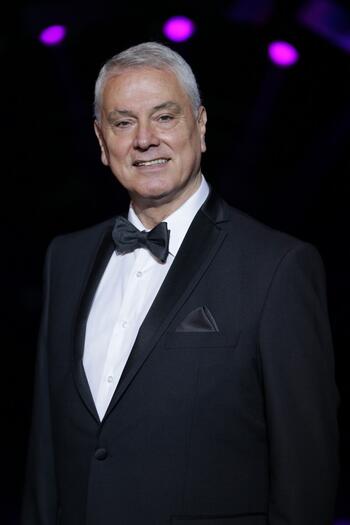
Ballroom dancing legend Pierre Dulaine will discuss his 'Dancing Classrooms' method which he applied in his award winning documentary 'Dancing in Jaffa' to bring Arab and Jewish children together through dance. Mr. Dulaine will speak about the film, his journey into the world of dance and his experience as a Judge on the Arabic version of the TV show 'So You Think You Can Dance.'  Talk features audio-visual presentation and free lunch.

Speaker Bio:
Image
pierre dulaine 21

Pierre Dulaine was born in Jaffa, Palestine in 1944 to an Irish father and a Palestinian mother--both of whom fled the area in 1948.  After eight months of moving several times, Dulaine's family settled in Amman, Jordan. In 1956, the Suez Crisis forced Dulaine's parents to flee the country, eventually resettling in Birmingham, England.  In 1994 Dulaine founded the Dancing Classrooms program in New York City's public schools in which he encouraged children from various backgrounds to dance together. He later traveled to the city of his birth, Jaffa, to visit his childhood home and to make a film, 'Dancing in Jaffa,' where he brought Israeli Arabs and Jews together through dance and music.  His life was also fictionalized in the film Take the Lead starring Antonio Banderas.  More recently, Pierre Duaine has gained much acclaim in the Arab world for his role as Judge on the Arabic version of the TV show 'So You Think You Can Dance' where he encouraged young Arab men and women to pursue dance as way of dealing with difficult circumstances and certain outdated social taboos.

(See flyer for a list of the co-sponsors)


Note: A screening of 'Dancing in Jaffa' will take place on campus on May 29. For more information, click here.


[[{"fid":"218684","view_mode":"crop_870xauto","fields":{"format":"crop_870xauto","field_file_image_description[und][0][value]":"PD flyer","field_file_image_alt_text[und][0][value]":"","field_file_image_title_text[und][0][value]":"","field_credit[und][0][value]":"","field_caption[und][0][value]":"","field_related_image_aspect[und][0][value]":"","thumbnails":"crop_870xauto","pp_lightbox":false,"pp_description":false},"type":"media","attributes":{"height":1344,"width":870,"class":"media-element file-crop-870xauto"}}]]

Stanford Language Center,
Building 30-102,
Stanford, CA

Pierre Dulaine
Lectures
-

Image
20140604usun400x464

Ambassador David Lane was nominated by President Barack Obama to serve as the U.S. Representative to the United Nations Agencies for Food and Agriculture and confirmed by the U.S. Senate on May 24, 2012.

Ambassador Lane has more than twenty years of experience working in leadership positions across sectors.  Before coming to Rome, he served at the White House as Assistant to the President and Counselor to the Chief of Staff. 

Prior to joining the Obama Administration, he served as President and CEO of the ONE Campaign, a global advocacy organization focused on extreme poverty, development, and reform.  Before that, as Director of Foundation Advocacy and the East Coast Office of the Bill & Melinda Gates Foundation, he helped lead that organization’s advocacy and public policy efforts. 

During the Clinton Administration, he served as Executive Director of the National Economic Council at the White House and Chief of Staff to the U. S. Secretary of Commerce.  He served as Vice-Chair of Transparency International USA, and he is a member of the Council on Foreign Relations

Ambassador Lane earned his B.A. from the University of Virginia and his M.P.A. from the Princeton University Woodrow Wilson School of Public and International Affairs.   


Sponsored by the Center on Democracy, Development and the Rule of Law (CDDRL) and the Center on Food Security and the Environment (FSE). Supported in part by Zachary Nelson ('84) and Elizabeth Horn.

Ambassador David Lane, United States Representative to UN Agencies in Rome United States Representative to UN Agencies in Rome Speaker
Lectures
-

The Freeman Spogli Institute for International Studies, the Center for International Security & Cooperation, and the Hoover Institution are honored to co-sponsor the 2015 Drell Lecture with The Honorable Ashton B. Carter, 25th U.S. Secretary of Defense, who will speak on "Rewiring the Pentagon: Charting a New Path on Innovation and Cybersecurity." The event will include welcoming remarks by Stanford University President John Hennessy. The talk will be followed by a Q&A session with Carter moderated by Amy Zegart, co-director of the CISAC and senior fellow at Hoover. Questions will be collected from the audience as well as from Twitter, using the hashtag #SecDefAtStanford. 


Drell Lecture Recording: NA


Drell Lecture Transcript: NA


Speaker's Biography: Secretary Carter was the 2014-2015 Payne Distinguished Visitor at the Freeman-Spogli Institute for International Studies until he left upon his nomination by the White House. Ash Carter served in numerous jobs in the Department of Defense, and as the twenty-fifth Secretary of Defense under President Obama. 


Cemex Auditorium

655 Knight Way

Stanford University

Ashton Carter 25th United States Secretary of Defense Speaker United States Department of Defense
Lectures
-

Koret Distinguished Lecture Series: Lecture VI

Image
hyong o kim square
Facing increasingly daunting challenges at home and abroad, South Korea will hold its next presidential election in December 2017. At home, South Koreans are concerned about a rapidly aging society, imminent population decline, economic slowdown, and an inadequate social welfare net. Abroad, they worry about the strength of their alliance with the United States, confrontation among the countries of Northeast Asia over history and territorial issues, and military buildups in the region, including North Korea’s continuing pursuit of nuclear weapons. Thus, the 19th presidential election may prove to be the most important in Korea’s history. Yet problems with Korea’s current presidential system and candidate selection process are all too apparent. The Honorable Hyong O Kim, a former Speaker of Korea’s National Assembly who has been heavily engaged in many past presidential elections, will analyze the outlook for the 2017 presidential election and recommend ways of dealing with the weighty issues it entails.


The Koret Distinguished Lecture Series is made possible through the generous support of the Koret Foundation.

Philippines Conference Room

Encina Hall, 3rd floor

Hyong O Kim <i>former Speaker of the National Assembly, South Korea</i>
Lectures

Due to the large response we have received, registration for this event is for the wait list only.

This event will be livestreamed here when the event begins.

In an age of terrorism, where should a democratic society draw the line on government surveillance? Edward Snowden’s explosive disclosures about the National Security Agency’s intelligence-collection operations have ignited an intense debate about the appropriate balance between security and liberty in America. In a special series this year, nationally prominent experts will explore the critical issues raised by the NSA’s activities, including their impact on our security, privacy, and civil liberties. This timely series will address one of the most challenging questions the nation faces today as it tries to strike the right balance between safety and liberty.

The Security Conundrum will look behind and beyond the headlines, examining the history and implementation of the NSA operations, the legal questions generated by them, the media’s role in revealing them, and the responsibility of Congress to oversee them. It will also address the NSA’s uneasy and evolving relationship with Silicon Valley. Each session in the series is designed to explore these issues from a different vantage point. The guest speakers, in conversation with Stanford scholars, will probe the problems, explain the political, legal, and technological contours of the NSA actions, and outline ways to preserve the nation’s security without sacrificing our freedoms. 


An Evening with Senator Mark Udall

Mark Udall was the senior US Senator from the state of Colorado from 2009–2015. During his tenure in the US Senate, Senator Udall held various national security committee assignments, both with the Senate Armed Services Committee and the Senate Select Committee on Intelligence. An active member of the Senate Intelligence Committee, Senator Udall gained notoriety for his vocal opposition to NSA surveillance programs in the wake of the Edward Snowden disclosures in June of 2013. However, as early as 2011, Senator Udall called on the Office of the Director of National Intelligence to declassify material related to US government surveillance. Following the Snowden revelations, Senator Udall advocated for adopting the recommendations from the President’s Review Group on Intelligence and Communications Technologies, as well as substantively reforming the NSA. 

In a conversation with Amy Zegart, CISAC Co-Director and Davies Family Senior Fellow at the Hoover Institution, Senator Udall will provide a lawmaker’s perspective on the oversight of controversial NSA programs. He will discuss the divide between security and civil liberties, as well as his thoughts on reform of US intelligence collection activities.


Ticket information: Admission is free but advance registration is required. Doors open at 6:30 PM; no entry after 7:40 PM. Registration is limited to 1 ticket per person. A photo ID will be required at the door.


The Security Conundrum is co-sponsored by Stanford’s Freeman Spogli Institute for International Studies, the Center for International Security and Cooperation, the Hoover Institution, Stanford Continuing Studies, Stanford in Government, and the Stanford Law School.

CEMEX Auditorium

Knight Management Center

641 Knight Way, Stanford University

Mark Udall Former US Senator, State of Colorado Speaker

CISAC
Stanford University
Encina Hall, E216
Stanford, CA 94305-6165

(650) 725-9754 (650) 723-0089
0
Senior Fellow at the Freeman Spogli Institute for International Studies
Morris Arnold and Nona Jean Cox Senior Fellow at the Hoover Institution
Senior Fellow at the Stanford Institute for Human-Centered AI
Professor, by courtesy, of Political Science
amyzegart-9.jpg PhD

Dr. Amy Zegart is the Morris Arnold and Nona Jean Cox Senior Fellow at the Hoover Institution. The author of five books, she specializes in U.S. intelligence, emerging technologies, and national security. At Hoover, she leads the Technology Policy Accelerator and the Oster National Security Affairs Fellows Program. She also is an associate director and senior fellow at the Stanford Institute for Human-Centered AI; a senior fellow at the Freeman Spogli Institute; and professor of political science by courtesy, teaching 100 students each year about how emerging technologies are transforming espionage.

Her award-winning research includes the leading academic study of intelligence failures before 9/11: Spying Blind: The CIA, the FBI, and the Origins of 9/11 (Princeton, 2007) and the bestseller Spies, Lies, and Algorithms: The History and Future of American Intelligence (Princeton, 2022), which was nominated by Princeton University Press for the Pulitzer Prize. She also coauthored Political Risk: How Businesses and Organizations Can Anticipate Global Insecurity, with Condoleezza Rice (Twelve, 2018). Her op-eds and essays have appeared in Foreign Affairs, Politico, the New York Times, the Washington Post, and the Wall Street Journal.

Zegart has advised senior officials about intelligence and foreign policy for more than two decades. She served on the National Security Council staff and as a presidential campaign foreign policy advisor and has testified before numerous congressional committees. Before her academic career, she spent several years as a McKinsey & Company consultant.

Zegart received an AB in East Asian studies from Harvard and an MA and a PhD in political science from Stanford. She serves on the boards of the Council on Foreign Relations, Kratos Defense & Security Solutions, and the American Funds/Capital Group.

Date Label
Amy Zegart Co-Director, CISAC, Davies Family Senior Fellow at the Hoover Institution Moderator
Lectures
-

At the NATO Summit in Wales in September 2014, NATO leaders were clear about the security challenges on the Alliance’s borders. In the East, Russia’s actions threaten our vision of a Europe that is whole, free and at peace.  On the Alliance’s southeastern border, ISIL’s campaign of terror poses a threat to the stability of the Middle East and beyond.  To the south, across the Mediterranean, Libya is becoming increasingly unstable. As the Alliance continues to confront theses current and emerging threats, one thing is clear as we prepare for the 2016 Summit in Warsaw: NATO will adapt, just as it has throughout its 65-year history.

Image
Douglas Lute, Ambassador of the United States to NATO


In August 2013, Douglas E. Lute was sworn-in as the Ambassador of the United States to the North Atlantic Treaty Organization (NATO).  From 2007 to 2013, Lute served at the White House under Presidents Bush and Obama, first as the Assistant to the President and Deputy National Security Advisor for Iraq and Afghanistan, and more recently as the Deputy Assistant to the President focusing on Afghanistan, Pakistan and India.  In 2010, AMB Lute retired from the U.S. Army as a Lieutenant General after 35 years on active duty.  Prior to the White House, he served as the Director of Operations on the Joint Staff, overseeing U.S. military operations worldwide. He served multiple tours in NATO commands including duty in Germany during the Cold War and commanding U.S. forces in Kosovo.  He holds degrees from the United States Military Academy and Harvard University.

A light lunch will be provided.  Please plan to arrive by 11:30am to allow time to check in at the registration desk, pick up your lunch and be seated by 12:00 noon.

Co-sponsored by The Europe Center, the Freeman Spogli Institute for International Studies, the Center for International Security and Cooperation and the Center for Russian, East European and Eurasian Studies.


Douglas Lute United States Ambassador to NATO Speaker
Lectures
-

Karen Dawisha is the author of Putin’s Kleptocracy. Who Owns Russia? and the Walter E. Havighurst Professor of Political Science and Director of the Havighurst Center at Miami University in Oxford, Ohio.

Co-sponsored by the Center for Russian, East European and Eurasian Studies, The Europe Center, and the Center on Democracy, Development and the Rule of Law.

Encina Hall 3rd Floor
616 Serra Street

Karen Daiwisha Walter E. Havighurst Professor of Political Science Speaker Miami University
Lectures
-

Join the Catalan conductor and multi-instrumentalist for a free lecture and demonstration of Turkish and Iberian traditions with musicians Hakan Güngör and Yurdal Tokcan.

TO RSVP FOR THIS EVENT, PLEASE SEND EMAIL TO: davisr@stanford.edu

Co-sponsored by Stanford Live, The Europe Center's Iberian Studies Program and the Mediterranean Studies Forum.

Jordi Savall Catalan Spanish viol player, conductor and composer Speaker
Lectures
Subscribe to Lectures