-

TEC will be canceling all public events and seminars until at least April 15th due to ongoing developments associated with COVID-19.


How do we explain that the European Union gained so much authority, especially in economic areas? Most explanations of the EU usually start off by misdescribing how much authority it exerts over its member-states. Classic IR theorists in realist or liberal traditions describe the EU as a strong international regime, allowing them to explain it simply as a response to especially-strong regional versions of the exogenously-given conditions that ostensibly favor international cooperation elsewhere. Even more endogenously-inclined theorists who explain the EU as an ideational or institutionally path-dependent project tend to describe it as a quasi-federation that still falls well short of a “United States of Europe.” But if the EU certainly lacks some important powers of federal states, in some core areas it has surpassed them. Employing a comparison of the EU to three Anglo-Saxon federations (United States, Canada, Australia), we show that today’s EU actively exercises authority over states’ market openness and fiscal discipline that these federations have never claimed. This re-description of the EU outcome displays just how far Europe has departed from the expectations of classic IR theories, and highlights the kind of strongly endogenous ideational and institutional explanation it requires. Co-author: Craig Parsons, University of Oregon.


Image
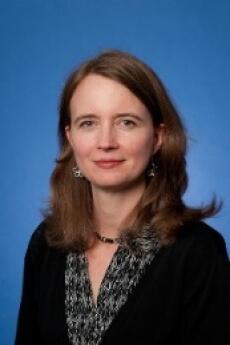
Matthias Matthijs

Matthias Matthijs is associate professor of international political economy. His research focuses on the politics of economic crises, the role of economic ideas in economic policymaking, the politics of inequality, and the democratic limits of regional integration. He was one of the inaugural recipients in 2015 of a Johns Hopkins Catalyst Award, in recognition of his work as a promising early-career investigator. He teaches courses in international relations, comparative politics, and international economics, and was twice awarded the Max M. Fisher Prize for Excellence in Teaching, in 2011 and 2015.

Since the summer of 2019, he is also a Senior Fellow for Europe at the Council on Foreign Relations (CFR). He also currently serves as the Chair of the Executive Committee of the European Union Studies Association (EUSA).

Matthijs is the editor (with Mark Blyth) of the book The Future of the Euro published by Oxford University Press in 2015, and author of Ideas and Economic Crises in Britain from Attlee to Blair (1945-2005), published by Routledge in 2011. The latter is based on his doctoral dissertation, which received the Samuel H. Beer Prize for Best Dissertation in British Politics by a North American scholar, awarded by the British Politics Group of the American Political Science Association (APSA) in 2010.

In 2018, he won the Best Paper Award from APSA’s European Politics and Society section for “When Is It Rational to Learn the Wrong Lessons?” (co-authored with Mark Blyth). Among various other research and writing projects, he is currently working on a book-length manuscript that delves into the collapse of national elite consensus around European integration.

Dr. Matthijs received his BSc in applied economics with magna cum laude from the University of Antwerp in Belgium, and his MA and PhD in international relations from Johns Hopkins University.

Matthias Matthijs Speaker School of Advanced International Studies, Johns Hopkins University
Lectures
-

Abstract: The problem of online disinformation is only getting worse. Social media may well play a role in the US 2020 presidential election and other major political events. But that doesn’t even begin to describe what future propaganda will look like. As Samuel Woolley shows, we will soon be navigating new technologies such as human-like automated voice systems, machine learning, ‘deep-fake’ AI-edited videos and images, interactive memes, virtual reality and augmented reality. In stories both deeply researched and compellingly written, Woolley describes this future, and explains how the technology can be manipulated, who might control it and its impact on political strategy. Finally, Woolley proposes strategic responses to this threat with the ultimate goal of empowering activists and pushing technology builders to design for democracy.

Image
Samuel Woolley
Samuel Woolley is a researcher with a focus on emerging media technologies, propaganda and politics. His work looks at how automation, algorithms and AI are leveraged for both democracy and control. His forthcoming book, The Reality Game: How the Next Wave of Technology Will Break the Truth, will be released in January of 2020 by PublicAffairs/Hachette. It explores the future of digital disinformation and provides a pragmatic roadmap for how society can respond.

Woolley is an assistant professor in the School of Journalism at the Moody College of Communication at the University of Texas-Austin. He is the Program Director of disinformation research at the Center for Media Engagement (CME) at UT. He holds a PhD from the University of Washington-Seattle. His academic work has appeared in the Journal of Information Technology and Politics, the International Journal of Communication, the Routledge Handbook of Media, Conflict and Security, A Networked Self: Platforms, Stories, Connections and The Political Economy of Robots.  He is one of the founders of the Computational Propaganda Research Project, now based at the Oxford Internet Institute, University of Oxford. Woolley is also the founder of the Digital Intelligence Lab at the Institute for the Future (IFTF)–a 50-year-old think-tank based in Palo Alto, CA.

Lectures
-

Image
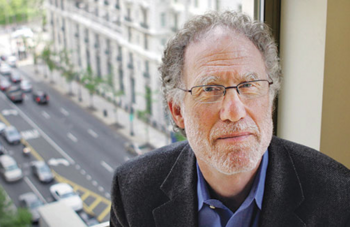
Robert Bauer
Abstract: Please join the Cyber Policy Center for a conversation on online political advertising, election law, and the 2020 election, with Robert Bauer, Professor of Practice and Distinguished Scholar in Residence at NYU Law, and Co-Director of NYU’s Legislative and Regulatory Process Clinic, with Professor Nathaniel Persily, Co-Director of the Cyber Policy Center. Bauer served as White House Counsel to President Obama, and returned to private practice in June 2011. In 2013, the President named Bauer to be Co-Chair of the Presidential Commission on Election Administration. Bauer was General Counsel to Obama for America, the President’s campaign organization, in 2008 and 2012. Bauer has also served as co-counsel to the New Hampshire State Senate in the trial of Chief Justice David A. Brock (2000) and counsel to the Democratic Leader in the trial of President William Jefferson Clinton (1999). He is the authors on books on campaign finance law and articles on various topics for law review and periodicals.

Robert Bauer bio >

Robert Bauer
Lectures
-

The phrase “immigration enforcement” often calls to mind efforts to detain and deport undocumented migrants. Yet, governments increasingly employ strategies of exclusion – denying migrants access to public and private resources in the hope this will encourage them to voluntarily leave and deter future arrivals. This talk will discuss these practices as a way to improve our understanding of how state power operates in Europe today. Drawing on and developing the concept of infrastructural power, this talk examines how immigration enforcement requires both administrative coordination and linkages to social groups. Infrastructural power is particularly essential when it comes to exclusionary policies, which attempt to steer the behavior of individual human beings in decentralized, complex economies and societies. In the course of instituting these measures, state officials have augmented their capacities for overseeing non-migrants as well, so that all citizens and denizens are subject to increased supervision.

Image
Kimberly Morgan

Kimberly J. Morgan is a Professor of Political Science and International Affairs at George Washington University. Her work examines the politics shaping public policies in Western Europe and the United States, with particular interests in migration and social welfare. She is the author of two books, Working Mothers and the Welfare State: Religion and the Politics of Work-Family Policy in Western Europe and the United States (Stanford 2006) and The Delegated Welfare State: Medicare, Markets, and the Governance of American Social Policy (Oxford 2011), and co-editor of two volumes, the Oxford Handbook of US Social Policy (Oxford 2015) and The Many Hands of the State: Theorizing Political Authority and Social Control (Cambridge 2017).


Co-sponsored by the Global Populisms Program

Kimberly J. Morgan Professor of Political Science and International Affairs Speaker George Washington University
Lectures
-

Please join Stanford's Center on Democracy, Development, and the Rule of Law (CDDRL) on Wednesday, December 4, 2019 at 4:30pm for a conversation with Sergii Leschenko.  Leschenko will be joined in coversation with Francis Fukuyama, the Mosbacher Director of CDDRL.


Abstract: 

Sergii Leshchenko was a journalist and former member of the Ukrainian Parliament who played a role in releasing the so-called "Black Ledger" detailing under-the-table payments made by Ukraine's corrupt former President Viktor Yanukovich to a number of figures.  One was Paul Manafort, President Trump's one-time campaign manager, who was subsequently convicted of money laundering and tax evasion in the Mueller probe.  As a result, Leshchenko has been attacked by Rudy Giuliani and other Trump associates for "interfering" in the US election.  In his talk, Leshchenko will discuss his role in the current impeachment case, set the record straight as to who is genuinely corrupt in Ukrainian politics, and explain how corruption scandals are now playing out in the politics of both Ukraine and the US.


Image
my photo
Speaker Bio:

Sergii LESHCHENKO is a Kyiv-based journalist, blogger, and press freedom activist served as Member of Ukrainian Parliament from 2014 until 2019. He was Chairperson of the subcommittee on international cooperation and implementation of anti-corruption legislation in Anticorruption Com-mittee of Parliament. 

Sergii Leshchenko graduated from the Taras Shevchenko National University of Kyiv and got the Master’s degree in journalism. 

From 2000 up to 2014 he worked for online newspaper Ukrainska Pravda, where he specializes in anti-corruption investigations and other political reporting. He helped to launch the «Stop Censor-ship!» movement in 2010 and «Chesno» campaign that called for transparency in the Parliament. 

In 2011, Poland’s Foundation of Reporters recognized Mr. Leshchenko as the best journalist within the countries of the Eastern Partnership. Most recently, in 2013, Mr. Leshchenko was awarded a Press Prize by the Norwegian Fritt Ord Foundation and the German ZEIT Foundation. 

In 2012, he was awarded a John Smith Fellowship, and in 2013 he was awarded a Draper Hills Fellowship at Stanford University. 

Sergii Leshchenko was Reagan-Fascell Fellow in Washington-based National Endowment for Democracy in 2013-2014. Leshchenko was selected as one of Reporters Without Borders’ "100 In-formation Heroes-2014". In 2014 he was honoured with the NDI’s Democracy Award. 

He is the author of 3 books. “The American Saga of Pavlo Lazarenko” is about investigations conducted by U.S. law enforcement agencies on former Ukrainian Prime Minister and “Mezhygirya Syndrom of Viktor Yanukovych” is about corrupt previous Ukrainian regime. Third book “The rise and fall of the oligarchs” was published in Norway in 2018.

Sponsored by: Center on Democracy, Development, and the Rule of Law, Freeman Spogli Institute for International Studies, The Europe Center, and Center for Russian, East European and Eurasian Studies

Media Contact: Ari Chasnoff


Who Is Really Corrupt in Ukraine?
Sergii Leshchenko

Encina Hall, C148
616 Jane Stanford Way
Stanford, CA 94305

0
Olivier Nomellini Senior Fellow at the Freeman Spogli Institute for International Studies
Director of the Ford Dorsey Master's in International Policy
Research Affiliate at The Europe Center
Professor by Courtesy, Department of Political Science
yff-2021-14290_6500x4500_square.jpg

Francis Fukuyama is the Olivier Nomellini Senior Fellow at Stanford University's Freeman Spogli Institute for International Studies (FSI), and a faculty member of FSI's Center on Democracy, Development and the Rule of Law (CDDRL). He is also Director of Stanford's Ford Dorsey Master's in International Policy, and a professor (by courtesy) of Political Science.

Dr. Fukuyama has written widely on issues in development and international politics. His 1992 book, The End of History and the Last Man, has appeared in over twenty foreign editions. His book In the Realm of the Last Man: A Memoir will be published in fall 2026.

Francis Fukuyama received his B.A. from Cornell University in classics, and his Ph.D. from Harvard in Political Science. He was a member of the Political Science Department of the RAND Corporation, and of the Policy Planning Staff of the US Department of State. From 1996-2000 he was Omer L. and Nancy Hirst Professor of Public Policy at the School of Public Policy at George Mason University, and from 2001-2010 he was Bernard L. Schwartz Professor of International Political Economy at the Paul H. Nitze School of Advanced International Studies, Johns Hopkins University. He served as a member of the President’s Council on Bioethics from 2001-2004. He is editor-in-chief of American Purpose, an online journal.

Dr. Fukuyama holds honorary doctorates from Connecticut College, Doane College, Doshisha University (Japan), Kansai University (Japan), Aarhus University (Denmark), the Pardee Rand Graduate School, and Adam Mickiewicz University (Poland). He is a non-resident fellow at the Carnegie Endowment for International Peace. He is a member of the Board of Trustees of the Rand Corporation, the Board of Trustees of Freedom House, and the Board of the Volcker Alliance. He is a fellow of the National Academy for Public Administration, a member of the American Political Science Association, and of the Council on Foreign Relations. He is married to Laura Holmgren and has three children.

(October 2025)

CV
Date Label
Olivier Nomellini Senior Fellow at the Freeman Spogli Institute for International Studies (FSI), and Mosbacher Director of FSI's Center on Democracy, Development, and the Rule of Law.
Steven Pifer Discussant William J. Perry fellow, Freeman Spogli Institute for International Studies
Lectures
-
Lectures
Subscribe to Lectures