-
ARD You Have Not Yet Been Defeated event

In this talk, prominent political activist Sanaa Seif and award-winning journalist Sharif Abdel Kouddous will discuss the current political conditions in Egypt, the massive expansion of the carceral state under the rule of Abdel-Fattah Al-Sisi and the country’s role within the geopolitical shifts reshaping the region. At the heart of the conversation will be the newly released book, You Have Not Yet Been Defeated, authored by Seif's brother Alaa Abdel-Fattah, one of the most high-profile political prisoners in Egypt. The book will be available for purchase at the event.

ABOUT THE SPEAKERS

Image
Sanaa Seif
Sanaa Seif is an Egyptian filmmaker, producer, and political activist. She has been imprisoned three times under the Sisi regime for her activism, most recently from the summer of 2020 until December 2021, when she was abducted by security forces after trying to get a letter in to her brother in prison. Hundreds of cultural figures and dozens of institutions campaigned for her release.

Image
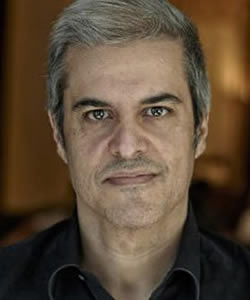
Sharif Abdel-Kouddous
Sharif Abdel Kouddous is an independent journalist based in Cairo. For eight years he worked as a producer and correspondent for the TV/radio news hour Democracy Now! In 2011, he returned to Egypt to cover the revolution. Since then, he has reported for a number of print and broadcast outlets from across the region. He received an Izzy Award for outstanding achievement in independent media for his coverage of the Egyptian revolution and an Emmy award for his coverage of the Donald Trump administration’s Muslim travel ban. He is currently an editor and reporter at Mada Masr, Egypt's leading independent media outlet.

This event is co-sponsored by the Abbasi Program in Islamic Studies at Stanford University.​

Image
ARD and Abbasi Program logos

In-person and online via Zoom
Encina Commons Room 123
615 Crothers Way, Stanford, CA

Sanaa Seif Political Activist
Sharif Abdel Kouddous Journalist
Lectures
-
Modern Authoritarianism and Geopolitics: Thoughts on a Policy Framework

Once upon a time, there was a seductive story about twin revolutions, a political one in France and an industrial one in Britain, that supposedly ushered in our modern world. This narrative never sat well with empirical realities, yet it lives on in textbooks. What might be a more persuasive framework for a global history of the modern era? What are the implications for research and the teaching of history?

ABOUT THE SPEAKER

Image
Steve Kotkin
Stephen Kotkin is the John P. Birkelund Professor of History and International Affairs in what used to be called the Woodrow Wilson School and in the History Department of Princeton University, as well as a Senior Fellow (adjunct) at the Hoover Institution at Stanford University. He directs the Princeton Institute for International and Regional Studies and co-directs its program in History and the Practice of Diplomacy, which he founded. He also founded Princeton’s Global History Initiative. His scholarship encompasses geopolitics and authoritarian regimes in history and in the present.

Kotkin has published two volumes of a three-volume history of the world as seen from Stalin’s desk: Paradoxes of Power, 1878-1928 (Penguin, November 2014) and Waiting for Hitler, 1929-1941 (Penguin, October 2017). The final installment, Totalitarian Superpower, 1941-1990s, is underway. He writes reviews and essays for Foreign Affairs, the Times Literary Supplement, and The Wall Street Journal, and served as the business book reviewer for The New York Times Sunday Business Section. He is an occasional consultant for governments and some private companies. PhD UC Berkeley (1988).


Image
CDDRL APARC Logos

Kathryn Stoner

Online, via Zoom

Stephen Kotkin John P. Birkelund Professor of History and International Affairs
Lectures
-
Japanese translation of Ill Winds book launch

The Institute for Global Governance Research (GGR) at Hitotsubashi University cordially invites you to join the book launch event of the Japanese translation of Dr. Larry Diamond’s Ill Winds, a work by Dr. Maiko Ichihara (2019-20 CDDRL Visiting Scholar) and published by Keiso Shobo.

This publication is undoubtedly one of the most important books of our times, offering an overview of the different movements that undermine the international liberal order, their interactions, and the values of democracy. Dr. Larry Diamond, an eminent scholar of democracy from Stanford University, will discuss the book, including how it can be read in the context of the Russian invasion of Ukraine.

The event will take place via Zoom in English, but Japanese interpretation will be provided as well.

Image
Ill Winds Japanese translation event info

Maiko Ichihara

Online via Zoom

CDDRL
Stanford University
Encina Hall, C147
616 Jane Stanford Way
Stanford, CA 94305-6055

(650) 724-6448 (650) 723-1928
0
Mosbacher Senior Fellow in Global Democracy at the Freeman Spogli Institute for International Studies
William L. Clayton Senior Fellow at the Hoover Institution
Professor, by courtesy, of Political Science and Sociology
diamond_encina_hall.png MA, PhD

Larry Diamond is the William L. Clayton Senior Fellow at the Hoover Institution, the Mosbacher Senior Fellow in Global Democracy at the Freeman Spogli Institute for International Studies (FSI), and a Bass University Fellow in Undergraduate Education at Stanford University. He is also professor by courtesy of Political Science and Sociology at Stanford, where he lectures and teaches courses on democracy (including an online course on EdX). At the Hoover Institution, he co-leads the Project on Taiwan in the Indo-Pacific Region and participates in the Project on the U.S., China, and the World. At FSI, he is among the core faculty of the Center on Democracy, Development and the Rule of Law, which he directed for six and a half years. He leads FSI’s Israel Studies Program and is a member of the Program on Arab Reform and Development. He also co-leads the Global Digital Policy Incubator, based at FSI’s Cyber Policy Center. He served for 32 years as founding co-editor of the Journal of Democracy.

Diamond’s research focuses on global trends affecting freedom and democracy and on U.S. and international policies to defend and advance democracy. His book, Ill Winds: Saving Democracy from Russian Rage, Chinese Ambition, and American Complacency, analyzes the challenges confronting liberal democracy in the United States and around the world at this potential “hinge in history,” and offers an agenda for strengthening and defending democracy at home and abroad.  A paperback edition with a new preface was released by Penguin in April 2020. His other books include: In Search of Democracy (2016), The Spirit of Democracy (2008), Developing Democracy: Toward Consolidation (1999), Promoting Democracy in the 1990s (1995), and Class, Ethnicity, and Democracy in Nigeria (1989). He has edited or coedited more than fifty books, including China’s Influence and American Interests (2019, with Orville Schell), Silicon Triangle: The United States, China, Taiwan the Global Semiconductor Security (2023, with James O. Ellis Jr. and Orville Schell), and The Troubling State of India’s Democracy (2024, with Sumit Ganguly and Dinsha Mistree).

During 2002–03, Diamond served as a consultant to the US Agency for International Development (USAID) and was a contributing author of its report, Foreign Aid in the National Interest. He has advised and lectured to universities and think tanks around the world, and to the World Bank, the United Nations, the State Department, and other organizations dealing with governance and development. During the first three months of 2004, Diamond served as a senior adviser on governance to the Coalition Provisional Authority in Baghdad. His 2005 book, Squandered Victory: The American Occupation and the Bungled Effort to Bring Democracy to Iraq, was one of the first books to critically analyze America's postwar engagement in Iraq.

Among Diamond’s other edited books are Democracy in Decline?; Democratization and Authoritarianism in the Arab WorldWill China Democratize?; and Liberation Technology: Social Media and the Struggle for Democracy, all edited with Marc F. Plattner; and Politics and Culture in Contemporary Iran, with Abbas Milani. With Juan J. Linz and Seymour Martin Lipset, he edited the series, Democracy in Developing Countries, which helped to shape a new generation of comparative study of democratic development.

Download full-resolution headshot; photo credit: Rod Searcey.

Former Director of the Center on Democracy, Development and the Rule of Law
Faculty Chair, Jan Koum Israel Studies Program
Date Label
Lectures
-

A SCCEI Spotlight Speaker Event


Friday, April 22, 2022          6 - 7 PM Pacific Time 
Saturday, April 23, 2022    9 - 10 AM Beijing Time


U.S.-China Relations in the Age of Uncertainty

The US-China relations are entering into an uncertain era. More than any other bilateral relations in the world, the US-China relations are characterized by complexities. The two countries compete in multiple arenas, but the competition takes place in a broad context of mutual dependency and collaborations. The Russian invasion of Ukraine may further unravel US-China relations. This talk will discuss and examine these issues.

This event features Yasheng Huang, Professor of Global Economics and Management at the MIT Sloan School of Management. He is joined by Scott Rozelle, co-director of Stanford Center on China's Economy and Institutions, and Helen F. Farnsworth Senior Fellow at the Freeman Spogli Institute for International Studies (FSI) and the Stanford Institute for Economic Policy Research (SIEPR), who will moderate a discussion about the major themes of the research. A question and answer session with the audience follows the discussion.


About the Speakers
 

Image
Yasheng Huang headshot.
Yasheng Huang is Epoch Foundation Professor of International Management, Professor of Global Economics and Management, and Faculty Director of Action Learning at Sloan School of Management, Massachusetts Institute of Technology. He is currently involved in research projects in three broad areas: 1) political economy of contemporary China, 2) historical technological and political developments in China, and 3) as a co-PI in “Food Safety in China: A Systematic Risk Management Approach” (supported by Walmart Foundation, 2016-). He has published numerous articles in academic journals and in media and 11 books in English and Chinese. His book, The Rise and the Fall of the EAST: Examination, Autocracy, Stability, and Technology in Chinese History and Today, will be published by Yale University Press in 2023.
 

Image
Headshot of Dr. Scott Rozelle
Scott Rozelle is the Helen F. Farnsworth Senior Fellow and the co-director of Stanford Center on China's Economy and Institutions in the Freeman Spogli Institute for International Studies and Stanford Institute for Economic Policy Research at Stanford University.  For the past 30 years, he has worked on the economics of poverty reduction. Currently, his work on poverty has its full focus on human capital, including issues of rural health, nutrition and education. For the past 20 year, Rozelle has been the chair of the International Advisory Board of the Center for Chinese Agricultural Policy, Chinese Academy of Sciences (CAS). Most recently, Rozelle's research focuses on the economics of poverty and inequality, with an emphasis on rural education, health and nutrition in China. In recognition of this work, Dr. Rozelle has received numerous honors and awards. Among them, he became a Yangtse Scholar (Changjiang Xuezhe) in Renmin University of China in 2008. In 2008 he also was awarded the Friendship Award by Premiere Wen Jiabao, the highest honor that can be bestowed on a foreigner.


Questions? Contact Debbie Aube at debbie.aube@stanford.edu


Watch the recording:

Scott Rozelle

Zoom Webinar

Yasheng Huang
Lectures
-
Rethinking Modern Sunni-Shii Relations: The State, Revolution, and Foreign Intervention

What explains the turn towards more politically relevant Sunni and Shii identities in the modern period? How do we account for a shift from Sunni-Shii cooperation against colonialism, for example, or in defense of the Ottoman Caliphate, towards polarisation? This lecture will look especially at the role of the modern state in regulating religion more broadly, coopting certain cultural groups and alienating others, and fostering sharpened sectarian identities. It will also look at the impact of the 1979 revolution in Iran, and reactions towards it, and of foreign intervention, especially the Iraq war of 2003 in sectarianizing the Middle Eastern regional system.

This event is sponsored by the Abbasi Program in Islamic Studies in partnership with the Center for International Security and Cooperation (CISAC) and the Program on Arab Reform and Democracy at CDDRL.

ABOUT THE SPEAKER

Image
Toby Matthieson
Toby Matthiesen is a scholar of Comparative Politics and International Relations with a focus on the Middle East. He is currently a Marie Curie Global Fellow at Stanford University and Ca’ Foscari University in Venice, leading a project on Sunni-Shii Relations in the Middle East.

Toby's aim in research and teaching is to study the Middle East in a global context. His research is characterized by the use of primary sources, archives, fieldwork, and engagement with social science and historiographical debates. He is the author of Sectarian Gulf: Bahrain, Saudi Arabia, and the Arab Spring That Wasn’t (Stanford University Press, 2013), a book on the impact of the Arab Spring on the Gulf States. His second book, The Other Saudis: Shiism, Dissent and Sectarianism (Cambridge University Press, 2015) dealt with the relationship between the Shii community in the Eastern Province and the Saudi state, and with transnational movements and Iran. It is based on fieldwork in Saudi Arabia and the wider region, and hitherto unused Arabic archives.

His forthcoming book, The Caliph and the Imam: The Making of Sunnism and Shiism, is a global history of Sunni-Shii relations and is published by Oxford University Press. Toby's work has also been translated into Arabic and Persian and apart from English, he publishes in German. His other research interests relate to the history of Leftist movements and the use of Islam as anti-Communism during the Cold War.

Encina Commons 123 or online via Zoom

Toby Matthiesen
Lectures
-
Marketing Democracy book talk

Erin A. Snider joins ARD to discuss her recently released book, Marketing Democracy: The Political Economy of Democracy Aid in the Middle East (Cambridge University Press, 2022).

For nearly two decades, the United States devoted more than $2 billion towards democracy promotion in the Middle East with seemingly little impact. To understand the limited impact of this aid and the decision of authoritarian regimes to allow democracy programs whose ultimate aim is to challenge the power of such regimes, Marketing Democracy examines the construction and practice of democracy aid in Washington DC and in Egypt and Morocco, two of the highest recipients of US democracy aid in the region.

Drawing on extensive fieldwork, novel new data on the professional histories of democracy promoters, archival research and recently declassified government documents, Erin A. Snider focuses on the voices and practices of those engaged in democracy work over the last three decades to offer a new framework for understanding the political economy of democracy aid. Her research shows how democracy aid can work to strengthen rather than challenge authoritarian regimes. Marketing Democracy fundamentally challenges scholars to rethink how we study democracy aid and how the ideas of democracy that underlie democracy programs come to reflect the views of donors and recipient regimes rather than indigenous demand. 

ABOUT THE SPEAKER 

Image
Erin A. Snider
Erin A. Snider is an assistant professor at Texas A&M University’s Bush School of Government and Public Service. Her research and teaching focus on the political economy of aid, democracy, and development in the Middle East. She was a Postdoctoral Fellow at Princeton University’s Niehaus Center for Globalization and Governance, a Fulbright scholar in Egypt, a Gates Scholar at the University of Cambridge, and a Carnegie Fellow with the New America Foundation in Washington, D.C. Her first book, Marketing Democracy: The Political Economy of Democracy Aid in the Middle East was published with Cambridge University Press. Other research has been published in International Studies Quarterly, PS: Political Science and Politics, and Middle East Policy, among other outlets. She holds a PhD in politics from the University of Cambridge and an MSc in Middle East Politics from the School of Oriental and African Studies (SOAS), University of London.

This event is co-sponsored by the Abbasi Program in Islamic Studies and the Center for African Studies at Stanford University.​

Hesham Sallam

Online via Zoom

Erin A. Snider Assistant Professor Associate Professor of Political Science and Islamic Studies Texas A&M University’s Bush School of Government and Public Service
Lectures
-
100% Democracy Book Talk

Today’s headlines are filled with arguments over restrictions on the right to vote and attempts to expand it. But what if we leapt over the current argument, and made a commitment to a ‘100% Democracy’, an election process where every citizen has the right to vote and full opportunities to do so—but also the duty to vote, a requirement to participate in our national choices?

In 100% Democracy:  The Case for Universal Voting, co-authors E.J. Dionne and Miles Rapoport argue for just that, and it’s not as far out as it sounds at first hearing.  Twenty-six countries around the world require participation in elections including Australia, which has required citizens to cast a ballot since 1924 and had over 90% voter turnout in their last major election. The U.S. on the other hand lags behind other democracies, with only 66.8% of eligible voters participating in the record-turnout election of 2020. If Americans are required to pay taxes and serve on juries, why not ask—or require—every American to vote?

Join us on Tuesday, April 5, for a conversation with Dionne and Rapoport about 100% Democracy, universal voting, and how it might be implemented. Is it time for the United States to take a major leap forward and recognize voting as both a fundamental civil right and a solemn civic duty?

ABOUT THE AUTHORS

Image
EJ Dionne
E.J. Dionne is a senior fellow at the Brookings Institution, a syndicated columnist for The Washington Post, a professor at Georgetown University, and visiting professor at Harvard University. He is the author of Code Red: How Progressives and Moderates Can Unite to Save Our Country.
 

Image
Miles Rapoport
Miles Rapoport is the Senior Practice Fellow in American Democracy at the Ash Center for Democratic Governance and Innovation at the Harvard Kennedy School. He formerly served in the Connecticut state legislature and as Connecticut’s secretary of the state. He also served as president of Demos and of Common Cause.

Didi Kuo
E.J. Dionne Senior Fellow Author Brookings Institution
Miles Rapoport Senior Practice Fellow in American Democracy Author Ash Center for Democratic Governance and Innovation at the Harvard Kennedy School
Lectures
-
China Chats with Stanford Faculty event header by the Stanford Center on China's Economy and Institutions

China Chats with Stanford Faculty 


Friday, May 13, 2022          6 - 7 PM Pacific Time 
Saturday, May 14, 2022    9 - 10 AM Beijing Time


From Education to World Development

Ensuring that every child in the world achieves basic skills is a key development goal emphasized in the UN's Sustainable Development Goals. But how far is the world away from reaching this goal? And what would achieving Sustainable Development Goal 4 mean for world development?  This talk will outline the development of an achievement data base for all of the countries of the world along with estimation of the economic gains from educational improvement. 

This Stanford alumni event will feature Eric Hanushek, the Paul and Jean Hanna Senior Fellow at the Hoover Institution of Stanford University. He will be joined by Scott Rozelle, the Helen F. Farnsworth Senior Fellow and the co-director of Stanford Center on China's Economy and Institutions in the Freeman Spogli Institute for International Studies and Stanford Institute for Economic Policy Research at Stanford University, who will moderate a discussion about the major themes of the research. A question and answer session with the audience will follow the discussion.


About the Speakers
 

Image
Eric Hanushek
Eric Hanushek is the Paul and Jean Hanna Senior Fellow at the Hoover Institution of Stanford University. He has been a leader in the development of economic analysis of educational issues, and he was awarded the Yidan Prize for Education Research in 2021. His widely-cited research spans many policy-related education topics including the economic value of teacher quality, the finance of schools, and the role of education in economic growth. His latest book, The Knowledge Capital of Nations: Education and the Economics of Growth, identifies the close link between the skills of the people and the economic growth of the nation. He has authored or edited 24 books along with over 250 articles. He is a Distinguished Graduate of the United States Air Force Academy and completed his Ph.D. in economics at the Massachusetts Institute of Technology. 


Image
Scott Rozelle
Scott Rozelle is the Helen F. Farnsworth Senior Fellow and the co-director of Stanford Center on China's Economy and Institutions in the Freeman Spogli Institute for International Studies and Stanford Institute for Economic Policy Research at Stanford University.  For the past 30 years, he has worked on the economics of poverty reduction. Currently, his work on poverty has its full focus on human capital, including issues of rural health, nutrition and education. For the past 20 year, Rozelle has been the chair of the International Advisory Board of the Center for Chinese Agricultural Policy, Chinese Academy of Sciences (CAS). Most recently, Rozelle's research focuses on the economics of poverty and inequality, with an emphasis on rural education, health and nutrition in China. In recognition of this work, Dr. Rozelle has received numerous honors and awards. Among them, he became a Yangtse Scholar (Changjiang Xuezhe) in Renmin University of China in 2008. In 2008 he also was awarded the Friendship Award by Premiere Wen Jiabao, the highest honor that can be bestowed on a foreigner.


Questions? Contact Debbie Aube at debbie.aube@stanford.edu


Watch the recording: 

Scott Rozelle

Zoom Webinar

Eric Hanushek Paul and Jean Hanna Senior Fellow at the Hoover Institution Stanford University
Lectures
-

Russian forces invaded Ukraine on February 24, 2022. Why is Ukraine strategically important to Russia and the West? What are the broader global implications of this attack? Join Stanford scholars from the Freeman Spogli Institute for International Studies for a discussion of the military invasion of Ukraine and the policy choices facing the United States, NATO, and their allies.

Panelists include Kathryn Stoner, the Mosbacher Director of the Center for Democracy, Development and the Rule of Law and senior fellow at the Freeman Spogli Institute for International Studies (FSI), Steve Pifer, the William J. Perry Fellow at the Center for International Security and Cooperation (CISAC) and a former U.S. ambassador to Ukraine, Rose Gottemoeller, the Steven C. Házy Lecturer at CISAC and a former deputy secretary-general of NATO, and Andriy Kohut, Director of the Sectoral State Archive of the Security Service of Ukraine and visiting scholar at the Stanford Center for Russian, East European and Eurasian Studies.

Scott Sagan, co-director of CISAC, senior fellow at FSI, and the Caroline S.G. Munro Professor of Political Science will moderate.

This event is co-sponsored by the Center on Democracy, Development and the Rule of Law (CDDRL), the Center for International Security and Cooperation (CISAC), and the Freeman Spogli Institute for International Studies (FSI).

Scott D. Sagan


In-person attendance is limited to Stanford affiliates only.
Attendance by Zoom is open to the public.

Oksenberg Conference Room
Encina Hall, Third Floor, Central
616 Jane Stanford Way, Stanford, CA 94305

FSI
Stanford University
Encina Hall C140
Stanford, CA 94305-6055

(650) 736-1820 (650) 724-2996
0
Satre Family Senior Fellow, Freeman Spogli Institute for International Studies
kathryn_stoner_1_2022_v2.jpg MA, PhD

Kathryn Stoner is the Mosbacher Director of the Center on Democracy, Development, and the Rule of Law (CDDRL), and a Senior Fellow at CDDRL and the Center on International Security and Cooperation at FSI. From 2017 to 2021, she served as FSI's Deputy Director. She is Professor of Political Science (by courtesy) at Stanford and she teaches in the Department of Political Science, and in the Program on International Relations, as well as in the Ford Dorsey Master's in International Policy Program. She is also a Senior Fellow (by courtesy) at the Hoover Institution.

Prior to coming to Stanford in 2004, she was on the faculty at Princeton University for nine years, jointly appointed to the Department of Politics and the Princeton School for International and Public Affairs (formerly the Woodrow Wilson School). At Princeton she received the Ralph O. Glendinning Preceptorship awarded to outstanding junior faculty. She also served as a Visiting Associate Professor of Political Science at Columbia University, and an Assistant Professor of Political Science at McGill University. She has held fellowships at Harvard University as well as the Woodrow Wilson Center in Washington, DC. 

In addition to many articles and book chapters on contemporary Russia, she is the author or co-editor of six books: "Transitions to Democracy: A Comparative Perspective," written and edited with Michael A. McFaul (Johns Hopkins 2013);  "Autocracy and Democracy in the Post-Communist World," co-edited with Valerie Bunce and Michael A. McFaul (Cambridge, 2010);  "Resisting the State: Reform and Retrenchment in Post-Soviet Russia" (Cambridge, 2006); "After the Collapse of Communism: Comparative Lessons of Transitions" (Cambridge, 2004), coedited with Michael McFaul; and "Local Heroes: The Political Economy of Russian Regional" Governance (Princeton, 1997); and "Russia Resurrected: Its Power and Purpose in a New Global Order" (Oxford University Press, 2021).

She received a BA (1988) and MA (1989) in Political Science from the University of Toronto, and a PhD in Government from Harvard University (1995). In 2016 she was awarded an honorary doctorate from Iliad State University, Tbilisi, Republic of Georgia.

Download full-resolution headshot; photo credit: Rod Searcey.

Mosbacher Director, Center on Democracy, Development and the Rule of Law
Professor of Political Science (by courtesy), Stanford University
Senior Fellow (by courtesy), Hoover Institution
CV
Date Label

Center for International Security and Cooperation
Encina Hall
616 Jane Stanford Way
Stanford University
Stanford, CA 94305-6165

0
William J. Perry Lecturer, Freeman Spogli Institute for International Studies
Research Fellow at the Hoover Institution
dsg_gottemoeller.jpg

Rose Gottemoeller is the William J. Perry Lecturer at Stanford University's Freeman Spogli Institute for International Studies and Research Fellow at the Hoover Institute.

Before joining Stanford Gottemoeller was the Deputy Secretary General of NATO from 2016 to 2019, where she helped to drive forward NATO’s adaptation to new security challenges in Europe and in the fight against terrorism.  Prior to NATO, she served for nearly five years as the Under Secretary for Arms Control and International Security at the U.S. Department of State, advising the Secretary of State on arms control, nonproliferation and political-military affairs. While Assistant Secretary of State for Arms Control, Verification and Compliance in 2009 and 2010, she was the chief U.S. negotiator of the New Strategic Arms Reduction Treaty (New START) with the Russian Federation.

Prior to her government service, she was a senior associate with the Carnegie Endowment for International Peace, with joint appointments to the Nonproliferation and Russia programs. She served as the Director of the Carnegie Moscow Center from 2006 to 2008, and is currently a nonresident fellow in Carnegie's Nuclear Policy Program.  

At Stanford, Gottemoeller teaches and mentors students in the Ford Dorsey Master’s in International Policy program and the CISAC Honors program; contributes to policy research and outreach activities; and convenes workshops, seminars and other events relating to her areas of expertise, including nuclear security, Russian relations, the NATO alliance, EU cooperation and non-proliferation. 

Date Label
Andriy Kohut
Lectures
-
S.T. Lee Lecture with Emmanuel Gyimah-Boadi

2022 S.T. LEE LECTURE

In the 1990s and early 2000s, most West African nations embarked on transitions to democratic governance. In the ensuing decade, the sub-region enjoyed relative peace and material progress. Unfortunately, these gains in democratization are being eroded. The lecture contends that democratic reforms at the turn of the 21st century were key drivers of the subsequent sanguine political, social, and economic conditions in the ECOWAS group; that popular attitudes in today’s West African societies are largely anti-autocratic; and that therefore the unfolding retreat from democratic governance in nations across the sub-region portends ill for their overall stability and material prosperity in the 2020s and beyond. The lecture proposes measures to arrest the democratic recession in West African nations to prevent economic decline, social unrest, and political implosion.

The S.T. Lee Lectureship is named for Seng Tee Lee, a business executive and noted philanthropist. Dr. Lee is the director of the Lee group of companies in Singapore and of the Lee Foundation.

Dr. Lee endowed the annual lectureship at the Freeman Spogli Institute for International Studies in order to raise public understanding of the complex policy issues facing the global community today and to increase support for informed international cooperation. The S.T. Lee Distinguished Lecturer is chosen for his or her international reputation as a leader in international political, economic, social, and health issues and strategic policy-making concerns.

ABOUT THE SPEAKER

Image
Gyimah-Boadi.jpg

E. Gyimah-Boadi is co-founder and board chair of Afrobarometer, the pan-African survey research network and global reference point for high-quality data on African democracy, governance, and quality of life. He is also co-founder and former executive director of the Ghana Center for Democratic Development, a leading independent democracy and good-governance think tank. A former professor in the Department of Political Science at the University of Ghana, he has also held faculty positions at several universities in the United States, including the American University’s School of International Service, as well as fellowships at Queen Mary University; the Center for Democracy, Rule of Law and Development at Stanford University; the Woodrow Wilson International Center for Scholars; and the International Forum for Democratic Studies at the National Endowment for Democracy.

A graduate of the University of California (Davis) and University of Ghana (Legon), Gyimah-Boadi is a fellow of the National Academy of Sciences (U.S.) and the Ghana Academy of Arts and Sciences. For his contributions to research and policy advocacy on democracy, accountable governance, and human rights, he has won a myriad of awards, including the Distinguished Africanist of the Year Award of the African Studies Association (2018); the Martin Luther King, Jr. Award for Peace and Social Justice (2017); and one of the Republic of Ghana’s highest honors, the Order of Volta (2008). He was named one of New African Magazine’s “100 Most Influential Africans of 2021.”

Larry Diamond
Emmanuel Gyimah-Boadi Chair, Afrobarometer Chair, Afrobarometer Chair, Afrobarometer
Lectures
Subscribe to Lectures