-

Download Transcript


On September 26, Germany elected a new parliament. With it a new coalition government will come to power and Angela Merkel will depart the political stage after serving for 16 years as federal chancellor. Who might succeed her? What will be the foreign policy priorities of the new government? And how do Germany’s European partners view Merkel’s legacy and Germany’s role in Europe?

Dr. Jana Puglierin and Rafael Loss of the European Council on Foreign Relations (ECFR) will discuss the results and implications of the German vote, and based on a recent 12-country public opinion poll, they will assess the expectations of Germany’s European partners toward Berlin and its new leadership.

Image
Jana Puglierin


Dr. Jana Puglierin has been the head of ECFR’s Berlin office and a senior policy fellow at the European Council on Foreign Relations since January 2020. She also directs ECFR’s Re:shape Global Europe project, which seeks to develop new strategies for Europeans to understand and engage with the changing international order.

Before joining ECFR, Puglierin headed the Alfred von Oppenheim Center for European Policy Studies at the German Council on Foreign Relations (DGAP). Prior to this, she was an advisor on disarmament, arms control, and non-proliferation in the German Bundestag, where she also worked on matters relating to German and European foreign and security policy. Between 2003 and 2010, she was researcher and lecturer to the chair of political science and contemporary history as well as in the program for North American studies at the University of Bonn.

In November 2017, Puglierin was a visiting fellow at the American-German Situation Room, a joint initiative of the AICGS and GMF. She is alumna of the Konrad-Adenauer-Foundation’s Working Group of Young Foreign Policy Experts (2007-2016), of the ZEIT Foundation Ebelin und Gerd Bucerius (2016), of the Manfred-Wörner-Seminar for German-American Relations (2009), and of the International Visitor Leadership Program (2015). She is a board member of the German Atlantic Society, European Movement Germany and a member of the extended board of Women in International Security (WIIS.de).

Puglierin earned a master’s degree and a doctorate in political science, international and European law, and sociology from the Friedrich-Wilhelms University of Bonn.


Image
Rafael Loss

Rafael Loss is the coordinator for pan-European data projects of the European Council on Foreign Relations’ Re:shape Global Europe project, which seeks to develop new strategies for Europeans to understand and engage with the changing international order. He also works on German and European foreign policy, security and defence, climate policy, transatlantic relations, and nuclear policy and arms control.

Prior to joining ECFR in 2020, Loss was a research associate at the Center for Global Security Research at Lawrence Livermore National Laboratory in Livermore, California. His essays and analyses have appeared in Internationale Politik Quarterly, War on the Rocks, and The Bulletin of the Atomic Scientists, among others.

Loss was a Fulbright fellow at the Fletcher School at Tufts University, where he earned an MA in international relations. He also holds a BA in political science from the University of Bremen.


*If you need any disability-related accommodation, please contact: Shannon Johnson by email: sj1874@stanford.edu or phone: 801-822-1334. Requests should be made by September 23, 2021.

Online via Zoom

Jana Puglierin speaker European Council on Foreign Relations
Rafael Loss speaker European Council on Foreign Relations
Seminars
-

*For fall quarter 2021, CISAC will be hosting hybrid events. Many events will offer limited-capacity in-person attendance for Stanford faculty, staff, fellows, visiting scholars, and students in accordance with Stanford’s health and safety guidelines, and be open to the public online via Zoom. All CISAC events are scheduled using the Pacific Time Zone.


REGISTRATION


Seminar Recording

About the Event: According to the Theory of the Nuclear Revolution (TNR), nuclear weapons have stabilized relations between great powers, making deterrence easier than compellence. This view is currently under attack. Recent work has documented Washington’s competitive approach to arms control agreements and the fragility of the nuclear stalemate. However, these critiques have not explained how policymakers could hope to extract coercive benefits from nuclear weapons. This paper revisits this question using a game-theoretic model. It shows that if the compellent state is able to bolster the credibility of its threat through standard techniques, i.e. burning bridges, probabilistic threats, or the rationality of irrationality, then compellence may succeed. However, greater military capabilities bolster coercion by increasing the risk of disaster, with first-strike capabilities being especially destabilizing. TNR was correct to warn about the risks of nuclear competition.

View paper


About the Speaker: 

Alexandre Debs is Associate Professor of Political Science at Yale University. 

His research focuses on the causes of war, nuclear proliferation, and democratization, and it has appeared in top journals such as the American Political Science Review, the American Journal of Political Science, the Journal of Politics, International Organization, and International Security. He wrote with Nuno Monteiro the book Nuclear Politics: The Strategic Causes of Proliferation (2017, Cambridge University Press).

Alexandre received a Ph.d. in Economics from M.I.T., an M.Phil. in Economic and Social History from the University of Oxford as a Rhodes scholar, and a B.Sc. in Economics and Mathematics from Universite de Montreal.

Virtual Only. This event will not be held in person.

​Alexandre Debs Associate Professor Yale University
Seminars
-

Image
When The Stars Begin to Fall book cover
About the Seminar: Structural racism threatens the principles that undergird the American creed. A national, multiracial solidarity is the best means of mitigating racism’s effects. The sociopolitical strategies of Black America – grounded in moral claims consonant with the creed but fashioned to be in alignment with contemporary national interests – provide a model for the type of solidarity the United States desperately needs.

This argument is explored in detail in When the Stars Begin to Fall: Overcoming Racism and Renewing the Promise of America. Through an examination of political science and sociological frameworks, alongside personal and historical narratives, it argues that structural racism is a crime of the state, that color-conscious policy is preferable to colorblindness, and that the American civil religion is central to national solidarity. Concluding with policy recommendations, the book offers the next step forward on the intractable issue of racism.


Image
Theodore R. Johnson
About the Speaker: Theodore R. Johnson is a Senior Fellow and Director of the Fellows Program at the Brennan Center for Justice at the NYU School of Law, where he undertakes research on race, politics, and American identity. Prior to joining the Brennan Center, he was a National Fellow at New America and a Commander in the United States Navy, serving for twenty years in a variety of positions, including as a White House Fellow in the first Obama administration and as speechwriter to the Chairman of the Joint Chiefs of Staff. His work on race relations has appeared in prominent national publications across the political spectrum, including the New York Times Magazine, the Atlantic, the Washington Post, the Wall Street Journal, and National Review, among others.


In-person for Stanford Affiliates: Philippines Conference Room
Online: Zoom

Theodore R. Johnson Senior Fellow and Director, Fellows Program at the Brennan Center for Justice
Seminars
-

About the Seminar: From foreign influence operations disrupting democratically-held elections to anti-vaccine conspiracies undermining global public health, disinformation has drawn attention to the many ways technology engenders new and complex challenges for civic life. This talk will explore the role of identity-based propaganda in contemporary influence operations and its consequences for democracy and civic life.


Register Now


About the Speaker: Samantha Bradshaw is a postdoctoral fellow at CDDRL, the Digital Civil Society Lab, and the Program on Democracy and the Internet.

Image
Samantha

Online, via Zoom.

Postdoctoral Fellow, CDDRL
Seminars
-

About the Session: How do gangs compete for extortion? Using detailed data on individual extortion payments to gangs and sales from a leading wholesale distributor of consumer goods and pharmaceuticals in El Salvador, we document evidence on the determinants of extortion payments, firm responses to extortion, and effects on consumers. We exploit a 2016 non-aggression pact between gangs to examine how collusion affects extortion in areas where gangs previously competed. While the non-aggression pact led to a large reduction in violence, we find that it increased extortion by 15% to 20%. Much of the increase in extortion was passed-through to retailers and consumers: we find a large increase in prices for pharmaceutical drugs and a corresponding increase in hospital visits for chronic illnesses. The results shed light on how extortion rates are set and point to an unintended consequence of policies that reduce competition between criminal organizations.


About the Speaker: Carlos Schmidt-Padilla received his PhD in Political Science from the University of California, Berkeley, where he was also a Research Associate at the Center on the Politics of Development. Since September 2021, Carlos has been a Postdoctoral Fellow at Stanford Impact Labs (SIL), affiliated with PovGov at CDDRL. Broadly, his research interests encompass the political economy of development of Latin America and of sub-Saharan Africa. In particular, he studies questions concerning crime, human capital, immigration, and policing in developing countries. Carlos is from San Salvador, El Salvador.

Image
Carlos Schmidt-Padilla

Online, via Zoom

Postdoctoral Fellow at Stanford Impact Labs (SIL), affiliated with PovGov at CDDRL
Seminars
-

About the Seminar: Africa arguably poses some of the most challenging conditions for democratic emergence and survival.  According to our existing theories, this is due to a number of economic, social, geographic factors, and institutional legacies of predatory neo-colonial states. Yet three decades of democratic endurance in significant, key cases suggest that the continent has much to teach us about how democracies maintain despite extremely challenging conditions. And the wave of global democratic backsliding has particular contours across the continent that illuminate how democratic institutions are utilized for autocratization, and with what constraints. This research project explores two most-different cases – South Africa and Benin – with highly diverse challenges and yet strikingly similar pathways to establish and maintain democracy against all odds, and the contemporary challenges that are pushing both to autocratic concessions.


Image
rachel_beatty_riedl.jpg
About the Speaker: Rachel Beatty Riedl (PhD Princeton University) is the John S. Knight Professor of International Studies, Director of the Einaudi Center for International Studies, and professor in the Department of Government at Cornell University. Her research interests include institutional development in new democracies, local governance and decentralization policy, authoritarian regime legacies, and religion and politics, with a regional focus in Africa. Previously, she was an Associate Professor in the Department of Political Science, Faculty Fellow in the Institute for Policy Research, and Director of the Program of African Studies at Northwestern University. Riedl is co-host of the podcast Ufahamu Africa, featuring weekly episodes of news highlights and interviews about life and politics on the African continent.

Online, via Zoom

Rachel Beatty Riedl Cornell University, John S Knight Professor of International Studies
Seminars
-

Image
Book cover of Accomplishment by Sir Michael Barber
There is no secret formula for success. But what if there were a pattern you could follow? A way of mapping the route and navigating the obstacles that arise?

Michael Barber has spent many years advising governments, businesses and major sporting teams around the world on how to achieve ambitious goals on time. In this book, he applies the wisdom he has gained from dealing with large, complex organizations and elite athletes to help anyone tackle their most challenging goals.

Drawing on the stories of historic visionaries and modern heroes – from Galileo to Rosa Parks, Gareth Southgate to Justin Trudeau – Accomplishment blends personal anecdote and proven strategy to trace a blueprint that can be applied to any area of life.

At the book’s core is the need to remember the ethical basis for what you have set out to do. Doing the right thing for the right reason is the reward that will see you through the criticism and setbacks. So whatever it is that you aspire to do – run a marathon, transform a school or run a public service for millions – this book will inspire you to get going and to bridge the gap between vision and reality.

Click here to purchase the book.


Image
Sir Michael Barber
About the Author: Sir Michael Barber is a global expert on the implementation of ambitious change in large, complicated systems. He has advised governments on every continent and worked with major private sector organizations, schools and universities in Britain and the US. In addition, Barber has advised Team Sky, the elite cycling team and, since 2016, he has been a member of the Football Association's Technical Advisory Board, which helps the FA prepare England's teams, both men and women, for major tournaments.


Online, via Zoom.

Sir Michael Barber Chairman and Founder, Delivery Associates
Seminars
-

About the Seminar: US response to 9/11 included a major focus on peace building through democracy promotion. The seminar examines the rationale and milestones for American engagement in distant lands. How will such an approach work in future foreign policy implementation is also discussed with some conclusions about future engagement.


For Fall Quarter 2021, we will be hosting a hybrid weekly Research Seminar Series. All events will be open to the public online via Zoom, and a limited-capacity in-person element for Stanford affiliates may be added in accordance with the County's health and safety guidelines.


Image
Shirin Tahir-Kheli
About the Speaker: Dr. Shirin Tahir-Kheli is a Senior Fellow and Founding Director of the South Asia Program at the Foreign Policy Institute of the Johns Hopkins University School of Advanced International Studies (SAIS). In 2011, Tahir-Kheli was named by Newsweek as one of the "150 Women Who Shake the World." She specializes in South Asia, nuclear non-proliferation, United Nations and U.S. foreign policy, and women's empowerment.

She is the author and editor of several monographs, including Pakistan Today: The Case for U.S.-Pakistan Relations (with Shahid Javed Burki, Foreign Policy Institute, 2017); Manipulating Religion for Political Gain in Pakistan: Consequences for the U.S. and the Region (Foreign Policy Institute, 2015); and India, Pakistan and the United States: Breaking with the Past (Council on Foreign Relations, 1997).

Democracy Promotion in U.S. Foreign Policy: Looking Back, Looking Forward
Download pdf

Online, via Zoom

Shirin Tahir-Kheli Ambassador & Senior Fellow, Foreign Policy Institute, Johns Hopkins School of Advanced International Studies, Washington DC Organization
Seminars
-

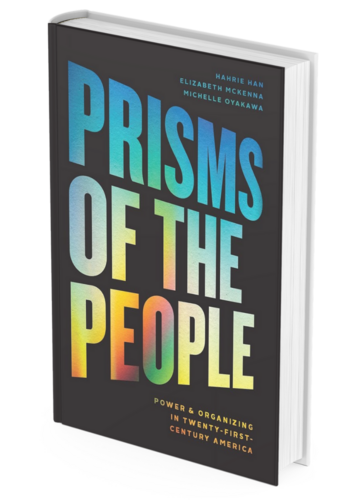
Image
Book cover of Prisms of the People by Hahrie Han
About the Seminar: As democracy hangs in the balance around the globe, people all over the world are pouring into the streets. Yet, the overwhelming response is stasis. Can people-powered movements make change possible? Prisms of the People: Power and Organizing in 21st c. America is a new book that looks systematically at the outliers to identify the characteristics that successful movement organizations share. Drawing on six cases in the United States, the book shows how these movements won not by doing things we all know--registering voters, canvassing neighborhoods and so on--but instead by negotiating for power in ways that rejected the false choice between idealism and pragmatism, between working inside the system and outside the system, between articulating a bold vision and making political compromises. Through careful analysis and vivid storytelling, the story turns conventional stereotypes of activists on their head.


Image
Hahrie Han
About the Speaker: Hahrie Han is the Inaugural Director of the SNF Agora Institute, the Stavros Niarchos Foundation Professor of Political Science, and Faculty Director of the P3 Research Lab at Johns Hopkins University. She specializes in the study of organizing, movements, civic engagement, and democracy. She has published four books and numerous articles in the American Political Science Review, American Sociological Review, American Journal of Sociology, Journal of the American Medical Association (JAMA), and numerous other outlets, including the New York Times, Washington Post, and elsewhere. She is currently working on a fifth book, to be published with Knopf (an imprint of Penguin Random House), about faith and race in America, with a particular focus on evangelical megachurches.

This seminar is presented in partnership with the Stanford Center on Philanthropy and Civil Society.

Image
CDDRL and PACS logos

Online, via Zoom

Hahrie Han Stavros Niarchos Foundation Professor of Political Science and Director, SNF Agora Institute | Johns Hopkins University
Seminars
-

About the Seminar: Domestic migration separates voters into nationally- and locally-minded electorates because migrants differ from non-migrants regarding the strength of their local identities. To demonstrate how migration alters the importance of local identities, I study sub-national variation in the nationalization of local elections: in out-migration areas, strong local identities mean that non-migrant voters are active in local politics and consider locally defined issues when voting, while weak local identities lower migrant voters' ability to do so in in-migration areas. I support my argument using household panel data and comprehensive data on cross-county migration, national and sub-national elections, and civil society organizations in contemporary Germany. My identification strategy uses a shift-share instrument for migration and exploits a large-scale welfare reform in 2005 that lastingly altered domestic migration flows. My focus on local identities calls for a reappraisal of conventional descriptions of contemporary democratic politics, which mostly examines divides in national politics. The paper identifies a new research agenda on the political consequences of domestic migration, which has important implications for our understanding of democratic polarization and local service delivery.


Image
Hans Lueders
About the Speaker: Hans Lueders holds a Ph.D. in Political Science from Stanford University and is currently a Postdoctoral Scholar at Stanford’s Center on Democracy, Development, and the Rule of Law. His research seeks to understand the causes and consequences of political inequality in different political contexts. Hans is currently working on a book project that links political inequality in contemporary democratic societies to domestic migration. Additionally, Hans researches political inequality in closed authoritarian regimes, where state institutions ensure that citizens have little political say. His work identifies little-acknowledged ways through which citizens can still influence politics despite this extreme inequality. Moreover, his research on unauthorized migration in the United States studies political inequality from the perspective of a politically marginalized group. It seeks to understand how unauthorized immigrants navigate life while being politically disenfranchised.  Hans’ work has been published in the Proceedings of the National Academy of Sciences (PNAS), the Journal of Politics, the Journal of Economics, Race, and Policy, and the European Political Science Review, among others.

Online, via Zoom

Postdoctoral Scholar, CDDRL
Seminars
Subscribe to Seminars