-

This is a virtual event. Please click here to register and generate a link to the talk. 
The link will be unique to you; please save it and do not share with others.

November 10, 5:00-6:15 p.m. California time / November 11, 9:00-10:15 a.m. China time
 

Based on his recent Oxford University Press book Protecting China's Interests Overseas: Securitization and Foreign Policy, Dr. Andrea Ghiselli will discuss the role of the actors that contributed to the emergence and evolution of China's approach to the protection of its interests overseas. He will show how the securitization of non-traditional security threats overseas played a key role in shaping the behavior and preferences of Chinese policymakers and military elites, especially with regard to the role of the armed forces in foreign policy. 

While Chinese policymakers were able to overcome important organizational challenges, the future of China's approach to the protection of its interests overseas remains uncertain as Chinese policymakers face important questions about the possible political and diplomatic costs associated with different courses of action.

For more information about Protecting China's Interests Overseas or to purchase a copy, please click here.


Image
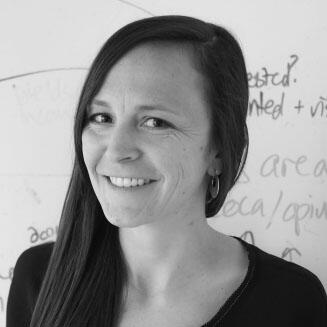
Portrait of Andrea Ghiselli
Dr. Andrea Ghiselli is an Assistant Professor at the School of International Relations and Public Affairs of Fudan University. He is also the Head of Research of the TOChina Hub's ChinaMed Project. His research focuses on the relationship between China's economic interests overseas and its foreign and defense policy. Besides his first monograph Protecting China's Interests Overseas: Securitization and Foreign Policy published by Oxford University Press, Dr. Ghiselli's research has been published in a number of peer-reviewed journals like the China Quarterly, the Journal of Strategic StudiesArmed Forces & Society, and the Journal of Contemporary China.


Via Zoom Webinar. Register at: https://bit.ly/3AUnPi3

Andrea Ghiselli Assistant Professor, School of International Relations and Public Affairs, Fudan University
Seminars
-

Image
jawboning as a first amendment problem

PART OF THE FALL SEMINAR SERIES

Join us on October 19th for our weekly seminar from 12 PM - 1 PM PT featuring Genevieve Lakier, Professor of Law at University of Chicago's Law School and CPC Co-Director, Nate Persily. This series is organized by the Program on Democracy and the Internet, and the Cyber Initiative at the William and Flora Hewlett Foundation.

For years now, scholars have expressed alarm at the tendency of government officials to pressure—or “jawbone”—social media companies into taking down what the officials consider to be harmful or offensive speech, even when no law requires it. Scholars have worried, for good reason, that the practice of jawboning allows government officials to evade the stringent constraints on their power to regulate speech imposed by the First Amendment. But relatively little attention has been paid to the constitutional question of whether, or rather when, government jawboning itself violates the First Amendment. In fact, answering this question turns out to be quite difficult because of deep inconsistencies in the cases that deal with jawboning, both in the social media context and beyond. In this talk, I will explore what those inconsistencies are, why the case law is so unclear about where the line between permissible government pressure and unconstitutional governmental coercion falls, and what kind of jawboning rule might be necessary to protect free speech values in a public sphere in which both private companies and government officials possess considerable power to determine who can and cannot speak.


REGISTER


Speaker Profile:

Genevieve Lakier teaches and writes about freedom of speech and American constitutional law. Her work examines the changing meaning of freedom of speech in the United States, the role that legislatures play in safeguarding free speech values, and the fight over freedom of speech on the social media platforms.
 
Genevieve has an AB from Princeton University, a JD from New York University School of Law, and an MA and PhD in anthropology from the University of Chicago. Between 2006 and 2008, she was an Academy Scholar at the Weatherhead Center for International and Area Studies at Harvard University. After law school, she clerked for Judge Leonard B. Sand of the Southern District of New York and Judge Martha C. Daughtrey of the Sixth Circuit Court of Appeals. Before joining the faculty, Genevieve taught at the Law School as a Bigelow Fellow and Lecturer in Law. She will serve as the Senior Visiting Research Scholar at the Knight Institute at Columbia University for the 2021-2022 school year, where she will be supervising a project exploring the relationship between the First Amendment and the regulation of lies, disinformation and misinformation.


Genevieve Lakier,
Seminars
-

Wednesday, November 17, 2021, 8:00am - 9:30am (Shanghai time)

Designing effective climate change mitigation and adaptation policies requires comprehensive assessment of the projected damages from climate change. However,  current climate policy is informed by outdated models lacking empirical grounding. In this talk, we use subnational mortality records across 40 countries to generate data-driven estimates of the global mortality consequences of climate change. We show that both extreme cold and extreme heat raise mortality rates, especially for the elderly, the poor, and populations that experience these extremes infrequently. These heterogeneous nonlinear responses to warming lead to highly differentiated projected impacts of climate change across the globe. In this talk we focus in particular on the Asia-Pacific region, where mortality risk generally rises with a warming climate, but projected damages differ substantially within and across countries. We conclude by demonstrating how these results can be used to inform local adaptation policy within an individual city, using Chengdu, China as a case study, and point to new developments in climate science that will enable future improvements in mortality risk assessment across Asia. 

Image
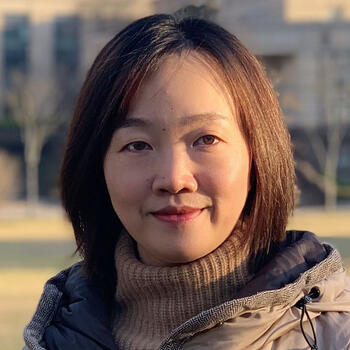
Tamma Carleton
Tamma Carleton is an Assistant Professor of Economics at the Bren School of Environmental Science and Management at the University of California, Santa Barbara. Her research combines economics with datasets and methodologies from remote sensing, data science, and climate science to quantify how environmental change and economic development shape one another. Tamma's current work focuses on climate change, water scarcity, and the use of remote sensing for global-scale environmental and socioeconomic monitoring. She is an active member of the Climate Impact Lab, an interdisciplinary team conducting an empirically-grounded global assessment of climate change impacts. Tamma joined the Bren School after a postdoc at the Energy Policy Institute at the University of Chicago. She holds a PhD in Agricultural and Resource Economics from the University of California, Berkeley, MSc.'s in Environmental Change and Management as well as Economics for Development from the University of Oxford, and a BA in Economics from Lewis & Clark College.

Image
Yuan, Jiacan
Jiacan Yuan is an Associate Professor of Climatology at the Department of Atmospheric and Oceanic Sciences at Fudan University, Shanghai, China. She is interested in understanding fundamental dynamical processes of the climate system and improving climate models, which could give us stronger predictive power and more accurate risk assessment of the changing climate. Jiacan’s current work focuses on understanding the physical processes and uncertainties in climate changes, with major emphases on compound heat-humidity extremes and sea level rise. She is also an active member of the Climate Impact Lab. Before joining Fudan University, Jiacan was an Assistant Research Professor at the Department of Earth and Planetary Sciences at Rutgers University. She holds a Ph.D. in Meteorology from Peking University.

Image
Solar panels and globe with text "Perfect Storm: Climate Change in Asia," APARC's fall 2021 webinar series
 This event is part of the 2021 Fall webinar series, Perfect Storm: Climate Change in Asia, sponsored by the Walter H. Shorenstein Asia-Pacific Research Center.

Via Zoom Webinar
Register: https://bit.ly/3DAaPA7

Tamma Carleton Assistant Professor, Environmental Economics, Climate Change, University of California, Santa Barbara
Jiacan Yuan Associate Professor of Atmospheric and Oceanic Sciences, Fudan University
Seminars
-

Image
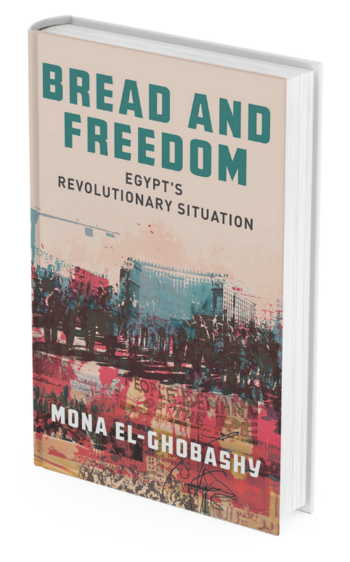
Bread and Freedom book cover
Egypt’s 2011 uprising is widely held to be a case of either failed democratic transition or inauthentic revolution. Scholars of democratic transitions blame Egypt’s bickering civilian politicians for failing to do the hard work of negotiated compromise to build an inclusive democracy. Scholars of revolution doubt that Egypt’s uprising counts as a revolution, since military generals did not cede the reins after Hosni Mubarak’s fall, and ultimately reconquered the state with their July 2013 coup. But what if instead of viewing Egypt as a uniform failure, we mine it for ideas on how to refresh our concepts of democracy and revolution? In this talk, based on her new book Bread and Freedom, Egypt’s Revolutionary Situation, Mona El-Ghobashy presents an interpretation of Egypt’s 2011 uprising that brings out some lost connections between democracy and revolution.
 

Register Now


SPEAKER BIO

Image
Mona El-Ghobashy
Mona El-Ghobashy is a scholar of the sociology and history of politics in Egypt, and the broader Middle East and North Africa. She is a Clinical Assistant Professor at Liberal Studies at New York University. Her research focuses on the dynamics of political contestation in Egypt before and after the 2011 uprising. Her first book, Bread and Freedom: Egypt’s Revolutionary Situation, was published by Stanford University Press in July 2021.

This event is co-sponsored by the "Ten Years on Project" and the Abbasi Program in Islamic Studies at Stanford University.

Online, via Zoom: REGISTER

Seminars
-

Asia Health Policy Program (AHPP) 2021-22 Colloquium series "Aligning Incentives for Better Health and More Resilient Health Systems in Asia”

Friday, November 12, 2021, 7:30am - 8:30am (Jakarta time)

Dr. Alatas will discuss her research on promoting vaccination in Indonesia and the impact of the pandemic on Indonesia’s society and economy more generally, including on poverty, human capital, and development.

Image
Vivi Alatas 4X4
Vivi Alatas is an  economist with passion for evidence-based solutions.  She is CEO of Asakreativita, a consulting and Edtech company that she established in 2020. Formerly she was a Lead Economist of the World Bank, where she led a team of seasoned local and international economists in producing several flagship reports for national and global audiences, including ‘Targeting Poor and Vulnerable Households in Indonesia’, ‘Making Poverty Work in Indonesia’ , ‘Indonesia’s Rising Divide’, ‘Indonesia Jobs Report’ and “Aspiring Indonesia – Expanding the Middle Class”. She has presented various of these research findings to the President, Vice President, Ministers and Deputy Ministers. She also has written several journal articles on poverty, inequality and labour issues. Some of the papers were written in collaboration with Nobel Laureates Abhijit Banerjee and Angus Deaton (who was also her advisor at Princeton).

Via Zoom Webinar
Register: https://bit.ly/3FmTUTp

Vivi Alatas CEO, Asakreativita
Seminars
-

This panel will examine the evolving political conflicts in Tunisia since the July 25 power grab executed by President Kais Saied that has been widely characterized as a step toward cementing authoritarian rule. Our panelists will examine the challenges recent developments have posed to Tunisia’s struggling democracy and the prospects for building consensus around an inclusive process of political reform.
 

Register Now

SPEAKER BIOS
 

Image
Achraf Aouadi
Achraf Aouadi is a Tunisian activist and academic that founded the watchdog organization I WATCH after the Tunisian Revolution in 2011. The organization is committed to fighting corruption and enhancing transparency. Aouadi is a holder of a master’s degree in international relations from the University of Birmingham. He is a former CDDRL Draper Hills fellow.

Image
Saida Ounissi
Saida Ounissi is a member of the Tunisian Assembly of People’s Representatives and previously served as Minister for Employment and Vocational Training. She represents Tunisians living in the North of France for the Ennahdha Party and was first elected in October 2014 and reelected in October 2019. In 1993, her family fled the dictatorship of Ben-Ali for France where she completed all her schooling. In 2005, she joined the University of Paris 1 Panthéon Sorbonne for a double degree in History and Political Science. She obtained her master’s degree at the Institute for the Study of Economic and Social Development and completed her studies with an internship at the African Development Bank in Tunis. In 2016, she was recruited by Prime Minister Youssef Chahed to join his Cabinet as Secretary of State in the Ministry of Employment and Vocational Training, charged with vocational training and private initiative. In 2018, she was promoted as the Minister for Employment and Vocational Training, becoming the youngest minister in Tunisia.

This event is co-sponsored by the Program on Arab Reform and Democracy at CDDRL, Stanford University's Center for African Studies, and the Abbasi Program in Islamic Studies.

Online, via Zoom: REGISTER

Achraf Aouadi
Saida Ounissi
Seminars
-

Image
Soojong Kim event flyer for October 12th showing his face and name of event

PART OF THE FALL SEMINAR SERIES

Join us at the weekly Cyber Policy Center (CPC) seminar on Tue, October 12th from 12 PM - 1 PM PST featuring Soojong Kim, postdoctoral fellow at the Program on Democracy and the Internet. This session will be moderated by Co-Director of the CPC, Nate Persily. This is part of the fall seminar series organized by the Program on Democracy and the Internet, and the William and Flora Hewlett Foundation’s Cyber Initiative.

There has been growing concern about online misinformation and falsehood. It has been suspected that the proliferation of misleading narratives is especially severe on Facebook, the world’s largest social media site, but there has been a lack of large-scale systematic investigations on these issues. This talk will introduce a series of ongoing research projects investigating online groups promoting misleading narratives on Facebook, including anti-vaccine groups, climate change denialists, countermovements against racial justice movements, and conspiracy theorists. The presentation will discuss the prevalence, characteristics, ecosystem of misleading narratives on Facebook, and implications for potential interventions.


REGISTER


Speaker Profile:

Soojong Kim is a postdoctoral fellow, jointly affiliated with the Program on Democracy and the Internet (PDI) and the Digital Civil Society Lab (DCSL) at Stanford University. He received his Ph.D. at the Annenberg School for Communication, University of Pennsylvania. His research centers around digital media, social networks, and information propagation. As a former computer scientist, he is also interested in developing and applying computational methods, including online experiments, large-scale data analysis, and computational modeling.


Seminars
-

*For fall quarter 2021, CISAC will be hosting hybrid events. Many events will offer limited-capacity in-person attendance for Stanford faculty, staff, fellows, visiting scholars, and students in accordance with Stanford’s health and safety guidelines, and be open to the public online via Zoom. All CISAC events are scheduled using the Pacific Time Zone.

REGISTRATION


About the Event: With the counter-recovery and countervailing nuclear-targeting strategies, the United States embraced a massive expansion of the roles for nuclear weapons. Simultaneously, however, an accuracy revolution has quietly imbued conventional weapons with vastly improved target-killing capability. This raises the question: how many targets in the nuclear-war plan could just as effectively be dealt with using conventional weapons? In the last decade, the Russian security establishment has expressed concern about emerging U.S. conventional capabilities while the U.S. military has downplayed their strategic import. In this talk I will report on the early stages of a new project to investigate exactly how and if conventional forces might execute a strategic strike akin to the U.S. nuclear war plan and, conversely, whether an adversary could threaten the United States with unacceptable damage without ever escalating to nuclear use. I will discuss several target categories, the expected performance of conventional weapons, system considerations, and the consequences that “conventional strategic strike” may have for the future of deterrence.


About the Speaker: R. Scott Kemp is the MIT Class of '43 Associate Professor of Nuclear Science and Engineering, and director of the MIT Laboratory for Nuclear Security and Policy. His research combines physics, politics, and history to help create more resilient societies. His work has focused primarily on problems arising from weapons of mass destruction. His current research includes securing vulnerabilities in U.S. critical infrastructure and the redefining of strategic defense. In 2010, Scott served as Science Advisor in the U.S. State Department's Office of the Special Advisor for Nonproliferation and Arms Control where he was responsible for developing the technical framework for what became the Iran Nuclear Deal. Scott received his undergraduate degree in physics from the University of California, Santa Barbara, and his Ph.D. in Public and International Affairs from Princeton University. He is a Fellow of American Physical Society and recipient of the Sloan Research Fellowship in Physics.


Only those with an active Stanford ID with access to William J Perry Conference Room in Encina Hall may attend in person. This event will not be livestreamed.

Scott Kemp MIT
Seminars
-

For fall quarter 2021, CISAC will be hosting hybrid events. Many events will offer limited-capacity in-person attendance for Stanford faculty, staff, fellows, visiting scholars, and students in accordance with Stanford’s health and safety guidelines, and be open to the public online via Zoom. All CISAC events are scheduled using the Pacific Time Zone. 

REGISTRATION


About the Event: In January 2017 and again during his presidential campaign, then-Vice President Biden said that “I believe that the sole purpose of the U.S. nuclear arsenal should be deterring—and, if necessary, retaliating against—a nuclear attack.” The Biden Administration is now undertaking its Nuclear Posture Review (NPR), in which it is possible that the United States would, for the first time, formally adopt such a “sole purpose” or perhaps even “no first use” policy for its nuclear weapons. Yet some former government officials, as well as press accounts, have publicly reported that the possibility of a biological weapons attack that might cause casualties comparable to a nuclear attack blocked the adoption of a no-first-use or a sole-purpose policy in previous administrations’ NPRs. Should it do so again? I will present a technical and policy analysis of this question, with the aspiration of helping to bring systematic attention to this issue in the ongoing Nuclear Posture Review.


About the Speaker: Christopher Chyba is a professor of astrophysical sciences and international affairs at Princeton University, and past director of the Program on Science and Global Security. As an associate professor of geological sciences at Stanford University before coming to Princeton, he co-directed the Center for International Security and Cooperation and held the Sagan Chair at the SETI Institute. He has been a Marshall Scholar and a MacArthur Fellow.

During President Clinton’s first term, Chyba served on the staffs of the National Security Council and Office of Science and Technology Policy at the White House, entering as a White House Fellow. He served for a decade as a member of the National Academy of Sciences' Committee on International Security and Arms Control, and on President Obama’s Council of Advisors on Science and Technology (PCAST) from April 2009 through January 2017, on which he co-chaired the working groups on antibiotic resistance and on biodefense. In late 2020 to early 2021, Chyba served on the national security and foreign policy team for the Biden-Harris transition. His current policy-relevant research focuses on possible pathways to nuclear weapons use (for the past two years, he has co-chaired a project of the American Academy of Arts and Sciences on this topic), nonproliferation and strategic arms control issues, and biodefense -- including as a member of the OPCAST pandemic response group. 

Chyba's scientific research ranges across planetary science and exobiology, as well as work in classical electrodynamics. His published work has included dynamical modeling of the Neptune-Triton system, the role of impacts on the origin of life on Earth, the Tunguska atmospheric explosion and planetary defense, radar, seismic, and magnetometer sounding of Europa's ice shell, bioenergetic models for possible ecosystems on Europa, electromagnetic heating of planetary satellites, and planetary protection. 

Only those with an active Stanford ID with access to William J Perry Conference Room in Encina Hall may attend in person. This event will not be livestreamed.

Christopher Chyba Professor Princeton University
Seminars
-
This is a virtual event. Please click here to register and generate a link to the event.
The link will be unique to you, please save it and do not share with others.
 

The Taliban’s shock takeover of Kabul in August 2021 has implications for South Asia far beyond Afghanistan’s borders. The Taliban does not have transnational political ambitions, but it is closely tied to the Pakistan security establishment, and its victory will resonate among other networks of terrorists. This webinar will explore the regional geopolitical consequences of the Taliban takeover. It will examine the Taliban victory’s impact on Pakistan’s regional strategy, on security in disputed Kashmir, on the role of China in the region, and on the trajectory of Islamist groups across the region.

Image
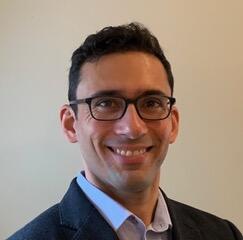
Javid Ahmad
Javid Ahmad is a senior fellow with the Atlantic Council and was, until recently, Afghanistan’s ambassador to the UAE. He was previously a nonresident fellow with the Modern War Institute at West Point and worked with U.S. defense contractors, where he provided counterterrorism/economic analysis to U.S. government and business clients on South Asia/Central Asia. He has worked for the Pentagon’s AfPak Hands, the German Marshall Fund in Washington, and NATO in Brussels. He has written for Wall Street Journal, Washington Post, Foreign Affairs, New York Times, Foreign Policy, The National Interest, The Hill, and CNN. He studied at Beloit College and Yale University.

Image
C Christine Fair
C. Christine Fair is a Professor in the Security Studies Program within Georgetown University’s Edmund A. Walsh School of Foreign Service. Her most recent book is In Their Own Words: Understanding Lashkar-e-Tayyaba (OUP, 2019).  She has authored or co-edited several books, inter aliaFighting to the End: The Pakistan Army’s Way of War (OUP, 2014); Pakistan’s Enduring Challenges (UPenn, 2015), Policing Insurgencies (OUP, 2014); Political Islam and Governance in Bangladesh (Routledge, 2010); Treading on Hallowed Ground: (OUP, 2008); The Cuisines of the Axis of Evil and Other Irritating States (GlobePequot, 2008).  She has a PhD from the University of Chicago, Department of South Asian Languages and Civilization. She causes trouble in Hindi, Urdu and Punjabi.

Image
Avinash Paliwal
Avinash Paliwal is Senior Lecturer in International Relations and Deputy Director of the SOAS South Asia Institute. He specialises in South Asian strategic affairs. He is author of the much-acclaimed book My Enemy’s Enemy - India in Afghanistan from the Soviet Invasion to the US Withdrawal (2017), and is currently authoring a strategic history of India's near east. Avinash holds an MA and PhD in International Relations from King’s College London, and a BA (Hons) in Economics from the University of Delhi.

Moderator:

Image
Arzan Tarapore
Arzan Tarapore is the South Asia research scholar at the Shorenstein Asia-Pacific Research Center at Stanford University, where he leads the newly-restarted South Asia research initiative. He is also a senior nonresident fellow at the National Bureau of Asian Research. His research focuses on Indian military strategy and contemporary Indo-Pacific security issues. He previously held research positions at the RAND Corporation, the Observer Research Foundation, and the East-West Center in Washington. Prior to his scholarly career, he served as an analyst in the Australian Defence Department, which included an operational deployment to Afghanistan. Arzan holds a PhD in war studies from King’s College London.

 

via Zoom webinar

Register:  https://bit.ly/2ZveaS8


Javid Ahmad Senior Fellow Atlantic Council
C. Christine Fair Professor, Security Studies Program Georgetown University
Avinash Paliwal Senior Lecturer in Int'l Relations & Deputy Director SOAS South Asia Institute
Moderator: Arzan Tarapore South Asia Research Scholar, APARC Stanford University
Seminars
Subscribe to Seminars