-

Image
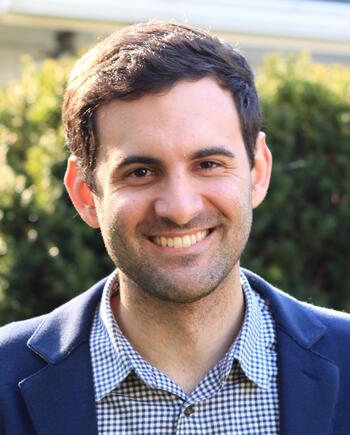
Luca Maini
Luca Maini, PhD, Department of Health Care Policy, Harvard Medical School. He focuses on the intersection between industrial organization and health economics and the regulation of pharmaceutical markets.

Talk Title — Mergers that Matter: The Impact of M&A Activity in Pharmaceutical Markets


We study how selection affects the analysis of consolidation through merger retrospectives. Using a novel dataset of pharmaceutical acquisitions from 2007–2019, we characterize M&A activity in the pharmaceutical market and examine its impact on prices and coverage of on-patent branded drugs. Approximately one-third of branded drugs are acquired by a different company during their patent terms. Most acquisitions involve drugs that are not direct competitors: only a minority of “overlap” acquisitions consolidate drug ownership in the same therapeutic area. Following an acquisition, acquired products experience an 8% price increase on average and are 1% more likely to be on a restricted formulary coverage tier. However, the effects are concentrated within two relatively small groups of deals less likely to raise regulatory scrutiny. The first group comprises within-market acquisitions whose value falls below the threshold for mandatory reporting. The second group comprises cross-market deals between small pharmaceutical companies, which are unlikely to be considered problematic even when disclosed. Following these acquisitions, prices increase by 60% on average, and drugs are 8% more likely to be on a restricted formulary coverage tier. Our results suggest that antitrust authorities are usually effective at preventing acquisitions that would hurt consumer welfare and that merger retrospectives that do not adequately account for regulatory oversight will underestimate the impact of M&A activity.

Encina Commons, Room 119

Seminars
-

For spring quarter 2022, CISAC will be hosting hybrid events. Many events will offer limited-capacity in-person attendance for Stanford faculty, staff, fellows, visiting scholars, and students in accordance with Stanford’s health and safety guidelines, and be open to the public online via Zoom. All CISAC events are scheduled using the Pacific Time Zone. 

SEMINAR RECORDING

Virtual to Public. Only those with an active Stanford ID with access to William J. Perry Conference Room in Encina Hall may attend in person. 

Rose Gottemoeller
David Holloway
Scott Sagan
Seminars
-

For spring quarter 2022, CISAC will be hosting hybrid events. Many events will offer limited-capacity in-person attendance for Stanford faculty, staff, fellows, visiting scholars, and students in accordance with Stanford’s health and safety guidelines, and be open to the public online via Zoom. All CISAC events are scheduled using the Pacific Time Zone. 

SEMINAR RECORDING

Virtual to Public. Only those with an active Stanford ID with access to William J Perry Conference Room in Encina Hall may attend in person. 

Dean Winslow
Seminars
-

Stanford University's Freeman Spogli Institute for International Studies (FSI) is honored to host the President of Ukraine, Volodymyr Zelenskyy, for a video address to the Stanford community about Ukraine’s fight against Russia in its war for independence, freedom and global democracy, which calls for the continued support of all the people of the free world.

Following his remarks, President Zelenskyy will answer Stanford student questions. Michael McFaul, director of FSI and former U.S. ambassador to Russia, will introduce the event and moderate the Q&A.

In-person attendence is currently limited to members of the Stanford community and press by invitation. Registration is required for in-person attendence.

For press/media inquries, please contact fsi-communications@stanford.edu.
 

Michael A. McFaul
Volodymyr Zelenskyy
Seminars
-

Image
image of jeff hancock on blue background with ryan moore and ross dahlke

Join us on Tuesday, May 17th from 12 PM - 1 PM PT for “Exposure to Untrustworthy Websites in the 2020 US Election” featuring Jeff Hancock, Ross Dahlke & Ryan Moore of the Social Media Lab. This weekly seminar series is jointly organized by the Cyber Policy Center’s Program on Democracy and the Internet and the Hewlett Foundation’s Cyber Initiative.

About The Seminar: 

Prior research has documented exposure to fake news and online misinformation using large-scale data on individuals’ media use, which has provided important information about the scope and nature of people’s exposure to misinformation online. However, most of this work has made use of data collected during the 2016 US election, and far fewer studies have examined how exposure to misinformation online has changed since 2016. In this paper, we examine exposure to untrustworthy websites in the lead up to the 2020 US election using a dataset of over 7.5 million passively tracked website visits from a nationally representative sample of American adults (N = 1,151). We find that a significantly smaller percentage of Americans were exposed to untrustworthy websites in 2020 compared to in 2016 (as calculated by Guess et al. [2020]). While exposure was concentrated among similar groups of people as it was in 2016, levels of exposure appear to be lower across the board. There were also differences in the role online platforms played in directing people to untrustworthy websites in 2020 compared to 2016. Our findings have implications for future research and practice around online misinformation.

About The Speakers:

Jeff Hancock is the founding director of the Stanford Social Media Lab and is Harry and Norman Chandler Professor of Communication at Stanford University. Professor Hancock and his group work on understanding psychological and interpersonal processes in social media. The team specializes in using computational linguistics and experiments to understand how the words we use can reveal psychological and social dynamics, such as deception and trust, emotional dynamics, intimacy and relationships, and social support. Recently Professor Hancock has begun work on understanding the mental models people have about algorithms in social media, as well as working on the ethical issues associated with computational social science.

Ross Dahlke, from Westfield, Wisconsin, is pursuing a PhD in theory and research in the Stanford Social Media Lab at the Stanford School of Humanities and Sciences. He graduated from the University of Wisconsin-Madison with bachelor’s degrees in journalism and political science. Ross’s research focuses on applying AI and computational techniques to understand how people interact with complex systems. Before graduate school, he was a data scientist at a marketing technology firm where he developed machine learning platforms that helped Fortune 500 companies optimize their digital marketing spend in order to drive sales. He has also consulted on dozens of state-wide and local political campaigns. In high school, Ross started a cheese distribution business which has sold more than $3 million in cheese.

Ryan Moore studies how features of new media platforms and technologies affect the consumption, processing, and sharing of information, especially information about politics and news. In addition, he is interested in the role that age plays in internet and technology use, particularly as it relates to encountering deceptive or misleading content.

Seminars
-
Image
two logos displayed on blue abstract background, Korea Foundation and Stanford's GTG program

Geopolitics of Technology in East Asia


WHEN: May 17 & May 18 
WHERE: Frances C. Arrillaga Alumni Center (IN PERSON) or Live Webcast


AGENDA: 

Day 1 of the workshop will focus on the strategic dimensions of industrial policy relating to digital goods and services. Key topics include national security reviews of inbound and outbound investments, export controls, and supply chain risks, with a view towards identifying areas that are ripe for multilateral alignment as well as points of friction and options for managing those points of friction. Elaborating the respective roles and responsibilities of government and private sector actors will be an important theme.

Day 2 of the workshop will focus on regulatory policy and workforce challenges and opportunities, especially AI and its ecosystem of supporting technologies. 
 

FULL AGENDA

Andrew Grotto

Frances C. Arrillaga Alumni Center or Live Webcast

Seminars
-

For spring quarter 2022, CISAC will be hosting hybrid events. Many events will offer limited-capacity in-person attendance for Stanford faculty, staff, fellows, visiting scholars, and students in accordance with Stanford’s health and safety guidelines, and be open to the public online via Zoom. All CISAC events are scheduled using the Pacific Time Zone. 

SEMINAR RECORDING


About the Event: The war that Russia inflicted on Ukraine is now well into its third month, with little sign the Kremlin has given up on its hope of achieving a victory on the battlefield.  Ukraine has impressed the world with the determination and tenacity of its resistance to the Russian invasion.  Vitaliy Sych, a long-time Kyiv-based journalist, will share his perspective on how the Ukrainian government, military and people are holding up in the face of Russia’s aggression.  

About the Speaker: Vitaliy Sych launched his career as a journalist with the Kyiv Post, Ukraine’s English-language newspaper in 1997, becoming business editor, then nation editor in 2000.  He later moved to the Korrespondent weekly magazine, helping to build it into one of the most respected media outlets in Ukraine.  He and a large part of the editorial team left Korrespondent in 2013 when a new owner imposed a stifling editorial policy, and they founded NV, a new weekly magazine that quickly earned a reputation for reliable and accurate reporting.  In addition to the magazine, NV now manages a news site and talk radio. 

Virtual 

Vitaliy Sych
Seminars
-

For spring quarter 2022, CISAC will be hosting hybrid events. Many events will offer limited-capacity in-person attendance for Stanford faculty, staff, fellows, visiting scholars, and students in accordance with Stanford’s health and safety guidelines, and be open to the public online via Zoom. All CISAC events are scheduled using the Pacific Time Zone. 

SEMINAR RECORDING

Virtual to Public. Only those with an active Stanford ID with access to William J. Perry Conference Room in Encina Hall may attend in person. 

Arzan Tarapore
Seminars
-

For spring quarter 2022, CISAC will be hosting hybrid events. Many events will offer limited-capacity in-person attendance for Stanford faculty, staff, fellows, visiting scholars, and students in accordance with Stanford’s health and safety guidelines, and be open to the public online via Zoom. All CISAC events are scheduled using the Pacific Time Zone. 

SEMINAR RECORDING

Virtual to Public. Only those with an active Stanford ID with access to William J. Perry Conference Room in Encina Hall may attend in person. 

Frances Butcher
Sigrid Lupieri
Seminars
-

For spring quarter 2022, CISAC will be hosting hybrid events. Many events will offer limited-capacity in-person attendance for Stanford faculty, staff, fellows, visiting scholars, and students in accordance with Stanford’s health and safety guidelines, and be open to the public online via Zoom. All CISAC events are scheduled using the Pacific Time Zone. 

SEMINAR RECORDING

Virtual to Public. Only those with an active Stanford ID with access to William J. Perry Conference Room in Encina Hall may attend in person. 

Karen Miller
Seminars
Subscribe to Seminars