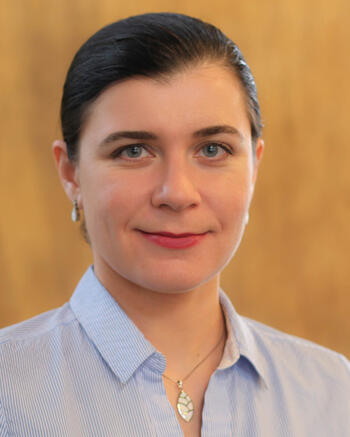
America, the Middle East, and Grand Strategy in the Post-9/11 Era
Encina Hall, 2nd floor
- This talk is co-sponsored by the Program in International Relations at Stanford University -
Abstract: Debates about how the United States’ should behave rarely address the central problem. Global challenges – from violent extremism to migration, inequality, climate change, epidemics, and economic or technological disruptions – unfold alongside governments that are increasingly ill fit to meet them. Global connections have generated concerns on scales that do not match the scale of the nation state. Analysts at the National Intelligence Council understand this and claim that the key to global power in the future will be the ability to marry national power and technological advantage with the ability to connect across a broad array of stakeholders. Arguments about engagement and retrenchment focus American strategy only on traditional relationships with other states. The growing body on new or networked governance forms rarely link their claims to a strategy for action. A slate of recent suggestions about how pragmatism might offer useful advice for United States action are built on assumptions that pragmatic action is inherently incremental (and thus of questionable use for meeting global challenges) and that US preferences are clear and fixed (something notably undermined by the fundamentally different visions of “the US” evident in the 2016 presidential campaign). I concur that pragmatism is useful, but it is not purely incremental, nor does it work through fixed preferences. Pragmatic thinkers like William James, John Dewey, and Jane Addams saw the potential for great transformation not simply incremental change. And transformation was possible precisely because they saw preferences as mutable and shaped through social interaction in relation to available means. Building more firmly on these philosophical roots suggests a pragmatic framework that both refocuses analysis of past American success and offers a more productive way to think about the future.
About the Speaker: Deborah Avant is the Sié Chéou-Kang Chair for International Security and Diplomacy and Director of the Sié Chéou-Kang Center for International Security and Diplomacy at the Josef Korbel School of International Studies, University of Denver. Her research (funded by the Institute for Global Conflict and Cooperation, the John D. and Catherine T. MacArthur Foundation, the Smith Richardson Foundation, and the Carnegie Corporation, among others) has focused on civil-military relations, military change, and the politics of controlling violence. She is author/editor of The New Power Politics: Networks and Transnational Security Governance with Oliver Westerwinter (Oxford University Press, 2016); Who Governs the Globe? with Martha Finnemore and Susan Sell (Cambridge: Cambridge University Press, 2010), The Market for Force: the Consequences of Privatizing Security (Cambridge: Cambridge University Press, 2005), and Political Institutions and Military Change: Lessons From Peripheral Wars (Ithaca: Cornell University Press, 1994) , along with articles in such journals as International Organization, International Studies Quarterly, Security Studies, Perspectives on Politics, and Foreign Policy. Under her leadership the Sié Chéou-Kang Center launched the Private Security Monitor (http://psm.du.edu/), an annotated guide to regulation, data and analyses of global private military and security services, in 2012 and in 2013 she was awarded an honorary doctorate from University of St. Gallen for her research and contribution toward regulating private military and security companies. Professor Avant serves on numerous governing and editorial boards, and is editor in chief of the International Studies Association’s newly launched journal: the Journal of Global Security Studies.
Encina Hall, 2nd floor
Abstract: In a world that is increasingly unstable, intelligence services like the American CIA and the United Kingdom's MI6 exist to deliver security. Whether the challenge involves terrorism, cyber-security, or the renewed specter of great power conflict, intelligence agencies mitigate threats and provide decisional advantage to national leaders. But empowered intelligence services require adequate supervision and oversight, which must be about more than the narrow (if still precarious) task of ensuring the legality of covert operations and surveillance activities.
Global Intelligence Oversight is a comparative investigation of how democratic countries can govern their intelligence services so that they are effective, but operate within frameworks that are acceptable to their people in an interconnected world. The book demonstrates how the institutions that oversee intelligence agencies participate in the protection of national security while safeguarding civil liberties, balancing among competing national interests, and building public trust in inherently secret activities. It does so by analyzing the role of courts and independent oversight bodies as they operate in countries with robust constitutional frameworks and powerful intelligence services. The book also illuminates a new transnational oversight dynamic that is shaping and constraining security services in new ways. It describes how global technology companies and litigation in transnational forums constitute a new form of oversight whose contours are still undefined. As rapid changes in technology bring the world closer together, these forces will complement their more traditional counterparts in ensuring that intelligence activities remain effective, legitimate, and sustainable. To purchase the book, please click here.
About the Speakers: Samuel J. Rascoff is an expert in national security law, and serves as faculty director of the Center on Law and Security. Named a Carnegie Scholar in 2009, Rascoff came to the Law School from the New York City Police Department, where, as director of intelligence analysis, he created and led a team responsible for assessing the terrorist threat to the city. A graduate of Harvard summa cum laude, Oxford with first class honors, and Yale Law School, Rascoff previously served as a law clerk to US Supreme Court Justice David H. Souter and to Judge Pierre N. Leval of the US Court of Appeals for the Second Circuit. He was also a special assistant with the Coalition Provisional Authority in Iraq and an associate at Wachtell, Lipton, Rosen & Katz. Rascoff’s publications include “Presidential Intelligence” (Harvard Law Review); “Counterterrorism and New Deterrence” (NYU Law Review); “Establishing Official Islam? The Law and Strategy of Counter-Radicalization” (Stanford Law Review); “Domesticating Intelligence” (Southern California Law Review), and “The Law of Homegrown (Counter-) Terrorism” (Texas Law Review).
Zachary K. Goldman is the Executive Director of the Center on Law and Security and an Adjunct Professor of Law at NYU School of Law. Previously, Zachary served as a Special Assistant to the Chairman of the Joint Chiefs of Staff at the U.S. Department of Defense, and as a policy advisor in the U.S. Department of the Treasury’s Office of Terrorism and Financial Intelligence, where he was the subject matter expert on terrorist financing in the Arabian Peninsula and Iran sanctions. In the private sector, he was a litigator at Sullivan & Cromwell LLP in New York.
Zachary is the co-editor of Global Intelligence Oversight: Governing Security in the Twenty-First Century, an edited volume on comparative approaches to intelligence oversight, published by Oxford University Press. He has testified before Congress and has published on national security strategy, cybersecurity, counterterrorism, and financial sanctions in outlets such as The New York Times, The Wall Street Journal, Foreign Affairs, The Financial Times Chinese, the South China Morning Post, Political Science Quarterly, Cold War History, The Atlantic, The Diplomat, The National Interest, and others.
Zachary is a Term Member of the Council on Foreign Relations, an Adjunct Senior Fellow at the Center for a New American Security, and a member of the Advisory Committee to the American Bar Association’s Standing Committee on Law and National Security. He received his JD from New York University School of Law, his Masters in International Relations from the London School of Economics, and his BA from Harvard University.

Encina Hall, 2nd floor
Abstract: Over the past decade, the proven ability to produce large quantities of natural gas from organic-rich shale formations in North America has shown the potential to change the energy picture in many parts of the world. Over the past five years there have been discoveries of large natural gas fields in the eastern Mediterranean and off the east coast of Africa. These enormous resources have the potential to dramatically change the global energy system – for better, or for worse. In this talk I will discuss steps that can be taken to assure that natural gas resources are developed in an optimally efficient and environmentally responsible manner. Responsible development of shale gas resources using horizontal drilling and multi-stage hydraulic fracturing has the potential to substantially reduce greenhouse gas emissions and, in the near term, significantly reduce air pollution in many cities in the developing world. I will discuss several on-going research projects investigating the wide variety of factors affecting successful gas production from these extremely low permeability formations and procedures for managing the risks of earthquakes triggered by injection of hydraulic fracturing waste water.
About the Speaker: Dr. Mark D. Zoback is the Benjamin M. Page Professor of Geophysics at Stanford University and Director of the Stanford Natural Gas Initiative. Dr. Zoback conducts research on in situ stress, fault mechanics, and reservoir geomechanics with an emphasis on shale gas, tight gas and tight oil production. He currently directs the Stanford Natural Gas Initiative and is co-director of the Stanford Center on Induced and Triggered Seismicity. He is the author of a textbook entitled Reservoir Geomechanics published in 2007 by Cambridge University Press and the author/co-author of over 300 technical papers. Dr. Zoback was the founder of GeoMechanics International, a software and consulting company that was acquired by Baker Hughes in 2008. Dr. Zoback has received a number of awards and honors, including the 2006 Emil Wiechert Medal of the German Geophysical Society and the 2008 Walter H. Bucher Medal of the American Geophysical Union. In 2011, he was elected to the U.S. National Academy of Engineering and in 2012 elected to Honorary Membership in the Society of Exploration Geophysicists. He is the 2013 recipient of the Louis Néel Medal of the European Geosciences Union and named an Einstein Chair Professor of the Chinese Academy of Sciences. In 2015 he received the Robert R. Berg Outstanding Research Award of the AAPG 2016 received the American Geosciences Institute Award for Outstanding Contribution to Public Understanding of Geosciences. He served on the National Academy of Engineering committee investigating the Deepwater Horizon accident and the Secretary of Energy’s committee on shale gas development and environmental protection. He also advised a Canadian Council of Academies panel investigating the same topic and served on the National Academy of Sciences Advisory Board on drilling in the Gulf of Mexico.
Encina Hall, 2nd floor
Accurate and timely estimates of population characteristics are a critical input to research and policy, but reliable data is often scarce in developing and conflict-affected regions. In recent work, we have shown how machine learning algorithms can be applied to mobile phone metadata to infer fixed characteristics of individual subscribers, such as wealth and gender. Here, we describe efforts to extend this approach to a non-stationary regime, to detect and measure changes in an individual's welfare over time. For this study, we tracked 1200 Afghan citizens with high-frequency panel surveys, and matched each person's responses to psuedonymized transactions log of mobile phone activity. Preliminary results indicate that it is possible to detect negative shocks (e.g., violence), and positive shocks (e.g., receiving a gift) from the mobile phone records alone. This suggests the possibility of real-time tracking of vulnerability, and new paradigms for program monitoring and impact evaluation.
The paper introduces the public sector as a major source of infrastructural state capacity that helps autocrats survive. Education or social services organizations are embedded in everyday life and trusted by the people, which makes them a unique tool in autocrats’ hands. These organizations significantly extend the ability of the state apparatus to implement political decisions on the ground. Using quantitative analysis of seventy-nine Russian regions and qualitative evidence from the media, I demonstrate that Vladimir Putin’s regime used schoolteachers, who were frequently members of local electoral commissions, to implement wide-scale electoral fraud during the 2012 presidential elections in Russia. The school system served as an organizational base for this maneuver, which allowed Putin’s regime to withstand the challenge of decreased popular support. The paper proposes a distinction between the redistributive and infrastructural roles of the public sector.
The people of Nagorno-Karabakh have long strived for the recognition of their right to self-determination. Azerbaijan reacted by unleashing a large scale military offensive that led to war, which ended in May 1994 with the signing of the cease-fire agreement by Azerbaijan, Nagorno-Karabakh, and Armenia. The negotiation process is mediated by the Co-Chairs of the Minsk Group – the USA, France and Russia. Though the parties were close to a solution on several occasions, the negotiations have not yielded a durable settlement. In April 2016 the conflict once again erupted with violence leaving hundreds killed and maimed. Since then, two summits have been convened to create conducive conditions for the advancement of the peace process.
Joint Presentation
DESIGN UNDER UNCERTAINTY: APPLICATIONS IN AIRCRAFT DESIGN AND WATER RESOURCES
Rick Walter Fenrich, Aeronautics & Astronautics Department, Stanford University
What do stock market investments and aircraft design have in common? They both contain uncertainties! For example, one can never be sure of next year's stock returns or exactly what weather an aircraft will fly in. Despite their differences, in fact both disciplines can use similar techniques to manage their uncertainties. Engineers can use these techniques to make predictions about the behavior of the stock market or aircraft performance, leading to savings in time, saving (or making) money, and in the case of aircraft design, confidently achieving a required level of safety. His research seeks to advance these techniques and integrate them with optimization methods used in design. Rick is also expanding my application area to water resources engineering at Peking University.
COMMUNICATING WITH LIGHT ON COMPUTER CHIPS
Colleen Shang Fenrich, Department of Materials Science and Engineering, Stanford University
Light has been used for centuries as a mode of communication between people such as by light houses, signal lamps, or even mirrors reflecting the sunlight. Recently, light has also revolutionized the world of telecommunications by transmitting our long-distance telephone calls, Internet traffic, and cable TV signals. However, one area in which light can still make significant advances is the communication of information between or within computer chips, otherwise known as the field of "silicon photonics," which can reduce power dissipation and increase speed in computer chips. Her research seeks to answer how to first generate light on computer chips.
The Lee Jung Sen Building, Langrun Yuan, Peking University
Please bring a photo ID and enter Peking University through the NE Gate.
Pre-registration for vehicle entrance inside the campus is required.
Please note there are no parking spaces outside the Center.
Speaker:
ADAM LIU Ph.D. Candidate, Political Science, Stanford University
Date: August 4th, 2016 (Thursday)
Time: Lunch at 11:45; Presentation and discussion 12:00 – 13:15
Developed, competitive banking systems are crucial for economic development. Yet, both cross-country and historical research has found that the emergence of such banking systems requires the rise of a limited government in the first place. Set against the extant literature, China becomes a big anomaly: the number of commercial banks in China has increased exponentially in the reform era without political change. Building and exploiting a unique spatial dataset covering all Chinese banks and bank branches built in the reform era—combined with existing datasets on Chinese firms, archival materials, as well as fieldwork—my dissertation seeks first to distill the political economic logic of bank proliferation in China, and second to assess the economic and distributive consequences of bank proliferation.
Registration:
Email: sanjiu39@stanford.edu
Phone: 010-6274 4163
The Lee Jung Sen Building
Langrun Yuan, Peking University
Lunch will be served. Please RSVP to allow for an accurate headcount.
Abstract: Dr. Johnston will present a preliminary analysis of some of the tensions between inter-state crisis management principles (as accepted by many Chinese crisis management experts) and concepts for the use of cyber weapons in military conOlicts being developed by the Chinese military.
About the Speaker: Alastair Iain Johnston is The Governor James Albert Noe and Linda Noe Laine Professor of China in World Affairs at Harvard University and a visiting fellow at the Hoover Institution in summer 2016. He has written on socialization theory, identity and foreign policy, and strategic culture, mostly with application to the study of China’s foreign policy and East Asian international relations.