-

Ambassador Osius will make remarks on U.S.-Vietnam relations in the wake of President Obama’s May 2016 visit. He will focus on the unfinished task of reconciliation. Relations were normalized in 1995. Yet many in Vietnam’s diaspora community, especially those most affected by the legacies of the war, oppose rapprochement and engagement. Overseas communities can play important and constructive roles in relations between their countries of origin and the rest of the world. Ambassador Osius will argue that a fully engaged Vietnamese-American community could and would contribute a lot toward growing the U.S. partnership with Vietnam, including helping to shape a beneficial future of greater trade, improved regional stability, and an expanded role for civil society.

Image
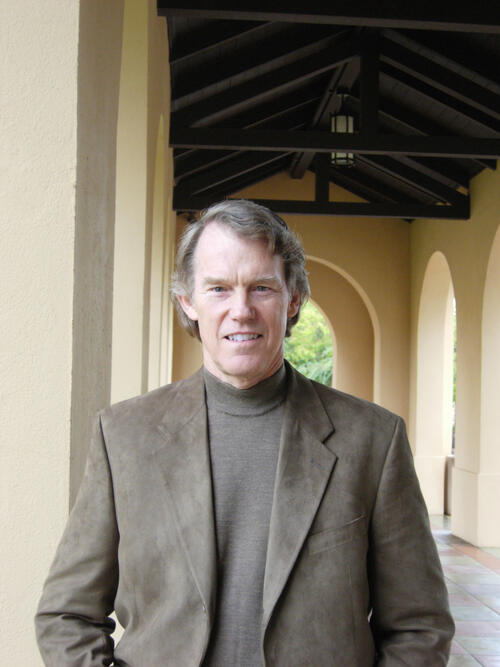
ted osius
Ted Osius is the sixth U.S. ambassador to Vietnam (December 2014-Present). Previously he was an associate professor and a senior fellow, respectively, at the National War College and the Center for Strategic and International Studies; deputy chief of mission at the U.S. Embassy in Jakarta; and political minister-counselor at the U.S. Embassy in New Delhi. His earlier career included service as regional environment officer for Southeast Asia and the Pacific in the U.S. State Department and as senior advisor on international affairs in the Office of the Vice President. 

This event is co-sponsored by the U.S. - Asia Security Initiative and the Southeast Asia Program
Ted Osius U.S. Ambassador to Vietnam
Seminars
-


Image
Taiwan's Democracy Challenged

This discussion will be based on the authors' recently published book, Taiwan's Democracy Challenged: The Chen Shui-bian Years, Lynne Rienner Publishing (2016).

Abstract

At the end of Chen Shui-bian’s two terms as the president of Taiwan, his tenure was widely viewed as a disappointment, if not an outright failure. Today, the Chen years (2000-2008) are remembered mostly for relentless partisan fighting over cross-Strait relations and national identity questions, prolonged political gridlock, and damaging corruption scandals—as an era that challenged, rather than helped consolidate, Taiwan’s young democracy and squandered most of the promise with which it began.

Yet as Taiwan’s Democracy Challenged: The Chen Shui-bian Years documents, this conventional narrative obscures a more complex and more positive story. The chapters here cover the diverse array of ways in which democratic practices were deepened during this period, including the depoliticization of the military and intelligence forces, the ascendance of an independent and professional judicial system, a strengthened commitment to constitutionalism and respect for the rule of law, and the creation of greater space for civil society representatives in the policy-making process. Even the conventional wisdom about unprecedented political polarization during this era is misleading: while elite politics became more divided and acrimonious, mass public opinion on cross-Strait relations and national identity was actually converging.

Not all developments were so positive: strong partisans on both sides of the political divide remained only weakly committed to democratic principles, the reporting of news organizations became more sensationalist and partisan, and the Taiwanese state’s exceptional autonomy from sectoral interests and vaunted capacity for long-term planning deteriorated. But on the whole, the authors argue, these years were not squandered. By the end of the Chen Shui-bian era, Taiwan’s democracy was firmly consolidated. 


This event is sponsored by the Taiwan Democracy Project in the Center on Democracy, Development, and the Rule of Law. It is free and open to the public, and lunch will be served. Please RSVP by October 31.

Taiwan's Democracy Challenged presentation slides
Download pdf

CISAC Central Conference Room, Encina Hall 2nd Floor

CDDRL
Stanford University
Encina Hall, C147
616 Jane Stanford Way
Stanford, CA 94305-6055

(650) 724-6448 (650) 723-1928
0
Mosbacher Senior Fellow in Global Democracy at the Freeman Spogli Institute for International Studies
William L. Clayton Senior Fellow at the Hoover Institution
Professor, by courtesy, of Political Science and Sociology
diamond_encina_hall.png MA, PhD

Larry Diamond is the William L. Clayton Senior Fellow at the Hoover Institution, the Mosbacher Senior Fellow in Global Democracy at the Freeman Spogli Institute for International Studies (FSI), and a Bass University Fellow in Undergraduate Education at Stanford University. He is also professor by courtesy of Political Science and Sociology at Stanford, where he lectures and teaches courses on democracy (including an online course on EdX). At the Hoover Institution, he co-leads the Project on Taiwan in the Indo-Pacific Region and participates in the Project on the U.S., China, and the World. At FSI, he is among the core faculty of the Center on Democracy, Development and the Rule of Law, which he directed for six and a half years. He leads FSI’s Israel Studies Program and is a member of the Program on Arab Reform and Development. He also co-leads the Global Digital Policy Incubator, based at FSI’s Cyber Policy Center. He served for 32 years as founding co-editor of the Journal of Democracy.

Diamond’s research focuses on global trends affecting freedom and democracy and on U.S. and international policies to defend and advance democracy. His book, Ill Winds: Saving Democracy from Russian Rage, Chinese Ambition, and American Complacency, analyzes the challenges confronting liberal democracy in the United States and around the world at this potential “hinge in history,” and offers an agenda for strengthening and defending democracy at home and abroad.  A paperback edition with a new preface was released by Penguin in April 2020. His other books include: In Search of Democracy (2016), The Spirit of Democracy (2008), Developing Democracy: Toward Consolidation (1999), Promoting Democracy in the 1990s (1995), and Class, Ethnicity, and Democracy in Nigeria (1989). He has edited or coedited more than fifty books, including China’s Influence and American Interests (2019, with Orville Schell), Silicon Triangle: The United States, China, Taiwan the Global Semiconductor Security (2023, with James O. Ellis Jr. and Orville Schell), and The Troubling State of India’s Democracy (2024, with Sumit Ganguly and Dinsha Mistree).

During 2002–03, Diamond served as a consultant to the US Agency for International Development (USAID) and was a contributing author of its report, Foreign Aid in the National Interest. He has advised and lectured to universities and think tanks around the world, and to the World Bank, the United Nations, the State Department, and other organizations dealing with governance and development. During the first three months of 2004, Diamond served as a senior adviser on governance to the Coalition Provisional Authority in Baghdad. His 2005 book, Squandered Victory: The American Occupation and the Bungled Effort to Bring Democracy to Iraq, was one of the first books to critically analyze America's postwar engagement in Iraq.

Among Diamond’s other edited books are Democracy in Decline?; Democratization and Authoritarianism in the Arab World; Will China Democratize?; and Liberation Technology: Social Media and the Struggle for Democracy, all edited with Marc F. Plattner; and Politics and Culture in Contemporary Iran, with Abbas Milani. With Juan J. Linz and Seymour Martin Lipset, he edited the series, Democracy in Developing Countries, which helped to shape a new generation of comparative study of democratic development.

Download full-resolution headshot; photo credit: Rod Searcey.

Former Director of the Center on Democracy, Development and the Rule of Law
Faculty Chair, Jan Koum Israel Studies Program
Date Label
Larry Diamond Senior Fellow and Principal Investigator, Taiwan Democracy Project
Seminars
-

Abstract: Deterrence is one of the most central concepts in international relations scholarship. Countries can dissuade changes to the status quo, according to the logic of deterrence, by threatening an opponent with pain (deterrence by punishment) or by reducing the probability that an opponent will achieve its aims (deterrence by denial). In the realm of international security, most deterrence theorists assume that states need military capabilities to deter by punishment or denial. Deterrence works, based on this line of thinking, because states can use military power to destroy cities, bomb critical military targets, or blunt land invasions. It is also possible, however, to punish an adversary without invoking destruction militarily. Yet deterrence through non-military means remains poorly understood in international relations. This project develops a theory to identify the conditions under which countries can deter opponents without using threats of military force. I explore the implications of this theory in one particular context: the development of dual-use nuclear technology. Having the capability to build nuclear weapons — a condition known as “nuclear latency” — may provide countries with deterrence benefits that we normally associate with having a nuclear arsenal. When states achieve nuclear latency, they (implicitly) threaten to develop nuclear weapons at some point in the future. The threat here is to pursue a policy that others would find undesirable, not to physically destroy things of value on another state’s territory, as in traditional deterrence theory. Does this kind of threat discourage others from meddling in a country’s affairs? This study presents the results of an analysis designed to identify the effects of nuclear latency (and nuclear arsenals) on the onset of international conflict from 1945 to 2000, drawing on a new dataset of sensitive dual-use nuclear plants in 32 countries.

About the Speaker: Matthew Fuhrmann is an associate professor of political science and Ray A. Rothrock `77 Fellow at Texas A&M University. He was named an Andrew Carnegie Fellow in 2016 by the Carnegie Corporation of New York. He is the author of Atomic Assistance: How “Atoms for Peace” Programs Cause Nuclear Insecurity (Cornell University Press, 2012) and the coauthor of Nuclear Weapons and Coercive Diplomacy (Cambridge University Press, 2016). His work has been published or is forthcoming in peer-reviewed journals such as American Journal of Political Science, British Journal of Political Science, International Organization, International Security, International Studies Quarterly, Journal of Conflict Resolution, Journal of Peace Research, and Journal of Politics. He has also written opinion pieces for The Atlantic (online), The Christian Science Monitor, Slate, and USA Today. He is a term member of the Council on Foreign Relations. You can follow him on Twitter @mcfuhrmann.

Encina Hall, 2nd floor

Visiting Associate Professor CISAC
Seminars
-

Abstract:

Low-income countries are less productive than their high-income counterparts. Is one reason because labor in high-income countries can more easily move to where it is most productive? We use detailed individual data combined with a spatial general equilibrium model of worker selection to study the determinants of labor productivity growth in Indonesia and the United States over the last 40 years. We find that while improvements in in situ labor productivity and the spatial allocation of human capital resources account for about 55% of Indonesian labor productivity growth, improvements in spatial mobility, due to lower costs of movement and improvements in the amenity of high productivity locations, account for nearly as much: 45%. In a comparison to the US, higher costs of movement in Indonesia account for 10% of the labor productivity gap between the two countries. These results suggest an important role of migration to explain aggregate productivity gaps both across and within countries.
 

Speaker Bio:

Image
melanie morten

Melanie Morten is an Assistant Professor of Economics at Stanford University. Her research focuses on migration in developing countries, including analyzing how migration changes informal financial safety nets and understanding the costs and potential productivity benefits of migration. She has worked on projects in India, Brazil, and Indonesia. She has a PhD in economics from Yale University.

Melanie Morten Assistant Professor, Department of Economics, Stanford University
Seminars
-

Abstract:

American government is incapable of dealing effectively with the challenges of modern society. Why the dysfunction? The usual suspects include polarization and the rise in campaign spending. But William Howell and Terry Moe argue—in their new book, Relic—that the roots of dysfunction go much deeper: to the Constitution itself. The framers designed the Constitution some 225 years ago for a simple agrarian society. But the government they created, a separation of powers system with a parochial Congress at its center, is ill-equipped to address the serious social problems that inevitably arise in a complex post-industrial nation. We are prisoners of the past. The solution is to update the Constitution for modern times. A promising step forward, the authors argue, is a simple reform that pushes Congress and its pathologies to the periphery of policymaking, and brings presidents to center stage.


Speaker Bio:

Image
terry moe
Terry M. Moe is the William Bennett Munro Professor of Political Science at Stanford University and a senior fellow at the Hoover Institution. He has written extensively on public bureaucracy and the presidency, as well as the theory of political institutions more generally. His articles include "The New Economics of Organization," "The Politicized Presidency," "The Politics of Bureaucratic Structure," "Political Institutions: The Neglected Side of the Story," "Presidents, Institutions, and Theory," “The Presidential Power of Unilateral Action” (with William Howell), “Power and Political Institutions,” “Political Control and the Power of the Agent,” and “Do Politicians Use Policy to Make Politics? The Case of Public Sector Labor Laws” (with Sarah F. Anzia). His most recent work is Relic: How Our Constitution Undermines Effective Government--And Why We Need a More Powerful Presidency (with William Howell, 2016)." He has also written extensively on the politics of American education. His newest books are The Comparative Politics of Education: Teachers Unions and Education Systems Around the World (edited with Susanne Wiborg, forthcoming 2017) and Special Interest: Teachers Unions and America’s Public Schools (2011). His past work on education includes Politics, Markets, and America's Schools (1990) and Liberating Learning: Technology, Politics, and the Future of American Education (2009), both with John E. Chubb, and Schools, Vouchers, and the American Public (2001).

Terry M. Moe William Bennett Munro Professor of Political Science at Stanford University
Seminars
-

RSVPS ARE NO LONGER BEING ACCEPTED AS WE HAVE REACHED VENUE CAPACITY. PRESS FILMING IS PROHIBITED.

Seating is first come, first served.


Image
amb  he cropped
A Panel Discussion Featuring

Ambassador HE Yafei

Former China Ambassador

to the United Nations


Panelists:

Ambassador Michael H. Armacost

Shorenstein APARC Distinguished Fellow, former U.S. Ambassador to Japan and the Philippines

Ambassador Karl W. Eikenberry

Director, U.S.-Asia Security Initiative; former U.S. Ambassador to Afghanistan

Professor Jean C. Oi (Moderator)

Director Shorenstein APARC China Program; William Haas Professor of Chinese Politics


Ambassador HE Yafei served as Vice Minister of the Overseas Chinese Affairs Office of the State Council of the People’s Republic of China.; Counselor of the Chinese Permanent Mission to the United Nations; Deputy Director General of the Arms Control Department of the Ministry of Foreign Affairs; Minister Counselor and Minister of the Embassy of China in the United States; Director General of the America and Pacific Department; Assistant Minister and Vice Minister of the Ministry of Foreign Affairs; and Representative and Ambassador of the Permanent Mission of China to the United Nations Office at Geneva and other international organizations in Switzerland.


Co-sponsored by the Shorenstein Asia-Pacific Research Center’s U.S.–Asia Security Initiative and the China Program

Seminars
-

Since its formation in 2014, the administration of Indonesian President Joko Widodo (“Jokowi”) has faced opportunities and challenges in many sectors and on many issues: security and economy, terrorism and radicalism, maritime resources and incursions, not to mention foreign-policy dynamics with the US, China, and the rest of Southeast Asia. How has Indonesia responded to these chances and concerns? How will it manage them going forward? Few Indonesians are better equipped to address these questions than retired Brig. Gen. Pandjaitan, who has dealt with them daily since joining Jokowi’s administration in 2014 as the president’s chief of staff and in subsequent cabinet positions.

Image
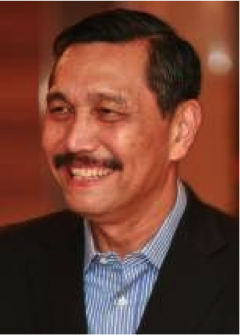
luhut panjaitan
Luhut Binsar Pandjaitan began his current ministership in July 2016 after serving as Coordinating Minister for Political, Legal, and Security Affairs in 2015-16. Earlier civilian positions include vice-chair of the Golkar Party’s advisory council (2008-2014); founding president of a resources company (2004-2014); trade and industry minister (2000-01); and ambassador to Singapore (1999-2000). His Indonesian army service dates back in time from an assignment as training and education commander (1997-99) through a series of leadership positions to his award as the best graduate of the army academy (1970). Other honors include Ernst & Young Entrepreneur of the Year (2011) and a national best coaching award related to his work on behalf of karate in Indonesia (2001-2010). In 1990-91 he studied in Washington DC at the National Defense University and George Washington University, earning an MPA from GWU (1991), and he is an alumnus of the Indonesia Army Staff College (1983).


Presentation slides
Luhut B. Pandjaitan Coordinating Minister for Maritime Affairs, Republic of Indonesia
Seminars
-

Abstract:

Does the perceived provision of security affect the empirical legitimacy attributed to ISAF in Afghanistan, and vice versa? By asking this question, the paper generates new insight on the relationship between effective and legitimate governance for Afghanistan as an area of limited statehood. The study applies multilevel analysis to an empirical foundation of newly assembled survey data from Northeast Afghanistan for 2009–2013. It thereby contributes evidence to a debate where empirical results remain scant and sheds light on several open questions. People who attributed their security to ISAF were more likely to view ISAF as legitimate. Afghans who viewed ISAF as legitimate were also more likely to feel secure. Nevertheless, the results partly challenge established assumptions on the relationship between effective and legitimate governance. Additionally, factors such as respondents’ liberal values and foreign aid deserve attention when analyzing ISAF’s legitimacy and security perceptions in Afghanistan.


Speaker Bio:

Image
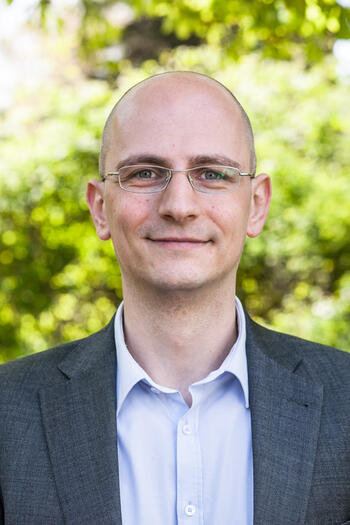
eric stollenwerk
Eric Stollenwerk is a Pre-doctoral Fellow at the Center on Democracy, Development, and the Rule of Law. He is also a Research Associate at the Collaborative Research Center (SFB) 700: Governance in Areas of Limited Statehood at Free University Berlin. His work concentrates on questions of effective and legitimate governance in areas of limited statehood with a focus on Sub-Saharan Africa and Afghanistan. Combining quantitative survey research with qualitative field research, his work analyses the interplay between governance actors’ legitimacy, state capacity and governance effectiveness. His research is funded by the German Research Foundation (DFG). With a B.A. in Political Science and German Literature from Georg-August-University Göttingen and an M.A. in Political Science from Free University Berlin, his PhD in Political Science from Free University Berlin is expected in 2017. Further, Eric is the Managing Director of the Collaborative Research Center (SFB) 700: Governance in Areas of Limited Statehood at Free University Berlin and a Research Associate at the Berlin Graduate School for Transnational Studies (BTS). Practical experiences include consulting for the German Federal Foreign Office and several NGOs.

Eric Stollenwerk Pre-doctoral Fellow at the Center on Democracy, Development, and the Rule of Law.
Seminars
-

Abstract:

Sunil Khilnani’s new book, Incarnations, tells India’s history through 50 biographical essays, ranging from the Buddha to a contemporary billionaire. Building on rich recent scholarship about Indian history and culture, Khilnani’s work ventures to integrate the fragmented character of disciplinary knowledge of India, and to suggest an alternative to both popular religious and secular nationalist accounts of India’s past. Recovering the stories of remarkable individuals, his talk will highlight experiments in living and radical, dissenting ideas as drivers of Indian history, and contend that many of India’s choices about its future depend on which historical lessons get drawn from its past.


Speaker Bio:

Sunil Khilnani is currently Avantha Professor and Director of the India Institute, established by him at King’s College London in 2011. From 2002 to 2011 he was Starr Foundation Professor and Director of South Asia Studies at the Nitze School of Advanced International Studies, Johns Hopkins University, in Washington D.C.; and before that, Professor of Politics at Birkbeck College, University of London. He received his BA and PhD from the University of Cambridge, and he has been a Fellow of Christ’s College Cambridge; the Woodrow Wilson International Center for Scholars; the Institute for Advanced Study in Berlin; and the American Academy in Berlin, as well as holding a Leverhulme Fellowship.

His publications include: Arguing Revolution: The Intellectual Left in Postwar France (Yale, 1993), The Idea of India (Penguin/FSG, 7th edn. 2016), and several collaborative volumes, including: Civil Society: History and Possibilities (Cambridge, 2000); NonAlignment 2.0: a Foreign Policy for India in the 21st Century (Penguin, 2013); An Indian Social Democracy (Academic, 2013); and Comparative Constitutionalism in South Asia (Oxford, 2013). His most recent book is Incarnations: A History of India in Fifty Lives (Penguin/FSG 2016), accompanied by his 50-part BBC radio and podcast and radio series.

Sunil Khilnani Avantha Professor and Director of the India Institute, King's College, London
Seminars
-

Image
How do weak organizations engage in mobilization under duress? Based on ethnographic work inside labor organizations in China, this talk makes the case that in a repressive environment, civil society organizations can mobilize through a counter-intuitive mechanism. Instead of amassing the crowds to take to the streets, groups can mobilize without the masses. Rather than citizens forming groups in order to trigger larger-scale contention, they form groups in order to better contend as individuals or as small bands of the aggrieved. The clear advantage of this strategy is that it lowers the cost of activism in an authoritarian state. Because it is highly risky for civil society groups to organize large-scale contention, they must devise ways to work around this constraint. Civil society groups coach citizens to adopt a grammar of contention that effectively threatens local social stability and challenges the moral authority of officials. However, at the point of contention, these groups disperse. By sending out only a sole contender or a limited number of contenders to confront state authorities, organizations minimize their risk of being targeted by authorities.


Diana Fu is an assistant professor of Asian Politics at the University of Toronto. Her research examines the relationship between popular contention, state power, and civil society, with an emphasis on contemporary China. Her book manuscript, Mobilizing Without the Masses in China examines state control and civil society contention under authoritarian rule. Based on two years of ethnographic research that tracks the development of informal labor organizations, the book explores counterintuitive dynamics of organized contention in post-1989 China.  

Prior to joining the Univeristy of Toronto, Professor Fu was a Walter H. Shorenstein Postdoctoral Fellow at the Shorenstein Asia-Pacific Research Center, Stanford University and a Predoctoral Fellow at the Massachusetts Institute of Technology, Political Science. She holds a D.Phil. in Politics and an M.Phil. in Development Studies with distinction from Oxford University, where she studied as a Rhodes Scholar. 

Diana Fu <i>Assistant Professor, Department of Political Science, University of Toronto</i>
Seminars
Subscribe to Seminars