-

The Tokyo Olympics-Paralympics Games are scheduled to open in late July with various adjustments to address concerns about COVID-19 such as no foreign visitors to watch the game. The unusual Olympics has sparked heated debates in Japan and elsewhere, but what will it look like when it opens and what should the organizers seek to accomplish? In the process of planning for the Olympics, a number of issues around governance and gender in Japanese sports associations got exposed. How should we go about resolving these issues and create an environment that is most desirable for athletes? Our seminar features two prominent former Olympians who continue to wield significant influence in Japanese sports scenes, Yuko Arimori and Dai Tamesue, to discuss these issues and the future of the Japanese sports world beyond the Tokyo Olympics. Moderated by our program director Kiyoteru Tsutsui, the seminar includes a Q&A session featuring questions from the audience. Simultaneous interpretation will be provided. 

コロナ禍の東京五輪と日本スポーツ界におけるガバナンスとジェンダー

東京オリンピック・パラリンピックの開幕を7月下旬に控え、コロナ対策のために外国人観戦客を受け入れないなど、通常の五輪とは異なる大会へ向けた準備が進んでいる。日本国内でも世界でも様々な意見が交錯する今回の五輪はどのような大会になるのか、どのような大会を目指すべきなのか。また、東京五輪への準備の中で、様々な日本スポーツ界の問題点、特にそのガバナンスとジェンダー・バランスの問題が浮き彫りになってきた。頻発するこのような問題を解決し、アスリートにとって理想的な環境を提供するにはどうすれば良いのか。今回のセミナーでは、高名なオリンピアンで、日本スポーツ界で大きな影響力を持つ、有森裕子氏と為末大氏に御登壇いただき、これらの問題について考え、五輪後も見据えた日本のスポーツ界の将来を語っていただく。当プログラム所長の筒井清輝をモデレーターとして、両氏に参加者からの質問に答えてもらう質疑応答の時間も予定されている。

このイベントは日本語で行われます。同時通訳がついています。

This event will be held in Japanese. Simultaneous translation will be offered. 

SPEAKERS 

Image
Yuko Arimori
Yuko Arimori was born in 1966 in Okayama prefecture. After graduating from Nippon Sport Science University, she joined Recruit. She won silver and bronze medals in the women's marathon event at the Barcelona Olympics and the Atlanta Olympics, which marked the beginning of the “Golden era of the Marathon” for Japanese female athletes. She became the first professional marathon runner in the country after the Atlanta Olympics. After her retirement, in addition to her running and marathon activities, she has served as a member of the International Olympic Committee (IOC), Sports and Active Social Committee, Director of the Japan Association of Athletics Federations, a Representative Director of the Heart of Gold, a president of Special Olympics Nippon, and Vice President of the University Sports Association (UNIVAS). In June 2010, she was the first Japanese to win the (IOC) Women and Sports Award.

有森裕子は1966年岡山県生まれ。日本体育大学卒業後、リクルート入社。バルセロナオリンピック、アトランタオリンピックの女子マラソンでは銀メダル、銅メダルを獲得し、その後に続く日本女子マラソン黄金期の幕開けを切った。アトランタオリンピック後、国内のプロマラソンランナー第1号に。現役引退後は、ランニングやマラソンに関わる活動以外にも、国際オリンピック委員会(IOC)スポーツと活動的社会委員会委員、日本陸上競技連盟理事、ハート・オブ・ゴールド代表理事、スペシャルオリンピックス日本理事長、大学スポーツ協会(UNIVAS)副会長などを務めている。2010年6月、国際オリンピック委員会(IOC)女性スポーツ賞を日本人として初めて受賞


Image
Dai Tamesue
Dai Tamesue, born in 1978 in Hiroshima, is the first Japanese medalist in a world competition for a sprint event.  He also participated in three Olympics and holds the Japanese record for men's 400m hurdles (as of April 2021). Dai currently serves as CEO of Deportare Partners. He is also the Director of Shin-toyosu Brillia Running Stadium, and the author of “Winning Alone” "The Philosophy of Running" "The Strength to Give Up," among other titles.

1978年広島県生まれ。スプリント種目の世界大会で日本人として初のメダル獲得者。男子400メートルハードルの日本記録保持者(2021年4月現在)。現在は執筆活動、会社経営を行う。Deportare Partners代表。新豊洲Brilliaランニングスタジアム館長。Youtube為末大学(Tamesue Academy)を運営。主な著作に『Winning Alone』『走る哲学』『諦める力』など。


MODERATOR 
Image
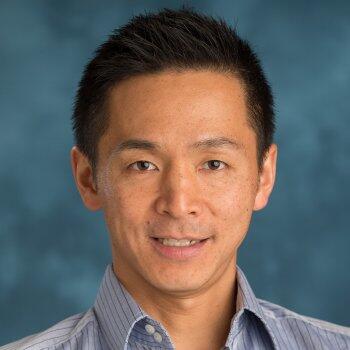
Kiyoteru Tsutsui
Kiyoteru Tsutsui is Henri H. and Tomoye Takahashi Professor and Senior Fellow in Japanese Studies at the Walter H. Shorenstein Asia-Pacific Research Center at Stanford University, where he is also Director of the Japan Program, a Senior Fellow of the Freeman Spogli Institute for International Studies, and a Professor of Sociology. He is the author of Rights Make Might: Global Human Rights and Minority Social Movements in Japan (Oxford University Press, 2018), co-editor of Corporate Responsibility in a Globalizing World (Oxford University Press, 2016) and co-editor of The Courteous Power: Japan and Southeast Asia in the Indo-Pacific Era (University of Michigan Press, forthcoming 2021). 

This event is being held virtually via Zoom. Please register for the webinar via the following link: https://bit.ly/3sfNNs2

Yuko Arimori <br><i>Two Time Olympic Marathon Medalist/バルセロナ・アトランタ オリンピック女子マラソンメダリスト</i><br><br>
Dai Tamesue <br><i>Three Time Olympian and CEO, Deporte Partners/ 元陸上選手・Deportare Partners代表</i><br><br>
Seminars
-

This event is part of Shorenstein APARC's spring webinar series "The United States in the Biden Era: Views from Asia."

When this webinar is held, Joe Biden’s presidency will be exactly three months old. Enough time to allow for the evaluation of his administration, its policies, and his country by observers around the world, including in Southeast Asia. Ms. Ha will share and interpret the findings of the ISEAS-Yusof Ishak Institute’s latest annual survey of elite Southeast Asian opinions regarding the United States and other nations, which she co-led and co-wrote up with ISEAS colleagues.  Professor Liow will will share some observations on regional views on the Biden administration thus far, focusing on its evolving approach to the region .  Regional impressions and judgments of America now and prior to Biden’s term will also be contrasted, alongside the changing reputations of other countries such as China and Japan.  Policy implications will be drawn as well, especially in light of the unfolding political crisis in Myanmar.

Image
Hoang Thi Ha 4X4
Hoang Thi HA is Fellow and Lead Researcher on Political-Security Affairs at the ASEAN Studies Centre of ISEAS-Yusof Ishak Institute. Her research focuses on political-security issues within ASEAN, including the South China Sea disputes, ASEAN human rights cooperation, ASEAN's relations with the major powers and ASEAN's institutional building. Ms. Hoang worked at the ASEAN Department of the Ministry of Foreign Affairs of Viet Nam and the ASEAN Secretariat before joining ISEAS. She holds an MA in International Relations from the Diplomatic Academy of Vietnam.

Image
Joseph Liow 4X4
Joseph Chinyong Liow is Dean of College of Humanities, Arts, and Social Sciences, Nanyang Technological University, Singapore, where he is also Tan Kah Kee Chair in Comparative and International Politics, and Research Advisor and former Dean at the S. Rajaratnam School of International Studies. He held the inaugural Lee Kuan Yew Chair in Southeast Asia Studies at the Brookings Institution, Washington DC, where he was also a Senior Fellow in the Foreign Policy Program.

Joseph’s research interests encompass Muslim politics and social movements in Southeast Asia and the geopolitics and geoeconomics of the Asia-Pacific region.

Joseph is the author, co-author, or editor of 14 books, has testified before the U.S. Congress, and has extensive teaching and consultancy experience. He sits on several editorial boards and governing boards of think tanks, and on the Social Science Research Council of Singapore.


Via Zoom Webinar
Register: https://bit.ly/2PWPv4z

Hoang Thi HA Fellow and Lead Researcher on Political-Security Affairs at the ASEAN Studies Centre of ISEAS-Yusof Ishak Institute, Singapore
Joseph Chinyong Liow Tan Kah Kee Chair Professor and Dean, College of Humanities, Arts, and Social Sciences, Nanyang Technological University and Research Advisor, Rajaratnam School of International Studies, Singapore
Seminars
-

Based on past and current ethnographic research in the Parisian metropolitan region, I discuss how racial and ethnic minorities understand and respond to their racialization in a context in which race and ethnicity are not legitimate or acknowledged, and how a suspect citizenship is created. I will discuss how racial and ethnic minorities are “citizen outsiders” as evident of France’s “racial project” (Omi and Winant 1994), which marks distinctions outside of explicit categorization. I explore not only how race marks individuals outside of formal categories, but also how people respond to these distinctions in terms of a racism-related issue, here, police violence and brutality against racial and ethnic minorities. I will also discuss how activists frame their growing social problem given the constraints of French Republican ideology.

Jean Beaman
Jean Beaman is Associate Professor of Sociology, with affiliations with Political Science, Feminist Studies, Global Studies, and the Center for Black Studies Research, at the University of California, Santa Barbara. Previously, she was faculty at Purdue University and held visiting fellowships at Duke University and the European University Institute (Florence, Italy). Her research is ethnographic in nature and focuses on race/ethnicity, racism, international migration, and state-sponsored violence in both France and the United States. She is author of Citizen Outsider: Children of North African Immigrants in France (University of California Press, 2017), as well as numerous articles and book chapters. Her current book project is on suspect citizenship and belonging, anti-racist mobilization, and activism against police violence in France. She received her Ph.D. in Sociology from Northwestern University. She is also an Editor of H-Net Black Europe, an Associate Editor of the journal, Identities: Global Studies in Culture and Power, and Corresponding Editor for the journal Metropolitics/Metropolitiques.

Online via Zoom

Jean Beaman speaker University of California, Santa Barbara
Seminars
-

Tuesday, April 27, 2021 | 4:30 - 5:45 pm Pacific Time

China's Belt and Road Initiative (BRI): A Look at the Evidence with Professor Albert Park, Hong Kong University of Science and Technology 

China’s Belt and Road Initiative (BRI) has attracted polarized debate over China’s motives with relatively little evidence. We analyze project-level data on China’s outbound foreign direct investments (FDI) and construction projects to examine several key questions related to the Initiative. First, we study the impact of the BRI on the amount of outbound FDI to BRI countries and examine whether the importance of economic, governance, and other factors in explaining China’s outbound FDI flows to different countries changed under the BRI. We find that after the BRI began, the importance of economic fundamentals declined while the importance of governance factors increased. Second, we quantify the role of state-owned enterprises in the Initiative and compare the nature and determinants of SOE investments to those made by private firms. Finally, to examine the impact of the Initiative on China’s soft power, we study changes in sentiment by using AI algorithms to conduct textual analysis of millions of media articles around the world.

Watch the Recorded Event: 


Image
Headshot of Dr. Albert Park.
About the Speaker

Albert Park is a development and labor economist who is an expert on China’s economic development. He is Head and Chair Professor of Economics, Chair Professor of Social Science, Professor of Public Policy, and Director of the Center for Economic Policy at HKUST. His research and commentary has appeared in the Economist, New York Times, Washington Post, Wall Street Journal, China Daily, BBC, CNN, NBC, Bloomberg, Freakonomics, and NPR. In recent years he has published articles in leading economics journals on firm performance, poverty and inequality, migration and employment, health and education, and the economics of aging in China. Prof. Park has played a leadership role in numerous survey research projects in China including the China Employer-Employee Survey (CEES), the China Urban Labor Survey (CULS), the Gansu Survey of Children and Families (GSCF), and the China Health and Retirement Longitudinal Study (CHARLS). He previously held faculty appointments at the University of Michigan and Oxford University, and has consulted frequently for the World Bank.


Seminar Series Moderators:

Image
Headshot of Dr. Scott Rozelle

Scott Rozelle holds the Helen Farnsworth Endowed Professorship at Stanford University and is Senior Fellow in the Food Security and Environment Program and the Shorenstein Asia-Pacific Research Center, Freeman Spogli Institute (FSI) for International Studies. For the past 30 years, he has worked on the economics of poverty reduction. Currently, his work on poverty has its full focus on human capital, including issues of rural health, nutrition and education. For the past 20 year, Rozelle has been the chair of the International Advisory Board of the Center for Chinese Agricultural Policy, Chinese Academy of Sciences (CAS). In recent years Rozelle spends most of his time co-directing the Rural Education Action Project (REAP). In recognition of this work, Dr. Rozelle has received numerous honors and awards. Among them, he became a Yangtse Scholar (Changjiang Xuezhe) in Renmin University of China in 2008. In 2008 he also was awarded the Friendship Award by Premiere Wen Jiabao, the highest honor that can be bestowed on a foreigner. 

Image
hongbin li headshot
Hongbin Li is the James Liang Director of the China Program at the Stanford King Center on Global Development, and a Senior Fellow of Stanford Institute for Economic Policy Research (SIEPR). Hongbin obtained his Ph.D. in economics from Stanford University in 2001 and joined the economics department of the Chinese University of Hong Kong (CUHK), where he became full professor in 2007. He was also one of the two founding directors of the Institute of Economics and Finance at the CUHK. He taught at Tsinghua University in Beijing 2007-2016 and was C.V. Starr Chair Professor of Economics in the School of Economics and Management. He founded the Chinese College Student Survey (CCSS) in 2009 and the China Employer-Employee Survey (CEES) in 2014.

Hongbin’s research has been focused on the transition and development of the Chinese economy, and the evidence-based research results have been both widely covered by media outlets and well read by policy makers around the world. He is currently the co-editor of the Journal of Comparative Economics.

Zoom Meeting

Seminars
-

About the Event:  Poor countries lack infrastructure services: 1.2 billion people have no electricity, and 1 billion live more than 2 kilometers from an all-weather road. In 2015, the World Bank initiated a surge of interest in financing this need when it claimed that rich-country private capital could close the infrastructure services gap, make money, and achieve the sustainable development goals by moving from “billions to trillions” in infrastructure investment in poor countries. This paper assesses and challenges the prevailing gap thinking by introducing an equilibrium framework that distinguishes those poor countries in which the Bank’s three-fold claim is tenable from those where it is not.


Image
Peter Blair Henry
About the Speaker:  Peter Blair Henry is Dean Emeritus of New York University's Leonard N. Stern School of Business. The youngest person to hold the position, he assumed the Deanship in January 2010 and joined the NYU Stern Faculty as the William R. Berkley Professor of Economics and Finance. Henry joined NYU Stern from Stanford University, where he was the Konosuke Matsushita Professor of International Economics, the John and Cynthia Fry Gunn Faculty Scholar, and Associate Director of the Center for Global Business and the Economy at the Stanford University Graduate School of Business.

Henry currently serves as a director of the boards of Citigroup and Nike, as Vice Chair of the Board of Directors of the National Bureau of Economic Research (NBER), and is a member of the advisory boards of Protiviti, a global consulting firm, and Biospring Partners, a growth-stage firm that invests in life sciences technology.  He is also Principal investigator of the PhD Excellence Initiative, a Sloan Foundation-funded fellowship program for minority scholars seeking admission to economic doctoral programs.  In 2015, Henry was awarded the Foreign Policy Association Medal, the highest honor bestowed by the organization.


The Global Infrastructure Gap: Potential, Perils, and a Framework for Distinction
Download pdf

Online, via Zoom: REGISTER

Peter Blair Henry Dean Emeritus of New York University's Leonard N. Stern School of Business
Seminars
-
 
This is a virtual event. Please click here to register and generate a link to the talk. 
The link will be unique to you; please save it and do not share with others.
 
ABSTRACT:
Despite major international conferences and milestones fast approaching, the peace process in Afghanistan is unlikely to end soon. Referring to the many interdependent and intractable issues to negotiate, the lead U.S. negotiator conceded that “nothing is agreed until everything is agreed.” Even if ongoing diplomatic efforts yield agreements, such deals – like the February 2020 U.S.-Taliban agreement – will likely be difficult to implement, verify, and enforce. Underlying core concerns, like the presence of transnational terrorist networks and Kabul’s weak institutional capacity, will persist regardless of the diplomatic process. This event will explore the status and prospects of the current peace process and its implications for U.S. policy. It will consider the long-term political competition between the Taliban and the Kabul government, the role of U.S. forces, and the constructive and disruptive roles that regional actors may play.

SPEAKERS:
Image
Asfandyar Mir
Dr. Asfandyar Mir is a postdoctoral fellow at the Center for International Security and Cooperation at Stanford University. His research is on the international security of South Asia, US counterterrorism policy, and al-Qaeda, with a regional focus on Afghanistan, Pakistan, and India. Some of his research has appeared in peer-reviewed journals, such as International Security, International Studies Quarterly, and Security Studies, and his commentary has appeared in Foreign Affairs, Foreign Policy, H-Diplo, Lawfare, and the Washington Post Monkey Cage. He holds a Ph.D. in Political Science from the University of Chicago and a BA and MA from Stanford University.
Image
Dipali Mukhopadhyav
Dr. Dipali Mukhopadhyay is an associate professor at the Humphrey School of Public Affairs at the University of Minnesota. Her research focuses on the relationships between political violence, state building, and governance during and after war. She is currently serving as senior expert on the Afghanistan peace process for the U.S. Institute of Peace. She is the author of Good Rebel Governance: Revolutionary Politics and Western Intervention in Syria (Cambridge University Press, forthcoming) with Kimberly Howe, and Warlords, Strongman Governors and State Building in Afghanistan(Cambridge University Press, 2014). Prior to joining the Humphrey School, Mukhopadhyay was on the faculty at Columbia University's School of International and Public Affairs from 2012 to 2020. She holds a PhD from Tufts University and a BA from Yale University.
 
MODERATOR:
Image
Arzan Tarapore
Dr. Arzan Tarapore is the South Asia research scholar at the Shorenstein Asia-Pacific Research Center at Stanford University, where he leads the newly-restarted South Asia research initiative. He is also a senior nonresident fellow at the National Bureau of Asian Research. His research focuses on Indian military strategy and contemporary Indo-Pacific security issues. He previously held research positions at the RAND Corporation, the Observer Research Foundation, and the East-West Center in Washington. Prior to his scholarly career, he served as an analyst in the Australian Defence Department, which included an operational deployments to Afghanistan. Arzan holds a PhD in war studies from King’s College London.

This event is co-sponsored by: The Center for South Asia
Via Zoom webinar. Please register at:  https://bit.ly/3cOcabZ
Seminars
-

* Please note all CISAC events are scheduled using the Pacific Time Zone.


Seminar Recording:  https://youtu.be/L04_-G6N7Go


About the Event: What can wargames tell us about the ethics of decision-making under the threat of nuclear escalation? The “Cold War Game” (CWG) that took place from 1954-1956 at the RAND Corporation offers insights into the origins of deterrence and the dilemmas of contemplating the possible futures of war with rare events or little empirical data through the method of gaming. Based on extensive archival research at RAND Corporation in Santa Monica, CA, this project identifies the methodological and epistemological issues faced by early systems analysts and social scientists in attempting to link political and economic issues to traditional military wargaming in the nuclear era. The CWG sought to both quantify the non-rational or social dimensions of nuclear decision-making as well as develop psychological insights, to recognize the ways that propaganda and psychology were used as techniques of warfare alongside the quantitative and rational analytics of game theory. I argue that discussions of the ethics of nuclear weapons were sidelined throughout the Cold War for nuclear strategists and my questions examine how ethics functioned even it its absence of explicit discourse. Nevertheless, a kind of ethical restraint became implicit throughout the CWG that tempered even the most bellicose players through the process of physical play by forcing strategists to face the weight of their decisions. Differing epistemological approaches to the game from the social science division and the mathematics/economics division at RAND offers a unique empirical test to compare qualitative and quantitative approaches to wargaming operating within the same context of uncertainty in the early Cold War period. The conclusions of this study offers insights for contemporary dilemmas of AI and wargaming the future of war today. Ultimately, the project offers both an in-depth look at the origins of the political-military wargames and interjects with the larger questions of how abstraction and technostrategic language enables and constrains the acceptable discourse for decision-making in the face of nuclear brinksmanship.


About the Speaker: John R. Emery is a Stanton Nuclear Security Fellow at Stanford University’s Center for International Security and Cooperation. He received his Ph.D. in political science from the University of California, Irvine and then became a Tobis Fellow at the Interdisciplinary Center for the Scientific Study of Ethics and Morality at UC Irvine. His research agenda is at the intersection of security studies, ethics of war, and science and technology studies. His previous work on drones, ethics, AI, and counter-terrorism has been published in Law & Policy, Critical Military Studies, Ethics & International Affairs, and Peace Review. His current research agenda explores issues of human-machine interaction in the U.S. national security context analyzing both historical and contemporary cases.

Virtual Seminar

0
emery.jpg

John R. Emery is an Assistant Professor of International Security at the University of Oklahoma in the Department of International and Area Studies. He holds a Ph.D. in Political Science from the University of California, Irvine. His research focuses broadly on the intersection of ethics of war, security studies and technology. His work on 1950s nuclear wargaming at the RAND Corporation and the impact of wargames on ethical intuition has been published in Texas National Security Review. Previous work on drones, ethics, counter-terrorism, and just war is published in Critical Military Studies, Ethics & International Affairs, and Peace Review. In 2017-2018 he was awarded the NSF-funded Technology, Law and Society Fellowship to undertake an interdisciplinary study of the impact of AI, Big Data, and blockchain on law and society scholarship.

Affiliate
Seminars
-

This is a virtual event. Please click here to register and generate a link to the talk. 
The link will be unique to you; please save it and do not share with others.


Corrupt countries are usually poor, yet China is an exception. President Xi Jinping acknowledges that corruption in the country has reached crisis proportions. If this is true, why has China nevertheless sustained 40 years of economic growth and deep transformation?

In this talk, Professor Yuen Yuen Ang will analyze how different types of corruption exert different effects on the economy.  Reminiscent of America’s Gilded Age during the 19th century, reform-era China has steadily evolved toward a particular type of corruption: access money (elite exchanges of power and wealth).  Starting in the 2000s, the central government effectively curbed directly growth-damaging types of corruption such as embezzlement and bureaucratic extortion. But access money fueled commerce by rewarding politicians for aggressively promoting growth and connected capitalists for taking on increasingly risky ventures. Such corruption has also produced systemic risks, distortions, and inequality, however—problems that define China's Gilded Age under Xi Jinping’s leadership. As a result, China today is a high-growth but risky and imbalanced economy. 

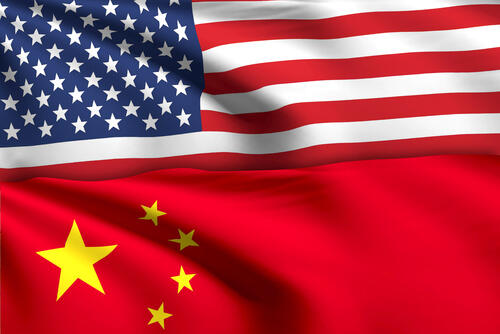
Despite popular perceptions that China and the United States are two polar opposites, therefore, contemporary China and 19th century America share some striking commonalities.


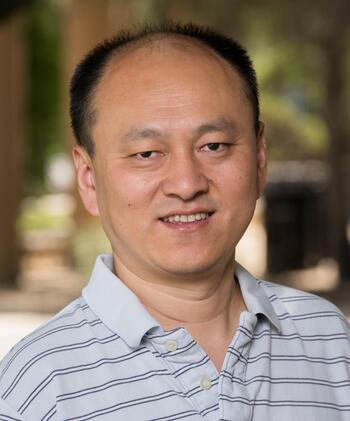
Image
Portrait of Yuen Yuen Ang
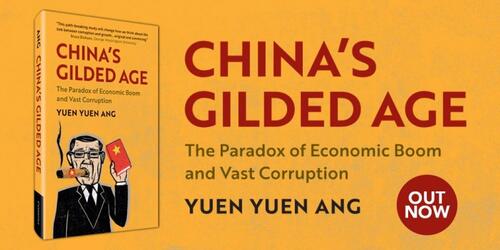
Yuen Yuen Ang is a PhD graduate of Stanford University, where she studied comparative political economy with a focus on China. She is the inaugural recipient of the Theda Skocpol Prize, awarded by the American Political Science Association for “impactful empirical, theoretical and/or methodological contributions to the study of comparative politics.” She was also named an Andrew Carnegie Fellow for “high-caliber scholarship that applies fresh perspectives to the most pressing issues of our times.” Her first, award-winning book, How China Escaped the Poverty Trap (2016), is acclaimed as “game changing” and “field shifting.” It received the Peter Katzenstein Prize in Political Economy, the Viviana Zelizer Prize in Economic Sociology, and was named “Best of Books 2017″ by Foreign Affairs. The sequel to this book, China’s Gilded Age: the Paradox of Economic Boom & Vast Corruption, is released in 2020. It was featured in The Diplomat, The Economist, and The Wire China. She is an associate professor in political science at the University of Michigan and previously a faculty member at Columbia University SIPA.

Image
Cover of "China's Gilded Age" by Yuen Yuen Ang


Image
American and Chinese flags
This event is part of the 2021 Winter/Spring Colloquia series, Biden’s America, Xi’s China: What’s Now & What’s Next?, sponsored by APARC's China Program.


Via Zoom Webinar. Register at: https://bit.ly/3cEtX5f

Yuen Yuen Ang Associate Professor of Political Science, University of Michigan
Seminars
-

Co-sponsored by the Southeast Asia Program, Shorenstein Asia Pacific Research Center, Stanford University, with the Center for Southeast Asian Studies, University of Michigan

Shocking events obliterate context.  The coup in Myanmar on 1 February 2021 is a case in point.  Who could imagine the cruelty of the Burmese generals who on February 1st 2021 grabbed power and proceeded to retain it by arresting thousands and murdering hundreds of its local opponents?  Who expected that on February 2nd the country’s youth would launch a nonviolent Civil Disobedience Movement (CDM) and keep it going and growing against such massively intimidating odds?  In this webinar, two experts will provide the essential but all too often missing contexts—current and historical, domestic and foreign, political and socioeconomic—within which the crisis can be understood, its future projected, and its implications assessed.  To those ends, the on-the-ground knowledge, personal experience, and close observer’s insights of Burmese scholar Moe Thuzar will interact with the insights of American professor David Steinberg based on his Burmese experiences and scholarship dating back into the 20th century.

The webinar will consider in particular what the coup and its aftermath may imply for Southeast Asia and its relations with China.  Relevant in that regard is the involvement of all four panel members in a recent collection, The Deer and the Dragon: Southeast Asia and China in the 21st Century—Steinberg and Ciorciari as authors, Emmerson as editor, and ­­Thuzar as an analyst who is using the book in her own research. 

Image
David I Steinberg 4X4
David I. Steinberg is Distinguished Professor of Asian Studies Emeritus, Georgetown University, where he directed its Asian studies program (1997-2007). Other positions he has held include the presidency of the Mansfield Center for Pacific Affairs and Southeast Asia-related US foreign-policy posts as a member of the Senior Foreign Service. He has also represented The Asia Foundation in South Korea, Burma, Hong Kong, and Washington, D.C.  His 15 books and monographs include one translation, more than 150 articles, and several hundred op-eds.. Among these books are: Myanmar: The Dynamics of an Evolving Polity (ed., 2015); Burma/Myanmar: What Everyone Needs to Know (2013, 2nd edition); Modern China-Myanmar Relations: Dilemmas of Mutual Dependence (with Fan Hongwei, 2012); Turmoil in Burma: Contested Legitimacies in Myanmar (2006); Burma: The State of Myanmar (2001); and Burma’s Road to Development (1981). His expertise includes the two Koreas, about which he has written widely. Professor Steinberg was educated at the University of London’s School of Oriental and African Studies, Harvard University, Darmouth College, and Lingnan University in Canton (now Guangzhou), China.

Image
Moe Thuzar 4X4
Moe Thuzar joined the Institute of Southeast Asian Studies in Singapore in 2008. Her responsibilities there have included managing or co-managing its Myanmar Studies Programme, serving as a lead researcher in its ASEAN Studies Centre, and helping the Centre engage with Myanmar regarding its turn to chair ASEAN in 2014. She spent the 2019-2020 academic year as a Fox International Fellow at Yale University's MacMillan Center researching the socio-cultural underpinnings of Burma’s Cold War foreign policy for her National University of Singapore PhD. Earlier she worked for a decade at the ASEAN Secretariat, where she headed its Human Development Unit. Her many publications include, as co-author, the 2020 and 2019 editions of ISEAS’s widely read State of Southeast Asia: Survey Report. Other recent writing includes chapters and articles in ASEAN-EU Partnerships: The Untold Story (ed., 2020); the Journal of Southeast Asian Economies (2019); Southeast Asian Affairs (ed., 2019); Human Security Norms in East Asia (ed., 2019); and, as co-author, ASEAN’s Myanmar Dilemma (with Lex Rieffel, 2018). Earlier works include Myanmar: Life After Nargis (with Pavin Chachavalpongpun, 2009).

Co-moderated by John Ciorciari, Director, Weiser Diplomacy Center, University of Michigan, and Donald K. Emmerson, Director, Southeast Asia Program, Stanford University

Via Zoom Webinar
Register: https://bit.ly/3mdiwEY

David I. Steinberg Distinguished Professor of Asian Studies Emeritus, Georgetown University, Washington, DC
Moe Thuzar Fellow and Co-coordinator, Myanmar Studies Programme, ISEAS-Yusof Ishak Institute, Singapore
John Ciorciari Moderator Director, Weiser Diplomacy Center, University of Michigan
0
Senior Fellow Emeritus at the Freeman Spogli Institute for International Studies
Affiliated Faculty, CDDRL
Affiliated Scholar, Abbasi Program in Islamic Studies
aparc_dke.jpg PhD

At Stanford, in addition to his work for the Southeast Asia Program and his affiliations with CDDRL and the Abbasi Program in Islamic Studies, Donald Emmerson has taught courses on Southeast Asia in East Asian Studies, International Policy Studies, and Political Science. He is active as an analyst of current policy issues involving Asia. In 2010 the National Bureau of Asian Research and the Woodrow Wilson International Center for Scholars awarded him a two-year Research Associateship given to “top scholars from across the United States” who “have successfully bridged the gap between the academy and policy.”

Emmerson’s research interests include Southeast Asia-China-US relations, the South China Sea, and the future of ASEAN. His publications, authored or edited, span more than a dozen books and monographs and some 200 articles, chapters, and shorter pieces.  Recent writings include The Deer and the Dragon: Southeast Asia and China in the 21st Century (ed., 2020); “‘No Sole Control’ in the South China Sea,” in Asia Policy  (2019); ASEAN @ 50, Southeast Asia @ Risk: What Should Be Done? (ed., 2018); “Singapore and Goliath?,” in Journal of Democracy (2018); “Mapping ASEAN’s Futures,” in Contemporary Southeast Asia (2017); and “ASEAN Between China and America: Is It Time to Try Horsing the Cow?,” in Trans-Regional and –National Studies of Southeast Asia (2017).

Earlier work includes “Sunnylands or Rancho Mirage? ASEAN and the South China Sea,” in YaleGlobal (2016); “The Spectrum of Comparisons: A Discussion,” in Pacific Affairs (2014); “Facts, Minds, and Formats: Scholarship and Political Change in Indonesia” in Indonesian Studies: The State of the Field (2013); “Is Indonesia Rising? It Depends” in Indonesia Rising (2012); “Southeast Asia: Minding the Gap between Democracy and Governance,” in Journal of Democracy (April 2012); “The Problem and Promise of Focality in World Affairs,” in Strategic Review (August 2011); An American Place at an Asian Table? Regionalism and Its Reasons (2011); Asian Regionalism and US Policy: The Case for Creative Adaptation (2010); “The Useful Diversity of ‘Islamism’” and “Islamism: Pros, Cons, and Contexts” in Islamism: Conflicting Perspectives on Political Islam (2009); “Crisis and Consensus: America and ASEAN in a New Global Context” in Refreshing U.S.-Thai Relations (2009); and Hard Choices: Security, Democracy, and Regionalism in Southeast Asia (edited, 2008).

Prior to moving to Stanford in 1999, Emmerson was a professor of political science at the University of Wisconsin-Madison, where he won a campus-wide teaching award. That same year he helped monitor voting in Indonesia and East Timor for the National Democratic Institute and the Carter Center. In the course of his career, he has taken part in numerous policy-related working groups focused on topics related to Southeast Asia; has testified before House and Senate committees on Asian affairs; and been a regular at gatherings such as the Asia Pacific Roundtable (Kuala Lumpur), the Bali Democracy Forum (Nusa Dua), and the Shangri-La Dialogue (Singapore). Places where he has held various visiting fellowships, including the Institute for Advanced Study and the Woodrow Wilson International Center for Scholars. 


Emmerson has a Ph.D. in political science from Yale and a BA in international affairs from Princeton. He is fluent in Indonesian, was fluent in French, and has lectured and written in both languages. He has lesser competence in Dutch, Javanese, and Russian. A former slam poet in English, he enjoys the spoken word and reads occasionally under a nom de plume with the Not Yet Dead Poets Society in Redwood City, CA. He and his wife Carolyn met in high school in Lebanon. They have two children. He was born in Tokyo, the son of U.S. Foreign Service Officer John K. Emmerson, who wrote the Japanese Thread among other books.

Selected Multimedia

Date Label
Moderator Director, Southeast Asia Program, Stanford University
Seminars
-

This is a virtual event. Please click here to register and generate a link to the talk. 
The link will be unique to you; please save it and do not share with others.


Presented by the Stanford China Program and the Stanford Center at Peking University.

Tuesday, April 27 
6:00 pm – 7:15 pm (PST) 
Wednesday, April 28 
9:00 am – 10:15 am (China) 

A large amount of ink has been spilled in the last few years--and even more so since COVID-19--in the U.S. regarding American perceptions of the P.R.C.  Relatively little, however, has been conveyed regarding how China might view the U.S. today.  In this talk, we bring together two eminent professors, Professor Jia Qingguo and Professor Wang Dong, from the School of International Studies, Peking University, to examine how policymakers, professionals, and average citizens in China might perceive the United States and what that might imply for the U.S.-China bilateral relationship.  Dr. Thomas Fingar, Shorenstein APARC Fellow, will moderate the conversation.

This event is part of Shorenstein APARC's spring webinar series.


Image
Portrait of Thomas Fingar
Thomas Fingar is a Shorenstein APARC Fellow in the Freeman Spogli Institute for International Studies at Stanford University. He was the inaugural Oksenberg-Rohlen Distinguished Fellow from 2010 through 2015 and the Payne Distinguished Lecturer at Stanford in 2009. From 2005 through 2008, he served as the first deputy director of national intelligence for analysis and, concurrently, as chairman of the National Intelligence Council. Fingar served previously as assistant secretary of the State Department’s Bureau of Intelligence and Research (2000-01 and 2004-05), principal deputy assistant secretary (2001-03), deputy assistant secretary for analysis (1994-2000), director of the Office of Analysis for East Asia and the Pacific (1989-94), and chief of the China Division (1986-89). Between 1975 and 1986 he held a number of positions at Stanford University, including senior research associate in the Center for International Security and Arms Control. Fingar's most recent books are Fateful Decisions: Choices that will Shape China’s Future, co-edited with Jean Oi (Stanford, 2020), and From Mandate to Blueprint: Lessons from Intelligence Reform (Stanford University Press, 2021).
 

Image
Portrait of Jia Qingguo
Jia Qingguo acquired his PhD at the Department of Government, Cornell University. He has been a member of the Standing Committee of the 11th, 12th and 13th National Committees of the Chinese People’s Political Consultative Conference (CPPCC), and was elected in March 2013 as a member of the Committee of Foreign Affairs of the 13th CPPCC. He is a professor and doctoral supervisor, and the former Dean of the School of International Studies at Peking University. He is a member of the Standing Committee of the Central Committee of the China Democratic League and the Director of its Education Committee. He is the Vice Chairman of the Beijing Municipal Committee, Director of the Research Center for International Economic Strategy of China, a member of the Academic Evaluation Committee of the China Foundation for International and Strategic Studies, a member of the Academic Committee of Quarterly Journal of International Politics of Tsinghua University, as well as an adjunct professor at Nankai University and Tongji University. Jia is also a senior researcher of the Hong Kong and Macao Research Institute under the Development Research Center of the State Council. His research mainly focuses on international politics, China-U.S. relations, China’s diplomacy, Cross-Strait relations, China’s rise, and the adjustment of China’s diplomacy. His major publications include: China’s Diplomacy in the 21st Century; Unrealized Reconciliation: China-U.S. Relations in the Early Cold War; and Intractable Cooperation: Sino-U.S. Relations After the Cold War.
 

Image
Portrait of Wang Dong
Wang Dong obtained his PhD in Politics at the University of California, Los Angeles (UCLA). He is now a full professor and doctoral supervisor at the School of International Studies, Executive Director of the Institute for Global Cooperation and Understanding, Vice President of the Office of Humanities and Social Sciences, and Deputy Secretary-General of the American Studies Center (National and Regional Research Base of the Ministry of Education) of Peking University. In addition, he is also the Secretary-General of the Academic Committee of the Pangoal Institution, member of the Steering Committee of the East Asia Security Forum of Western Returned Scholars Association, a member of the Advisory Committee of the Global Times and The Carter Center “Forum for Young Chinese and American Scholars” and a researcher of the Peace in East Asia Program of the Department of Peace and Conflict Research at Uppsala University, Sweden. Wang has led major programs of the National Social Science Fund of China, undertaken major projects of the Ministry of Education, Ministry of Foreign Affairs, and Ministry of Science and Technology, and been funded by the National Social Science Fund of China many times. He was shortlisted for “Munich Young Leader” in 2016 and Beijing “Outstanding Young Scientist” in 2018. He is interested in research on international relations theory, the Cold War, US diplomacy, China-US relations, etc.

Via Zoom Webinar. Register at: https://bit.ly/3rAcwXC

Thomas Fingar <br>Shorenstein APARC Fellow, Stanford University<br><br>
Jia Qingguo (贾庆国) <br>Former Dean and Professor, School of International Studies, Peking University<br><br>
Wang Dong (王栋) <br>Professor, School of International Studies, Peking University; Executive Director, Institute for Global Cooperation and Understanding (iGCU), Peking University<br><br>
Seminars
Subscribe to Seminars