-

* Please note all CISAC events are scheduled using the Pacific Time Zone.


Register in advance for this webinar: https://stanford.zoom.us/webinar/register/8416226562432/WN_WLYcdRa6T5Cs1MMdmM0Mug


About the Event: Is there a place for illegal or nonconsensual evidence in security studies research, such as leaked classified documents? What is at stake, and who bears the responsibility, for determining source legitimacy? Although massive unauthorized disclosures by WikiLeaks and its kindred may excite qualitative scholars with policy revelations, and quantitative researchers with big-data suitability, they are fraught with methodological and ethical dilemmas that the discipline has yet to resolve. I argue that the hazards from this research—from national security harms, to eroding human-subjects protections, to scholarly complicity with rogue actors—generally outweigh the benefits, and that exceptions and justifications need to be articulated much more explicitly and forcefully than is customary in existing work. This paper demonstrates that the use of apparently leaked documents has proliferated over the past decade, and appeared in every leading journal, without being explicitly disclosed and defended in research design and citation practices. The paper critiques incomplete and inconsistent guidance from leading political science and international relations journals and associations; considers how other disciplines from journalism to statistics to paleontology address the origins of their sources; and elaborates a set of normative and evidentiary criteria for researchers and readers to assess documentary source legitimacy and utility. Fundamentally, it contends that the scholarly community (researchers, peer reviewers, editors, thesis advisors, professional associations, and institutions) needs to practice deeper reflection on sources’ provenance, greater humility about whether to access leaked materials and what inferences to draw from them, and more transparency in citation and research strategies.

View Written Draft Paper


About the Speaker: Christopher Darnton is a CISAC affiliate and an associate professor of national security affairs at the Naval Postgraduate School. He previously taught at Reed College and the Catholic University of America, and holds a Ph.D. in Politics from Princeton University. He is the author of Rivalry and Alliance Politics in Cold War Latin America (Johns Hopkins, 2014) and of journal articles on US foreign policy, Latin American security, and qualitative research methods. His International Security article, “Archives and Inference: Documentary Evidence in Case Study Research and the Debate over U.S. Entry into World War II,” won the 2019 APSA International History and Politics Section Outstanding Article Award. He is writing a book on the history of US security cooperation in Latin America, based on declassified military documents.

Virtual Seminar

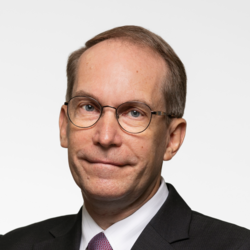
Christopher Darnton Associate Professor of National Security Affairs Naval Postgraduate School
Seminars
-
vachudova_reds_tec_oct_22_2026
We are amid the greatest transformation of Europe’s domestic politics, international institutions and geopolitical ambitions since the collapse of communism three decades ago. Russia’s war, Ukraine’s steadfast response, and America’s authoritarian turn are reshaping political contestation while also transforming Europe’s security order and testing its institutions: NATO is fortifying, the OSCE is incapacitated, and the EU has started to ramp up its defense and its geopolitical power. All of this is happening as Europe and the US have become more polarized and unpredictable. 
 
Across Europe, governments that uphold liberal democracy are confronted by governments and political parties that have undermined liberal democratic institutions at home and sought favors from the Kremlin abroad. Within some European countries, elections are fought between two blocs of parties – those who vow to protect liberal democratic institutions and those who have a track record of diminishing them. In this time of polarization and war, can international institutions and transatlantic cooperation defend the democratic West? The rise of authoritarian-minded political parties in Europe and the US puts at risk fundamental interests: a shared and prosperous liberal democratic West, the stability and decisiveness of NATO, and the survival and recovery of Ukraine.


Milada Anna Vachudova is a Professor of Political Science at the University of North Carolina at Chapel Hill. Her current projects include protest in defense of liberal democracy across Europe, the revival of EU enlargement, and the upending of European security amidst the transformation of European politics and institutions owing to Russia’s war against Ukraine. Her recent articles explore the trajectories of European states due to strengthening ethnopopulism and democratic backsliding – and how these changes are impacting party systems and civic participation. She is part of the core team of the Chapel Hill Expert Survey (CHES) on the positions of political parties across Europe. Professor Vachudova holds a B.A. from Stanford University. As a British Marshall Scholar, she completed an M.Phil. and a D.Phil. at the University of Oxford. She has held fellowships and grants from various institutions including the European University Institute, the Center for European Studies at Harvard University, the Center of International Studies at Princeton University, the National Science Foundation and the National Council for Eurasian and East European Research.


REDS: RETHINKING EUROPEAN DEVELOPMENT AND SECURITY


The REDS Seminar Series aims to deepen the research agenda on the new challenges facing Europe, especially on its eastern flank, and to build intellectual and institutional bridges across Stanford University, fostering interdisciplinary approaches to current global challenges.

REDS is organized by The Europe Center and the Center on Democracy, Development and the Rule of Law, and co-sponsored by the Center for Russian, East European and Eurasian Studies.

Learn more about REDS and view past seminars here.

Anna Grzymała-Busse, Kathryn Stoner
Milada Vachudova, University of North Carolina Presenter
Seminars
Date Label
-
jannis_panagiotidis_nov_19_tec_event
Racism against East Europeans constitutes a major gap in racism research and anti-racism debates. Yet there is a long tradition of treating the region and its inhabitants as inferior, with devastating consequences throughout history. This book is the first comprehensive study of racism in the entangled histories of Germany and Eastern Europe—a racism that is not based on skin color and affects people despite their mostly phenotypical whiteness. Embedded in colonial imaginations of Eastern Europe, anti-East European racism took its most radical and brutal shape during Nazism. But racist knowledge persisted across the rupture of 1945 and the Cold War and took on new shapes after the fall of communism in 1989, when East-West migration once again became an important feature of European and German reality. This book makes a case for the long overdue eastward expansion of the contemporary racism debate. 


Jannis Panagiotidis is a historian and migration scholar. He is scientific director of the Research Center for the History of Transformations (RECET) at the University of Vienna. His publications include the monographs The Unchosen Ones: Diaspora, Nation, and Migration in Israel and Germany (Indiana UP 2019), Postsowjetische Migration in Deutschland: eine Einführung (Beltz Juventa 2021), and Antiosteuropäischer Rassismus in Deutschland: Geschichte und Gegenwart (Beltz Juventa 2024, with Hans-Christian Petersen).
Anna Grzymała-Busse
Anna Grzymała-Busse
Jannis Panagiotidis, University of Vienna Presenter
Seminars
Date Label
-
Jana Hunter TEC event Dec 3
Who decides what time it is? In Habsburg Bohemia, that question drew in nearly every other: nation and empire, identity and sovereignty, capital and a newly connected world. Railways and telegraphs created a time shared across distance, and with it a debate over who had the power to set it. Histories of time standardization have told a story of unification; histories of Habsburg sovereignty, meanwhile, have located its conflicts in diets and parliaments. This talk brings them together, asking how an empire tried to synchronize every local clock, where authority over time was located, and why time became a question of sovereignty. After 1867, Bohemia's unresolved constitutional status moved into the infrastructure of daily life: whose observatory produced noon, which meridian ran the trains, whose clocks kept the time. At stake was not only who ruled Bohemia, but how time could be controlled at all. 
 
By the turn of the century, Bohemians called their divided time dualismus, the word for the constitutional settlement itself. This talk traces these jurisdictional disputes over four decades from railway decrees to universal time. The lines of conflict did not run simply between empire and nation: German liberals, Czech nationalists, intellectuals, and businessmen appealed to historic rights, national identity, commercial interest, and civic embarrassment. Jurisdiction over time was scalar, dispersed across ministries, railway companies, international conferences, and municipal councils, and exercised through everyday practice; sovereignty over time was claimed everywhere but located nowhere. The talk closes by asking, as the satirists of the day did, whether any authority could make a polity agree on something as basic as noon.


Jana Hunter is Assistant Professor at Stanford University, where she works on modern Central and Eastern Europe with particular interests in time, science and technology, modernity, and environmental change. Her first book project, Kingdom of Hours: The Transformation of Time in Habsburg Bohemia, 1848-1918, uses time as a lens to rethink the making of modern Central Europe. Rather than treating modern time as a single, accelerating rhythm, the study examines the coexistence of natural and industrial, religious and secular, nationalist and imperial, and mechanical and subjective temporalities that structured everyday life in late nineteenth- and early twentieth-century Bohemia. Moving from rural villages and mining towns to Prague’s municipal councils and the Reichsrat, the book reconstructs how local actors reworked temporal regimes to serve imperial, national, regional, and commercial aims, offering a new framework for understanding modernization beyond the categories of nation and empire. 
 
Her second project, Testing Grounds: From Marx to Oppenheimer—Czechoslovakia’s Global Legacy, 1918-Present, traces how twentieth-century ideologies of modernity were lived, imposed, and resisted through the uranium-mining town of Jáchymov. Once dubbed the “cradle of the atomic bomb,” Jáchymov became a testing ground for successive empires and energy regimes, its landscape transformed by extractive ambition, political violence, and environmental fallout. Bringing Karl Marx’s ecological critique into dialogue with J. Robert Oppenheimer’s nuclear physics, the project reframes the history of militarized landscapes and energy transitions, situating East-Central Europe within global histories of extraction and environmental change. Hunter received her D.Phil. from the University of Oxford in 2024 and her M.Phil. from the University of Cambridge. She has held fellowships at Princeton University, the Czech Academy of Sciences, the University of Vienna, and the Herder Institute. Before joining Stanford, she was a Lecturer in Modern European History at New College, Oxford.
Anna Grzymała-Busse
Anna Grzymała-Busse
Jana Hunter, Stanford University Presenter
Seminars
Date Label
-

About the event: China is practicing gray-zone coercion in the Indo-Pacific, deploying military vessels for drills in the waters between Taiwan and the Philippines. This “salami-slicing” strategy, advanced under Xi Jinping, incrementally escalates pressure on neighboring states while remaining below the threshold of open conflict. Disruption of critical sea lanes—through which fuel and food supplies transit—would have catastrophic implications for human populations dependent on uninterrupted maritime traffic. This talk presents research from the Stanford Geopolitical Coercion and Global Health Impact Initiative on maritime disruptions in the Indo-Pacific and what they would mean for human populations if maritime traffic were interrupted in a manner comparable to a closure of the Strait of Hormuz, with particular attention to effects on food security, energy access, and maternal and child health.

About the speaker: Dr. Ruth Gibson is a Visiting Scholar at the Center for Innovation in Global Health, Affiliated Scholar at CISAC and the Founding Executive Director of the Stanford Geopolitical Human Impact Research Lab—the first research initiative at Stanford University dedicated to examining how geopolitical decisions shape human lives, with particular attention to children. Based in the Department of Pediatrics at the Stanford School of Medicine, the Initiative brings together health modeling, open-source intelligence, and international humanitarian law to produce rigorous, policy-relevant scholarship. She co-leads The Lancet Series on Foreign Engagement and Health in an Era of Geopolitical Crisis with Professor Gary Darmstadt. Dr. Gibson earned her PhD in geopolitical coercion and global health from the University of British Columbia and completed postdoctoral training at Stanford’s Center for International Security and Cooperation from 2022 to 2025. Drawing on more than a decade of international global health experience across five continents, her research focuses on the health consequences of sanctions, blockades, and armed conflict, especially their effects on maternal and child health.

William J. Perry Conference Room 

0
Affiliated Scholar
Ruth Gibson Headshot PhD

Dr. Ruth Gibson serves as an affiliated scholar at the Center for International Security and Cooperation (CISAC). Her scholarly expertise encompasses global health, foreign affairs, and strategic studies, with a particular emphasis on enhancing maternal and child health in geopolitically fragile regions—nations contending with war, sanctions, and diplomatic challenges.

Dr. Gibson is presently co-leading a Lancet series on the future of foreign aid, which scrutinizes military aid, humanitarian aid, and official development assistance. This Lancet Series investigates how these forms of foreign aid can be more effectively harnessed and integrated to fulfill their intended goals, while advancing prospects for humanity's future. She collaborates with the United Nations Human Rights Office of the High Commissioner, partnering with the Special Rapporteur on Unilateral Coercive Measures to establish a universal monitoring framework for evaluating the effects of sanctions on human rights. She has contributed to reports prepared for the International Criminal Court. Dr. Gibson is a research collaborator with the Global Burden of Disease Consortium at the University of Washington’s Institute for Health Metrics and Evaluation, supporting efforts in global health estimation and forecasting. She is a reviewer for Nature. Her research has been published in The Lancet and The Lancet Global Health, and her insights on geopolitics and human health have featured in international media outlets, including TIME magazine.

Prior to her academic career, Dr. Gibson dedicated a decade to humanitarian and global health endeavors across eight countries on five continents. Her efforts focused on fragile states confronting poverty, human rights violations, and armed conflict. She led a humanitarian foundation in Madagascar in the aftermath of a military coup, dealing with the disintegration of the healthcare system amid international sanctions on foreign aid. While living in the Middle East, she worked for Saudi Arabia’s Ministry of Health Affairs and the Health Ministries of Yemen and Somalia on telemedicine-driven medical education, as well as cultivating diplomatic relations through shared fundamental health objectives amid periods of conflict. Throughout this decade of overseas experience, Dr. Gibson directly observed the human costs of war and geopolitical coercion, an experience that informs her ongoing research.

Dr. Gibson earned an Honors Bachelor of Science and a Master of Science from the University of Toronto, a fellowship in Medical Education from the Wilson Center at the University Health Network, and a PhD in Global Health and Strategic Studies from the University of British Columbia. She completed her postdoctoral training at CISAC from 2022 to 2025. She also undertook a postdoctoral fellowship at the Center for Innovation in Global Health (CIGH), Stanford Medicine, between 2022 and 2023, where she currently holds the position of visiting scholar. She completed a postdoctoral fellowship at the Department of Health Policy, Stanford University, from 2024 to 2025. She is conversational in English, Mandarin Chinese, and French.

Date Label
Ruth Gibson
Seminars
Date Label
-

What makes a science and innovation cluster thrive, and how can regions scale their global impact? This seminar explores two of the world’s leading innovation clusters, Tokyo-Yokohama and China’s Greater Bay Area, ranked among the top clusters in WIPO’s Global Innovation Cluster Index. Drawing on interviews and new reports from the Swedish Foundation for International Cooperation in Research and Higher Education (STINT), Executive Director Dr. Andreas Göthenberg will share perspectives from STINT’s Science Intelligence work on global science and innovation, followed by presentations from Dr. Laura Barbieri and Dr. Erik Forsberg on the ecosystems, strengths, and development trajectories of these two regions.

Speakers:

Dr. Andreas Göthenberg

Dr. Andreas Göthenberg was appointed Executive Director of STINT as of September 1, 2009. And since 2024, he has been a Board Member at the Karolinska Institutet, Sweden. He received his M.Sc. and Ph.D. degrees from KTH Royal Institute of Technology, Stockholm, Sweden, in 1996 and 2003, respectively. 

From 2006 until 2009, he was a Science and Technology Attaché at the Embassy of Sweden in Tokyo, Japan. Before that, he worked as a Center Manager and Senior Researcher in China, setting up joint research and education centers for KTH Royal Institute of Technology at Zhejiang University and Fudan University.
 

Dr. Laura Barbieri

Dr. Laura Barbieri is a STINT Science Fellow in Japan and South Korea. Based in Tokyo, she is currently a Visiting Scholar at the National Graduate Institute for Policy Studies (GRIPS). Previously, she was a JSPS Postdoctoral Fellow at Osaka Metropolitan University, where she conducted malaria immunology research within the SATREPS JICA Project in collaboration with Kenyan and Japanese partners.

Dr. Barbieri holds a PhD in Experimental Immunology from the University of Padova (Italy), carried out with Karolinska Institutet (Sweden), and a Master’s degree in Medical Biotechnologies from Padova in collaboration with King’s College London (UK). She also worked as a Postdoctoral Researcher at the University of Cambridge (UK) and was a Visiting Researcher at the University of Tokyo (Japan).
 

Dr. Erik Forsberg

Dr. Erik Forsberg has been the STINT Representative in Asia since 2018. He has worked in China for more than 17 years, and was the Founding Vice Director of the Sino–Swedish Joint Research Center of Photonics as well as a Postdoctoral Fellow and an Associate Professor at Zhejiang University, China.

Dr. Forsberg was the Founding Graduate Dean at the Higher Colleges of Technology (United Arab Emirates) and a Visiting Scientist at Hokkaido University (Japan). Currently, he is an Adjunct Associate Professor at Zhejiang University and a Visiting Research Associate at the University of Malaya (Malaysia). In parallel with his academic work, he has been active in industry and entrepreneurship in China, co-founding several startups.


Directions and Parking > 

Okimoto Conference Room (E307)
Encina Hall, 3rd Floor
616 Jane Stanford Way, Stanford, CA 94305

Andreas Göthenberg, Executive Director, STINT
Laura Barbieri, Science Fellow in Japan and South Korea, STINT; Visiting Scholar, GRIPS
Erik Forsberg, Representative in China and ASEAN, STINT; Associate Professor, Zhejiang University
Seminars
Date Label
-
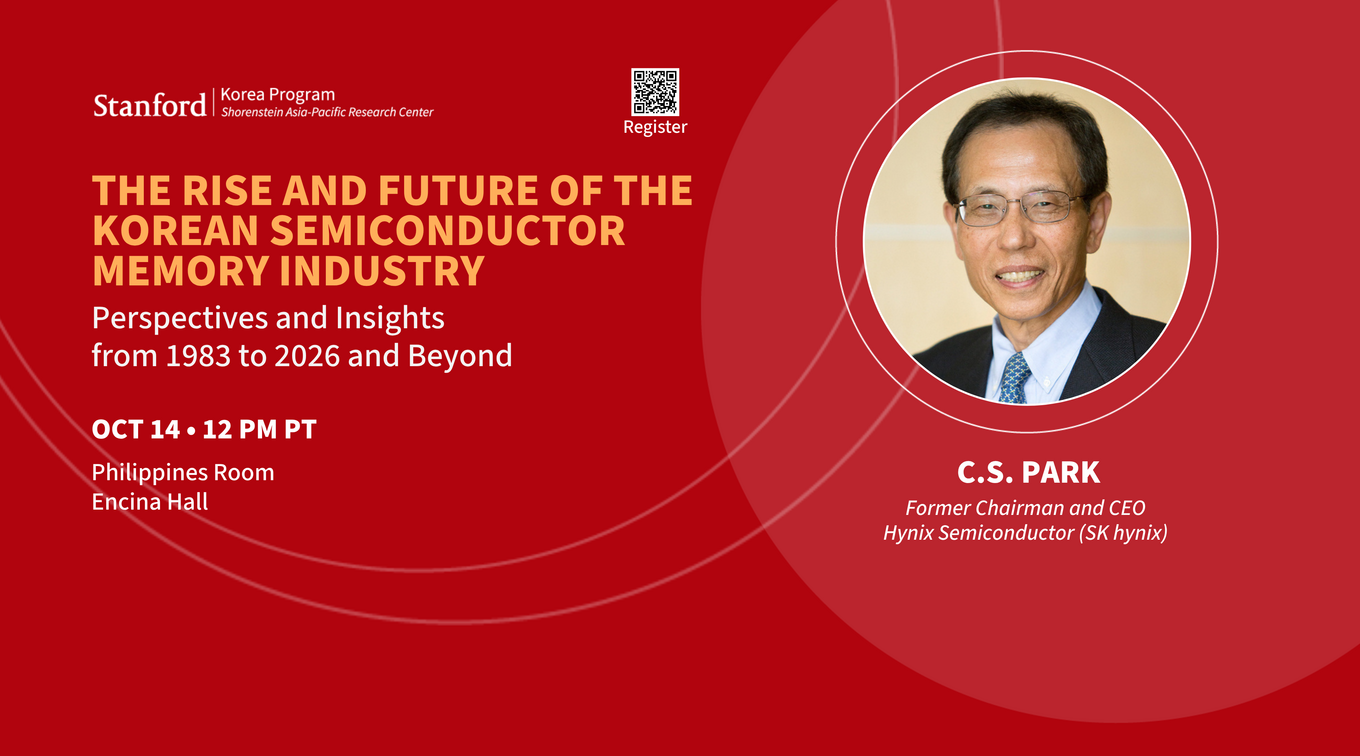
C.S. Park event card, Registration: The Rise and Future of the Korean Semiconductor Memory Industry: Perspectives and Insights from 1983 to 2026 and Beyond. Speaker: C.S. Park

The recent Nasdaq debut of a Korean semiconductor memory producer, SK hynix—raising $26.5 billion in the largest-ever listing by a foreign company—has garnered global recognition after temporarily overtaking Samsung Electronics as South Korea’s most valuable chipmaker. Together, the two companies account for more than half of KOSPI’s total market capitalization.

This talk will explore how South Korea built a globally competitive semiconductor memory industry, navigated intense industry competition and consolidation, survived historical boom-and-bust cycles, and emerged as a crucial player in the global artificial intelligence (AI) era. Specifically, the discussion will shed light on how South Korean firms overcame initial technological, financial, and human capital constraints to ultimately transform a historically low-margin commodity memory business into the highly profitable High Bandwidth Memory (HBM) products required for AI. Finally, the presentation will consider the future trajectory of Korea’s memory industry, including Moore’s Law, the growing semiconductor ecosystem, its U.S. footprint, the rise of Chinese memory makers, engineering talent, demand cyclicality, stock volatility, socio-economic impact, and geopolitics as the global AI industry continues to evolve.

Speaker:
C.S. Park is the former Chairman and CEO of Hynix Semiconductor (now SK hynix). In 1983, he joined Hyundai Electronics as a founding member, where he held several positions, including President of U.S. operations, Head of Semiconductor Marketing & Sales, and CEO. He was instrumental in restructuring and transforming Hyundai Electronics into Hynix Semiconductor, a leading memory company. He was also Maxtor’s CEO until its merger with Seagate, where he served as Lead Independent Director. In the past, he served on a number of boards, including DLA Piper, Enphase Energy, Computer Sciences Corp., Ballard Power, Brooks Automation, Smart Modular, STATS ChipPAC, and Silicon Valley Community Foundation. Currently, he serves as a Board Advisor for ScaleFlux, a memory and storage company scaling the AI data pipeline.

Directions and Parking > 

Philippines Conference Room (C330)
Encina Hall, 3rd Floor
616 Jane Stanford Way, Stanford, CA 94305

C.S. Park, former Chairman and CEO, Hynix Semiconductor (now SK hynix)
Seminars
Image
Registration: The Rise and Future of the Korean Semiconductor Memory Industry: Perspectives and Insights from 1983 to 2026 and Beyond. Photo: C.S. Park
Date Label
-
Illiberal Law and Development - Susan Whiting

In Illiberal Law and Development, Susan H. Whiting advances institutional economic theory with original survey and fieldwork data, addressing two puzzles in Chinese political economy: how economic development has occurred despite insecure property rights and weak rule of law and how the Chinese state has maintained political control amid unrest. Whiting answers these questions by focusing on the role of illiberal law in reassigning property rights and redirecting grievances. The book reveals that, in the context of technological change, a legal system that facilitates reassignment of land rights to higher-value uses plays an important and under-theorized role in promoting economic development. This system simultaneously represses conflict and asserts legitimacy. Comparing China to post-Glorious Revolution England and contemporary India, Whiting presents a critical new argument that brings the Chinese case more directly into debates in comparative politics about the role of the state in specifying property rights and maintaining authoritarian rule.

Speaker: Susan H. Whiting is Professor of Political Science at the University of Washington. She is the author of Illiberal Law and Development: Property Rights and Conflict over Land in China (2026) and Power and Wealth in Rural China: The Political Economy of Institutional Change (2001), both published by Cambridge University Press. Her research on property rights, state capacity, “rule of law,” economic development, and civil society in China has been published in journals such as Comparative Political StudiesStudies in Comparative International DevelopmentChina Quarterly, Journal of Asian Studies, and Voluntas, as well as in edited volumes such as Holding China Together and Trust and Governance, among others. She holds a Ph.D. in Political Science from the University of Michigan and a B.A. in East Asian Studies from Yale University. At the University of Washington, she also holds adjunct appointments in the School of Law and the Jackson School of International Studies.  


Directions and Parking > 

Philippines Conference Room (C330)
Encina Hall, 3rd Floor
616 Jane Stanford Way, Stanford, CA 94305

Susan H. Whiting , Professor, University of Washington
Seminars
Date Label
-

Seminar details to come.

ABOUT THE SPEAKER

Jeanet Sinding Bentzen is a Professor in Economics at University of Copenhagen, where she is also head of the PhD program in economics. Her research focuses on economic approaches to decision-making and culture, and includes topics related to religion, institutions, economic growth, economic history, and geography. Most of her recent work is within the Economics of Religion field. Methodologically, she uses econometric techniques to test theories from psychology, sociology, theology, anthropology, and economics empirically. Her methodology involves broad datasets spanning the globe, allowing testing of the generalizability of the various theories. Jeanet is associate editor at The Economic Journal. She is a CEPR Research Affiliate in Economic History and the Macroeconomics and Growth programme, an External Research Associate at CAGE, Warwick University, and Executive Director of the international Association of Economics, Religion, and Culture (ASREC). Her research features in outlets, such as The American Economic Journal: Applied Economics, The Economic Journal, the Review of Economics and Statistics, the Journal of the European Economic Association, Journal of Economic Growth, the Journal of Development Economics, and Nature Communications.

Hesham Sallam
Hesham Sallam

Virtual to Public. If prompted for a password, use: 123456

Only those with an active Stanford ID with access to William J. Perry Conference Room in Encina Hall, may attend in person.

Jeanet Sinding Bentzen Professor, Department of Economics Presenter University of Copenhagen
Seminars
Date Label
Subscribe to Seminars