Authors
Noa Ronkin
News Type
News
Date
Paragraphs

U.S. policymakers are counting on India as a natural strategic partner. They focus on India’s increasing national power and its enticing potential as a counterbalance to China. But what happens if India’s strategic preferences shift? Will it fulfill its potential so that the U.S. strategic bet pays off?

In a special report, Exploring India's Strategic Futures, published by the National Bureau of Asian Research (NBR), APARC South Asia Research Scholar and NBR Nonresident Fellow Arzan Tarapore identifies a set of challenges for American strategists, illustrating alternative futures of India as a strategic actor and focusing on futures that may pose challenges to U.S. security interests.

Tarapore uses a novel method of major/minor trends to demonstrate that India’s strategic preferences are not fixed but could vary discontinuously under different environmental conditions. Based on detailed historical analysis, this method offers a powerful tool to sensitize decision makers to a range of possible futures. He analyzes three plausible scenarios:

First, a revisionist India driven by Hindu-nationalist ideology to settle the score with Pakistan, which will require it to keep the China front quiet and accommodate China’s Belt and Road Initiative in Eurasia. This scenario may severely complicate U.S. strategy in the Indo-Pacific and its efforts to counterbalance China.

Second, a risk-acceptant Indian military that engages in brinkmanship, which may endanger strategic stability with both Pakistan and China. In this scenario, rather than keeping the Chinese military in check, India may paradoxically have the opposite effect.

Third, an India that expands its competition with China into continental Eurasia, making common cause with U.S. rivals such as Russia and Iran. This scenario illustrates the tensions in a U.S. global strategy that lacks prioritization and prompts Washington to more carefully consider its preferences in Central Asia.

Tarapore by no means suggests that such futures are likely — they are decidedly unlikely — but rather that U.S. strategists should consider them plausible. Indeed, the three scenarios are all grounded in political processes that have long existed in India, from communalism to military adaptation, to the balancing of external threats. Therefore, argues Tarapore, U.S. policymakers should not assume Indian strategic preferences are stable. They must consider scenarios in which India might challenge U.S. security interests.

Read More

Portrait of Arzan Tarapore and text: "Q&A with Arzan Tarapore"
Q&As

Internal Balancing Will Determine India’s Relationships with the US and China, Argues APARC’s Newest Research Scholar

Indo-Pacific security expert Arzan Tarapore, whose appointment as a research scholar at APARC begins on September 1, discusses India’s military strategy, its balancing act between China and the United States, and his vision for revitalizing the Center’s research effort on South Asia.
Internal Balancing Will Determine India’s Relationships with the US and China, Argues APARC’s Newest Research Scholar
Japanese Prime Minister Shinzo Abe speaks at a podium with audience seen at the front
Commentary

Three Hits and Three Misses: What is Prime Minister Abe’s Legacy?

Despite this long period as prime minister, it is not entirely clear that Abe accomplished major policy goals.
Three Hits and Three Misses: What is Prime Minister Abe’s Legacy?
Leaders from the ASEAN league gather onstage at the 33rd ASEAN Summit in 2018 in Singapore.
Commentary

Southeast Asia's Approach to China and the Future of the Region

In an interview with The Diplomat, Donald Emmerson discusses how factors like the South China Sea, U.S.-China competition, and how COVID-19 are affecting relations between Southeast Asia, China, and the United States.
Southeast Asia's Approach to China and the Future of the Region
Hero Image
An Indian Army soldier looking through a military monocular over hills in the background
An Indian Army soldier guards the line dividing Kashmir between India and Pakistan. | Farooq Khan-Pool/ Getty Images
All News button
1
Subtitle

In a special report published by the National Bureau of Asian Research, Tarapore analyzes possible scenarios for India’s strategic future that expose risks and tensions in current U.S. policy.

Authors
News Type
News
Date
Paragraphs

Generations of political support for sugar cultivation have helped India become the second-largest producer of sugar worldwide. Now, the country’s commitment to renewable energy could create additional benefits, like conserving natural resources and providing better nutrition to the poor.

Stanford researchers conducted the first comprehensive analysis of India’s sugar industry and its impact on water, food and energy resources through the lens of its political economy – that is, how entrenched political interests in sugar production threaten food, water and energy security over time. The results show that a national biofuel policy encouraging production of ethanol made directly from sugarcane juice may make India’s water and energy resources more sustainable. Using sugarcane juice instead of molasses would also free up land and irrigation water for growing nutrient-rich foods. The research was published July 24 in Environmental Research Letters.

“There are spillover effects between sectors, unintended consequences,” said co-author Rosamond Naylor, a food security expert and the William Wrigley Professor in Stanford’s School of Earth, Energy & Environmental Sciences (Stanford Earth). “It’s very instructive to think about the connection between food, water and energy because the solution may not be in the sector you’re focusing on.”

Moving toward renewables

Somewhat analogous to the corn industry in the U.S., which has shifted about 40 percent of its output to ethanol production in recent years, policymakers in India – many of whom benefit financially from the sugar industry – are currently exploring how to use sugarcane to increase energy independence and shift toward renewable energy use.

The Indian government has set a goal to increase the ethanol-to-gasoline blending rate from its current rate of about 6 percent to 20 percent by 2030 and introduced several policies to promote production of ethanol from sugarcane. The increased blending rate is a “desirable goal for improved energy security,” the researchers write. However, its effects on human health and the environment will largely depend on which sugar product ends up being the main feedstock: juice extracted from crushed sugarcane, or molasses, a by-product from sugar processing.

Figure showing irrigation water use of Indian sugar Meeting E20 by 2030: additional sugarcane, water and land resources needed, and extra sugar produced. Meeting the 20% ethanol-to-gasoline blending rate by 2030 with ethanol produced from molasses would require additional water and land resources and produce extra sugar. In contrast, ethanol produced from sugarcane juice could meet the blending target without risking water and land resources and would reduce extra sugar. (Image credit: Lee et al. / Environmental Research Letters)

India’s national policy on biofuels only recently began allowing use of sugarcane juice in ethanol production, in addition to molasses.

“If the energy industry continues to use molasses as the bioethanol feedstock to meet its target, it would require additional water and land resources and result in the production of extra sugar,” said co-author Anjuli Jain Figueroa, a postdoctoral researcher in Earth system science. “In contrast, if the industry used the sugarcane juice to produce ethanol, the target could be met without requiring additional water and land beyond current levels.”

Using sugarcane juice to create ethanol could also help alleviate government spending to subsidize sugar and sell it below cost in its public distribution system.

Entrenched incentives

The public distribution system of sugar in India dates to the 1950s, when frequent famines plagued the country. Back then, sugar helped to meet basic calorie requirements. But today – with micronutrient deficiency leading to illness, disabilities and even death – the Indian government is more concerned with nutrition.

“In India right now, even poor populations have met their basic calorie needs,” said Naylor, who is also a senior fellow at the Stanford Woods Institute for the Environment. “They have been able to buy sugar at subsidized prices, but meanwhile they don’t have access to adequate protein and micronutrients for cognitive growth and for physical well-being.”

Figure showing micronutrient content and calories of crops Micronutrient content and calories of sugar and selected crops. Sugar provides empty calories with no nutritional value. (Image credit: Lee et al. / Environmental Research Letters)

Sugarcane cultivation in India has expanded in part because of policies that incentivize production, including a minimum price, guaranteed sales of sugarcane and public distribution of sugar. These regulations have become entrenched over many generations, making the crop highly profitable to the 6 million farmers in the country, but the empty-calorie crop reduces the amount of resources available for micronutrient-rich foods. 

“Using scarce natural resources to produce a crop that doesn’t fulfill nutritional needs for the second most populated country in the world can place pressure on the global food system if more and more food imports are required to meet the rising demand in India,” Naylor said.

Balancing act

The researchers focused their analysis on Maharashtra in western India, one of the country’s largest sugarcane-producing states. Sugarcane cultivation in Maharashtra has increased sevenfold in the past 50 years to become the dominant user of irrigation water. The study found that in 2010-11, sugarcane occupied only 4 percent of Maharashtra’s total cropped areas but used 61 percent of the state’s irrigation water. Meanwhile, irrigation for other nutritious food crops remained lower than the national averages.

Figure showing irrigation water use of major crops in Maharashtra Irrigation water use by major crops or crop groups in Maharashtra from 1970–71 to 2010–11. In Maharashtra, irrigation water use by sugarcane has increased more rapidly than any other crop over time, and sugarcane has used the highest share of total irrigation water in all time periods. (Image credit: Lee et al. / Environmental Research Letters)

“Irrigation of sugarcane in our study region is about four times that of all other crops and has doubled from 2000 to 2010. This resulted in about a 50 percent reduction of river flow over that period,” said co-author Steven Gorelick, the Cyrus Fisher Tolman Professor at Stanford Earth. “Given that this region is susceptible to significant drought, future water management is likely to be quite challenging.”

As part of continued efforts to examine the Indian sugar industry and its impacts, lead author Ju Young Lee, a PhD student in Earth system science, also developed satellite imagery analyses to identify sugarcane from space.

“Despite the importance of sugarcane in the water, food and energy sectors in India, there are no reliable sugarcane maps for recent years and in time series,” Lee said. “Using remote sensing data, I am developing current time-series sugarcane maps in Maharashtra – an important step forward.”


The researchers worked with stakeholders in India, including NGOs, academics and government officials, to focus the goals of the project. The research is part of Food Water Energy for Urban Sustainable Environments (FUSE), an international consortium supported in part by the National Science Foundation through the Belmont Forum to address competition for scarce resources in stressed urban food-water-energy systems – including the impacts of climate variability.

Naylor is also a senior fellow at the Freeman Spogli Institute for International Studies and a professor, by courtesy, of economics. Gorelick is also lead principal investigator of FUSE and a senior fellow at the Stanford Woods Institute for the Environment.

The research was supported by the U.S. National Science Foundation.

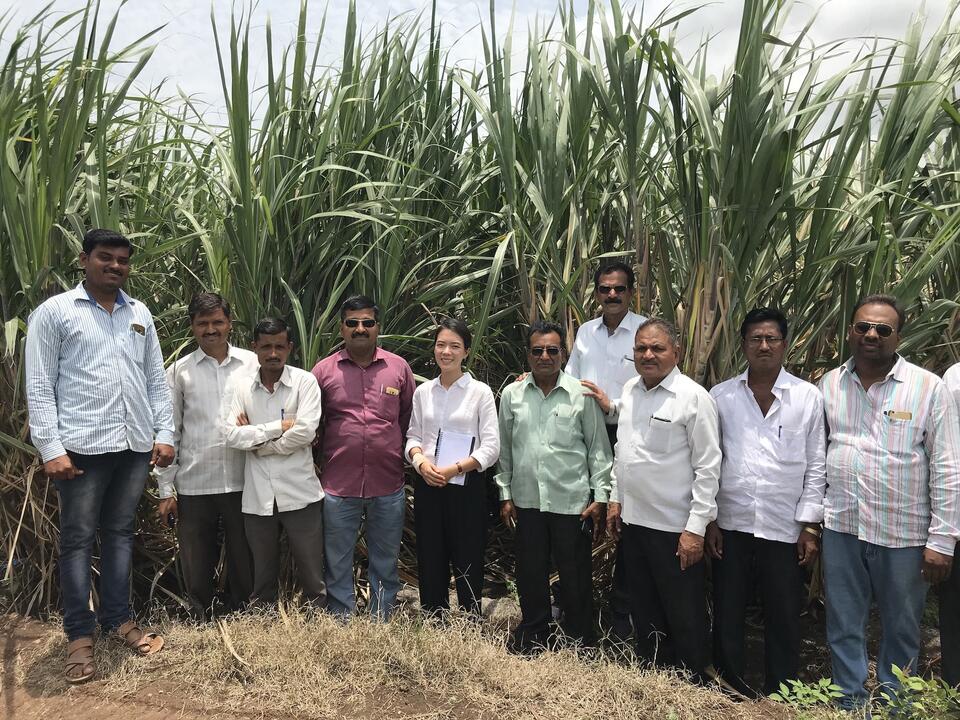
Lead author with a group of farmers in Indian sugar field Lead study author Ju Young Lee, center, is pictured with local farmers and agricultural experts while visiting a sugarcane field in Maharashtra in western India in August 2018. (Image courtesy of Ju Young Lee)

Hero Image
Freshly cut pieces of sugarcane. (Image credit: iStock / Getty Images)
All News button
1
Subtitle

Researchers analyzed the interconnected food, water and energy challenges that arise from the sugar industry in India – the second-largest producer of sugar worldwide – and how the political economy drives those challenges.

News Type
News
Date
Paragraphs

A team of SHP faculty and researchers, together with Stanford Medicine graduate and medical students and in collaboration with colleagues at CIDE in Mexico, have launched a modeling framework to investigate the epidemiology of COVID-19 and to support pro-active resource planning and policy evaluations for diverse populations and geographies — including California, Mexico and India.

The Stanford-CIDE Coronavirus Simulation Model — or SC-COSMO — incorporates realistic demography and patterns of contacts sufficient for transmission of the virus that has infected more than 2 million people worldwide and claimed more than 125,600 lives, according to the widely used Johns Hopkins COVID-19 map which is updated several times a day.

The SC-COSMO model also incorporates non-pharmaceutical interventions, such as social distancing, timing and effects on reductions in contacts which may differ by demography.

Jeremy Goldhaber-Fiebert, an associate professor of medicine at Stanford Health Policy, is the principal investigator of the project, along with Fernando Alarid-Escudero, an assistant professor at the Center for Research and Teaching in Economics (CIDE) in Mexico and Jason Andrews, an assistant professor of medicine (infectious diseases) at Stanford Medicine. Other SHP faculty among the 20 investigators and staff members who are working on the project are Joshua Salomon and David Studdert, both professors of medicine.

The model also allows for the comparison of many future what-if scenarios and how they might impact outcomes over time and cumulatively.

The SC-COSMO team is a multi-disciplinary, multi-institutional team including expertise and experience in infectious disease, epidemiology, mathematical modeling and simulation, statistics, decision science, health policy, health law and health economics.

“As COVID-19 transmission occurs throughout the world’s diverse populations, it is critical to efficiently model and forecast its future spread between and within these populations and to appropriately reflect uncertainty in modeled outcomes,” Goldhaber-Fiebert said. “Doing so supports timely resource planning and decision making between potentially appropriate and effective interventions that balance the trade-offs they embody.”

The team is currently working on three projects:

  1. The researchers are providing California with county-level COVID-19 estimates for such things as the number of infections, detected cases and projections of future needs for hospital and ICU beds, personal protective equipment (PPE) and ventilators.
  2. The project is working on potential strategies to mitigate the COVID-19 pandemic in Mexico by focusing on three specific objectives: collecting, synthesizing and openly sharing the most relevant and useful data; accelerating the development of the SC-COSMO model and its adaptation to the Mexican situation; and identifying a set of mitigation strategies, comparing the health and economic consequences in the population in the medium and long term.
  3. They are developing forecast models of the COVID-19 epidemic in India with the Wadhwani Institute of Artificial Intelligence and its Indian government partners, providing a rapid response to urgent needs for planning and resource allocation.


jeremy

Jeremy Goldhaber-Fiebert

Associate Professor of Medicine
His research focuses on complex policy decisions surrounding the prevention and management of increasingly common, chronic diseases and the life course impact of exposure to their risk factors.

Read More

gettyimages n95mask
News

COVID19: Can Masks Help with Reopening the Economy?

COVID19: Can Masks Help with Reopening the Economy?
jeremy class
News

SHP faculty to Teach Students How To Build COVID-19 Mathematical Projection Models for Policymakers

SHP faculty to Teach Students How To Build COVID-19 Mathematical Projection Models for Policymakers
gettyimages trumpcorona
Commentary

Federalism Meets the COVID-19 Pandemic: Thinking Globally, Acting Locally

Federalism Meets the COVID-19 Pandemic: Thinking Globally, Acting Locally
Hero Image
gettyimages coronainvestigate
All News button
1
Subtitle

The Stanford-CIDE Coronavirus Simulation Model — or SC-COSMO — incorporates realistic demography and patterns to investigate resource planning and policy evaluations for diverse populations and geographies in California, Mexico and India.

Authors
Callista Wells
News Type
News
Date
Paragraphs

The Stanford Center at Peking University (SCPKU), the Center on Democracy, Development and the Rule of Law (CDDRL), and the APARC China Program jointly hosted a workshop on China’s Belt and Road Initiative (BRI) in early March. The workshop, held on March 2 and 3, welcomed researchers from around the world with expertise in the Initiative. Unfortunately, because of the rapidly developing health emergency related to the coronavirus, participants from not only China, but also Japan, were prevented from attending. As described by Professor Jean Oi, founding director of SCPKU and the China Program, and Professor Francis Fukuyama, director of CDDRL and the Ford Dorsey Master's in International Policy, who co-chaired the workshop, the meeting aimed to provide a global perspective on the BRI, consolidate knowledge on this opaque topic, and determine the best method and resources for future research.  

The workshop began with presentations from several of the invited guests. Dr. Atif Ansar from the University of Oxford’s Saïd Business School kicked off the first day by describing not only the tremendous opportunity that the BRI presents to developing economies, but also the serious pitfalls that often accompany colossal infrastructure projects. Pointing out the poor returns on investment of mega infrastructure projects, Ansar examined the frequest cost and schedule overruns, random disasters, and environmental degradation that outweigh the minimal benefits that they generally yield. China’s own track record from domestic infrastructure projects does little to mitigate fear of these risks, Ansar claimed. In response, he urged professional management of BRI investments, institutional reforms, and intensified deployment of technology in BRI projects. Dr. Ansar was followed by Dr. Xue Gong of the S. Rajaratnam School of International Studies, Nanyang Technological University, Singapore. Dr. Gong’s analysis centered on the extent to which China’s geopolitical motivations influenced its outward foreign direct investments (OFDI). Although her research was still in the early stages, her empirical analysis of China’s OFDI inflows into fifty BRI recipient countries from 2007-2018 nevertheless revealed that geopolitical factors often outweigh economic factors when it comes to China’s OFDI destinations.

Image
Amit Bhandari of Gateway House: Indian Council on Global Relations presents his research at the Belt and Road Workshop.
Participants then heard presentations from Amit Bhandari of Gateway House: Indian Council on Global Relations and Professor Cheng-Chwee Kuik of the National University of Malaysia. Mr. Bhandari’s talk focused on Chinese investments in India’s six neighboring countries, which tend to center more on energy rather than connectivity projects. He first found that the investments are generally not economical for the host countries because they come with high costs and high interest rates. Secondly, he argued that these projects often lacked a clear economic rationale, appearing instead to embed a geopolitical logic not always friendly to India. Professor Kuik, by contrast, provided a counterexample in his analysis of BRI projects in Southeast Asia. He described how, in Southeast Asia, host countries’ reception of the BRI has varied substantially; and how various stakeholders, including states, sub-states and other entities, have used their leverage to shape outcomes more or less favorable to themselves. Kuik’s analysis injected complexity into the often black-and-white characterizations of the BRI. He highlighted the multidimensional dynamics that play out among local and state-level players in pursuit of their goals, and in the process of BRI implementation.

Professor Curtis J. Milhaupt and Scholar-in-Residence Jeffrey Ball, both at Stanford Law School, followed with individual presentations on the role of State-Owned Enterprises (SOEs) in the BRI and the emissions impact of the BRI on climate change, respectively. Professor Milhaupt  characterized Chinese SOEs as both geopolitical and commercial actors, simultaneously charged with implementing Party policies and attaining corporate profits. Chinese SOEs are major undertakers of significant overseas BRI projects, acting not only as builders but also as investors, partners, and operators. This situation, Milhaupt asserted, carries significant risks for SOEs because these megaprojects often provide dismal returns, have high default rates, and can trigger political backlash in their localities. Milhaupt highlighted the importance of gathering firm-level data on businesses actually engaged in BRI projects to better infer geostrategic, financial, or other motivations. Jeffrey Ball turned the discussion to carbon emissions from BRI projects and presented preliminary findings from his four-country case studies. He concluded that, on aggregate, the emissions impact of the BRI is still “more brown than green.” Twenty-eight percent of global carbon emissions may be accounted for by BRI projects, Ball asserted, underscoring the importance of the BRI to the future of global climate change.

The day concluded with presentations by  Michael Bennon, Managing Director at the Stanford Global Projects Center, and Professor David M. Lampton, Oksenberg-Rohlen Fellow at the Freeman Spogli Institute for International Studies. Bennon first presented findings from two empirical case studies of BRI projects and then went on to describe how the BRI is now practically the “only game in town” for infrastructure funding for developing countries. Lengthy environmental review processes at Western multilateral banks have turned the World Bank, for example, from a lending bank into a “knowledge bank,” he argued. He also highlighted that, in general, economic returns on BRI projects for China are very poor, even though recipient countries may accrue macroeconomic benefits from these projects. Finally, Professor Lampton turned the discussion back to Southeast Asia, where China is currently undertaking massive cross-border high-speed rail projects through eight ASEAN countries. He described how each host country had varying capacity to negotiate against its giant neighbor, and how the sequential implementation of these cross-border rail projects also had varying impacts on the negotiating positions of these host countries. BRI played out differently in each country, in other words, eliciting different reactions, push-backs and negotiated terms.

The second day of the workshop was dedicated to working toward a collaborative approach to future BRI research. The group discussed the key gaps in the existing research, including how to know what China’s true intentions are, how to measure those intentions, who the main players and their interests in both China and the host countries are, and even what the BRI is, exactly. Some cautioned that high-profile projects may not be representative of the whole. Participants brainstormed about existing and future sources of data, and stressed the importance of diversifying studies and seeking empirical evidence.

Hero Image
Participants in the Belt and Road Initiative Workshop at Stanford University, March 2-3, 2020.
All News button
1
-

...water, water everywhere, nor any drop to drink...

Join Stanford's Center on Food Security and the Environment for a lecture and reception with Dr. Junaid Ahmad, the World Bank Country Director for India.

Dr. Ahmad will look at the political economy of managing service delivery in India through the prism of water. The presentation will look at the water supply and sanitation sector and water resource management in the context of India’s federalism and urban and food policies. Ahmad argues that India’s transition to middle income will depend significantly on how water will be valued in India’s political economy.  

Junaid Ahmad, from Bangladesh, is currently the World Bank Country Director for India. Over the years, Mr. Ahmad has brought an exceptional track record of management and leadership in the areas of policy reform, service delivery and international partnerships, combining intellectual and analytical rigor with strategic operational focus. Mr. Ahmad’s work has covered urban finance and city management, infrastructure finance, water, service delivery in federal systems, and local government reform. Currently, he is responsible for managing the World Bank’s India portfolio.

Symposiums
Authors
News Type
Commentary
Date
Paragraphs

Authorities don’t seem to understand the real threat from cyber-operations.

The Nuclear Power Corporation of India Limited (NPCIL) has now confirmed that there was a cyberattack on the Kudankulam Nuclear Power Plant (KKNPP) in Tamil Nadu, India, in September. The nuclear power plant’s administrative network was breached in the attack, but did not cause any critical damage. KKNPP plant officials had initially denied suffering an attack and officially stated that KKNPP “and other Indian nuclear power plants are stand alone and not connected to outside cyber network and Internet. Any cyberattack on the Nuclear Power Plant Control System is not possible.”


So what really happened at Kudankulam? Here’s what you need to know.

1. The nuclear power plant and the cyberattack

The KKNPP is the biggest nuclear power plant in India, equipped with two Russian-designed and supplied VVER pressurized water reactors with a capacity of 1,000 megawatts each. Both reactor units feed India’s southern power grid. The plant is adding four more reactor units of the same capacity, making the Kudankulam Nuclear Power Plant one of the largest collaborations between India and Russia.


Read the Rest at The Washington Post


Hero Image
screen shot 2019 11 06 at 2 24 48 pm
All News button
1
Authors
Asfandyar Mir
News Type
Q&As
Date
Paragraphs

Political scientist Asfandyar Mir has studied security affairs in South Asia for years. Now a postdoctoral fellow at the Center for International Security and Cooperation at Stanford University, Mir explains the latest developments, old conflicts, and potential conflagrations in the ongoing crisis between nuclear-armed rivals India and Pakistan.

RFE/RL: Where do you see the military situation moving after India and Pakistan engaged in what appears to be retaliatory air strikes and cross-border shelling?

Asfandyar Mir: The current stand-off between India and Pakistan hasn't fully de-escalated, but it isn't as tense as it was some days ago. After Pakistan retaliated with air strikes against India on February 27, the crisis intensified -- it appeared the Indian government was considering a follow-on retaliation. In that backdrop, Pakistani Prime Minister Imran Khan's gesture of returning the Indian Air Force pilot, captured by Pakistan after his plane was shot down, lowered the political temperature, eased the situation somewhat. That said, military forces on both sides remain mobilized in large numbers, and the Indian government still hasn’t given a clear-cut signal of wanting to de-escalate.

RFE/RL: Do you see the current leadership in India and Pakistan as capable of deescalating given the domestic pressures they currently face?

Mir: The leadership of the two countries has different political incentives. On the Indian side, Prime Minister [Narendra] Modi still has incentives to re-escalate. He is going into a national election. His government’s economic performance has been weak, so he appears to be relying more on foreign policy issues like confronting Pakistan -- an issue the Indian electorate cares about. Pakistan’s shooting down of the Indian aircraft and capturing of the air force pilot also deeply embarrassed him and his political party, the Bhartiya Janata Party (BJP).

On the Pakistan side, two leaders matter: Prime Minister Imran Khan and chief of the country's powerful army, General Qamar Bajwa. After the first Indian military raid, both were left embarrassed before their key domestic audiences: Khan in front of his voter base and Bajwa in front of his officer corps.


However, Pakistan's retaliatory strikes not only reversed that damage but enhanced their domestic political standing. Now both the leaders want a deescalation. Khan has made his first move to deescalate. He is also insisting with a dialogue offer to India on terrorism on India's terms. What he hasn’t done and could do to defuse the situation is a crackdown against the group behind the February 14 terror attack, Jaish-e-Muhammed.

Khan, however, would need Bajwa’s support for such a crackdown. It remains unclear whether Bajwa would agree. The Pakistani military hasn’t acted against Pakistan-based jihadis operating in Kashmir. Instead, it has seen them as valuable allies in confronting India in Kashmir.

RFE/RL: What happens to the Kashmir issue now?

Mir: We remain very far from any meaningful progress on the dispute over Kashmir. In recent years, India has intensified its crackdown in Kashmir against violent and non-violent separatist groups. India also employs a heavy-handed counterinsurgency strategy, which frequently targets the civilian population. As a result, resentment in the Kashmiri population toward the Indian state remains very high. The Indian government continues to see a coercive approach instead of a political approach involving concessions as the way forward in the disputed region.

Pakistan also remains firm in its territorial claim over Kashmir. Given India’s unwillingness to make concessions and the deep alienation in the region toward the Indian state, Pakistan is likely to continue political and military support for the insurgency in Kashmir.

RFE/RL: What dangers do jihadi groups present to Pakistan?

Mir: It is commonly assumed that jihadi groups operating against India in Kashmir pose a direct threat to Pakistan. This was true a decade ago, when factions of Kashmir-focused jihadi groups defected toward transnational jihadis like Al-Qaeda. It appears that the process has stopped. Major Kashmir-focused jihadi groups based in Pakistan do not challenge the Pakistani government. These groups have also consolidated control over their cadres, preventing fragmentation toward Al-Qaeda and [the ultra-radical] Islamic State (IS).

This is not to say there are no indirect bad effects of such groups on Pakistan. These groups spawn a large jihadi infrastructure, which is a source of radicalization in the country. Pakistan continually faces international opprobrium, even from its allies like China privately, for allowing such groups to operate from its territory.

RFE/RL: What has the international community's role been in the current crisis?

Mir: [U.S.] President [Donald] Trump made an important statement in Hanoi on February 28, suggesting that the U.S. government has been involved in mediating an end to the India-Pakistan crisis. Besides the U.S., Saudi Arabia, the United Arab Emirates, China, and Russia have sought to deescalate the tensions.

Overall, Pakistan is under pressure from the international community for not doing enough to curb anti-India jihadi groups. Still, it is striking that beyond condemnation, the U.S. and other major powers have not pledged any material support to the Indian government like sanctions against Pakistani leadership or military support for Indian operations.

RFE/RL: Did nuclear weapons play a role in the current crisis?

Mir: Nuclear weapons have played a role. Following the first Indian air strike on February 26, the Pakistani military spokesman stated that the government was activating the body which decides the deployment and use of nuclear weapons. This was a clear-cut signal by Pakistan that it would use nuclear weapons if the crisis exacerbated. I believe that deterred a sizable Indian response after Pakistan conducted its retaliatory strikes on February 27.

 

Hero Image
asfandyar mir 2
All News button
1
-

Bio: Dr. Arvind Gupta recently retired as India's Deputy National Security Advisor. In his capacity as Deputy NSA, he also headed India's National Security Council Secretariat from 2014 until 2017. Previously, he was the Director General of the Institute for Defence Studies and Analysis (IDSA), a thinktank funded by India's Ministry of Defence. Dr. Gupta joined the Indian Foreign Service in 1979 and served at India's diplomatic missions in Moscow, London and Ankara. At the Ministry of External Affairs in New Delhi, he dealt with Afghanistan, the Soviet Union, Russia, Kashmir, and the Central Asian affairs. He is an honorary professor in the Department of Defence and National Security Studies, Panjab University. He has an MSc in Physics from the University of Delhi and a Ph.D. in International Relations from Jawaharlal Nehru University. He is currently the Director of Vivekananda International Foundation (VIF), a Delhi-based independent, non-partisan think tank focussing on foreign policy, defense and security-related issues from an Indian perspective. His most recent book How India Manages its National Security was published by Penguin Random House in 2018.

Book Overview: In this authoritative and comprehensive survey of the challenges a changing global security environment poses to India, former deputy national security advisor Arvind Gupta outlines the important aspects of the country's security apparatus and how they interface to confront internal and external conflicts. We have today a turbulent Middle East to the west; a rising and assertive China to the north; Pakistan in the grip of the military and the militants across our border and an increasingly militarizing Indian Ocean region surrounding us. Additionally, climate change, cyber security and the vulnerability of our space assets are major areas of concern. Anything that weakens a nation weakens its security, which makes the issues of food, water, health, economics and governance critically significant. Arvind Gupta draws on his long experience in these areas to argue that instead of tactical remedies, a strategic, coherent, institutional approach is needed to deal with these challenges. Strengthening the National Security Council, for instance, could be one way forward.

How India Manages Its National Security explains with great clarity and thoroughness the concept and operation of India's national security apparatus. This book will be of great interest to practitioners, analysts and laymen alike and offer an important voice in the discussion on how national security challenges should be resolved in the decades to come.

Arvind Gupta Director Vivekananda International Foundation
Seminars
-

Abstract: In November 1998, ‘mujahideen’ warriors climbed the heights above Kargil in Indian held Kashmir, crossed the Line of Control, and occupied Indian military posts. These ‘mujahideens’ were really Pakistani soldiers clad in civilian garb on a secret mission. This was the beginning of the war in Kargil between two nuclear neighbors (India and Pakistan). This study critically evaluates the relationship between ‘learning’ and risk-prone behavior of Pakistan in the midst of technological maturation. Should we be confident and rely on nuclear deterrence and believe that Kargil-like crisis will never happen again? This talk will explain the story of Kargil from a theoretical lens of nuclear learning, demonstrating how difficult it has been for Pakistan to learn appropriate lessons given the firewalls of convictions, cover-ups, and confirmation biases. 

Speaker bio: Sannia Abdullah is a political scientist. Her doctoral thesis is on nuclear learning in South Asia with special reference to India-Pakistan crisis behavior. She is associated with Quaid-i-Azam University in the Department of Defense and Strategic Studies as a permanent faculty member. At CISAC, she is working on her book manuscript focusing on the evolution of Pakistan's nuclear behavior and its deterrence logic. Prior to joining CISAC, she was a visiting research scholar at Cooperative Monitory Center, Sandia National Labs (NM) where her research focuses primarily nonproliferation issues in South Asia. In 2016, she presented her research at Atlantic Council on Pakistan’s pursuit of full spectrum deterrence strategy and posture, conceptual nuances, and implied ramifications and at ISAC-ISSS, Annual Conference, University of Notre Dame. She was invited to deliver lectures at the USAFA on Pakistan’s deterrence stability and maturing force posture. She expressed her academic views at different forums including Pentagon, Lawrence Livermore National Labs, Congressional Budget Office and in some Think Tanks in Washington D.C. She had been a Nonproliferation Fellow at the Center for Nonproliferation Studies (CNS), in Monterey and a SWAMOS alumni of Columbia University (2011). Since 2010, Dr. Abdullah has been part of several Track-II dialogues and had an opportunity to learn decision-making trends through her regular participations in Table Top Exercises exploring escalation control and deterrence stability in South Asia.


CISAC, Stanford University
Seminars
Subscribe to India