Authors
George Krompacky
Noa Ronkin
News Type
News
Date
Paragraphs

When Stanford sociologist Gi-Wook Shin left his home country of South Korea in 1983 to pursue graduate studies at the University of Washington, he was certain he would return to Korea upon graduation. More than 40 years later, Shin, the William J. Perry Professor of Contemporary Korea and a senior fellow at the Freeman Spogli Institute for International Studies, is still in the United States. 

Yet he does not consider himself a case of brain drain for Korea. Shin, who is also the founding director of the Korea Program at the Shorenstein Asia-Pacific Research Center (APARC) and APARC director, has continuously contributed to Korea by leading transnational collaborations, researching and publishing on pressing issues in Korean affairs, and otherwise engaging in diverse intellectual exchanges with the country.

Shin’s experiences sparked his interest in the sociological patterns of mobile talent and a central question: How do countries attract, develop, and retain talent in a globalized world? His new book, The Four Talent Giants (Stanford University Press, 2025), explores that question regarding transnational talent flows from a comparative lens by examining how four strikingly different Asia-Pacific nations – Japan, Australia, China, and India – have become economic powerhouses.

We interviewed Shin about his book – watch:

Sign up for APARC newsletters to receive our scholars’ research updates >


The book’s main idea, Shin explains, is that how countries manage talent is key to their strength and future success. He calls the four Asia-Pacific nations the book examines “talent giants” because each has used a distinct talent strategy that has proven critical to national development. Three of these nations – China, Japan, and India – are among the top five economies in the world in terms of GDP, and Australia, despite its relatively small population size, is third in terms of wealth per adult.

In The Four Talent Giants, Shin investigates how these four nations have become global powers and sustained momentum by responding to risks and challenges, such as demographic crises, brain drain, and geopolitical tensions, and what lessons their developmental paths hold for other countries.

There is no ‘one-size-fits-all’ path to development [...] Rather, the ‘talent giants’ have developed distinctive talent portfolios with different emphases on human versus social capital, domestic versus foreign talents, and homegrown versus foreign-educated talents.
Gi-Wook Shin

A New Framework for Studying Human Resource Development 


Asia’s robust economic growth over the past forty years is nothing short of a remarkable feat. The Asia-Pacific today continues to be the world's fastest-growing region, despite global economic uncertainty. How did this phenomenal ascendance come about?

The existing literature has emphasized common “recipes” of success among Asia-Pacific powers. Endeavoring to find one-size-fits-all formulas that could be replicated in other countries seeking rapid development, it has overlooked the distinct developmental journeys of Asian nations. “We need a new lens, or framework, to explain their successes, while also accounting for cross-national variation in development and sustainability,” writes Shin. 

In his book, Shin examines talent – the skilled occupations essential to a nation’s economy – as a key driver of economic development. While all countries rely on human resources for development, their talent strategies vary based on historical, cultural, and institutional factors. Shin introduces a new framework, talent portfolio theory (TPT), inspired by financial portfolio theory, to analyze and compare these national approaches.

“TPT views a nation’s talent development, like financial investment, as constructing a ‘talent portfolio’ that mixes multiple forms of talent – domestic, foreign, and diasporic – adjusting its portfolio over time to meet new risks and challenges,” he explains. Just as an investor may select different financial products in a mix of assets, countries can create talent portfolios by picking from various strategies.

Shin identifies four main strategies by which a country can harness talent – what he calls the four B's: 

  • Brain train” signifies efforts to develop and expand a country’s domestic talent or human capital.
  • Brain gain” refers to attracting foreign talent to strengthen the domestic workforce.
  • Brain circulation” involves bringing back nationals who have gone abroad for work or study.
  • Brain linkage” means leveraging the global networks and expertise of citizens living overseas through transnational collaboration.


Shin uses TPT as an analytical framework to examine how each of the four talent giants has constructed its distinct national talent portfolio and how this portfolio has evolved. As in an investment portfolio rebalancing, a nation can maintain diversification across the four B's and within each B. TPT therefore offers a holistic framework for understanding the overall picture of a country’s talent strategy, and how and why it may “rebalance” its talent portfolio.

Throughout the book, Shin shows that, while Japan has relied on the brain train strategy, Australia, whose population was too small for such an approach, emphasized brain gain. China used brain circulation: it first sent students and professionals abroad to learn, then implemented policies to encourage them to return. India, by contrast, established linkages among its diaspora and used them to develop its economy.

Immigrants have not just filled jobs. They have created new industries and helped the United States and their home countries alike. If the US makes it harder for talent to come in and stay, it risks hurting its long-term success.
Gi-Wook Shin

New Geopolitics of Global Talent: Lessons and Policy Implications


The case studies of the four talent giants reveal that there is no single path to talent-driven development. Each of the four Asia-Pacific countries has built its unique talent portfolio, balancing human and social capital, homegrown and foreign-educated individuals, and domestic and diasporic talents. While the talent giants use all four B's to some extent, each emphasizes them differently, reflecting diverse strategies and development paths. The core findings of these studies offer valuable insights for countries aiming to design effective talent policies. 

The four B's were instrumental in the economic rise of the four Asian nations, and they will be equally critical in addressing new challenges facing all economies, from demographic crises to emergent geopolitical tensions. For the United States, one such challenge is its sprawling competition with China, where the battle for talent is heating up in the race for technological supremacy.

Shin warns that the advantage the United States has long held in technological innovation, driven by its ability to attract skilled foreign talent, is now at risk from the Trump administration’s anti-immigration policies, pressures on universities, and cuts to research funding. “Immigrants have not just filled jobs,” he emphasizes. “They have created new industries and helped the US and their home countries. If the US makes it harder for talent to come in and stay, it risks hurting its long-term success.”

The Four Talent Giants is an outcome of Shin’s longstanding project investigating Talent Flows and Development, now one of the research tracks he leads at the Stanford Next Asia Policy Lab (SNAPL), which he launched in 2022. Housed at APARC, the lab is an interdisciplinary research initiative addressing Asia’s social, cultural, economic, and political challenges through comparative, policy-relevant studies. SNAPL’s education mission is to cultivate the next generation of researchers and policy leaders by offering mentorships and fellowship opportunities for students and emerging scholars.

Shin notes that the SNAPL team illustrates all four B’s in his talent portfolio theory, as some members are U.S.-born and trained, some come from Asia and, after working at the lab, return to their home countries, whereas some stay here, promoting linkages with their home countries. “In many ways, this project shows what is possible when we invest in talent and encourage international collaboration.”


In the Media


Stanford Scholar Reveals How Talent Development Strategies Shape National Futures
The Korean Daily, July 13, 2025 (interview)
- English version
- Korean version

Read More

College students wait in line to attend an information session at the Mynavi Shushoku MEGA EXPO in Tokyo, Japan.
News

A New Approach to Talent Development: Lessons from Japan and Singapore

Stanford researchers Gi-Wook Shin and Haley Gordon propose a novel framework for cross-national understanding of human resource development and a roadmap for countries to improve their talent development strategies.
A New Approach to Talent Development: Lessons from Japan and Singapore
Gi-Wook Shin, Evan Medeiros, and Xinru Ma in conversation at the Center for Strategic and International Studies.
News

Stanford Next Asia Policy Lab Engages Washington Stakeholders with Policy-Relevant Research on US-China Relations and Regional Issues in Asia

Lab members recently shared data-driven insights into U.S.-China tensions, public attitudes toward China, and racial dynamics in Asia, urging policy and academic communities in Washington, D.C. to rethink the Cold War analogy applied to China and views of race and racism in Asian nations.
Stanford Next Asia Policy Lab Engages Washington Stakeholders with Policy-Relevant Research on US-China Relations and Regional Issues in Asia
Lee Jae-myung, the presidential candidate of the Democratic Party, and his wife Kim Hea-Kyung celebrate in front of the National Assembly on June 4, 2025 in Seoul, South Korea.
Commentary

Is South Korea’s New President Good for Democracy?

South Koreans have elected Lee Jae-myung president. Will he be a pragmatic democratic reformer? Or will he continue the polarizing political warfare of recent South Korean leaders?
Is South Korea’s New President Good for Democracy?
Hero Image
Gi-Wook Shin seated in his office, speaking to the camera during an interview.
All News button
1
Subtitle

In his new book, The Four Talent Giants, Shin offers a new framework for understanding the rise of economic powerhouses by examining the distinct human capital development strategies used by Japan, Australia, China, and India.

Date Label
Paragraphs

Low-income individuals in developing countries are often inadequately prepared for employment because they lack key labor market skills. We explore how employability and wage outcomes are related to English language skills in a novel, large-scale randomized field experiment conducted in Delhi, India, involving 1,260 low-income individuals. Experimental estimates indicate that a job training program that emphasizes English language skills training substantially increases English language skills as well as employability and estimated wages (as assessed by hiring managers through interviews) for regular jobs and employability for jobs that specifically require English language skills. Program effects hold regardless of gender, social class, or prior employment. We furthermore find that participants enjoy improved employability and estimated wage outcomes because the program improves their English language skills. Taken together, our results suggest that English language skills training, which is surprisingly underutilized in developing countries, may provide considerable economic opportunities for individuals from low-income backgrounds.

All Publications button
1
Publication Type
Journal Articles
Publication Date
Journal Publisher
Economic Development and Cultural Change
Authors
Authors
News Type
Blogs
Date
Paragraphs

As part of its efforts to teach and train future leaders and policymakers, the Freeman Spogli Institute for International Studies sponsors four student-led initiatives that engage participants in international affairs and help develop their skills in foreign diplomacy. Through collaborations with universities abroad, FSI students have launched regionally-focused initiatives to build intellectual and cultural networks with scholars in other countries, gain leadership skills, and connect with a global cohort of like-minded students.

This year, students from the Stanford Japan Exchange Conference (SJEC), the Forum for American/Chinese Exchange at Stanford (FACES), and the Stanford Indo-Pak Dosti Forum (SIPDF) shared highlights of their respective programs. From classroom course design to annual summits and field trips, students collaborated with their peers in Japan and China, and promoted dialogue, mutual understanding, and cooperation to foster reconciliation between India and Pakistan. FSI offers several programs providing Stanford students with international opportunities to advance their personal, academic and professional objectives. Learn more on the FSI Student Programs website.
 

The Stanford Japan Exchange Conference

As members of the Stanford Japan Exchange Conference, Anais Sobrier and Jessie Kong hosted a week-long exchange program for visiting Japanese students. The Stanford students introduced their guests to campus life, the U.S. educational system, and local employers, while also learning about the visitors' political history, social structures, and cultural practices.

Jessie Kong: Every year, SJEC puts on a week-long, entirely student-run, exchange program for 20-25 visiting Japanese students from Keio, Doshisha, and Kyoto Universities. Through this programming, we strive to provide authentic insights into Stanford academics, extracurriculars, and lifestyle by having the Japanese students join our lives and develop bonding experiences. 

As one of the co-presidents of SJEC this year, my work has centered around coordinating the entire team of Stanford officers, delegating tasks between teams, communicating with and preparing the Japanese students, and facilitating activities during the conference.

Through leading SJEC this year, I have realized the importance of dedication and commitment when planning these activities. My previous years in SJEC leading the social team has also shown me how to plan events from start to finish in an efficient way that leverages the capabilities of everyone on the team while focusing on the experience for the Japanese students. I think being able to put the group's interest above my own was also a good skill I learned while in the co-president position.

Socially, I have been able to build connections both for myself and other Stanford students with the Japanese student community. Starting with SJEC, I was able to meet and take care of visiting Japanese students at Stanford, and this effort was reciprocated when I went to study abroad through the BOSP Kyoto program. Being able to feel the reciprocity of my efforts in SJEC only makes me more motivated to continue working in SJEC to create a good experience for more Japanese students who visit in the future.
 

The Forum for American-Chinese Exchange at Stanford

Yifei Cheng and Irene Zhang participated in organizing the annual summit for the Forum for American-Chinese Exchange at Stanford (FACES), facilitating dialogue and the exchange of geopolitical experiences between Chinese and American scholars. The students gained skills in logistics management, community building, and academic leadership by mentoring their peers in their research interests.

Yifei Cheng: The main event from our organization this year is the FACES annual summit that took place in January 2025. We invited 40 college students from Chinese and American universities to engage in dialogue about US-China relations on Stanford campus. As the president of FACES, I was involved in candidate selection and planning the summit schedule. I also took the initiative to organize the summit field trip at the Angel Island Immigration Facility. 

Through the lecture of Professor Gordon H. Chang on the persecution of Chinese scientists during the McCarthy Era, I learned about the repeated interlocks between politics and academia in the US, which has significant contemporary repercussions with the current administration's restrictions of student visas and immigration process. 

The FACES summit also enhanced my understanding of diplomacy on a personal level. This experience taught me that cultural exchange isn’t about reaching agreement—it’s about creating a shared space where different truths can coexist. I learned to listen across differences, become comfortable with discomfort, and see the value in ambiguity. These lessons have reshaped how I engage in conversations not only about geopolitics, but also about identity, equity, and belonging more broadly.

I gained concrete organizational skills with managing timelines, delegating tasks, and staying calm when things went wrong—like when the hotel rooming list gets wrong and messy. I also learned that leadership is less about control and more about creating the conditions for others to grow. I facilitated the daily reflection session during the summit. As the discussion facilitator, I found it rewarding to moderate discussions where sometimes disagreements arise. I think this is a valuable skill for my academic and professional development. 
 

The Stanford Indo-Pak Dosti Forum

Aimen Ejaz and Luv Jawahrani launched the new Stanford Indo-Pak Dosti Forum (SIPDF) this year and designed two courses to navigate the complexities of peacebuilding between India and Pakistan. From hosting distinguished diplomats and entrepreneurs to moderating student debates on potential diplomatic solutions to decades of conflict, the two undergraduate students cultivated a safe space for cross-generational dialogue. In the process, they also acquired hands-on experience in pedagogy, diplomacy, and leadership.

Aimen Ejaz and Luv Jawahrani: This year, in its inaugural term, the Stanford Indo-Pak Dosti Forum (SIPDF)achieved what many said was impossible: bringing together Indians and Pakistanis in the same room – voluntarily – twice a week.

In the fall, we launched INTNL REL 47SI: Bridging the Divide, a student-initiated course focused on the political and economic dimensions of India-Pakistan relations. The class brought together prominent individuals concerned about peace-building, ranging from former Indian and Pakistani ambassadors who’d been involved in negotiating peace to professors from the Stanford Graduate School of Business (GSB), to research fellows at the Hoover Institute and the Center for International Security and Cooperation (CISAC), and veteran journalists who have covered the subcontinent for decades.

In spring, we co-taught GLOBAL 47SI: Building Bridges—a course that spotlights cross-border entrepreneurship as a tool for soft diplomacy. We invited legendary South Asian entrepreneurs and venture capitalists from both sides of the border: Mamoon Hamid (Managing Director at Kleiner Perkins), Samir Kaul (Managing Director at Khosla Ventures), Amit Patel (Managing Director at Owl Ventures), Bilal Zuberi (Partner at Lux Capital), and Anand Swaminathan (Senior Partner at McKinsey), among others. The goal? To explore how venture-building, innovation, and chai-fueled resilience can outpace political gridlock.

Academically, co-leading our student-led initiative taught us more than any textbook ever could, mostly because we had to build the syllabus ourselves. And we didn’t just co-lead — we co-dreamed and co-hustled, getting the syllabi approved by multiple departments and cold-emailing, even chasing down, speakers from across the U.S.

In designing INTNL REL 47SI: Bridging the Divide, we dove headfirst into the complexities of India-Pakistan political and economic relations. But we didn’t stop at reading IR theory. We debated it with the very diplomats and policymakers who once shaped those theories in real time. Every week became a crash course in postcolonial statecraft, regional security, and the surprisingly human side of high diplomacy.

Then came GLOBAL 47SI: Building Bridges, where we shifted from conflict to collaboration, exploring how entrepreneurship can serve as a tool of soft power. Through case studies, guest lectures, and our own classroom debates, we began asking whether a startup pitch can accomplish  what politicians can't. What happens when innovation moves faster than diplomacy? And what does it mean when the biggest South Asian venture capitalist in the world funds a startup founded by someone from the "other" side?

More than anything, we learned how to turn theory into action. Whether it was teaching concepts like diaspora diplomacy or moderating discussions between venture capitalists and undergrads, we were constantly translating complex ideas into real-world conversations. We didn’t just learn. We taught, we built, and we questioned everything along the way.

Culturally and socially, our student-led initiative felt less like organizing a class and more like hosting weekly peace talks, with chai and biryani. We came in thinking we were building a curriculum; we ended up navigating generations of silence, suspicion, and identity.

We learned that Partition isn’t just a historical event–it’s a living memory passed down through stories and subconscious hesitation. It’s in the way some students avoid eye contact when the topic turns political, or how others lower their voices when mentioning where their family is really from. But we also learned that these barriers can soften when people feel safe enough to speak, and laugh, together.

We watched students from India and Pakistan, often meeting for the first time, begin to open up. Conversations that started stiffly turned into long debates, jokes, shared Desi Spotify playlists, and sometimes even plans to visit each other’s cities, if our countries ever allow it. We learned that vulnerability—especially in a region taught to fear it—is a radical act. And that our generation is more ready than we think to rewrite the script we inherited.

There were moments when we questioned whether this initiative was worth it. When we received backlash online for platforming certain voices. When a class discussion got tense and uncomfortable. When friends warned us that this was “too political,” “too idealistic,” “too risky.” And we didn’t always have the perfect response.

But leadership, we realized, isn’t about always being right. It’s about being rooted in a vision that peace isn’t naïve — it’s necessary. That bridging divides isn’t weakness—it’s the only strength that can outlast hate. And when things fell apart — when a high-profile speaker pulled out at the last minute, or a student pushed back hard in class — we didn’t pivot away from our mission. We dug deeper. We turned cancellations into teachable moments. We turned criticism into conversation. Most importantly, we learned to trust ourselves and to trust that our generation doesn’t have to inherit the silence, the suspicion, and the separation.

Read More

Students from Gordian Knot Center classes at the White House with NSC Senior Director for Technology and National Security Tarun Chhabra in Washington D.C.
News

AI-augmented Class Tackles National Security Challenges of the Future

In classes taught through the Freeman Spogli Institute’s Gordian Knot Center, artificial intelligence is taking a front and center role in helping students find innovative solutions to global policy issues.
AI-augmented Class Tackles National Security Challenges of the Future
Liza Goldberg
News

CDDRL Honors Alumna Named 2025 Knight-Hennessy Scholar

Liza Goldberg (Fisher Family Honors Program class of 2023-24) is among 84 scholars in the Knight-Hennessy Scholars' eighth cohort.
CDDRL Honors Alumna Named 2025 Knight-Hennessy Scholar
A collage of group photo from the capstone internship projects from the Ford Dorsey Master's in International Policy Class of 2025.
Blogs

Globe Trotting MIP Students Aim for Policy Impact

Students from the Ford Dorsey Master's in International Policy Class of 2025 visited organizations around the world to tackle pressing policy challenges such as human trafficking, cyber threats, disinformation, and more.
Globe Trotting MIP Students Aim for Policy Impact
Hero Image
Three photos showing student groups focused on building U.S.-China, Indo-Pakistani, and U.S.-Japan relations.
All News button
1
Subtitle

With funding from the Freeman Spogli Institute for International Studies, students at Stanford University are making connections, learning, and listening to their counterparts in Japan, China, India, and Pakistan.

Date Label
Paragraphs

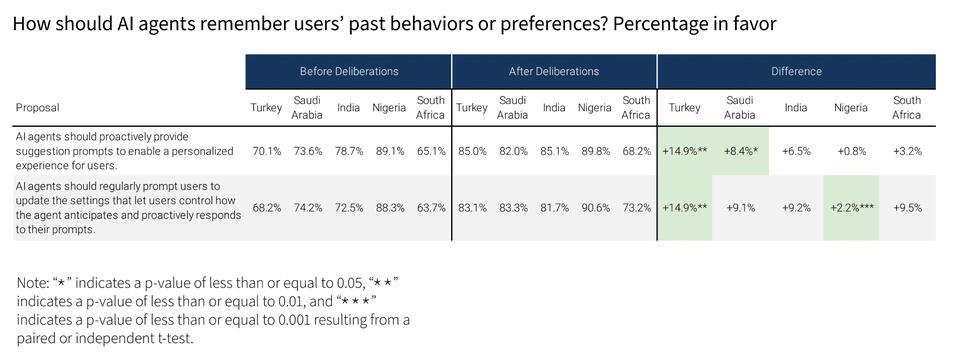
In October 2024, Meta, in collaboration with the Stanford Deliberative Democracy Lab, implemented the third Meta Community Forum. This Community Forum expanded on the October 2023 deliberations regarding Generative AI. For this Community Forum, the participants deliberated on ‘how should AI agents provide proactive, personalized experiences for users?’ and ‘how should AI agents and users interact?’ Since the last Community Forum, the development of Generative AI has moved beyond AI chatbots and users have begun to explore the use of AI agents — a type of AI that can respond to written or verbal prompts by performing actions for you, or on your behalf. And beyond text-generating AI, users have begun to explore multimodal AI, where tools are able to generate content images, videos, and audio as well. The growing landscape of Generative AI raises more questions about users’ preferences when it comes to interacting with AI agents. This Community Forum focused deliberations on how interactive and proactive AI agents should be when engaging with users. Participants considered a variety of tradeoffs regarding consent, transparency, and human-like behaviors of AI agents. These deliberations shed light on what users are thinking now amidst the changing technology landscape in Generative AI.

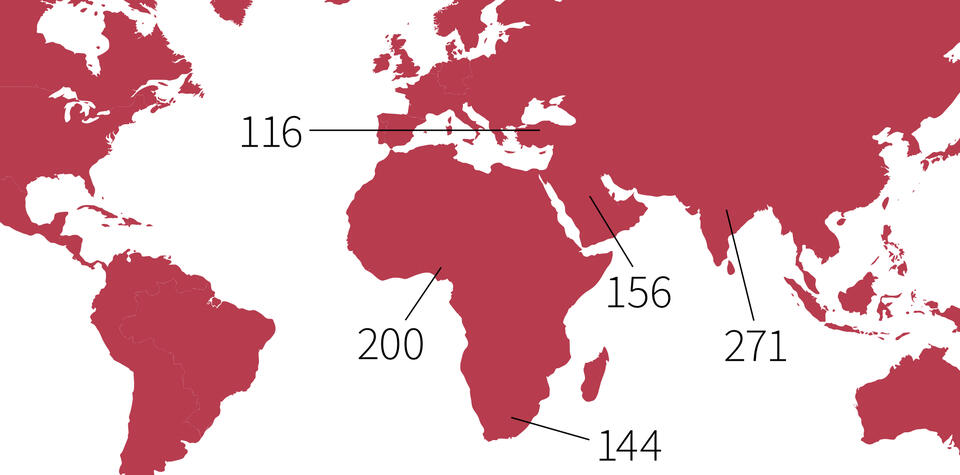
For this deliberation, nearly 900 participants from five countries: India, Nigeria, Saudi Arabia, South Africa, and Turkey, participated in this deliberative event. The samples of each of these countries were recruited independently, so this Community Forum should be seen as five independent deliberations. In addition, 1,033 persons participated in the control group, where the participants did not deliberate in any discussions; the control group only completed the two surveys, pre and post. The main purpose of the control group is to demonstrate that any changes that occur after deliberation are a result of the deliberative event.

All Publications button
1
Publication Type
Reports
Publication Date
Subtitle

April 2025

Authors
James S. Fishkin
Alice Siu
Authors
Soraya Johnson
News Type
News
Date
Paragraphs

Democracies face the challenge of requiring competent yet representative leaders in order to effectively embody the will of the people. More than a hundred countries have electoral quotas for women and minorities to ensure representation; however, such efforts are being threatened globally under the guise of critiques alleging that quotas undermine meritocracy and candidate quality. 

To assess this assumption, Stanford Assistant Professor of Political Science Soledad Prillaman examined in a CDDRL research seminar the relationship between candidate quality and electoral affirmative action. Her co-authored study relies on data from India, where the largest of such policies is enacted, and local Gram Panchayat positions are proportionally reserved for women and lower caste individuals on a rotating basis. Using population, census, and survey data, Prillaman compared the quality of politicians by looking at their level of education and their relative education performance. 

Her findings reveal that politicians in general are positively selected, meaning that they are much better educated than the constituents they serve. While quota-elected politicians had lower average education levels than non-quota politicians, they were more positively selected — they were drawn from a higher tail of their group’s education distribution. This means that quota politicians are relatively better educated than non-quota politicians, suggesting that they are of no worse quality and maybe even higher quality.

To further bolster this claim — that quota politicians may be of higher quality than non-quota politicians — Prillaman shows that voters hold quota politicians to a higher education standard than non-quota politicians and that the lower levels of average education are largely due to inequality in access to education. 

The evidence provides little justification for the assumption that electoral quotas undermine meritocracy. Instead, inequality of opportunity underlies differences in levels of education, and overall quality can be higher because voters tend to hold minority candidates to higher standards. As affirmative action policies are under challenge across the globe, it is critical to remember that improving minority representation in our democratic systems does not require sacrificing candidate quality.

Read More

Francis Fukuyama presented his research in a CDDRL seminar on April 3, 2025.
News

Rethinking Bureaucracy: Delegation and State Capacity in the Modern Era

Francis Fukuyama traces how scholars and policymakers have grappled with the tension between empowering bureaucracies to act effectively and ensuring they remain accountable to political leaders.
Rethinking Bureaucracy: Delegation and State Capacity in the Modern Era
Michael Albertus presented his research in a CDDRL seminar on March 6, 2025.
News

How Land Shapes the Fate of Societies

Tracing land’s role as a source of power, University of Chicago Professor of Political Science Michael Albertus analyzed how its distribution affects governance, social stratification, and conflict.
How Land Shapes the Fate of Societies
Juliet Johnson presented her research in a REDS Seminar, co-hosted by CDDRL and TEC, on February 27, 2025.
News

Show Me the Money: Central Bank Museums and Public Trust in Monetary Governance

Juliet Johnson, Professor of Political Science at McGill University, explores how central banks build public trust through museums.
Show Me the Money: Central Bank Museums and Public Trust in Monetary Governance
Hero Image
Soledad Artiz Prillaman presented her research in a CDDRL seminar on April 10, 2025.
Soraya Johnson
All News button
1
Subtitle

In the wake of widespread challenges to affirmative action policy, Stanford Political Scientist Soledad Artiz Prillaman’s research challenges the notion that electoral quotas for minority representation weaken candidate quality.

Date Label
Paragraphs

This book is premised on the understanding that women’s inclusion in constitutional politics is critical for our equality. In the present political context, particularly Muslim contexts, it is imperative to promote women’s equality both in law and in practice, so that women can move closer towards equality. Utilising a feminist constitutionalist approach, this book highlights the impact of women’s historical underrepresentation in constitutional drafting processes and discussions across the globe, as well as recent feminist interventions to address legislative processes that consider women’s needs and interests. It reflects on the role of Islam in politics and governance, and the varied ways in which Muslim-majority countries, as well as Muslim-minority countries, have sought to define women’s citizenship rights, personal freedoms, and human rights from within or outside of a religious framework. Recognising the importance of Constitutions for the recognition, enforcement and protection of women’s rights, this book explores how women seek justice, equality, and political inclusion in their diverse Muslim contexts.

The book advocates for more inclusive constitutional drafting processes that also consider diverse cultural contexts, political history, and legal and institutional developments from a gendered lens. Tracing the ways in which women are empowered and exercise agency, insist on inclusion and representation in politics and seek to enshrine their rights, the contributing authors present case studies of Afghanistan, Algeria, India, Iran, Morocco, Sudan, and Tunisia. Positioned at the crossroads of secular and religious legal forces, the book situates women’s rights at the centre of debates surrounding constitutional rights guarantees, gender equality, and religious rules and norms. The contributors offer a range of disciplinary approaches and perspectives that illustrate the richness and complexity of this field. The dominant emergent themes that each contributor tackles in considering how women’s rights impact, and are, in turn, impacted by Constitutions, are those of critical junctures such as revolutions or regime change which provide the impetus and opportunity for women’s rights advocates to push for greater equality; the tension between religion and women’s rights, where women’s legal disadvantage is justified in the name of religion, and finally, the recognition of the important role women’s movements play in advocating and organizing for equality. While much has been written about the constitutional processes of the past decade across the Muslim world as a result of pro-democratic uprisings, revolutions, and even regime change, most of such analyses lack a gendered lens, disregard women’s perspectives and fail adequately to acknowledge the significant role of women in constitutional moments. Even less has been written about the importance of constitutionalizing women’s equality rights in Muslim contexts. This edited volume is an effort to fill this gap in the literature. It will appeal to a broad range of scholars, students and activists in the areas of Muslim constitutionalism, feminist constitutionalism, Muslim law and society, gender studies, anthropology, and political science, religious studies and area studies.

EDITORS:

Dr. Vrinda Narain is Associate Professor at the Faculty of Law, McGill University, Canada, and Research Fellow, Research Directorate, University of the Free State, South Africa. Professor Narain’s research and teaching focus on constitutional law, social diversity and feminist legal theory. She is the author of two books: Reclaiming the Nation: Muslim Women and the Law in India (University of Toronto Press, 2008) and Gender and Community: Muslim Women's Rights in India (University of Toronto Press, 2001). She was Associate Dean, Academic, at the Faculty of Law from 2016 to 2019. She is a Board Member of the transnational research and solidarity network, Women Living Under Muslim Laws (WLUML), Member of the National Steering Committee of the National Association of Women and the Law (NAWL), Canada, and the President of the South Asian Women’s Community Centre (SAWCC) in Montreal.

Mona Tajali is a scholar of gender and politics in Muslim countries, with a focus on Iran, Turkey, and Afghanistan. She is the author of Women’s Political Representation in Iran and Turkey: Demanding a Seat at the Table (EUP 2022), and co-author of Electoral Politics: Making Quotas Work for Women (WLUML 2011) with Homa Hoodfar. She serves as executive board member of the transnational feminist solidarity network Women Living Under Muslim Laws (WLUML), and is currently the director of research of WLUML’s multi-sited Women and Politics project and its Transformative Feminist Leadership Institute. She is an associate professor of International Relations and Women’s Studies at Agnes Scott College, where she helped found the Middle East Studies Program and directed the Human Rights Program. She is currently researching institutionalization of women’s rights in Iran and Afghanistan at Stanford University’s Center for Democracy, Development and Rule of Law (CDDRL) as a visiting scholar.

All Publications button
1
Publication Type
Books
Publication Date
Authors
Book Publisher
Revival Press Limited
Paragraphs

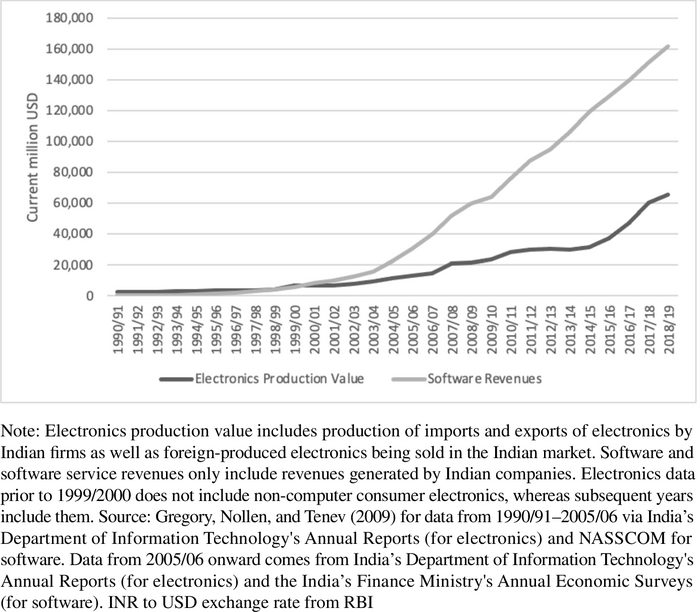
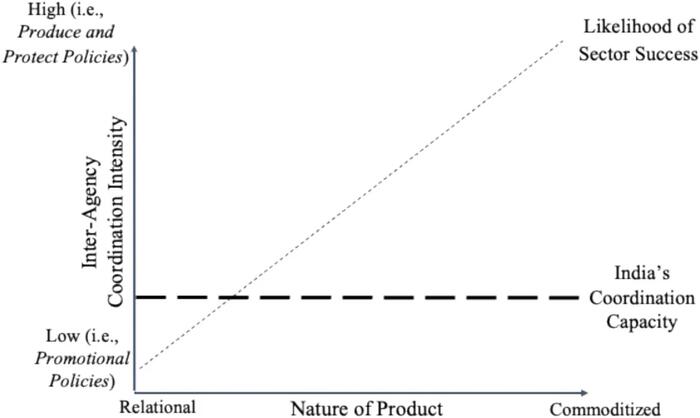
Economic growth is uneven within many developing countries as some sectors and industries grow faster than others. India is no exception, where anemic performance in manufacturing has been offset by robust growth in services. Standard scholarly explanations fail to explain this kind of variation. For instance, the factor endowments that are required for services—such as an educated workforce or access to electricity and other infrastructure—should also complement manufacturing. Reciprocally, if a state’s institutions hold back manufacturing, they should also impair growth in services. Why have services in India outperformed manufacturing? We examine India’s performance in the computing industry, where a dynamic software services sector has emerged even as its computer hardware manufacturing sector has flagged. We argue that the uneven outcomes between the software and hardware sectors are due to the variable needs of the respective sectors and the state’s capacity to coordinate agencies. The policies required to promote the software sector needed minimal coordination between state agencies, whereas the computer hardware sector required a more centralized state apparatus for successful state-business engagement. Domestic and transnational political networks were critical for the success of the software sector, but similar networks could not deliver the same benefits to the computer hardware industry, which required more coordination-intensive policies than software. A state’s ability to coordinate industrial policy is thus a critical determinant for effective sectoral political networks, shaping sectoral variations within an economy.

All Publications button
1
Publication Type
Journal Articles
Publication Date
Journal Publisher
Studies in Comparative International Development
Authors
Authors
Soraya Johnson
News Type
News
Date
Paragraphs

India’s once-robust democracy is in decline, with the Bharatiya Janata Party (BJP) being the only party with effective political organizing and a clear national message. FSI Mosbacher Senior Fellow in Global Democracy Larry Diamond, Hoover Senior Fellow Šumit Ganguly, and Hoover Research Fellow Dinsha Mistree reflected on this reality in a CDDRL seminar series talk. The discussion built on findings from their recently released book, The Troubling State of India's Democracy (University of Michigan Press, 2024).

The absence of a coordinated opposition in India has continued to threaten the functioning of its democracy. The challenges confronting the Indian National Congress Party (INC) are at the heart of the problem.

In the first half of the twentieth century, the INC emerged as a healthy political party. It enjoyed a unified national vision that championed secularism and independence from the British Empire. By being inclusive towards various political and religious identities, it unified a vast coalition across India’s broad geography, utilizing effective grassroots organizing mechanisms.

Today, however, the INC is hampered by extreme personalism due to the domineering role of the Gandhi family. The party lacks the organization or national vision to compete with the BJP. This decline began under the populist prime minister Indira Gandhi, who rose to power in the late 1960s. She replaced party leaders with loyalists and sycophants, weakening critical party mechanisms. The party began to set aside ideologically-driven political priorities in favor of more personalistic sinecures.

As subsequent members of the Gandhi family continued to lead the party, the INC failed to pose as an effective alternative to the BJP. The lack of political options results in a harmful feedback loop where citizens are discouraged from engaging with the opposition at all because they perceive no other candidates as having a chance at gaining power.

The future of India’s democratic competition requires the revival of opposition parties. Local parties at the state level are unlikely to grow to match the BJP, as they are often focused on specific ethnic and regional concerns, as well as lacking the infrastructure to take on the BJP nationally. The INC, once a leading national party, is unlikely to reinvent itself effectively unless it is released from the personalist grasp of the Gandhi family. The history of coalition building among the diversity of parties at the state and regional levels may provide a potential model for democratic checks or even electoral alternation. In any case, vigorous opposition must emerge from within India's political party system if backsliding is to be countered in the world's largest democracy.

A full recording of the seminar can be viewed below:

Read More

Keith Darden presented his research in a CDDRL/TEC REDS Seminar on February 6, 2025.
News

War and the Re-Nationalization of Europe

American University Political Scientist Keith Darden examines how the Russian-Ukrainian war is reshaping European institutions.
War and the Re-Nationalization of Europe
Alice Siu presented her research during a CDDRL seminar on January 30, 2025.
News

Can Deliberation Revitalize Democracy?

Alice Siu, Associate Director of CDDRL’s Deliberative Democracy Lab, demonstrates the wide-ranging effects of deliberation on democracy.
Can Deliberation Revitalize Democracy?
Ali Çarkoğlu
News

Polarization, Cleavages, and Democratic Backsliding: Electoral Dynamics in Turkey (1990-2023)

Using data from the World Values Survey and Turkish Election Studies, CDDRL Visiting Scholar Ali Çarkoğlu explores the rise of the Justice and Development Party (AKP) and the enduring influence of cultural divides on Turkey’s political landscape.
Polarization, Cleavages, and Democratic Backsliding: Electoral Dynamics in Turkey (1990-2023)
Hero Image
Larry Diamond, Šumit Ganguly, and Dinsha Mistree present their research in a CDDRL seminar.
Larry Diamond, Šumit Ganguly, and Dinsha Mistree (clockwise L to R) presented their research in a CDDRL seminar on February 13, 2025.
Nora Sulots
All News button
1
Subtitle

Stanford Scholars Larry Diamond, Šumit Ganguly, and Dinsha Mistree, co-editors of the recently released book "The Troubling State of India's Democracy," gathered to discuss how the decline of opposition parties in India has undermined the health of its democracy.

Date Label
Authors
News Type
Commentary
Date
Hero Image
Indian flag with text "Matters of Policy and Politics" overlayed
All News button
1
Subtitle

Šumit Ganguly joins Dinsha Mistree on the Hoover Institution's "Matters of Policy and Politics" podcast with host Bill Whalen to discuss what the future holds for India, which has the world’s largest population and whose demographics are changing, as well as its tastes in work, leisure, and family planning.

Date Label
Paragraphs
Cover of the book "The Four Talent Giants"

The Asia-Pacific region has seen extraordinary economic achievements. Japan's post-World War II transformation into an economic powerhouse challenging US dominance by the late 1980s was miraculous. China's rise as the world's second-largest economy is one of the 21st century's most stunning stories. India, now a top-five economy by GDP, is rapidly ascending. Despite its small population, Australia ranked among the top ten GDP nations in 1960 and has remained resilient. While cultivating, attracting, and leveraging talent has been crucial to growth in these countries, their approaches have varied widely, reflecting significant cultural, historical, and institutional differences.

In this sweeping analysis of talent development strategies, Gi-Wook Shin investigates how these four "talent giants'' achieved economic power and sustained momentum by responding to risks and challenges such as demographic crises, brain drain, and geopolitical tensions. This book offers invaluable insights for policymakers and is essential for scholars, students, and readers interested in understanding the dynamics of talent and economic growth in the Asia-Pacific region and beyond.

See also:

Sociologist Gi-Wook Shin Illuminates How Strategic Human Resource Development Helped Build Asia-Pacific Economic Giants
APARC website,  June 26, 2025

In the Media

Stanford Scholar Reveals How Talent Development Strategies Shape National Futures
The Korean Daily, July 13, 2025 (interview)
- English version
- Korean version


Reviews of The Four Talent Giants


Review by Barry Eichengreen, University of California, Berkeley 
Published in Foreign Affairs, December 16, 2025

"Scholars have offered multiple hypotheses, mostly emphasizing culture, history, and institutions, to explain the economic rise of countries in Asia. Shin focuses on human capital, analyzing the different ways Asian economies have developed their workforces. The four countries whose economies he focuses on—Australia, China, India, and Japan—have taken distinctive approaches to acquiring what he calls “talent portfolios.” Japan nurtured homegrown talent, while Australia attracted skilled immigrants. China sent students abroad, while India relied on its foreign diaspora and its advanced institutes of technology to train workers and impart needed skills. Although the approaches differ, each country successfully developed scientific, technical, and managerial talent in the quest for economic growth. Shin’s focus on talent competition is especially timely given the rapid increase in the number of students in China studying STEM subjects—science, technology, engineering, and math—and political attacks on higher education in the United States. Together, these trends raise questions about the ability of the United States to keep pace with China."

Review By Steven A. Mejia, Washington State University
Published in Social Forces, August 23, 2025

"The determinants of nation-state development is one of the most central questions in the comparative international social sciences. In The Four Talent Giants: National Strategies for Human Resource Development Across Japan, Australia, China, and India, Gi-Wook Shin joins these longstanding conversations in an ambitious work that may become a classic study. [...]

"There is much to praise about The Four Talent Giants. It makes sound theoretical inferences from analysis of expansive historical and quantitative data on major successes in the modern world economy, helping advance scientific understanding of the factors shaping development. These scholarly insights will also be crucial for policy makers at national, regional, and international levels. For example, countries seeking to foster their own development may invest in the forms of human and social capital emphasized in The Four Talent Giants. [...]

"Overall, The Four Talent Giants provides a groundbreaking theoretical innovation to help explain key empirical problems central to decades of comparative international social scientific work. This may in turn shape development policy that can then improve the quality of life for millions around the world. The Four Talent Giants will move comparative international social scientific conversations on development in important new directions."

Read the complete review via Social Forces.

Review by Anthony P. D'Costa, University of Melbourne
Published in The Developing Economies, November 2025

"Gi-Wook Shin has written an excellent book on talent development strategies [...] Shin's book is noteworthy for three key reasons: First, he has developed a novel framework to analyze the development and the international movement of talent and their mobilization by governments for national economic and technological development. Second, he covers an important region of the world that has significant players in talent portfolios and offers wide-ranging experiences for talent strategy. And third, it is a timely publication when anti-immigrant sentiments are running high. He has skillfully marshaled a wealth of data, including field interviews in these countries, to produce a coherent narrative of global talent [...]

"Gi-Wook Shin's skillfully argued book will inspire students and scholars to rethink talent migration, education inequality, and the future of Asian economic development."

Read the complete review via The Developing Economies.


Advance praise for The Four Talent Giants:

"The Four Talent Giants is a wonderful book, full of new ideas and, especially, comparative empirical research. Gi-Wook Shin's ambitious treatment of the topic of human capital, or 'talent,' in the context of a globalized economy is very important and reading it will be a rewarding exercise for scholars, politicians, corporate leaders, and many others."
—Nirvikar Singh, University of California, Santa Cruz

"The current scholarly literature offers multiple country-specific talent formation studies, including those on the transformative role of skilled migration. However, few authors have dared to attempt a thorough cross-national analysis, comparing the nature and impact of policies across highly variable geopolitical contexts. The Four Talent Giants achieves this goal triumphantly, and accessibly, assessing the global implications of national experimentation for effective talent portfolio management."
—Lesleyanne Hawthorne, University of Melbourne
 

All Publications button
1
Publication Type
Books
Publication Date
Subtitle

National Strategies for Human Resource Development Across Japan, Australia, China, and India

Authors
Gi-Wook Shin
Book Publisher
Stanford University Press
Subscribe to India