News Type
News
Date
Paragraphs

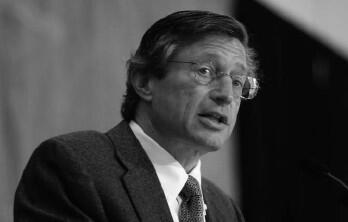
Under the aegis of the Forum on Contemporary Europe, Ambassador Jan Eliasson, former U.N. Special Envoy to Darfur, visited Stanford and FSI to offer a new model for global crisis management of a wide range of issues, from piracy to global poverty.   As the former president of the U.N. General Assembly, Eliasson called for concerted action by NATO, the European Union, the U.N., and other actors on pressing security and humanitarian issues.  Arguing that current security and humanitarian challenges are greater than at any time in recent memory, Eliasson urged that world powers, along with international institutions, seek new leadership from the Obama administration grounded in recognition of the global impact of regional crises. 

To make his case for seeing the global in the regional, Eliasson raised the specter of the escalating sea piracy off the coast of Somalia.  Pirates in that region launch from the shores of a failed state – a polity that has degenerated into rival war-lord militias after combined forces of U.N. and Western powers lost their appetite for engagement, and turned their attention elsewhere.  While much of the world is refocused on the wars in Iraq and Afghanistan, multinational corporations are increasingly subject to and pay out multi-million dollar ransoms for the release of ship crews and cargoes that include the world’s commercial arms shipments.  The piracy has grown beyond instances of local plunder, into crime that threatens one of the most heavily trafficked shipping lanes between western and emerging markets.  Merchant marine as well as naval fleets have been forced to change course, altering global transportation and security routes.  Most recently, Eliasson’s call for international leadership would seem to have been heeded by nations attending the international summit in Brussels on the piracy crisis.  At the summit, the E.U. foreign policy chief, the U.N. Secretary General, and U.S. officials joined with more than sixty countries – including Iraq – to pledge over $200 million in aid to the Somali government for security and development.  This international cooperation, and attention to root causes, would seem to be the first sign of the kind of vision that Ambassador Eliasson urges for new and more comprehensive response.

Ambassador Eliasson completed his depiction of the most effective international policy responses with a focus on the world problem of poverty.  Drawing on his years of experience in the international and Swedish diplomatic corps, Eliasson explained that in the most impoverished areas of the world, the most effective investment in international aid is that which funds the education of girls and young women.  Teach a girl essential education, and she herself, along with her family, and her community, benefits in manifold ways. Raising his glass, Eliasson noted that great numbers of peoples still do not have access to cheap and clean water – an essential provision for health and development.  Water, and access to its diminishing supply, must be understood by the world’s new leaders as the high stake behind multiple border wars. 

The Forum hosted Ambassador Eliasson at FSI and Stanford for two days of talks to reach multiple audiences.  At a Stanford Speakers Bureau event, Ambassador Eliasson addressed an overflow crowd of students and offered  insights into the crisis in Darfur.  The Forum welcomed the opportunity to bring Ambassador Eliasson, so recently from his mission in Darfur, to spur student interest in the role of international (U.N.) and regional (European Union and African Union) peace keeping operations.  During the same visit to Stanford, the Forum on Contemporary Europe hosted Kerstin Eliasson, Board Member of the European Commission Joint Research Center, and former Assistant Undersecretary of the Swedish Ministry of Education and Science, to speak on research reforms in the European higher education system.  Kerstin Eliasson’s public address was co-hosted with the Forum by the faculty seminar series of the Stanford Institute for Higher Education Research.  The visit by Ambassador Eliasson, and Kerstin Eliasson, was a highlight of spring 2009 research and public dissemination of the Program on Sweden, Scandinavia, and the Baltic Region at the Forum on Contemporary Europe.

Hero Image
eliasson scenery Rod Searcey
All News button
1
-

This presentation will discuss the current clinical diagnostic business scenario and the business opportunities available with a focus on the U.S. market.


About the speaker:

Sivaraman Vasudevan is a corporate affiliate visiting fellow at Shorenstein APARC for 2008-09.  Prior to joining Shorenstein APARC, he has been working for Reliance Life Sciences in Bangalore, India as Regional Head in charge of sales opoerations for Eastern and Southern parts of India.  His job responsibilities include developing business plans, implementing strategies and achieving sales targets.  Additionally, he is part of an elite corporate team in developing national and regional marketing strategies. 

Daniel and Nancy Okimoto Conference Room

Sivaraman Vasudevan Speaker
Seminars
Paragraphs

The objective of this paper is to examine the ‘soft power' exercised by associations formed by the Indian diaspora in the United States, as it relates to: (a) building up the image of India as a deserving member of the global elite - politically, culturally and economically, and, then, (b) using that image to achieve certain goals for their country of origin. The term "association" is used to denote both formal non-profit organizations, such as trade associations, and informal non-profit organizations. The latter includes informal networks created by e-mail groups, as well as initiatives of limited life-span created to achieve specific aims, such as reducing anti-dumping tariffs on steel imports from India or passing the US-India nuclear fuel agreement.

All Publications button
1
Publication Type
Working Papers
Publication Date
Authors
Rafiq Dossani
-

This lecture deals with the strategies of reconstructing the suppressed memory of traumatic events in Kosova, Afghanistan, and Bosnia and Herzegovina at the end of the 20th century. In this period of transitions and changes, history has become a key conflict arena in which identity and memory are being waged. Milica Tomic's work addresses these issues in an unconventional way that challenges traditional ‘representation’ (or lack of thereof) of the past events. By combining three of her exhibited projects xy-üngelost, container and Srebrenica – this talk attempts to investigate the ways in which we can engage with the past to confront the drives to forget. Thus re-constructed material and social network of events critically investigate the politics of rights to narrate traumatic events from the past. Proceeding from the fact that what we cannot remember tells us about that which we cannot forget, Milica Tomic interprets the syntagm “politics of memory” as a demand for a renewal of politics. Stated in the negative form, it goes: There is no memory without politics!/There is no oblivion without politics!

Milica Tomic works and lives in Belgrade as a visual artist, primarily video, film, photography, performance, action, light and sound installation, web projects, discussions etc. Tomic's work centers on issues of political violence, nationality and identity, with particular attention to the tensions between personal experience and media constructed images. Milica Tomic's has exhibited globally since 1998 and participated in numerous exhibitions including Venice Biennale in 2001 and 2003, Sao Paulo Biennale in1998, Istanbul Biennale in 2003 and Sidney Biennale in 2006, Prague Biennale in 2007, Gyumri Biennale in 2008. Tomic's work was exhibited in a wide international context including the Museum voor Moderne Kunst, Arnhem, Holland, Kunsthalle Wien, Austria, Moderna Museet, Stockholm, Sweden, MUMOK- Museum Moderner Kunst Stiftung Ludwig Wien, Vienna, Austria, Fundacio Joan Miro, Barcelona, Spain, Ludwig Museum Budapest, Hungary, Malmo Konsthall, Malmo, Sweden, Palazzo Della Triennale Milano, Milan, Italy, Museum of Contamporary Art Belgrade, Serbia, GfZK- Galerie fur Zeitgenussische Kunst, Leipzig, Germany, State Museum of Contemporary Art Thessaloniki, Greece, Kunsthalle Fridericianum, Kassel, Germany, Copenhagen Contemporary Art Center, Copenhagen, Denmark, Brooklyn Museum of Art, New York, USA, Freud Museum, London, UK, KIASMA Nykytaiteen Museo, Helsinki, Finland, Nasjonalmuseet for Kunst, Arkitektur og Design, Oslo, Norway, Stedelijk Museum, Amsterdam, Holland etc.

A founder and member of the Monument Group, Tomic is a organizer of numerous international art projects and workshops, as well as lecturer at international institutions of contemporary art, such as: NIFCA (Nordic Institute for Contemporary Art), Kuvataideakatemia / Academy of Fine Arts, Helsinki, Finland, Piet Zwart Institut, Rotterdam, Holland, Akademie der bildenden Künste, Vienna, Austria and others.

Jointly sponsored by the Forum on Contemporary Europe, Archaeology Center, Department of Art and Art History, and Center for Russian, East European and Eurasian Studies.

Building 500, Archaeology Center
488 Escondido Mall
Seminar Room
Stanford University

Milica Tomic Visual Artist, Belgrade Speaker
Seminars
-

This talk will describe the role of data analysis in political transitions to democracy. Transitions require accountability of some form, and in the aggregate, accountability is statistical. In this talk, I will present examples of using several different kinds of data to establish political responsibility for large-scale human rights violations.

Patrick Ball, Ph.D., is the Director of the Human Rights Program at the Benetech Initiative which includes the Martus project and the Human Rights Data Analysis Group (HRDAG). Since 1991, Dr. Ball has designed information management systems and conducted statistical analysis for large-scale human rights data projects used by truth commissions, non-governmental organizations, tribunals and United Nations missions in El Salvador, Ethiopia, Guatemala, Haiti, South Africa, Kosovo, Sierra Leone, Sri Lanka, Perú, Timor-Leste, Sierra Leone, and Chad.

Dr. Ball is currently involved in Benetech projects in Colombia, Burma, Liberia, Guatemala and in other countries around the world.


Wallenberg Theater

Patrick Ball, Ph.D. Director of the Human Rights Program Speaker Benetech
Workshops
Authors
News Type
News
Date
Paragraphs

Joshua Cohen's Program on Global Justice (PGJ), which explores issues at the intersection of political norms and global political-economic realities, has joined CDDRL Center Director Larry Diamond has announced.  Cohen, a professor of political science, philosophy, and law, came to Stanford from the Massachusetts Institute of Technology (M.I.T.) in 2006 to launch a new program on global justice at FSI.

The aim of his program, Cohen said, "is to build dialogue and research that integrates political values - toleration, fairness, and the common good - into discussions about human rights, global governance, and access to such basic goods as food and clean water."  "These issues of global politics are all ethically consequential," Cohen points out, "and addressing them well requires a mix of philosophical thought with the best current social-scientific research."

CDDRL Director Diamond and Associate Director for research Kathryn Stoner joined in saying "We are delighted to welcome Josh Cohen to our team.  His path-breaking work bridges the normative, empirical, and policy dimensions of our Center's ongoing concerns for democracy, equitable economic development, and the rule of law."

Under Cohen, the Global Justice Program's largest effort has focused on the Just Supply Chains project. As globalization of production creates a need for new models of fair treatment for workers in global supply chains, fresh thinking is also needed on the role of unions, the rights of workers to associate, and the role of trade agreement in promoting just working conditions.

Cohen, Diamond, and Terry Winograd, Stanford professor of computer science, have also initiated a the new Program on Liberation Technology which brings together Stanford colleagues from computer science and applied technology with social scientists to explore ways that new information technologies can improve economic, political, and social conditions in low income countries, and materially improve human lives. As Cohen and Diamond note, Liberation Technology "seeks to understand how information technology can be used to defend human rights, improve governance, empower the poor, promote economic development, and pursue of variety of other social goods."  

A prolific author, Cohen has written extensively on issues of democratic theory, especially the theory of deliberative democracy, and implications of that idea for personal liberty. He is the author with Joel Rogers of On Democracy (1983), Rules of the Game (1986), and Associations and Democracy (1995). A volume of his selected papers, Philosophy, Politics, Democracy is forthcoming from Harvard University Press, and his Rousseau: A Free Community of Equals, is forthcoming from Oxford University press.  

Cohen is also the editor of Boston Review, a bi-monthly magazine of political, cultural, and literary ideas, and has edited 18 books that grew out of forums that appeared in the Review. He moderated the Global Poverty and Development Course offered by Google.org in 2007 for google.com employees. The ten week-course addressed issues ranging from growth and globalization to education and urbanization, and can still be watched on YouTube.

Diamond, Stoner-Weiss, and Cohen are part of the distinguished Stanford faculty group who lead the Just Supply Chains each summer.  This highly competitive program each year selects from 600-800 applicants some 30 rising leaders from major transitioning countries such as Russia, Iran, Iraq, Pakistan, Afghanistan, Nigeria, Kenya, and Zimbabwe and brings them to Stanford to examine and foster linkages among democracy, sustainable economic development, and good governance. As Diamond and Cohen point out, in today's challenging environment, putting new information technologies to socially, politically, and economic constructive uses is a powerful tool and of growing interest to many of these rising leaders from transitioning countries.   

All News button
1
Authors
News Type
News
Date
Paragraphs

As fallout from accelerating climate change and the economic meltdown reveals, today's gravest threats are transnational, demanding unprecedented cooperation among competing nations to find lasting solutions. The policies and strategies developed for the balance-of-power rivalries of the 20th century no longer apply in this one, according to the authors of Power & Responsibility, a book launched March 17 at Stanford.

"Transnational threats create security interdependence between the most powerful states and the weaker states," author Stephen J. Stedman said during the panel discussion hosted by the Freeman Spogli Institute for International Studies. "The United States can't defend itself against any threat without sustained international cooperation from others."

Stedman, a faculty member at Stanford's Center for International Security and Cooperation (CISAC), Bruce Jones of New York University and Carlos Pascual from the Brookings Institution, said their book seeks to promote the concept of "responsible sovereignty" to rebuild international order and strengthen international institutions such as the United Nations. In other words, the authors argue, their notion of sovereignty demands responsibility from states in addition to according privilege. Furthermore, nations should be held responsible for the harmful international effects of their domestic policies-whether it's producing massive amounts of carbon dioxide or failing to secure national borders and financial institutions, thus enabling terrorist groups to attack targets thousands of miles away.

The book's publication follows a policy oriented Plan for Action booklet released last November on the heels of the U.S. presidential election. Timed to coincide with the start of the Obama administration, the 360-page book, published by Brookings Institution Press, highlights seven issues that demand transnational solutions: nuclear proliferation, climate change, bio-security, civil violence and regional conflicts, terrorism and economic security. According to Stedman, the book was received positively during recent launches in Europe, Asia and Washington, D.C. and, earlier this month, the authors presented their findings to senior White House officials.

While U.S. power is in decline, Jones said, it is the only nation with the military, diplomatic, economic and political power needed to take a global lead in tackling transnational threats. The world's rising powers-China, India and Brazil-recognize that the alternative to U.S. leadership is "entropy and chaos," he said, and that every state stands to benefit more from the former as long as it is geared to structured cooperation.

"This is not a love fest of great powers," Jones continued. "There are real interests here and there [would] be tough and sustained negotiations." But the alternatives-maintaining the status quo where global decisions are made by the outmoded G-7 group of industrialized nations, or establishing a "league of democracies" that would exclude critical players such as China-are simply unworkable. "We recognize that our model is tough but we think it's the most likely to have impact on the threats that face us," Jones said.

Hero Image
MGI
All News button
1
-

Amandeep Singh Gill is a visiting fellow at CISAC. He is a member of the Indian Foreign Service and has served in the Indian Mission to the United Nations in Geneva, the Indian Embassy in Tehran and the High Commission of India in Colombo. At headquarters in New Delhi, he has served twice in the Disarmament and International Security Affairs Division of the Ministry of External Affairs from 1998 to 2001 and again from 2006 to 2008 at critical junctures in India’s nuclear diplomacy. He was a member of the Indian delegation to the Conference on Disarmament during the negotiations on the Comprehensive Nuclear Test Ban Treaty. He has also served as an expert on the UN Secretary General’s panels of experts on Small Arms and Light Weapons and on Missiles.

His research priorities include disarmament, arms control and non proliferation, Asian regional security and human security issues.  He is currently working on the interaction of nuclear policies of major states, particularly in Asia.

Before joining the Indian Foreign Service, Amandeep Gill worked as a telecommunications engineer. He retains an abiding interest in the interaction of science, security and politics. He is founder of a non-profit called Farmers First Foundation that seeks to reclaim agriculture for the farmers and demonstrate the viability of integrated agriculture in harmony with nature.

David Holloway is the Raymond A. Spruance Professor of International History, a professor of political science, and an FSI senior fellow. He was co-director of CISAC from 1991 to 1997, and director of FSI from 1998 to 2003. His research focuses on the international history of nuclear weapons, on science and technology in the Soviet Union, and on the relationship between international history and international relations theory. His book Stalin and the Bomb: The Soviet Union and Atomic Energy, 1939-1956 (Yale University Press, 1994) was chosen by the New York Times Book Review as one of the 11 best books of 1994, and it won the Vucinich and Shulman prizes of the American Association for the Advancement of Slavic Studies. It has been translated into six languages, most recently into Czech in 2008. Holloway also wrote The Soviet Union and the Arms Race (1983) and co-authored The Reagan Strategic Defense Initiative: Technical, Political and Arms Control Assessment (1984). He has contributed to the Bulletin of the Atomic Scientists, Foreign Affairs, and other scholarly journals.

Since joining the Stanford faculty in 1986 -- first as a professor of political science and later (in 1996) as a professor of history as well -- Holloway has served as chair and co-chair of the International Relations Program (1989-1991), and as associate dean in the School of Humanities and Sciences (1997-1998). Before coming to Stanford, he taught at the University of Lancaster (1967-1970) and the University of Edinburgh (1970-1986). Born in Dublin, Ireland, he received his undergraduate degree in modern languages and literature, and his PhD in social and political sciences, both from Cambridge University.

If you would like to be added to the email announcement list, please visit https://mailman.stanford.edu/mailman/listinfo/socialscienceseminar

Reuben W. Hills Conference Room

Amandeep Singh Gill CISAC Visiting Scholar Speaker

CISAC
Stanford University
Encina Hall, E214
Stanford, CA 94305-6165

(650) 723-1737 (650) 723-0089
0
Senior Fellow Emeritus at the Freeman Spogli Institute of International Studies
Raymond A. Spruance Professor of International History
0820stanford-davidholloway-238-edit.jpg PhD

David Holloway is the Raymond A. Spruance Professor of International History, a professor of political science, and an FSI senior fellow. He was co-director of CISAC from 1991 to 1997, and director of FSI from 1998 to 2003. His research focuses on the international history of nuclear weapons, on science and technology in the Soviet Union, and on the relationship between international history and international relations theory. His book Stalin and the Bomb: The Soviet Union and Atomic Energy, 1939-1956 (Yale University Press, 1994) was chosen by the New York Times Book Review as one of the 11 best books of 1994, and it won the Vucinich and Shulman prizes of the American Association for the Advancement of Slavic Studies. It has been translated into seven languages, most recently into Chinese. The Chinese translation is due to be published later in 2018. Holloway also wrote The Soviet Union and the Arms Race (1983) and co-authored The Reagan Strategic Defense Initiative: Technical, Political and Arms Control Assessment (1984). He has contributed to the Bulletin of the Atomic Scientists, Foreign Affairs, and other scholarly journals.

Since joining the Stanford faculty in 1986 -- first as a professor of political science and later (in 1996) as a professor of history as well -- Holloway has served as chair and co-chair of the International Relations Program (1989-1991), and as associate dean in the School of Humanities and Sciences (1997-1998). Before coming to Stanford, he taught at the University of Lancaster (1967-1970) and the University of Edinburgh (1970-1986). Born in Dublin, Ireland, he received his undergraduate degree in modern languages and literature, and his PhD in social and political sciences, both from Cambridge University.

Faculty member at the Center for International Security and Cooperation
Affiliated faculty at the Center on Democracy, Development, and the Rule of Law
Affiliated faculty at The Europe Center
CV
Date Label
David Holloway Raymond A. Spruance Professor of International History and FSI Senior Fellow; CISAC Faculty Member; Forum on Contemporary Europe Research Affiliate; CDDRL Affiliated Faculty Commentator
Seminars
-

Long-term demand for nuclear fuel is high as demonstrated by the continued rise in activities such as uranium mining and milling, enrichment, and fuel fabrication. At a recent international conference in Beijing on nuclear energy, IAEA officials stated that the global financial crisis is unlikely to deter the increasing long-term demand for new nuclear power plants. In order to limit the proliferation risk, the IAEA suggested the concept of multinational nuclear arrangements and member countries followed up with various related proposals. A few projects at the front-end of the nuclear fuel cycle are reviewed in the context of such multinational arrangements. Policies of two uranium-producing countries, Mongolia (a new supplier) and Kazakhstan (a relatively new supplier) are compared. The development at the front end of the nuclear fuel cycle is reviewed in the context of collaboration of supplier countries and countries with strong technological capability and demand such as Russia, France, China, Japan, and India. 

Undraa Agvaanluvsan is a visiting professor at CISAC. Her research covers the technical and policy aspects of the uranium and nuclear energy industry. Mongolia, her homeland, has a large reserve of natural uranium that it wants to develop for economic and strategic purposes. Similar to other developing nations, Mongolia also is considering nuclear power to help reduce domestic pollution and meet growing demand for electricity. In this context, Agvaanluvsan is analyzing Mongolia's uranium mining and processing policies to compare this emerging industry with parallel developments in Kazakhstan and countries in southern Africa. She also is comparing Mongolia's potential role as a uranium supplier to that of Canada's and Australia's.

Agvaanluvsan received her bachelor's (1994) and master's (1995) degrees in physics from the National University of Mongolia. From 1996-97, she studied high energy physics at the International Centre for Theoretical Physics in Trieste, Italy. Agvaanluvsan earned her doctorate in 2002 from North Carolina State University in Raleigh, North Carolina, studying nuclear reactions and quantum chaos in nuclei. Following completion of her doctorate, she conducted postdoctoral research work in the Nuclear Experimental Physics group at Lawrence Livermore National Laboratory.

In addition to Agvannluvsan's scientific and policy analysis work, in 2008 she served as an adviser to Mongolia's Minister of Foreign Affairs. Agvaanluvsan also is director of the recently established Mongolian-American (MonAme) Scientific Research Center in Ulaanbaatar, which focuses on energy, the environment and mineral processing technologies. In September 2008, she helped organize MonAme's first international meeting, the "Ulaanbaatar Conference on Nuclear Physics and Applications," in Mongolia's capital.

Reuben W. Hills Conference Room

Undraa Agvaanluvsan CISAC Visiting Professor Speaker
Seminars
-

Abstract: China's three human spaceflights (2003, 2005, and 2008) and 2007 anti-satellite test have put the world on notice that a new geography is emerging in 21st Century space competition, which also includes several other leading Asian countries: India, Japan, and South Korea. North Korea is also desperately trying to enter the club of space-faring nations.  Why are Asian states today so interested in space?  What are their evolving capabilities, in both the civilian and military sectors? And how are these countries' activities likely to affect the interests of the United States?  This presentation will cover each of these issues, as well as emerging Obama administration space policies, particularly in regard to China.  (Dr. Moltz recently returned from research trips to South Korea and Japan, where he conducted extensive interviews with space officials and analysts. His talk is based on a book manuscript he is currently writing.)

James Clay Moltz holds a joint appointment as an associate professor in the Department of National Security Affairs and in the Space Systems Academic Group at the Naval Postgraduate School.  >From 1993 to 2007, he worked at the Monterey Institute of International Studies' Center for Nonproliferation Studies, where he served as deputy director from 2003-07.  Dr. Moltz is the author (most recently) of The Politics of Space Security: Strategic Restraint and the Pursuit of National Interests (Stanford University Press, 2008).  He received his Ph.D. and M.A. in Political Science from the University of California at Berkeley and holds an M.A. in Russian and East European Studies and a B.A. in International Relations (with Distinction) from Stanford University. Dr. Moltz serves as a consultant to the NASA Ames Research Center, where he chairs the Space Futures Analysis Group.

If you would like to be added to the email announcement list, please visit https://mailman.stanford.edu/mailman/listinfo/stsseminar 

Reuben W. Hills Conference Room

Clay Moltz Associate Professor, Naval Postgraduate School Speaker
Seminars
Subscribe to South Asia