


Transitions 2009 conference to focus on action plan for President-elect Obama
News Type
News
Date
Paragraphs
America's standing in the world has been damaged by eight years of unilateralism and it must cooperate with rising powers to tackle emerging transnational threats, according to a major research project to be unveiled Thursday, Nov. 13, at a conference hosted by Stanford's Freeman Spogli Institute for International Studies (FSI).
The directors of "Managing Global Insecurity Project (MGI)" (MGI) from Stanford's Center for International Security and Cooperation (CISAC), New York University and the Brookings Institution will use the conference to present their "plan for action" for the next U.S. president.
"President-elect Obama should take advantage of the current financial crisis and the goodwill engendered by his election to reestablish American leadership, and use it to rebuild international order," said CISAC's Stephen J. Stedman. "Part of that is to recalibrate international institutions to reflect today's distribution of power. If you could find a way for constructive engagement between the G-7 and Russia, China, India, Brazil and South Africa-that reflects the reality of world power today-you could actually animate a lot of cooperation."
Stedman, Bruce Jones from New York University's Center on International Cooperation and Carlos Pascual from Brookings will discuss concrete actions for the incoming administration to restore American credibility, galvanize action against transnational threats ranging from global warming to nuclear proliferation and rejuvenate international institutions such as the United Nations.
"You find in American foreign policy a blanket dismissal of international institutions, especially regarding security," Stedman said. "But if you eliminate them, you don't have a prayer of recreating the kind of cooperation that exists in the U.N. There actually is a pretty good basis of cooperation on which to build."
The nonpartisan project also will be presented Nov. 20 at a high-profile event at the Brookings Institution that will feature leaders such as former Secretary of State Madeleine Albright and Brookings President Strobe Talbott. That in turn will take place on the heels of the upcoming G-20 emergency summit to discuss measures to stave off a global recession and give a greater voice to developing nations. MGI's "plan for action" includes a series of policy papers on hot-button topics such as economic security.
"The big thing we talk about is if you institutionalize cooperation with the existing and rising powers you can hope to build a common understanding of shared long-term interests," Jones said. "If you approach issues only through the lens of the hottest crises, you will find different interests in the very short term on how [problems] are handled."
Transitions 2009
The 20-month-long project, which incorporated feedback and direction from nonpartisan U.S. and international advisory boards, dovetails closely with the theme of FSI's fourth annual conference: "Transitions 2009."
"There has rarely been a moment more fraught with danger and opportunity, as new administrations in the United States and abroad face the interlocking challenges of terrorism, nuclear proliferation, climate change, hunger, soaring food prices, pandemic disease, energy security, an assertive Russia and the grave implications of failed and failing states," FSI Director Coit D. Blacker said. "This conference will examine what we need to do to prepare our own citizens for the formidable challenges we face and America's own evolving role in the world."
Timothy Garton Ash, an Oxford professor and Hoover Institution senior fellow, will deliver the conference's keynote address, titled, "Beyond the West? New Administrations in the United States and Europe Face the Challenge of a Multi-Polar World."
Blacker, who served in the first Clinton administration; Stephen D. Krasner, who worked in the current Bush administration; medical Professor Alan M. Garber; and Stanford President Emeritus Gerhard Casper will open the conference with a reflection on the past and future and the watershed moment presented by Obama's presidency. The conference also will include breakout sessions with FSI faculty such as "Rethinking the War on Terror," led by Martha Crenshaw of CISAC; "Toward Regional Security in Northeast Asia," chaired by former Ambassador Michael J. Armacost, acting director of the Shorenstein Asia-Pacific Research Center; and "Is African Society in Transition?" led by economist Roz Naylor of the Program on Food Security and the Environment.
Long-term security
For MGI project leaders Stedman, Jones and Pascual, the zeitgeist of the moment is America's relationship with the emerging powers. "The good news from an American perspective is, despite the financial crisis, despite everything else, sober leadership in China, India, Brazil and elsewhere understand, in the immediate term, there is no alternative to American leadership, as long as [it] is geared toward cooperation and not 'do as you please-ism,'" Jones said. "On the other side, the financial crisis highlights that U.S. foreign policy has to come to terms with the fact that it does not have the power to dictate outcomes. It has to build cooperation with emerging powers, with international institutions, into the front burner of American foreign policy." More broadly, international cooperation must be built on what Stedman calls the principle of "responsible sovereignty," the notion that sovereignty entails obligations and duties toward other states as well as to one's own citizens.
In addition to MGI's "plan for action," the three men have coauthored Power and Responsibility: International Order in an Era of Transnational Threats, to be published in 2009. The book criticizes both the Bush and Clinton administrations for failing to take advantage of the moment of U.S. dominance after the fall of the Soviet Union to build enduring cooperative structures. "We're in a much tougher position than we were five years ago and 10 years ago," Jones said. "There still is an opportunity, but time is getting away from us."
If revitalizing international cooperation fails, Jones said, transnational threats will gain the upper hand. "We will not be able to come to terms with climate change, transnational terrorism, spreading nuclear proliferation," he said. "U.S. national security and global security will deteriorate. [We] have a moment of opportunity to do this now."
All News button
1
Obama administration will give diplomacy a chance to deal with the North Korean nuclear problem
News Type
Commentary
Date
Paragraphs
David Straub, the acting director of Korean Studies Program, argues that Obama administration will finally give diplomacy a chance to deal with the North Korean nuclear problem. He stresses that Senator Obama understands the difficulties of dealing with North Korea and will proceed carefully. If North Korea does not respond to this more nuanced American approach, he concludes, the international community is likely to be more supportive of U.S. efforts to constrain North Korean behavior.
Among conservatives in Korea and other American allied countries, there seems to be some anxiety about the election of a relatively unknown, young African-American liberal as the next American president. Typically, when a new U.S. president is elected, American diplomats seek to reassure allies by telling them that the incoming president will pursue fundamentally the same policies as the outgoing president. However, President Obama clearly will adopt a significantly different foreign policy than President Bush, including toward North Korea.
Obama’s soaring rhetoric has led to a widespread (and correct) impression of him as idealistic, but the long presidential campaign also revealed him to be a disciplined politician and a skillful manager. His foreign policy will be much closer to the prudent realpolitik of President Bush’s father than it will be to the “neo-con” approach of President Bush himself.
And while it is true that Obama does not have deep experience in foreign affairs, his youthful years spent in Indonesia and Hawaii, taken together with his successful navigation of American society as a young African-American man, have given him a genuine empathy for different peoples and cultures. He has the self-confidence and intelligence to listen with an open mind to others and then carefully to make his own decisions.
President Obama’s policy toward North Korea will defy stereotypes of the past. In some ways he will be “softer” on North Korea than President Bush; in other ways, he will be “tougher.” Like President Bush and his predecessors, President Obama will take the position that he can never accept a North Korea with nuclear weapons. On the other hand, Obama will not engage in bluster such as “all options are on the table,” which most South Koreans reject and which only plays into the DPRK’s hands.
Instead, Obama will finally give diplomacy a fighting chance. Even during the past couple of years, President Bush remained very reluctant to engage fully in negotiations with North Korea. President Obama will order that a policy review be conducted expeditiously, and he will probably appoint a very senior special envoy to take charge of negotiations with North Korea. While maintaining the framework of the Six-Party Talks and consulting very closely with the Republic of Korea and Japan, he will also authorize meaningful bilateral negotiations with North Korea. If those negotiations bear real fruit, he may even visit Pyongyang himself if he is confident that he will be able to strike a deal completely ending North Korea’s nuclear ambitions.
President Obama will probably offer North Korea a “more for more” deal. In other words, compared to President Bush he will propose a much more detailed and concrete series of steps to be taken by North Korea, the United States, and other members of the Six-Party Talks. The aim will be agreement on an early end to North Korea’s nuclear weapons programs.
The North Koreans should not think that President Obama will be “easier” than President Bush. If, as may well be the case, the North Koreans reject President Obama’s approach or drag their feet in responding to it, he, unlike President Bush, will have the international credibility to work more effectively with other members of the Six-Party Talks and the international community to limit North Korea’s options.
Moreover, as a hardheaded domestic politician, President Obama will be careful to avoid situations in which the Republican opposition could credibly criticize him as being naïve about North Korea. Indeed, Obama’s team recognizes clearly that, having declared itself a nuclear weapons state and tested a nuclear device, North Korea may not be prepared to verifiably give up its nuclear weapons ambitions.
In formulating and conducting his policy toward North Korea, President Obama will have access to many trusted experts on North Korea, beginning with Vice President Biden and his staff. Obama is also advised by a number of experienced officials from the Clinton administration, from former Defense Secretary Bill Perry to former career diplomat Jeffrey Bader.
U.S. relations with the Republic of Korea are key to any successful American policy toward North Korea. Obama and his team fully appreciate the importance of U.S.-ROK relations and the security alliance. They will coordinate very closely with the Lee Myung-bak administration and never sacrifice the interests of the Republic of Korea, which is immeasurably more important to the United States than the DPRK is or ever will be.
President Obama will support the implementation of the agreements President Bush reached with the Republic of Korea on the realignment of U.S. Forces of Korea and the transfer of wartime operational control, as befits the ROK’s military and economic might.
Under President Obama, the United States will also aim to approve, with some adjustments, the U.S.-ROK Free Trade Agreement, although it may take a year or so to do so as he perforce deals first with the global financial and economic crises and wars in Iraq and Afghanistan. President Obama must be cognizant of the viewpoint of leading congressional Democrats and the constituencies they represent. It may be counterproductive if the ROK pushes too hard, too fast for U.S. approval of the FTA.
Obama’s inauguration will also open up new possibilities for U.S.-ROK coordination and cooperation on global issues. Unlike President Bush, whose early unilateralist mindset and specific policies caused dismay among international friends and foes alike, President Obama begins with a vast reservoir of sympathy and respect throughout the world. That will make it easier, and more useful, for the Republic of Korea to cooperate globally more with the United States.
In short, South Koreans should be reassured, not that President Obama’s foreign policy will be like that of President Bush, but that it will be different. Perhaps South Koreans will even begin to feel that their alliance with the United States is not just one that they feel they must have for their country’s long-term interests – but also one of which they can feel proud.
All News button
1
Sarah Chayes discusses life in Taliban-resurgent Afghanistan
News Type
News
Date
Paragraphs
Although Iraq dominates the headlines, the situation in Afghanistan may be more decisive to longterm international security, said Sarah Chayes, who has lived in the country since 2001 after covering the last stand of the Taliban for National Public Radio (NPR).
Chayes, an American who directs Arghand, a cooperative in Kandahar that produces soap from local plants and fruits as an alternative to opium production, spent Wednesday, Nov. 5, at Stanford. During several talks with CISAC faculty, staff, students and donors she discussed regional security, the future of democracy in Afghanistan and the stresses of everyday life in the ancient city of Kandahar, where she lives and where civilians must carry firearms to protect themselves.
Chayes strongly criticized efforts to negotiate with the Taliban, which has fought a protracted guerilla war against the Afghan government since 2004. The extremist movement ruled the country from 1996 to 2001, when the Northern Alliance and NATO forces removed its leaders from power. "There is no intrinsic support from the population for the Taliban," Chayes said. "The Taliban want all, they understand they won't get all so they are trying to get what they can. Negotiating with the Taliban [offers] zero benefit."
Instead, according to Chayes, Afghanistan needs to experience the "real substance of democracy," not simply elections. It also needs a surge of non-military volunteers trained to mentor leaders working in civil society. "Thirty years of combat undoes a lot of structure" in society, she said. "People get things done as fast as possible because they might be shot in the next 50 seconds."
Chayes is the author of The Punishment of Virtue: Inside Afghanistan after the Taliban. In 2006, she was awarded The Bulletin of the Atomic Scientists' inaugural Ruth Adams Award for her work explaining the impact of U.S. policy on Afghanistan after 9/11. The prize recognizes journalists who translate complex issues of peace and security into everyday language and images. Chayes left NPR in 2002 to help rebuild Afghanistan. Initially, she served as field director for Afghans for Civil Society, a non-profit founded by the brother of Afghan President Hamid Karzai. She founded Arghand in May 2005.
All News button
1
Global financial reformers must heed Asia's clout
News Type
Commentary
Date
Paragraphs
Professor Phillip Lipscy discusses the current international financial crisis and provides insight for future reforms. "The IMF and World Bank should be reformed to better reflect the interests and concerns of rising economic powers. Voting shares need to be further redistributed to reflect underlying economic realities. Decision making rules should be modified to give greater weight or agenda-setting authority to regional actors -- the US may have a strong interest in loans to Mexico, but Japan may have a greater stake in Indonesia. Assignment of the top positions should be made truly competitive. Core functions should be decentralized -- both institutions are headquartered in Washington, impeding employment of top talent from Asia and limiting intellectual exchange."
Major international crises often produce tectonic shifts in international relations. Under pressure from key European counterparts, President Bush has agreed to a "new Bretton Woods" summit on Nov. 15.
It would be hard to overstate the potential significance of this meeting. The first Bretton Woods, in 1944, set the rules for monetary relations among nations, and it created the International Monetary Fund (IMF) and the World Bank.
While European leaders are pushing for greater regulation and a major overhaul of the international financial order, US policymakers have been lukewarm, emphasizing the preservation of free-market capitalism. This transatlantic drama has obscured the more fundamental problem—how to accommodate the historic shift of economic power away from the West toward Asia.
Including India, broader East Asia encompasses more than half of the world's population. The region already accounts for about one-third of global economic output, oil consumption, and CO2 emissions, and this is only likely to grow in the future. Over the course of the 21st century, Asia's economic and geopolitical weight in the world will, in all likelihood, come to rival that of Europe in the 19th century. Asian problems will become increasingly indistinguishable from global problems.
In the face of such dramatic change, the IMF and World Bank are becoming relics of a bygone era. At the time of their creation, by US and European negotiators, the major challenge was to get capital flowing from the US to war-ravaged Europe. The days of the US as creditor state are long gone—our massive current account deficit is financed by importing nearly $1 trillion in foreign capital every year. Major US banks are being rescued by sovereign wealth funds and financial institutions from the Middle East and East Asia. China and Japan alone held over $600 billion of securities issued by Fannie Mae and Freddie Mac, making the bailout of those institutions a major foreign policy issue.
Despite these changed realities, both Bretton Woods institutions remain dominated by the West. By convention, the IMF is led by a European, the World Bank by a US national. The US is the only country with veto power over important decisions in either body.
My analysis of voting shares in the IMF indicates that the Allied powers of World War II have been consistently overrepresented compared to Axis powers despite the passing of more than 60 years since the end of that war. Studies show that IMF lending is biased in favor of recipients with strong economic and diplomatic ties to the US and key European states at the expense of other members.
This unbalanced representation had real consequences during the Asian Financial Crisis of 1997-98, when the IMF, as part of its rescue operation, implemented policies widely viewed as contrary to Asian interests. During the crisis, Japanese financial authorities proposed an Asian Monetary Fund as a potential alternative source of liquidity. This proposal was rejected by US officials, who feared dilution of IMF authority. However, over the past decade, East Asian states have stockpiled foreign currency reserves and developed regional cooperation that may eventually develop into a credible alternative to the IMF.
The IMF and World Bank should be reformed to better reflect the interests and concerns of rising economic powers. Voting shares need to be further redistributed to reflect underlying economic realities. Decisionmaking rules should be modified to give greater weight or agenda-setting authority to regional actors—the US may have a strong interest in loans to Mexico, but Japan may have a greater stake in Indonesia. Assignment of the top positions should be made truly competitive. Core functions should be decentralized—both institutions are headquartered in Washington, impeding employment of top talent from Asia and limiting intellectual exchange.
An international financial architecture that fragments or remains centered on the West as Asia rises will probably prove grossly ineffective. Europe attempted much the same during the turbulent period between the two World Wars, resurrecting a system based on British hegemony even as Britain was in relative decline. Those were scary times, with free riding and beggar-thy-neighbor policies feeding mutual distrust and economic catastrophe.
This will not be the last financial crisis we face. Next time, ad hoc cooperation by the US and Europe may prove insufficient. Franklin Roosevelt had the foresight to include China on the United Nations Security Council long before that nation became a geopolitical heavyweight. Similar foresight should be brought to bear as world leaders debate the future of the international financial architecture.
All News button
1
Evidence from Imagery: The Iran and Syrian Nuclear Programs - An Open & Shut Case?
-
Abstract: In this age of increasing "Global Transparency," commercial satellite imagery has now made it possible for anyone to remotely peer "over the fence" and view what heretofore had been otherwise impossible...clandestine nuclear facilities (most significantly, those capable of producing fissile material suitable for use in nuclear weapons). The synergistic combination of readily available tools: personal computers, the internet, three-dimensional virtual globe visualization applications such as Google Earth, and high resolution commercial satellite imagery has gone beyond what anyone could have imaged just a few years ago. The downside of all this is that those who want to keep their clandestine nuclear facilities and associated activities from being either detected, identified, and/or monitored, are becoming more adept in their use of camouflage, concealment, and deception.
Iran is one such case where it has followed a steep learning curve of adapting to the threat that overhead observation can pose. After repeated dissident group revelations about Iran's clandestine nuclear facilities, together with confirming media broadcast of commercial satellite images of those facilities followed by verification inspections by the International Atomic Energy Agency (IAEA); the government of Iran has become increasingly aware of this threat and gone to greater and greater lengths to try and defeat it. Iran's cover-up tactics have improved with time...from concealed infrastructure and false cover stories (Natanz)...to refurbishment and sanitization of facilities following removal of incriminating equipment (Kalaye Electric and Lashkar Abad), to the wholesale razing of facilities together with the removal of dirt and vegetation to defeat IAEA forensic environmental sampling (Lavizan).
While the international community continues to debate the issue of whether or not Iran's nuclear program is purely peaceful in nature (helping it to stay an "open case"), Iran is defiantly pursuing its goal of fissile material production. Syria, on the other hand (evidently together with North Korea), was also quite aware of the overhead observation threat, taking great pains to conceal its plutonium production reactor at Al-Kibar. Syria disguised the true function of the facility by employing minimal site security (no fences or guard towers), having minimal support infrastructure (with non visible powerlines and only buried water lines), not installing a telltale reactor ventilation stack or cooling tower, hiding the reactor building in a ravine (terrain masking), and finally camouflaging the facility with a false façade to make it appear as a byzantine fortress. Nonetheless, despite all those steps, a leak of ground-level reactor construction and interior photographs, which formed the basis for the subsequent bombing of the facility by Israel, successfully thwarted that effort (the "closed case?"). Rather than confessing the truth about al-Kibar, the Syrian government rushed to remove all traces of the destroyed reactor and supplant it with a new larger footprint building for as yet unknown purposes while continuing to claim it was previously only a disused military warehouse. The IAEA asked d Syria for permission to inspect not only the Al-Kibar site, but reportedly up to three other sites thought to be associated with it. The Syrians refused access to all but the now heavily sanitized Al-Kibar location. We must now all await the IAEA report on the findings of that singular onsite inspection.
Frank Pabian is a Senior Nonproliferation Infrastructure Analyst at Los Alamos National Laboratory who has over 35 years experience in the nuclear nonproliferation field including six years with the Office of Imagery Analysis and 18 years with Lawrence Livermore National Laboratory's "Z" Division. Frank also served as a Chief Inspector for the IAEA during UN inspections in Iraq from 1996-1998 focusing on "Capable Sites." In December 2002, Frank served as one of the first US nuclear inspectors back in Iraq with UN/IAEA. While at Los Alamos, Frank has developed and presented commercial satellite imagery based briefings on foreign clandestine nuclear facilities to the International Nuclear Suppliers Group, the IAEA, NATO, and the Foreign Ministries of China and India on behalf of the NNSA and STATE.
Reuben W. Hills Conference Room
Frank Pabian
International Research, Analysis, and Development Work Force, LANL
Speaker
Seminars
From Colony to Superpower: U.S. Foreign Relations Since 1776
-
About the speaker
George C. Herring is Alumni Professor of History, Emeritus at the University of Kentucky. A leading authority on U.S. foreign relations, he is the former editor of Diplomatic History and a past president of the Society for Historians of American Foreign Relations. He is the author of America's Longest War: The United States and Vietnam, 1950-1975, among other books.
Dr. Herring’s From Colony to Superpower: U.S. Foreign Relations Since 1776 is the twelfth and latest book in the Oxford History of the United States, and the first book in the series to focus on a single subject, U.S. foreign policy.
Dr. Herring earned a PhD in history from the University of Virginia, and has been a Visiting Fulbright Scholar at the University of Otago in New Zealand.
About the moderator
David M. Kennedy is the Donald J. McLachlan Professor of History at Stanford University, a senior fellow at the Woods Institute for the Environment, and co-director of The Bill Lane Center for the Study of the North American West. Professor Kennedy is the winner of the 2000 Pulitzer Prize for his book, Freedom from Fear: The American People in Depression and War. Reflecting his interdisciplinary training in American Studies, which combined the fields of history, literature, and economics, Kennedy's scholarship is notable for its integration of economic and cultural analysis with social and political history. His 1970 book, Birth Control in America: The Career of Margaret Sanger, embraced the medical, legal, political, and religious dimensions of the subject and helped to pioneer the emerging field of women's history. One of his later books, Over Here: The First World War and American Society (1980), used the history of American involvement in World War I to analyze the American political system, economy, and culture in the early twentieth century. He is a graduate of Stanford University (BA, history) and Yale University (MA, PhD, American Studies).
About From Colony to Superpower: U.S. Foreign Relations Since 1776:
Image

From the American Revolution to the fifty-year struggle with communism and conflicts in Afghanistan and Iraq, From Colony to Superpower: U.S. Foreign Relations since 1776 tells the dramatic story of America’s emergence as a superpower—its birth in revolution, its troubled present, its uncertain future.
» Buy it from Oxford University Press: "From Colony to Superpower: U.S. Foreign Relations Since 1776" (Oxford University Press, 2008)
The Oxford History of the United States is the most respected multi-volume history of our nation in print. The series includes three Pulitzer Prize winners, a New York Times bestseller, and winner of prestigious Bancroft and Parkman prizes. From Colony to Superpower is the only thematic volume commissioned for the series. Here, George C. Herring uses foreign relations as the lens through which to tell the story of America’s dramatic rise from thirteen disparate colonies huddled along the Atlantic coast to the world’s greatest superpower.
Quotes in praise of From Colony to Superpower: U.S. Foreign Relations Since 1776:
“George Herring’s well-paced, readable, and up-to-date history of U.S. foreign relations will be the authoritative account for this generation.”
- Emily S. Rosenberg, University of California, Irvine
“In this splendidly detailed account, George Herring expertly guides us through the rich and fascinating story of America’s foreign relations. This is history on a grand scale, clearly and elegantly rendered. Anyone who wants to understand how the Untied States has come to occupy its current place on the world stage should read this magisterial book."
- Fredrik Logevall, co-author of A People and a Nation
Bechtel Conference Center
George C. Herring
Alumni Professor of History, Emeritus, University of Kentucky
Keynote Speaker
David M. Kennedy
Donald J. McLachlan Professor of History, Emeritus; Senior Fellow, Woods Institute for the Environment; and Co-Director, The Bill Lane Center for the Study of the North American West
Moderator
Lectures
A silver lining to the U.S.-India nuclear deal
News Type
Commentary
Date
Paragraphs
The civilian nuclear cooperation deal between the United States and India, which President George W. Bush signed into law last week, has been controversial from the moment it was first outlined in New Delhi about three years ago. It would allow Washington to trade nuclear technology with New Delhi despite the fact that India is a de facto nuclear weapons state outside of the Nuclear Non-Proliferation Treaty (NPT).
Critics of the deal insist, fairly convincingly, that doing so would cause irreparable harm to the nonproliferation regime, leaving the non-nuclear weapon states that abide by the NPT to question what tangible benefits exist for dutifully assuming their treaty obligations and submitting to NPT restrictions. Conversely, supporters of the deal legitimately point out that the benefits of a good relationship between India and the United States outweigh any potential harm. As with most things, the truth is probably somewhere in the middle--it's unlikely that the nonproliferation regime would remain unscathed, but it's quite possible that the damage could be contained.
A major sticking point for critics is that the deal actually makes it easier for India to continue producing fissile material for its nuclear weapons program by allowing New Delhi access to the world market in nuclear fuel for its power reactors, thereby freeing its scarce uranium resources for the production of weapons-usable plutonium in dedicated reactors that are exempt from any international safeguards. Moreover, India's breeder reactor program--another potential source of weapon-grade plutonium--is also free from safeguards. It's hardly encouraging that India would have the capability to increase its stock of weapon materials, but in reality, this doesn't much matter--probably the main reason why India got away with keeping that capability. There seems to be a worldwide consensus that once New Delhi crossed the nuclear threshold, the amount of weapons in its arsenal is unimportant. In fact, in some important aspects this is exactly the case--beyond its symbolic value India's nuclear arsenal hardly provides any security for the country. Indeed, if the U.S.-India nuclear deal helps strengthen this understanding, it provides some silver lining to the nuclear arrangement's drawbacks.
The deal could also provide a much needed incentive for a critical review of some of the current nonproliferation regime's assumptions. One such assumption is implicit in Article VI of the NPT--nuclear weapon states and their close allies have control over nuclear technologies. This is still largely true for advanced commercially viable technologies, but the monopoly on weapon-relevant technology is firmly in the past. An idea that emerged during discussion of the U.S.-India nuclear deal was to ban the transfer of enrichment and reprocessing technologies to India, supposedly to limit its ability to ramp up production of weapon materials. Limiting production of weapon-grade materials is a reasonable goal, but if the only approach is to deny a country access to advanced centrifuges or reprocessing plants, that battle is already lost.
Similarly, much ink has been spilled over the effort to have India commit to a moratorium on nuclear testing as part of the deal. The intent behind the idea was certainly laudable. But if the threat of cutting off the supply of fuel for nuclear reactors is our best hope to prevent India from nuclear testing, the effort to prevent new nuclear tests is in big trouble.
Without a doubt, the U.S.-India nuclear deal presents a serious challenge to the NPT. But it also presents an opportunity to strengthening the regime and its most important, relevant elements. In particular, for all of its problems and challenges, the NPT has successfully established a norm that assumes that countries shouldn't have nuclear weapons. The official signing of the U.S.-India nuclear deal is a good time to remind New Delhi that if it wants to be a responsible partner in the nuclear trade, it must assume the obligations that come with this norm--even if India never signed the NPT. Of course, this would require the nuclear weapon states to get serious about their NPT obligations and responsibilities as well. And that's not such a bad thing either.
All News button
1
Korea and the Next American Presidency
-
In addition to Iraq, Afghanistan, Pakistan, the financial crisis, and the housing crisis (as if that were not enough!), the next American president will have his hands full with matters on the Korean peninsula. What will be the future of Six Party talks? What is the status of the leadership in Pyongyang? How do changes in leadership in Washington (and potentially in Pyongyang) affect outcomes? What are the prospects for US-ROK relations? And what of the KORUS FTA? Victor Cha, former director of Asian affairs at the White House, will lead a discussion on these issues.
Professor Cha is director of Asian Studies and holds the D.S. Song Chair in the Department of Government and School of Foreign Service at Georgetown University. He left the White House in May 2007 after serving since 2004 as Director for Asian Affairs at the National Security Council. At the White House, he was responsible primarily for Japan, the Korean peninsula, Australia/New Zealand and Pacific Island nation affairs. Dr. Cha was also the Deputy Head of Delegation for the United States at the Six Party Talks in Beijing, and received two Outstanding Service commendations during his tenure at the NSC.
He is the award-winning author of Alignment Despite Antagonism: The United States-Korea-Japan Security Triangle (Stanford University Press) (winner of the 2000 Ohira Book Prize) and co-author of Nuclear North Korea: A Debate on Engagement Strategies (Columbia University Press, 2004). He has written articles on international relations and East Asia in journals including Foreign Affairs, International Security, Political Science Quarterly, Survival, International Studies Quarterly, and Asian Survey. Professor Cha is a former John M. Olin National Security Fellow at Harvard University, two-time Fulbright Scholar, and Hoover National Fellow, CISAC Fellow, and William J. Perry Fellow at Stanford University.
Image
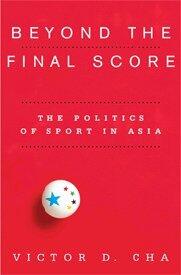
His new book Beyond the Final Score: The Politics of Sport in Asia (Columbia University Press, 2008) looks at the politics of sports and the Beijing Olympics. Cha holds a BA and Ph.D. from Columbia University, MA from University of Oxford.
This event is sponsored by the Pantech Group in Korea.
Philippines Conference Room
Victor D. Cha
Director of Asian Studies
Speaker
Georgetown University
Seminars
U.S. Policy in Korea after the elections
News Type
Commentary
Date
Paragraphs
In the waning days of the Clinton administration, the momentum for engagement with North Korea, building from the earlier agreement to freeze its nuclear program and a moratorium on ballistic missile launches, accelerated to the brink of full-scale normalization of relations. The U.S. presidential election in 2000 brought that diplomatic freight train to an abrupt halt.
Will the 2008 election bring yet another dramatic change in U.S. Korea policy?
The answer, based on the published positions of the two candidates and conversations with his senior Asia policy advisors, seems to be NO. There are important differences of emphasis in the approaches of both candidates, which I will discuss, but the bottom line is that both men are likely to pick up where President George W. Bush leaves off.
There are two fundamental reasons why U.S. policy toward Korea – and more broadly in Northeast Asia --- will not change dramatically. First, Asia will continue to suffer from a deficit of presidential attention. The arc of crisis – Iraq, Iran, Afghanistan and Pakistan -- will necessarily still command, as it has for almost 8 years, the attention of senior American policymakers. Even that will have to fight for space with the growing global financial crisis.
Second, both candidates agree on the broad outlines of an Asia policy, one that does not depart radically from the one pursued by the Bush administration. As a senior McCain advisor put it to me: “There is not a huge difference on Asia between Obama and McCain.” Privately, Obama advisors also stress that there will not be a huge break with current U.S. policy.
Both campaigns are critical of the lack of attention paid to Asia and the need for the U.S. to be more proactive to strengthen existing alliances and to join the discussion about new forms of regional integration. Both candidates support the need to engage, rather than confront, a rising China. Both men call for the U.S. to pay more attention to management of our alliances with South Korea and Japan. And both Obama and McCain support the North Korean nuclear negotiations carried out by President Bush in his second term, although privately both campaigns are critical of the deal that has been struck.
If there are differences, they can be found in two areas – support for the Korea US free trade agreement and the willingness to directly engage North Korea and its regime.
Free Trade and the KORUS Free Trade Agreement
If there is one single issue regarding Korea on which Senators Obama and McCain clearly part company, it is the future of the free trade agreement negotiated with the Bush administration. Senator McCain is an unambiguous supporter of the FTA, not only as a trade pact but also as a symbol of the broader partnership between the U.S. and South Korea.
Senator Obama also supports free trade but is critical of this and other agreements, such as NAFTA, for failing to ensure market access and the protection of labor rights and the environment. Privately, Obama’s advisors understand the symbolic value of the FTA to the alliance, but they plan to ask Seoul to reopen talks on market access, particularly for the automobile industry. Their position reflects the importance of trade unions and the role of some key states – Michigan most of all – in the election outcome. Even if Obama loses, the Democrats are likely to strengthen their control of Congress, making approval of the FTA difficult under any circumstances.
Negotiating with Pyongyang: Back to the Future?
Both the McCain and the Obama camps publicly back the Bush administration’s negotiations with Pyongyang, but both are also privately critical, though for different reasons.
The Obama team is heavily populated by former Clinton administration officials who were involved in the negotiation of the 1994 Agreed Framework with North Korea. They see the current deal as an inevitably flawed bargain, the result of the refusal of the administration to seriously engage the North directly until it had crossed the red line of nuclear weapons testing. With little leverage, not least the credible threat of coercion, we are left with containing the plutonium production of the North, and hoping that a grand bargain down the line can yield full denuclearization.
Obama recognizes the need for “close coordination and consultation with our allies South Korea and Japan,” as one of his advisors put it in a published interview, and supports continuing the Six Party Talks. But the emphasis is clearly on direct talks with North Korea, though conducted with a principled toughness that the Bush administration has not exhibited in its final months in office.
That readiness to conduct direct negotiations, up to conclusion of a peace treaty with Pyongyang and full normalization of relations, is where the two candidates part company. The Republican nominee is clearly uncomfortable with direct dealings with Pyongyang – his position resembles the first term of the Bush administration more than the second in that respect. His advisory team combines realists, mainly veterans of the Powell State Department, and neoconservatives, reproducing the divisions that thwarted coherent policy-making in that first Bush term.
In the end, the views of McCain himself may be decisive. He was an opponent of the Agreed Framework, an agreement he characterized as “appeasement.” He maintained this stance into the Bush administration, vocally opposing any direct negotiations with the North Koreans as long as they maintained the right to develop nuclear weapons. He has been critical as well of the main deal struck by President Bush in his second term – “I didn’t believe in the KEDO agreement that President Clinton made and I don’t believe in this one,” he said in January.
McCain, according to an interview with one of his senior Asia advisors, would “seek a return to the core principles of denuclearization known as CVID, or complete, verifiable, irreversible, dismantlement.” The demand for CVID was the watchword of the Bush administration’s earlier stance, in effect a call for Pyongyang to abandon its nuclear option as a first step. But that demand was dropped after Pyongyang called the Bush administration’s bluff by exploding a nuclear device in October, 2006.
McCain also wants to “broaden our policy goals related to North Korea” beyond nuclear issues, to including human rights, economic and political reform, and reduction of the conventional military threat from North Korea, goals also set out at the outset of the Bush administration. McCain has repeatedly referred to the North Korean regime, and its leader, Kim Jong Il, in harsh terms and embraced a policy of “rogue state rollback.”
Realistically, however, McCain offers no credible, practical means to reach these goals. He reserves, as does Obama, the option to use force. But concretely he comes back to the strategy of pressing China to bring North Korea to heel. Unfortunately the Bush administration also relied on China and found there were clear limits to Beijing’s ability to control or its willingness to press its North Korean client. In the end, McCain may have little option but to follow Bush to Pyongyang’s doorstep.
One Caveat – Events Matter
Despite the powerful impetus to maintain continuity in U.S. policy toward the Korean peninsula, no matter whom is elected in November, there is one important caveat to keep in mind – events matter. Unplanned, and unforeseen, developments could force Korea to the top of the President’s agenda. Already we have seen the reports of Kim Jong Il’s serious illness trigger fresh concerns about a possible collapse of political authority in Pyongyang. A simultaneous rush by China, South Korea and the United States to fill a vacuum of power in the North could upset all calculations. For South Korea, and President Lee Myung-bak, it is always best to prepare for the unexpected.
Hero Image

All News button
1