


LAD Workshop: Ukrainian Catholic University 2017
-
This five day intensive program for a select group of mid- and high-level government officials and business leaders is designed to address how government can encourage and enable the private sector to play a larger, more constructive role as a force for economic growth and development. A driving principle of this LAD-UCU program is that policy reform is not like engineering or other technical fields that have discrete skills and clear, optimal solutions. Instead, successful reformers must be politically aware and weigh a broad range of factors that influence policy outcomes. For example, they must have a solid grasp of country-specific economic, financial, political and cultural realities. Most importantly, they must have a sense of how to set priorities, sequence actions and build coalitions. This program is designed to provide participants with an analytical framework to build these leadership abilities and operate effectively under adverse conditions.
Lviv and Kiev, Ukraine
Workshops
Abe-Putin summit holds prospect of resolution on island dispute
News Type
Commentary
Date
Paragraphs
A hot springs summit between Japanese Prime Minister Shinzo Abe and Russian President Vladimir Putin next week hopes to solve the 70-year-old dispute over an isolated string of islands that Russian and Japanese nationalists both claim as their own, according to Daniel Sneider, associate director for research at the Shorenstein Asia-Pacific Research Center.
Read the commentary piece in Foreign Policy here.
Hero Image

All News button
1
LAD Course: Case Teaching and Case Study Writing for Public Policy at the Ukrainian Catholic University
-
This workshop course is designed to develop skills that faculty in policy-focused universities and training institutions can use both to develop interactive and participant-centered teaching styles and to help faculty develop skills in case writing.
The first two days mostly involve "how to" lessons on both teaching and writing, interspersed with activities where the participants work in teams to prepare case teaching plans and class openings that they present to all of the participants. The initial emphasis is on case teaching, since before participants can write a successful case, they must understand how learning in a case-oriented classroom takes place. The workshop includes case discussions on several existing cases, combined with a “post-mortem” of what worked and what did not in both the written case and the case discussion. We discuss core teaching strategies including development of time management plans, whiteboard management plans, how to pose opening questions, “cold-calling” versus “warm calling,” and how to close a case-discussion class with “Take-Aways.”
Ukrainian Catholic University campus
Lviv, Ukraine
Workshops
The New Yorker: Reforming Ukraine after the revolutions
News Type
News
Date
Paragraphs
Joshua Yaffa writes in the September issue of The New Yorker magazine about the phenomenon of Ukrainian journalists Sergii Leshchenko and Mustafa Nayyem becoming politicians. Leshchenko and Nayyem participated in the Draper Hills Summer Fellows program that is hosted annually at Stanford’s Center on Democracy, Development and the Rule of Law (CDDRL). The story touches on how the program and Mosbacher Director Francis Fukuyama was instrumental in helping them decide to transition from journalism to politics. The story asks whether the two hacks-turned-MPs can really let go of their journalistic ethics and play in the rough-and-tumble world of Ukrainian politics.
Read more about it here.
Image

Sergii Leshchenko introduces himself at the welcoming reception for Stanford’s Draper Hills Summer Fellows in July 2013.
Hero Image

All News button
1
Cooperation of U.S., Russian Scientists Helped Avoid Nuclear Catastrophe at Cold War’s End, CISAC Scholar Says
News Type
News
Date
Paragraphs
When the Soviet Union collapsed in 1991, the worry in the West was what would happen to that country’s thousands of nuclear weapons. Would “loose” nukes fall into the hands of terrorists, rogue states, criminals – and plunge the world into a nuclear nightmare?
Fortunately, scientists and technical experts in both the U.S. and the former Soviet Union rolled up their sleeves to manage and contain the nuclear problem in the dissolving Communist country.
One of the leaders in this relationship was Stanford engineering professor Siegfried Hecker, who served as a director of the Los Alamos National Laboratory before coming to Stanford as a senior fellow at the Center for International Security and Cooperation. He is a world-renowned expert in plutonium science, global threat reduction and nuclear security.
Hecker cited one 1992 meeting with Russian scientists in Moscow who were clearly concerned about the risks. In his new book, Doomed to Cooperate: How American and Russian scientists joined forces to avert some of the greatest post-Cold War nuclear dangers, Hecker quoted one Russian expert as saying, “We now need to be concerned about terrorism.”
Earning both scientific and political trust was a key, said Hecker, also a senior fellow at Stanford’s Freeman Spogli Institute for International Studies. The Russians were proud of their scientific accomplishments and highly competent in the nuclear business – and they sought to show this to the Americans scientists, who became very confident in their Russian counterparts’ technical capabilities as they learned more about their nuclear complex and toured the labs.
Economic collapse, political turmoil
But the nuclear experts faced an immense problem. The Soviets had about 39,000 nuclear weapons in their country and in Eastern Europe and about 1.5 million kilograms of plutonium and highly enriched uranium (the fuel for nuclear bombs), Hecker said. Consider that the bomb that the U.S. dropped on the Japanese city of Nagasaki in 1945 was only six kilograms of plutonium, he added. Meanwhile, the U.S. had about 25,000 nuclear weapons in the early 1990s.
Hecker and the rest of the Americans were deeply concerned about the one million-plus Russians who worked in nuclear facilities. Many faced severe financial pressure in an imploding society and thus constituted a huge potential security risk.
“The challenge that Russia faced with its economy collapsing was enormous,” he said in an interview.
The Russian scientists, Hecker said, were motivated to act responsibly because they realized the awful destruction that a single nuclear bomb could wreak. Hecker noted that one Russian scientist told him, “We arrived in the nuclear century all in one boat, and a movement by anyone will affect everyone.” Hecker noted, “Therefore, you know, we were doomed to work together to cooperate.”
All of this depended on the two governments involved easing nuclear tensions while allowing the scientists to collaborate. In short order, the scientists developed mutual respect and trust to address the loose nukes scenario.
The George H.W. Bush administration launched nuclear initiatives to put the Russian government at ease. For example, it took the nuclear weapons off U.S. Navy surface ships and some of its nuclear weapons off alert to allow the Russians to do the same. The U.S. Congress passed the Nunn-Lugar Cooperative Threat Reduction legislation, which helped fund some of the loose nuke containment efforts.
While those were positive measures, Hecker said, it was ultimately the cooperation among scientists, what they called lab-to-lab-cooperation, that allowed the two former superpower enemies to “get past the sensitivity barriers” and make “the world a safer place.”
Since the end of the Cold War, no significant nuclear event has occurred as a result of the dissolution of the Soviet Union and its nuclear complex, Hecker noted.
Lesson: cooperation counts
One lesson from it all, Hecker said, is that government policymakers need to understand that scientists and engineers can work together and make progress toward solving difficult, dangerous problems.
“We don’t want to lose the next generation from understanding what can actually be done by working together,” he said. “So, we want to demonstrate to them, Look, this is what was done when the scientists were interested and enthusiastic and when the government gave us enough room to be able to do that.”
Hecker said this scientific cooperation extended to several thousand scientists and engineers at the Russian sites and at U.S. nuclear labs – primarily the three defense labs: Lawrence Livermore, Los Alamos, and Sandia national laboratories. Many technical exchanges and visits between scientists in Russia and the United States took place.
He recalled visiting some of the nuclear sites in Russian cities shrouded by mystery. “These cities were so secret, they didn’t even appear on Soviet maps.”
Change of threat
When the Soviet Union collapsed, the nature of the nuclear threat changed, Hecker said. The threat before was one of mutual annihilation, but now the threat changed to what would happen if nuclear assets were lost, stolen or somehow evaded the control of the government.
“From an American perspective we referred to these as the ‘four loose nuclear dangers,'” he said.
This included securing the loose nukes in the Soviet Union and Eastern Europe; preventing nuclear materials or bomb fuel from getting into the wrong hands; the human element involving the people who worked in the Soviet nuclear complex; and finally, the “loose exports” problem of someone trying to sell nuclear materials or technical components to overseas groups like terrorists or rogue nations.
For Hecker, this is not just an American story. It is about a selfless reconciliation with a longtime enemy for the greater global good, a relationship not corrupted by ideological or nationalistic differences, but one reflective of mutual interests of the highest order.
“The primary reason,” he said, “why we didn’t have a nuclear catastrophe was the Russian nuclear workers and the Russian nuclear officials. Their dedication, their professionalism, their patriotism for their country was so strong that it carried them through these times in the 1990s when they often didn’t get paid for six months at a time … The nuclear complex did its job through the most trying times. And it was a time when the U.S. government took crucial conciliatory measures with the new Russian Federation and gave us scientists the support to help make the world a safer place.”
Hero Image

All News button
1
Former fellows comment on Ukraine's continuing struggle for political change
News Type
News
Date
Paragraphs
In a video by PBS NewsHour, three Ukrainian alumni of the CDDRL's Draper Hills Summer Fellows Program provide comments on the struggle for political change and stability in their country two years after the Maidan protests drove President Yanukovych out of Ukraine. Alumni members Sergii Leshchenko, Mustafa Nayyem, and Svitlana Zalishchuk currently serve as Members of Parliament in Ukraine. Nayyem: "It was very easy to be heroes on the Maidan. It is much more difficult to be heroes in the Parliament."
Hero Image

All News button
1
Ukraine-Russia: What Next?
-
Due to the high interest in this event, we have moved it to a larger room. It is now in the Oksenberg Conference Room, Encina Hall, 3rd floor.
The February Minsk II agreement introduced a fragile ceasefire in eastern Ukraine, following a year of crisis and conflict between Kyiv and Moscow. Ukrainian President Poroshenko needs to grapple with a daunting list of critical economic and political reforms. Russian President Putin, however, appears intent on destabilizing the Ukrainian government and has the means, including military force, to do so. What can we expect next in the Ukraine-Russia stand-off, and how should the West respond?
Image

Steven Pifer is a senior fellow at the Brookings Institution, where his work focuses on arms control, Ukraine and Russia. A retired Foreign Service officer, his more than 25 years with the State Department included assignments as deputy assistant secretary of state with responsibilities for Russia and Ukraine (2001-2004), ambassador to Ukraine (1998-2000), and special assistant to the president and senior director for Russia, Ukraine and Eurasia on the National Security Council (1996-1997).
Co-sponsored by the Freeman Spogli Institute for International Studies and The Europe Center.
Steven Pifer
Senior Fellow
Speaker
the Brookings Institution
Lectures
Ukrainian fellow reflects on journey to parliament
News Type
Q&As
Date
Paragraphs
Svitlana Zalishchuk (’11), an alumna of the Draper Hills Summer Fellow Program (DHSFP) at Stanford’s Center on Democracy, Development and the Rule of Law reflects on the challenges and motives behind her decision to run for public office in Ukraine. Amidst a transitional moment in her country’s history, Zalishchuk won a seat in Ukraine’s Parliament alongside DHSFP alumni Sergii Leshchenko ('13) and Mustafa Nayyem ('14). Before joining government, Zalishchuk led the Ukrainian NGO, Centre UA, which works to reassert citizens' influence on politics and restore freedom of speech in Ukraine.
1) What are the top challenges Ukraine faces today?
Ukraine is currently confronted with challenges on two fronts. The first is in the east of the country – the war with Russia. The second challenge is with the old system of government against corrupt and rotten institutions both struggles are an attempt to break up with Ukraine’s Soviet past.
There is an essential interdependence between these two battles. With the war in Donbass (in the east of Ukraine) it is much more difficult to implement the reforms. At the same time, without reforms it is impossible to win the war in the East.
In the end, Putin’s aim is not to control two Ukrainian regions, but to make the European idea a failed idea in Ukraine. The reunion of the Ukrainian territories in the long-term will be based on the people’s wish to live better lives in a free and democratic European country. Reforms are the most powerful weapon against this post-Soviet front.
2) How has civil society responded to the new leadership under President Petro Poroshenko?
President Petro Poroshenko was elected with more than 50 percent support of the voters. But to be a leader of a country, which has a military conflict with one of the biggest powers in the world and is going through one of the most difficult economic crises since its independence, is a monumental task.
Ukrainian society has high expectations of the new president, government and parliament – institutions that represent the shift of the political elites after the Euromaidan protests in Kyiv. But it is almost impossible to meet these expectations. The country’s decision to move toward democratic development has been made at the expense of thousands of Ukrainian lives.
Currently, the government has been facing harsh criticism for countless mistakes, a slow reform process, and lack of effort to combat corruption. Society continues to live through unprecedented self-organization. Groups of volunteers have formed across the country to perform various tasks that the state sometimes is unable to execute - such as the creation of volunteer battalions, the financing of the army, and the construction of housing for refugees.
Still, it is a bit early to answer this question. Society is still waiting for the results of this leadership: reforms and a peaceful settlement of the conflict.
3) What challenges do you face, currently, as a member of parliament? What kind of changes do you hope to implement in your current role?
The biggest challenge is to justify people’s expectations that a new generation in politics will be able to change the country. People need to realize that real changes do not come with new faces in the government - and not even with newly adopted bills - but with well-functioning institutions. Building these will take time.
Nevertheless, we have to show that reforms are possible even in times of military conflict and economic crisis. New anti-corruption policies and measures; judicial and police reform; deregulation; constitutional reform that decentralizes the country to allow more power to local communities – these are the first steps of a long journey toward our European goal.
In the long-term, politicians with roots tracing back to the Euromaidan protests have to build their political identities alongside new political parties. The legacy of the Euromaidan protests has to be institutionalized.
4) What prompted you to run for parliament? How would you describe the transition from a journalist to politician?
Having experienced censorship for many years in Ukraine, we have chosen to fight for the freedom of speech. This meant doing a little more outside the normal responsibilities of a journalist.
We have been advocating for the Freedom of Information Bill for five years. We were demanding reform in the media sphere for ten. We were fighting against corruption not only by writing about it, but also by initiating nation-wide civic campaigns. We were on the frontline of both revolutions – Orange in 2004 and Euromaidan in 2014. After this, pursuing a career in politics seemed like a logical next step to transform this fight into a constructive continuation of reforms.
5) How has the Draper Hills Summer Fellows Program contributed – if at all- towards your new role in government?
One of the most important experiences from the Draper Hills Summer Fellows Program was the recalibration and transformation of my local way of thinking into a global way of thinking. I was able to move from only seeing a national (Ukrainian) perspective on the problems with democratic and economic reforms to seeing an understanding of how all these challenges have been faced by many countries in the world.
6) Do you have any advice for alumni members who are seeking to run for office?
I have three personal conclusions. First, politics is a team game. It is important to build or find a circle of trustworthy and like-minded people. Second, goal-oriented strategy is essential for long-term political journeys. And finally, cooperation with civil society, continuous engagement with voters and communication with people is crucial.
Pursuing a career in politics was a difficult decision for my friends and I. But life proved that there are no right decisions. You make the decisions and then you make them right.
Hero Image

All News button
1
Wales to Warsaw: NATO and the Current State of Transatlantic Security
-
At the NATO Summit in Wales in September 2014, NATO leaders were clear about the security challenges on the Alliance’s borders. In the East, Russia’s actions threaten our vision of a Europe that is whole, free and at peace. On the Alliance’s southeastern border, ISIL’s campaign of terror poses a threat to the stability of the Middle East and beyond. To the south, across the Mediterranean, Libya is becoming increasingly unstable. As the Alliance continues to confront theses current and emerging threats, one thing is clear as we prepare for the 2016 Summit in Warsaw: NATO will adapt, just as it has throughout its 65-year history.
Image
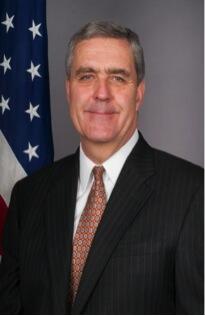
In August 2013, Douglas E. Lute was sworn-in as the Ambassador of the United States to the North Atlantic Treaty Organization (NATO). From 2007 to 2013, Lute served at the White House under Presidents Bush and Obama, first as the Assistant to the President and Deputy National Security Advisor for Iraq and Afghanistan, and more recently as the Deputy Assistant to the President focusing on Afghanistan, Pakistan and India. In 2010, AMB Lute retired from the U.S. Army as a Lieutenant General after 35 years on active duty. Prior to the White House, he served as the Director of Operations on the Joint Staff, overseeing U.S. military operations worldwide. He served multiple tours in NATO commands including duty in Germany during the Cold War and commanding U.S. forces in Kosovo. He holds degrees from the United States Military Academy and Harvard University.
A light lunch will be provided. Please plan to arrive by 11:30am to allow time to check in at the registration desk, pick up your lunch and be seated by 12:00 noon.
Co-sponsored by The Europe Center, the Freeman Spogli Institute for International Studies, the Center for International Security and Cooperation and the Center for Russian, East European and Eurasian Studies.
Douglas Lute
United States Ambassador to NATO
Speaker
Lectures