The people of Nagorno-Karabakh have long strived for the recognition of their right to self-determination. Azerbaijan reacted by unleashing a large scale military offensive that led to war, which ended in May 1994 with the signing of the cease-fire agreement by Azerbaijan, Nagorno-Karabakh, and Armenia. The negotiation process is mediated by the Co-Chairs of the Minsk Group – the USA, France and Russia. Though the parties were close to a solution on several occasions, the negotiations have not yielded a durable settlement. In April 2016 the conflict once again erupted with violence leaving hundreds killed and maimed. Since then, two summits have been convened to create conducive conditions for the advancement of the peace process.
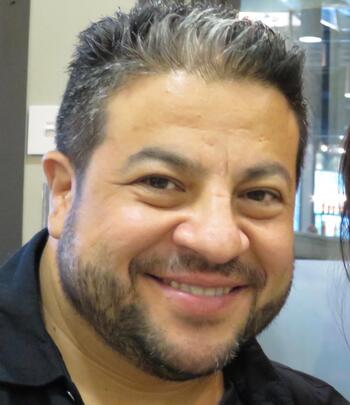
Minister Edward Nalbandian has been the Foreign Affairs Minister of Armenia since 2008. He studied at the Moscow State Institute of International Relations and received his PhD (in political science) from the Institute of Oriental Studies at the National Academy of Sciences. Minister Nalbandian began working at the Soviet Ministry of Foreign Affairs in the late 1970s. After Armenia's independence he was invited to work for the Armenian diplomatic service. He has been Armenia's Ambassador to Egypt, Morocco, Oman, France, as well as Israel, the Vatican and Andorra. He has also been Special Representative of the President of Armenia in different international organizations. Minister Nalbandian has published several works on international relations. He is the recipient of several awards, including the Armenian Medal of Mkhitar Gosh and the second-grade and first-grade Medals of Services to the Motherland, Commandeur and Grand Officier de la Légion D'honneur of France, Saint Gregory's Grand Cross Order of the Holy See (Vatican), the USSR order of Friendship of Nations, and others. He is married and has a daughter.
Edward Nalbandian, Foreign Affairs Minister of Armenia
Foreign Affairs Minister of Armenia
Speaker
A real possibility exists that foreign hackers could throw a monkey wrench into the outcome of the U.S. presidential election in the fall, a Stanford expert says.
Herbert Lin, senior research scholar for cyberpolicy and security at Stanford’s Center for International Security and Cooperation and a research fellow at the Hoover Institution, said that electronic voting could be affected by hackers in the presidential race, especially if a candidate claims tampering. In recent months, hackers from outside the country reportedly infiltrated the Democratic National Committee and Hillary Clinton campaign computer networks, leading to data breaches that made headlines worldwide.
The Stanford News Service interviewed Lin on this subject:
How worried are you about possible cyberattacks that could influence the outcome of the November elections in the U.S.?
There are two kinds of things to worry about. One is an actual cyberattack that, for example, alters vote counts in a way that tilts the election away from the will of the voters. That kind of attack is hard to pull off, and I’m not very worried about that – though I worry about it some.
A second worry – much more serious in my opinion – is the possibility that an election loser might challenge the outcome of the election, alleging that the results were altered by a cyberattack, especially if the election were close. How would anyone ever prove that ballots, electronically cast with no permanent and auditable record, were accurately counted?
If the evidence that Russians hacked the Democratic National Committee and the Hillary Clinton campaign proves to be legitimate, how should President Obama respond to Russia and Vladimir Putin?
Herbert Lin (Image credit: Rod Searcey/CISAC)
The U.S. has many response options, ranging from private diplomatic conversations to military action and everything in between. There are many things we could do to exact a price. But some of these things may be wise and others may be unwise. For example, an unwise option would be to threaten overt military action and otherwise do saber-rattling in response. The balancing act is calibrating a response that exacts a penalty but does not provoke a response that is unacceptable to us – and that’s a hard thing to do.
Would the U.S. ever hack back at Russia in some way?
I would be utterly amazed if the U.S. were not hacking Russia, and every other major power in the world for that matter. And I would be amazed if every other major power in the world were not hacking the U.S. There’s a baseline level of hacking that is going on all the time by everyone.
So, the question isn’t hacking or not hacking, the question is hacking back versus hacking. And on that point, I suspect it would be really hard for the recipient – in this case, Russia – to distinguish between hacking that almost surely is going on already and hacking that was conducted in response to any putative Russian involvement in the Democratic National Committee hack.
Is the hacking symbolic of a poor relationship between the U.S. and Russian governments?
I would not say symbolic – but it’s entirely consistent with a poor relationship.
In this 2015 video, Herb Lin talks about how U.S. policy on offensive cyber operations should be declassified.
Clifton Parker is a writer for the Stanford News Service.
Stanford University’s Center on Democracy, Development and the Rule of Law (CDDRL) is proud to announce our four incoming fellows who will be joining us in the 2016-2017 academic year to develop their research, engage with faculty and tap into our diverse scholarly community.
The pre- and postdoctoral program will provide fellows the time to focus on research and data analysis as they work to finalize and publish their dissertation research, while connecting with resident faculty and research staff at CDDRL.
Fellows will present their research during our weekly research seminar series and an array of scholarly events and conferences.
Topics of the incoming cohort include electoral fraud in Russia, how the elite class impacts state power in China, the role of emotions in support for democracy in Zimbabwe, and market institutions in Nigeria.
Discipline and expected date of graduation:Sociology, April 2017
Research Interests: authoritarianism, state capacity, social policy, civil society, trust, Russia and post-communist countries
Dissertation Title: The State that Betrays the Trust: Infrastructural State Power, Public Sector Organizations, and Authoritarian Resilience in Putin's Russia
What attracted you to the CDDRL Pre/post-doctoral program? I study the connection between state capacity and political regimes - the topic that is at the core of many research initiatives at CDDRL. Learning more about this work and receiving feedback for my dissertation will enrich and sharpen my analysis, while helping me to place it into a comparative context. I am looking forward to discussing my work with the faculty who study the post-Soviet region. I also will explore policy implications of my work with the help of policy experts at CDDRL.
What do you hope to accomplish during your nine-month residency at the CDDRL? Besides finishing writing my dissertation, I will workshop three working papers to prepare them for publication. The first one argues that Putin's regime used the school system to administer a large-scale electoral fraud in 2012 presidential elections; the second one shows how the networks of social organizations were used by subnational autocrats to strengthen the regime; and the third one will look at the factors that make the abuse of such organizations more difficult in some regions. In addition to these papers I will continue developing my post-graduation research project exploring the relationship between social trust and distrust, institutions, political competition, and democratization.
Fun fact: I have spent 25 years of my life in Siberia, and I can tell you: Chicago winters are worse!
Research interests: political economy of development, private governance, market institutions, Sub-Saharan Africa, survey methods
Dissertation Title: The Politics of Order in Informal Markets: Evidence from Lagos
What attracted you to the CDDRL post-doctoral program? I was attracted to CDDRL largely for its community of scholars. Affiliated faculty work on the political economy of development and medieval and modern market institutions, topics that are tied to my own interests.
What do you hope to accomplish during your nine-month residency at the CDDRL? I plan to prepare a book manuscript based on my dissertation, a project that explains variation in the provision of pro-trade institutions in private market organizations through the study of physical marketplaces in Nigeria. In addition, I will continue to remotely manage an on-going project in Nigeria (with Meredith Startz) investigating whether reputation alleviates contracting frictions. I also plan to work on submitting to journals a few working papers, including one on the politics of non-compliance with polio vaccination in Nigeria (with Jonathan Phillips and Leah Rosenzweig).
Fun fact: Contrary to popular belief, not all cheese is vegetarian. I have a website to help people determine if a cheese is vegetarian or not: IsThisCheeseVegetarian.com.
Academic Institution: University of California, Berkeley
Discipline & Graduation Date: Political Science, Summer 2016
Research Interests: Governance, rule of law, state building, authoritarian politics, Chinese politics
Dissertation Title: The Social Origins of State Power: Democratic Institutions and Local Elites in China
What attracted you to CDDRL? The Center has a fantastic community of scholars and practitioners who work on the areas that I'm interested in, including governance and the rule of law. I'm excited to learn from the CDDRL community and participate in the Center's events. The fellowship also provides me with valuable time to finish my book manuscript before I start teaching.
What do you hope to accomplish during your nine-month residency at the CDDRL? While at CDDRL, I plan to prepare my book manuscript and to work on some related projects on local elites and state power in China and elsewhere.
Fun fact: I grew up on an organic farm in Vermont.
Discipline & Graduation Date: Political Science (Comparative Politics, Methods), May 2016 (defense), Oct 2016 (degree conferral)
Research Interests: political violence, political economy of development, autocratic persistence, democratization, protest, electoral violence
Dissertation Title: The Psychology of Repression and Dissent in Autocracy
What attracted you to the CDDRL post-doctoral program? As a graduate of the CISAC honors program when I was an undergraduate at Stanford, I have seen first-hand how intellectually stimulating, collaborative, and plugged into policy CDDRL is. While at the center I will be revising my dissertation work on the political psychology of participation in pro-democracy movements in Zimbabwe for submission as a book manuscript, and moving forward new projects that similarly seek to understand how different forms of violence by non-state actors affects citizens' preferences and decision-making. Because of its deep bench of experts on autocracy, narco-trafficking, and insurgency, CDDRL will add enormous value to these projects.
What do you hope to accomplish during your nine-month residency at the CDDRL? During my fellowship year, my primary goal is to revise my research on Zimbabwe into a book manuscript. I defended my dissertation as three stand-alone articles, including two experiments showing that emotions influence whether opposition supporters in Zimbabwe express their pro-democracy preferences and a descriptive paper showing that repression has a larger effect on the behavior of the poor. To prepare the book manuscript during my fellowship, I will bring in additional quantitative and qualitative descriptive evidence and tie the three papers together into a cohesive argument about how opposition supporters make decisions about participation in protest, why emotions have such a large effect on these decisions, and how this affects variation across individuals and the strategic choices of autocrats and activists.
Fun fact: During my fieldwork I took an overnight train from Victoria Falls to a southern city in Zimbabwe and hitch-hiked into a national park. It got a little nerve-wracking when night started to fall, but ended with an invitation to a barbecue!

When the Soviet Union collapsed in 1991, the worry in the West was what would happen to that country’s thousands of nuclear weapons. Would “loose” nukes fall into the hands of terrorists, rogue states, criminals – and plunge the world into a nuclear nightmare?
Fortunately, scientists and technical experts in both the U.S. and the former Soviet Union rolled up their sleeves to manage and contain the nuclear problem in the dissolving Communist country.
One of the leaders in this relationship was Stanford engineering professor Siegfried Hecker, who served as a director of the Los Alamos National Laboratory before coming to Stanford as a senior fellow at the Center for International Security and Cooperation. He is a world-renowned expert in plutonium science, global threat reduction and nuclear security.
Hecker cited one 1992 meeting with Russian scientists in Moscow who were clearly concerned about the risks. In his new book, Doomed to Cooperate: How American and Russian scientists joined forces to avert some of the greatest post-Cold War nuclear dangers, Hecker quoted one Russian expert as saying, “We now need to be concerned about terrorism.”
Earning both scientific and political trust was a key, said Hecker, also a senior fellow at Stanford’s Freeman Spogli Institute for International Studies. The Russians were proud of their scientific accomplishments and highly competent in the nuclear business – and they sought to show this to the Americans scientists, who became very confident in their Russian counterparts’ technical capabilities as they learned more about their nuclear complex and toured the labs.
Economic collapse, political turmoil
But the nuclear experts faced an immense problem. The Soviets had about 39,000 nuclear weapons in their country and in Eastern Europe and about 1.5 million kilograms of plutonium and highly enriched uranium (the fuel for nuclear bombs), Hecker said. Consider that the bomb that the U.S. dropped on the Japanese city of Nagasaki in 1945 was only six kilograms of plutonium, he added. Meanwhile, the U.S. had about 25,000 nuclear weapons in the early 1990s.
Hecker and the rest of the Americans were deeply concerned about the one million-plus Russians who worked in nuclear facilities. Many faced severe financial pressure in an imploding society and thus constituted a huge potential security risk.
“The challenge that Russia faced with its economy collapsing was enormous,” he said in an interview.
The Russian scientists, Hecker said, were motivated to act responsibly because they realized the awful destruction that a single nuclear bomb could wreak. Hecker noted that one Russian scientist told him, “We arrived in the nuclear century all in one boat, and a movement by anyone will affect everyone.” Hecker noted, “Therefore, you know, we were doomed to work together to cooperate.”
All of this depended on the two governments involved easing nuclear tensions while allowing the scientists to collaborate. In short order, the scientists developed mutual respect and trust to address the loose nukes scenario.
The George H.W. Bush administration launched nuclear initiatives to put the Russian government at ease. For example, it took the nuclear weapons off U.S. Navy surface ships and some of its nuclear weapons off alert to allow the Russians to do the same. The U.S. Congress passed the Nunn-Lugar Cooperative Threat Reduction legislation, which helped fund some of the loose nuke containment efforts.
While those were positive measures, Hecker said, it was ultimately the cooperation among scientists, what they called lab-to-lab-cooperation, that allowed the two former superpower enemies to “get past the sensitivity barriers” and make “the world a safer place.”
Since the end of the Cold War, no significant nuclear event has occurred as a result of the dissolution of the Soviet Union and its nuclear complex, Hecker noted.
Lesson: cooperation counts
One lesson from it all, Hecker said, is that government policymakers need to understand that scientists and engineers can work together and make progress toward solving difficult, dangerous problems.
“We don’t want to lose the next generation from understanding what can actually be done by working together,” he said. “So, we want to demonstrate to them, Look, this is what was done when the scientists were interested and enthusiastic and when the government gave us enough room to be able to do that.”
Hecker said this scientific cooperation extended to several thousand scientists and engineers at the Russian sites and at U.S. nuclear labs – primarily the three defense labs: Lawrence Livermore, Los Alamos, and Sandia national laboratories. Many technical exchanges and visits between scientists in Russia and the United States took place.
He recalled visiting some of the nuclear sites in Russian cities shrouded by mystery. “These cities were so secret, they didn’t even appear on Soviet maps.”
Change of threat
When the Soviet Union collapsed, the nature of the nuclear threat changed, Hecker said. The threat before was one of mutual annihilation, but now the threat changed to what would happen if nuclear assets were lost, stolen or somehow evaded the control of the government.
“From an American perspective we referred to these as the ‘four loose nuclear dangers,'” he said.
This included securing the loose nukes in the Soviet Union and Eastern Europe; preventing nuclear materials or bomb fuel from getting into the wrong hands; the human element involving the people who worked in the Soviet nuclear complex; and finally, the “loose exports” problem of someone trying to sell nuclear materials or technical components to overseas groups like terrorists or rogue nations.
For Hecker, this is not just an American story. It is about a selfless reconciliation with a longtime enemy for the greater global good, a relationship not corrupted by ideological or nationalistic differences, but one reflective of mutual interests of the highest order.
“The primary reason,” he said, “why we didn’t have a nuclear catastrophe was the Russian nuclear workers and the Russian nuclear officials. Their dedication, their professionalism, their patriotism for their country was so strong that it carried them through these times in the 1990s when they often didn’t get paid for six months at a time … The nuclear complex did its job through the most trying times. And it was a time when the U.S. government took crucial conciliatory measures with the new Russian Federation and gave us scientists the support to help make the world a safer place.”
Hero Image
Siegfried Hecker (second from left) takes a tour of a secret Russian nuclear facility in the city of Sarov in February, 1992. Hecker was serving as director of the Los Alamos National Laboratory during his visit.
Doomed to Cooperate tells the remarkable story of nuclear scientists from two former enemy nations, Russia and the United States, who reached across political, geographic, and cultural divides to confront, together, the new nuclear threats that resulted from the collapse of the Soviet Union. Using the lingua franca of science and technology, the brilliant minds and unparalleled scientific nuclear programs of Russia and the United States embarked upon more than two decades of cooperation to avert the loss of nuclear weapons, nuclear materials, nuclear weapons expertise, and the export of sensitive nuclear technologies during a time of economic and political turmoil in the newly formed Russian Federation— a herculean endeavor known as lab-to-lab cooperation.
For the past two years, we have convened a bipartisan group of Hoover and Stanford scholars to better understand foreign policy challenges and develop a strategy for the next administration — whomever wins — to address them. Our conclusion: U.S. foreign policy needs to get back to basics. A smart national security strategy starts with three guiding principles and focuses on three key strategic challenges: Russia, China, and “black swan” threats comprised of biological, nuclear, and cyber dangers.
The Soviet Union responded sceptically to Eisenhower’s ‘Atoms for Peace’ speech in December 1953 but eventually entered negotiations on the creation of the International Atomic Energy Agency. It believed the IAEA would provide opportunities for political influence and scientific collaboration. It did not want the peaceful uses of atomic energy around the world to be dominated by the United States. It pressed for close ties between the new agency and the United Nations and supported India and other developing countries in their opposition to safeguards. The new Agency was to be a forum for competition as well as cooperation.
This event is sponsored by the Freeman Spogli Institute for International Studies (FSI), the Shorenstein Asia-Pacific Research Center (APARC), the Center for Russian, East European, and Eurasian Studies (CREEES), and the Stanford Music Department.
Movie Screening: 7:30pm-8:35pm
FREE TO ROCK is a feature length documentary film telling the story of how western rock music contributed to ending the Cold War. Prohibited by the Soviet and Eastern Bloc authorities as propaganda, the “soft power” of western rock music infected the youth behind the Iron Curtain, spreading like a virus. This forbidden music was distributed and sold as “bone records” (etched on x-ray paper for 20 or fewer plays) and cassettes by Black market entrepreneurs and fledgling pop-culture capitalists. In the eyes of the Soviet Ministry of Culture, western rock music combined the twin evils of spreading the English language - undermining a Russification initiative in the 15 Republics of the USSR extending from Kazakhstan to the Baltics - and encouraging illicit free enterprise.
The film, narrated by Kiefer Sutherland, features interviews with former President, Jimmy Carter, Mikhail Gorbachev (former Premier of the Soviet Union), Billy Joel, the Beach Boys, rock and roll pioneers from the Soviet Union, and is directed and produced by Jim Brown, four time Emmy Award winning director.
Panel discussion, 8:35-9:30pm
Power of Music and Political Change
Moderator
Michael McFaul, Former Ambassador to Russia and Director of the Freeman Spogli Institute for International Studies
Panelists
Mark Applebaum, Associate Professor of Music, Stanford University
Despite the increasing state control over free speech, the Russian media market is still alive — and huge. There are tens of independent online media with a multimillion audience and each year we get more. How do you survive on the internet when it is controlled by the state? How do you find professional journalists when there are no decent schools of journalism? How do you manage a media outlet when you do not know what is going to happen tomorrow? Publisher of the popular Russian language online media outlet Meduza Ilia Krasilshchik will explain how the world of Russian media works.
Image
After dropping out of university at 21, in 2008 Ilya Krasilshchik became the editor of the then most influential Moscow entertainment and city life magazine Afisha. During his five-year tenure, Afisha published more than 100 issues, including specials like “Oral History of the Russian Media” and “Oral History of the Russian Internet” and a “Coming Outs” issue (as an answer to the ”LGBT propaganda” law adopted by the Russian State Duma). He stepped down in 2013 to become the Product Director at Afisha publishing company, launching three separate web-based media and а TV streaming service in one year. In October 2014, he finally left Afisha, and together with two partners launched Meduza, a groundbreaking Russian language web news outlet based in Riga, Latvia. By December 2015 the monthly readership of Meduza exceeded 3.5 million unique visitors, with 320,000 app downloads and more than 500,000 followers on social media. Seventy percent of Meduza’s audience is based in Russia.
A shadowy terror group smuggles a crude nuclear bomb into the United States, then detonates it right in the heart of Washington D.C., setting off a 15 kiloton explosion.
Eighty thousand Americans are killed instantly, including the president, vice president and most of the members of Congress, and more than a hundred thousand more are seriously wounded.
News outlets are soon broadcasting a message they’ve all received from a group claiming responsibility.
It says there are five more bombs hidden in five different cities across the America, and one bomb will be set off each week for the next five weeks unless all American troops based overseas are ordered to immediately return to the U.S. homeland.
The nation is thrown into chaos, as millions scramble to flee the cities, clogging roads and choking telecommunications systems.
The stock market crashes, before trading is halted altogether.
Martial law is declared, amid widespread looting and violence.
That was just one of the nightmare scenarios for a potential nuclear disaster that former U.S. Secretary of Defense William J. Perry vividly described as he delivered the Center for International Security and Cooperation’s annual Drell Lecture on Wednesday.
“My bottom line is that the likelihood of a nuclear catastrophe today is greater than it was during the Cold War,” Perry said.
Most people were “blissfully unaware” of the danger that simmering conflicts in geopolitical flash points around the globe – including Russia, China, North Korea, Iran and Pakistan – could easily turn nuclear, Perry told the Stanford audience.
A new nuclear arms race with Russia
Perry said he had tried to foster closer cooperation between the U.S. and Russia when he headed the Pentagon during the mid ‘90s and helped oversee the joint dismantling of four thousand nuclear weapons.
“When I left the Pentagon, I believed we were well on the way to ending forever that Cold War enmity, but that was not to be,” he said.
William J. Perry shares a video depicting the threat of nuclear terrorism with a Stanford audience.
Since then, relations between the West and Russia have soured badly, prompting Russia to modernize its nuclear arsenal and assume a more aggressive nuclear posture.
“They’re well advanced in rebuilding their Cold War nuclear arsenal, and it is Putin’s stated first priority,” Perry said.
“And they have dropped their former policy of no first use of nuclear weapons, and replaced it with a policy that says nuclear weapons will be their weapon of choice if they are threatened.”
While Perry said he believed Russian president Vladimir Putin did not want to engage in a military conflict with NATO forces, he said he was concerned about the possibility of Russia making a strategic miscalculation and stumbling into a conflict where they might resort to the use of tactical nuclear weapons.
“If they did that there’s no way of predicting or controlling the escalation that would follow thereafter,” Perry said.
Chinese economic problems increasing tensions
In Asia, a slowing Chinese economy could exacerbate domestic political tensions over issues such as wealth inequality and pollution, and encourage Chinese leaders to divert attention from problems at home by focusing on enemies abroad.
“China has had more than 10 percent growth now for almost three decades, but I think there’s trouble ahead,” Perry said.
“The time-proven safety valve for any government that’s in trouble is ultra-nationalism, which in the case of China translates into anti-Americanism and anti-Japanese.”
China has seen a major growth in military expenditures over the last decade, and it has used that investment to build a blue water navy and develop effective anti-ship missiles designed to drive the U.S. Navy hundreds of miles back from the Chinese coastline.
One potential flash point for a conflict between China and the U.S. are the artificial islands that China has been building in the disputed waters of the South China Sea.
“In a sense, China is regarding the South China Sea as a domestic lake, and we regard it and most other countries regard it as international waters, so their actions have been challenged by the U.S. Navy and will continue to be challenged,” Perry said.
North Korea’s growing nuclear threat
Meanwhile, China’s neighbor North Korea has continued to defy the international community and conducted another nuclear test in January.
“North Korea is today building a nuclear arsenal, and I would say clearly it’s of the highest priority in their government, and they have adopted outrageous rhetoric about how they might use those nuclear weapons,” Perry said.
William J. Perry delivers the Drell Lecture in an address entitled "A National Security Walk Around the World."
North Korea followed up its latest nuclear test with a satellite launch earlier this month – an important step towards developing an intercontinental ballistic missile that could threaten the United States mainland.
“These missiles today have only conventional warheads that are of no significant concern, but they are developing nuclear warheads,” Perry said.
“They already have developed a nuclear bomb, and the latest test, as well as tests to come, will be designed to perfect a bomb small enough and compact enough and durable enough to fit into a warhead. If they succeed in doing that, then the bluster will become a real threat.”
Perry said he hoped China and the United States could combine forces and adopt a “carrot and stick” diplomatic approach to force North Korea to abandon its nuclear weapons program – with the United States offering aid and international recognition, and China threatening to cut off supplies of food and aid.
He said he expected to see “more acting out” from the North Korean regime in the coming months, in the form of further nuclear and rocket tests.
Like it or not, the Iran deal is the only deal we’ll get
The landmark deal reached last year, where Iran agree to curtail its nuclear program in exchange for the lifting of economic sanctions, was a better resolution than Perry had expected to the negotiations, but it has met with significant resistance from groups he described as “strange bedfellows.”
“The opposition in Israel and the United States opposed the deal because they fear it will allow Iran to get a bomb,” Perry said.
“Whereas the opposition in Iran opposed the deal because they fear it will prevent Iran from getting a bomb. Both cannot be right.”
Many Republican presidential hopefuls have publicly stated on the campaign trail that they would withdraw from the deal if they got elected to the White House, but Perry said that would be a strategic mistake.
“The opposition in the United States has a simple formula – we should withdraw from the deal, we should reinstate sanctions, and we should renegotiate a better deal,” Perry said.
“Let me be as blunt as I can, this is a pure fantasy. There is not the remotest possibility that the sanction could be reapplied if the United States withdraws from this deal, because the day we withdraw from the deal, our allies are gone, the sanctions are gone, there will be no renegotiations without sanctions, so this deal, like it or not, is the only deal we will ever get.”
Another “Mumbai” attack could spark regional nuclear war
Nuclear rivals India and Pakistan have more than a hundred nuclear weapons on each side, as well as the missiles to deliver them, and a conventional military conflict between them could quickly escalate into a regional nuclear war, Perry said.
Another large-scale terror attack, like the coordinated assault in Mumbai that killed more than 163 people in 2008, could lead India to retaliate militarily against Pakistan (which India blames for encouraging the terror groups operating in Pakistani territory).
Perry said he was concerned that Pakistan would then use tactical nuclear weapons against invading Indian troops, and that India might then respond with a nuclear attack of its own on Pakistan.
“So this is the nightmare scenario of how a regional nuclear war could start,” Perry said.
“A nightmare that would involve literally tens of millions of deaths, along with the possibility of stimulating a nuclear winter that would cause widespread tragedies all over the planet.”
A ray of hope
Despite all the potential for nuclear disaster in the current geopolitical environment, Perry said he was still hopeful that nuclear catastrophe could be avoided.
"While much of my talk today has a doomsday ring to it, that truly is not who I am,” Perry said.
“I’m basically an optimist. When I see a cloud, I look for a ray to shine through that cloud.”
One important step toward reducing the nuclear threat would be improving relations between the U.S. and Russia, he said.
“My ray of sunshine, my hope, is I believe we can still reverse the slide in U.S. Russia relations, he said.
“We must begin that by restoring civil dialog. We must restore cooperation between the United States and Russia in areas where we have mutual interest…If we succeed in doing that, then we can work to stop and reverse the drift to a greater and greater dependence on nuclear weapons.”
Perry ended his speech by urging the audience to keep striving to rid the world of the threat of nuclear weapons.
“We must pursue our ideals in order to keep alive our hope – hope for a safer world for our children and for our grandchildren,” he said.
Hero Image
William J. Perry answers questions from the audience during the annual Drell Lecture at Stanford, as CISAC co-director David Relman (right) looks on.