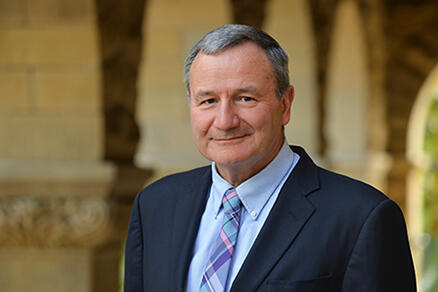
Authors
Yong Suk Lee
News Type
Commentary
Date
Paragraphs

Trump and Kim share a common desire for development.

At first glance U.S. President Donald Trump and North Korean leader Kim Jong Un seem like an unlikely pair. A few years back they were calling each other “Rocket Man” and a “dotard,” and tension between the United States and North Korea was escalating rapidly in 2017. But in a few days they are slated to meet for the second time, and according to Trump they had “fallen in love” not long after their first encounter. What could have created such intimate bond between the two? The common interest that brings the two together is the desire for development — economic development in the case of Kim and property development in the case of Trump.

Read the full article on The Diplomat.

Hero Image
President Trump and Chairman Ki talking during Sinapore Summit
Official White House Photo
All News button
1
Authors
Gi-Wook Shin
News Type
Commentary
Date
Paragraphs

This post was originally published on Axios.

While President Trump and North Korean leader Kim Jong-un’s June 2018 meeting ended with a broad statement — committing to “establish new U.S.-DPRK relations” for “a lasting and stable peace regime on the Korean Peninsula” — they will aim to take more concrete steps forward at their second summit in Hanoi this week.

Between the lines: To keep up the diplomatic momentum, Trump and Kim will need to minimize existing ambiguities and divergences on key issues — including the definition of denuclearization — and produce a comprehensive road map that lays out the specifics of their proclaimed shared vision. Without these agreements, the Hanoi summit could be easily denigrated as “just another show.”

Where it stands: Trump and Kim each face immense pressure, both international and domestic, to make progress.

  • Trump needs to earn political trust back in Washington to continue negotiating with North Korea. His strategy so far has been to convince Kim that North Korea’s denuclearization would bring the country a “bright future.”
  • At the same time, Trump must address Kim’s concerns about whether any agreement reached with his administration will withstand the Democrat-controlled House and survive the post-Trump era.

Between the lines: Successful diplomacy sometimes entails purposeful ambiguities, and the ambiguities of the first Trump-Kim summit might indeed have been strategic. At this critical juncture, however, a failure on Trump’s and Kim’s part to commit to defined objectives could hurt the bilateral relationship.

The bottom line: Trump and Kim need support more than ever to advance their diplomatic endeavors. While spectators have good reason to be skeptical, and one can only be cautiously hopeful with North Korea, a return to confrontation or "strategic patience" is in no one’s interest.

Gi-Wook Shin is the William J. Perry Professor of Contemporary Korea and director of the Walter H. Shorenstein Asia-Pacific Research Center at Stanford University.

Hero Image
Banner welcoming Kim and Trump to Vietnam
A banner hung opposite the Marriott Hotel in Hanoi, Vietnam, where President Trump is expected to stay during his summit with Kim Jong-un, on Feb. 25. | Carl Court via Getty Images
All News button
1
-

Image
vincent brooks 2x3
About the speaker: Vincent K. Brooks is a career Army officer who recently retired from active duty as the four-star general in command of all U.S. Forces in Korea, where he concurrently commanded United Nations Command – continuously serving since 1950 and initially commanded by General of the Army Douglas MacArthur; and the Republic of Korea-U.S. Combined  Forces Command comprising over 625,000 Koreans and Americans under arms.

General Brooks, who goes by “Vince,” is a 1980 graduate of the United States Military Academy at West Point, the first class to include women, and he led the 4,000 cadets as the cadet brigade commander or “First Captain.”  He is the first African American to have been chosen for this position, and he was also the first cadet to lead the student body when women were in all four classes (freshman or “plebe” to senior or “first classman”).

General Brooks is from a career military family and claims Alexandria, Virginia as home given the long roots in maternal and paternal branches of the family tree. His areas of expertise are national security, policy, strategy, international relations, military operations, combating terrorism and countering the proliferation of weapons of mass destruction, diversity and inclusion, leadership in complex organizations, crisis leadership, and building cohesive trust-based teams. He is a combat veteran and a member of the Council on Foreign Relations.

Image
karl eikenberry 3x2 crop
Ambassador Karl Eikenberry, currently director of U.S.-Asia Security Initiative at Stanford's Shorenstein Asia-Pacific Research Center, will moderate the discussion. He served as the U.S. Ambassador to Afghanistan from 2009 until 2011. Before appointment as Chief of Mission on Kabul, Ambassador Eikenberry had a thirty-five year career in the United States Army, retiring in April 2009 with the rank of Lieutenant General.
 

This keynote event is part of the 11th annual Koret Workshop, "North Korea and the World in Flux," and open to the general public with registration.

The event is made possible through the generous support of the Koret Foundation. 


Oksenberg Conference Room
Encina Hall, 3rd floor
616 Serra Mall, Stanford University
 

General Vincent Brooks <i>former Commander of U.S. Forces Korea</i>
Moderated by Ambassador Karl Eikenberry
Seminars
-

Misconduct by those in high places is always dangerous to reveal. Whistleblowers thus face a paradox: by challenging and exposing transgressions by the powerful, they perform a vital public service; yet they always suffer for it. Comparing whistleblower protection in Europe and the United States brings into fuller relief the vital role truth-telling can play in sustaining civil discourse and democracy.


Image
Prof. Allison Stanger

Allison Stanger
is the Russell Leng ’60 Professor of International Politics and Economics and founding director of the Rohatyn Center for International Affairs at Middlebury College. She is the author of One Nation Under Contract: The Outsourcing of American Power and the Future of Foreign Policy and Whistleblowers: Honesty in America from Washington to Trump, both with Yale University Press. She is working on a new book tentatively titled Consumers vs. Citizens: Justice and Democracy’s Public Square in a Big Data World. Stanger’s writing has appeared in Foreign Affairs, Foreign Policy, Financial Times, International Herald Tribune, New York Times, USA Today, U.S. News and World Report, and the Washington Post, and she has testified before the Commission on Wartime Contracting, the Senate Budget Committee, the Congressional Oversight Panel, the Senate HELP Committee, and the House Committee on Government Oversight and Reform. She is a member of the Council on Foreign Relations and received her Ph.D. in Political Science from Harvard University. Stanger is currently a Scholar in Residence in the Cybersecurity Initiative at New America and an External Professor at the Santa Fe Institute.


Co-sponsored by the McCoy Family Center for Ethics in Society


Allison Stanger Professor of International Politics and Economics, Middlebury College Speaker Middlebury College
Lectures
Authors
Beth Duff-Brown
News Type
News
Date
Paragraphs

Opioids overdoses now kill more Americans than car accidents or guns, with more than 350,000 Americans having succumbed to the painkillers since 2000.

“The opioid misuse and overdose crisis touches everyone in the United States,” Health and Human Services Secretary Alex Azar said in this recent report. “The effects of the opioid crisis are cumulative and costly for our society — an estimated $504 billion a year in 2015 — placing burdens on families, workplaces, the health care system, states, and communities.”

Now, new research led by Stanford shows that not only have opioid-related deaths jumped fourfold in the last 20 years, but that those most affected by the epidemic, and where they live, has also shifted dramatically. In fact, the District of Columbia has had the fastest rate of increase in mortality from opioids, more than tripling every year since 2013.

“Although opioid-related mortality has been stereotyped as a rural, low-income phenomenon concentrated among Appalachian or midwestern states, it has spread rapidly, particularly among the eastern states,” writes Mathew V. Kiang, ScD, a research fellow at the Center for Population Health Sciences at the Stanford University School of Medicine, in an original investigation published in JAMA Network Open.

The study found the highest rates of opioid-related deaths and more rapid increases in mortality were observed in eight states: Connecticut, Illinois, Indiana, Massachusetts, Maryland, Maine, New Hampshire and Ohio. Two states, Florida and Pennsylvania, had opioid-related mortality rates that were doubling every two years — and tripling in Washington, D.C.

Kiang and his co-authors, including Stanford Health Policy’s Sanjay Basu, MD, PhD,an assistant professor of medicine at Stanford Medicine, used data from the National Center for Health Statistics and corresponding population estimates from the U.S. Census. The other authors are Jarvis Chen, ScD, at the Harvard T.H. Chan School of Public Health, and Monica Alexander, PhD, in the Department of Sociology at the University of Toronto.

“It seems there has been a vast increase in synthetic opioid deaths in the eastern states and especially in the District of Columbia because illicit drugs are often tainted with fentanyl or other synthetic opioids,” Kiang said in an interview.  “People aren’t aware their drugs are laced and more potent than they expected — putting them at higher risk of overdose.”

Image

Synthetic opioid deaths now outnumber heroin deaths in these eastern states, which suggests fentanyl has spread to other illegal drugs and is no longer limited to heroin.

“The identification and characterization of opioid `hot spots’ — in terms of both high mortality rates and increasing trends in mortality — may allow for better-targeted policies that address the current state of the epidemic and the needs of the population,” the authors write.

The research suggests the opioid epidemic has evolved as three intertwined, but distinct waves, based on the types of opioids associated with mortality:

  1. The first wave of opioid-related deaths was associated with prescription painkillers from the 1990s until about 2010.
  2. From 2010 until the present, the second wave was associated with a large increase in heroin-related deaths.
  3. And in the third and current wave, which began around 2013, the rapid increase is associated with illicitly manufactured synthetic opioids, such as tramadol and fentanyl.

“The evolution has also seen a wider range of populations being affected, with the spread of the epidemic from rural to urban areas and considerable increases in opioid-related mortality observed in the black population,” they write.

The Centers for Disease Control and Prevention reports that African-Americans experienced the largest increase in opioid overdose deaths among any racial group from 2016 to 2017, with a 26 percent surge.

“The identification and characterization of opioid ‘hot spots’ — in terms of both high mortality rates and increasing trends in mortality — may allow for better-targeted policies that address the current state of the epidemic and the needs of the population,” the researchers write.

States are trying to combat the epidemic by enacting policies, such as restricting the supply of prescription drugs and expanding treatment and access to the overdose-reversing drug naloxone.

“Treating opioid use as a disorder should be our top priority to curb the problem,” said Kiang. “Similarly, we have the ability that counteract the effects of an overdose — these life-saving drugs should be easily accessible and widely available.”

Hero Image
opioids
A man uses heroin under a bridge where he lives with other addicts in the Kensington section of Philadelphia which has become a hub for heroin use on January 24, 2018 in Philadelphia, Pennsylvania. Over 900 people died in 2016 in Philadelphia from opioid overdoses, a 30 percent increase from 2015. | Spencer Platt/Getty Images
All News button
1
Authors
News Type
Commentary
Date
Paragraphs

This piece originally appeared at Brookings.


The Trump administration has finished off the 1987 Intermediate-range Nuclear Forces (INF) Treaty, a treaty mortally wounded by Russia’s deployment of a banned intermediate-range missile. That leaves the 2010 New Strategic Arms Reduction Treaty (New START) as the sole agreement limiting U.S. and Russian nuclear forces.

New START has less than two years to run. At the February 15-16 Munich Security Conference, a senior Russian official reiterated Moscow’s readiness to extend the treaty. The administration, however, continues its odd reluctance to take up that offer. House Democrats should use their power of the purse on the issue.

WHY EXTENSION MAKES SENSE

Signed in 2010, New START limits the United States and Russia each to no more than 700 strategic ballistic missiles and bombers, and no more than 1,550 deployed strategic warheads. Those limits took full effect in February 2018. Both sides have complied, although technical questions have arisen. Russian officials question the way in which the U.S. military converted some launchers so that they would not count.

By its terms, New START runs until February 5, 2021. It can be extended for up to five years by simple agreement between the U.S. and Russian presidents.

When asked about extension in 2017, administration officials said they would wait to complete the nuclear posture review and to see if the Russians met the New START limits. Both of those boxes were checked more than a year ago. Administration officials now say they are studying extension but see no need to rush.

New START extension is in the U.S. interest.

First, extension would constrain Russian strategic nuclear forces until 2026. It makes little sense to let the treaty lapse in 2021, when Russia has hot production lines churning out new missiles, submarines, and bombers.

Second, New START extension would not impact U.S. strategic modernization plans. They are sized to fit within New START’s limits. Moreover, the United States will not start producing significant numbers of replacement missiles, submarines, and bombers until the second half of the 2020s.

Third, extension would continue the flow of information that the sides share with each other about their strategic forces. That comes from data exchanges, notifications, on-site inspections and other verification measures, all of which end if New START lapses. Making up for that loss of information would require a costly investment in new national technical means such as reconnaissance satellites.

WHY WE SHOULD WORRY

Extension should be a no-brainer. However, in a White House that operates on its own facts and at times with an indecipherable logic, extension is not a given.

President Trump does not seem to understand much about nuclear arms control. During his first telephone conversation with President Putin, Trump reportedly dismissed New START as a bad deal done by his predecessor. He has taken delight in undoing the accomplishments of President Obama (witness the Iran nuclear accord).

National Security Advisor Bolton shows disdain for arms control and has criticized New START. One of its faults, according to Mr. Bolton: It provides for equal limits on the United States and Russia. He felt the treaty should allow the U.S. military to have more. (U.S. diplomats would have had an interesting time trying to negotiate that.) Asked about New START extension, Mr. Bolton notes two alternatives: renegotiation and a new treaty modeled on the 2002 Strategic Offensive Reductions Treaty (SORT).

Renegotiation would allow U.S. officials to try to improve New START, perhaps with more intrusive verification measures, or even broadening the agreement to cover non-strategic nuclear weapons. Moscow, however, would seek changes as well, such as constraints on missile defenses—anathema to Washington.

Renegotiation would prove difficult, take considerable time, and have at best uncertain prospects for success. A wiser course would extend New START and then seek a renegotiation or a new follow-on treaty.

As for SORT, negotiated by Mr. Bolton, it limited deployed warheads only. Mr. Putin accepted that in 2002, but Russian officials have long since made clear that limits should apply to warheads and delivery vehicles, as they do in New START.

SORT, moreover, was “sort of” arms control. Lacking agreed definitions, counting rules or monitoring measures, it was unverifiable. In doing their own counts on the honor system, the U.S. and Russian militaries may not have even counted the same things.

Neither Secretary of State Pompeo nor Acting Secretary of Defense Patrick Shanahan has shown interest in championing New START. The uniformed military leadership argued the treaty’s value in the past, but Chairman of the Joint Chiefs Joseph Dunford recently has hedged.

While ratification of a treaty requires consent from two-thirds of the Senate, the president alone can decide to leave a treaty. The Trump administration did not consult with either Congress or allies on withdrawal before Trump announced his intention to pull out of the treaty last October.

HOUSE DEMOCRATS TO THE RESCUE?

While the Trump administration shows little interest in arms control, it does want funding to modernize U.S. strategic forces. Democrats should recognize that and force the White House’s hand.

The U.S. strategic triad is aging. Ballistic missile submarines are the leg of the triad most in need of urgent replacement. They should be funded. Replacing intercontinental ballistic missiles (ICBMs) or building the B-21 bomber, however, are less urgent needs. As they work on the appropriations for the 2020 defense budget, House Democrats should make clear to the White House and the Pentagon that money for ICBM modernization or the B-21 would need to be paired with extension of New START. That will get attention.

Retaining a strategic triad makes sense (though the need for 400 deployed ICBMs is debatable). Retaining New START makes sense as well. House Democrats should simply insist on a trade.

Hero Image
steven pifer 0
All News button
1
News Type
News
Date
Paragraphs

Stanford e-Japan is an online course that teaches Japanese high school students about American society and culture and U.S.–Japan relations. The course introduces students to both American and Japanese perspectives on many historical and contemporary issues. It is offered biannually by the Stanford Program on International and Cross-Cultural Education (SPICE). The Fall 2018 cohort was the seventh group of students to complete Stanford e-Japan.


In August 2019, three of the top students of the Fall 2018 Stanford e-Japan distance-learning course will be honored at an event at Stanford University. The three Stanford e-Japan Day honorees—Sakura Hayakawa (Katoh Gakuen Gyoshu Senior High School), Ryotaro Homma (Kaisei Senior High School), and Taiki Yamamoto (Ritsumeikan Uji Senior High School)—will be recognized for their coursework and exceptional research essays that focused respectively on “Importance of Youth Political Participation and Citizenship Education,” “The Abolition of the Electoral College: A Synthesis of the Positive Aspects,” and “The U.S.-Japan Alliance: Is a New Framework Necessary?”

Mayu Fujinami (Keio Girls Senior High School) and Tatsuya Sugiyama (Saitama Prefectural Urawa High School) received Honorable Mentions for their research papers on “The Importance of Paternity Leave for Gender Equality” and “Design Thinking: Lessons from the U.S.,” respectively.

Applications for the next session of Stanford e-Japan (Spring 2019) are currently being accepted through February 24, 2019. More information is available at stanfordejapan.org.

To stay informed of SPICE news, join our email list or follow us on Facebook and Twitter.


SPICE offers separate courses for U.S. high school students. For more information, please see the Reischauer Scholars Program (online course about Japan), Sejong Scholars Program (online course about Korea), or China Scholars Program (online course about China).


Hero Image
Stanford e-Japan honoree Sakura Hayakawa presents her final research paper at her school
All News button
1
-

Since its establishment, DNX Ventures (formerly Draper Nexus Ventures) has acted as a bridge between growing Silicon Valley businesses and large Japanese firms. Since 2011, DNX Ventures has created more than 100 partnerships between its portfolio companies and its over 25 large Japanese corporate LPs. During this seminar, Managing Director of DNX Ventures Hiro Rio Maeda will extrapolate from his over 15 years of experience in both corporate venture capital and venture capital and extensive experience working with both startups and large Japanese corporations to discuss the basics of venture capital, and how Japanese corporations leverage venture capital to push forward open innovation initiatives. From a VC perspective: how are decisions about strategic investments made? How does money flow? What ratio of successful investments to non-successful investments do VCs aim for? From a large Japanese corporate perspective: how do large Japanese firms use VC to achieve open innovation goals? What are some of the obstacles to Japanese large firm-startup partnerships, and what are some of the ways to overcome these challenges? Maeda will answer these questions and more, as well as share examples of successful partnerships and large Japanese firms that are successfully harnessing Silicon Valley to further open innovation efforts.  

SPEAKER:

Hiro Rio Maeda, Managing Director, DNX Ventures (formerly Draper Nexus)

BIO:

Hiro Rio Maeda is a Managing Director at venture capital firm DNX Ventures (formerly Draper Nexus). Rio focuses on investing in innovative companies in Cyber Security, mobile, storage, and retail tech area that could work on a global scale. His portfolio companies include Cylance, SafeBreach, JASK, vArmour, AppDome, Ayasdi, Remotium, Klout, Fyde, JoyMode, and Hom.ma. 

Prior to joining DNX Ventures (formerly Draper Nexus), Rio spent six years at Globespan Capital Partners where he had put his resource on both investment and business development of Japan/US portfolio companies. Palo Alto Networks(NYSE: PANW) was a good example portfolio company that he took a lead on taking them to the Japanese market.

Prior to Globespan, Rio spent seven years at Sumitomo Corporation, a Japanese conglomerate trading company in which he had built expertise his international business skill in IT technologies and consumer web services in Tokyo and his capitalist career at Presidio Ventures (Sumitomo’s corporate venture capital arm) in Santa Clara.Japanese conglomerate trading company in which he had built expertise his international business skill in IT technologies and consumer web services in Tokyo and his capitalist career at Presidio Ventures (Sumitomo’s corporate venture capital arm) in Santa Clara.

AGENDA:

4:15pm: Doors open
4:30pm-5:30pm: Talk and Discussion
5:30pm-6:00pm: Networking

RSVP REQUIRED:

Register to attend at http://www.stanford-svnj.org/22819-public-forum

For more information about the Silicon Valley-New Japan Project please visit: http://www.stanford-svnj.org/


Hiro Rio Maeda, Managing Director, DNX Ventures (formerly Draper Nexus)
Seminars
-
Please join Stanford's Center on Democracy, Development, and the Rule of Law (CDDRL) on Tuesday, February 19, 2019 for a conversation with Larry Summers on US-China relations.  Summers will be joined in coversation with Francis Fukuyama, the Mosbacher Director of CDDRL. 
 

Speaker Bio

Image
summers 2 200x300
Former Treasury Secretary Lawrence H. Summers is one of America’s leading economists. In addition to serving as 71st Secretary of the Treasury in the Clinton Administration, Dr. Summers served as Director of the White House National Economic Council in the Obama Administration, as President of Harvard University, and as the Chief Economist of the World Bank.Currently, Dr. Summers is the President Emeritus and the Charles W. Eliot University Professor at Harvard University, where he became a full professor at age 28, one of the youngest in Harvard’s recent history. He directs the University’s Mossavar-Rahmani Center for Business and Government. Summers was the first social scientist to receive the National Science Foundation’s Alan Waterman Award for scientific achievement and, in 1993, he was awarded the John Bates Clark Medal, given to the most outstanding economist under 40 in the United States. He was elected to the National Academy of Sciences in 2002. He has published more than 150 papers in scholarly journals.


Stanford Institute for Economic Policy Research 366 Galvez Street Stanford, CA 94305
Lawrence H. Summers Charles W. Eliot University Professor and President Emeritus at Harvard University

Encina Hall, C148
616 Jane Stanford Way
Stanford, CA 94305

0
Olivier Nomellini Senior Fellow at the Freeman Spogli Institute for International Studies
Director of the Ford Dorsey Master's in International Policy
Research Affiliate at The Europe Center
Professor by Courtesy, Department of Political Science
yff-2021-14290_6500x4500_square.jpg

Francis Fukuyama is the Olivier Nomellini Senior Fellow at Stanford University's Freeman Spogli Institute for International Studies (FSI), and a faculty member of FSI's Center on Democracy, Development and the Rule of Law (CDDRL). He is also Director of Stanford's Ford Dorsey Master's in International Policy, and a professor (by courtesy) of Political Science.

Dr. Fukuyama has written widely on issues in development and international politics. His 1992 book, The End of History and the Last Man, has appeared in over twenty foreign editions. His book In the Realm of the Last Man: A Memoir will be published in fall 2026.

Francis Fukuyama received his B.A. from Cornell University in classics, and his Ph.D. from Harvard in Political Science. He was a member of the Political Science Department of the RAND Corporation, and of the Policy Planning Staff of the US Department of State. From 1996-2000 he was Omer L. and Nancy Hirst Professor of Public Policy at the School of Public Policy at George Mason University, and from 2001-2010 he was Bernard L. Schwartz Professor of International Political Economy at the Paul H. Nitze School of Advanced International Studies, Johns Hopkins University. He served as a member of the President’s Council on Bioethics from 2001-2004. He is editor-in-chief of American Purpose, an online journal.

Dr. Fukuyama holds honorary doctorates from Connecticut College, Doane College, Doshisha University (Japan), Kansai University (Japan), Aarhus University (Denmark), the Pardee Rand Graduate School, and Adam Mickiewicz University (Poland). He is a non-resident fellow at the Carnegie Endowment for International Peace. He is a member of the Board of Trustees of the Rand Corporation, the Board of Trustees of Freedom House, and the Board of the Volcker Alliance. He is a fellow of the National Academy for Public Administration, a member of the American Political Science Association, and of the Council on Foreign Relations. He is married to Laura Holmgren and has three children.

(October 2025)

CV
Date Label
Olivier Nomellini Senior Fellow at the Freeman Spogli Institute for International Studies (FSI), and Mosbacher Director of FSI's Center on Democracy, Development, and the Rule of Law.
Lectures
Authors
Gary Mukai
News Type
News
Date
Paragraphs

Stanford e-Tottori is a distance-learning course sponsored by the Tottori Prefectural Board of Education and the Stanford Program on International and Cross-Cultural Education (SPICE), Freeman Spogli Institute for International Studies at Stanford University. Tottori Governor Shinji Hirai and Superintendent Hitoshi Yamamoto of the Tottori Prefectural Board of Education were instrumental in its establishment. Offered for the first time in 2016, Stanford e-Tottori presents a creative and innovative approach to teaching Japanese high school students about U.S. society and culture.


Stanford e-Tottori student Hana Hirosaka of Tottori Higashi High School with SPICE Director Gary Mukai Hana Hirosaka of Tottori Higashi High School with SPICE Director Gary Mukai

Stanford e-Tottori instructor Jonas Edman recently recognized three of his top performing students for their exceptional coursework. They are James Banville (Tottori Keiai High School; Principal Shigeo Nikaido), Hana Hirosaka (Tottori Higashi High School; Principal Masato Omuro), and Kosei Kamada (Tottori Nishi High School; Principal Eiju Yamamoto). Since the launching of Stanford e-Tottori, Edman has encouraged his students to think in an internationally minded manner—that is, to consider different points of view and to realize the importance of diversity and cross-cultural communication. Reflecting upon his former students over the first two years of Stanford e-Tottori, Edman noted that “James, Hana, and Kosei were always open-minded to various points of view and demonstrated strong critical thinking skills… and I was also impressed with their regular attendance in class despite their extremely busy schedules. I am so proud of all of the Tottori students’ accomplishments, but those of James, Hana, and Kosei especially stood out.”


Stanford e-Tottori student James Banville with Principal Shigeo Nikaido of Tottori Keiai High School James Banville with Principal Shigeo Nikaido of Tottori Keiai High School


Each of the honorees received a plaque from SPICE/Stanford University, and Edman expressed his hope that this honor would help them with university admissions as well as inspire them to someday study in the United States. As part of the admissions process to Waseda University, Banville spoke about what he learned in Stanford e-Tottori during an interview. He was admitted to Waseda and will begin his freshman year this spring. Hirosaki and Kamada are now in the midst of the university application process and they, too, plan to showcase their participation in Stanford e-Tottori.

Takuya Fukushima, Office Director of the English Education Advancement Office of the High School Division at the Tottori Prefectural Board of Education, expressed his profound gratitude to Edman and feels that these honors have made Stanford e-Tottori more visible in Tottori Prefecture. “With wonderful guidance and skilled facilitation, Edman-sensei has done a great job to foster the students’ interest and participation in discussions… the students’ positive attitude and willingness to participate in lessons was something that I had been long waiting for. It was the moment when I could feel, ‘Oh, Stanford e-Tottori rose one step higher.’”

To stay informed of SPICE news, join our email list or follow us on Facebook and Twitter.


Related articles:


Hero Image
Stanford e-Tottori student Kosei Kamada with Principal Eiju Yamamoto of Tottori Nishi High School
Kosei Kamada with Principal Eiju Yamamoto of Tottori Nishi High School | Tottori Nishi High School
All News button
1
Subscribe to United States