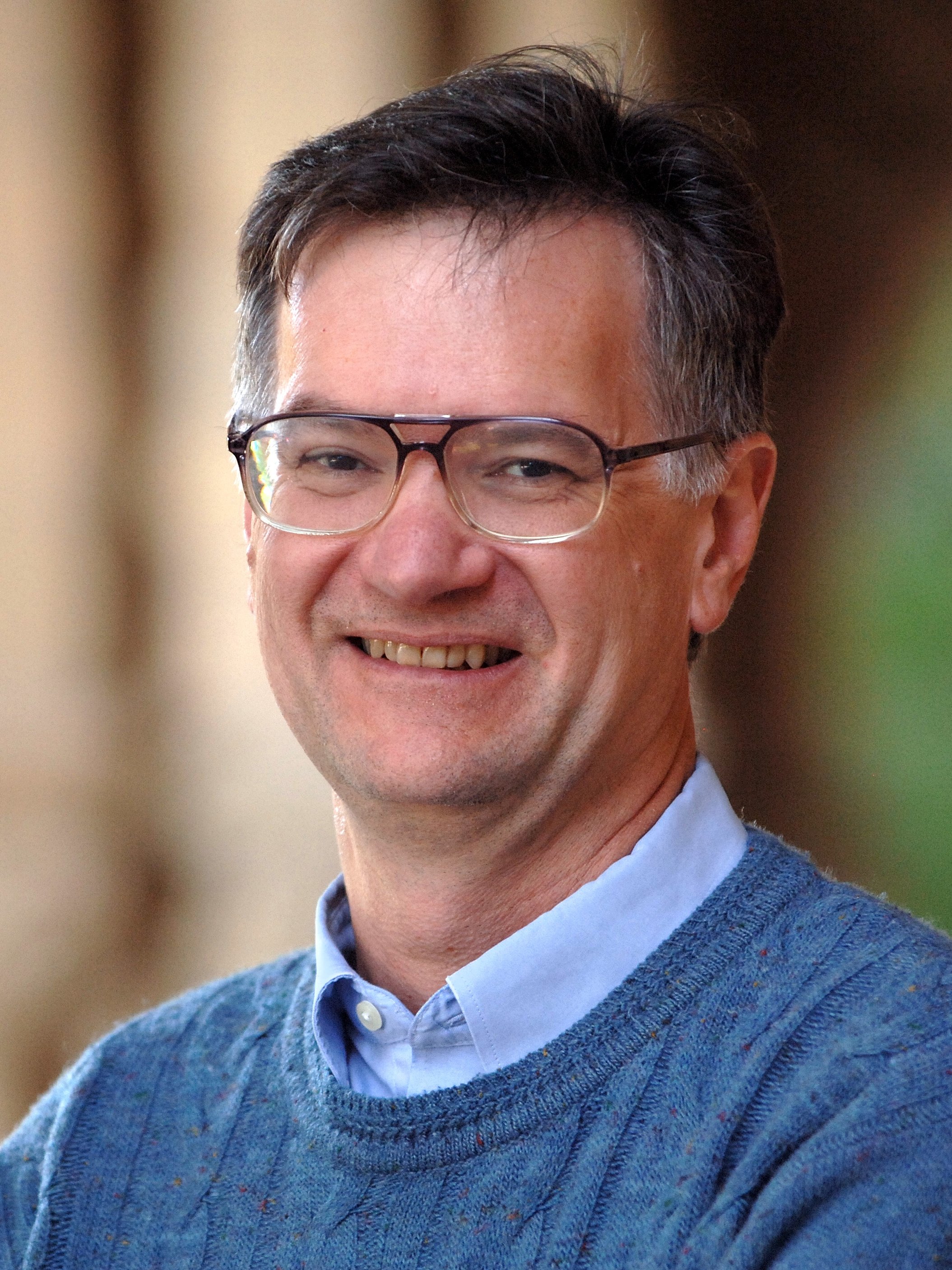
-

Title: Surviving Mass School Shootings

Prashant Bharadwaj 
University of California, San Diego (UCSD) 

Professor in the Department of Economics at the University of California, San Diego. Research interests are in development and labor economics. Research affiliations include BREAD, CEGA, CERP and the NBER. Currently a co-editor at  Journal of Human Resources and an associate editor at the Journal of Development Economics and the Journal of Health Economics. Currently, also the Vice Chair of Graduate Studies in the Department of Economics and the Program Director of the South Asian Studies minor at UCSD.


Prashant Bharadwaj
-

Title: The Value of Improving Insurance Quality: Evidence from Long-Run Medicaid Attrition

Dr. Ajin Lee
Assisstant Professor of Economics 
Michigan State University

Main fields of interest are public and health economics. She focuses on the determinants of efficient delivery of public health insurance systems and both short- and long-run effects of the early childhood environment. 
Dr. Ajin Lee received her BA in Economics from Yonsei University and my PhD in Economics from Columbia University.


Dr. Ajin Lee
News Type
News
Date
Paragraphs

Applications opened last week for the China Scholars Program (CSP), Sejong Korea Scholars Program (SKSP), and Reischauer Scholars Program (RSP) on Japan—three intensive online courses offered by SPICE, Stanford University, to high school students across the United States. All three applications can now be viewed at https://spicestanford.smapply.io/. Interested students must submit their completed application (including an essay and letter of recommendation) by the deadlines listed below.

Spring 2021 Online Course Application Deadlines

China Scholars Program: October 16, 2020
Sejong Korea Scholars Program: October 16, 2020
Reischauer Scholars Program: October 16, 2020

All three online courses are currently accepting applications for the Spring 2021 term, which will begin in February and run through June. Designed as college-level introductions to East Asia, these academically rigorous courses present high school students the unique opportunity to engage in a guided study of China, Korea, or Japan directly with leading scholars, former diplomats, and other experts from Stanford and beyond. High school students with a strong interest in East Asia and/or international relations are especially encouraged to apply.

“U.S. relations with East Asia is prominently featured in the news daily,” says Naomi Funahashi, instructor of the Reischauer Scholars Program. “SPICE is incredibly fortunate to have Stanford faculty conducting cutting-edge research on Korea, Japan, and China who are willing to help our students interpret key historical events and understand contemporary topics related to security, trade, and politics.”

Rising high school sophomores, juniors, and seniors in the United States are eligible to apply to any of the three programs. Students who are interested in more than one program can apply to two or three and rank their preferences on their applications; those who are accepted into multiple programs will be invited to enroll in their highest-preference course.

For more information on a specific course, please refer to its individual webpage at chinascholars.org, sejongscholars.org, or reischauerscholars.org.


The RSP, SKSP, and CSP are SPICE’s online courses for high school students. In addition, we offer online courses for high school students in Japan (Stanford e-Japan) and China (Stanford e-China). To be notified when the next application period opens, join our email list or follow us on Facebook, Twitter, or Instagram.

Read More

Student in a red dress presenting at a podium with Stanford signage
Blogs

Coming Full Circle: The Sejong Korea Scholars Program and Stanford

The following reflection is a guest post written by Sandi Khine, an alumna of the Reischauer Scholars Program and the Sejong Korea Scholars Program, which are currently accepting applications for the 2021 courses.
Coming Full Circle: The Sejong Korea Scholars Program and Stanford
group of students taking a photo in front of a building
Blogs

China Scholars Program: East Asia Through a STEM Lens

The following reflection is a guest post written by Mallika Pajjuri, an alumna of the China Scholars Program and the Reischauer Scholars Program. She is now a student at MIT.
China Scholars Program: East Asia Through a STEM Lens
Hero Image
Quad and hoover tower on campus
Stanford’s Inner Quad with Hoover Tower in the background; photo credit Linda A. Cicero / Stanford News Service
All News button
1
Authors
News Type
Blogs
Date
Paragraphs

Amidst the hectic year known as 2020, I started and finished SPICE’s Sejong Korea Scholars Program (SKSP), an online program offered through Stanford for high school students interested in Korea. The program was challenging but also rewarding; I honestly loved every moment of it.

My interest in Korea began when I was in elementary school. Growing up in Queens, New York, a New York City borough with a diverse population, Korean culture was introduced to me in the form of food. Although some may think all Asian food is the same, as a Chinese American, I know how vastly different Korean food can be from Chinese food. My Korean American classmates would bring in Korean foods for lunch—kimchi, gimbap, galbi—and because I had never seen it before, I’d always want to know how it tasted. Luckily for me, Queens had a sizable ethnic Korean population and with that came great Korean restaurants. I was a frequent visitor to these tasty restaurants. Through this, I became interested in learning more about Korea, but outside of food, a few videos I had watched, and some information from my classmates, I didn’t know much, if anything at all, about Korea.

Heading into the SKSP, I was worried I didn’t know as much as my classmates. When I started the SKSP, all of my worries subsided. You didn’t need a strong background on Korea or in Korean. I was told that the most important thing to have is a genuine interest or curiosity about the topic, which was something I did have. I also have to say that my classmates were some of the most motivated students I’ve ever met.

One of my favorite parts about the program was the fact that I was able to connect with students from all over the U.S. and learn firsthand how they interpreted what we learned from our readings and lectures through discussion boards.
Jason Lu

And during our biweekly meetings, we would attend lectures with experts on Korea and professionals who worked with Korea. Something interesting I learned from a lecture was that the “BBC Dad” Professor Robert Kelly is a political analyst on Korean affairs, which I don’t find to be a coincidence; instead, learning the fact that Professor Kelly is an expert on Korea shows how widespread and important the study of Korea today is.

We explored a bit of pre-nineteenth century Korean history and then explored more on religions in Korea, colonial Korea, the division of Korea and the Korean War, post-war Korea, the divergence of North and South Korea, and trends in South Korean culture including bits about chaebols and the Hallyu wave. I found a particular interest in the Korean diaspora in Japan, which I learned about when learning about Korea in its colonial period. And because the SKSP has a research component, I wrote my paper on that and enjoyed my time so much because it was a topic I genuinely wanted to learn more about. After completing my paper, I was led to Min Jin Lee’s novel Pachinko, a historical fiction about a Korean family in Japan, and found myself so invested because I had some background knowledge.

Starting the course before the pandemic and completing it during the pandemic was interesting, to say the least. When the coronavirus situation took a turn for the worse, my high school courses scrambled to finish the year, but the SKSP went on normally, and I was able to invest more time into learning about Korea. I have to give props to the course instructor, Dr. HyoJung Jang, and the program coordinator Jonas Edman for keeping the course running smoothly through a worldwide crisis and helping us students with any questions and issues we had.

I participated in the SKSP as a senior in high school, and having taken it right before college has been incredible. This course has helped develop my self-driven learning skills, which I believe will be unimaginably beneficial for me as I head off to begin my first year of college. The SKSP is a college-level course that teaches in the same way college courses are taught, and right now, I find that my experience with the SKSP has prepared me for my college classes that I have only recently started.

The SKSP has furthered my interest in international relations, which I hope to major in at the University of Pennsylvania where I am a freshman this fall. I am definitely looking forward to furthering my knowledge of Korea and hope I am able to visit one day after traveling is safe once again. For me, as someone who came into the SKSP with a curiosity and left with even more, I can’t wait to continue on my path of learning. For those interested in the SKSP, I say go for it. It has changed not only how much I know about the world, but also how I perceive it. I hope SPICE continues to offer this terrific opportunity and students take this opportunity, so they can make a difference in the world.

Read More

Student in a red dress presenting at a podium with Stanford signage
Blogs

Coming Full Circle: The Sejong Korea Scholars Program and Stanford

The following reflection is a guest post written by Sandi Khine, an alumna of the Reischauer Scholars Program and the Sejong Korea Scholars Program, which are currently accepting applications for the 2021 courses.
Coming Full Circle: The Sejong Korea Scholars Program and Stanford
Students in Stanford’s SKSP online course learn about Korea from many angles, including both traditional and contemporary Korean culture.
News

The Largest Cohort of High School Students Successfully Completes the SKSP Online Course on Korea at Stanford

The Largest Cohort of High School Students Successfully Completes the SKSP Online Course on Korea at Stanford
2014 Sejong Scholars Honorees
News

Students honored at the 2014 Hana-Stanford Conference on Korea for U.S. secondary school teachers

Students honored at the 2014 Hana-Stanford Conference on Korea for U.S. secondary school teachers
Hero Image
High school student with a diploma standing in front of a banner
Jason Lu at the 2020 graduation ceremony of Ocean Lakes High School, Virginia Beach, Virginia; photo courtesy Jason Lu
All News button
1
Subtitle

The following reflection is a guest post written by Jason Lu, an alumnus of the Sejong Korea Scholars Program, which is currently accepting applications for the 2021 course.

Encina Hall
616 Jane Stanford Way
Stanford, CA 94305-6055

0
Research Scholar
mike_bennon_2022.jpg

Michael Bennon is a Research Scholar at CDDRL for the Global Infrastructure Policy Research Initiative. Michael's research interests include infrastructure policy, project finance, public-private partnerships and institutional design in the infrastructure sector. Michael also teaches Global Project Finance to graduate students at Stanford. Prior to Stanford, Michael served as a Captain in the US Army and US Army Corps of Engineers for five years, leading Engineer units, managing projects, and planning for infrastructure development in the United States, Iraq, Afghanistan and Thailand. 

Program Manager, Global Infrastructure Policy Research Initiative
Authors
News Type
Blogs
Date
Paragraphs

As schools across the U.S. began to close due to COVID-19 in mid-March, I was in the unique position of transitioning into online classes while already having had some experience taking fully online classes. The year before, I had completed SPICE’s Reischauer Scholars Program (RSP), an intensive online course focusing on Japanese culture, history, and U.S.–Japan relations; participating in the Sejong Korea Scholars Program (SKSP), an equivalent program, I thought, would be a similar experience.

Yet, being part of the SKSP in the midst of a pandemic framed the way I participated in and learned from the class. As the course went on, we began each Virtual Classroom with a brief discussion on COVID-19, talking amongst ourselves how we were personally doing, and how Korea was handling it as compared to the U.S. We were encouraged to read local news in Korea to learn about COVID-19, and we brought our learnings to each discussion with renewed vigor. There’s a strange and harrowing feeling you get when analyzing the course of a virus in your home country and across the Pacific—an implicit understanding that this isn’t just a research text to pore over, but an unprecedented moment in history we’re living through. 

But back to the beginning. After participating in the RSP, I realized how essential it is to analyze stories from all facets.

In my school, I’d only learned from Western perspectives; RSP and SKSP were golden opportunities to more comprehensively learn the nuances of global culture and history.
Sandi Khine

RSP first introduced me to the concept that “history is told from the winner’s perspective,” and SKSP gave me the opportunity to delve deeply into that. I became intrigued with how history is taught and wanted to understand the “other” sides of stories I learned about in my textbooks. Weeks later, when we learned about the Japanese exploitation of Korean comfort women during World War II, I knew that learning about these issues from one side would simply not be enough to fully comprehend parts of history such as these. The way I learn history directly impacts how I view society and the relationships between groups of people.

Hence, each of the modules helped me craft a multifaceted perspective of Korea and U.S.–Korea relations. The lessons and lectures allowed me to understand and re-interpret modern and historical issues in a global context. From Shamanism’s evolving role in Korean society, to Japanese colonial rule in Korea, to the social impacts of the Miracle on the Han River, to class and socioeconomic strata in Korean education systems, I dove into a plethora of topics through readings, lectures, and class discussions. As a high school student, I never believed I would have the honor of learning from distinguished scholars and experts, but SKSP introduced me to a variety of academics with clear passions for Korean history and culture. My learning extended beyond lectures: in discussion boards, I learned from my classmates, who shared their diverse perspectives and experiences and fostered an inclusive and challenging learning environment. We were given the chance to analyze material on our own through readings and assignments, but it was in these virtual interactions with my peers that I discovered the most. The open and constructive group that Dr. Jang and Mr. Edman facilitated was one where we could respectfully engage with one another on any topic while acknowledging at the end of the day the friendships and bonds we’d made. Thus, I paired my self-led education from SPICE with that of my public schooling and constructed a greater comprehensive understanding of the world.  

However, it was the Korean War and North Korea units that I believe played the greatest role in not only my intellectual development, but also my personal and political growth. These two units coalesced in my final research paper project, in which I wrote about the critical role of student activism in South Korean democratization. During my research and readings, I analyzed how the March First Movement set the stage for South Korean protest culture and democratization. I recognized that of the two factions of activists post March First, I might have been in the more radical faction, the one that ended up becoming North Korea. This realization, combined with the readings and lectures from the North Korea unit, completely changed my view of geopolitics in Korea. I learned about the U.S.’s role in the Korean War, and subsequently the Western portrayal of North Korea as a rogue, renegade state. I wondered, how much are we to speak about propaganda when students like me are taught lessons that shield Western imperialism with saviorism and American exceptionalism?

SKSP is not simply a fleeting online course with a broad overview of Korea, but an unparalleled opportunity to uncover Korea on an academic level few other high school students have. I hadn’t expected to undergo a personal and political reckoning within myself, but it is because of this growth that I am beyond grateful for SKSP, Dr. Jang and Mr. Edman’s instruction and advising, and all of my peers’ questions and discussions. Since then, I haven’t ceased to continue kindling my interest in Korean history and politics, questioning previously held beliefs, and broadening my worldview. And it is especially during a time like this—a global movement of Black Lives Matter, a local movement to change my high school’s Indigenous emblem, and everything in between, all within the context of a pandemic—that it is so crucial for me to critically analyze what I’ve been taught, and to keep learning as much as I can. In SKSP, I’ve developed the skills necessary to do so. It’s the “other sides” of stories, namely non-Western and non-white, that I am committed to studying, since understanding the nuances of the past can help guide us into a more equitable future.

Next fall, I begin at Stanford, hopefully on campus—it feels like coming full circle, having the privilege to attend college in an institution that first allowed me to foster a genuine love for learning. Now, while many of my friends begin their college careers, I have chosen to take a gap year with the U.S. Department of State’s National Security Language Initiative for Youth (NSLI-Y), a rigorous and competitive academic scholarship to study a critical language abroad. As of August, the in-country program has been pushed back to 2021 due to COVID-19, but I hope to find myself in Seoul in a few months. With everything ahead of me, I know SKSP is only the beginning, as I hope to continue bridging my education to the world.

Read More

Alumni of the Reischauer Scholars Program and Sejong Korean Scholars Program gather with SPICE staff
Blogs

Shinnenkai: A New Year Gathering

Shinnenkai: A New Year Gathering
Students in Stanford’s SKSP online course learn about Korea from many angles, including both traditional and contemporary Korean culture.
News

The Largest Cohort of High School Students Successfully Completes the SKSP Online Course on Korea at Stanford

The Largest Cohort of High School Students Successfully Completes the SKSP Online Course on Korea at Stanford
Hero Image
Student in a red dress presenting at a podium with Stanford signage
Sandi Khine speaking as an honoree of the Reischauer Scholars Program, August 9, 2019; photo courtesy Rylan Sekiguchi
All News button
1
Subtitle

The following reflection is a guest post written by Sandi Khine, an alumna of the Reischauer Scholars Program and the Sejong Korea Scholars Program, which are currently accepting applications for the 2021 courses.

Authors
News Type
Blogs
Date
Paragraphs

I grew up with STEM as my backbone, my crutch. My parents met in engineering school, and the childhood they gifted me with was one filled with opportunities to get my hands dirty. The identity I built for myself was defined by asking questions about snail slime, aphids on roses, simply everything about the “hows” and “whys” of the biological world around me. And not once did I think to steer my gaze elsewhere in hopes of enriching my worldview. To an elementary school Mallika, understanding science and science alone would gift me the tools to solve the world’s greatest problems.

So, of course, it confused me to see my dad, an equity analyst focused on the semiconductor and green tech industries, travel so often to Japan, China, and Korea. Hands filled with stuffed animal pandas wearing qi paos, he would talk on and on about East Asia’s incomparable ability to merge the old with the new: cities at the forefront of tech innovation were sparkled with architecture and customs from lineages spanning thousands of years. My dad sold the intrigue. Not in an orientalist way, rather through a deep appreciation of recognizing the past in an effort to rebrand the future. I just had to get my peek.

I started learning Japanese in fourth grade, Chinese in seventh, and was in love with the languages. They were logical, pictographic, and simply scientific. But the classes were one-dimensional, one-epochical almost, if that’s even a word. What they were able to capture in unraveling the past did nothing in describing the translation to the future. I wanted to get a grasp of contemporary issues to eventually find ways to apply this newfound information to my STEM pursuits.

Fast forward a few years, a semester of SPICE’s Reischauer Scholars Program under my belt, I loved my experience with the SPICE program so much that I had to return for a second program. Naturally, I applied to SPICE’s China Scholars Program (CSP) my junior year of high school, and compounded with classes like AP U.S. History and Honors Chinese, my worldview felt interconnected. Everything I was studying added to an accumulated web of information, weaving connections between economics, public policy, technology, and culture. I wrote my final paper on how bureaucracy, educational equity, and green technology could help China establish itself as the (not a) global superpower, and it had quite honestly been my first exploration in drawing conclusions between seemingly disparate fields. For someone who had conducted many science research projects in the past, CSP and its instructor, Dr. Tanya Lee, challenged and stretched me in ways I never thought possible.

I’m currently studying Materials Science and Engineering and Bioengineering at MIT, but my love for STEM is bolstered by a global lens.
Mallika Pajjuri

At MIT, we’re taught the merits of collaboration through group-based projects and exceedingly difficult problem sets. However, I often doubt the translatability of this approach in the real world. Students of similar academic backgrounds collaborate on similar projects with similar solutions. The web of information synthesized by students of different majors is undeniably extremely useful in developing real-world solutions. Completing CSP through a STEM lens was a unique way of doing just that. I met students from Virginia all the way to Hong Kong who were passionate about everything under the sun. The variation in perspectives livened discussion boards, and I could almost liken the completed responses to a mosaic: each student had their unique piece to offer, such that the image created was one of heightened clarity. Since then, I’ve taken classes on Chinese, on economics, and even on how to stage revolutions, all as a result of understanding the merits of cross-disciplinary and cross-cultural exploration. And who knows, I might even minor in Chinese to pay homage to the language that shaped my worldview.


Hero Image
group of students taking a photo in front of a building
Mallika Pajjuri (woman standing to the far right) with her floormates from Baker House in front of MIT's Great Dome; photo courtesy Mallika Pajjuri
All News button
1
Subtitle

The following reflection is a guest post written by Mallika Pajjuri, an alumna of the China Scholars Program and the Reischauer Scholars Program. She is now a student at MIT.

-

Please register at www.eai-aparc-seminar.or.kr on the day of the event.

A panel of experts in international relations and commerce will discuss challenges facing South Korea and the country's strategy in light of the current tensions between the U.S. and China. This event is co-sponsored by East Asia Institute in Korea.

Panelists:

David Kang, Maria Crutcher Professor in International Relations; Professor of Business, and East Asia Languages and Cultures; Director of Korean Studies Institute, USC

Seungjoo Lee, Professor of Political Science and International Relations, Chung-Ang University, Korea

Charles Freeman, Senior Vice President for Asia, U.S. Chamber of Commerce

Taeho Bark, President, Lee&Ko Global Commerce Institute; former Minister of Trade, Korea

Discussants:

Yong Suk Lee, Deputy Director of the Korea Program, Shorestein APARC; SK Center Fellow, FSI,  Stanford University

Seong-Ho Sheen, Professor of International Security, Graduate School of International Studies, Seoul National University, Korea

Moderators:

Gi-Wook Shin, Director of APARC; Senior Fellow, FSI; William J. Perry Professor of Contemporary Korea; Professor of Sociology, Stanford University

Yul Sohn, President, East Asia Institute; Professor, Graduate School of International Studies, Yonsei University, Korea

Watch the recorded event at https://youtu.be/Hoz0cXtQfR4.

Live stream: Register at www.eai-aparc-seminar.or.kr on the day of the event.

Panel Discussions
Authors
News Type
Commentary
Date
Paragraphs

Believe it or not, there is an issue on which Donald Trump and Joe Biden agree: Both have announced their opposition to building an underground repository to permanently store nuclear waste at Yucca Mountain in Nevada. With the presidential candidates on record, it is time for everyone else to accept that Yucca Mountain is finally off the table, and for the United States to begin to seriously consider realistic alternatives for safely managing the more than 80,000 tons of spent nuclear fuel currently sitting at 72 operating and shut-down commercial nuclear reactor sites across the country.

Read the rest at Bulletin of Atomic Scientists

Hero Image
Energy Department representatives presented the Yucca Mountain license application to the NRC on June 3, 2008
Energy Department representatives presented the Yucca Mountain license application to the NRC on June 3, 2008 | NRC
All News button
1
Subtitle

Both have announced their opposition to building an underground repository to permanently store nuclear waste at Yucca Mountain in Nevada. Now it's time for everyone else to accept that Yucca Mountain is off the table and for the United States to begin to consider realistic alternatives for safely managing spent fuel.

-

This is a virtual event. Please click here to register and generate a link to the talk. 
The link will be unique to you; please save it and do not share with others.


Sponsored by the Stanford China Program and the Stanford Center at Peking University.
 

International institutions established after WWII and shaped by the Cold War facilitated attainment of unprecedented peace and prosperity.  But what worked well in the past may no longer be adequate to address the challenges and opportunities in the world these institutions helped to create.  Should legacy institutions be reformed, replaced, or supplemented by new mechanisms to manage new global challenges?  This program will examine whether existing institutions of global governance are adequate, and if not, why changing them will be difficult.


Image
Dr. Thomas Fingar
Thomas Fingar is a Shorenstein APARC Fellow in the Freeman Spogli Institute for International Studies at Stanford University. He was the inaugural Oksenberg-Rohlen Distinguished Fellow from 2010 through 2015 and the Payne Distinguished Lecturer at Stanford in 2009. From 2005 through 2008, he served as the first deputy director of national intelligence for analysis and, concurrently, as chairman of the National Intelligence Council. Fingar served previously as assistant secretary of the State Department’s Bureau of Intelligence and Research (2000-01 and 2004-05), principal deputy assistant secretary (2001-03), deputy assistant secretary for analysis (1994-2000), director of the Office of Analysis for East Asia and the Pacific (1989-94), and chief of the China Division (1986-89). Between 1975 and 1986 he held a number of positions at Stanford University, including senior research associate in the Center for International Security and Arms Control.

Fingar's most recent books are The New Great Game: China and South and Central Asia in the Era of Reform, editor (Stanford, 2016), Uneasy Partnerships: China and Japan, the Koreas, and Russia in the Era of Reform (Stanford, 2017), and Fateful Decisions: Choices that will Shape China’s Future, co-edited with Jean Oi (Stanford, 2020).


Dr. Stephen J. StedmanStephen Stedman is a Freeman Spogli senior fellow at the Center on Democracy, Development, and the Rule of Law and FSI, an affiliated faculty member at CISAC, and professor of political science (by courtesy) at Stanford University. 

In 2011-12 Professor Stedman served as the Director for the Global Commission on Elections, Democracy, and Security, a body of eminent persons tasked with developing recommendations on promoting and protecting the integrity of elections and international electoral assistance. The Commission is a joint project of the Kofi Annan Foundation and International IDEA, an intergovernmental organization that works on international democracy and electoral assistance. In 2003-04 Professor Stedman was Research Director of the United Nations High-level Panel on Threats, Challenges and Change and was a principal drafter of the Panel’s report, A More Secure World: Our Shared Responsibility. In 2005 he served as Assistant Secretary-General and Special Advisor to the Secretary- General of the United Nations, with responsibility for working with governments to adopt the Panel’s recommendations for strengthening collective security and for implementing changes within the United Nations Secretariat, including the creation of a Peacebuilding Support Office, a Counter Terrorism Task Force, and a Policy Committee to act as a cabinet to the Secretary-General.  His most recent book, with Bruce Jones and Carlos Pascual, is Power and Responsibility: Creating International Order in an Era of Transnational Threats (Washington DC: Brookings Institution, 2009).

Via Zoom Webinar. Register at: https://bit.ly/3b6qmKT

Thomas Fingar Shorenstein APARC Fellow, Stanford University
Stephen Stedman Deputy Director, Center on Democracy, Development and Rule of Law, Stanford University
Seminars
Subscribe to United States