Authors
Callista Wells
News Type
News
Date
Paragraphs

On October 6, 2021, the APARC China Program hosted the panel program, "Engaging China: Fifty Years of Sino-American Relations." In honor of her recently released book of the same title, Director of the Grassroots China Initiative Anne Thurston was joined by contributors Mary Bullock, President Emerita of Agnes Scott College; Thomas Fingar, Shorenstein APARC Fellow; and David M. Lampton, Professor Emeritus at Johns Hopkins School of Advanced International Studies (SAIS). Thomas Fingar also moderated the panel.

Recent years have seen the U.S.-China relationship rapidly deteriorate. Engaging China brings together leading China specialists—ranging from academics to NGO leaders to former government officials—to analyze the past, present, and future of U.S.-China relations.

During their panel, Bullock, Fingar, Lampton, and Thurston reflected upon the complex and multifaceted nature of American engagement with China since the waning days of Mao’s rule. What initially motivated U.S.’ rapprochement with China? Until recent years, what logic and processes have underpinned the U.S. foreign policy posture towards China? What were the gains and the missteps made during five decades of America’s engagement policy toward China? What is the significance of our rapidly deteriorating bilateral relations today? Watch now: 

For more information about Engaging China or to purchase a copy, please click here.

Read More

Xi and Biden
Q&As

Biden, Xi Will Want To Diminish Exaggerated Characterizations of Bilateral Friction, Stanford Scholar Says

In this Q&A, Stanford scholar Thomas Fingar discusses what to expect when President Biden meets with Chinese President Xi Jinping.
Biden, Xi Will Want To Diminish Exaggerated Characterizations of Bilateral Friction, Stanford Scholar Says
Taiwan
Commentary

America's Future in Taiwan

Intensifying threats of a military conflict over Taiwan have brought uncertainty to the stability of regional security for Southeast Asia, according to Center Fellow Oriana Skylar Mastro on radio show On Point.
America's Future in Taiwan
USS Key West during during joint Australian-United States military exercises Talisman Sabre 2019 in the Coral Sea.
Commentary

In Defense of AUKUS

This is not only about nuclear-powered submarines; it is about a strengthened US commitment to Australia.
In Defense of AUKUS
Hero Image
"Engaging China: Fifty Years of Sino-American Relations" book cover
All News button
1
Subtitle

Was the strategy of engagement with China worthwhile? Experts Mary Bullock, Thomas Fingar, David M. Lampton, and Anne Thurston discuss their recent release, "Engaging China: Fifty Years of Sino-American Relations."

Authors
Gary Mukai
News Type
Blogs
Date
Paragraphs

My first visit to the University of Tokyo was in autumn 1977. I distinctly recall walking through Akamon and being in awe of the contrast between the autumn leaves and the red gate. I last walked through Akamon in autumn 2019. I had kindly been invited by Professor Hideto Fukudome, Director, Center for Advanced School Education and Evidence-based Research (CASEER), to give a guest lecture on “University–High School Collaboration” at the Graduate School of Education. I was scheduled to visit again in March 2020 but my trip had to be canceled due to the pandemic. Despite the pandemic, Fukudome conceptualized a lecture series that would allow SPICE staff to virtually walk through Akamon to collaborate with CASEER faculty and University of Tokyo students.

On November 1, 2021, the lecture series—SPICE/Stanford–UTokyo Partnership on International and Cross-Cultural Education and Global Citizenship—was launched. The goal of the lecture series is to provide a platform to share current research and practice. The discussions will ideally result in opportunities to collaborate between both organizations, and also opportunities for student engagement.

Fukudome delivered the first lecture, “Multiculturalism and Classical Tradition in Liberal Education: Comparative and Historical Perspectives.” Since his was the first lecture of the series, he opened by sharing important information about the University of Tokyo to help set the context for the series. This included the vision of the new president of the University of Tokyo—including an emphasis on diversity and inclusiveness—and information about University of Tokyo admissions. President Teruo Fujii’s vision is captured in UTokyo Compass, a statement of the guiding principles of the University of Tokyo that is titled “Into a Sea of Diversity: Creating the Future through Dialogue.” It focuses on the need to build a democratic society in which each individual can live with respect.

Sprinkled in his lecture were comparisons between the University of Tokyo and Stanford University. One of the comparisons—that 20 percent of undergraduates at the University of Tokyo are women, versus 51 percent of undergraduates at Stanford University—was very surprising to the SPICE staff and prompted discussion. He also noted that most students are admitted solely based upon test scores, and that only three percent are admitted through a process translated in English as “self-recommendation,” which is a more holistic review process to determine admissions. In addition, he noted that in Japan, universities do not identify students’ socio-economic background in the admissions process.

In the heart of his lecture, Fukudome shared comments on the many different ways of thinking about liberal education in the United States. He noted two major trends that form the ideological foundation of liberal education. One is the classical approach, or the idea that the cultural and spiritual foundation of the United States is to be found in Europe and that the core of liberal education is to learn about Western civilization, which originated in Greece and Rome. The second is multiculturalism, or seeing the cultural origins of the United States as diverse and made up of many races and ethnic groups. He noted, “These ideas are often viewed in opposition to each other over the undergraduate curriculum. From the perspective of how to think about the ideological basis of the curriculum, both ideas can provide suggestions for Japan. In this sense, the ideological debate over liberal education in the United States has an essential meaning for Japan as well.”

From the perspective of how to think about the ideological basis of the curriculum, both ideas can provide suggestions for Japan. In this sense, the ideological debate over liberal education in the United States has an essential meaning for Japan as well.

The SPICE staff is looking forward to further exchanging ideas with Fukudome and his CASEER colleagues and the University of Tokyo students on topics related to liberal education and other topics of mutual interest. The second session on December 6, 2021 will focus on SPICE’s online instruction for high school students, including Stanford e-Japan, SPICE’s first online course for high school students in Japan that is supported by the Yanai Tadashi Foundation. The following are the list of speakers and their topics for the first six session of the lecture series.

  • 1st session: November 1, Hideto Fukudome, University of Tokyo, Multiculturalism and Classical Tradition in Liberal Education: Comparative and Historical Perspectives
  • 2nd session: December 6, Gary Mukai, SPICE/Stanford, Online Instruction for High School Students
  • 3rd session: January 10, Yuto Kitamura, University of Tokyo, Teaching and Learning Transversal Competencies Through Education for Sustainable Development (ESD): Implications from a Survey Conducted in Yokohama City
  • 4th session: February 7, Rylan Sekiguchi, SPICE/Stanford, Curriculum and Instruction: What Does It Mean to Be an American?  
  • 5th session: February 28, Misako Nukaga, University of Tokyo, Visibilizing the Second Generation Immigrants in Japan: Divergent Pathways of Acculturation and Educational Inequality
  • 6th session: April 4, Mariko Yang-Yoshihara, SPICE/Stanford, Learning Assessment in Online Courses
     

The University of Tokyo faculty members who are participating in the lecture series all have experiences in the United States. Listed alphabetically, they are:

  • Hideto Fukudome, Director & Professor (Former Visiting Scholar at U.C. Berkeley and Penn State)
  • Yuto Kitamura, Deputy Director & Professor (PhD, UCLA)
  • Kayoko Kurita, Professor (Former Visiting Scholar at Center for Teaching and Learning, Stanford)
  • Kanako Kusanagi, Assistant Professor (BA, University of North Carolina, Chapel Hill)
  • Yusuke Murakami, Associate Professor (Former Visiting Scholar at U.C. Berkeley)
  • Misako Nukaga, Associate Professor (PhD, UCLA)
     

SPICE’s Maiko Tamagawa Bacha is a graduate of the University of Tokyo and following the first session commented, “The lecture series brought back fond memories of my time at the University of Tokyo as an undergraduate. In particular, it was touching to see one of my fellow undergraduate students—Misako Nukaga, now an associate professor at the University of Tokyo—in attendance! I am grateful to Professor Fukudome for bringing us together again and for also bringing my academic and work institutions together.”

Since UTokyo Compass underscores (1) the importance of a university as a place where diverse people gather to discuss, share, and solve problems and (2) the importance for students to think from multiple perspectives, I hope that the collaboration with SPICE will help to support UTokyo Compass. These two points have been central pillars of SPICE since its beginning in 1976.

Read More

female student standing in front of Akamon in Japan
Blogs

Stanford e-Japan: A Turning Point in My Life

The following reflection is a guest post written by Hikaru Suzuki, a 2015 alumna and honoree of the Stanford e-Japan Program, which is currently accepting applications for Spring 2021.
Stanford e-Japan: A Turning Point in My Life
Hero Image
gate to University of Tokyo
Akamon (Red Gate) at the University of Tokyo
All News button
1
Subtitle

The SPICE/Stanford–CASEER/UTokyo Lecture Series provides a platform to share current educational research and practice.

Authors
Melissa Morgan
News Type
News
Date
Paragraphs

According to the Freedom House project’s 2021 Freedom in the World assessment, 2020 saw a sharp acceleration in the global decline of democracy. By their measure, fewer than a fifth of the world’s population now live in fully free countries. This is part of a longer trend of democratic decline and rising authoritarianism that’s been underway across the globe for the last 30 years.

Why is this happening? That’s the question Ben Rhodes, former Deputy National Security Advisor for Strategic Communications and Speechwriting under President Barack Obama, tries to tackle in his new book, After the Fall: Being American in the World We’ve Made.

Rhodes joined FSI Director Michael McFaul on the new season of the World Class Podcast to discuss the book and the stories it tells of incredible individuals pushing back against autocratic regimes around the world.

Click here for a transcript of "Understanding the Global Rise of Authoritarianism."

On the inspiration for the book:


I wanted to investigate this trend of nationalist authoritarianism through the prism of people, particularly [people] in opposition who are living it. I ended up looking at Hungary, Russia, China, and the U.S., all of which I think are representative of a kind of a different flavor of the same authoritarian trend that we're getting. That's really what the whole book is: me pulling on this thread of what is the interconnection between why this is happening, and how are people thinking about it? How can I approach it not as just pure analysis, but through the stories of these human beings?

On why nationalism and authoritarianism is spreading globally:


The first was the excess of globalization, the excess of capitalism, and the creation of exploding inequality happening at the same time that globalization is kind of encroaching on people's national identity or tribal identity

Another trend through line was the post-9/11 securitization of the American superpower. When we turn our national purpose into this war on terror, not only do we militarize our engagement with the world, which I think was generally bad for democracy, but we also provide a template and a justification for autocrats to expropriate that for their own purposes.

Then lastly, technology is big difference maker in the sense that these platforms that at first were connecting people became the perfect vehicles for disinformation and surveillance

On China:


China may look different [from regimes like Russia or Hungary], but I don't think they're nearly as different as people think. Right? You have to look at Xi Jinping, first and foremost, as a nationalist Chinese leader, not a communist Chinese leader. And in his brand of nationalism, he's very similar to Putin, and Orban, and Trump, and all the other leaders I could have done in this book.

How did [the Chinese Communist Party] survive post-Tiananmen? They reestablished who they were as a Chinese Nationalist Party. They had been a revolutionary communist party, then they give up a big chunk of the communism to move to capitalism

On authoritarianism in America:


In this country, you have a major political party, that has completely gone off the deep end. They're literally setting up a playbook where they can overturn the results of an election through the laws they’re are passing at the state level. And if Trump does come back, which is a 50-50 proposition, he's clearly going to run and it will be another 50-50 election, right? And even if he loses, maybe they'll succeed this time overturning the result. They will start from such a more advanced authoritarian position than even in 2016 when he was elected.

On the future:


There's a lot of reason to be concerned that the overall trajectory of society globally is still moving in the wrong direction. What makes me optimistic, though, is that I don't believe that that's how most people want to live. And I also find, in most places – not all places, but most places – generationally, there's an overwhelming preference to not live like that. If we can hold the line and weather the storm for the next few years, and begin to figure out some structural things like, I do think we can come through in the backend to a place where the pendulum starts swinging pretty hard in the other direction.

Read More

Trump supporters at the Capitol Building
News

New Administration Inherits a Democracy in Crisis, Explains FSI Panel

Scholars say there is much work to be done to restore confidence in democracy in America and around the world.
New Administration Inherits a Democracy in Crisis, Explains FSI Panel
President-elect Joe Biden and Chinese President Xi Jinping
News

Biden Administration Will Rely On U.S. Allies for Support as Tensions with China Continue to Rise

On the World Class Podcast, international security expert Oriana Skylar Mastro says conflict between China and Taiwan is plausible within the next 15 years, and the U.S. will likely be involved.
Biden Administration Will Rely On U.S. Allies for Support as Tensions with China Continue to Rise
Vladimir Putin
News

Biden Administration Should Aim to Bring Positive Change to a Tense U.S.-Russia Relationship

On the World Class Podcast, former U.S. Ambassador to Ukraine Steven Pifer says we can expect a consistency between the president’s behavior and policy toward Russia.
Biden Administration Should Aim to Bring Positive Change to a Tense U.S.-Russia Relationship
Hero Image
Vladamir Putin and Xi Jinping shake hands.
Getty Images
All News button
1
Subtitle

National security analyst and veteran podcaster Ben Rhodes joins Michael McFaul on World Class to discuss his new book, After the Fall: Being American in the World We've Made, and the reasons nationalism and authoritarianism are on the rise across the globe.

-

To watch the recording of the event, click here.

This event is co-hosted with the East Asia Institute (EAI) in Korea.

Event Time: November 18, 4:00 - 6:00 PM (PST) / November 19, 9:00 - 11:00 PM (Japan and Korea)
Please register for this event at EAI event page.

The ROK-U.S. and U.S.-Japan joint statements have increased expectations for a possible expansion of security and economic cooperation among South Korea, the U.S. and Japan. However, heightened U.S.-China strategic competition, as well as persistent challenges in the region such as historical tensions and the North Korea threat, have complicated the strategic calculus of U.S., South Korea and Japan. Under these circumstances, the South Korea, the U.S. and Japan must define their economic and security interests and seek ways to maintain friendly relations among the three countries. This seminar will discuss security and economic cooperation among Korea, the United States and Japan in the era of strategic competition between the U.S. and China.

Panel 1 on security:

Park Joon Woo, former Chairman of the Sejong Institute; former South Korean Ambassador to E.U. and to Singapore

Tomiko Ichikawa, Director General of the Japan Institute of International Affairs

Gen. Vincent Brooks, former USFK Commander

Moderated by Young Sun Ha, Chairman of East Asia Institute; Professor Emeritus, Seoul National University

Panel 2 on economic cooperation:

Young Ja Bae, Professor of Political Science and Diplomacy, Konkuk University, Korea

Andrew Grotto, Director of the Program on Geopolitics, Technology and Governance, FSI, Stanford University

Kimura Fukunari, Professor of Economics, Keio University, Japan

Moderated by Thomas Fingar, Shorenstein APARC Fellow, Stanford University


Via Zoom. Register at https://bit.ly/3w7Ak9g

Panel Discussions
Authors
News Type
News
Date
Paragraphs

SPICE is pleased to share the announcement below from Stanford Global Studies about an upcoming Education Partnership for Internationalizing Curriculum (EPIC) workshop for community college instructors that will feature a talk by Professor Tomás Jiménez on his latest book, States of Belonging: Immigration Policies, Attitudes, and Inclusion. This free virtual workshop will take place on Tuesday, November 9, 4:00–6:00PM (Pacific Time). All attendees will receive a copy of Professor Jiménez’s book after the workshop. Please see the workshop description below for more information as well as the registration link.


The Stanford Program on International and Cross-Cultural Education (SPICE) and Stanford Global Studies (SGS) are continuing their partnership to offer exciting professional development opportunities for community college instructors who wish to internationalize their curriculum. This two-hour workshop is presented by SPICE and SGS as part of the Education Partnership for Internationalizing Curriculum (EPIC) and is supported by Department of Education Title VI funding.

This workshop will feature a talk by Stanford Professor Tomás Jiménez on his latest book, States of Belonging: Immigration Policies, Attitudes, and Inclusion. Participants will have the opportunity to ask questions and discuss with Professor Jiménez the differing approaches and attitudes shaping today’s immigration policies in the United States.

As noted by the publisher of States of Belonging, “Political turmoil surrounding immigration at the federal level and the inability of Congress to pass comprehensive immigration reform have provided an opening for state and local governments to become more active in setting their own immigration-related policies. States largely dictate the resources, institutions, and opportunities immigrants can access: who can get a driver’s license or attend a state university, what languages are spoken in schools and public offices, how law enforcement interacts with the public, and even what schools teach students about history. In States of Belonging, an interdisciplinary team of immigration experts explore the interconnections among immigration policies, attitudes about immigrants and immigration, and sense of belonging.” (https://www.russellsage.org/publications/states-belonging)

Tomás Jiménez is Professor of Sociology and Comparative Studies in Race and Ethnicity at Stanford University. His research and writing focus on immigration, assimilation, social mobility, and ethnic and racial identity.

Please register here at your earliest convenience.

Read More

Maiya Evans at the Van Gogh Museum, Amsterdam, Netherlands
Blogs

Reimagining Public Health

Guest author Maiya Evans reflects on her EPIC project, which challenges students to reimagine public health.
Reimagining Public Health
image of six fellows
News

Collegiality and the 2020–21 EPIC Fellows

On August 13 and 14, 2020, Stanford Global Studies welcomed 12 new Education Partnership for Internationalizing Curriculum (EPIC) Fellowship Program community college instructors as members of its 2020–21 cohort.
Collegiality and the 2020–21 EPIC Fellows
2019–2020 EPIC Fellows
News

SPICE’s Jonas Edman Meets with New EPIC Fellows

SPICE’s Jonas Edman Meets with New EPIC Fellows
Hero Image
Professor Tomás Jiménez
All News button
1
Subtitle

SPICE and Stanford Global Studies will offer a free virtual workshop with Professor Tomás Jiménez on November 9, 4:00–6:00PM.

Authors
Melissa Morgan
News Type
News
Date
Paragraphs

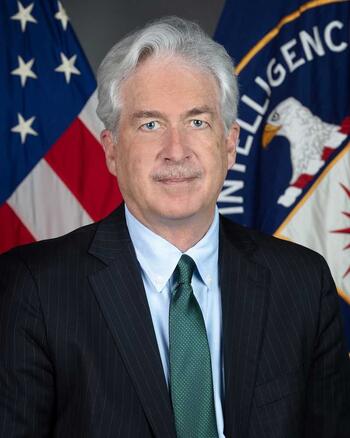
William Burns has been many things in his long career: U.S. ambassador to Jordan and later Russia, deputy secretary of state, career ambassador, and president of the Carnegie Endowment for International Peace, among others. But with his confirmation on March 19, 2021 he added a wholly unique title to his already remarkable list of accomplishments: the first diplomat to ever serve as director of the Central Intelligence Agency.

Burns’ career path was not always clear. As a young college graduate in 1981, he received an offer from the Foriegn Service, but hesitated to take it. His father, a Major General in the U.S. Army, wrote him a note with the advice, “Nothing can make you prouder than to serve your country with honor.”

At his recent visit to the Freeman Spogli Institute for International Studies, Burns offered the students in attendance similar council about pursuing careers in public service. A recording of his remarks is below.

“I’m a believer in the virtues of public service and what it means to our country,” Burns told the audience.

He recognized that this moment in American policy at home and around the world is one of transition and uncertainty and that the current climate of distrust between the American public and government has had a tremendous impact on domestic politics. Abroad, the rise of China cuts across all sectors of U.S. geopolitics, while even larger, non-state challenges such as climate change, global health insecurity, and the rapid advancement of technology pose even greater existential challenges.

Still, Burns has faith in the unique relationship that the United States has to its public service institutions.

“It’s my obligation as a leader, and your opportunity [as potential future public servants] to demonstrate that we can produce institutions in this country that are professional, apolitical, and devoted to the national interest and doing things in accordance with American values,” he emphasized.

It’s my obligation as a leader, and your opportunity to demonstrate that we can produce institutions in this country that are professional, apolitical, and devoted to the national interest and doing things in accordance with American values.
William J. Burns
Director of the C.I.A.

In his jurisdiction over the C.I.A, Burns has already set benchmarks to ensure the agency remains competitive and serves its purpose of providing policymakers with high-quality, timely intelligence which supports their decision-making process. He is committed to streamlining the hiring process at the C.I.A. and making it more attractive to top talent, as well as diversifying the workforce and drawing on expertise from across all types of professional backgrounds and abilities. “We’re not going to be an effective intelligence organization if everyone at the C.I.A. looks like me,” he quipped.

Keeping the bigger picture in mind, Director Burns reiterated one of the underlying principles that has guided his approach to public service. “Both [diplomacy and intelligence] require a sense of humility. There are perspectives in the world that are not identical to ours. You don’t have to accept or indulge those perspectives, but understanding them is the starting point of effective intelligence work and effective diplomacy.”

Read More

William Burns
News

Ambassador William Burns Reflects On a Career in Diplomacy

Ambassador William Burns Reflects On a Career in Diplomacy
encina
News

Call for Applications: Visiting Fellow in Israel Studies at the Freeman Spogli Institute for International Studies, Stanford University

The visiting fellow will teach at least one course during the quarter of the visit on some aspect of Israel’s politics, society, economy, modern history, technological development and/or regional or international relations.
Call for Applications: Visiting Fellow in Israel Studies at the Freeman Spogli Institute for International Studies, Stanford University
Byter, Bombs, and Spies  - new book by Amy Zegart and Herb Lin
News

Scholars examine cyber warfare in new book

Scholars examine cyber warfare in new book
Hero Image
C.I.A. Director William Burns speaks to students at the Freeman Spogli Institute for International Studies at Stanford University.
Rod Searcy
All News button
1
Subtitle

Director Burns shared how he is applying the lessons he learned as a diplomat to make the intelligence community an effective organization for the challenges facing policymakers today.

Authors
Gary Mukai
News Type
Blogs
Date
Paragraphs

When I first met Mayor Norihiko Fukuda in Kawasaki City several years ago, he shared two important values that he embraces. They are “diversity brings strength and greater possibilities” and “recognizing differences is beneficial.” I also learned of the three pillars of Kawasaki’s industrial policy. They are life innovation, green innovation, and welfare innovation. I was struck by his vision that was shaped by his education in both Japan and the United States, and began discussions with him about the development of an online course for high school students in Kawasaki that would introduce topics related to diversity and entrepreneurship. Stanford e-Kawasaki was launched in 2019.

The opening ceremony for the third-year offering of Stanford e-Kawasaki was held on September 23, 2021. Mayor Fukuda addressed the new students, saying, “Today, I am very happy that many of you have decided to participate in this program. I think that the willingness to challenge yourselves is a very important mindset for you to embrace as you prepare for the future.” He continued,

As technology advances, things that were previously impossible will become possible. Like this opening ceremony, you can easily connect with people who live in other countries. I want you to think of these changing times as an opportunity for you to grow.

Stanford e-Kawasaki Instructor Maiko Tamagawa Bacha and I represented SPICE during the opening ceremony. During the ceremony, Bacha informed her 20 students from Kawasaki High School and Tachibana High School that they will be encouraged to think critically about issues related to diversity and entrepreneurship. Stanford scholars and leading entrepreneurs have been invited as speakers. Among the lineup of speakers are Dr. Stephen Murphy-Shigematsu, Stanford University, and Sukemasa Kabayama, Founder and CEO of Uplift Labs in Silicon Valley and former President and Representative Officer, Telsa Motors, Japan. Reflecting on her first two years of serving as the Instructor of Stanford e-Kawasaki, Bacha noted, “Because I have family ties to Kawasaki City, formerly worked for the Japanese Ministry of Foreign Affairs in San Francisco, and currently live in the United States, I feel both a personal and professional connection to Stanford e-Kawasaki. I hope that the course will inspire my students to pursue studies and work in U.S.–Japan relations as I have done.”

Bacha introduced the course requirements, including the development of final projects, and noted that the top two performing students will be invited to Stanford University for a ceremony during which they will be honored along with the top two students in SPICE’s four other regional programs in Japan. Earlier this year, two of the students in the 2020–21 Stanford e-Kawasaki course were honored. They were Eric Silang, whose final project was titled “Humor and America,” and Shunya Tani, whose final project was titled “Possible Ways to Promote Renewable Energy in Japan and the U.S.” Silang’s project noted the importance of considering diversity through the lens of cultural differences in humor, and Tani’s project stressed the need for Japan and the United States to cooperate, rather than compete, in promoting the use of renewable energy to tackle climate change.

I am most grateful to Mayor Norihiko Fukuda for his vision and for making this course possible. I would also like to express my appreciation to Mr. Nihei and Mr. Katsurayama from the Kawasaki Board of Education; and Mr. Abe, Mr. Tanaka, Mr. Kawato, and especially Mr. Inoue from Kawasaki City for their unwavering support. Importantly, I would like to express my appreciation to Principal Iwaki and his staff of Kawasaki High School and Principal Takai and his staff from Tachibana High School for their engagement with Stanford e-Kawasaki.

Maiko Tamagawa Bacha

Maiko Tamagawa Bacha

Instructor, Stanford e-Kawasaki
FULL BIO

Read More

Photo of student honorees holding plaques
News

SPICE Honors Top Students from 2020–2021 Regional Programs in Japan

Congratulations to the eight student honorees from Hiroshima Prefecture, Kawasaki City, Oita Prefecture, and Tottori Prefecture.
SPICE Honors Top Students from 2020–2021 Regional Programs in Japan
Victoria Tsai in Kyoto
Blogs

Stanford e-Kawasaki Guest Speaker: Victoria Tsai, Founder and CEO, Tatcha

The entrepreneur and businesswoman spoke to students about how certain key experiences in her life influenced her path.
Stanford e-Kawasaki Guest Speaker: Victoria Tsai, Founder and CEO, Tatcha
SPICE Director Dr. Gary Mukai with Mayor Norihiko Fukuda
Blogs

Stanford e-Kawasaki: The Vision of Mayor Norihiko Fukuda

Stanford e-Kawasaki: The Vision of Mayor Norihiko Fukuda
Hero Image
Stanford e-Kawasaki students and instructors
Mayor Norihiko Fukuda with Stanford e-Kawasaki students; photo courtesy Kawasaki City
All News button
1
Subtitle

Kawasaki Mayor Norihiko Fukuda makes welcoming comments.

-

For Fall Quarter 2021, FSI will be hosting hybrid events. Many events will be open to the public online via Zoom, and limited-capacity in-person attendance for Stanford affiliates may be available in accordance with Stanford’s health and safety guidelines.

Register for Zoom
(Open to the public)
Register for In-person
(Stanford affiliates only)

The Freeman Spogli Institute for International Studies (FSI) is honored to host the Director of the Central Intelligence Agency, William J. Burns, for a discussion on the national security challenges and opportunities facing the United States, and his experiences and lessons learned during his career in the Foreign Service. FSI Director Michael McFaul will moderate the discussion and questions from the audience.

Image
William Burns, Director of the CIA

Director Burns was officially sworn in as C.I.A. Director on March 19, 2021, making him the first career diplomat to serve as Director. Director Burns holds the highest rank in the Foreign Service—Career Ambassador—and is only the second serving career diplomat in history to become Deputy Secretary of State.

Director Burns retired from the State Department U.S. Foreign Service in 2014 before becoming president of the Carnegie Endowment for International Peace.

Director Burns is a crisis-tested public servant who spent his 33-year diplomatic career working to keep Americans safe and secure. Prior to his tenure as Deputy Secretary of State, he served as Under Secretary of State for Political Affairs from 2008 to 2011; U.S. Ambassador to Russia from 2005 to 2008; Assistant Secretary of State for Near Eastern Affairs from 2001 to 2005; and U.S. Ambassador to Jordan from 1998 to 2001. He was also Executive Secretary of the State Department and Special Assistant to former Secretaries of State Warren Christopher and Madeleine Albright; Minister-Counselor for Political Affairs at the U.S. Embassy in Moscow; Acting Director and Principal Deputy Director of the State Department’s Policy Planning Staff; and Special Assistant to the President and Senior Director for Near East and South Asian Affairs at the National Security Council.

Director Burns received three Presidential Distinguished Service Awards and the highest civilian honors from the Pentagon and the U.S. Intelligence Community. He is the author of the best-selling book, The Back Channel: A Memoir of American Diplomacy and the Case for Its Renewal (2019). He earned a bachelor’s degree in history from LaSalle University and master’s and doctoral degrees in international relations from Oxford University, where he studied as a Marshall Scholar.

William Burns | Director of the CIA
Lectures
Paragraphs
Cover of North Korean Conundrum, showing a knotted ball of string.

Read our news story about the book >> 

North Korea is consistently identified as one of the world’s worst human rights abusers. However, the issue of human rights in North Korea is a complex one, intertwined with issues like life in the North Korean police state, inter-Korean relations, denuclearization, access to information in the North, and international cooperation, to name a few. There are likewise multiple actors involved, including the two Korean governments, the United States, the United Nations, South Korea NGOs, and global human rights organizations. While North Korea’s nuclear weapons and the security threat it poses have occupied the center stage and eclipsed other issues in recent years, human rights remain important to U.S. policy. 

The contributors to The North Korean Conundrum explore how dealing with the issue of human rights is shaped and affected by the political issues with which it is so entwined. Sections discuss the role of the United Nations; how North Koreans’ limited access to information is part of the problem, and how this is changing; the relationship between human rights and denuclearization; and North Korean human rights in comparative perspective.

Contents

  1. North Korea: Human Rights and Nuclear Security Robert R. King and Gi-Wook Shin
  2. The COI Report on Human Rights in North Korea: Origins, Necessities, Obstacles, and Prospects Michael Kirby
  3. Encouraging Progress on Human Rights in North Korea: The Role of the United Nations and South Korea Joon Oh 
  4. DPRK Human Rights on the UN Stage: U.S. Leadership Is Essential Peter Yeo and Ryan Kaminski
  5. Efforts to Reach North Koreans by South Korean NGOs: Then, Now, and Challenges Minjung Kim
  6. The Changing Information Environment in North Korea Nat Kretchun
  7. North Korea’s Response to Foreign Information Martyn Williams
  8. Human Rights Advocacy in the Time of Nuclear Stalemate: The Interrelationship Between Pressuring North Korea on Human Rights and Denuclearization  Tae-Ung Baik
  9. The Error of Zero-Sum Thinking about Human Rights and U.S. Denuclearization Policy Victor Cha
  10. Germany’s Lessons for Korea Sean King
  11. Human Rights and Foreign Policy: Puzzles, Priorities, and Political Power Thomas Fingar

Desk, examination, or review copies can be requested through Stanford University Press.

June 2022 Update

The Korean version of The North Korean Conundrum is now available, published by the Database Center for North Korean Human Rights (NKDB). Purchase the Korean version via NKDB's website >>

To mark the release of the Korean version of the book, APARC hosted a book talk in Seoul jointly with the Database Center for North Korean Human Rights, on June 9, 2022.
Watch NTD Korea's report of the event:

View news coverage of the event by Korean Media:

All Publications button
1
Publication Type
Books
Publication Date
Subtitle

Balancing Human Rights and Nuclear Security

Authors
Robert R. King
Gi-Wook Shin
Book Publisher
Shorenstein APARC
Authors
News Type
Commentary
Date
Paragraphs

Thirty years after the end of the Cold War, nuclear weapons pose a far greater threat to the safety and security of Americans than is reflected in our public discourse. While the United States must maintain a strong nuclear deterrent as an important tool of U.S. foreign and defense policy, an oversized global arsenal of nuclear weapons makes Americans equally unsafe. It is time to reinvigorate arms control discussions to seek reasonable reductions that will make us all more secure.

Too many nuclear weapons increase the risk of theft by terrorists or other nefarious actors, encourage more countries to develop nuclear arms, and raise the risk of nuclear war. Reasonable arms control measures, taken in conjunction with adversaries like Russia, make Americans safer by diminishing the large Russian nuclear arsenal, reinforcing norms against the development and use of nuclear arms, securing or eliminating nuclear material from theft or misuse by terrorists, and saving money that can be used to strengthen the United States military’s conventional deterrence against costly and destructive wars. 

In order to achieve those goals, Washington and Moscow have cut their strategic nuclear weapons since the height of the Cold War. Through the 2010 New Strategic Arms Reduction Treaty, or New START, which the U.S. and Russia recently extended, both countries each reduced their nuclear arsenals to no more than 1,550 deployed strategic warheads arming no more than 700 deployed strategic ballistic missiles and bombers.

Yet, despite these historic cuts, the United States and Russia each still have far more nuclear weapons than either side could conceivably use in a conflict, and at least ten times more weapons than any other country in the world. This actually makes Americans less safe, rather than the other way around.

In 2013, the Joint Chiefs of Staff concluded that the United States could safely reduce the number of deployed strategic warheads by one-third. The Biden administration should use that study—along with the current Nuclear Posture Review– to set the United States on the path to reasonable reductions. 

The Biden administration should aim for new negotiations between the United States and Russian to limit each country’s armed forces to 1,000 deployed strategic warheads. The agreement can be executed incrementally, and the sides might informally agree once negotiations began to deploy no more than 1,400 strategic warheads, as an early confidence-building measure. This first step is an easy and safe one to take, as there have been times over the past decade when both countries already deployed fewer than 1,400 strategic warheads.

As part of a bold new vision for arms control and strategic stability, U.S. negotiators should seek an agreement that encompasses all U.S. and Russian nuclear warheads, including reserve (non-deployed) strategic warheads, and non-strategic nuclear weapons. Negotiators should work to limit all nuclear warheads to no more than 2,500 each, with an embedded sub-limit of 1,000 deployed strategic warheads within the overall aggregate limit. Even with the dramatic arsenal reductions outlined here, the United States would maintain the ability to deter and, if necessary, defend against any global adversary.

Such a nuclear arms reduction agreement would have significant additional advantages for the United States:

First, it could position Washington and Moscow to press China to freeze or limit its build-up of nuclear arms as long as the United States and Russia are reducing their nuclear arsenals. 

Second, such an agreement could give the Pentagon additional resources to support wider force modernization requirements for nuclear and conventional forces alike, including new ballistic missile submarines and the B-21 bomber. If we have the forces to deter conventional conflict, we dramatically reduce the prospect of nuclear war.

Third, such an agreement would bolster America’s non-proliferation credentials and leadership. A new U.S.-Russia nuclear arms reductions treaty may not lead North Korea to abandon its nuclear program overnight, but it would increase the ability of U.S. diplomats to urge third countries to pressure and sanction outliers such as North Korea.

Right-sizing U.S. and global nuclear arsenals strengthens deterrence, reduces proliferation risks, and lowers the threat of nuclear war to the United States and our allies. The Biden administration has an opportunity to reduce that risk. It should seize it.

Rep. Ami Bera, D-Calif., is chairman of the House Foreign Affairs Subcommittee on Asia, the Pacific, Central Asia, and Nonproliferation. Steven Pifer is a William J. Perry Research Fellow at Stanford's Center for International Security and Cooperation.

Originally for Defense One

Hero Image
Submarine
Guided missile submarine USS Ohio (SSGN 726). | Dave Fliesen/U.S. Navy via Getty Images
All News button
1
Subtitle

Biden has an opportunity to bolster deterrence, reduce proliferation risks, and lower the risk of nuclear war.

Subscribe to United States