-

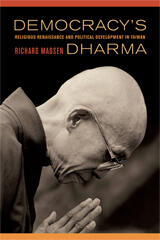
This is a CDDRL's Special Event within our Democracy in Taiwan Program. It is also co-sponsored by the Public Diplomacy/Emerging Publics Project of the Center for the Pacific Rim at University of San Francisco. In this seminar, Dr. Richard Madsen will talk about his new book that explores the religious renaissance that has reformed, revitalized, and renewed the practices of Buddhism and Daoism in Taiwan and how this religious renaissance embraces democracy modernity.  

Image
10896
Richard Madsen is distinguished professor and chair of the sociology department at the University of California, San Diego and a co-author (with Robert Bellah et al.) of The Good Society and Habits of the Heart which received the Los Angeles Times Book Award and was jury nominated for the Pulitzer Prize. He has authored or co-authored five books on China, including Morality and Power in a Chinese Village for which he received the C. Wright Mills Award; China's Catholics: Tragedy and Hope in an Emerging Civil Society; and China and the American Dream.  He also co-edited (with Tracy B. Strong) The Many and the One: Religious and Secular Perspectives on Ethical Pluralism in the Modern World. His latest book is Democracy’s Dharma: Religious Renaissance and Political Development in Taiwan.

Richard Madsen received an MA in Asian studies and a Ph.D. in sociology from Harvard.

"Madsen is a genial and well-informed guide, both to social-political change in Taiwan and to the ins and outs of religious movements. His engaging writing skillfully interweaves profound insights and themes into the descriptive analytical narrative. Democracy's Dharma presents new material based on recent research while offering a fresh spin on thinking about Asian religions."–Thomas Gold, editor of Social Connections in China: Institutions, Culture, and the Changing Nature of Guanxi

Philippines Conference Room

Richard Madsen Distinguished Professor Speaker Department of Sociology at the University of California, San Diego
Conferences
Paragraphs

With the inauguration in February 2008 of South Korean President Lee Myung-bak, The Korea Society and Stanford University’s Walter H. Shorenstein Asia-Pacific Research Center launched a nonpartisan group of former senior U.S. government officials, scholars, and other American experts on Korea to explore how to revitalize the U.S. alliance with the Republic of Korea (ROK) after nearly a decade of strains and tensions.

New Beginnings group members believe that the United States cannot afford to lose the opportunity presented by President Lee’s desire to build a global partnership. The group has identified several steps that the United States, in cooperation with the ROK, could take to move the alliance into a new era.

All Publications button
1
Publication Type
Policy Briefs
Publication Date
Journal Publisher
Shorenstein APARC
Authors
Robert Carlin
Gi-Wook Shin
Daniel C. Sneider
David Straub
Authors
Heather Ahn
News Type
News
Date
Paragraphs

The Koret Foundation of San Francisco has approved a $300,000 gift in support of the Korean Studies Program at Stanford University.

The two-year gift allows the Center to establish a Koret Fellowship and to bring leading professionals in Asia and the United States to Stanford to study United States–Korean relations. The fellows will conduct their own research on the bilateral relationship, with an emphasis on contemporary relations with the broad aim of fostering greater understanding and closer ties between the two countries.

“As a Korean American, I am pleased to support efforts to strengthen the bilateral relationship between Korea and the United States,” said Susan Koret, chairman of the board of the Koret Foundation. “The strength of Stanford’s program is a strong indicator that our foundation’s support will have a positive impact.”

“This is a very important and timely grant, as the two allies seek to repair the strains of the past and to strengthen their long standing relationship for the future,” said Professor Gi-Wook Shin, Center director. “Equally, we value our relationship with Koret, and we believe this is the beginning of a long-lasting relationship between the Foundation and our Center.”

The Korean Studies Program (KSP) focuses on multidisciplinary, social science-oriented, collaborative research on policy-relevant topics on Korea. KSP's mission is to be a research center in the truest sense, with its own research fellows and collaborative projects.

An entrepreneurial spirit guides Koret in addressing societal challenges and strengthening Bay Area life. Investing in strategic, local solutions, Koret helps to inspire a multiplier effect – encouraging collaborative funding and developing model initiatives.

In the San Francisco Bay Area, Koret adds to the region’s vitality by promoting educational opportunity, contributing to a diverse cultural landscape, and bolstering organizations that are innovative in their approaches to meeting community needs.

The Koret Fellowship is expected to commence with the 2008/2009 academic year.


About the Korean Studies Program at Shorenstein APARC

The Stanford Korea Program was formally established in 2001 at the Shorenstein Asia-Pacific Research Center with the appointment of Professor Gi-Wook Shin, as the founding director. The Stanford KSP offers courses on Korea, hosts seminars related to the study of Korea, sponsors workshops and conferences, conducts research projects, supports fellowships, and collaborates with a broad range of visiting scholars.

Hero Image
koret found logo
All News button
1
-

Abstract
We will present our observations from a visit to India’s nuclear facilities and several think tanks during March 2008. We will comment on India’s nuclear research programs, nuclear energy development, and the implications for the proposed U.S.-India nuclear deal and for scientific collaboration between our countries. We visited the Indira Gandhi Center for Atomic Research (IGCAR) in Kalpakkam, the Bhabha Atomic Research Center (BARC) in Trombay, had detailed discussions with the top leadership of the India Department of Atomic Energy (DAE), and also visited several institutes in Bangalore and Chennai to discuss nuclear energy and nuclear nonproliferation.

Chaim Braun is a vice president of Altos Management Partners, Inc., and a CISAC science fellow and affiliate. He is a member of the Near-Term Deployment and the Economic Cross-Cut Working Groups of the Department of Energy (DOE) Generation IV Roadmap study. He conducted several nuclear economics-related studies for the DOE Nuclear Energy Office, the Energy Information Administration, the Electric Power Research Institute, the Nuclear Energy Institute, Non-Proliferation Trust International, and others. Braun has worked as a member of Bechtel Power Corporation's Nuclear Management Group, and led studies on power plant performance and economics used to support maintenance services. Braun has worked on a study of safeguarding the Agreed Framework in North Korea, he was the co-leader of a NATO Study of Terrorist Threats to Nuclear Power Plants, led CISAC's Summer Study on Terrorist Threats to Research Reactors, and most recently co-authored an article with former CISAC Co-Director Chris Chyba on nuclear proliferation rings.

Siegfried Hecker is a professor (research) in the Department of Management Science and Engineering, a senior fellow at FSI, and co-director of CISAC. He is also an emeritus director of Los Alamos National Laboratory. Hecker's research interests include plutonium science, nuclear weapon policy and international security, nuclear security (including nonproliferation and counter terrorism), and cooperative nuclear threat reduction. Over the past 15 years, he has fostered cooperation with the Russian nuclear laboratories to secure and safeguard the vast stockpile of ex-Soviet fissile materials. His current interests include the challenges of nuclear India, Pakistan, North Korea, and the nuclear aspirations of Iran. Hecker works closely with the Russian Academy of Sciences and is actively involved with the U.S. National Academies, serving on the National Academy of Engineering Council and its International Programs Committee, as chair of the Committee on Counterterrorism Challenges for Russia and the United States, and as a member of the National Academies Committee on International Security and Arms Control Nonproliferation Panel.

Reuben W. Hills Conference Room

Chaim Braun CISAC Fellow and CISAC Affiliate Speaker

CISAC
Stanford University
Encina Hall, C220
Stanford, CA 94305-6165

(650) 725-6468 (650) 723-0089
0
Senior Fellow, Freeman Spogli Institute for International Studies, Emeritus
Research Professor, Management Science and Engineering, Emeritus
hecker2.jpg PhD

Siegfried S. Hecker is a professor emeritus (research) in the Department of Management Science and Engineering and a senior fellow emeritus at the Freeman Spogli Institute for International Studies (FSI). He was co-director of CISAC from 2007-2012. From 1986 to 1997, Dr. Hecker served as the fifth Director of the Los Alamos National Laboratory. Dr. Hecker is an internationally recognized expert in plutonium science, global threat reduction, and nuclear security.

Dr. Hecker’s current research interests include nuclear nonproliferation and arms control, nuclear weapons policy, nuclear security, the safe and secure expansion of nuclear energy, and plutonium science. At the end of the Cold War, he has fostered cooperation with the Russian nuclear laboratories to secure and safeguard the vast stockpile of ex-Soviet fissile materials. In June 2016, the Los Alamos Historical Society published two volumes edited by Dr. Hecker. The works, titled Doomed to Cooperate, document the history of Russian-U.S. laboratory-to-laboratory cooperation since 1992.

Dr. Hecker’s research projects at CISAC focus on cooperation with young and senior nuclear professionals in Russia and China to reduce the risks of nuclear proliferation and nuclear terrorism worldwide, to avoid a return to a nuclear arms race, and to promote the safe and secure global expansion of nuclear power. He also continues to assess the technical and political challenges of nuclear North Korea and the nuclear aspirations of Iran.

Dr. Hecker joined Los Alamos National Laboratory as graduate research assistant and postdoctoral fellow before returning as technical staff member following a tenure at General Motors Research. He led the laboratory's Materials Science and Technology Division and Center for Materials Science before serving as laboratory director from 1986 through 1997, and senior fellow until July 2005.

Among his professional distinctions, Dr. Hecker is a member of the National Academy of Engineering; foreign member of the Russian Academy of Sciences; fellow of the TMS, or Minerals, Metallurgy and Materials Society; fellow of the American Society for Metals; fellow of the American Physical Society, honorary member of the American Ceramics Society; and fellow of the American Academy of Arts and Sciences.

His achievements have been recognized with the Presidential Enrico Fermi Award, the 2020 Building Bridges Award from the Pacific Century Institute, the 2018 National Engineering Award from the American Association of Engineering Societies, the 2017 American Nuclear Society Eisenhower Medal, the American Physical Society’s Leo Szilard Prize, the American Nuclear Society's Seaborg Medal, the Department of Energy's E.O. Lawrence Award, the Los Alamos National Laboratory Medal, among other awards including the Alumni Association Gold Medal and the Undergraduate Distinguished Alumni Award from Case Western Reserve University, where he earned his bachelor's, master's, and doctoral degrees in metallurgy.

Date Label
Siegfried S. Hecker Co-Director of CISAC and Professor (Research), Department of Management Science and Engineering; FSI Senior Fellow Speaker
Seminars
-

The National Plant Diagnostic Network (NPDN) was created to enhance the capabilities of existing diagnostic laboratories in the nation to detect and report introduced pathogens, pests and weeds of high consequence to plant agriculture and natural ecosystems.  An important goal of the network is to coordinate diagnostic and scientific expertise at land-grant universities, state departments of agriculture, agencies within the USDA (CSREES and APHIS), and other organizations involved in agricultural production and security.  The program, which is administered through the USDA, was established in 2002 through funding created by the Homeland Security Act in response to concerns that agricultural pests and pathogens could be used as agents of bio-terrorism.  Responsibilities of the NPDN include the compilation and establishment of diagnostic protocols for priority agents, the development of a web-based distributed plant pest diagnostic and reporting system for the nation, the provision of up-to-date information on plant pests for the nation, the development of analytical tools to exploit these data, and the recruitment and training of first detectors.  The national network is organized into 5 regions, with regional centers located at the University of California, Davis (Western Region), Kansas State University (Great Plains Region), Michigan State University (North Central Region), the University of Florida (Southern Region), and Cornell University (Northeastern Region).  A parallel network for veterinary medicine, the National Animal Health Laboratory Network, also has been established with regional centers located at the same institutions as the NPDN regional centers.  The mission and design of the NPDN, its programs, and progress towards meeting network objectives, will be presented and discussed.

Richard Bostock is a professor and former chair (1999-2005) of the Department of Plant Pathology at the University of California, Davis.  In 2002, he was appointed as the founding Director of the Western Region of the National Plant Diagnostic Network (NPDN).  The NPDN is a distributed system comprised of public institutions for the purpose of quickly detecting and identifying high consequence pests and pathogens.  The network links plant health professionals, researchers and diagnostic labs throughout the region, providing a way for them to share information about occurrences of plant diseases and pests that could have an impact on the region's most economically important crops.   This information also is reported to first responders and decision makers. Funding for the network is provided through the United States Department of Agriculture. Dr. Bostock received his Ph.D. in Plant Pathology at the University of Kentucky in 1981, and was appointed to the faculty at UC Davis that year.  His research and teaching interests are the biochemistry and molecular biology of plant-microbe interactions and general plant pathology.  He teaches several courses in the department and in the Science and Society program on various aspects of plant pathology, plant-microbe interactions, and issues related to food production. 

Reuben W. Hills Conference Room

Richard Bostock Professor of Plant Pathology and Director, Western Plant Diagnostic Network Speaker University of California, Davis
Seminars
-
As we find ourselves at the start of the "biological century" with a wealth of potential benefits to public health, agriculture, and global economies, it is almost deliberately naive to think that the extraordinary growth in the life sciences might not be exploited for nefarious purposes. A report published in 2006 by an ad hoc committee of the National Academies of Science recognized that the breadth of biological threats is much broader than commonly appreciated and will continue to expand for the foreseeable future. The nature of these threats, and a set of potential approaches with which to mitigate these threats, will be reviewed.

David Relman, MD, is professor of medicine, and of microbiology and immunology at Stanford University. He is also chief, infectious diseases section, at the VA Palo Alto Health Care System in Palo Alto, California. His research is directed towards the characterization of the human indigenous microbial communities, with emphasis on understanding variation in diversity, succession, the effects of disturbance, and the role of these communities in health and disease.  This work brings together approaches from ecology, population biology, environmental microbiology, genomics and clinical medicine.  In addition, his research explores the classification structure of humans and non-human primates with systemic infectious diseases, based on patterns of genome-wide gene transcript abundance in blood and other tissues. The goals of this work are to recognize classes of pathogen and predict clinical outcome at early time points in the disease process, as well as to gain further insights into virulence. Past scientific achievements include the description of a novel approach for identifying previously-unknown pathogens, the identification of a number of new human microbial pathogens, including the agent of Whipple's disease, and some of the most extensive analyses to date of the human indigenous microbial ecosystem. See http://relman.stanford.edu

Among his other activities, Dr. Relman currently serves as Chair of the Board of Scientific Counselors of the National Institute of Dental and Craniofacial Research (NIH), Chair of the Institute of Medicine's Forum on Microbial Threats (U.S. National Academies of Science), member of the National Science Advisory Board for Biosecurity, and advises several U.S. Government departments and agencies on matters related to pathogen diversity, the future life sciences landscape, and the nature of present and future biological threats.  He co-chaired a three-year study at the National Academy of Sciences that produced a report entitled, "Globalization, Biosecurity, and the Future of the Life Sciences" (2006). He is a member of the American Academy of Microbiology. Dr. Relman received the Squibb Award of the IDSA in 2001, and was the recipient of both the NIH Director's Pioneer Award, and the Distinguished Clinical Scientist Award from the Doris Duke Charitable Foundation, in 2006.

Reuben W. Hills Conference Room

David Relman Professor of Medicine and of Microbiology and Immunology Speaker Stanford University
Seminars
-

This talk will examine the evolution of Japanese attitudes and policy toward the Korean peninsula.

The legacy of Japan's occupation; divisions in Japan's Korean community and the spillover into Japanese domestic politics; the impact of the abduction issue and the North Korean nuclear and missile programs on Japanese attitudes toward Pyongyang will be looked at. The current state of relations, with a focus on the divisions between Tokyo and Washington on how to proceed, will also be discussed.

Ambassador Deming joined the School of Advanced International Studies at Johns Hopkins Universtiy in September 2005, after a 38 year career in the Foreign Service. His last overseas post was as Ambassador to Tunisia from 2000 to 2003. Prior to that, he served as Principal Deputy Assistant Secretary of State for East Asian and Pacific Affairs (June 1998 to August 2000). He was Senior Advisor to the Assistant Secretary for East Asian and Pacific Affairs from December 1997. From October 1997 to December 1997, he was the East Asian and Pacific Affairs Bureau’s Senior Advisor to the United Nations General Assembly in New York.

Ambassador Deming has spent much of his career dealing with Japanese affairs, having served in Japan as Charge d’Affaires, ad interim, from December 1996 to September 1997, and as Deputy Chief of Mission from October 1993 to December 1996. From September 1991 to August 1993, Amb. Deming was Director of the Office of Japanese Affairs in Washington. He served as Minister Counselor for Political Affairs at the American Embassy in Tokyo from August 1987 to July 1991. From 1985 to 1986, Amb. Deming was detailed to the National War College at Fort McNair in Washington, DC.

He received his M.A. in East Asian Studies from Stanford University and B.A. from Rollins College.

Philippines Conference Room

Ambassador Rust Deming Adjunct Professor, Japan Studies, SAIS, Johns Hopkins University Speaker
Seminars
Authors
Daniel C. Sneider
News Type
Commentary
Date
Paragraphs
%people1%, associate director for research at Shorenstein APARC, gives a few cautionary lessons on U.S.-Korea relations.
Earlier this month I visited Seoul as a member of “New Beginnings,” a study group of former American policymakers and experts on Korea, co-organized by the Shorenstein Asia-Pacific Research Center at Stanford, and The Korea Society. We formed this group last year, anticipating that the upcoming Korean elections and the American presidential elections afterwards would offer an opportunity to embark upon a “new beginning” in our alliance.

After several days of meetings in Seoul, most importantly with President-elect Lee Myeong-bak and his senior advisors, we came away convinced that our hopes for a “new beginning” were more than justified. As President Lee takes office, it is clear that his administration is deeply committed to restoring the alliance to its previous place as the foundation of Korean foreign and security policy. Equally important, the new government is focused on the need to boost economic growth based on the free flow of trade and investment, and sees the conclusion of the Free Trade Agreement with the United States as central to that goal.

For those of us who have long argued that a vibrant Korea is vital to America’s interests, these were welcome words. It is no secret that there was a perception in the United States that President Roh Moo-hyun, backed by a significant portion of the Korean people, no longer saw the alliance as a strategic imperative for Korea. Unfortunately, many Americans, particularly in Congress, had begun to share this view of the alliance, fueled by a mistaken belief that Koreans were “anti-American.”

This view of President Roh and of Korea was unfair and even distorted. President Roh deserves credit, particularly in the last two years, for taking important steps to improve alliance relations, not least his promotion of the negotiation of the FTA. He made unpopular decisions, such as the dispatch of troops to Iraq, in order to preserve a cooperative atmosphere. And as we saw demonstrated in the election, public opinion in Korea regarding the United States has shifted dramatically since the emotional days of 2002.

The Lee administration can anticipate a warm greeting in Washington, as is already clear in the preparations for his visit next month. The new President has sounded all the right notes – seeking closer cooperation on North Korea policy, restoring positive ties with Japan, America’s other vital ally in Northeast Asia, and building a broader strategic partnership with the U.S. beyond the Korean peninsula.

Amidst the renewed embrace of the alliance, it is worth however keeping a few cautionary lessons from the past in mind:

1. Not everything will be Smooth Sailing

Despite the welcome official rhetoric, it is no secret that the relationship between the United States and the Republic of Korea has never been entirely smooth. From its earliest days, born out of Korea’s liberation and the trials of the Korean War, the alliance has been marked by both close cooperation and by clashes over key policy goals. While bound together by strategic necessity, the national interests of Korea and the United States have not always been identical.

There is nothing unusual about such differences among allies. Look for example at the tensions that plagued U.S.-European relations over the disastrous decision to invade Iraq. Even with the best of intentions, there will be moments of conflict between Seoul and Washington. What is important is how governments manage those differences to protect the underlying relationship. Both Koreans and Americans need to remember the virtues of quiet diplomacy, trying to avoid negotiating their differences through the media.

2. All politics is local

Alliance relations can no longer be managed solely by diplomats or by friends meeting behind closed doors. Those ties are crucial but both Korea and the United States are democracies in which the issues that are at the core of the relationship – from trade to the alignment of military forces – are matters of public discussion. Domestic politics shapes policy decisions but both Koreans and Americans sometimes forget the pressures operating on the other side.

This is particularly important in an election year. The Korean National Assembly election in April is already having an impact, delaying ratification of the FTA. The U.S. election will mean FTA ratification by the U.S. Congress this year may be impossible. Presidential candidates are taking positions that they may adjust after gaining power. On another level, the new government in Seoul needs to remember that the Bush administration is a lame duck affair and begin to prepare for a new government in Washington.

3. Expect the Unexpected, particularly with North Korea

The limited progress on the nuclear negotiations with North Korea has temporarily brought closer coordination between Korea and the US. But it would be foolish to assume that this trend will necessarily continue. The negotiations are already facing a slowdown as negotiators grapple with much tougher problems. If they break down, both Seoul and Washington, along with their other partners in the 6-party talks, will face some hard questions about how to respond. Any attempt to pressure Pyongyang is likely to bring an escalatory response, not least to test the new government in Seoul.

It is possible that Seoul and Washington will once again be somewhat out of synch. Ironically, the Bush administration – and whatever follows it -- may favor greater concessions than the new administration in Seoul would prefer to make.

These differences are manageable. The key is real policy coordination between the US and Korea – and the inclusion of Japan in a revived trilateral coordination mechanism. If both sides keep that commitment, we will indeed have made a “new beginning” in our alliance.

Daniel Sneider is the Associate Director for Research at Stanford University’s Walter H. Shorenstein Asia-Pacific Research Center. A former foreign correspondent, Sneider covered Korea for the Christian Science Monitor.
All News button
1
Authors
Date
Paragraphs

The Asia Society last week awarded the 2007 Goldman Sachs Foundation Media and Technology Prize to the Reischauer Scholars Program, a college-level, distance-learning course about Japan for American high school students developed at Stanford.

Gary Mukai, SPICE director, and Naomi Funahashi, the primary instructor for the scholars program, accepted the prize, a plaque and a check for $25,000, at a March 10 luncheon in New York City.

Mukai said he would use the money to fund the 2008-09 scholars program, which is named in honor of Edwin O. Reischauer, a former U.S. ambassador to Japan.

Currently, the program receives funding from the Center for Global Partnership of the Japan Foundation, a nonprofit organization that promotes international cultural exchange and mutual understanding between Japan and other countries.

Stanford was one of four winners of the 2007 Goldman Sachs Foundation Prizes for Excellence in International Education awarded by the Asia Society, an international organization whose goal is to strengthen relationships and promote understanding among the people, leaders and institutions of Asia and the United States. The prizes were created to identify and recognize the most promising and successful examples of international education in the United States.

In addition to Stanford, the society also awarded prizes to a Florida elementary school, an Oregon high school and the Ohio State Board of Education.

Every year, the Reischauer Scholars Program selects 25 exceptional high school juniors and seniors throughout the United States to take part in the course, which offers a broad overview of Japanese history, literature, religion, arts, politics, economics and contemporary society, with a special emphasis on U.S.-Japan relations.

The course is offered through 10 "virtual classes" via the Internet over four months, and includes lectures, readings and online discussions, as well as videos and presentations that creatively display maps, statistics, images and digitized primary resources. Senior scholars, diplomats and other experts from the United States and Japan teach the classes. Students who successfully complete the course earn credit from the Stanford Continuing Studies Program.

The Stanford Program on International and Cross-Cultural Education is a K-12 education outreach program at the Freeman Spogli Institute for International Studies.

The advisers to the Reischauer Scholars Program are Michael Armacost, a former ambassador to Japan and now a distinguished fellow at the Freeman Spogli Institute; Daniel Okimoto, a professor emeritus of political science at Stanford; Consul General Yasumasa Nagamine of the Consulate General of Japan in San Francisco; and Nisuke Ando, a professor emeritus of law at Doshisha University in Japan.

Hero Image
spicegoldman2
All News button
1

On March 24th-25th, CDDRL and The Center for Transnational Relations, Foreign and Security Policy at the Freie Universität Berlin, will convene a focused authors workshop designed to advance the preparation of an edited volume comparing American and European strategies and experiences of democracy promotion. The volume will be published by Palgrave McMillan.

CDDRL would like to thank the Smith Richardson Foundation for their generous support.

Walter P. Falcon Lounge

CDDRL
Stanford University
Encina Hall
Stanford, CA 94305-6055

(650) 723-0676 (650) 724-2996
0
Senior Fellow at the Freeman Spogli Institute for International Studies, Emeritus
Graham H. Stuart Professor of International Relations
Senior Fellow at the Hoover Institution, Emeritus
krasner.jpg MA, PhD

Stephen Krasner is the Graham H. Stuart Professor of International Relations. A former director of CDDRL, Krasner is also an FSI senior fellow, and a fellow of the Hoover Institution.

From February 2005 to April 2007 he served as the Director of Policy Planning at the US State Department. While at the State Department, Krasner was a driving force behind foreign assistance reform designed to more effectively target American foreign aid. He was also involved in activities related to the promotion of good governance and democratic institutions around the world.

At CDDRL, Krasner was the coordinator of the Program on Sovereignty. His work has dealt primarily with sovereignty, American foreign policy, and the political determinants of international economic relations. Before coming to Stanford in 1981 he taught at Harvard University and UCLA. At Stanford, he was chair of the political science department from 1984 to 1991, and he served as the editor of International Organization from 1986 to 1992.

He has been a fellow at the Center for Advanced Studies in the Behavioral Sciences (1987-88) and at the Wissenschaftskolleg zu Berlin (2000-2001). In 2002 he served as director for governance and development at the National Security Council. He is a fellow of the American Academy of Arts and Sciences and a member of the Council on Foreign Relations.

His major publications include Defending the National Interest: Raw Materials Investment and American Foreign Policy (1978), Structural Conflict: The Third World Against Global Liberalism (1985), Sovereignty: Organized Hypocrisy (1999), and How to Make Love to a Despot (2020). Publications he has edited include International Regimes (1983), Exploration and Contestation in the Study of World Politics (co-editor, 1999),  Problematic Sovereignty: Contested Rules and Political Possibilities (2001), and Power, the State, and Sovereignty: Essays on International Relations (2009). He received a BA in history from Cornell University, an MA in international affairs from Columbia University and a PhD in political science from Harvard.

CV
Stephen D. Krasner Speaker
0
Director, Jan Koum Israel Studies Program, CDDRL
Senior Research Scholar, CDDRL
Visiting Fellow in Israel Studies, FSI (2022-2025)
W. Glenn Campbell National Fellow, Hoover Institution (2008-2009)
CDDRL Affiliated Scholar, 2008-2009
CDDRL Predoctoral Fellow, 2004-2008
amichai_magen.jpg

Amichai Magen is a Senior Research Scholar at the Center on Democracy, Development and the Rule of Law (CDDRL) and the founding director of the center's Jan Koum Israel Studies Program. Previously, he served as the visiting fellow in Israel Studies at Stanford University's Freeman Spogli Institute for International Studies, head of the MA Program in Diplomacy & Conflict Studies, and director of the Program on Democratic Resilience and Development (PDRD) at the Lauder School of Government, Diplomacy and Strategy, Reichman University, Herzliya, Israel. His research and teaching interests address democracy, the rule of law, liberal orders, risk and political violence, as well as Israeli politics and policy.

Magen received the Yitzhak Rabin Fulbright Award (2003), served as a pre-doctoral fellow at the Center on Democracy, Development and the Rule of Law, and was the W. Glenn Campbell National Fellow at the Hoover Institution (2008-9). In 2016, he was named a Richard von Weizsäcker Fellow of the Robert Bosch Academy, an award that recognizes outstanding thought leaders around the world. Between 2018 and 2022, he served as principal investigator in two European Union Horizon 2020 research consortia, EU-LISTCO and RECONNECT. Amichai Magen served on the Executive Committee of the World Jewish Congress (WJC) and is a Board Member of the Israel Council on Foreign Relations (ICFR) and the International Coalition for Democratic Renewal (ICDR).

Date Label
Amichai Magen Speaker
Tanja Borzel Speaker

CDDRL
Stanford University
Encina Hall, C147
616 Jane Stanford Way
Stanford, CA 94305-6055

(650) 724-6448 (650) 723-1928
0
Mosbacher Senior Fellow in Global Democracy at the Freeman Spogli Institute for International Studies
William L. Clayton Senior Fellow at the Hoover Institution
Professor, by courtesy, of Political Science and Sociology
diamond_encina_hall.png MA, PhD

Larry Diamond is the William L. Clayton Senior Fellow at the Hoover Institution, the Mosbacher Senior Fellow in Global Democracy at the Freeman Spogli Institute for International Studies (FSI), and a Bass University Fellow in Undergraduate Education at Stanford University. He is also professor by courtesy of Political Science and Sociology at Stanford, where he lectures and teaches courses on democracy (including an online course on EdX). At the Hoover Institution, he co-leads the Project on Taiwan in the Indo-Pacific Region and participates in the Project on the U.S., China, and the World. At FSI, he is among the core faculty of the Center on Democracy, Development and the Rule of Law, which he directed for six and a half years. He leads FSI’s Israel Studies Program and is a member of the Program on Arab Reform and Development. He also co-leads the Global Digital Policy Incubator, based at FSI’s Cyber Policy Center. He served for 32 years as founding co-editor of the Journal of Democracy.

Diamond’s research focuses on global trends affecting freedom and democracy and on U.S. and international policies to defend and advance democracy. His book, Ill Winds: Saving Democracy from Russian Rage, Chinese Ambition, and American Complacency, analyzes the challenges confronting liberal democracy in the United States and around the world at this potential “hinge in history,” and offers an agenda for strengthening and defending democracy at home and abroad.  A paperback edition with a new preface was released by Penguin in April 2020. His other books include: In Search of Democracy (2016), The Spirit of Democracy (2008), Developing Democracy: Toward Consolidation (1999), Promoting Democracy in the 1990s (1995), and Class, Ethnicity, and Democracy in Nigeria (1989). He has edited or coedited more than fifty books, including China’s Influence and American Interests (2019, with Orville Schell), Silicon Triangle: The United States, China, Taiwan the Global Semiconductor Security (2023, with James O. Ellis Jr. and Orville Schell), and The Troubling State of India’s Democracy (2024, with Sumit Ganguly and Dinsha Mistree).

During 2002–03, Diamond served as a consultant to the US Agency for International Development (USAID) and was a contributing author of its report, Foreign Aid in the National Interest. He has advised and lectured to universities and think tanks around the world, and to the World Bank, the United Nations, the State Department, and other organizations dealing with governance and development. During the first three months of 2004, Diamond served as a senior adviser on governance to the Coalition Provisional Authority in Baghdad. His 2005 book, Squandered Victory: The American Occupation and the Bungled Effort to Bring Democracy to Iraq, was one of the first books to critically analyze America's postwar engagement in Iraq.

Among Diamond’s other edited books are Democracy in Decline?; Democratization and Authoritarianism in the Arab World; Will China Democratize?; and Liberation Technology: Social Media and the Struggle for Democracy, all edited with Marc F. Plattner; and Politics and Culture in Contemporary Iran, with Abbas Milani. With Juan J. Linz and Seymour Martin Lipset, he edited the series, Democracy in Developing Countries, which helped to shape a new generation of comparative study of democratic development.

Download full-resolution headshot; photo credit: Rod Searcey.

Former Director of the Center on Democracy, Development and the Rule of Law
Faculty Chair, Jan Koum Israel Studies Program
Date Label
Larry Diamond Speaker
Rachel Kleinfeld Speaker
Richard Youngs Speaker
Tamara Wittes Speaker
Syuzanna Vasilyan Speaker
Laurence Whitehead Speaker
Vera van Hullen Speaker
Thomas Risse Speaker
Andreas Stahn Speaker

FSI
Stanford University
Encina Hall C140
Stanford, CA 94305-6055

(650) 736-1820 (650) 724-2996
0
Satre Family Senior Fellow, Freeman Spogli Institute for International Studies
kathryn_stoner_1_2022_v2.jpg MA, PhD

Kathryn Stoner is the Mosbacher Director of the Center on Democracy, Development and the Rule of Law (CDDRL) and the Satre Family Senior Fellow at the Freeman Spogli Institute for International Studies (FSI). From 2017 to 2021, she served as FSI's Deputy Director. She is Professor of Political Science (by courtesy) at Stanford and teaches in the Department of Political Science, the Program on International Relations, and the Ford Dorsey Master's in International Policy Program. She is also a Senior Fellow (by courtesy) at the Hoover Institution.

Prior to coming to Stanford in 2004, she was on the faculty at Princeton University for nine years, jointly appointed to the Department of Politics and the Princeton School for International and Public Affairs (formerly the Woodrow Wilson School). At Princeton, she received the Ralph O. Glendinning Preceptorship, awarded to outstanding junior faculty. She also served as a Visiting Associate Professor of Political Science at Columbia University and an Assistant Professor of Political Science at McGill University. She has held fellowships at Harvard University as well as the Woodrow Wilson Center in Washington, D.C. 

In addition to many articles and book chapters on contemporary Russia, she is the author or co-editor of six books: Transitions to Democracy: A Comparative Perspective, written and edited with Michael A. McFaul (Johns Hopkins 2013);  Autocracy and Democracy in the Post-Communist World, co-edited with Valerie Bunce and Michael A. McFaul (Cambridge, 2010);  Resisting the State: Reform and Retrenchment in Post-Soviet Russia (Cambridge, 2006); After the Collapse of Communism: Comparative Lessons of Transitions (Cambridge, 2004), coedited with Michael McFaul; and Local Heroes: The Political Economy of Russian Regional Governance (Princeton, 1997); and Russia Resurrected: Its Power and Purpose in a New Global Order (Oxford University Press, 2021).

She received a BA (1988) and MA (1989) in Political Science from the University of Toronto, and a PhD in Government from Harvard University (1995). In 2016, she was awarded an honorary doctorate from Ilia State University in Tbilisi, the Republic of Georgia.

Download full-resolution headshot; photo credit: Rod Searcey.
Mosbacher Director, Center on Democracy, Development and the Rule of Law
Professor of Political Science (by courtesy), Stanford University
Senior Fellow (by courtesy), Hoover Institution
CV
Date Label
Kathryn Stoner-Weiss Speaker

Encina Hall
616 Jane Stanford Way
Stanford, CA 94305-6055

0
Senior Fellow, Freeman Spogli Institute for International Studies
Ken Olivier and Angela Nomellini Professor of International Studies, Department of Political Science
Peter and Helen Bing Senior Fellow, Hoover Institution
mcfaul_headshot_2025.jpg PhD

Michael McFaul is the Ken Olivier and Angela Nomellini Professor of International Studies in Political Science, Senior Fellow at the Freeman Spogli Institute for International Studies, and the Peter and Helen Bing Senior Fellow at the Hoover Institution, all at Stanford University. He joined the Stanford faculty in 1995 and served as FSI Director from 2015 to 2025. He is also an international affairs analyst for MSNOW.

McFaul served for five years in the Obama administration, first as Special Assistant to the President and Senior Director for Russian and Eurasian Affairs at the National Security Council at the White House (2009-2012), and then as U.S. Ambassador to the Russian Federation (2012-2014).

McFaul has authored ten books and edited several others, including, most recently, Autocrats vs. Democrats: China, Russia, America, and the New Global Disorder, as well as From Cold War to Hot Peace: An American Ambassador in Putin’s Russia, (a New York Times bestseller) Advancing Democracy Abroad: Why We Should, How We Can; and Russia’s Unfinished Revolution: Political Change from Gorbachev to Putin.

He is a recipient of numerous awards, including an honorary PhD from Montana State University; the Order for Merits to Lithuania from President Gitanas Nausėda of Lithuania; Order of Merit of Third Degree from President Volodymyr Zelenskyy of Ukraine, and the Dean’s Award for Distinguished Teaching at Stanford University. In 2015, he was the Distinguished Mingde Faculty Fellow at the Stanford Center at Peking University.

McFaul was born and raised in Montana. He received his B.A. in International Relations and Slavic Languages and his M.A. in Soviet and East European Studies from Stanford University in 1986. As a Rhodes Scholar, he completed his D. Phil. in International Relations at Oxford University in 1991. 

CV
Date Label
Michael A. McFaul Speaker
Workshops
Subscribe to United States