-

The Haas Center for Public Service is pleased to have former U.S. Senator Russ Feingold as the first Mimi and Peter E. Haas Distinguished Visitor. Feingold will deliver the Distinguished Visitor Lecture on Public Service and Citizenship on February 8, 2012.

His lecture will address his forthcoming book, While America Sleeps: A Wake-Up Call for the Post-9/11 Era. The book examines "what America has done wrong domestically and abroad since the terrorist attacks of September 11, and what steps must be taken to ensure that the next ten years are focused on the international problems that threaten America and its citizens."


Tickets are required for this event, even though it is free and open to the public. For tickets, click here. 

Cemex Auditorium, Knight Management Center

Russ Feingold Former U.S. Senator and the Mimi and Peter E. Haas Distinguished Visitor, Haas Center for Public Service Speaker
Lectures
-

About the topic: Standards and regulations for the management, transportation and disposal of radioactive materials have been key to the development of strategies for the handling and disposing of radioactive materials at the “back-end” of the nuclear fuel cycle.  This presentation summarizes previous U.S. experience in developing a standard and regulations for the geologic disposal of spent nuclear fuel and high-level radioactive waste.  The main purpose of a standard and its implementing regulations should be to protect human health and the environment, but the structure of the standard and regulations, as well as the standard-of-proof for compliance, should not extend beyond what is scientifically possible and reasonable.  The demonstration of compliance must not only be compelling, but it must also be able to sustain scientific and public scrutiny.  We can benefit from the sobering reality of how difficult it is to project the future behavior of a geologic repository over extended spatial and temporal scales that stretch over tens of kilometers and out to a million years.

About the Speaker: Rodney Ewing is the Edward H. Kraus Distinguished University Professor at the University of Michigan.  He was appointed to the U.S. Nuclear Waste Technical Review Board by President Obama on July 28, 2011.

He has faculty appointments in the departments of Earth and Environmental Sciences, Nuclear Engineering & Radiological Sciences and Materials Science & Engineering and is an Emeritus Regents' Professor at the University of New Mexico, where he was a member of the faculty from 1974 to 1997.  He is a fellow of the Geological Society of America, the Mineralogical Society of America, the American Geophysical Union, the Geochemical Society, the American Ceramic Society, the American Association for the Advancement of Science, and the Materials Research Society. 

CISAC Conference Room

CISAC
Stanford University
Encina Hall, E203
Stanford, CA 94305-6165

(650) 725-8641
0
1946-2024
Senior Fellow at the Freeman Spogli Institute for International Studies
Frank Stanton Professor in Nuclear Security
Professor of Geological Sciences
rodewingheadshot2014.jpg MS, PhD

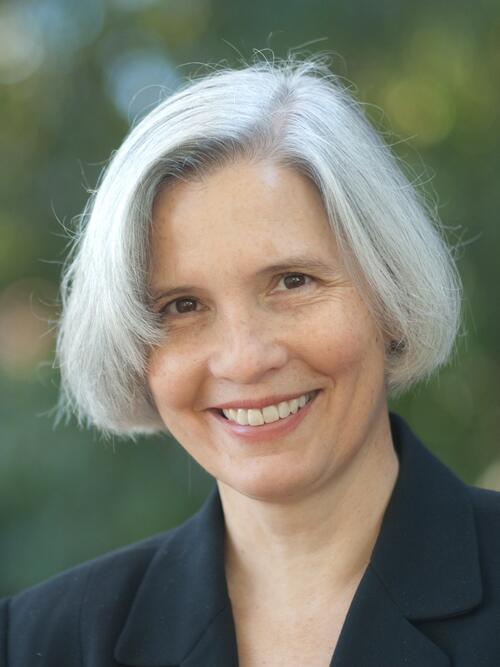
      Rod Ewing was the Frank Stanton Professor in Nuclear Security and Co-Director of the Center for International Security and Cooperation in the Freeman Spogli Institute for International Studies and a Professor in the Department of Geological Sciences in the School of Earth, Energy and Environmental Sciences at Stanford University. He was also the Edward H. Kraus Distinguished University Professor Emeritus at the University of Michigan, where he had faculty appointments in the Departments of Earth & Environmental Sciences, Nuclear Engineering & Radiological Sciences and Materials Science & Engineering.  He was a Regents' Professor Emeritus at the University of New Mexico, where he was a member of the faculty from 1974 to 1997. Ewing received a B.S. degree in geology from Texas Christian University (1968, summa cum laude) and M.S. (l972) and Ph.D. (l974, with distinction) degrees from Stanford University where he held an NSF Fellowship.    His graduate studies focused on an esoteric group of minerals, metamict Nb-Ta-Ti oxides, which are unusual because they have become amorphous due to radiation damage caused by the presence of radioactive elements. Over the past thirty years, the early study of these unusual minerals has blossomed into a broadly-based research program on radiation effects in complex ceramic materials.  In 2001, the work on radiation-resistant ceramics was recognized by the DOE, Office of Science – Decades of Discovery as one of the top 101 innovations during the previous 25 years. This has led to the development of techniques to predict the long-term behavior of materials, such as those used in radioactive waste disposal.

      He was the author or co-author of over 750 research publications and the editor or co-editor of 18 monographs, proceedings volumes or special issues of journals. He had published widely in mineralogy, geochemistry, materials science, nuclear materials, physics and chemistry in over 100 different ISI journals. He was granted a patent for the development of a highly durable material for the immobilization of excess weapons plutonium.  He was a Founding Editor of the magazine, Elements, which is now supported by 17 earth science societies. He was a Principal Editor for Nano LIFE, an interdisciplinary journal focused on collaboration between physical and medical scientists. In 2014, he was named a Founding Executive Editor of Geochemical Perspective Letters and appointed to the Editorial Advisory Board of Applied Physics Reviews.

      Ewing had received the Hawley Medal of the Mineralogical Association of Canada in 1997 and 2002, a Guggenheim Fellowship in 2002, the Dana Medal of the Mineralogical Society of America in 2006, the Lomonosov Gold Medal of the Russian Academy of Sciences in 2006, a Honorary Doctorate from the Université Pierre et Marie Curie in 2007, the Roebling Medal of the Mineralogical Society of America in 2015, Ian Campbell Medal of the American Geoscience Institute, 2015, the Medal of Excellence in Mineralogical Sciences from the International Mineralogical Association in 2015, the Distinguished Public Service Medal of the Mineralogical Society of America in 2019, and was a foreign Fellow of the Royal Society of Canada. He was also a fellow of the Geological Society of America, Mineralogical Society of America, Mineralogical Society of Great Britain and Ireland, American Geophysical Union, Geochemical Society, American Ceramic Society, the American Association for the Advancement of Science and the Materials Research Society. He was elected a Fellow of the National Academy of Engineering in 2017.

      He was president of the Mineralogical Society of America (2002) and the International Union of Materials Research Societies (1997-1998). He was the President of the American Geoscience Institute (2018). Ewing had served on the Board of Directors of the Geochemical Society, the Board of Governors of the Gemological Institute of America and the Science and Security Board of the Bulletin of the Atomic Scientists.

      He was co-editor of and a contributing author of Radioactive Waste Forms for the Future (North-Holland Physics, Amsterdam, 1988) and Uncertainty Underground – Yucca Mountain and the Nation’s High-Level Nuclear Waste (MIT Press, 2006).  Professor Ewing had served on thirteen National Research Council committees and board for the National Academy of Sciences, Engineering and Medicine that have reviewed issues related to nuclear waste and nuclear weapons. In 2012, he was appointed by President Obama to serve as the Chair of the Nuclear Waste Technical Review Board, which is responsible for ongoing and integrated technical review of DOE activities related to transporting, packaging, storing and disposing of spent nuclear fuel and high-level radioactive waste; he stepped down from the Board in 2017.

https://profiles.stanford.edu/rodney-ewing

Co-director of the Center for International Security and Cooperation
CV
Rodney Ewing Edward H. Kraus Distinguished University Professor, University of Michigan; Member, Nuclear Waste Technical Review Board; Affiliate, CISAC Speaker
Seminars
News Type
News
Date
Paragraphs
U.S.-Korea relations are stronger than ever, but there has not always been support in Korea for Americans or for the alliance. As Korea has both general and presidential elections this year whose outcome might affect U.S.-Korea relations, it is important for U.S. policymakers to appreciate the complexity of Korean sentiments. A recent article by Gi-Wook Shin and Hilary Izatt in Asian Survey sheds new light on anti-American and anti-alliance sentiments of the 1990s and early 2000s.
Hero Image
LeeObama NEWSFEED
U.S. President Barack Obama talks with President Lee Myung-bak of the Republic of Korea during their meeting in the Oval Office, Oct. 13, 2011. | Official White House Photo by Pete Souza
All News button
1

The third ARD annual conference examineي the challenges, key issues, and ways forward for social and economic development in the Arab world during this period of democratic transition. 

Day One - April 26, 2012

9:15-10:45am       Opening Panel – International & Domestic Frameworks for                                       Development


Welcoming Remarks: Larry Diamond and Lina Khatib, Stanford University


George Kossaifi, Dar Al-Tanmiyah:

Towards an Integrated Social Policy of the Arab Youth

10:45-11:00am Break

11:00-12:30am     Session 1: Political Economy of Reform


Chair: Hicham Ben Abdallah, Stanford University

Mongi Boughzala, University of Tunis El-Manar:

Economic Reforms in Egypt and Tunisia: Revolutionary Change and an Uncertain Agenda

Abdulwahab Alkebsi, Center for International Private Enterprise:

Answering Calls for Economic Dignity 

12:30-1:30pm Lunch

1:30-3:00pm         Session 2: Oil-Dependent Economies and Social and Political                                     Development


Chair: Larry Diamond, Stanford University

Hedi Larbi, World Bank:

Development and Democracy in Transition Oil-rich Countries in MENA

Ibrahim Saif, Carnegie Middle East Center:

Lessons from the Gulf's Twin Shocks

3:00-3:30pm Break

3:30-5:00pm         Session 3: Youth, ICTs, and Development Opportunities


Chair: Ayca Alemdaroglu, Stanford University

Loubna Skalli-Hanna, American University:

Youth and ICTs in MENA: Development Alternatives and Possibilities

Hatoon Ajwad Al-Fassi, King Saud University:

Social Media in Saudi Arabia, an era of youth social representation


Day Two - April 27, 2012

9:00-10:30am             Session 1: Civil Society Development


Chair: Sean Yom, Temple University

Laryssa Chomiak, Centre d’Etudes Maghrebines à Tunis (CEMAT):

Civic Resistance to Civil Society: Institutionalizing Dissent in Post-Revolutionary Tunisia

Rihab Elhaj, New Libya Foundation:

Building Libyan Civil Society 

10:30-11:00am Break

11:00-12:30pm           Session 2: Democratic Transition and the Political                                                     Development of Women


Chair: Katie Zoglin, Human Rights Lawyer 

Valentine Moghadam, Northeastern University:

The Gender of Democracy: Why It Matters

Amaney Jamal, Princeton University:

Reforms in Personal Status Laws and Women’s Rights in the Arab World

12:30-1:30pm Lunch

1:30-3:00pm               Session 3: Minority Rights as a Key Component of                                                       Development


Chair: Lina Khatib, Stanford University

Mona Makram-Ebeid, American University in Cairo:

Challenges Facing Minority Rights in Democratic Transition (title TBC)

Nadim Shehadi, Chatham House:

The Other Turkish Model: Power Sharing and Minority Rights in the Arab Transitions 

3:00-3:30pm Break

3:30-4:45pm               Session 4: Towards Integrated Development in the Arab                                           World


Chair: Larry Diamond, Stanford University 

Closing roundtable discussion: Scenarios for integrated development


4:45-5:45pm Reception


Bechtel Conference Center

Conferences
-

Christopher Painter has been on the vanguard of cyber issues for twenty years. Most recently, Mr. Painter served in the White House as Senior Director for Cybersecurity Policy in the National Security Staff. During his two years at the White House, Mr. Painter was a senior member of the team that conducted the President's Cyberspace Policy Review and subsequently served as Acting Cybersecurity Coordinator. He coordinated the development of a forthcoming international strategy for cyberspace and chaired high-level interagency groups devoted to international and other cyber issues.

Mr. Painter began his federal career as an Assistant U.S. Attorney in Los Angeles where he led some of the most high profile and significant cybercrime prosecutions in the country, including the prosecution of notorious computer hacker Kevin Mitnick. He subsequently helped lead the case and policy efforts of the Computer Crime and Intellectual Property Section in the U.S. Department of Justice and served, for a short time, as Deputy Assistant Director of the F.B.I.'s Cyber Division. For over ten years, Mr. Painter has been a leader in international cyber issues. He has represented the United States in numerous international fora, including Chairing the cutting edge G8 High Tech Crime Subgroup since 2002. He has worked with dozens of foreign governments in bi-lateral meetings and has been a frequent spokesperson and presenter on cyber issues around the globe. He is a graduate of Stanford Law School and Cornell University.

Sloan Mathematics Center

Christopher Painter Coordinator for Cyber Issues Speaker US State Department
Seminars
-

Abstract:

The 2012 Republic of China presidential and legislative elections to be held on January 14th mark the fifth presidential and seventh national legislative direct elections in Taiwan. Incumbent ROC President Ma Ying-jeou of the Kuomintang (KMT) enjoyed a landslide victory in 2008 over Democratic Progressive Party (DPP) candidate Hsieh Chang-ting, winning by over 2.2 million votes. Subsequent revelations of corruption by former President Chen Shui-bian of the DPP and various members of his administration further damaged the DPP's public image and electoral prospects.

In the intervening years, however, current DPP candidate Tsai Ing-wen and other members of the DPP have worked to revitalize their party's image, and as chairperson of the DPP Tsai established a special internal investigative committee to root out corruption in the party. A potentially complicating new factor in the race is the first-ever presidential bid by the People's First Party (PFP), led by candidate James Soong. Polling results to date have indicated the potential for a very close race between Ma and Tsai, with Soong also pulling a substantial portion of the vote that may affect the electoral outcome.

On the legislative side, the KMT won 81 out of 113 total seats in the Legislative Yuan in the 2008 elections, a circumstance that has facilitated the passage of various controversial measures supported by the Ma administration, including in particular the Economic Cooperation Framework Agreement (ECFA) with mainland China, and a significant shift in the composition of this body is likely to have a pronounced impact.

Regardless of the outcome, the results of the 2012 elections promise to offer much insight into the popular attitudes of the Taiwanese people and the prospects for future democratic consolidation and development in Taiwan. Ten days following the elections, Professors Shelly Rigger and Eric Chen-hua Yu will join us for a panel discussion to analyze the outcomes of these elections and discuss their relevance to the US and the world.

Speaker Bios:

Image
Shelley Rigger is the Brown Professor of East Asian Politics and Chair of Political Science at Davidson College in Davidson, North Carolina. She has a PhD in Government from Harvard University and a BA in Public and International Affairs from Princeton University. She has been a visiting researcher at National Chengchi University in Taiwan (2005) and a visiting professor at Fudan University in Shanghai (2006). Rigger is the author of two books on Taiwan’s domestic politics, Politics in Taiwan: Voting for Democracy (Routledge 1999) and From Opposition to Power: Taiwan’s Democratic Progressive Party(Lynne Rienner Publishers 2001). In 2011 she published Why Taiwan Matters: Small Island, Global Powerhouse, a book for general readers. She has published articles on Taiwan’s domestic politics, the national identity issue in Taiwan-China relations and related topics. Her current research studies the effects of cross-strait economic interactions on Taiwan and Mainland China. Her monograph, “Taiwan’s Rising Rationalism: Generations, Politics and ‘Taiwan Nationalism’” was published by the East West Center in Washington in November 2006.

Image

Eric Chen-hua Yu is an assistant research fellow of the Election Study Center and

jointly appointed as an assistant professor of political science at National Chengchi University in Taiwan. Before he returned to Taiwan to serve in his Alma mater in 2009, he has been a research fellow and program manager of Center on Democracy, Development, and the Rule of Law at Stanford’s Freeman Spogli Institute for International Studies since 2006. His research interests include public opinion, electoral politics, quantitative methods, and American politics. He also participates in a number of joint survey projects such as Taiwan Election and Democratization Studies (TEDS) and World Value Survey. Yu recently published academic articles on Taiwan’s domestic politics in
Taiwan Political Science Review, Journal of Electoral Studies, Review of Social Sciences, and Japanese Journal of Electoral Studies. Yu received a MS (2000) in Public Policy Analysis from the University of Rochester, and a Ph.D. in political science (2006) from Columbia University.

CISAC Conference Room

Shelly Rigger Professor of East Asian Politics and Chair of Political Science Speaker Davidson College

616 Serra St.
Encina Hall
Stanford, CA 94305

1
3x4200dpi[2]_self.JPG MS, PhD

Eric Yu was a research fellow and program manager for the Democracy in Taiwan program at CDDRL. His research interests included public opinion, electoral politics, federalism, and quantitative methods. He worked with Election Study Center at National Chengchi University (Taiwan) on a multi-year research project examining the relationship between public opinion and policy output at the local level in Taiwan. This project aimed to explore the extent to which local policy-makings respond to public opinions across a variety of policy dimensions. His recent studies also include the development of Taiwanese public attitudes toward cross-strait relations, the emergence of the third force under the new "single-district, two-ballot" electoral system for Taiwan's legislative elections, and mass policy preferences and their implications for political parties in Taiwan.

Yu received a BA (1995) in Political Science from the National Chengchi University in Taiwan, a MS (2000) in Public Policy Analysis from the University of Rochester, and a Ph.D. (2006) in Political Science from Columbia University.

Research Fellow and Program Manager for the Democracy in Taiwan Program
Eric Chen-hua Yu Assistant Research Fellow and Assistant Professor of Political Science Speaker Election Study Center; National Chengchi University
Panel Discussions
-

At present, the tobacco industry produces some six trillion cigarettes worldwide every year. Six trillion cigarettes per annum, each ready to release smoke filled with highly addictive nicotine and powerful carcinogens. A third of all these sticks were produced in China last year. In 2011, the world’s largest cigarette maker by volume, the China National Tobacco Corporation, contributed an all-time high of U.S. $214 billion in profits and taxes to the Chinese government, up 22 percent year-on-year. Currently the greatest cause of preventable death in the world, the cigarette is likely to kill ten times as many people in the 21st century as it did in the 20th century, epidemiologists tell us, with China bearing the largest burden. Until now, much global health research and intervention has focused with limited success on the cigarette consumer—addressing how one or another variable prompts people to take up or quit smoking, whether the cue for the consumer is biological, psychological, spatial, financial or symbolic. What though of the industrial sources of tobacco-related diseases? Where are the six trillion cigarettes that are released into circulation each year manufactured? Where are they rolled, wrapped, and boxed for shipment? This presentation will introduce the Cigarette Citadels Project, an innovative application of participatory GIS. With special attention given to China’s network of cigarette factories, Matthew Kohrman will explain how the Cigarette Citadels Project not only reveals conceptual roadblocks in public health policy but also lacuna in social theory pertaining to the state and the politics of life.


Matthew Kohrman joined Stanford’s faculty in 1999. His research and writing bring multiple methods to bear on the ways health, culture, and politics are interrelated. Focusing on the People's Republic of China, he engages various intellectual terrains such as governmentality, gender theory, political economy, critical science studies, and embodiment. His first monograph, Bodies of Difference: Experiences of Disability and Institutional Advocacy in the Making of Modern China, examines links between the emergence of a state-sponsored disability-advocacy organization and the lives of Chinese men who have trouble walking. In recent years, Kohrman has been conducting research projects aimed at analyzing and intervening in the biopolitics of cigarette smoking and production. These projects expand upon analytical themes of Kohrman’s disability research and engage in novel ways techniques of public health.

This event is part of the China's Looming Challenges series. 

Philippines Conference Room

Stanford University
Department of Anthropology
Building 50, Central Quad
Stanford, California 94305-2034

(650) 723-3421 (650) 725-0605
0
Associate Professor of Anthropology
Senior Fellow, by courtesy, at the Freeman Spogli Institute for International Studies
Faculty Affiliate at the Walter H. Shorenstein Asia-Pacific Research Center
Faculty Affiliate at the Stanford Center on China's Economy and Institutions
matthewkohrman-vert.jpeg

Matthew Kohrman joined Stanford’s faculty in 1999. His research and writing bring multiple methods to bear on the ways health, culture, and politics are interrelated. Focusing on the People's Republic of China, he engages various intellectual terrains such as governmentality, gender theory, political economy, critical science studies, and embodiment. His first monograph, Bodies of Difference: Experiences of Disability and Institutional Advocacy in the Making of Modern China, examines links between the emergence of a state-sponsored disability-advocacy organization and the lives of Chinese men who have trouble walking. In recent years, Kohrman has been conducting research projects aimed at analyzing and intervening in the biopolitics of cigarette smoking and production. These projects expand upon analytical themes of Kohrman’s disability research and engage in novel ways techniques of public health.

Date Label
Matthew Kohrman Associate Professor of Anthropology and Senior Fellow Speaker FSI
Seminars
-

Abstract:

     While the reelection of Taiwan’s president, Ma Ying-jeou, relieved concerns about an immediate deterioration in cross-Strait relations, the future of ties between Beijing and Taipei remain uncertain. Much will depend on the PRC’s policy. Moreover, calls in the United States either to abandon Taiwan or, conversely, to embrace it ever more closely as a hedge against the Mainland’s growing strength, have yet to play themselves out. Alan D. Romberg will address the implications of the election for these issues, as well as for Sino-American relations and for the region.

Speaker Bio:

     Alan Romberg is the director of the East Asia program at Stimson. 

     Before joining Stimson in September 2000, he enjoyed a distinguished career working on Asian issues, both in and out of government, including twenty years as a US Foreign Service Officer. Romberg was the principal deputy director of the State Department's Policy Planning staff and deputy spokesman of the department. He served in various capacities dealing with East Asia, including director of the Office of Japanese Affairs, member of the Policy Planning staff for East Asia, and staff member at the National Security Council for China. He served overseas in Hong Kong and Taiwan. 

     Additionally, Romberg spent almost ten years as the CV Starr Senior Fellow for Asian Studies at the Council on Foreign Relations, and was special assistant to the Secretary of the Navy. 

     Romberg holds an MA from Harvard University, and a BA from the Woodrow Wilson School of Public and International Affairs at Princeton University.

CISAC Conference Room

Alan Romberg Distinguished Fellow Speaker the Stimson Center
Seminars
Authors
News Type
Q&As
Date
Paragraphs

Since Kim Jong Il’s death on Dec. 17, North Korea has a young new leader: Kim’s 28-year-old son Kim Jong Un. What does the new leadership hold in store for the future of the Korean Peninsula, U.S.-Korea relations, and the stability of Northeast Asia? David Straub, who attended the seventh U.S.-Korea West Coast Strategic Forum in Seoul just days before Kim’s death, shares highlights from the Forum and offers insight into the current North Korea situation.

Straub is associate director of the Korean Studies Program at Stanford University and a retired senior U.S. foreign service official with over 30 years of Northeast Asia experience.

The U.S.-Korea West Coast Strategic Forum is held semi-annually, alternating between Stanford and the Sejong Institute in Seoul.

The West Coast Forum opened with a discussion about the current situation in North Korea. After Kim Jong Il’s death, how much do you think that picture will change?

Most Forum experts believe there will be relative stability in North Korea for some time to come.

The reason Kim Jong Il chose Kim Jong Un as his successor is because he is the least controversial person in North Korea to succeed him. Anyone else would be the object of great suspicion and jealousy within the elite there.

North Korea has already had one succession—from founder Kim Il Sung to his son Kim Jong Il—and that went smoothly. The succession from Kim Jong Il to his youngest son Kim Jong Un is natural within that context—it is a dynastic succession. As with other dynastic successions, the easiest person to accept is normally someone who represents a continuation of the person in power.

Do you foresee possible areas for improvement in relations between North and South Korea or for negotiations over North Korea’s nuclear program?

Apr. 15 is the 100th anniversary of Kim Il Sung’s birth, which is going to be a large celebration. North Korea probably will want to commemorate it without a lot of distractions. The North Korean leadership also wants to provide more food and supplies to its people, and provocations toward South Korea would make it harder to get international aid. 

A number of Forum experts are concerned that North Korea might conduct another nuclear or long-range missile test this year. Most tests so far have not been fully successful, so from a military and technology perspective they probably want to try again. North Korea has been slapped with international trade sanctions for its previous tests, but China has always stepped in to help. Sanctions will probably not deter the North Koreans from conducting future tests.

As far as inter-Korean relations are concerned, it is unlikely that North Korea will take any major new initiatives toward the South. The leadership does not like conservative South Korean President Lee Myung-bak because he came into office saying that he would not continue giving large-scale aid to North Korea until it abandoned its nuclear weapons program. That was contrary to the Sunshine Policy of his two progressive predecessors.

President Lee’s term is almost up, and South Korea will hold a hold a presidential election on Dec. 19 this year. North Korea probably hopes that the progressives will win the election and restore the Sunshine Policy.

Will North Korea be a major issue for debate in South Korea’s upcoming 2012 presidential election?

Current polling shows that North Korea is the top concern of only 8 percent of the South Korean electorate. As in the past, the main issues for voters there are the economy, their standard of living, and social welfare issues. North Korea will not be the top issue unless something very dramatic happens between now and the election. On the other hand, if the race is close, feelings about North Korea policy could help to decide the outcome.

Among South Korean citizens, is there more fear or hope—or maybe a mixture of both—about North Korea’s new leadership?

Recent opinion polls show that 80 percent of South Koreans feel that North Korea will not give up its nuclear weapons. There is not much reason for optimism. That being said, most South Koreans are concerned about North Korea’s 2010 attack of Yeonpyeong Island and hope for improved relations. And, of course, Kim Jong Un is a different leader and most South Koreans hope he will move in a more positive direction. But they feel it is unlikely to happen in the next few years—if ever.

Does uncertainty over the future of North Korea have the potential to impact or strengthen any aspects of the U.S.-South Korea alliance?

This year, the U.S. and South Korean administrations will likely focus on managing the North Korean situation and continue to prioritize the U.S.-South Korea alliance. The two countries closely cooperate on North Korea policy.

The real question for the alliance in terms of North Korea policy will be who is elected as president in both countries. If a progressive South Korean candidate wins, that person will probably pursue some variation of the Sunshine Policy. Especially if a Republican is elected in the United States, we may see echoes of the difficult U.S.-South Korea relationship we had during the George W. Bush administration.

If President Obama is re-elected, another South Korean Sunshine Policy would also pose challenges. The administration has taken a very firm position that the United States will not significantly improve relations with North Korea until it gives up its nuclear weapons program. South Korea’s Sunshine Policy focuses on embracing North Korea in the hope that relations will improve over time and that North Korea will eventually voluntarily give up its nuclear weapons in that long-term context. 

China, the country in Northeast Asia with the most influence over North Korea, recently issued a statement in support of Kim Jong Un. Does this signify any major change in relations between these two countries?

The Chinese government has particular interest in North Korea. China is focused on developing its own economy, including the relatively poor northeastern area that borders North Korea. The last thing China wants is instability on the Korean Peninsula, which would detract from its economic development.

China does not believe it can force North Korea to give up its nuclear weapons without risking instability. In the absence of progress in the Six Party negotiations over North Korea’s nuclear program, China has unilaterally increased economic and diplomatic support for North Korea. Its support is independent of who serves as the North Korean leader.

China tried very hard to get Kim Jong Il to open up the North Korean economy more, but did not succeed, primarily because Kim feared that doing so would also allow in more outside information and undermine his regime. China probably hopes that the younger Kim Jong Un may eventually have not only the power but also the desire to reform the economy.  

Hero Image
KIS HomecomingYeowatzup NEWSFEED
A mosaic in Pyongyang depicts North Korean founder Kim Il Sung's homecoming. | Flickr/Yeowatzup
All News button
1
Subscribe to United States