-
Abstract
He will preview some of the main arguments about the temptations of "solutionism" from his upcoming book "To Save Everything, Click Here." Now that everything is smart, hackable and trackable, it is very common to see big technology companies (as well as ordinary tech enthusiasts and geeks) embark on ambitious projects to "solve all of the world's problems." Obesity, climate change, dishonesty and hypocrisy in politcs, high crime rate: Silicon Valley can do it all. But where does this solutionist quest lead? What are the things that ought to be left "dumb" and "unhackable"? How do we learn to appreciate the imperfection - of both our lives and our social institutions - in a world, where it can be easily eliminated? Do we even have to appreciate it? 
 
 Evgeny Morozov is the author of The Net Delusion: The Dark Side of Internet Freedom. In 2010-2012 he was a visiting scholar at Stanford University's Liberation Technology program and a Schwartz fellow at the New America Foundation. In 2009-2010 he was a fellow at Georgetown University and in 2008-2009 he was a fellow at the Open Society Foundations (where he also sat on the board of the Information Program between 2008 and 2012).  Between 2006 and 2008 he was Director of New Media at Transitions Online.  Morozov has written for The New York Times, The Economist, The Wall Street Journal, The New Republic, Financial Times, London Review of Books, Times Literary Supplement, and other publications. His monthly Slate column is syndicaetd in El Pais, Corriere della Sera, Frankfurter Allgemeine Zeitung, Folha de S.Paulo and several other newspapers. 

Wallenberg Theater

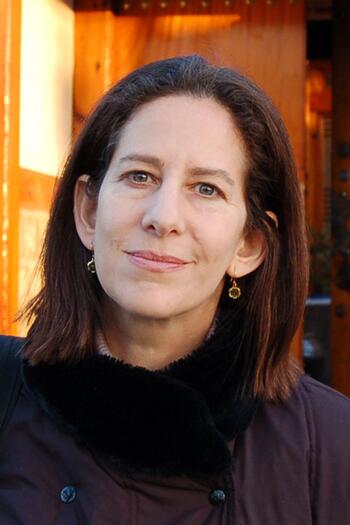
Evgeny Morozov Author and former Stanford Visiting Scholar Speaker
Seminars
-

Abstract:

Political parties that represent old regime interests in moments of democratization are normally thought exclusively to play a "negative" role, blocking democracy and only conceding it when sufficiently challenged. Summarizing research for a book on the historical rise of democracy in Europe, this presentation will focus on British and German democratization in the nineteenth and twentieth centuries to make the case that under certain conditions, old regime conservative parties play a decisive and counter-intuitive role that makes democratization more settled over the long run.

Speaker Bio:

Daniel Ziblatt is Professor of Government at Harvard University. He has been named a Sage Publications Fellow for a project on "Conservative Political Parties and Democratization in Europe" and in 2012-2013 is on leave at the Center for Advanced Study in Behavioral Sciences at Stanford University.

His research and teaching interests include democratization, state-building, development, comparative politics and comparative historical analysis, with a particular interest in Europe. He is the author of Structuring the State: The Formation of Italy and Germany and the Puzzle of Federalism (Princeton University Press, 2006), the winner of three prizes from the American Political Science Association, including the 2007 Prize for the Best Book published on European Politics. He is co-editor of a 2010 special double issue of Comparative Political Studies entitled "The Historical Turn in Democratization Studies." Recent papers have appeared in American Poiltical Science Review, Comparative Political Studies, and World Politics.  His most recent papers have received APSA's 2011 Mary Parker Follett Prize from the Politics and History Section of APSA, APSA's  2009 Luebbert Prize for the best paper published  in comparative politics, the 2008 Sage prize for best paper presented in comparative politics at the APSA meeting, and two  prizes in 2010 from the Comparative Democratization Section of APSA.  Ziblatt has been a DAAD Fellow in Berlin, an Alexander von Humboldt visiting fellow at the Max Planck Institute in Cologne and the University of Konstanz, Germany, and visiting professor at the Ecole Normale Superieure, Paris in 2010. He is currently completing a new book entitled Conservative Political Parties and the Birth of Modern Democracy in Europe, 1848-1950 (Cambridge University Press) that offers a new interpretation of the historical democratization of Europe.

Encina Ground Floor Conference Room

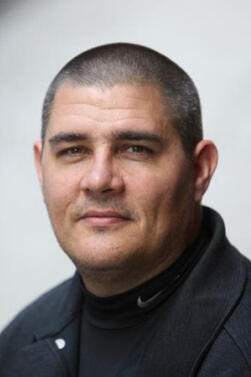
Daniel Ziblatt Professor of Government Speaker Harvard University
Seminars
-

Forecasting is a difficult profession. International economist David Hale and writer Lyric Hughes Hale do not claim they can foretell the future. But as veteran observers of the Asian economies, they can envision scenarios that are contrary to current conventional wisdom, and trends that deserve more attention than they are given in the media. What if China and Japan actually engage in armed conflict? Could East Asia experience its own version of the Arab Spring? What would be the consequences of another major earthquake in Japan? When the United States was the dominant power in the Pacific, security interests and economic interests were aligned in the region. Now that China has become the largest trading partner for many ASEAN countries, a new Great Divergence is emerging, with  potentially destabilizing consequences. While our national attention has been dominated by the Middle East for a decade now, in the coming era of energy self-sufficiency in the United States, we must shift our focus to the Far East.

Image
David Hale
David Hale
Global Economist & Chairman
David Hale Global Economics, Inc.

                    and

Image
Lyric Hughes Hale
Lyric Hughes Hale
Independent International Affairs Professional &
Board Director, The Japan America Society of Chicago

Philippines Conference Room

Seminars
-

North Korea, arguably the most isolated country in the world, poses unique challenges for journalists. Access to the country is severely limited and even when a journalist is able to gain entry, the secretive and repressive nature of the state significantly limits what can be learned. Still, despite these difficult conditions, the realities of North Korean life are increasingly finding their way into various media, from newspaper reporting and on-line media to thinly fictionalized accounts.

This panel will take a multi-faceted look at the coverage of North Korea through the journalist (represented by 2012 Shorenstein Journalism Award winner Barbara Demick), the editor, the development/relief worker, and the novelist.

Panelists include:

Image
Barbara Demick
Barbara Demick, has been Beijing bureau chief for the Los Angeles Times since 2008. She has focused on human trafficking, corruption, and minorities, as well as North Korea. Demick is the author of two books -- Nothing to Envy: Ordinary Lives in North Korea and Logavina Street: Life and Death in a Sarajevo Neighborhood. Her work has won awards from the Asia Society, the Overseas Press Club, the American Academy of Diplomacy, among others. Her North Korea book, which has been translated into more than 20 languages, recently won the International Book Award on Human Rights. She is a graduate of Yale and taught a seminar on coverage of repressive regimes at Princeton University. She lives in Beijing with her son Nicholas.

Image
Susan Chira
Susan Chira, was named assistant managing editor for news for the New York Times in September 2011. Previously, she had served as foreign editor (since January 2004), and as editorial director of book development (since September 2002). Before that, Chira was the editor of the "Week in Review" section at the Times (since October 1999), after having served as deputy foreign editor of the newspaper (since February 1997). Earlier, she served in a variety of reporting positions including national education correspondent, Tokyo correspondent (from October 1984 until February 1989), metropolitan reporter in the Albany and Stamford bureaus, and reporter for the "Business Day" section.
 

Image
Katharina Zellweger
Katharina Zellweger, a Pantech Fellow, joined the Korean Studies Program at the Walter H. Shorenstein Asia-Pacific Research Center after five years of living in Pyongyang where she has served as the North Korea country director for the Swiss Agency for Development and Cooperation (SDC). Through her SDC and earlier work, she has witnessed modest economic and social changes not visible to most North Korea observers. Her research at the Center has drawn on her over 15 years of humanitarian work in North Korea and explore how aid intervention can stimulate positive sustainable change there


Image
Adam Johnson
Adam Johnson is an associate professor of English, with emphasis in creative writing, at Stanford University. A Whiting Writers’ Award winner, his fiction has appeared in Esquire, Harper's, Playboy, Paris Review, Granta, Tin House, and Best American Short Stories. He is the author of Emporium, a short-story collection, and the novel Parasites Like Us, which won a California Book Award. His novel The Orphan Master's Son, a novel set in North Korea, has just been published by Random House. His books have been translated into sixteen languages. Johnson was a 2010 National Endowment for the Arts Fellow.

Bechtel Conference Center

Conferences
-

With new or newly re-elected leaderships in both North and South Korea and all of Korea’s neighbors and the United States, the year 2013 will see increased diplomatic movement regarding the Korean Peninsula. Accordingly, the fifth annual Koret conference will take the form of a policy workshop on North Korea policy. The workshop participants will examine the interests and policies of the new governments of North and South Korea and their neighbors toward the "North Korea problem" and consider what policy adjustments may have made possible by the leadership changes. They will consider initiatives that the concerned countries, individually and collectively, could take to begin a sustainable process of establishing permanent peace and security on the Korean Peninsula and realizing economic and political liberalization in North Korea.

The 5th Annual Koret Conference is made possible by the generous support of the Koret Foundation.

Bechtel Conference Center

Conferences
Subscribe to United States