Shorenstein Asia-Pacific Research CenterEncina Hall E301616 Serra StreetStanford, CA 94305-6055
(650) 723-1434 (650) 723-6530
0
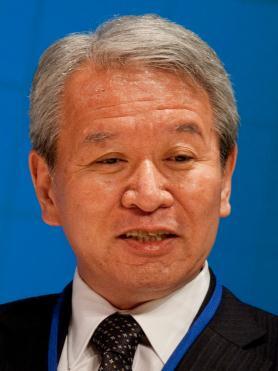
kazuyuki_motohashi.jpg Ph.D.

Kazuyuki Motohashi joins the Walter H. Shorenstein Asia-Pacific Research Center (Shorenstein APARC) during the period of September 2014 to March 2015 as this year's Sasakawa Peace Fellow, from the the University of Tokyo, where he serves as a professor at the Department of Technology Management for Innovation, Graduate School of Engineering. Until this year, he had taken various positions at the Ministry of Economy, Trade and Industry of the Japanese Government, economist at OECD, and associate professor at Hitotsubashi University.

His research interest covers a broad range of issues in economic and statistical analysis of innovation, including economic impacts of information technology, international comparison of productivity, national innovation systems focusing on science and industry linkages, and SME innovation and entrepreneurship policy. He has published several papers and books on the above issues, including Productivity in Asia: Economic Growth and Competitiveness (2007). At Shorenstein APARC, he is conducting the research project, “New Channles: Reinventing US-Japan Relationship”, particularly focusing on innovation in Silicon Valley and its linkage with the Japanese innovation system.

Mr. Motohashi was awarded his Master of Engineering degree from the University of Tokyo, MBA from Cornell University, and Ph.D. in business and commerce from Keio University.

Sasakawa Peace Fellow, 2014-2015
Paragraphs
The advent of Cloud computing as the new underlying global infrastructure of computing presents distinctive new opportunities and challenges for Europe. Cloud computing is transforming computing resources from a scarce to an abundant resource, driving a wave of commoditization in previously high-end software and hardware. For Europe to gain independence from US-based global scale Cloud providers, our view is that it needs to move towards a distributed model of computing with federated governance. Distributed Cloud means the distribution of computation close to the geographic location of the data and the users, as opposed to the centralized model of today. Our research and innovation strategy


All Publications button
1
Publication Type
Working Papers
Publication Date
Journal Publisher
The Berkeley Roundtable on the International Economy (BRIE)
Authors
Kenji E. Kushida

This project is completed, October 2014-October 2019.


Motivation 
 

There has been by a heightened interest in Silicon Valley as an innovation system. The interest is not only in Silicon Valley's entrepreneurism, but how entrepreneurship fits into the broader economic structure. Over the past few years, Silicon Valley has witnessed a new wave of Japanese startups (entrepreneurs, successful startups from Japan). This trend has occurred within the context of increased importance of innovation and entrepreneurship in Japan.

Authors
News Type
News
Date
Paragraphs

Stanford researchers have introduced a major new study on North Korea policy at a hearing at the South Korean National Assembly. Entitled “Tailored Engagement,” the report concludes that South Korea is the only country today that may be both willing and able to try a new approach toward the worsening North Korea problem.

“There is considerable urgency for Seoul to act,” according to the report released by the Korea Program at the Walter H. Shorenstein Asia-Pacific Research Center (APARC) in the Freeman Spogli Institute for International Studies, which comes in response to increasing tensions and heightened nationalism in Northeast Asia.

“Only the Republic of Korea has both the need and the potential influence to change this dangerous trajectory on the Korean Peninsula.”

Published by Gi-Wook Shin, the director of Shorenstein APARC; David Straub, the associate director of the Korea Program; and Joyce Lee, the research associate for the Korea Program, the report is the culmination of more than a year of intensive research activities at Stanford University, including three international conferences focused on Northeast Asia’s security and political situation.

During the past year, North Korea continued to develop nuclear weapons and North-South Korean relations worsened, while increasing U.S.-China strategic mistrust has made it less likely that those two countries can cooperate to change North Korea's behavior.

Image
national assembly presentation final
On Sept. 15, the authors presented the report at a public hearing of the Special Committee on Inter-Korean Relations, Exchange and Cooperation of the South Korean National Assembly in Seoul. They are also scheduled to discuss the study at the Brookings Institution in Washington D.C. on September 29.

“I was very impressed by the concern that the Korean Congressmen showed about the current situation on the Korean Peninsula and by their interest in our reasoning and recommendations,” Shin said. “Almost all of the Committee’s 18 members attended, and engaged in a lively exchange of views during the three-hour-long hearing.”

In their report, Shin, Straub and Lee propose a process that involves a series of increased exchanges with North Korea. This would be applied in a principled, systematic way, based largely on expanding a domestic consensus in South Korea that treats South Korean engagement of the North as necessary for improving the situation on the peninsula, not as incompatible with maintaining pressure on Pyongyang to abandon its pursuit of nuclear weapons.

The report lays out four main steps that South Korea can implement to reduce the risk of regional conflict, while also creating a foundation for peaceful unification with North Korea.

  • Focus on the pursuit of mutual interests and benefits rather than on symbolism and appeals to national sentiment.
  • Apply market principles and international standards in economic activities.
  • Collaborate with other countries and third-party companies in both economic and people-to-people projects.
  • Be pragmatic and flexible in pursuing engagement at both the state-to-state and grassroots levels in complementary ways. 
    Image
    national assembly room final 2

South Korea is well suited to engage the North because of their shared history, and its status as a major middle-power status has also increased its sway with both China and the United States.

No longer a “shrimp among whales,” South Korea has transformed since democratization, leaving that modest proverb behind and gaining an influential role in the region.

Now the country has an opportunity to begin to bridge the gap with North Korea, but first, it must create an internal structure that supports engagement.

In implementation

The North Korea problem is complex and wrapped in a varied history of engagement efforts by South Korea and other countries. Lessons of success and failure from past administrations provide important insight, the report says.

“The main impediment to South Korea’s assuming a greater international leadership role on the Korean question is not a lack of national power,” the report states, “but a lack of domestic political consensus about how to deal with North Korea and the consequent inconsistency in ROK policy across administrations.”

The South Korean government changes executive leadership every five years, and with it, there has been great inconsistency between conservative and progressive policies. The current administration that assumed office in 2013, led by President Park Geun-hye, pursues a North Korea policy of trustpolitik, wherein the government aims to build trust through a step-by-step process.

According to the report, the tailored engagement approach can inform and build on President Park’s policy. Three main actions can be taken by South Korea’s administration to implement productive engagement, the report states:

  • Reorganize the Korean government itself to facilitate a more coordinated formulation and implementation of North Korea policy.
  • Achieve much more consensus within South Korea on how to deal with North Korea.
  • Seek to win support of the major powers, especially the United States and China for its approach to North Korea.

Developing trust is essential to de-escalate tension between the Koreas. Without progress in confidence-building, the two countries can hardly collaborate on even straightforward projects, such as expanding the existing Kaesong Industrial Complex, a bi-lateral industrial park located just north of the North-South border.

Solving more basic issues and participating in joint initiatives can help pave the way toward inter-Korean reconciliation during President Park’s administration, and the next.

“Reconciliation and convergence would improve many aspects of the situation on the Korean Peninsula, including eventually facilitating North Korea’s abandonment of its nuclear weapons program and the achievement of unification,” the reports says.

Asia Economy Daily wrote an article (in the Korean language) about the research team's presentation. A version of this article was also carried as a news release by the Stanford News Service. NK News, a news oufit focused on North Korea-related news, also wrote an article (in the English language) and can be found on NKNews.org. The Voice of America covered the presentation by Shin and Straub at the Brookings Institution. The article, written in Korean, can be accessed on the Voice of America online.

Hero Image
rtr2nb2o 2
Participants tie ribbons for peace at the Imjingpak pavilion near the demilitarized zone separating the two Koreas in 2011. | Reuters/Jo Yong Hak
All News button
1
Paragraphs

"Tailored Engagement" is a result of research and an earlier report by faculty members and researchers at the Walter H. Shorenstein Asia-Pacific Research Center (APARC) at Stanford University. The authors, Gi-Wook Shin, the director the Shorenstein APARC; David Straub, the associate director of the Korea Program; and Joyce Lee, the research associate for the Korea Program, write that they "hope this study will serve as a useful reference for leaders and citizens of the Republic of Korea as well as contribute to the global discussion about how to ensure peace, security and prosperity in Northeast Asia."


Contents:

  • Introduction

  • Policy Parameters of Major Players

  • President Park's North Korea Policy

  • The Policy Context

  • Toward Tailored Engagement

  • Engaging North Korea


A summary of the report is also available in Korean.

All Publications button
1
Publication Type
Policy Briefs
Publication Date
Authors
Gi-Wook Shin
David Straub
Joyce Lee
News Type
News
Date
Paragraphs

Yves Russell, reviewing Shorenstein APARC's Divided Memories: History Textbooks and the Wars in Asia for the 2014/2 issue of China Perspectives, says that the volume "makes two major contributions to existing literature on the problem of history textbooks in East Asia" with its parallel excerpts from textbooks on eight controversial themes and its "inclusion of American textbooks" in the debate on historical memories in Asia. Russell continues to note that "one of the book's great strengths [is showing that] Japanese textbooks do not highlight patriotism, revisionism, or nationalism or seek to justify the war—rather the contrary." 

Divided Memories is just one of the outputs of a multi-year history project on the effects of historical memories on postwar reconciliation. Most recently released was Wartime History Issues in Asia: Pathways to Reconciliation Final Report, a summary report of a Track II dialogue on the continuing impact of wartime history issues.

Hero Image
tangguantun
A Japanese postcard depicts the Japanese army entering Tangguantun, southwest of Tianjin, following the Marco Polo Bridge Incident of 1937.
All News button
1
Authors
News Type
Commentary
Date
Paragraphs

It is August again, and my wife and I are back on our farm. We have a medium-sized operation in east-central Iowa that produces soybeans, alfalfa, and corn, and that also supports an Angus cow-calf herd. These summers are supposed to be quiet, relaxing times away from the bustle of Stanford University. However, the days here seem anything but tranquil.  Two years ago my almanac report dealt with one of the worst droughts in Iowa’s history; last year the focus was on flooding and the wettest planting season on record.  I suppose it is only fair that wind should be the main topic this year. For our rural neighborhood, only problems, not answers, seemed to have been blowin’ in it.

Two evenings after our arrival from California, we were sent scurrying to our doubly reinforced “safe” room in the basement. Warning sirens blared, all television stations went on emergency broadcasting, and the spontaneous neighborhood phone line magically got activated.  Everything was for real, and all hell broke loose.  Eighty-five m.p.h. flat-line winds, grape-sized hail, and buckets of rain.  The power went out, and our safe-room conversation centered on whether or not to start our small generator—not for lights, but to assure that the sump pump continued working!

For a swath three miles wide and 15 miles long the tornado danced—jumping here and skipping there. Some farms were spared; others were pretty much demolished.  We were moderately lucky.  We lost an infinite number of branches and our largest oak tree—a four-foot diameter, 70-foot tall specimen. Entire trees were twisted off like toothpicks. Shingles from roofs went missing, as did white fencing. But we were among the lucky ones—no major buildings were lost and no people or animals were injured.

Two farms over, the five-bin corn storage unit took a direct hit. Two 120-foot tall elevators that lift grain to the top (called legs, although the anatomy analogy makes no sense) lay in a crumpled mess.  These bins hold some 240,000 bushels of corn and there are massive amounts of steel involved. The broken legs looked, at 120X scale, like an angry third-grader had deliberately slammed his Lego creations onto the ground. The difference is that the repairs, labor costs, and replacement parts for the bins and legs total $750,000. Farmers soon began re-reading their insurance policies about acts of God, depreciation allowances, and the rules for full versus partial replacement.

The morning following the storm, an eerie calm was soon replaced by a different form of energy.  Other work seemed to stop in a region larger than the storm-hit area.  No one arranged it, but neighbors suddenly appeared at each other’s farmsteads with tractors, loaders, pickups, and chainsaws. Small mountains of brush, trees, and building parts began to emerge, to be burned at a later date—no doubt with generous burn permits being granted by the county.

At the time of the storm, corn was about waist high. Like the trees, it took a serious beating throughout the storm’s path.  The corn stalks were tightly packed in narrow rows as a consequence of the changed density of planting—from 20,000 kernels per acre 20 years ago to 35,000 currently.  (Bags of seed corn containing 80,000 kernels now typically sell in excess of $300, putting seed costs per acre about on a par with the cost of nitrogen fertilizer.) This tightly woven carpet of corn was now leaning at 45 degrees—or worse.  The question was whether the stalks would straighten up. And the answer turns out to be “sort of.”  Many of them are “goose-necked,” a much used word now in farmer conversations. The concern is, IF large ears develop, will the stalks be sturdy enough to support them? Or, will a large amount of “ear droppage” seriously reduce yields and profits? We continue to be optimistic, and are still hoping for corn yields of 190 bushels per acre, not far from our best year of 220 bushels.

Morning coffee conversations at the old limestone café have been fairly somber affairs this summer. (The general store has changed hands, but unfortunately, the watery coffee and the stale cookies have not improved.)  Farmer faces were grim even before the storm, mainly because of what has happened to corn prices.  In August 2012, local farmers were being offered $7.65/bushel [56 pounds] of corn; in August 2013, the price was $6.20/bushel, and on August 20, 2014, the price was $3.60/bushel.  Suddenly the rush to buy new pick-ups and large harvesting equipment slowed drastically.  John Deere, the major farm-equipment manufacturer, has already laid off hundreds of workers at various Iowa sites.

Orders have not stopped entirely, however, largely because of crop insurance.  Virtually all farmers have either 75% or 85% revenue protection. If a combination of yield and/or price declines cause revenue to be less than 75% (85%) of normal, farmers are reimbursed by private insurance companies. The premiums for this revenue-protection insurance are heavily subsidized by the federal farm program. Taxpayers underwrite more than 60% of the total insurance premiums, which last year resulted in subsidies to farmers of about $9 billion. Historic yields are used in the insurance contract, and this year the early insurance lock-in price was $4.62/bushel. That price looked low in the spring, but now looks extremely favorable.  Unfortunately, many of my neighbors chose the “wrong” insurance option. They were able to purchase 75% revenue protection for about $4.50/acre, whereas the 85% protection cost about $19/acre. For a farmer with 1500 acres of corn, the difference in insurance premiums was more than $20,000.  But given declining corn prices, the cheaper insurance option for 2014 will surely turn out to be the most costly choice at the end of the season.  Farm decision making these days is mostly about risk management, and that is why crop insurance was such a big element in the new farm program.

Perhaps the hottest topic of conversation at morning coffee centered again on wind, but not of the tornado variety.  It turns out that “the wind comes sweeping down the plain” in Iowa as well as in Oklahoma. Iowa is the third-largest producer of wind energy, and wind power supplies a hefty 27 percent of Iowa’s total energy use. So why are my neighbors upset?  It is something called the Rock Island Clean Line (RICL), and a bit of history is in order.
 

Image


The old Rock Island Line was a rail company—made more famous than it really deserved to be by Johnny Cash. The line ran five miles south of our farm, and yes, it was a “mighty fine line” that did carry cows, sheep, pigs, and mules. But it went bankrupt in 1975. The Rock Island Clean Line originally planned to use some of the old right-of- way for quite a different purpose—transporting wind-generated power from northwest Iowa on huge towers, with cables carrying direct-current electricity into the Illinois market to the east. It turned out, however, that too much of the old right of way went through urban areas and was unsuitable, so RICL will purchase some 500 linear miles of farmland right-of-way for the towers.

Farmers are rationally and irrationally furious. (The line was originally scheduled to go across the full length of our farm, so we have been directly involved in the discussions.) It has been extremely difficult to get straight answers about the line, with the company and the Iowa Utilities Board doing a dance in which neither wants to lead. There is no doubt that these140-foot towers create an ugly line of sight; they complicate farming with large machinery; and they seriously impact adjoining fields during the construction phase.  The company believes that it is offering generous one-time compensation—the equivalent of $10,000 to $15,000 per acre in most cases—but it then retains easement rights to this land forever, including the authority to sell the rights. Farmers are livid—they basically do not want the line from which they will receive no benefits—but they are being faced with potential eminent domain proceedings if they do not agree to sell. All sorts of NIMBY arguments are being brought forward, from the “government can’t tell us what to do,” to “the lines will emit electrical forces that will cause health effects,” to “they are not paying enough,” to “why should we use good Iowa soil to transport electricity rather than to produce food for the hungry?” The last of these comments is the one I have heard most often. When I inquired as to whether the coffee group was also against ethanol—since 40% of Iowa corn is going into gas tanks rather than hungry mouths—I was NOT regarded as a helpful contributor to the conversation!

In the end, I suspect that the Rock Island Clean Line will prevail, and that farmers and their families will learn to accommodate the power towers. Many farmers will grumble publically, but smile privately en route to their banks with rather large checks. However, both the process and outcome have stirred up deep passions about who controls the land.

Not all farmers are sad this summer, and the winds of good fortune have blown in the direction of cattle feeders.  The structure of cattle feeding in Iowa has changed enormously in recent times. I am the son of a mid-sized feeder, and spent a good deal of my youth working with cattle and driving cattle trucks.  Most east Iowa farms these days are strictly grain farms, in large part to free farmers from the 24/7 burden of animal care. My neighbor talks about his corn-Texas crop rotation—growing corn in the summer and going to Texas for the winter.
 

Two black angus calves.


There are only two large cattle feeding operations left in Linn County where I live, and both are within four miles of our farm.  I was invited by one of the owners to attend a cattle auction with him, and to see for myself just how much things had changed.  He owns his own 18-wheeler, and almost every week takes a load (36 head) of prime beef to the auction.  Cattle are taken to the auction pens the night before the sale and are taken off of feed and water. These steers weigh between 1400 and 1500 pounds, and buyers want assurance that the animals have not gorged on feed and water just before crossing the scales. The cattle are weighed early the morning of the sale, and weights are then flashed on a scoreboard as the animals enter the sale ring.

There is still an amazing amount of ritual at a cattle auction—I had forgotten just how much! Prime steers are typically sold in lots of 12 animals. They enter the ring from one side, and are moved about by a “ring man” so that buyers can get a good view of them. Part of the ritual is where various people sit.  A small group of farmers/sellers sits in one section, typically bantering about whom has the best cattle and whose will “top the sale.” The buyers sit near the top of the bleachers, in the same spot each week, but separated from each other.  (They would not want a casual conversation between them to be construed as collusion!) There is also the auctioneer with his chatter, mile-a-minute delivery, and selling antics. The sale itself happens very rapidly. There are typically two to four bidders for a particular lot of animals, and the bids go back and forth among them at lightning speed. The bidding cues are highly personalized—one buyer uses the flip of his tally sheet, another raises his index finger, and one simply arches his eyebrow.  In less than 45 seconds, the winning buyer has spent $27,000! And then the next lot appears.  Cattle from this sale went to packing plants in Wisconsin, Iowa, Nebraska, and Illinois.

On the 25-mile ride home, my neighbor talked about how pleased he was with what had happened. His steers had gained well and had topped the market in terms of price at $1.57 per pound. He said that corn was very cheap, as was distiller’s grain—the high protein by-product from making corn-based ethanol—which is now an important part of cattle feeding rations. There would be a healthy profit from this load of steers that had grossed about $80,000. 

But then he turned somber.  What should he do about next year? The price of 600-pound calves that he would put into the feedlot for feeding and sale next year are selling at the astronomical price of $2.50 per pound and even higher.  Perhaps next year, he said, was the year to stay out of the ring and go to Texas or Arizona for the winter. Risk had reared its ugly head once again. But my neighbor is first and foremost a cattle feeder, with a cattle feeder’s mindset toward risk. My conjecture is that he will somehow find a rationale for purchasing replacement calves, and that he will do everything all over again next year.                                                 

“The answer my friend, is blowin’ in the wind,

The answer is blowin’ in the wind.”

(Bob Dylan, 1962)


Hero Image
cow calf
All News button
1
News Type
Commentary
Date
Paragraphs

David Straub, the associate director of the Korea Program at Shorenstein APARC, spoke with the Voice of America about the three American citizens being held as prisoners in North Korea. On 1 Sept. 2014, the detainees called for U.S. help in videotaped interviews released by the North Korean government.

“If I were still in the U.S. government, I would be reluctant to be a party to sending extremely senior Americans to pick up Americans who have been incarcerated. At what point can you continue to do that? At what point does this become a benefit to the North Koreans, allowing them at any point to blackmail the United States?” said Straub.

Straub was part of the 2009 diplomatic mission with former U.S. president Bill Clinton to free two American journalists.


Hero Image
1 straubclintonnorthkorea
In 2009, David Straub (back row 2nd from right), associate director of the Korea Program, pictured with former U.S. president Bill Clinton, met North Korean leader Kim Jong-Il to free two U.S. reporters. | Reuters/KCNA
All News button
1
-

60 years have passed since Japan started its development cooperation in 1954.  Japan has undergone the process of a defeated country of World War II becoming an economic superpower in the 1970s-1980s to be stagnant in the succeeding two decades.  During these periods, Japan's financial contribution to development cooperation once reached the highest among the OECD countries in the 1990s. But recently Japan's financial contribution stays at 4th or 5th. How has the Japanese development cooperation evolved over the past six decades? What have been its characteristics? What are the current debates of future direction of Japan's development cooperation? What role does it play in overall Japan's diplomacy and international relations?


Mr. Ak

Image
ihiko Tanaka is President of the Japan International Cooperation Agency (JICA). Before assuming the present post, he was Professor of International Politics at the Interfaculty Initiative in Information Studies and at the Institute for Advanced Studies on Asia, the University of Tokyo. Most recently he was Vice President of the University of Tokyo (2011-2012), Executive Vice President of the University of Tokyo (2009-2011), and Director of the Division of International Affairs of the University of Tokyo (2008-2010).

He obtained his B.A. in International Relations at the University of Tokyo in 1977 and his Ph.D. in Political Science at Massachusetts Institute of Technology in 1981.

Mr. Tanaka’s specialties include theories of international politics, contemporary international relations in East Asia, and Japan’s foreign policy. He has numerous books and articles in Japanese and English including the New Middle Ages: The World System in the 21st Century (Tokyo: The International House of Japan, 2002).

He received the Medal with Purple Ribbon for his academic achievements in 2012.


Akihiko Tanaka President Speaker President, Japan International Cooperation Agency
Seminars
Authors
News Type
News
Date
Paragraphs

Intense competition between the United States and China will be one of the significant global issues in the years to come. Stanford international security fellow Karl Eikenberry says there's no reason the two nations should repeat the "Thucydides Trap," which refers to seemingly inevitable and violent conflicts between rising and existing powers.

The United States and China can peacefully co-exist if they avoid history's most dangerous geopolitical pitfalls, according to a Stanford expert.

The key is not to presume an inevitable conflict, said Karl Eikenberry, the William J. Perry Fellow in International Security at Stanford's Center for International Security and Cooperation and a faculty member of the Shorenstein Asia–Pacific Research Center.

"More often than not, the subsequent competition between the rising and status quo powers results in increasingly bitter conflicts and ultimately ends in all-out war," he wrote in a recent journal article.

A retired U.S. Army lieutenant general, Eikenberry was the U.S. ambassador to Afghanistan from 2009 until 2011. He also served as the defense attaché in the American embassy in the People's Republic of China. He earned an interpreter's certificate in Mandarin Chinese from the British Foreign Commonwealth Office and an advanced degree in Chinese history from Nanjing University.

Eikenberry said that colliding powers sometimes fall prey to the "Thucydides Trap," which harkens back to the Peloponnesian War from 431 B.C. to 404 B.C. when the rising Greek city-state of Athens fought the reigning city-state of Sparta. The Greek historian Thucydides famously wrote, "It was the rise of Athens and the fear that this inspired in Sparta that made war inevitable."

Today, Eikenberry wrote, pundits and experts use the term "Thucydides Trap" to describe the phenomenon of a rising power provoking so much fear in a status quo power that it ultimately leads to conflict between the two. 

Economic bond

However, Eikenberry pointed out, more differences abound than similarities to Sparta and Athens in the case of the United States and China. For starters, the two countries are deeply intertwined in a global marketplace, whereas Sparta and Athens were separate economies.

"The type of economic interaction matters," Eikenberry said in an interview.  

For example, on the eve of the First World War, trade among major European powers was at high levels by historical standards, he said. Yet that did not prevent the outbreak of a cataclysmic war. As for the United States and China, they have a different trading relationship than the European powers in the early 20th century.

"China and the U.S. today enjoy a high level of bilateral trade and China holds a significant amount of American debt. More stabilizing, though, would be increased mutual direct investment," he said.

Eikenbery wrote in his essay that the Sino-American relationship offers its partners particular benefits difficult to find in other countries – such as the world-leading quality of U.S. higher education and the "safe harbor" appeal of U.S. treasury notes as a safe Chinese investment.

"Athens did not hold $1 trillion worth of Spartan treasury notes. Also, huge numbers of Athenian students did not live and study in Sparta. In short, Athens and Sparta were distinct and rival city-states with very little integration or sharing of sector-specific resources or services," he said.

On top of this, Washington and Beijing are in discussions on a bilateral investment treaty, he said. "A good treaty would hopefully encourage more economic activity that in the long term would make military conflict even more costly than it already is."

Values and history count

Still, concerns exist. The differences in belief systems between the United States and China cannot be ignored when one contemplates the future, Eikenberry wrote.

"The United States places a heavy emphasis on democracy, freedom and human rights. By contrast, Chinese President Xi Jinping has cautioned party members against advocacy of constitutional democracy, universal values, civil society, neo-liberalism, media freedom, historical nihilism (excessive criticism of the party's past) and questioning reform. In China, democracy is still considered subversive," he wrote.

In the end, values and history do matter, Eikenbery said. They shape how nations perceive the world and pursue their strategic goals.

"The United States has defined itself as an exceptional nation that has championed democracy and freedom. It sees itself on the winning side of mankind. By contrast, China, feeling aggrieved and humiliated, sees a great need to restore itself to its rightful place in the world as a rich and strong nation," he wrote.

If values like freedom and democracy matter, does this bode well for the United States in its competition with China? Perhaps, Eikenberry said. 

"Americans are questioning their government's performance, especially at the federal level. But the debate is over methods and processes, not whether democracy has run its course," he said in an interview. 

The liberal democratic political model has proven itself over the past couple hundred of years, he noted. "States ruled by closed autocracies have had occasional good runs – sometimes for a few decades – but most have ended failures. I bet on the former," he added.

How the future unfolds for America and China depends on a proper reading of history and political context, Eikenberry said.

"Mismanaged by one or both sides, conflict is possible," he said.

But there's no need for leaders in Washington and Beijing to cast themselves as tragic actors condemned to re-enact the Peloponnesian War.

"To do so would make for a bad reading of history, poor political science and a very flimsy basis for statecraft," he said.

He would advise U.S. and Chinese leaders to focus on fixing their respective political systems. A lot is at stake, not only in both countries, but also for others around the world.

"Failure on China's part would, in the long-term, have severe consequences for its internal and global stability. Failure on America's part would erode its material and moral claim to world leadership," he said. 

Media Contact

Karl Eikenberry, Freeman Spogli Institute: (650) 723-0145, kweikenberry@stanford.edu

Clifton B. Parker, Stanford News Service: (650) 725-0224, cbparker@stanford.edu

Hero Image
Obama-Xi
Meetings like this one in 2012 between President Obama and Chinese leader Xi Jinping can ease tensions between the two nations if leaders promote healthy interactions, according to Karl Eikenberry of Stanford's Freeman Spogli Institute for International Studies. | The White House
All News button
1
Subscribe to United States