-

Abstract: With the development of cyber capabilities by an increasing number of states, policymakers as well as scholars have been calling for the negotiation of a new international treaty to regulate cyber warfare. This paper provides an account and analysis of relevant debates in the United Nations with a focus on the position of four states – Russia, China, the US and the UK. Discussions have been concentrated in the First Committee of the General Assembly which has been seized with the issue since 1998 when the Russian Federation submitted a proposal for an international convention to govern the use of information and communication technologies for military purposes. While these efforts towards a wholesale international treaty have not materialized, Russia and China continue to advocate a change in the legal status through the promulgation of additional norms. In contrast, the US and the UK have been firm supporters of applying current legal regimes, including the UN Charter and the Geneva Conventions, to the use of cyber capabilities by states. In advancing these positions, two powerful narratives have emerged each emphasizing different aspects of the cybersecurity debate.


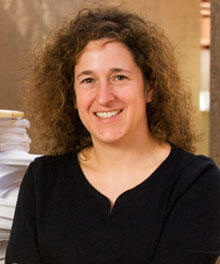
About the Speaker: Elaine Korzak is a postdoctoral cybersecurity fellow at CISAC. She earned her Ph.D from the Department of War Studies at King´s College London in 2014. Her thesis examined the applicability and adequacy of international legal frameworks to the emerging phenomenon of cyber attacks. Her analysis focused on two legal areas in particular: international law on the use of force and international humanitarian law. Elaine holds both an MA in International Peace and Security from King´s College London and an LL.M in Public International Law from the LSE. Her professional experience includes various governmental and non-governmental institutions, including NATO´s Cyber Defence Section as well as the European Commission´s Directorate-General on Information Society and Media.


Encina Hall (2nd floor)

Elaine Korzak Cybersecurity Fellow Speaker CISAC
Seminars
Paragraphs
The global cities of Latin America - Rio de Janeiro, Ciudad Juarez, Tijuana, Mexico City and Medellin - have become engines of economic growth. These cities attract remarkable talent across all levels and build extensive networks that allow for innovation and the circulation of ideas. But crime, violence and the dissolution of the social fabric threaten the main attraction of these cities and significantly undermine development prospects. The challenge of providing policing that protects citizens, especially those living in the poorest neighborhoods where gangs and other criminal organizations tend to concentrate, is daunting. The conference on violence and policing in Latin America and US cities brought together academics, policy makers, NGOs, and citizens to reflect on how cities in Latin America are meeting the challenges of rising
criminal violence. Particular focus was given to the “policing” processes in cities that have experienced and successfully reduced civil war-like levels of violence. The goal was to reflect on the dynamics and varieties of security strategies, police reform and efforts to rebuild the social fabric of major cities. The conference was hosted by the Program on Poverty and Governance (PovGov) at Stanford's Center on Democracy, Development, and the Rule of Law (CDDRL). Other centers and institutions at Stanford University that co-sponsored the conference include the Center for Latin American Studies (CLAS), the Bill Lane Center for the American West, the Mexico Initiative’ at the Freeman Spogli Institute for International Studies (FSI), and the Center for International Security and Cooperation (CISAC).
 
For a complete conference overview, please click here. 
 
All Publications button
1
Publication Date
Authors
Veriene Melo
Authors
News Type
News
Date
Paragraphs

Tokyo-based reporter Jacob Schlesinger will receive award for his journalistic work and achievements spanning three decades

Stanford University’s Walter H. Shorenstein Asia-Pacific Research Center (APARC) is pleased to announce Wall Street Journal reporter Jacob Schlesinger as the 2014 recipient of the Shorenstein Journalism Award.

Schlesinger has been selected for his excellence in reporting on Japan’s economy, trade and politics, over a more than three-decade career in journalism. A Japan watcher since the late 1980s, Schlesinger incisively covered the nation at its economic height, the ‘boom’ period, through its ‘bust,’ as the financial system collapsed in the 1990s, and now, into an era that has seen signs of economic revival.

Commenting on the selection of Schlesinger for the award, Professor Daniel Okimoto, one of the leading American experts on Japanese political economy and a former director of Shorenstein APARC, said:

 “Through the years, followers of Japan have had the benefit of being kept informed by a succession of first-rate journalists based in Tokyo, such as Bill Emmott (The Economist), author of “The Sun Also Sets,” and Gillian Tett (Financial Times), author of “Saving the Sun.” No foreign journalist has covered Japan longer, or understood its political economy more deeply, than Jacob M. Schlesinger (Wall Street Journal), author of “Shadow Shoguns.”

The Shorenstein Journalism Award, launched in 2002, is given to journalists who are outstanding in their reporting on Asia, and who have contributed significantly to Western understanding of the region. The award was originally designed to honor distinguished American journalists for their work on Asia, but since 2011, Shorenstein APARC re-envisioned the award to encompass Asian journalists who pave the way for press freedom, and have aided in the growth of mutual understanding between Asia and the United States. The award alternates between Western and Asian journalists.

The most recent award recipients were Aung Zaw, the founder of Burmese publication the Irrawaddy, and a pioneer of press freedom in that country, and Barbara Demick, the Los Angeles Times correspondent in Beijing and the author of ground-breaking studies of life in North Korea.

Schlesinger has covered Japan for the Wall Street Journal for nearly a decade. He is currently the Senior Asia Economics Correspondent and Central Banks Editor – Asia for the Journal, based in Tokyo. He came first to Japan as a reporter in the late 1980s, covering tech, trade and politics, and then reporting on Japan’s stock market crash and financial crisis, and the fallout that carried on through the mid-1990s, a period known as “the lost decade.”

Schlesinger then worked for 13 years in the Journal’s bureau in Washington DC, covering politics and the U.S. economy. He was part of the Journal’s team that was awarded a Pulitzer Prize in 2003 for the “What’s Wrong” series about the causes and consequences of the late-1990s financial bubble.

Schlesinger returned to Japan as the Japan editor/Tokyo bureau chief in 2009, overseeing the coverage of the historic transfer of power to the Democratic Party of Japan, and the triple disaster of the massive earthquake of March 2011 and the tsunami and Fukushima nuclear disaster that resulted. He has since closely followed the return to power of the conservative Liberal Democratic Party, and its leader Shinzo Abe, and his administration’s economic stimulus policy, known as ‘Abenomics,’ as well as growing tensions within the region.

Schlesinger is the author of the book, “Shadow Shoguns: The Rise and Fall of Japan’s Postwar Political Machine,” widely recognized as one of the most important works on Japan’s politicians, parties and the dramatic changes in its political order. Published in 1997, the book was hailed by Foreign Affairs as “a fascinating and penetrating tale.” He wrote the book while a visiting fellow at Shorenstein APARC.

Schlesinger will receive the award at a special ceremony at Stanford’s Bechtel Conference Center on March 9. He will also lead a panel discussion earlier that day examining the coverage of Japan’s economy, from boom to bust and back again, with Susan Chira, a former Tokyo correspondent and now deputy executive editor of The New York Times and Professor Takeo Hoshi, a prominent economist and director of Stanford’s Japan Program.

Please click here for the full press release.

Contact: Lisa Griswold, communications coordinator at Shorenstein APARC, with any questions about the award or the March 9 events.

Hero Image
Wall Street Journal's Jacob Schlesinger (at Left) interviews World Bank President Jim Yong Kim at the 2012 Tokyo Annual Meetings of the International Monetary Fund and World Bank.
Wall Street Journal's Jacob Schlesinger (at Left) interviews World Bank President Jim Yong Kim at the 2012 Tokyo Annual Meetings of the International Monetary Fund and World Bank. | World Bank/Ryan Rayburn
All News button
1
-

Abstract

Two former congressmen present the keys to fixing a broken Congress in

“A smart book that asks the right questions and offers some intriguing solutions.”— President Bill Clinton

Premiere/FastPencil (a publishing imprint distributed by Dover Publications) announces the release of The Partisan Divide: Congress in Crisis, a powerful and important new work by two former congressional leaders, one Democratic and one Republican. According to Mr. Frost and Mr. Davis, Congress is incapable of reforming itself without a good kick in the seat from the American public. Frost and Davis, with great insight and skill, along with a wealth of entertaining anecdotes and photos, dissect the causes of legislative gridlock and offer a common sense, bipartisan plan for making our Congress function again.

The perfect tonic for these turbulent times, The Partisan Divide: Congress in Crisis is a fascinating must-read for the historically and politically curious.


Speaker Bios

Image
tomdavis
Tom Davis served in Congress from 1994 to 2008 representing Virginia's 11th district. During that time, he served as House GOP campaign chairman for two cycles (2000 and 2002), and chairman of the House Committee on Government Reform and Oversight before retiring, undefeated in 2008. He is a graduate of Amherst College and the University of Virginia Law School. Mr. Davis currently serves as a Director at Deloitte LLP and resides in Vienna, Virginia. He is also a co-founder of "No Labels."


Image
Martin Frost served 26 years in Congress representing the Dallas–Ft. Worth area in North Texas. During that time he served four years as chair of the Democratic Congressional Campaign Committee and four years as Chair of the House Democratic Caucus. He has undergraduate degrees in journalism and history from the University of Missouri and a law degree from the Georgetown University Law Center. Mr. Frost is a senior partner in the Washington office of the Polsinelli law firm and resides in Alexandria, Virginia.


*This event is co-sponsored with CDDRL's Program on American Democracy in Comparative Perspective and Stanford in Government.*


[[{"fid":"217935","view_mode":"crop_870xauto","fields":{"format":"crop_870xauto","field_file_image_description[und][0][value]":"","field_file_image_alt_text[und][0][value]":"","field_file_image_title_text[und][0][value]":"","field_credit[und][0][value]":"","field_caption[und][0][value]":"","field_related_image_aspect[und][0][value]":"","thumbnails":"crop_870xauto","pp_lightbox":true,"pp_description":false},"type":"media","attributes":{"height":"1113","width":"870","class":"media-element file-crop-870xauto"}}]]


State of Politics in 2014
Download pdf
Martin Frost Former Democratic Representative to the U.S. House of Representatives Texas's 24th Congressional District, 1979-2005
Tom Davis Former Republican Representative to the U.S. House of Representatives Virginia's 11th District, 1995-2008
Seminars
-

Is Europe "elderly and haggard", and could France become "the crucible of  Europe" (Jan. 10, 2015 NYTimes op-ed)?

On the one hand, Europe is warned by the US about an Asian "pivot", and is perceived here as less relevant and effective. Significantly, certainly as a wake up call, Pope Francis recently compared Europe to  a "grandmother, no longer fertile and vibrant, increasingly a bystander in a world that has apparently become less and less Eurocentric”. France had been previously presented here as an eminent representative of an "Old Europe".

On the other hand,  the US has been constantly, during the last decade, advocating for a stronger Europe  and stressing a special French role in this endeavour. A few days ago, after the terrorist attacks in Paris, President Obama publicly stated that "France was the US oldest Ally". 

At a time when we have to face common challenges in the Middle East and in Africa, to adapt to new emerged actors and a more assertive Russia, to deal with direct threats including in the field of proliferation and the cyber space, to define a multipolar world and organize our economic relation (TTIP), what can be the EU contribution? What can also be a special intellectual and diplomatic French input to this global realignment?

Co-sponsored by The Europe Center, the Center for International Security and Cooperation and the France-Stanford Center.

Image
Ambassador Eric Lebédel of France


Ambassador Eric Lebédel is a French diplomat, former ambassador to the OSCE and to Finland, with a deep experience in Transatlantic relationship (twice as Minister's advisor;  in the French embassy in Washington DC) and in European affairs. He is also involved in crisis management (PMs office), international security (embassy in Moscow, consul general in Istanbul) and multilateral diplomacy ( NATO's Director for crisis management, OSCE). Presently working on Strategic Partnerships for the French MFA and interested in e.diplomacy, he also regularly lectures  at Sciences-po and ENA (Ecole Nationale d'Administration) on crisis management and Europe.


Ambassador Eric Lebédel French Diplomat Speaker
Seminars
Paragraphs

The politics of economic crises bring distributive economic conflict to the fore of national political debates. How policy should be used to transfer resources between citizens becomes a central political question and the answers chosen often influence the trajectory of policy for a generation. This context provides an ideal setting for evaluating the importance of self-interest and other-regarding preferences in shaping public opinion about economic policy. This paper investigates whether self-centered inequity aversion along with self-interest influences individual tax policy opinions. We conduct original survey experiments in France and the United States and provide evidence that individuals care both about how policy alternatives affect their own interests and how they influence the welfare of others relative to themselves. Our estimates suggest that in France both disadvantageous inequality aversion---utility losses when others have better economic outcomes---and advantageous inequality aversion---utility losses when others have worse economic outcomes---are important determinants of tax policy preferences. In the United States, we find strong evidence of disadvantageous inequality aversion but not advantageous inequality aversion. The results for both countries suggest that self-interest and other-regarding preferences influence tax policy preferences and the findings in France are strongly consistent with self-centered inequity aversion.

All Publications button
1
Publication Type
Working Papers
Publication Date
Authors
-

Abstract

Substantial systematic differences exist in children’s home learning experiences. The few existing parenting programs that have shown promise often are not widely accessible, either due to the demands they place on parents’ time and effort or cost. In this study, we evaluate the effects of READY4K!, a text messaging program for parents of preschoolers designed to help them support their children’s literacy development. The program targets the behavioral barriers to good parenting by breaking down the complexity of parenting into small steps that are easy-to-achieve and providing continuous support for an entire school year. We find that READY4K! positively affected the extent to which parents engaged in home literacy activities with their children by 0.22 to 0.34 standard deviations, as well as parental involvement at school by 0.13 to 0.19 standard deviations. Increases in parental activity at home and school translated into student learning gains in some areas of early literacy, ranging from approximately 0.21 to 0.34 standard deviations. The widespread use, low cost, and ease of scalability of text messaging make texting an attractive approach to supporting parenting practices.

Speaker Bio

susanna loeb Susanna Loeb

Susanna Loeb

Barnett Family Professor of Education, Stanford University

Faculty Director, Center for Education Policy Analysis

Co-Director, Policy Analysis for California Education


This event is part of the Liberation Technology Seminar Series. 


[[{"fid":"217339","view_mode":"crop_870xauto","fields":{"format":"crop_870xauto","field_file_image_description[und][0][value]":"LibTech Loeb Flyer","field_file_image_alt_text[und][0][value]":"","field_file_image_title_text[und][0][value]":"","field_credit[und][0][value]":"","field_caption[und][0][value]":"LibTech Loeb Flyer","field_related_image_aspect[und][0][value]":"","thumbnails":"crop_870xauto","pp_lightbox":false,"pp_description":false},"type":"media","attributes":{"height":960,"width":870,"class":"media-element file-crop-870xauto"}}]]

School of Education

Room 206

Susanna Loeb Faculty Director Faculty Director, Center for Education Policy Analysis
Seminars
-

ABSTRACT

When defined in terms of social identity and evaluations of in and out groups, the polarization of the American electorate has clearly increased. We elaborate on the question of affective polarization by developing and validating a measure of implicit or subconscious partisan affect. Using this measure, we demonstrate not only that hostility for the out party is ingrained or automatic in voters’ psyches, but also that partisan affect exceeds affect based on race and other social cleavages. After documenting the extent of affective party polarization, we demonstrate that party cues exert powerful effects on non-political judgments and behaviors. Partisans discriminate against out partisans, and do so to a degree that exceeds discrimination based on race. In concluding, we note that heightened partisan affect and the intrusion of partisan bias into non-political domains means that partisan affiliation in America now approximates the model of the “mass membership” party.


SPEAKER BIO

Image
shanto iyengar
Shanto Iyengar holds a joint appointment as the Harry and Norman Chandler Chair in Communication and Professor of Political Science at Stanford University. Iyengar is also a senior fellow (by courtesy) at the Hoover Institution. Iyengar currently serves as the editor of Political Communication (Taylor and Francis), an inter-disciplinary journal sponsored by the American Political Science Association and the International Communication Association. According to the 2012 Thomson-Reuters Journal Citation Reports, Political Communication is the top-ranked journal in the field of Communication, and fourth (out of 170) in the field of Political Science. Iyengar's teaching and research addresses the role of the news media and mass communication in contemporary politics. He is the author of several books including Media Politics: A Citizen's Guide (W. W. Norton, 2007), Going Negative: How Political Advertisements Shrink and Polarize the Electorate (Free Press, 1995), Explorations in Political Psychology (Duke University Press, 1993), and News That Matters: Television and American Opinion (University of Chicago Press, 1987). Iyengar's research has been published by leading journals in political science and communication. He is also a regular contributor to Washingtonpost.com. His scholarly awards include the Murray Edelman Career Achievement Award for research in political communication, the Philip Converse Award for the best book in the field of public opinion (for News That Matters), the Goldsmith Book Prize (for Going Negative), and the Distinguished Alumni Achievement Award from the University of Iowa.


[[{"fid":"217340","view_mode":"crop_870xauto","fields":{"format":"crop_870xauto","field_file_image_description[und][0][value]":"Iyengar Flyer","field_file_image_alt_text[und][0][value]":"","field_file_image_title_text[und][0][value]":"","field_credit[und][0][value]":"","field_caption[und][0][value]":"Iyengar Flyer","field_related_image_aspect[und][0][value]":"","thumbnails":"crop_870xauto","pp_lightbox":false,"pp_description":false},"type":"media","attributes":{"height":"910","width":"870","class":"media-element file-crop-870xauto"}}]]

Shanto Iyengar Director, Political Communication Lab Stanford University
Seminars
Subscribe to United States