-

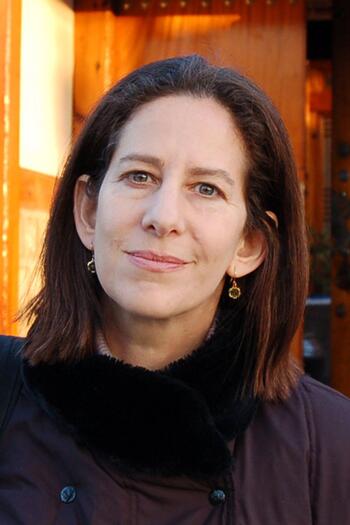
Carla Ferstman is Director of REDRESS. She is currently on sabbatical leave and is a Jennings Randolph Senior Fellow 2012-2013 at the United States Institute of Peace. She joined REDRESS in 2001 as its Legal Director and became its Director in 2005. She was called to the Bar in British Columbia, Canada where she practiced as a criminal law barrister. She has also worked with the UN High Commissioner for Human Rights on legal reform and capacity building in post-genocide Rwanda, with Amnesty International's International Secretariat as a legal researcher on trials in Central Africa and as Executive Legal Advisor to Bosnia and Herzegovina's Commission for Real Property Claims of Displaced Persons and Refugees (CRPC). She has an LL.B. from the University of British Columbia, an LL.M. from New York University and is a doctoral candidate at the University of Oxford. Ms. Ferstman has published and is a regular commentator on victims' rights, the International Criminal Court and the prohibition against torture.

Bechtel Conference Center

Carla Ferstman Director Speaker REDRESS -- Jennings Randolph Senior Fellow 2012-13 at United States Institute of Peace
Lectures
-

James D. Fearon is Theodore and Frances Geballe Professor in the School of Humanities and Sciences and Professor of Political Science at Stanford University.  His research focuses mainly on political violence – interstate, civil, and ethnic conflict, for example – though he has also worked on aspects of democratic theory and the impact of democracy on foreign policy. He has published numerous articles in scholarly journals, including “Self-Enforcing Democracy” (Quarterly Journal of Economics), “Can Development Aid Contribute to Social Cohesion after Civil War?” (American Economic Review: Papers and Proceedings), “Iraq’s Civil War” (Foreign Affairs), “Neotrusteeship and the Problem of Weak States” (co-authored with David Laitin, in International Security), “Ethnicity, Insurgency, and Civil War” (co-authored with David Laitin, in American Political Science Review), and “Rationalist Explanations for War” (International Organization). Fearon was elected member of the American Academy of Arts and Sciences in 2002, and has been a Program Fellow of the Canadian Institute for Advanced Research since 2004. He served as Chair of the Department of Political Science at Stanford from 2008-2010.

Bechtel Conference Center

CISAC
Stanford University
Encina Hall
Stanford, CA 94305-6165

(650) 725-1314
0
Senior Fellow at the Freeman Spogli Institute for International Studies
Theodore and Frances Geballe Professor in the School of Humanities and Sciences
Professor of Political Science
rsd26_013_0052a.jpg PhD

James Fearon is the Theodore and Frances Geballe Professor in the School of Humanities and Sciences and a professor of political science. He is a Senior Fellow at FSI, affiliated with CISAC and CDDRL. His research interests include civil and interstate war, ethnic conflict, the international spread of democracy and the evaluation of foreign aid projects promoting improved governance. Fearon was elected to the National Academy of Sciences in 2012 and the American Academy of Arts and Sciences in 2002. Some of his current research projects include work on the costs of collective and interpersonal violence, democratization and conflict in Myanmar, nuclear weapons and U.S. foreign policy, and the long-run persistence of armed conflict.

Affiliated faculty at the Center for International Security and Cooperation
Affiliated faculty at the Center on Democracy, Development, and the Rule of Law
CV
Date Label
James D. Fearon Speaker
Lectures
-
Abstract
New tools and technologies are changing the ways newsrooms tell stories. Data journalism is a new set of skills for searching, understanding, and visualizing information from the vastly expanding world of digital sources available to today's reporters. Along with traditional "shoe leather" reporting, reporters now have access to tools and newsroom specialists to quickly parse thousands of confidential documents, analyze voting trends, or connect the dots between powerful interest groups, and package their findings for readers with compelling visuals. Some newsrooms are using free, open-source tools to compile and publish wholly new data sets, like Mother Jones's Guide to Mass Shootings in America, a groundbreaking data-driven investigation cited by the New York Times and others as the first-ever comprehensive survey of this phenomenon in our country. Tasneem Raja leads a team of data visualization specialists at Mother Jones, and offers this survey of the field's award-winning investigations, commonly used tools, and how data is changing journalism.

 
Tasneem Raja is the Interactive Editor at Mother Jones. She specializes in data-driven journalism, interactive graphics, and newsroom training in emerging technologies. Prior to joining Mother Jones, she was an interactive producer at The Bay Citizen, a nonprofit journalism startup in San Francisco that partnered with the New York Times to produce high-impact local investigative reports for the Bay Area, and earned a master's degree from the Graduate School of Journalism at UC Berkeley. Before crossing over to "the dark side," she was a features reporter covering subcultures and fringe groups at The Chicago Reader.
 

Wallenberg Theater

Tasneem Raja Interactive Editor Speaker MoJo
Seminars
-

Abstract: 
While the debate rages on regarding the role of social media technologies within the Egyptian revolution of 2011, and more generally the larger wave of ‘Arab Spring’ protests, the more relevant question of today is whether the 18 days of revolt may have done more for social media than vice versa. In different manners, social media technologies appear to be central to this discussion. From the Muslim Brotherhood’s use of technology to engage global publics, to activist uses of social media to build grassroots networks which bypass the barriers of infrastructure and access, or blogger uses of social media to impact older top-down media, social media technologies represent critical sites for analysis and critique. Building on two years of ethnographies and interviews, this paper identifies three key themes by which social media technologies shape political power: 1. Moving Past Bubbles, 2. Linking Older and Newer Media, and 3. Digital Subversion.

Dr. Ramesh Srinivasan, Assistant Professor at UCLA in Design and Media/Information Studies, studies and participates in projects focused on how new media technologies impact political revolutions, economic development and poverty reduction, and the future of cultural heritage. He recently wrote a front page article on Internet Freedom for the Huffington Post, an Op/Ed in the Washington Post on Social Media and the London Riots, an upcoming piece in the Washington Post on Myths of Social Media, and was recently on NPR discussing his fieldwork in Egypt on networks, actors, and technologies in the political sphere. He was also recently in the New Yorker based on his response (from his blog: http://rameshsrinivasan.org) to Malcolm Gladwell’s writings critiquing the power of social media in impacting revolutionary movements. He has worked with bloggers who were involved in overthrowing the recent authoritarian Kyrgyz regime, non-literate tribal populations in India to study how literacy emerges through uses of technology, and traditional Native American communities to study how non-Western understandings of the world can introduce new ways of looking at the future of the internet. He holds an engineering degree from Stanford, a Masters degree from the MIT Media Lab, and a Doctorate from Harvard University. His full academic CV can be found at http://rameshsrinivasan.org/cv

Wallenberg Theater

Ramesh Srinivasan Associate Professor, Design and Media/Information Studies Speaker UCLA
Seminars
-
Abstract
He will preview some of the main arguments about the temptations of "solutionism" from his upcoming book "To Save Everything, Click Here." Now that everything is smart, hackable and trackable, it is very common to see big technology companies (as well as ordinary tech enthusiasts and geeks) embark on ambitious projects to "solve all of the world's problems." Obesity, climate change, dishonesty and hypocrisy in politcs, high crime rate: Silicon Valley can do it all. But where does this solutionist quest lead? What are the things that ought to be left "dumb" and "unhackable"? How do we learn to appreciate the imperfection - of both our lives and our social institutions - in a world, where it can be easily eliminated? Do we even have to appreciate it? 
 
 Evgeny Morozov is the author of The Net Delusion: The Dark Side of Internet Freedom. In 2010-2012 he was a visiting scholar at Stanford University's Liberation Technology program and a Schwartz fellow at the New America Foundation. In 2009-2010 he was a fellow at Georgetown University and in 2008-2009 he was a fellow at the Open Society Foundations (where he also sat on the board of the Information Program between 2008 and 2012).  Between 2006 and 2008 he was Director of New Media at Transitions Online.  Morozov has written for The New York Times, The Economist, The Wall Street Journal, The New Republic, Financial Times, London Review of Books, Times Literary Supplement, and other publications. His monthly Slate column is syndicaetd in El Pais, Corriere della Sera, Frankfurter Allgemeine Zeitung, Folha de S.Paulo and several other newspapers. 

Wallenberg Theater

Evgeny Morozov Author and former Stanford Visiting Scholar Speaker
Seminars
-

Abstract:

Political parties that represent old regime interests in moments of democratization are normally thought exclusively to play a "negative" role, blocking democracy and only conceding it when sufficiently challenged. Summarizing research for a book on the historical rise of democracy in Europe, this presentation will focus on British and German democratization in the nineteenth and twentieth centuries to make the case that under certain conditions, old regime conservative parties play a decisive and counter-intuitive role that makes democratization more settled over the long run.

Speaker Bio:

Daniel Ziblatt is Professor of Government at Harvard University. He has been named a Sage Publications Fellow for a project on "Conservative Political Parties and Democratization in Europe" and in 2012-2013 is on leave at the Center for Advanced Study in Behavioral Sciences at Stanford University.

His research and teaching interests include democratization, state-building, development, comparative politics and comparative historical analysis, with a particular interest in Europe. He is the author of Structuring the State: The Formation of Italy and Germany and the Puzzle of Federalism (Princeton University Press, 2006), the winner of three prizes from the American Political Science Association, including the 2007 Prize for the Best Book published on European Politics. He is co-editor of a 2010 special double issue of Comparative Political Studies entitled "The Historical Turn in Democratization Studies." Recent papers have appeared in American Poiltical Science Review, Comparative Political Studies, and World Politics.  His most recent papers have received APSA's 2011 Mary Parker Follett Prize from the Politics and History Section of APSA, APSA's  2009 Luebbert Prize for the best paper published  in comparative politics, the 2008 Sage prize for best paper presented in comparative politics at the APSA meeting, and two  prizes in 2010 from the Comparative Democratization Section of APSA.  Ziblatt has been a DAAD Fellow in Berlin, an Alexander von Humboldt visiting fellow at the Max Planck Institute in Cologne and the University of Konstanz, Germany, and visiting professor at the Ecole Normale Superieure, Paris in 2010. He is currently completing a new book entitled Conservative Political Parties and the Birth of Modern Democracy in Europe, 1848-1950 (Cambridge University Press) that offers a new interpretation of the historical democratization of Europe.

Encina Ground Floor Conference Room

Daniel Ziblatt Professor of Government Speaker Harvard University
Seminars
Subscribe to North America