-

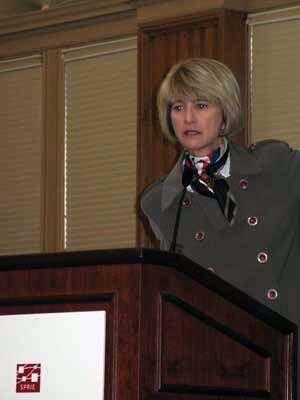
Daniel Posner is Total Professor of Political Science at the Massachusetts Institute of Technology, and currently a fellow at the Center for Advanced Study in the Behavioral Sciences.  His research focuses on ethnic politics, research design, distributive politics and the political economy of development in Africa. His work investigates, among other topics, the sources of ethnic identification and the political, social and economic outcomes that ethnicity affects-coalition-building, voting, collective action, public goods provision, and economic growth-with special attention to the mechanisms through which it has its impact. His methodological approach is to find creative ways to maximize leverage for making strong descriptive and causal claims, through the use of experiments (in the lab, in the field, and occurring "naturally"), new data sources (including the re-appropriation of data collected for other purposes), and the adoption of techniques from other disciplines such as satellite geography, public health, and behavioral economics.

His most recent co-authored book, Coethnicity: Diversity and the Dilemmas of Collective Action (Russell Sage, 2009) employs experimental games to probe the sources of poor public goods provision in ethnically diverse communities. His first book, Institutions and Ethnic Politics in Africa (Cambridge, 2005), explains why and when politics revolves around one dimension of ethnic cleavage rather than another. He has received several awards for his work, including the Luebbert Award for best book in Comparative Politics (2006 and 2010), the Heinz Eulau Award for the best article in the American Political Science Review (2008), the Michael Wallerstein Award for the best article in Political Economy (2008), the best book award from the African Politics Conference Group (2006), and the Sage Award for the best paper in Comparative Politics presented at the APSA annual meeting (2004). He has been a Harvard Academy Scholar (1995-98), a National Fellow at the Hoover Institution (2001-02), a Carnegie Scholar (2003-05) and, this year, a Fellow at the Center for Advanced Study in the Behavioral Sciences (2010-11). He currently serves on the editorial boards of World Politics, PS, and the Annual Review of Political Science. He is the co-founder of the Working Group in African Political Economy (WGAPE). He received his BA from Dartmouth College and his PhD from Harvard University. Before moving to MIT, he taught for twelve years at UCLA.

Encina Ground Floor Conference Room

Daniel Posner Total Professor of Political Science Speaker Massachusetts Institute of Technology
Seminars
News Type
News
Date
Paragraphs

Japan's massive earthquake and tsunami three weeks ago and the challenging recovery process continue to make news headlines around the world. It is difficult to separate fact and reasonable speculation about the future from the terror-filled coverage about radiation leaking from the Fukushima nuclear complex. In an effort to make sense of recent events, the Walter H. Shorenstein Asia-Pacific Research Center (Shorenstein APARC) convened a panel of experts for a discussion about the possible future implications arising from this complex and emotionally charged situation for Japan's energy policy, economy, and politics.

Addressing an audience of one hundred students, faculty, and members of the general public on March 30, Shorenstein APARC associate director for research Daniel C. Sneider expressed the center's deep sympathy for those affected by the natural disasters and its profound admiration for the way in which the people of Japan are dealing with the aftermath. Members of the panel echoed these sentiments throughout the event.

Michio Harada, Deputy Counsel General at the Consulate General of Japan in San Francisco, cited official government figures indicating that, as of March 28, twenty-eight thousand people were dead or missing and one-hundred-and-eighty thousand people were still in evacuation shelters. Faced with such staggering figures, Japan remains in a rescue and recovery phase, he said, but is receiving a tremendous amount of global support. More than one hundred and thirty countries have provided financial assistance, and eighteen countries and regions have sent rescue teams. Collective public spirit is currently very strong, Deputy Counsel Harada emphasized. Japan's challenge moving forward, he suggested, will be to adopt pragmatic measures to fund reconstruction projects in the areas destroyed or damaged by the natural disasters.

Understanding the situation at the Fukushima nuclear power facility and the information circulating about the potential health risks of radiation exposure is complicated, stressed Siegfried S. Hecker, co-director of the Center for International Security and Cooperation. He described the intricate design and structure of the reactors and outlined the sequence of events up to the present, explaining the immediate, crucial challenge of continuing to cool the reactors and deal with the leakage of radiation from them. While there are definite and potentially very serious health threats from radiation exposure and contamination, Hecker said, fear and stress about the situation could also negatively affect mental and physical wellbeing. It is too soon to know the long-term implications for energy policy in Japan and other countries, he suggested, emphasizing the significance of learning from this experience in order to improve any future use of nuclear power.

Robert Eberhart, a researcher with the Stanford Program on Regions of Innovation and Entrepreneurship, proposed that the global supply chain is flexible enough to absorb any manufacturing disruptions in Japan. He noted that in the past twenty years most of Japan's heavy manufacturing has moved overseas, and that the components made there are a comparatively less significant part of the supply chain. In terms of the overall impact on Japan's economy, Eberhart suggested that the net effect on the GDP would be neutral over the next two years, explaining that the imminent loss of business and investment in some areas would be offset by the growth of firms involved in the reconstruction process.

Phillip Lipscy, a center fellow at the Freeman Spogli Institute for International Studies and an assistant professor with the Department of Political Science, stated that events and immediate needs during the early stages of reconstruction may have long-term affects on policymaking and the government structure in Japan. For example, the continued use of nuclear energy—a relatively clean and efficient source of power accounting for 30 percent of Japan's total energy consumption—will face public opposition due to rising concerns about safety and pressing energy needs. In addition, while Prime Minister Naoto Kan's prompt response after the natural disasters helped boost popular sentiment for him and the Democratic Party of Japan (DPJ), how they fare in the long term—especially with regard to the DPJ's relationship with the opposition Liberal Democratic Party and reconstruction-related modifications to its key economic policies—remains to be seen, Lipscy said.

Sneider closed the event with a comparison between the events in Japan and the April 2010 Gulf of Mexico oil spill, pointing to criticism that the Obama and Kan administrations have received for not regulating large corporations closely enough. A prompt resolution to the dangerous—and contentious—situation at the Fukushima nuclear complex is the most immediate concern, and one that will help foretell the long-term political implications for Japan's government, he concluded.

Although there is still a long road ahead in Japan—especially until the accident at Fukushima's nuclear reactor is contained and the actual after-effects of radiation are better understood—the underlying message during the panel discussion was that Japan will indeed recover and that the terrible events of the past weeks have brought people—and even the competing political parties—closer together.

Hero Image
EarthQuakeRecoveryNewsfeed
U.S. airmen and sailors work together with Japanese residents to pull a vehicle out of the tree line at the Misawa City fishing port, March 19, 2011.
U.S. Air Force photo by Staff Sgt. Marie Brown
All News button
1
Paragraphs

In March 2011, NATO launched its Deterrence and Defense Posture Review, which will examine the Alliance's nuclear posture, among other issues.  At about the same time, the U.S. government began its formal interagency consideration of options for dealing with non-strategic nuclear weapons in a possible future round of arms reduction talks with Russia.

Written for the Nuclear Policy Paper series sponsored by the Arms Control Association, BASIC and the University of Hamburg, it describes the thinking within the U.S. government on NATO's future nuclear posture, including Alliance declaratory policy, and the possible arms control approaches for dealing with non-strategic nuclear weapons.

All Publications button
1
Publication Type
Working Papers
Publication Date
Authors
News Type
News
Date
Paragraphs

On March 26, 2011, Gi-Wook Shin, director of the Stanford Korean Studies Program (Stanford KSP) and the Walter H. Shorenstein Asia-Pacific Research Center, presented the keynote address "Teaching Korea to Korean American Students" at a gathering of two hundred Korean-language instructors organized by the Korean Schools Association of Northern California (KSANC).

Gi-Wook Shin

Shin pointed to the connection between language and identity, emphasizing the importance of developing Korean-language skills in children of Korean ethnicity growing up in the United States. He noted the dual significance of having a strong, well-rounded Korean American identity: one rooted in a solid understanding of Korean language, culture, and history, with also a firm sense of being American.

KSANC is a non-profit organization dedicated to providing Korean-language instruction and programming about Korean culture and history to children and adults. Through its outreach activities, Stanford KSP helps to support the mission of KSANC and numerous other non-profit education organizations throughout Northern California.

Hero Image
ShinNEWSFEED
Gi-Wook Shin presenting the keynote address "Teaching Korea to Korean American Students," March 26, 2011
KSANC
All News button
1
-

Brenna Marea Powell is a 7th year PhD candidate in the department of Government at Harvard University, and a doctoral fellow at the Multidisciplinary Program on Inequality and Social Policy at the Kennedy School of Government. She received her AB from Stanford in Comparative Studies in Race and Ethnicity. Her research interests include inequality, civil conflict and political violence in divided societies. Her three-article dissertation research explores the role of political institutions in redefining ethno-racial boundaries and social hierarchy. This includes work on post-conflict policing in Northern Ireland, racial policy in Brazil, and the politics of ethno-racial classification in the United States.

Reuben W. Hills Conference Room

Brenna M. Powell Predoctoral Fellow, CISAC; PhD Student, Government, Harvard University Speaker
Aila Matanock Predoctoral Fellow, CISAC; PhD Student, Political Science, Stanford University Commentator
Seminars
-

Hein Goemans received his PhD in Political Science from the University of Chicago in 1995 and currently serves as Associate Professor of Political Science at the University of Rochester in New York. 

His book War and Punishment was published by Princeton University Press in 2000. Another book, Leaders and International Conflict (co-authored with Giacomo Chiozza) is forthcoming by Cambridge University Press. Other publications have appeared in the American Journal of Political Science and the Journal of Conflict Resolution

Goemans is currently engaged in two research projects. The first extends the research in his first book on the causes of war termination and examines the role and incentives of leaders in international conflict initiation. This seminar will draw on his work for his second research project, which explores when and why people become attached to specific pieces of territory that together constitute a "homeland" and the consequences of these attachments.

Reuben W. Hills Conference Room

not in residence

0
Visiting Professor
HeinAPSA2004.jpg PhD

Hein Goemans received his PhD in Political Science from the University of Chicago in 1995 and currently serves as Associate Professor of Political Science at the University of Rochester in New York.

His book War and Punishment was published by Princeton University Press in 2000. Another book, Leaders and International Conflict, (co-authored with Giacomo Chiozza) is forthcoming from Cambridge University Press. Other publications have appeared in the American Journal of Political Science and the Journal of Conflict Resolution.

Goemans is currently engaged in two research projects. The first extends the research in his first book on the causes of war termination and examines the role and incentives of leaders in international conflict initiation. His second research project explores when and why people become attached to specific pieces of territory that together constitute a "homeland," and the consequences of these attachments.

(Profile last updated in September 2011.)

CV
Hein Goemans Associate Professor of Political Science Speaker University of Rochester
Amanda Robinson PhD Candidate, Political Science Commentator Stanford University
Seminars
News Type
News
Date
Paragraphs

North Korea conducted its first nuclear weapons test in October 2006, prompting the UN Security Council to establish military and economic sanctions in an effort to block further development of the country's nuclear program. After North Korea conducted another test in May 2009—a move that U.S. President Barack Obama described as "directly and recklessly challenging the international community"—the UN Secretary General, at the request of the Security Council, convened a Panel of Experts to advise and assist the UN committee that enforces the sanctions (the "1718 Committee," after the UN Security Council Resolution that brought it into being).

John Everard, 2010-2011 Pantech Fellow with the Stanford Korean Studies Program at the Walter H. Shorenstein Asia-Pacific Research Center (Shorenstein APARC) and former UK Ambassador to North Korea, left Stanford at the end of March to take up a position with the panel.

The seven-member panel comprises independent experts from the Security Council's five permanent member countries—China, France, the Russian Federation, the United Kingdom, and the United States—and from South Korea and Japan. Some experts come from academic institutions while others have been lent to the panel by national governments. As part of its efforts to advise the 1718 Committee, the panel often travels to inspect banned goods—such as materials that could be used for nuclear purposes—in intercepted cargo shipping to or from North Korea. 

During his diplomatic service in North Korea from 2006 to 2008, Everard closely observed and took photographs of the details of everyday life, discovering that the mindset of ordinary people frequently does not match official government ideology. "There is an openness toward warm relations with Americans if political relations improve," he says. Everard is currently working on completing a book describing his observations of the everyday life of non-elite North Koreans, as well as his experience as a foreigner living in North Korea. It also addresses how North Korea as a country has evolved over the past sixty years and provides suggestions for how better to deal with its government.

Although Everard looks forward to his new position with the Panel of Experts, he will not soon forget his time at Shorenstein APARC. "It has been a great experience," he emphasizes. "It has been a real delight to be surrounded not just by this beautiful architecture and the wonderful facilities that Stanford has, but also by the very friendly, very intelligent people here."

Hero Image
2011Mar29EverardNEWSFEED
John Everard, 2010-2011 Pantech Fellow, speaking at the third annual Koret Conference, February 24, 2011.
Rod Searcey
All News button
1
Authors
News Type
News
Date
Paragraphs

February 10th marked the launch of the Program on Food Security and the Environment's Global Food Policy and Food Security Symposium Series. Setting the stage for the two-year series were Jeff Raikes, CEO of the Bill & Melinda Gates Foundation, and Greg Page, CEO and Chairman of Cargill Inc. As CEOs from the largest foundation and the largest agricultural firm in the world they provided important perspectives on global food security in these particularly volatile times. Full video and clips of the event are now available - Improving Food Security in the 21st Century: What are the Roles for Firms and Foundations.

Jeff Raikes: A Perspective from the Bill & Melinda Gates Foundation

Catalytic philanthropy

The Gates Foundation, through its Agricultural Development Initiative, has been a leader in addressing global food security issues. The Foundation allocates 25% of its resources to global development and to addressing the needs of the 1 billion people who live in extreme poverty ($1/day). 70-75% of those people live in rural areas and are dependent on subsistence agriculture for their livelihoods.

The Gates Foundation is driven by the principle: how can it invest its resources in ways that can leverage performance and address market failures? Its approach embodies a novel concept driven by both private sector motives and public responsibilities. Raikes describes this as catalytic philanthropy.

"The Foundation identifies where its investments can create an innovation, a new intervention that can really raise the quality of lives for people," said Raikes. "If successful, it can be scaled up and sustained by the private sector if we can show that there is a profit opportunity or the public sector if we can show that this is a better way to improve the overall quality of society through investment in public dollars."

Image

Photo credit: Michael Prince

In the realm of agriculture, allocating resources across the agricultural value chain has proven to be the most effective approach. As an example of this strategy, Raikes talked about a farmer-owned, Gates-supported dairy chilling plant in Kenya. The cooling facility provided the storage necessary to provide a predictable price at which to sell farmers' milk. This price knowledge and market access gave farmers the confidence to invest in better technology and better dairy cattle. The plant also provided artificial insemination services and extension services to teach farmers how to get greater amounts of milk from the cattle.

"I love the concept. I also love the numbers," said Raikes. "In just two or three years there were now 3,000 farmers in a 25 kilometer radius that were able to access this dairy chilling plant and able to sell their milk."

In addition to improving incomes, Raikes remarked that very consistently what he hears is when farmers are able to improve their incomes the first thing they do with the money is invest in the education of their children.

Upcoming challenges to food security

During the next 40 years or so, global food production must double to accommodate a growing and richer population. Climate change and water scarcity contribute to this challenge. The places that will suffer the most severe weather are also the places where the poorest farmers live. 95% of sub-Saharan agriculture is rain fed with very little irrigation.

"If we are going to be able to feed the world we are going to have to figure out how to achieve more crop per drop," cautioned Raikes. "This includes trying to breed crop varieties that will better withstand water shortages. Early results show that you can get as much as a 20% increase in yield or more under stressed conditions when you have varieties that are bred for that need."

These challenges are compounded by the current economic crisis that is putting pressure on budgets in both donor and developing countries. In 2009, the G20 committed 22 billion dollars to agricultural development in recognition of the importance of agricultural development to food security. However, of the 22 billion promised, 224 million dollars went to five countries in the first round of grants in June. By November, when 21 additional countries submitted their proposals, just 97 million dollars were available to be dispersed and 17 countries were turned away empty handed.

High- and low-tech solutions

In an effort to alleviate some of this deficit, the Gates Foundation has committed 300 million dollars in six grants that span the value chain. These include investments in science and technology, farm management practices, farmer productivity, and market access as well as the data and policy environment to support the Foundation's work. The grants are intended to support about 5 ½ million farm families in sub-Saharan Africa and South Asia.

"We believe innovative solutions can come from both high-tech and low-tech," said Raikes. "On the high-tech end, submergent genes are allowing rice crops to survive periods of flooding up to 15 days. In areas of rice farming prone to flooding, this can save entire crops traditionally wiped out by such weather disasters."

Image
Photo credit IRRI/Ariel Javellana

The sub1gene seeds are now being used by 400,000 farmers and are on track to be used by 20 million rice farmers by 2017. On the low-tech end, the Gates Foundation is providing $2 triple layer bags to farmers to reduce crop loss from pests; an affordable solution that has increased average income per farmer by $150/year.

"We primarily support conventional breeding, but we also support biotechnology breeding. In some cases we think that breeders in Africa and South Asia will want to take advantage of the modern tools we use here in our country to provide better choices for their farmers," explained Raikes.

Reasons for optimism

After years of diminished support, US Agricultural Development assistance to sub-Saharan Africa has gone from about 650 million in 2005 to about 1.5 billion in 2009. In developing countries, the Comprehensive Agricultural Development Program (CADP) in Africa has challenged countries to dedicate 10% of their national budgets to agriculture with the goal of improving annual agricultural growth by 6%. 20 countries have signed on to the CADP compacts, and 10 countries are exceeding the 6% growth target. Finally, since 1990, 1.3 billion people worldwide have lifted themselves out of poverty primarily through improvements in agricultural productivity.

Raikes pointed to Ghana as a success story. Since 1990, casaba production, an important staple food for poor smallholder farmers, has increased fivefold. Tomato production increased six fold. The cocoa sector has been revived and hunger has been cut by 75%.

"The key to success in Ghana was a combination of getting the right developing country policy with the right macroeconomic reform, the right institutional reform, smart public investment, and an overall good policy environment," said Raikes.

Supporting good policy is an important part of the Foundation's food security strategy, and was a strong motivation behind its funding of FSE's Global Food Policy and Food Security Symposium series.

"We see this symposium series as an opportunity to gather policy leaders who will bring new ideas of what will be effective policy approaches and effective economic environments in the countries we care a lot about, in particular sub-Saharan Africa and South Asia," said Raikes.

Raikes concluded his remarks by reminding everyone that the key to improving food security globally is making sure women, who make up at least 70% of the farm labor population, are included in the equation.

Greg Page: Balancing the race to caloric sufficiency with rural sociology

As the largest global agricultural firm, Cargill has an influential role to play in the world of food and agriculture. Cargill is a major supplier of food and crops and a provider of farmer services, inputs, and market access.

Image
Photo credit: Olaf Hammelburg

Together with the Gates Foundation, Cargill has reached out and trained 200,000 cocoa farmers in the Ivory Coast, Ghana, and Cameroon. One tribe and one small village at a time the company has helped improve food safety, quality maintenance, and storage; benefiting the farmers, Cargill, and customers further down the supply chain. Cargill has also assisted, through financing and product purchasing, 265,000 farmers in Benin, Burkina Faso, the Ivory Coast, Malawi, Uganda, Zambia, and Zimbabwe.

Can the world feed itself?

A billion people lack sufficient caloric intake on a daily basis. In sub-Saharan Africa, 38% of all children are chronically malnourished, largely the result of inadequate agricultural productivity. While nine of the ten countries that have the highest prevalence of malnourishment are in sub-Saharan Africa, the two countries with the largest absolute number of malnourished people are India and China.

"This points to the difficulty of this problem," said Page. "India exports corn and soybean protein and China has 2.5 trillion dollars of hard currency reserves. These issues aren't necessarily of ability to feed people, but a willingness and commitment to do so."

Can the world feed itself? Yes, said Page.

When you break down the number of calories needed per malnourished person per day and convert that to tons of whole grains required to extinguish that hunger you get 30 million tons; 1/6 the amount of grain we converted to fuel globally last year. In the U.S. alone, 40% of our corn goes to ethanol.

"It isn't an issue of caloric famine-it is an issue of economic famine," stated Page. "In other words, this is not a food supply problem, but rather the lack of purchasing power to pay for a diet. An adequate price must be assured to reward the farmer for his efforts and to provide enough money that she can do it again the following year."

Rural sociology premium

What we face is the need to keep smallholders on the farm-despite the fact that they may not be the low-cost producer of foodstuffs-in order to avoid a rural population migration that would be unsustainable. As a result, the challenge the world faces is who is going to pay that rural sociology premium? If it costs more to raise crops on small farms is that burden going to be borne by the urban poor or is there going to be an alternative funding mechanism that allows smallholders to succeed?

Image
Photo credit: Cargill

What is the survival price for a smallholder farmer? Page explained that if you wanted a family of four on a farm in sub-Saharan Africa to receive an income commensurate with the average per capita income of the urban population, you would come up with a price near $400 a ton.

"To put this in context, the highest price for maize that has ever been reached here in the United States is about $275 a ton," said Page. "This rural sociology premium to sustain smallholders is not an insignificant amount of money. How do we achieve fairness between the revenue received by the rural smallholder and the price borne by the urban consumer?"

State of disequilibrium - complacency to crisis

Today we are experiencing incredible price volatility where commodity prices are in a continuous state of disequilibrium. Very small changes in production have outsized impacts on price. This is in contrast to the last two and a half decades when the world operated with fairly robust stocks due to crop subsidies in the United States and Western Europe.

"This period of subsidization was when the western world probably did more harm to sub-Saharan Africa and South Asia than any other period in history," said Page. "We refused to allow price to signal to western farmers to produce less. As a result, the world price of grains fell far below the ability of any smallholder to compete. We then shipped those surpluses to developing countries, which then failed to invest in their agriculture for decades."

Today we are lurching from complacency to crisis. The ability of information and market speculation to be transmitted rapidly is affecting purchasing decisions of thousands to millions of consumers. Rising fuel prices, export restrictions, increasing demand for crops for biofuels, and unpredictable weather have all contributed to higher prices. Some of the drivers of price, however, are good things, such as the increase in per capita income and the capacity of more people to have a more dense and nutritious diet.

"Interestingly, the upside of the ethanol and biofuels program is that it brought prices back to a sufficiency that reinvigorated investment in agriculture," noted Page. "On one level I think a very good argument could be made that the biofuels program brought the world further from famine than it ever had been because of the price."

Critical food security factors

Page concluded by summarizing the elements that Cargill believes are critically important to increase food security. The first is the ability to understand the tradeoffs between a fast path to caloric sufficiency and the needs of rural sociology. Second, that crops be grown in the right soil, with the right technology, and relying on free trade so we can harvest competitive advantage to its fullest.

Another critical factor is rural property rights. Smallholders must have the ability to own the land, have access to it, and transfer it to future generations if you want a farmer to reinvest in his farm, said Page.

"Smallholders in developing countries need some degree of revenue certainty and access to a reliable market if we expect them to do what their countries really need them to do, which is raise productivity," explained Page. "Today they are often forced to sell at harvest, often below the cost of production, and lack the storage capabilities and capital to provide crops sufficiently and continuously."

Open, trust-based markets also play a key role in ensuring food security. Governments need to support trade. When Russia, Ukraine, and Argentina turned to embargos as a way to protect domestic food prices open markets were jeopardized and price volatility increased. Finally, there are very important roles for the world's governments in the creation of infrastructure that is vital to provide access to markets.

"I believe fully and completely in the world's capacity to harvest photosynthesis to feed every single person and to do it at prices that can be borne by all," concluded Page.

Hero Image
rtr3ylwf
All News button
1
-

As Hungary took over the EU  presidency, the EU member states watch the crisis in the Middle East unfold with great concern.  H.E. Dr. Gyorgy Szapary, the newly appointed Hungarian Ambassador to WDC, will discuss the political, economic, security and social implications for Hungary and the Europe of the last weeks events.

An economist by training, Dr. Szapary spent several years at the IMF in WDC, and is in a unique position to discuss the current events and their potential effects.

Jointly sponsored by The Europe Center at FSI, and the Center for Russian, East European and Eurasian Studies.

Philippines Conference Room

H.E. Mr. György Szapáry Ambassador of the Republic of Hungary to the United States Speaker
Seminars
Subscribe to North America