


Bassam Haddad Analyzes the Root Causes and Dynamics of the Syrian Uprising [VIDEO]
News Type
Commentary
Date
Paragraphs
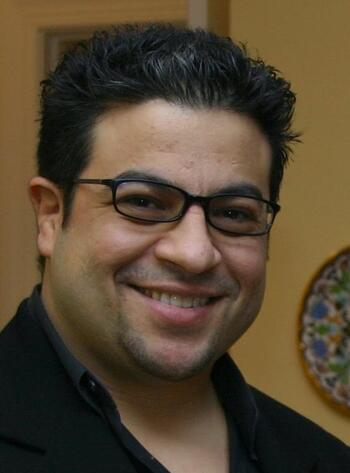
As part of the Program on Arab Reform and Democracy's speaker series, George Mason University scholar Bassam Haddad explained the roots and dynamics of the tragic Syrian uprising, with particular attention to its background and to the recent Russian intervention, in a talk dated January 22, 2016. After nearly five years since the start of the uprising, Syria finds itself divided and embattled, with no end in sight. More significantly, more than half of the Syrian population is displaced and the death toll surpassed 300,000 by all counts. The Syrian tragedy persists and, more than any other case of mass uprising in the region, continues to be shrouded in political power-plays and contradictions at the local, regional, and international levels, Haddad explained.
Hero Image

All News button
1
The Russian Intervention in Syria and its Implication on the Syrian Crisis
-
Abstract
After five years of political support for the regime of Bashar Al-Asad in its war against the opposition, Russia intervened militarily on his behalf in September 2015 and suddenly later this year Russian President Vladimir Putin announced the withdrawal of the Russian troops from Syria. While Moscow claims that its intervention was aimed at destroying ISIS and other terrorists groups, but the vast majority of its air strikes seem to target the moderate armed opposition, which has fought ISIS on the ground. This presentation assesses the outcome of Russia’s intervention, arguing that it neither achieved its goal of destroying ISIS nor did it tip the balance favor of Asad. Instead, the intervention had resulted in the killing of Syrian civilians, complicated the conflict in Syria, and constrained the prospects for a political solution by empowering Asad on the ground.
Speaker Bio
Image

CISAC Central Conference Room
Encina Hall, 2nd Floor
616 Serra St
Stanford, CA 94305
Radwan Ziadeh
Arab Center, Washington, DC
Seminars
Causes and Dynamics of the Syrian Uprising: From Civil Protests to the Implications of the Russian Intervention
-
Abstract
After nearly five years since the start of the uprising, Syria finds itself divided and embattled, with no end in sight. More significantly, more than half of the Syrian population is displaced and the death toll surpassed 300,000 by all counts. The Syrian tragedy persists and, more than any other case of mass uprising in the region, continues to be shrouded in political power-plays and contradictions at the local, regional, and international levels. Defined increasingly by an absence of a clear favorable outcome, considering existing parties to the conflict, the logic of the lesser evil reigns supreme. This lecture is an attempt to understand the roots and dynamics of the tragic Syrian uprising, with particular attention to its background and to the recent Russian intervention.
Speaker Bio
Image
This event is co-sponsored by The Markaz: Resource Center at Stanford University.
[[{"fid":"221861","view_mode":"crop_870xauto","fields":{"format":"crop_870xauto","field_file_image_description[und][0][value]":"Bassam Haddad January 21","field_file_image_alt_text[und][0][value]":"","field_file_image_title_text[und][0][value]":"","field_credit[und][0][value]":"","field_caption[und][0][value]":"","field_related_image_aspect[und][0][value]":"","thumbnails":"crop_870xauto"},"type":"media","attributes":{"width":"870","class":"media-element file-crop-870xauto"}}]]
CISAC Central Conference Room
Encina Hall, 2nd Floor
616 Serra St
Stanford, CA 94305
Bassam Haddad
Associate Professor
George Mason University
Seminars
Diamond comments on US response to terrorist threats
News Type
News
Date
Paragraphs
A day after President Obama's address on the San Bernardino shootings, FSI Senior Fellow Larry Diamond speaks with Michael Krasny of NPR News on the U.S. response to global terrorist threats. In addition to a unified, international coalition, Diamond believes one of the keys to defeating ISIS lies with empowerment of the people of Iraq and Syria, addressing the need for political change in the region. Diamond was accompanied by Jessica Stern, research professor at Boston University and Shibley Telhami, senior fellow at the Center for Middle East Policy at the Brookings Institution.
Hero Image

All News button
1
Military approach will not work in Syria, says former Stanford scholar
News Type
News
Date
Paragraphs
On November 17, CDDRL’s Program on Arab Reform and Democracy (ARD) hosted Lina Khatib, a senior research associate with the Arab Reform Initiative, for a special talk on the Syrian crisis. Khatib was a co-founder of the ARD Program and managed its research agenda for four years before leaving CDDRL to lead the Carnegie Middle East Center in Beirut.
After conducting extensive fieldwork on the Syrian-Turkish border, Khatib provided a detailed analysis of ISIS’ origins and how they are benefitting from the unresolved crisis in Syria. Khatib also weighed in on the refugee crisis, as well as the regional rivalries that are using Syria as a proxy to exert themselves militarily. Khatib argued that a military solution to solving the ISIS problem is not the right approach, and encouraged the international community to begin engaging different members of the Syrian opposition, and rethinking their approach to international diplomatic negotiations.
Photo Album
Hero Image

All News button
1
Human rights experts weigh in on Syria conflict
News Type
News
Date
Paragraphs
On November 10, CDDRL and the WSD Handa Center for Human Rights and International Justice welcomed Human Rights Watch's Director of Emergencies Peter Bouckaert and Sareta Ashraph, senior analyst on the UN Commission of Inquiry on the Syrian Arab Republic, for a discussion on the ongoing human rights and refugee crises in Syria. The talk was moderated by Stanford Law School's Beth Van Schaack, Leah Kaplan Visiting Professor in Human Rights.
Photo Album
Hero Image

All News button
1
Russia seeks to demonstrate military prowess in Syria, CDDRL scholar says
News Type
News
Date
Paragraphs
In a recent piece with Stanford News, FSI Senior Fellow Kathryn Stoner remarks on recent Russian military interventions in the Syrian conflict, suggesting that this re-engagement with the Middle East is a signal to Western powers of Putin's aim to become a global power. To read more, please click here.
Hero Image

All News button
1