Authors
News Type
News
Date
Paragraphs

Motivation


Retaliation (or the threat thereof) is a central component of human behavior. It plays a key role in sustaining cooperation — such as in international organizations or free trade agreements — because those known to retaliate come to acquire a reputation of being hard to exploit. But how does the use and function of retaliation vary across cultures, and how does it interact with formal forms of punishment?

In “Cross-cultural differences in retaliation: Evidence from the soccer field,” Alain Schläpfer tackles these questions using data on retaliation from association football. Retaliation is simply defined in terms of fouling: player B retaliates against player A if and only if, after A fouls B, B then fouls A. Among other findings, Schläpfer shows that players from cultures emphasizing revenge are more likely to retaliate on the football field. This form of ‘informal punishment’ by players also interacts with ‘formal punishment’ by referees: retaliation by B is less likely when A is sanctioned with a yellow card. Schläpfer’s paper increases our knowledge of the causes and consequences of retaliation, while showing how informal cultural norms interact with the formal rules of football.  

Data


Schläpfer creates a data set of fouls committed over three football seasons (2016-2019) in nine of the world’s top professional men’s leagues. This includes the European leagues of Premier League (England), Serie A (Italy), Bundesliga (Germany), LaLiga (Spain), and Ligue 1 (France), as well as Série A (Brazil), Liga Profesional (Argentina), Liga MX (Mexico), and Major League Soccer (United States). The dataset comprises 9,531 games, 230,113 fouls committed by 10,928 unique perpetrators from 139 countries against 11,115 unique victims from 137 countries.

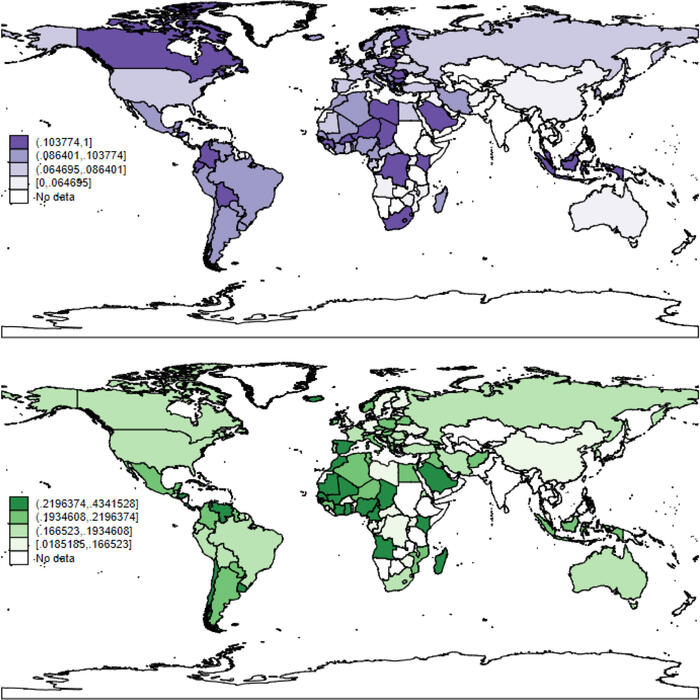
Because Schläpfer hypothesizes that being from more revenge-centric cultures explains on-field retaliation, the key independent variable is measured using a dataset from Stelios Michalopoulos and Melanie Meng Xue that identifies revenge motifs in a culture’s folklore. Examples of this include supernatural forces avenging human murders or animals avenging the death of their friends by humans. Schläpfer uses a host of other independent variables, such as country-level survey data about the desire to punish — as opposed to rehabilitate — criminals, which is also theoretically linked to revenge. As stated above, retaliation is measured in terms of fouls committed. Schläpfer shows that there is substantial variation in retaliation rates among players from different countries, from Gabon (8%) to Iceland (31%). Can the folklore in the country of origin explain the behavior of players on the field?


Image
Fig. 1. The share of fouls retaliated in soccer games (top) and the prevalence of revenge motifs in folklore (bottom). Both variables tend to have higher values for players and folklore from the Middle East, Central Africa, Eastern Europe, and parts of South America.


Fig. 1. The share of fouls retaliated in soccer games (top) and the prevalence of revenge motifs in folklore (bottom). Both variables tend to have higher values for players and folklore from the Middle East, Central Africa, Eastern Europe, and parts of South America.


Findings


Retaliation:

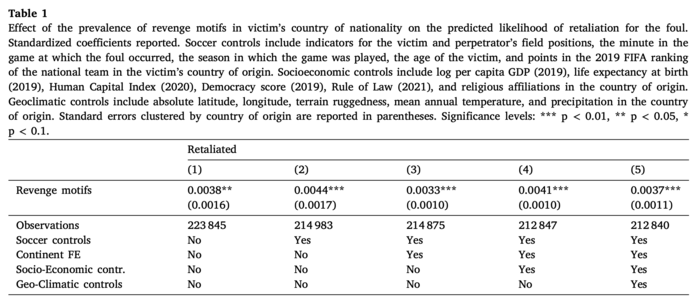
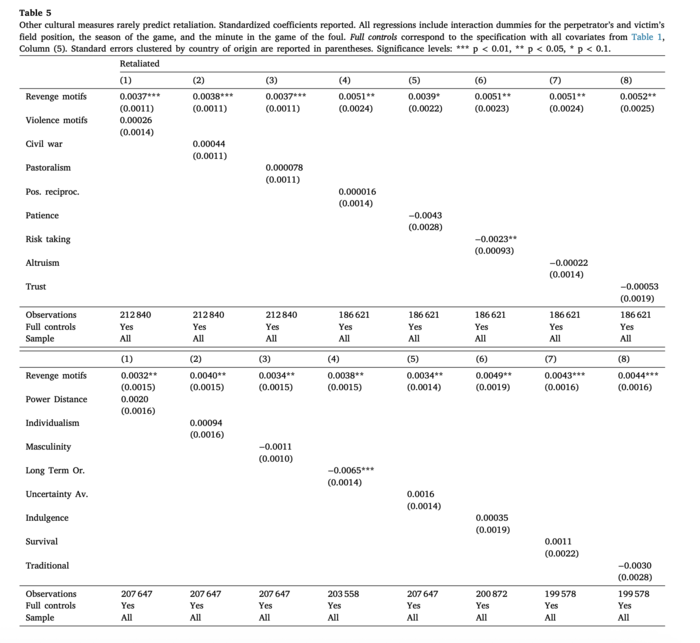
Schläpfer finds evidence that players from cultures that value revenge are indeed more likely to retaliate for fouls. However, they are not more likely to commit fouls overall, cautioning us against conflating the concepts of retaliation and violence. Indeed, Schläpfer demonstrates that motifs of violence in a culture's folklore do not predict retaliation. Players are also found to be more retaliatory early on in a game, which is consistent with its use as a signal or aspect of one’s reputation. In other words, retaliation serves to deter future fouls. Victims of fouls also retaliate quickly. Indeed, retaliation rates are stable or slightly increasing during the first 30 minutes of a game, but then fall consistently thereafter.


Image
Table 1. Effect of the prevalence of revenge motifs in victim’s country of nationality on the predicted likelihood of retaliation for the foul.


Evidence is also provided to show that retaliation deters future transgressions: perpetrators are less likely to foul again if victims retaliate for the initial foul. However, this deterrence finding is only observed when the perpetrator is from a revenge culture. In other words, for retaliation to support cooperation (the absence of fouls), players must share a similar cultural background.

Schläpfer’s findings hold even when soccer-related or socioeconomic factors are taken into account. Further, the paper considers, but finds little support for, alternative explanations of why retaliation varies. These include that some teams encourage players to retaliate more or employ more players from revenge cultures. Further, retaliation does not appear to be driven by emotions; otherwise, it would be less likely to occur after halftime when players have had a chance to cool down, but this is not the case.


Image
Table 5. Other cultural measures rarely predict retaliation. Standardized coefficients reported.


Informal and Formal Sanctioning:

Finally, Schläpfer analyzes the interaction between player retaliation and refereeing. Most importantly, retaliation is significantly less likely if a foul is sanctioned with a yellow card. This illustrates the theoretical principle of formal punishment “crowding out” informal punishment, such as religious excommunication, which carries greater weight than social shunning or police fines compared to peer pressure. Both retaliation and referee sanctioning are shown to reduce the frequency of repeated offenses by perpetrators, especially among players from revenge cultures. However, Schläpfer finds that formal sanctioning is roughly three times more effective than retaliation. This suggests that football referees are doing a better job managing conflict between players than players themselves. 

Schläpfer concludes by mentioning a few of the paper’s limitations. First of all, retaliation is measured only by what referees sanction. However, referees may miss crucial incidents for which retaliation is a response, such as Zinedine Zidane’s 2006 World Cup headbutt after a verbal insult (that was not sanctioned). This is important because individuals from revenge cultures are likely to be particularly offended by verbal insults. Second, the paper does not capture retaliation that occurs across games played by the same teams over time, particularly when rivalries and hostilities have intensified. Similarly, it does not account for preemptive retaliation that does not follow a foul. Ultimately, Schläpfer deepens our understanding of retaliation in a domain where many would expect it not to operate or to do so with minimal significance. The article impressively marshals large-scale data from both sports and cultural history to clarify the causes and consequences of retaliation.

*Research-in-Brief prepared by Adam Fefer.

Hero Image
A person in a red and blue football uniform on a field Jona Møller via Unsplash
All News button
1
Subtitle

CDDRL Research-in-Brief [4-minute read]

Date Label
Authors
Michael Breger
News Type
News
Date
Paragraphs

As right-wing populism surges around the world, immigrants and their descendants often face discrimination and become targets of political scapegoating. Yet, the question of which groups of immigrants are targeted by anti-immigrant rhetoric is dependent on a host of factors, and there remains a lack of clear evidence on the reasons underlying xenophobic behavior and the othering of immigrant populations.

A new study, published in the American Political Science Review, introduces a novel international relations perspective, particularly the concept of geopolitical rivalry, into the literature on anti-immigrant sentiment. The study indicates citizens strongly prefer immigrants from non-rival countries over those from rival countries.

The study’s co-authors — including Kiyoteru Tsutsui, APARC deputy director and director of APARC’s Japan Program and Dartmouth College’s Charles Crabtree, a former visiting professor with the Japan Program, shift the research focus of anti-immigrant sentiment to the political dynamics between the immigrants' countries of origin and the destination countries. In doing so, the authors emphasize the importance of going beyond the existing preoccupation with the individual background characteristics of migrants and integrating the study of xenophobia within the global context of political competition and alliances.

Geopolitical Relations and Public Perceptions 

Traditionally, research on anti-immigrant attitudes has concentrated on factors such as race, culture, and labor market impacts. By contrast, Tsutsui and his co-authors build on the view that the political relations between immigrants’ origin and host countries shape citizen attitudes toward them. The researchers draw on this international relations perspective to argue that immigrants (as opposed to refugees) from countries with contentious or conflictual relationships with the host country are generally less welcomed than those from allied nations.

In each of the survey countries, immigrants from non-rival countries are strongly preferred over those from rival countries
Tsutsui et al.

To test this argument, the researchers used a method known as a forced-choice conjoint experiment, a technique whereby social scientists present survey participants with a series of hypothetical scenarios in which they must choose between two or more options — in this case, potential immigrants — each described by a set of varying attributes. Tsutsui and his co-authors had survey participants choose between two candidates for permanent residency, differentiated by their country of origin and various other attributes typically used in experiments to determine if labor market concerns outweigh preferences for specific immigrants.

The researchers fielded the experiment with nationally representative samples in 22 democracies, mostly in Europe and the Americas but also Asia and South Africa. They assigned four countries of origin to the immigrant profiles: two countries of origin with a similar racial and cultural make-up as the majority of the survey respondents, a rival country and an ally; and two countries with a different racial and cultural make-up.

The results strongly support the geopolitical rivalry argument: “In each of the survey countries, immigrants from non-rival countries are strongly preferred over those from rival countries,” the co-authors write. “The effect is so large that it results in a net preference for immigrants from countries with a dissimilar racial and cultural makeup than the majority of the host country.”

The researchers also show that the greater the respondents’ sense of their own country’s superiority, the stronger the international relations of their governments are mirrored in their preferences for immigrants. Furthermore, they find that members of ethno-racial majorities are more prone to the rivalry effect because they are more strongly identified with their nation compared to minority members.

The authors demonstrate that, for instance, in Western Europe, immigrants from Russia are less favored, while in East Asia, Chinese immigrants face similar hostility. This animosity towards immigrants from rival nations leads to a net preference for those with different racial or cultural backgrounds compared to the more favorable reception of immigrants from allied countries.

“The mechanisms we document in this article play an important part in the overall dynamic leading to the selective rejection or acceptance of immigrants,” Tsutsui and his colleagues summarize.

Addressing Anti-Immigrant Sentiment

In their empirical analysis, the researchers found minimal evidence of broad anti-Asian sentiment or “Sinophobia” beyond the effects of political rivalry. This conclusion holds consistently across various survey countries, continents, and immigrant origin countries. The detailed examination by survey country indicates that generalized racial or cultural biases did not significantly influence the observed preference for immigrants from politically aligned countries. The authors propose that future research expand the sample of survey countries, update and refine measures of political rivalry, and include a broader range of immigrant origins.

The study offers a new lens connecting geopolitical rivalries with xenophobia, providing a more nuanced understanding of public attitudes toward immigrants. Policymakers and researchers can use this framework to better anticipate and address potential backlash against immigrants from countries with politically contentious relations. Informed immigration policies that promote multiculturalism and social inclusion start with a deeper grasp of the forces shaping public perceptions and attitudes toward immigrants.

Read More

U.S. and China flags on Constitution Avenue, Washington, DC, with the Capitol building in the background.
News

Stanford Next Asia Policy Lab Receives Grants to Advance Policy Engagement and Research Collaboration

New grants to inform U.S. Asia policy and fuel cross-disciplinary research on Asia’s role in the global system of the 21st century.
Stanford Next Asia Policy Lab Receives Grants to Advance Policy Engagement and Research Collaboration
Stanford building with palm trees and architectural details on the foreground and text "Call for Applications: Fall 2025 Fellowships" and APARC logo.
News

Stanford’s Asia-Pacific Research Center Invites Applications for Fall 2025 Asia Studies Fellowships

The Center offers multiple fellowships for Asia researchers to begin in Autumn quarter 2025. These include postdoctoral fellowships on Asia-focused health policy, contemporary Japan, and the Asia-Pacific region, postdoctoral fellowships and visiting scholar positions with the Stanford Next Asia Policy Lab, a visiting scholar position on contemporary Taiwan, and fellowships for experts on Southeast Asia.
Stanford’s Asia-Pacific Research Center Invites Applications for Fall 2025 Asia Studies Fellowships
(Clockwise from top left) Michael McFaul, Oriana Skylar Mastro, Gi-Wook Shin, Kiyoteru Tsutsui
News

Stanford Experts Assess the Future of the Liberal International Order in the Indo-Pacific Amid the Rise of Autocracy, Sharp Power

At the Nikkei Forum, Freeman Spogli Institute scholars Oriana Skylar Mastro, Michael McFaul, Gi-Wook Shin, and Kiyoteru Tsutsui considered the impacts of the war in Ukraine, strategies of deterrence in Taiwan, and the growing tension between liberal democracy and authoritarian populism.
Stanford Experts Assess the Future of the Liberal International Order in the Indo-Pacific Amid the Rise of Autocracy, Sharp Power
Hero Image
People enjoy lunch at a Chinese community centre
People enjoy lunch at a Chinese community center that assists and supports people from East and Southeast Asia, in London, England.
Photo by Carl Court/Getty Images
All News button
1
Subtitle

Researchers including Stanford sociologist Kiyoteru Tsutsui, the deputy director of APARC and director of the Japan Program at APARC, find that geopolitical rivalries and alliances significantly shape citizen perceptions of immigrants.

Date Label
Authors
Melissa Morgan
News Type
News
Date
Paragraphs

2021 was not the year many people hoped for. In addition to the ongoing COVID-10 pandemic and emerging coronavirus variants, last year ushered in a laundry list of unprecedented weather events.

Canada and the Pacific Northwest of the United States were scorched by a record-breaking heat wave. An extended fire season in the American West sent blankets of smoke pollution rolling across the rest of the continent. In India, China and Germany, unseasonal rain storms brought on devastating floods. According to the National Centers for Environmental Information (NOAA), July 2021 was the hottest July on Earth since global record-keeping began in 1880.

Data clearly shows that these kinds of extreme weather patterns are driven by climate change. But is that fact driving policymakers to make meaningful inroads to address the climate crisis? Marshall Burke, the deputy director of the Center on Food Security and the Environment, joins Michael McFaul on World Class podcast to review the latest data on what’s happening with the climate in the field and in the halls of Congress.

Listen here and browse highlights of their conversation below.

Click the link for a transcript of “Taking the Temperature on Climate Change."

Climate Policy in the United States


Changes in climate are going to affect most, if not all, of us in the U.S. And public opinion has certainly changed on this in the last 10 years. Many more Americans are on board that the climate is changing and that we should do something about it. There's much more support for climate legislation across the board from Democrats and increasingly from Republicans.

Anyone who works on climate was really excited to see the platform Biden ran on, because it was really the first mainstream presidential campaign where climate had played a fundamental role. There's been a lot of discussion aboutthe importance of climate, the damages from climate that are already happening, and what we need to do is take aggressive action in the future to deal with the problem.

But there are specific industries who are going to be harmed by this legislation, and they are quite organized in fighting this legislation, and in funding politicians who fight it, and in funding organizations, either transparently or not, that are fighting climate legislation.

We are closer than we’ve ever been to really meaningful legislation on climate change. The optimistic view is that we’re on the right trajectory and that we’re going to get some part of this done eventually. But we’re not there yet.
 

Progress is being made. Emissions are falling. But it’s also important for us to realize what we don’t know.
Marshall Burke
Deputy Director of the Center on Food Security and the Environment


COP26: Climate Change on the Global Stage


A “COP” is a “Conference of the Parties,” which is an annual meeting of the signatories of the 1992 United Nations Framework Convention on Climate Change. The main focus of Glasgow was to get countries to be very transparent about how they are going to achieve the ambitions for combating climate change that they articulated at the last major COP summit in Paris.

Was it a success? A lot of countries did come to the table in Glasgow and made commitments in ways that they hadn't done before. There were also new, important agreements on certain greenhouse gasses that we've learned recently are pretty damaging, like methane.

Where we failed to make progress was on something that's called “loss and damage.” Many developing countries argue that they are suffering the damages from climate change even though it is a problem that they have not caused, and they are seeking compensation from developed countries who have been the drivers of climate change. That issue was on the table in Glasgow, but it got put off until next year in Egypt.

The Forecast for the Future


Progress is being made. Emissions are falling in the U.S. They're falling in California. They're falling in the EU. They're pretty flat around the world. And these are not just the per capita emissions, but overall emissions are now going down in many parts of the world, which is a huge success.

Where has that progress come from? In part from government policies that have been successful in mitigation. But the driving factor has really been longer decadal investments by both the public sector and the private sector in technologies that allow us to produce energy in a clean way. It’s a combination of long-term public support through taxes and subsidies for the development of these technologies alongside private sector deployment of these technologies at huge scale.
 

We are closer than we’ve ever been to really meaningful legislation on climate change. But we’re not there yet.
Marshall Burke
Deputy Director of the Center on Food Security and the Environment


It’s important for people to know about these successes. But it’s also important for us to realize what we don’t know. Emissions in different parts of the world are falling, and that’s fantastic. But it’s also true that people are already getting sick, being harmed, and dying because of the changes we’re already experiencing.  We’re poorly adapted to the climate we live in now, much less the climate of a two-degree warmer or three-degree warmer future, and the science on that needs to be much more widely understood.

I think a huge role for us as academics is not only to do the research to understand those questions, but to get that information out into the world. The great thing about the Freeman Spolgi Institute and institutions like FSI is that it's part of our mandate to translate this research out into the broader world. The translation of what we already know is important, as is the imperitive to drill down on and study the things that we don't.

Read More

David Lobell holds up maize in a farm to show outcomes from different growing practices
News

David Lobell honored with 2022 NAS Prize in Food and Agriculture Sciences

Lobell’s groundbreaking work has advanced the world’s understanding of the effects of climate variability and change on global crop productivity.
David Lobell honored with 2022 NAS Prize in Food and Agriculture Sciences
Climate change activists march down a street carrying banners and signs.
Q&As

Together For Our Planet: Americans are More Aligned on Taking Action on Climate Change than Expected

New data from the Center for Deliberative Democracy suggests that when given the opportunity to discuss climate change in a substantive way, the majority of Americans are open to taking proactive measures to address the global climate crisis.
Together For Our Planet: Americans are More Aligned on Taking Action on Climate Change than Expected
Forest fires burn
News

Ban Ki-moon Urges Global Cooperation to Address Twin Crises of Climate Change, COVID-19

“We need an all hands on deck approach underpinned by partnership and cooperation to succeed...we must unite all global citizens and nations...indeed we are truly all in this together.”
Ban Ki-moon Urges Global Cooperation to Address Twin Crises of Climate Change, COVID-19
Hero Image
People gather at the UN Climate Change Conference in Glasgow, 2021.
Data on the severity of the climate crisis is abundant, but effective policy to adapt to and mitigate the changing climate still lags in most countries, says Marshall Burke.
Getty
All News button
1
Subtitle

Climate expert Marshall Burke joins the World Class podcast to talk through what’s going right, what’s going wrong, and what more needs to be done to translate data on the climate crisis into meaningful policy.

Authors
Herbert Lin
News Type
Commentary
Date
Paragraphs

On Feb. 12, White House National Security Adviser Robert O’Brien announced that the U.S. government has “evidence that Huawei has the capability secretly to access sensitive and personal information in systems it maintains and sells around the world.” This represents the latest attempt by the Trump administration to support an argument that allied governments—and the businesses they oversee—should purge certain telecommunications networks of Huawei equipment. The position reflects the preferred approach in the United States, which is to issue outright bans against select companies (including Huawei) that meet an as-yet-unknown threshold of risk to national security.


Read the rest at Lawfare Blog


Hero Image
lin herbert
All News button
1
Authors
News Type
Commentary
Date
Paragraphs

In Aug. 2019, Bobby Chesney (from Strauss Center at the University of Texas at Austin) and Max Smeets (from ETH Zurich and also Stanford University’s Center for International Security and Cooperation (CISAC)) convened a workshop in Amsterdam focusing on military operations in the cyber domain, from a transatlantic perspective. The “Transatlantic Dialogue on Military Cyber Operations—Amsterdam” gathered experts from military, civilian, and academic institutions hailing from a range of countries, including the United States, United Kingdom, Germany, the Netherlands, Denmark, Estonia, and France.


Read the Rest at Lawfare Blog

Hero Image
screen shot 2019 12 18 at 8 32 53 am
All News button
1
-

Seminar recording: https://youtu.be/fYUK-ALGqAE


Abstract:  Russian influence operations during the 2016 US elections, and the investigations that followed, revealed the broad scope of Russian political warfare against Western democracies. Since then, Russian operations have targeted the UK, France, Germany, Ukraine, and others. Other state and non-state actors, motivated by politics or profit, have also learned and adapted the Kremlin’s tool-kit. With the 2020 elections a year away, what have we learned about foreign information operations? How has the transatlantic community responded and what are the threats we are likely to face?  Drawing on extensive research on transatlantic relations, disinformation, and Russian foreign policy, Dr. Polyakova will discuss the state of policy options to address disinformation, analyze Russian intentions, and highlight emerging threats.


Speaker’s Biography:

Image
alina polyakova
Alina Polyakova is the founding director of the Project on Global Democracy and Emerging Technology and a fellow in the Center on the United States and Europe at the Brookings Institution, where she leads the Foreign Policy program’s Democracy Working Group. She is also adjunct professor of European studies at the Paul H. Nitze School of Advanced International Studies (SAIS) at Johns Hopkins University. Her work examines Russian political warfare, European populism, digital authoritarianism, and the implications of emerging technologies to democracies. Polyakova's book, "The Dark Side of European Integration" (Ibidem-Verlag and Columbia University Press, 2015) analyzed the rise of far-right political parties in Europe.  She holds a master’s and doctorate from the University of California, Berkeley, and a bachelor's in economics and sociology with highest honors from Emory University. 

Alina Polyakova Director, Project on Global Democracy and Emerging Technology The Brookings Institution
Seminars
News Type
News
Date
Paragraphs

Scholars Corner is an ongoing SPICE initiative to share FSI’s cutting-edge social science research with high school and college classrooms nationwide and international schools abroad.


This week we released “The Rise and Implications of Identity Politics,” the latest installment in our ongoing Scholars Corner series. Each Scholars Corner episode features a short video discussion with a scholar at the Freeman Spogli Institute for International Studies (FSI) at Stanford University sharing his or her latest research.

This Scholars Corner video features New York Times bestselling author Francis Fukuyama discussing the recent rise of identity politics, both in the United States and around the world. “In the 20th century we had a politics that was organized around an economic axis, primarily. You had a left that worried about inequality…and you had a right that was in favor of the greatest amount of freedom,” summarizes Fukuyama. “[N]ow we are seeing a shift in many countries away from this focus on economic issues to a polarization based on identity.”

According to Fukuyama, this shift in politics is reflected in such domestic social movements as Black Lives Matter and #MeToo, as well as in international movements like the Catalan independence movement, white nationalism, and even the Islamic State.

The rise of identity politics may have troubling implications for modern democracies. “In the United States, for example, the Republican party increasingly has become a party of white people, and the Democratic party has become increasingly a party of minorities and women. In general, I think the problem for a democracy is that you’ve got these specific identities…[but] you need something more than that. You need an integrative sense of national identity [that’s] open to the existing diversity of the society that allows people to believe that they’re part of the same political community,” says Fukuyama.

“That, I think, is the challenge for modern democracy at the present moment.”

To hear more of Dr. Fukuyama’s analysis, view the video here: “The Rise and Implications of Identity Politics.” For other Scholars Corner episodes, visit our Scholars Corner webpage. Past videos have covered topics such as cybersecurity, immigration and integration, and climate change.

"Identity" hardcover book by Francis Fukuyama "Identity" hardcover book by Francis Fukuyama

Francis Fukuyama is a Senior Fellow at FSI and the Mosbacher Director of the Center on Democracy, Development, and the Rule of Law. This video is based on his recent book Identity: The Demand for Dignity and the Politics of Resentment, which was recognized as The Times (UK) Best Books of 2018, Politics, and Financial Times Best Books of 2018.

Stay informed of SPICE news by joining our email list or following us on Facebook and Twitter.


Related article:


Hero Image
Scholars Corner video featuring Francis Fukuyama discussing identity politics
Francis Fukuyama discusses identity politics in SPICE's latest Scholars Corner video.
All News button
1
Paragraphs

We have long understood the Industrial Revolution as a triumphant story of innovation and technology. Empire of Guns, a rich and ambitious new book by award-winning historian Priya Satia, upends this conventional wisdom by placing war and Britain's prosperous gun trade at the heart of the Industrial Revolution and the state's imperial expansion.

Satia brings to life this bustling industrial society with the story of a scandal: Samuel Galton of Birmingham, one of Britain's most prominent gunmakers, has been condemned by his fellow Quakers, who argue that his profession violates the society's pacifist principles. In his fervent self-defense, Galton argues that the state's heavy reliance on industry for all of its war needs means that every member of the British industrial economy is implicated in Britain's near-constant state of war.

Empire of Guns uses the story of Galton and the gun trade, from Birmingham to the outermost edges of the British empire, to illuminate the nation's emergence as a global superpower, the roots of the state's role in economic development, and the origins of our era's debates about gun control and the "military-industrial complex" -- that thorny partnership of government, the economy, and the military. Through Satia's eyes, we acquire a radically new understanding of this critical historical moment and all that followed from it.

Sweeping in its scope and entirely original in its approach, Empire of Guns is a masterful new work of history -- a rigorous historical argument with a human story at its heart.

All Publications button
1
Publication Type
Books
Publication Date
Journal Publisher
Penguin Press
Authors
Paragraphs

This essay examines why England experienced a civil war every fifty years from the Norman Conquest up until the Glorious Revolution of 1688–1689, and was completely stable after that point. The reasons had to do with, first, the slow accumulation of law and respect for the law that had occurred by the seventeenth century, and second, with the emergence of a strong English state and sense of national identity by the end of the Tudor period. This suggests that normative factors are very important in creating stable settlements. Rational choice explanations for such outcomes assert that stalemated conflicts will lead parties to accept second- or third-best outcomes, but English history, as well as more recent experiences, suggests that stability requires normative change as well. 

Download here:


All Publications button
1
Publication Type
Journal Articles
Publication Date
Authors
Francis Fukuyama
Subscribe to United Kingdom