Authors
Nora Sulots
News Type
News
Date
Paragraphs

The Center on Democracy, Development and the Rule of Law proudly congratulates its graduating class of honors students for their outstanding original research conducted under CDDRL's Fisher Family Honors Program. Among those graduating are Adrian Scheibler, who has won a Firestone Medal for his thesis on regionalism and economic crisis in Europe, and Michal Skreta, winner of the CDDRL Outstanding Thesis Award for his study of the Family 500 cash benefit program in Poland.

Image
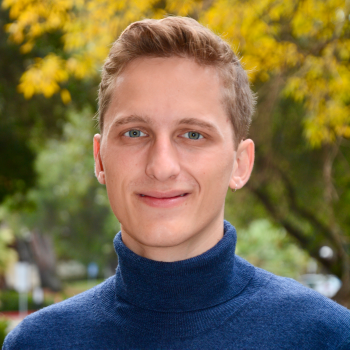
Adrian Scheibler

The Firestone Medal for Excellence in Undergraduate Research recognizes Stanford's top ten percent of honors theses in social science, science, and engineering among the graduating senior class. Scheibler's thesis is entitled Challenging the State: Western European Regionalism in the Era of Financial Crisis. Using an original dataset containing 8 countries, 35 regions, and 128 regionalist parties, he finds that voters did not increase their support for regionalist parties during the crisis and may have even turned their backs on these political actors. In addition, he considers the reactions of regionalist parties in three Spanish autonomous communities, Catalonia, the Basque Country, and Galicia, to the crisis. He finds evidence of regionalist mobilization on the issue and even some indications of radicalization of regionalist demands. Taken together, he notes, these findings raise interesting implications for the impacts of the financial crisis and the interaction between economic indicators, party competition, and voting patterns.


Image
Michal Skreta

Skreta's thesis is entitled Babies, Money, and Power: Estimating Causal Effects of the “Family 500+” Child Benefit Program in Poland using the Synthetic Control Method. He proposes using the synthetic control method as a causal identification strategy to empirically estimate country-level treatment effects of the program on fertility, poverty, and inequality. Treating 500+ as a natural experiment, he compares observational data from actual Poland with a synthetic counterfactual of Poland constructed from a weighted donor pool of other European countries through a data-driven selection procedure. His findings on fertility metrics are consistent with prior studies, being ambiguous and insignificant, indicating that the main short-term objective of the program has not been achieved. Meanwhile, he finds that the program causally reduced the rate of people at risk of poverty in Poland and that the child benefit has led to a significant reduction in income inequality.

Scheibler and Skreta are part of a cohort of ten graduating CDDRL honors students who have spent the past year working in consultation with CDDRL-affiliated faculty members and attending honors research workshops to develop their theses projects. Collectively, their topics documented some of the most pressing issues impacting democracy today in the US, India, Mexico, and Spain, among others.

"We are very proud of the CDDRL honors class of 2022," shared Didi Kuo, Senior Research Scholar and Associate Director for Research at CDDRL. "These students began their thesis projects remotely and were able to conduct research on important topics while also managing their return to campus and ongoing COVID disruptions. Their diverse intellectual backgrounds and thesis subjects reflect the talents and passions of our honors students."

These students began their thesis projects remotely and were able to conduct research on important topics while also managing their return to campus and ongoing COVID disruptions. Their diverse intellectual backgrounds and thesis subjects reflect their talents and passions.
Didi Kuo
Senior Research Scholar and Associate Director for Research, CDDRL

CDDRL's Fisher Family Honors Program trains students from any academic department at Stanford to prepare them to write a policy-relevant research thesis with global impact on a subject touching on democracy, development, and the rule of law. Honors students participate in research methods workshops, attend honors college in Washington, D.C., connect to the CDDRL research community, and write their thesis in close consultation with a faculty advisor to graduate with a certificate of honors in democracy, development, and the rule of law.

A list of the 2022 graduating class of CDDRL honors students, their thesis advisors, and thesis titles can be found here.

Read More

Phi Beta Kappa
News

CDDRL Congratulates Newly Elected Phi Beta Kappa Members

Sylvie Ashford (honors class of 2021) and Carolyn Chun (honors class of 2022) are among the newest members of this prestigious academic honors society.
CDDRL Congratulates Newly Elected Phi Beta Kappa Members
Hero Image
CDDRL honors class of 2022 with Steve Stedman, Sako Fisher, and Didi Kuo
All News button
1
Subtitle

Adrian Scheibler ('22) is a recipient of the 2022 Firestone Medal and Michal Skreta ('22) has won the CDDRL Outstanding Thesis Award.

News Type
News
Date
Paragraphs

Scholars Corner is an ongoing SPICE initiative to share FSI’s cutting-edge social science research with high school and college classrooms nationwide and international schools abroad.


This week we released “The Rise and Implications of Identity Politics,” the latest installment in our ongoing Scholars Corner series. Each Scholars Corner episode features a short video discussion with a scholar at the Freeman Spogli Institute for International Studies (FSI) at Stanford University sharing his or her latest research.

This Scholars Corner video features New York Times bestselling author Francis Fukuyama discussing the recent rise of identity politics, both in the United States and around the world. “In the 20th century we had a politics that was organized around an economic axis, primarily. You had a left that worried about inequality…and you had a right that was in favor of the greatest amount of freedom,” summarizes Fukuyama. “[N]ow we are seeing a shift in many countries away from this focus on economic issues to a polarization based on identity.”

According to Fukuyama, this shift in politics is reflected in such domestic social movements as Black Lives Matter and #MeToo, as well as in international movements like the Catalan independence movement, white nationalism, and even the Islamic State.

The rise of identity politics may have troubling implications for modern democracies. “In the United States, for example, the Republican party increasingly has become a party of white people, and the Democratic party has become increasingly a party of minorities and women. In general, I think the problem for a democracy is that you’ve got these specific identities…[but] you need something more than that. You need an integrative sense of national identity [that’s] open to the existing diversity of the society that allows people to believe that they’re part of the same political community,” says Fukuyama.

“That, I think, is the challenge for modern democracy at the present moment.”

To hear more of Dr. Fukuyama’s analysis, view the video here: “The Rise and Implications of Identity Politics.” For other Scholars Corner episodes, visit our Scholars Corner webpage. Past videos have covered topics such as cybersecurity, immigration and integration, and climate change.

"Identity" hardcover book by Francis Fukuyama "Identity" hardcover book by Francis Fukuyama

Francis Fukuyama is a Senior Fellow at FSI and the Mosbacher Director of the Center on Democracy, Development, and the Rule of Law. This video is based on his recent book Identity: The Demand for Dignity and the Politics of Resentment, which was recognized as The Times (UK) Best Books of 2018, Politics, and Financial Times Best Books of 2018.

Stay informed of SPICE news by joining our email list or following us on Facebook and Twitter.


Related article:


Hero Image
Scholars Corner video featuring Francis Fukuyama discussing identity politics
Francis Fukuyama discusses identity politics in SPICE's latest Scholars Corner video.
All News button
1
Encina Hall, C147 616 Jane Stanford Way Stanford, CA 94305-6055
0
CDDRL Predoctoral Fellow, 2018-20
Fellow, Program on Democracy and the Internet, 2018-20
jakli.jpg

​I am a Junior Fellow at the Harvard Society of Fellows. Starting in 2023, I will be an Assistant Professor at Harvard Business School's Business, Government and the International Economy (BGIE) unit.

My research examines political extremism, destigmatization, and radicalization, focusing on the role of popularity cues in online media. My related research examines a broad range of threats to democratic governance, including authoritarian encroachment, ethnic prejudice in public goods allocation, and misinformation. 

​My dissertation won APSA's Ernst B. Haas Award for the best dissertation on European Politics. I am currently working on my book project, Engineering Extremism, with generous funding from the William F. Milton Fund at Harvard.

My published work has appeared in the American Political Science Review,  Governance,  International Studies QuarterlyPublic Administration Review, and the Virginia Journal of International Law, along with an edited volume in Democratization (Oxford University Press). My research has been featured in KQED/NPRThe Washington Post, and VICE News.

I received my Ph.D. in Political Science at the University of California, Berkeley in 2020. I was a Predoctoral Research Fellow at the Center on Democracy, Development and the Rule of Law at Stanford University and the Stanford Program on Democracy and the Internet. I hold a B.A. (Magna Cum Laude; Phi Beta Kappa) from Cornell University and an M.A. (with Distinction) from the University of California, Berkeley.

CV
Paragraphs

On January 13, 2016 for the first time in its history the European Union launched an investigation against one of its full member states, i.e. Poland. The dispute is about new Polish laws that allegedly disempower the national constitutional court and the public media thus breaching EU democracy standards. The newly elected Polish government in charge since November 2015 denies this and calls its “reforms” legitimate, even necessary to achieve a government better capable of acting in order to renew the economy and the political and social system. The dispute reaches far beyond Poland and questions the state and perspectives of integration of the Central Eastern European (CEE) nations into the EU. It is both effect and motor of the current pluri-­‐dimensional European crisis.

In essence, the EU-­‐Poland dispute is the outcome of the combination of the specific problems of governance in the Central Eastern European (CEE) nations with a superficial institutionalism of the EU that long neglected the area’s developmental issues. Poland’s democracy problems show that new attention of the EU to its CEE member states is needed which were for many years ignored because of other concerns such as the economic and financial crises since 2007 and the subsequent debt crisis since 2012, latest because of the threat of a “Brexit”, of Britain leaving the EU. In order to save the European integration project, it will be crucial for the credibility and acceptance of the EU to help the CEE nations to reform their socio-­‐economic systems. The case of Poland is the chance for a debate about how the EU and its CEE member states can cooperate better instead of arguing. This debate will be an important pillar of the ongoing overall discussion about the future of the European Union in the coming years.

All Publications button
1
Publication Type
Working Papers
Publication Date
Authors

This lecture is the first in a new series co-sponsored by The Europe Center and the Stanford Archaeology Center on how modern Europe has been shaped by the concepts, materials and ideology of its past inhabitants.

This first speaker highlights both the ecological and socio-political ramifications of conquest.  Based on work undertaken in Poland, Latvia, Estonia and Lithuania, Dr. Aleksander Pluskowski discusses the way that relationships created during one of the most dynamic epochs of European history, the period of crusading, have left a profound legacy for modern Europe.  The process of crusading resulted in massively modified landscapes and catalyzed population reconfiguration at the frontiers of Europe, during the period of Christian expansion.  The archaeo-historical backdrop to these events is presented, along with a discussion of how Europe and the relationship Europe has with non-Christian societies, was permanently altered.

Aleksander Pluskowski's research focuses on frontier societies, colonization and ecological diversity in medieval Europe.  He is primarily concerned with the nuanced relationships between ecology and culture, moving towards a complete integration of environmental and social archaeology, history and art history.  His ultimate aim is to further a holistic understanding of this formative period of European society, contributing to the management of cultural and ecological heritage today.  His other interests include cult praxis in the past and the construction of religious identities.

"How Conquest Transformed Northern Europe"
Download pdf

Building 500
488 Escondido Mall
Terman Labs

Aleksander Pluskowski Lecturer in Archaeology Speaker University of Reading, United Kingdom
Lectures

Department of History
Stanford University
Stanford, CA  94305-2024
 

(650) 723-1884 (650) 725-0597
0
Senior Lecturer in History
Senior Fellow of the WSD HANDA Center for Human Rights and International Justice
k_jolluck_webpage_photo.jpg PhD

Katherine R. Jolluck is Senior Lecturer and Coordinator of the Public History/Public Service Track in the Department of History at Stanford University.  She is also a Senior Fellow at the Center for Human Rights and International Justice.  She has also taught at the University of North Carolina at Chapel Hill and the Naval Post-Graduate School in Monterey.  A specialist on the history of twentieth-century Eastern Europe and Russia, she focuses on the topics of women and war, women in communist societies, nationalism, the Soviet Gulag, and human trafficking. Her books include: Exile and Identity: Polish Women in the Soviet Union during WWII, and Gulag Voices: Oral Histories of Soviet Incarceration and Exile (with Jehanne M Gheith). She has also written articles on Poland in World War II, antisemitism, and human trafficking in Europe.  Jolluck serves on the Faculty Steering Committee of the Haas Center for Public Service, offers service-learning courses, and is active in the Bay Area anti-trafficking community.  She is a Steering Committee member of No Traffick Ahead, a multi-county, multi-disciplinary workgroup dedicated to combating human trafficking in all forms.


Affiliated Senior Lecturer at The Europe Center
Affiliated Senior Lecturer at the Program on Human Rights
CV

Encina Hall
616 Serra Street
Stanford, CA  94305-6165

0
Visiting Professor at The Europe Center, 2014-2015
besier_gerhard.jpg

Gerhard Besier is a theologian, historian and psychologist. He held Chairs in Contemporary (Church) History and European Studies at the Universities of Berlin, Heidelberg and Dresden. He is currently the Director of the Sigmund Neumann Institute for the Research on Freedom, Liberty and Democracy. Professor Besier has published widely on the themes of German-Polish antagonisms, transformation processes in Europe since 1945, European dictatorships, confessional controversies in Germany, Europe and the USA, and on stereotypes and prejudices. His latest book Neither Good Nor Bad. Why Human Beings Behave How They Do was published in English by Cambridge Scholars Publishing (Newcastle upon Tyne) in June 2014.

-

The presentation summarizes preliminary findings of my research project on Allied policy towards resistance groups during World War II and its impact on post-war political and ideological divisions.

The research is linked with a multiplicity of historical problems: the western Allies’ balance of political and military considerations during World War II; the Anglo-American cooperation and competition in the field of intelligence; the use of special operations as an instrument of foreign policy, especially in regard to countries where the development of resistance movements had a strong impact on post-war settlement (e.g. Yugoslavia, Greece and Poland); the politics of communist movements between war and revolution in Central and Eastern Europe; the relationship between the Western Allies and the Soviet Union and the Allies’ perception of the latter.

The particular contribution of the project is to bring together aspects which are usually addressed separately: the different national scenarios, whose connections and mutual influence will be investigated; the two Western intelligence agencies, which have been researched mostly in separate ways by scholars of the corresponding nationalities; the Soviet and Western allies’ policies.

Tommaso Piffer is a Marie Curie Postdoctoral Fellow at the Davis Center for Russian and Eurasian Studies at Harvard and at the University of Cambridge. Among his publications is a biography of Alfredo Pizzoni, the political chief of the Italian Resistance (Il Banchiere della Resistenza, 2005), an account of the relationship between the Allies and the Italian Resistance during World War II (Gli Alleati e la Resistenza Italiana, 2010) as well as several essays. He also edited a book in memory of Victor Zaslavsky on Totalitarian societies and democratic transition (Società totalitarie e transizione alla democrazia, 2011, with Vladislav Zubok) and the collection of essays on the political mass murder of Porzus (Porzus. Violenza e resistenza sul confine orientale, 2012). He is an affiliate at the Harvard Center for European Studies and a contributor to the cultural insert of the Italian newspaper Corriere della Sera.

Open to Stanford affiliates

Sponsored by the Center for Russian, East European and Eurasian Studies and co-sponsored by The Europe Center

History Corner, Room 307

Tommaso Piffer Marie Curie Postdoctoral Fellow, Davis Center for Russian and Eurasian Studies, Harvard and University of Cambridge Speaker
Seminars
-


Image

Abstract:

Scholars of state development have paid insufficient attention to the question of regionalism; too often modeling state-building as the extension of the authority of a 'center' over peripheral territories, and too often linking regionalism to cultural or ethnic heterogeneity. A purely spatial account of the challenges to central control shows that even in the absence of cultural fractionalization, the presence of economically powerful and politically salient regions undermines political development. Three analytically distinct mechanisms - divergent public good preferences, economic self-sufficiency, and institutional design - underlie this relationship. I explore these issues through a region-wide analysis of Latin America, and case studies of the United States, Ecuador, Colombia, and early modern Poland.

Speaker Bio:

Hillel David Soifer earned his PhD in the Government Department at Harvard, and is currently Assistant Professor of Political Science at Temple University. His research has been centered in Latin America, with a focus on political development and state capacity, and has been published in journals including Latin American Research Review and Comparative Political Studies. He is currently completing a book on the long-term divergence in state capacity in Latin America which contrasts the cases of Chile, Colombia, Mexico, and Peru.

Encina Ground Floor Conference Room

Hillel Soifer Assistant Professor of Political Science Speaker Temple University
Seminars
Subscribe to Poland