Conference Agenda for Day 1, October 8, 2014:


9:00 AM

  • Welcome Remarks – Eric T. Wakin, Robert H. Malott Director of Hoover Institution Library & Archives

  • Opening Remarks – Amir Weiner, Stanford University

9:15-10:45 AM – Chair: Amir Weiner

  • Toomas Hiio, Estonian War Museum. Multi-ethnic (or Multi-national) Student Body of the University of Tartu and the WW I: Choices, Political Movements, Volunteers, Mobilizations, and Postwar Consequences

  • Darius Staliunas, Lithuanian Institute of History. Anti-Jewish Violence in Lithuania at the Turn of the 20th Century

11:00 AM – 12:30 PM Chair: Aivars Stranga, The University of Latvia

  • Ēriks Jēkabsons, University of Latvia. The War for Independence of Latvia and the United States

  • Tomas Balkelis, Vilnius University. Paramilitarism in Lithuania: Violence, Civic Activism and Nation-making, 1918–1920

  • Bert Patenaude, Stanford University. “Yankee Doodle: American Attitudes toward Baltic Independence, 1918–1921”


Conference organizers:  Professors Lazar Fleishman (Slavic Department) and Amir Weiner (History Department)

Sponsored by: Hoover Institution Library and Archives, Office of the Provost, Stanford School of Humanities and Sciences, Stanford Global Studies Division, The Europe Center, Stanford University Libraries, Division of Literatures, Cultures, & Languages, Department of Slavic Languages and Literatures, Department of History, Center for Russian, East European and Eurasian Studies, and the Stanford Humanities Center.

Stauffer Auditorium, Hoover Institution

Conferences

Stanford Law School
Neukom Building
Room N255

(650) 736-8090 (voice)
0
Distinguished Austrian Chair Professor (2013-2014)
Visiting Professor, Stanford Law School
Professor of Law, University of Vienna, Austria
manfred_nowak.jpg

Manfred Nowak graduated from the Vienna Law School (Dr. iur. 1973) and from Columbia University New York (LL.M. 1975). He has been professor at the Institute of Constitutional and Administrative Law at the University of Vienna since 1986. He was member of the Austrian Delegation to the U.N. Commission on Human Rights (1986 and 1993) as well as director of the Netherlands Institute of Human Rights (SIM) at the University of Utrecht (1987-1989). In 1989, he founded the Austrian Ludwig Boltzmann Institute of Human Rights in Vienna and coordinated NGO-parallel events during the 1993 UN Conference for Human Rights in Vienna while he also was Professor of Law at the Austrian Federal Academy of Public Administration in Vienna until 2002.

As U.N. expert on missing persons in the former Yugoslavia he started a process aiming at the identification of missing persons through exhumation of mortal remains between 1994 and 1997.

From 1996-2003, Manfred Nowak was a judge at the Human Rights Chamber in Bosnia. Since 2000, he is head of an independent human rights commission at the Austrian Interior Ministry. From 2002 to 2003 he was visiting professor at the Raoul Wallenberg of Human Rights and Humanitarian Law at the University of Lund. He has been a UN expert on legal questions on enforced disappearances since 2002 and was appointed UN Special Rapporteur on Torture and other Cruel, Inhuman or Degrading Treatment in 2004 with a mandate until 2010.

In addition, Manfred Nowak is also Chairperson of the European Masters Degree in Human Rights and Democratisation (since 2000). Manfred Nowak has published more than 400 books and articles on international, constitutional, administrative, and human rights law, including the standard commentary on the International Covenant on Civil and Political Rights. He was awarded the UNESCO Prize for the Teaching of Human Rights in 1994 and the Bruno Kreisky Prize for Human Rights in 2007.


CV
News Type
News
Date
Paragraphs

Recap:  The Europe Center Lectureship on Europe and the World

 
On April 30, May 1, and May 2, 2014, Adam Tooze, Barton M. Briggs Professor of History at Yale University, delivered in three parts The Europe Center Lectureship on Europe and the World, the first of an annual series. 
 
With the centenary of the outbreak of the First World War as his backdrop, Tooze spoke about the history of the transformation of the global power structure that followed from Germany’s decision to provoke America’s declaration of war in 1917. He advanced a powerful explanation for why the First World War rearranged political and economic structures across Eurasia and the British Empire, sowed the seeds of revolution in Russia and China, and laid the foundations of a new global order that began to revolve around the United States. 
 
The three lectures focused successively on diplomatic, economic, and social aspects of the troubled interwar history of Europe and its relationship with the wider world. Over the course of the lectures, he presented an argument for why the fate of effectively the whole of civilization changed in 1917, and why the First World War’s legacy continues to shape our world even today.
 
Tooze also participated in a lunchtime question-and-answer roundtable with graduate students from the History department.
 
Image of Yale's Barton M. Briggs Professor of History Adam Tooze, speaking at Stanford University, May 2, 2014Tooze is the author of The Wages of Destruction: The Making and Breaking of the Nazi Economy(2006) and Statistics and the German State 1900-1945: The Making of Modern Economic Knowledge (2001), among numerous other scholarly articles on modern European history. His latest book, The Deluge: The Great War and the Remaking of Global Order 1916-1931, will be released in Summer 2014 in the United Kingdom and in Fall 2014 in the United States.
 
We welcome you to visit our website for additional details about this event.


Recap:  European Commission President José Barroso Visits Stanford

 
José Manuel Barroso, President of the European Commission, delivered a lecture entitled, “Global Europe: From the Atlantic to the Pacific,” before an audience at Stanford on May 1, 2014. 
 
Barroso discussed at length the political and economic consequences of the global financial crisis of 2008 for European affairs. He acknowledged that the crisis revealed “serious flaws” in the economic management of some national economies, but stressed that the 28-member union adapted and reformed to handle the fallout from the crisis. For example, he explained how banking supervision is now controlled at the “European level through the European Central Bank,” and that “there are common rules for banks so that we avoid having to use taxpayers' money to rescue them." 
 
Barroso also discussed various political and security aspects related to the ongoing upheaval in Ukraine, and affirmed that Europe “stands ready” to support the country as it comes “closer to the European Union.” He added that Russia’s decision “to interfere, to destabilize, and to occupy part of the territory of a neighboring country” was a “gesture that we hoped was long buried in history books.”
 
Image of José Manuel Barroso, President of the European CommissionBarroso was named President of the Social Democratic Party (PSD) of Portugal in 1999, following which he was re-elected three times. He was appointed Prime Minister of Portugal in 2002. He remained in office until July 2004 when he was elected by the European Parliament to the post of President of the European Commission. He was re-elected to a second term as President of the European Commission by an absolute majority in the European Parliament in September 2009.
 
We welcome you to visit our website for additional details about this event.


Workshop:  Comparative Approaches to the Study of Immigration, Ethnicity, and Religion

 
On May 9, 2014 and May 10, 2014, The Europe Center will host the Fourth Annual Workshop on Comparative Approaches to the Study of Immigration, Ethnicity, and Religion.
 
Speakers draw from a range of national and international universities and include Jens Hainmueller, Dominik Hangartner, Efrén Pérez, Lauren Prather, Jorge Bravo,  Giovanni Facchini, Cecilia Testa, Harris Mylonas, Rahsaan Maxwell, Ali Valenzuela, Mark Helbling, Rob Ford, Matthew Wright, Karen Jusko, Maggie Peters, Justin Gest, Rafaela M. Dancygier, and Yotam Margalit.
 
The all-day workshop will begin at 8:30 am on Friday and at 9:15 am on Saturday, and will be held in the CISAC Conference Room in Encina Hall. Visitors are cordially invited to attend. 
 
We welcome you to visit our website for additional details about this event.


Spring 2014 Graduate Student Grant Competition Winners Announced

 
Please join us in congratulating the winners of The Europe Center Spring 2014 Graduate Student Grant Competition:
 
Lisa Barge, German Studies, “Beyond Objectivity: Questioning Shifting Scientific Paradigms in Erwin Schrödinger's Thought”
 
Michela Giorcelli, Economics, “Transfer of Production and Management Model Across National Borders:  Evidence from the Technical Assistance and Productivity Program”
 
Benjamin Hein, Modern European History, “Capitalism Dispersed: Frankfurt and the European Stock Exchanges, 1880-1960”
 
Michelle Kahn, Modern European History, “Everyday Integration: Turks, Germans, and the Boundaries of Europe”
 
Friederike Knüpling, German Studies, “Kleist vom Ende lesen”
 
Orysia Kulick, History, “Politics, Power, and Informal Networks in Soviet Ukraine”
 
Claire Rydell, U.S. History, “Inventing an American Liberal Tradition: How England's John Locke Became ‘America's Philosopher’, 1700-2000”
 
Lena Tahmassian, Iberian and Latin American Cultures, “Post-Utopian Visions: Modes of Countercultural Discourse of the Spanish Transition to Democracy”
 
Donni Wang, Classics, “Illich Seminar”
 
Lori Weekes, Anthropology & Law, “Nation Building in the Post-Soviet Baltics as a Legal, Institutional, and Ethno-Cultural Project”
 
The Spring Grant Competition winners will join 16 graduate students who were awarded competitive research grants by the Center in Fall 2013. The Center regularly supports graduate and professional students at Stanford University whose research or work focuses on Europe. Funds are available for Ph.D. candidates across a wide range of disciplines in the humanities and social sciences to prepare for dissertation research and to conduct research on approved dissertation projects. The Center also supports early graduate students who wish to determine the feasibility of a dissertation topic or acquire training relevant for that topic. Additionally, funds are available for professional students whose interests focus on some aspect of European politics, economics, history, or culture; the latter may be used to support an internship or a research project. 
 
We welcome you to visit our website for additional details about this event.


Meet our Visiting Scholars:  Vibeke Kieding Banik

 
In each newsletter, The Europe Center would like to introduce you to a visiting scholar or collaborator at the Center. We welcome you to visit the Center and get to know our guests.
 
Image of Vibeke Banik, Visiting Scholar at The Europe Center, Stanford UniversityVibeke Kieding Banik is currently affiliated as a postdoctoral fellow at the Department of Archaeology, Conservation and History, at the University of Oslo. Her main focus of research is on the history of minorities in Scandinavia, particularly Jews, with an emphasis on migration and integration. Her research interests also include gender history, and her current project investigates whether there was a gendered integration strategy among Scandinavian Jews in the period 1900-1940. Dr. Banik has authored several articles on Jewish life in Norway, Jewish historiography, and on the Norwegian women’s suffragette movement. She has taught extensively on Jewish history and is currently writing a book on the history of the Norwegian Jews, scheduled to be published in 2015.


Workshop Schedules  

 
The Europe Center invites you to attend the talks of speakers in the following workshop series: 
 

Europe and the Global Economy

 
May 15, 2014
Christina Davis, Professor of Politics and International Affairs, Princeton University
“Membership Conditionality and Institutional Reform: The Case of the OECD”  
RSVP by May 12, 2014
 

European Governance

 
May 22, 2014
Wolfgang Ischinger, Former German Ambassador to the U.S.; Chairman, Munich Security Conference
“The Future of European Security & Defence” 
RSVP by May 19, 2014
 
May 29, 2014
Simon Hug, Professor of Political Science, University of Geneva
“The European Parliament after Lisbon (and before)” 
RSVP by May 26, 2014


The Europe Center Sponsored Events

 
We invite you to attend the following events sponsored or co-sponsored by The Europe Center:
 
May 16 and May 17, 2014
“Let There Be Enlightenment: The Religious and Mystical Sources of Rationality”
A Stanford University Conference
Margaret Jacks Hall: Terrace Room
 
May 29, 2014
Josef Joffe, FSI Senior Fellow, Hoover Institution Research Fellow, and Publisher/Editor of Die Zeit
“The Myth of America's Decline: Politics, Economics, and a Half Century of False Prophecies”
Oksenberg Conference Room
 
Jun 3, 2014
Tommaso Piffer, Marie Curie Postdoctoral Fellow, Harvard University and University of Cambridge
“The Allies, the European Resistance and the Origins of the Cold War in Europe”
History Corner, Room 307


Other Events

 
The Europe Center also invites you to attend the following event of interest:
 
May 12, 2014
Latvian Cultural Evening: Sustaining a Memory of the Future
Cubberley Auditorium
 

We welcome you to visit our website for additional details.

All News button
1
News Type
News
Date
Paragraphs

2014 Undergraduate Internship Program Winners Announced

 
A key priority of The Europe Center is to provide Stanford’s undergraduate student community with opportunities to develop a deep understanding of contemporary European society and affairs.  By promoting knowledge about the opportunities and challenges facing one of the world’s most economically and politically integrated regions, the Center strives to equip our future leaders with the tools necessary to tackle complex problems related to governance and economic interdependence both in Europe and in the world more broadly.
 
To this end, the Center recently spearheaded a new initiative, The Europe Center Undergraduate Internship Program in Europe.  The Center is sponsoring four undergraduate student internships with leading think tanks and international organizations in Europe in Summer 2014.  Laura Conigliaro (International Relations, 2015) will join the Centre for European Policy Studies (CEPS), where she will work on a policy-related research project.  Additionally, Elsa Brown (Political Science, 2015), Noah Garcia (BA International Relations and MA Public Policy, 2015), and Jana Persky (Public Policy, 2016) will be joining Bruegel, a leading European think tank, where they will work on public policy briefs for the new European Union Commission that will take office in Fall 2014.  The Center is actively seeking to develop ties with business, governmental, and non-governmental organizations in Europe that can participate in The Europe Center Undergraduate Internship Program in future years.


Workshop Recap:  Comparative Approaches to the Study of Immigration, Ethnicity, and Religion

 
On May 9, 2014 and May 10, 2014, The Europe Center hosted the Fourth Annual Workshop on Comparative Approaches to the Study of Immigration, Ethnicity, and Religion.  Speakers drew from a range of national and international universities.  Some of the papers presented included:
 
“Does Naturalization Foster the Political Integration of Immigrants?  Evidence from a Regression Discontinuity Design in Switzerland,” Jens Hainmueller (Stanford) & Dominik Hangartner (LSE).
 
“The Rhetoric of Closed Borders:  Quotas, Lax Enforcement and Illegal Migration,” Giovanni Facchini (Nottingham) & Cecilia Testa (Royal Holloway).
 
“How State Support of Religion Shapes Religious Attitudes Toward Muslims,” Mark Helbling (WZB Berlin).
 
“Opposition to Race Targeted Policies -- Ideology or Racism?  Particular or Universal?  Experimental Evidence from Britain,” Robert Ford (Manchester).
 
“Nature over Nurture:  Explaining Muslim Integration Discrepancies in Britain, France, and the United States,” Justin Gest (Harvard).
 
Other speakers included:  Efrén Pérez (Vanderbilt), Lauren Prather (Stanford), Jorge Bravo (Rutgers), Harris Mylonas (George Washington), Harris Mylonas (George Washington), Rahsaan Maxwell (UNC-Chapel Hill), and Matthew Wright (American).
 
We welcome you to visit our website for additional details about this event.


Recordings of The Europe Center Special Events Available Online

 
On May 29, 2014, Josef Joffe, FSI Senior Fellow, Hoover Institution Research Fellow, and publisher/editor of the German weekly Die Zeit, talked about his latest book, The Myth of America’s Decline:  Politics, Economics, and a Half Century of False Prophesies.  Stephen Krasner and Kathyrn Stoner served as discussants.  We welcome you to visit our website for an audio recording of the event. 
 
On April 30, May 1, and May 2, 2014, Adam Tooze, Barton M. Briggs Professor of History at Yale University, delivered The Europe Center Lectureship on Europe and the World.  This series of three lectures focused successively on diplomatic, economic, and social aspects of the troubled interwar history of Europe and its relationship with the wider world.  Video recordings of the lectures are available for viewing on our website.


Student Scholar Profile:  Jessie Marino

 
The Europe Center regularly sponsors the research of undergraduate and graduate students through our research grant, internship, and scholarly exchange programs.  We would like to introduce you to some of the students that we support and the projects on which they are working.  Our featured student this month has been sponsored by the Center’s Program on Sweden, Scandinavia, and the Baltic Region.
 
 
Image of Serge Vuille and Mark Knoop performing Jessie Marino's original piece Jessie Marino, a DMA candidate in Composition at Stanford, recently returned from Copenhagen’s SPOR festival, where she was selected as one of five artists from a field of 140 (representing 34 nationalities) to perform her original work, titled “Heartfelt bird, vivid and great in style.”  “I was commissioned by the SPOR Festival to compose a new piece featuring percussionist Serge Vuille and pianist Mark Knoop (photo inset) which was featured in a concert of all world premiere works,” writes Marino.  “This event allowed me to meet new musicians, artists, curators, and composers who are working under similar guises and to exchange ideas about how our art can expand and develop in the 21st century.” 
 
Image of Stanford PhD student Jessie MarinoMarino (inset) is also a recipient of a summer travel grant from the Center’s Graduate Student Grant Program.  She will be traveling to Germany to attend the 2014 Darmstadt International Summer Course for New Music.  Marino writes that the opportunity will give her the chance to “practice and perform my own compositions,” to “work and develop new ideas with composers and academics,” and to “attend lectures on current research, developments and discoveries in sound production and music technology.”


Featured Faculty Research:  David Laitin

 
The Europe Center serves as a research hub bringing together Stanford faculty members, students, and researchers conducting cutting-edge research on topics related to Europe.  Our faculty affiliates draw from the humanities, social sciences, and business and legal traditions, and are at the forefront of scholarly debates on Europe-focused themes.  The Center regularly highlights new research by faculty affiliates that is of interest to the broader community.  
 
 
Image of David Laitin, Stanford UniversityDavid Laitin and his co-author Rafaela Dancygier’s article in the Annual Review of Political Science, “Immigration into Europe: Economic Discrimination, Violence, and Public Policy,” investigates and reviews recent research on changing Western European demographic patterns, and its implications for labor-market discrimination, immigrant-state relations, and immigrant-native violence.  The authors “discuss some of the methodological challenges that scholars have not fully confronted in trying to identify the causes and consequences of discrimination and violence,” and propose pathways to resolve contradictory results in existing studies regarding the economic consequences of immigration policymaking.  Laitin is the James T. Watkins IV and Elise V. Watkins Professor of Political Science at Stanford University.  
 
Additional information about The Europe Center’s research program on migration can be found here, and a copy of the research article can be found here.  


Events 

 
The regular seminar series sponsored by The Europe Center will be on break during the summer months.  We invite you to attend the following event of interest:
 
August 20, 2014
7:00 pm -- 9:00 pm
Film Screening 
Forasters (Outsiders), dir. Ventura Pona
Joan Ramon Resina, Director of The Europe Center’s Iberian Studies Program, will lead a Q&A session after the film.  The screening is part of the summer film series, “Beyond Boundaries:  Race, Gender and Culture Across the Globe,” organized by the Stanford Global Studies Division.
Braun Corner (Building 320), Room 105
 

We welcome you to visit our website for additional details.  Here is wishing you a pleasant and productive summer.

All News button
1
News Type
News
Date
Paragraphs

Special Event:  Pascal Lamy Lecture

“World Trade and Global Governance”

 
The Europe Center invites you to a special lecture by Pascal Lamy, the former Director-General of the World Trade Organization.
 
Image
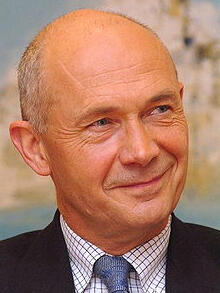
Image of Pascal Lamy
Date: February 10, 2014 
Time: 4:00 - 5:30 p.m.
Venue: Bechtel Conference Center, Encina Hall
RSVP by February 5, 2014                       
  
Mr. Lamy will speak on the necessary mix of economic, social, and political policies that will determine the efficacy of free trade as an engine of global economic growth. In particular, he will outline a statement of his own thinking about the future of global governance and international trade, and describe what remains to be done in addressing the challenges of globalization. Additionally, Mr. Lamy will reflect on the features of modern politics that create governance gridlock and thwart global oversight, and will identify how progress can be made in overcoming impediments to policy action at the international level. 
 
My Lamy served as the Director-General of the World Trade Organization from 2005-2013. He is currently the Honorary President of the Paris-based think tank, Notre Europe.


Meet our Visiting Scholars:  Bjørn Høyland 

 
In each newsletter, The Europe Center would like to introduce you to a visiting scholar or collaborator at the Center. We welcome you to visit the Center and get to know our guests.
 
Bjør
Image
Image of Bjorn Hoyland
n Høyland (PhD, London School of Economics, 2005) is Professor of Political Science at the University of Oslo, Norway. He is currently visiting Professor and Anna Lindh Fellow at The Europe Center, Freeman Spogli Institute for International Studies and Stanford Global. The focus of his research is European Union politics and comparative legislative politics. Professor Høyland’s list of journal publications includes the American Political Science Review, Annual Review of Political Science, British Journal of Political Science, and European Union Politics. His textbook (with Simon Hix) The Political System of the European Union (3rd ed) is the standard text for advanced courses on the European Union.

Workshop Schedules  

 
The Europe Center invites you to attend the talks of speakers in the following workshop series: 
 

Europe and the Global Economy

 
January 23, 2014
David Dreyer Lassen, Professor of Economics, University of Copenhagen
RSVP by Jan 20, 2014 
 
February 20, 2014
Alan Deardorff, John W. Sweetland Professor of International Economics & Prof. of Economics and Public Policy, University of Michigan
RSVP by Feb 17, 2014
 
Mar 6, 2014
Sophie Meunier, Research Scholar, Woodrow Wilson School and Co-Director, EU Program at Princeton, Princeton University
RSVP by Mar 3, 2014
 
Mar 13, 2014
Randy Stone, Professor of Political Science, University of Rochester
RSVP by Mar 10, 2014
 
Apr 3, 2014
Kåre Vernby, Associate Professor, Department of Government, Uppsala University
RSVP by Mar 31, 2014
 
Apr 17, 2014
Mark Hallerberg, Professor of Public Management and Political Economy, Hertie School of Governance 
RSVP by Apr 4, 2014
 
May 15, 2014
Christina Davis, Prof. of Politics and International Affairs, Princeton University
RSVP by May 12, 2014

European Governance

 
February 6, 2014
Matthew Gabel, Professor of Political Science, Washington University at St. Louis
RSVP by Feb 3, 2014
 
May 22, 2014
Wolfgang Ischinger, Former German Ambassador to the U.S.; Chairman, Munich Security Conference
RSVP by May 19, 2014
 
May 29, 2014
Simon Hug, Professor of Political Science, University of Geneva
RSVP by May 26, 2014

Other Events

 
The Europe Center also invites you to attend the following events of interest:
 
January 27, 2014
Vassil Terziev, Co-founder & CEO, Telerik (BG); and Japec Jakopin, Co-founder & CEO, Seaway (SI)
“Worldclass Enterprise Software and Design Firms in SouthEast and Balkans Europe” 
Sponsor: European Entrepreneurship & Innovation Thought Leaders Seminar
 
January 30, 2014
Ken Schultz, Professor of Political Science, Stanford University
“Making and Breaking Territorial Agreements: Explaining European Exceptionalism”
Sponsor: CISAC Social Science Seminar; co-sponsored by The Europe Center

 
 
All News button
1

Workshop Goals

On the first day, develop a set of research interventions (surveys, experiments, archival searches, participant observations, etc.) that will gain some leverage in measuring differential policies in Europe and their impact on integration, however specified; or in examining the various immigrant populations to measure their differential success in integration, however specified. Each of the participants (either singly or in collaboration) will write up one or two research proposals that lay out the outcomes of interest and the strategy for explaining variation on those outcomes.  Discuss problems and opportunities for each of the submitted proposals and fulfill this first goal.

The second goal of the workshop, and the subject for the second day, to think through three related issues. The first is how to frame the set of proposals in a way that they all fit into a well-defined framework, as if each proposal were a piece of a coherent puzzle. The second is to think through funding sources for this set of interventions that would allow us to conduct the research we proposed and to continue collaborating across these projects. The third is to explore whether there are scholars whose work we know who should be invited to join our group and become part of the grant proposing team.

Wednesday, May 7, 2014 Agenda

I.  Citizenship (discussant Thad) – [9-11AM]

  • Hainmueller/Hangartner – Return on getting citizenship; encouragement design in Switzerland
  • Gest/Hainmueller/Hiscox – Encouragement design on citizenship in US (Chicago)
  • Hainmueller/Laitin – Encouragement design on citizenship in France
  • Alter/Margalit – Immigration and political participation, where immigrants get immediate rights to citizenship (Israel)
  • Dancygier/Vernby – return on citizenship for labor market success (Sweden)

II. Local Context (Rafaela) [11:15-12:15]

  • Adida/Hangartner – RDD on Sudanese refugees in various US cities; experiment with IRC on Iraqi/Chaldian integration in El Cajon

III. Contracts of Integration (Yotam) [1:30-3PM]

  • Hainmueller/Hangartner – Integration Contracts and Naturalization
  • Hainmueller/Laitin – Integration Contracts in France

IV. Discrimination (Jens) [3:30-5PM]

  • Ortega/Polavieja – Immigrants and Job security in Spain and elsewhere in Europe
  • Margalit – Overcoming employer abuse of immigrant workers
  • Dancygier/Vernby – failure of immigrants to get nominated for political office

Thursday, May 8, 2014 Agenda

Discussion on what investments in collective goods might advance this research perspective productively. We might look at favorable granting institutions and how we might combine our memos into a macro proposal; or we might think about building a common research infrastructure (in the way J-PAL has done for experimental development studies). Working towards a jointly authored volume might be another way to aggregate our research projects. All of this discussion depends on the complementarities that emerge from our discussions on Wednesday. David will chair the Thursday discussion.

Reuben W. Hills Conference Room

Department of Political Science
Stanford University
Encina Hall, W423
Stanford, CA 94305-6044

(650) 725-9556 (650) 723-1808
0
James T. Watkins IV and Elise V. Watkins Professor of Political Science
laitin.jpg PhD

David Laitin is the James T. Watkins IV and Elise V. Watkins Professor of Political Science and a co-director of the Immigration Policy Lab at Stanford. He has conducted field research in Somalia, Nigeria, Spain, Estonia and France. His principal research interest is on how culture – specifically, language and religion – guides political behavior. He is the author of “Why Muslim Integration Fails in Christian-heritage Societies” and a series of articles on immigrant integration, civil war and terrorism. Laitin received his BA from Swarthmore College and his PhD from the University of California, Berkeley.

Affiliated faculty at the Center for International Security and Cooperation
Affiliated faculty at The Europe Center
David Laitin (Workshop Faculty Organizer) Stanford University Speaker

616 Serra Street
Encina Hall West, Room 100
Stanford, CA 94305-6044

0
Associate Professor of Political Science
Europe Center Affiliated Faculty
101105_JensHainmueller_1583.jpg

Jens Hainmueller's research has appeared in journals such as the American Political Science Review, American Journal of Political Science, Journal of the American Statistical Association, Review of Economics and Statistics, Political Analysis, International Organization, and the Journal of Statistical Software, and has received awards from the American Political Science Association, the Society of Political Methodology, the Midwest Political Science Association.

Hainmueller received his PhD from Harvard University and also studied at the London School of Economics, Brown University, and the University of Tübingen. Before joining Stanford, he served on the faculty of the Massachusetts Institute of Technology.

Jens Hainmueller Stanford University Speaker
Claire Adida UC San Diego Speaker
Dominik Hangartner London School of Economics and Political Science Speaker
Kare Vernby Uppsala University, Sweden Speaker
Yotam Margalit Columbia University Speaker
Francesc Ortega Queens College CUNY Speaker
Thad Dunning UC Berkeley Speaker
Rafaela Dancygier Princeton University Speaker
Simon Ejdemyr Stanford University Speaker
Simon Hix London School of Economics and Political Science Speaker
Workshops
-

*Event is currently full. Live stream is available here.*

During the Enlightenment, John Locke offered a democratic solution to the Hobbesian nightmare of a war of all against all: a social contract to regulate the relationship between the government and free citizens. We now need a new "Lockean contract" for the modern digital society. The President of Estonia, Toomas Hendrik Ilves, talks about the solutions found in a small, high-tech European democracy and calls forth Locke and Voltaire of the digital age.

This event is co-sponsored by the CDDRL Program on Liberation Technology, the Department of Communications, Stanford Libraries, the Freeman Spogli Institute and the Europeans Entrepreneurship and Innovation at Stanford Engineering. A special thank you to the Clark Kelly McCatchy Lecture Fund for support of this event.


Live stream full link: http://stanfordvideo.stanford.edu/stream/ilves.html

Cecil H. Green Library
Albert M. Bender Room
5th Floor

President Toomas Hendrik Ilves Speaker Republic of Estonia
Conferences
-

Mark von Hagen teaches the history of Eastern Europe and Russia, with a focus on Ukrainian-Russian relations, at Arizona State University, after teaching 24 years at Columbia University, where he also chaired the history department and directed the Harriman Institute.  At the Harriman Institute, he developed Ukrainian studies in the humanities and social sciences.  He was elected President of the International Association for Ukrainian Studies in 2002 and presided over the Congress in Donetsk in 2005.  He also served as President of the Association for Slavic, East European and Eurasian Studies (2009).  During his New York years, he was a member of the Council on Foreign Relations, and remains a member of the Advisory Board for Europe and Asia at Human Rights Watch.  He has worked with historians, archivists, and educators in independent Ukraine and with diaspora institutions.  He has served on the advisory board of the European University in Minsk (in exile in Vilnius, Lithuania), to the Open Society Institute; on the Board of Directors of the National Council for Eurasian and East European Research, and the International Fellowship Committee of the Social Science Research Council.
 

Ambassador Vlad Lupan has been the Ambassador, Permanent Representative of the Republic of Moldova to the United Nations, in New York, since January 2012, where he is focusing on development issues, rule of law and human rights, and conflict resolution. He has held a variety of diplomatic posts since 1996 till 2008, last one being Head of Political-Military Cooperation Department and was a negotiator on Transnistrian conflict settlement. He also worked with OSCE field Missions in in Georgia, Albania and Croatia. In 2008 Mr. Lupan joined the civil society, and became a member of the advisory board to the Ministry of Defense. During this time he was also the host of the “Euro-Atlantic Dictionary” radio talk show. In 2010 he became the Foreign Policy Advisor to the Acting President of the Republic of Moldova, and was later elected as a Member of the Parliament. 

Educated at the State University of Moldova and at the National School of Political Science and Public Administration in Bucharest, Romania, Ambassador Lupan earned his international relations degree, and later a master’s degree in journalism and public communications from the Free Independent Moldovan University in Chisinau.  Ambassador Lupan has published mainly in Romanian, though he also published in Russian or English, on foreign and domestic politics issues, including international security matters, Security Sector Reform, Transnistrian conflict settlement and European Union Eastern Partnership.
 

Dr. Yaroslav Prytula is an Associate Professor at the Department of International Economic Analysis and Finance at Lviv Ivan Franko National University (LIFNU) and a Professor at the Lviv Business School of the Ukrainian Catholic University in Lviv, Ukraine. Previously he served as an Academic Secretary of LIFNU and a Vice-Dean of the Faculty of International Relations at LIFNU. He is a member of the Supervisory Board of Lviv Ivan Franko National University. His scholarly interests are in macroeconomic modelling, quantitative methods in social science and higher education in transitional societies. His current research is related to socio-economic regional development in Ukraine. During 2001 he spent a semester in The George Washington University Elliott School of International Affairs under William and Helen Petrach scholarship and continued his research during 2003-04 in The George Washington University Research Program in Social and Organizational Learning under the U.S. Department of State funded Junior Faculty Development Program. During 2004-07 he was a fellow of the Open Society Institute Academic Fellowship Program. During 2007-09 Yaroslav was a fellow of the Global Policy Fellowship Program of the Institute for Higher Education Policy (Washington, DC). In 2011 Dr. Prytula was a visiting scholar at the George Mason University under the University Administration Support Program funded by the Carnegie Corporation of New York and administered by the International Research and Exchanges Board (IREX). Currently Dr. Prytula is a Fulbright Research Scholar at the George Washington University School of Business. Dr. Prytula was awarded his PhD in Mathematical Analysis from LIFNU in 2000. He graduated from the Faculty of Mechanics and Mathematics of LIFNU.  Yaroslav Prytula has received numerous awards and scholarships.


Presented by the Center for Russian, East European and Eurasian Studies, and co-sponsored by The Europe Center and the Stanford Humanities Center.

Levinthal Hall

Mark von Hagen Professor of History Speaker Arizona State University
Ambassador Vlad Lupan Permanent Representative of the Republic of Moldova to the UN Speaker
Yaroslav Prytula Associate Professor Speaker Lviv Ivan Franko National University
Robert Crews Associate Professor of History Moderator Stanford University
Panel Discussions
-

For nearly 70 years, CARE has been serving individuals and families in the world's poorest communities. Today, they work in 84 countries around the world, with projects addressing issues from education and healthcare to agriculture and climate change to education and women's empowerment. Helene Gayle, president and CEO of CARE USA, will discuss her work with CARE and her experiences in the field of international development. Dr. Gayle will discuss how access to global health is integral to CARE's effort in addressing the underlying causes of extreme global poverty.

Dr. Michele Barry, director of the Center for Innovation in Global Health, will moderate a conversation between CARE President and CEO, Dr. Helene Gayle and former Prime Minister of Norway and United Nations Special Envoy, Dr. Gro Brundtland. 

This event is sponsoredy by CARE USA, the Center on Democracy, Development and the Rule of Law and the Haas Center for Public Service.

A reception will follow the event. 


Dr. Gro Brundtland Bio:

Dr. Gro Harlem Brundtland is the former prime minister of Norway and the current deputy chair of The Elders, a group of world leaders convened by Nelson Mandela and others to tackle the world’s toughest issues. She was recently appointed as the Mimi and Peter E. Haas Distinguished Visitor for spring 2014 at the Haas Center for Public Service at Stanford University. Dr. Brundtland has dedicated over 40 years to public service as a doctor, policymaker and international leader. She was the first woman and youngest person to serve as Norway’s prime minister, and has also served as the former director-general of the World Health Organization and a UN special envoy on climate change.

Her special interest is in promoting health as a basic human right, and her background as a stateswoman as well as a physician and scientist gives her a unique perspective on the impact of economic development, global interdependence, environmental issues and medicine on public health.


 Dr. Helene Gayle Bio:

Helene D. Gayle joined CARE USA as president and CEO in 2006. Born and raised in Buffalo, New York, she received her B.A. from Barnard College of Columbia University, her M.D. from the University of Pennsylvania and her M.P.H. from Johns Hopkins University. After completing her residency in pediatric medicine at the Children's Hospital National Medical Center in Washington, D.C., she entered the Epidemic Intelligence Service at the Centers for Disease Control and Prevention, followed by a residency in preventive medicine, and then remained at CDC as a staff epidemiologist.

At CDC, she studied problems of malnutrition in children in the United States and abroad, evaluating and implementing child survival programs in Africa and working on HIV/AIDS research, programs and policy. Dr. Gayle also served as the AIDS coordinator and chief of the HIV/AIDS division for the U.S. Agency for International Development; director for the National Center for HIV, STD, and TB Prevention, CDC; director of CDC's Washington office; and health consultant to international agencies including the World Health Organization, UNICEF, the World Bank and UNAIDS. Prior to her current position, she was the director of the HIV, TB and reproductive health program for the Bill and Melinda Gates Foundation.


Hewlett 201
Hewlett Teaching Center
370 Serra Mall
Stanford, CA 94305

Dr. Gro Brundtland Mimi and Peter E. Haas Distinguished Visitor Panelist Haas Center for Public Service, Stanford University
Dr. Helene Gayle President and CEO Panelist CARE USA
Michele Barry Director Moderator Center for Innovation in Global Health
Conferences
-

*This event is free and open to the public.*


PANELISTS

Don Emmerson - Director of the Southeast Asia Forum, Shorenstein Asia-Pacific Research Center; Affiliated Scholar, Abbasi Program in Islamic Studies; Affiliated Faculty, CDDRL

Erik Jensen - Professor of the Practice of Law, Stanford Law School; Senior Advisor for Governance and Law, The Asia Foundation; Senior Research Scholar, CDDRL; Director, Rule of Law Program, Stanford Law School

Norman Naimark - Director of the Stanford Global Studies Division; Professor of History

Diane H. Steinberg (Panel Chair) - Visiting Scholar at Stanford's Program on Human Rights, Center on Democracy, Development, and the Rule of Law (CDDRL)


Image

 
The Act of Killing visits former Indonesian death squad killers who wreaked havoc in 1965 and 1966 in the aftermath of Indonesia's military coup and yet have never been held accountable for slaughtering between 200,000 to 2 million people in a genocide often forgotten.  The dramatic reenactments of the murders in the documentary catalyze an unexpected emotional journey for Anwar Congo from arrogance to regret as he confronts for the first time in his life the full implications of what he has done.
 
The Act of Killing is an award-winning documentary film directed by Joshua Oppenheimer with co-director Christine Cynn and and an anonymous co-director from Indonesia. It is a Danish-British-Norwegian co-production, presented by Final Cut for Real in Denmark and produced by Signe Byrge Sørensen. It was recently nominated for an Academy Award for Best Documentary Feature.

"Director Joshua Oppenheimer has made a documentary in which he interviews the leaders of Indonesian death squads, who were responsible, collectively, for the deaths of millions of Communists, leftists and ethnic Chinese in 1965 and 1966. But he doesn't just interview them. He has them re-enact their crimes and even invites them to write, perform and film skits dramatizing their murders." Mick LaSalle, San Francisco Chronicle, 8/8/2013
 
"The Act of Killing is a bold reinvention of the documentary form, as well as an astounding illustration of man's infinite capacity for evil." Rene Rodriguez, The Miami Herald, 8/15/2013
 
After the screening of the  Director's Cut of The Act of Killing (160 minutes), there will be a thirty-minute panel discussion.
 
For more information regarding the film, please visit: http://theactofkilling.com/.
 
This event is presented and sponsored by Stanford Global Studies, CDDRL's Program on Human Rights, and the Vice Provost of Undergraduate Education.

Cubberley Auditorium

Conferences
Subscribe to Scandinavia and Baltic Rim