-

Explaining the New Confrontation Between Russia and the West

Power. Policy. People 

July 6th, 2015

5:00 pm - 6:30 pm 

U.S.-Russia relations have reached a new low.  For thirty years, American presidents believed that the end of the Cold War ushered in a new era of cooperation with Moscow, and Russian integration into the West.   That hope has now ended. In parallel, Russian leaders also sought to deepen ties with the United States and build closer relations with Western institutions. Today, however, Russian leaders and commentators describe the United States as an adversary. In turn, American and European leaders have instituted unprecedented coercive measures against Russia in response to Russia’s intervention into Ukraine.  What happened?  How did we go from the end of the Cold War thirty years ago to a new period of confrontation? In his lecture, Professor McFaul will examine several explanations for this tragic set of developments, drawing on both his theoretical knowledge from his academic career as well as his practical experiences as a U.S. government official. 

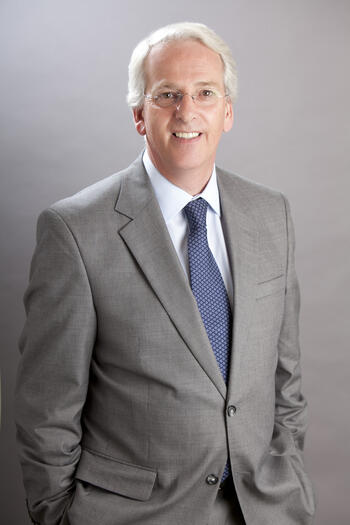
Michael A. McFaul is the director of the Freeman Spogli Institute for International Studies, professor of political science, the Peter and Helen Bing Senior Fellow at the Hoover Institution, all at Stanford University. He also works as a news analyst for NBC News. McFaul served for five years in the Obama administration, first as Special Assistant to the President and Senior Director for Russian and Eurasian Affairs at the National Security Council at the White House (2009-2012) and then as U.S. Ambassador to the Russian Federation (2012-2014).  This summer, he is in residence at the Stanford Center at Peking University as a Mingde Distinguished SCPKU Visiting Fellow.  


Stanford Center at Peking University

The Lee Jung Sen Building Peking University

No.5 Yiheyuan Road

Haidian District

Beijing, P.R.China 100871

Michael McFaul Freeman Spogli Institute for International Studies Stanford University
Lectures
Authors
News Type
News
Date
Paragraphs

The United Nations has thus far fulfilled its charter to prevent a third world war, but with 60 million refugees, continued bloodshed with unresolved civil conflicts and terrorism spreading like cancer, the world's leading peacekeeping organization must spearhead global action, U.N. Secretary-General Ban Ki-moon said Friday at Stanford on the 70th anniversary of the international organization.

Ban, the U.N.'s eighth secretary-general, did not rest on any laurels during his speech at a public event sponsored by the Walter H. Shorenstein Asia-Pacific Research Center (APARC). "I humbly accept criticism that the U.N. is not doing enough," he said. 

However, the situation could have been worse if not for the United Nations, he continued. "Without peacekeepers, or without the U.N.'s continued humanitarian assistance and advocacy of human rights, I'm afraid to tell you that this world would have been poorer, more dangerous and even bloodier without the United Nations."

Ban's visit to Stanford – his second to the university in less than three years – was part of a trip to the Bay Area to commemorate the signing of the U.N. charter. In 1945, representatives from 50 nations gathered in San Francisco to create the United Nations – an international organization aimed at saving future generations from the "scourge of war."

Today, the United Nations has grown to 193 member nations. Its challenges – from climate change and poverty to civil wars and terrorism – have never been greater, Ban said.

"This is a critical year; 2015 is a year of global action," he said. "The U.N. cannot do it alone. We need strong solidarity among government, business communities and civil societies, from each and every citizen."

The fact that so many young people around the globe are drawn to violent narratives is worrisome, Ban said. "Violent terrorism is spreading like cancer around the world."

The rise in terrorist activities stems from "a failure of leadership," he said. That's why the United Nations needs to develop a comprehensive plan of action to address extremism, he maintained.

The U.N.'s 70th anniversary coincidentally fell on a momentous day of tragedy and celebration around the world. Dozens were killed when terrorists launched horrific attacks across three continents – in France, Tunisia and Kuwait – fueling anger, sadness and fear of more violence.

But in the United States, celebrations rang out in response to a landmark U.S. Supreme Court ruling that legalizes same-sex marriages nationwide.

Ban, who has long advocated for equality and last year pushed the United Nations to recognize same-sex marriages of its staff, drew a round of applause when he heralded the court ruling as "a great step forward for human rights."

The June 26 event was co-sponsored by Shorenstein APARC and the Freeman Spogli Institute for International Studies at Stanford University, with promotional co-sponsors Asia Society, Asia Foundation and the World Affairs Council of Northern California

May Wong is a freelance writer for the Stanford News Service.

Coverage and related multimedia links:

Remarks at Stanford University by Ban Ki-moon (U.N. News Centre, 6/26/15)

Photos of Ban Ki-moon at Stanford University (U.N. Photo, 6/26/15)

At Stanford University, Ban says U.N. ready to build a better future for all (U.N. News Centre, 6/27/2015)

U.N. Secretary-General Ban Ki-moon welcomes growing engagement of India, China (NDTV, 6/27/2015)

U.N. Secretary-General Ban Ki-moon speaks at Stanford, celebrates U.N.'s 70th anniversary (Stanford Daily, 6/29/15)

Hoover archival photographs featured at lecture delivered by U.N. Secretary-General Ban Ki-moon (Hoover Institution, 6/29/2015)

Hero Image
636086
Ban Ki-moon, the eighth secretary-general of the United Nations, urged the audience to see 2015 as a year of global action.
UN/Mark Garten
All News button
1
News Type
News
Date
Paragraphs

Ban Ki-moon, the eighth secretary-general of the United Nations, will deliver a public speech at Stanford University on Friday, June 26.

Ban’s visit will highlight the 70th anniversary of the founding of the U.N., part of a larger trip to the Bay Area to commemorate the San Francisco Conference, where the charter establishing the U.N. was signed in 1945. After his speech, he will participate in a question and answer session with Ambassador Kathleen Stephens, the U.S. ambassador to the Republic of Korea (2008-11).

The Stanford event will take place at 3 p.m. RSVP is required by June 24; seating is first come, first served. Media must pre-register by 9 a.m. on June 25.

It is Ban’s second visit to Stanford in under three years. In Jan. 2013, he delivered a speech to mark the occasion of the Walter H. Shorenstein Asia-Pacific Research Center (APARC)’s thirtieth anniversary.

“I believe we face a unique opportunity,” Ban said in Dinkelspiel Auditorium. “Because the changes we face are so profound – the decisions we make will have a deeper and more lasting impact than perhaps any other set of decisions in recent decades.”

Calling on students to be ‘global citizens,’ he spoke about the ongoing crisis in Syria, the mandate to act on climate change, and the need for a sustainable peace worldwide.

“Growing up, the U.N. was a beacon of hope for me and my country,” he said. “I urge you to harness that same spirit and make a difference.”

Ban was born in the Republic of Korea in 1944. As a youth, more than fifty years ago, Ban visited California during his first trip to the United States with a Red Cross, saying “my trip here opened my eyes to the world.” He has since held a 37-year career in public service in the Ministry of Foreign Affairs, including the role of minister of foreign affairs and trade, foreign policy advisor and chief national security advisor to the president.

“It’s truly our pleasure to host Secretary-General Ban Ki-moon on the seventieth anniversary of the U.N.,” said Gi-Wook Shin, a Stanford professor and director of Shorenstein APARC. “The U.N. has had a profound impact on the shaping of global order in the postwar era. And Ban’s leadership has steered the organization toward the world’s most pressing aims.”

Ban is reaching the end of his term as secretary-general. He assumed office in Jan. 2007 and was reelected for a second term in June 2011. Over his tenure, Ban has led a major push toward peace and non-proliferation activities, youth, women’s rights and the environment. He has urged leaders of China, Japan and South Korea to work harder on reconciliation over the wartime past to ensure long-term stability in the region.

The June 26 event, which can be followed at #UNatStanford, is co-sponsored by Shorenstein APARC and the Freeman Spogli Institute for International Studies at Stanford University; with promotional co-sponsors Asia Society, Asia Foundation and the World Affairs Council of Northern California.

CONTACT: Event inquires may be directed to Debbie Warren, dawarren@stanford.edu or (650) 723-8387; Media inquires may be directed to Lisa Griswold, lisagris@stanford.edu or (650) 736-0656

Hero Image
ban shin conversation
U.N. Secretary-General Ban Ki-moon talks with professor Gi-Wook Shin following a public lecture at Stanford in Jan. 2013.
Rod Searcey
All News button
1
Paragraphs

Transitions from state socialism created a startling range of initial economic outcomes, from renewed growth to deep economic crises. Debates about the causes have largely ignored the political disruptions due to regime change that coincided with sudden initial recessions, and they have defined the problem as relative growth rates over time rather than abrupt short-run collapse. Political disruptions were severe when states broke apart into newly independent units, leading to hyperinflation, armed warfare, or both. Even absent these disruptions, the disintegration of communist parties inherently undermined economic activity by creating uncertainty about the ownership of state assets. The protracted deterioration of the party- state prior to the breakup of the Soviet Union generated widespread conflict over control of assets, which crippled economic activity across the Soviet successor states. A more rapid path to regime change was less disruptive in other post-communist states, and the problem was absent in surviving communist regimes. Comparative accounts of regime change frame an analysis of panel data from 31 countries after 1989 that distinguishes the early 1990s from subsequent years. A wide range of variables associated with alternative explanations have little evident impact in accounting for the onset and severity of the early 1990s recessions.

All Publications button
1
Publication Type
Journal Articles
Publication Date
Journal Publisher
American Sociological Review
Authors
Andrew G. Walder
Paragraphs

I propose and test a theoretical framework that explains institutional change in international relations. Like firms in markets, international institutions are affected by the underlying characteristics of their policy areas. Some policy areas are prone to produce institutions facing relatively little competition, limiting the outside options of member states and impeding redistributive change. In comparison, institutions facing severe competition will quickly reflect changes in underlying state interests and power. To test the theory empirically, I exploit common features of the Bretton Woods institutions—the International Monetary Fund and World Bank—to isolate the effect of variation in policy area characteristics. The empirical tests show that, despite having identical membership and internal rules, bargaining outcomes in the Bretton Woods institutions have diverged sharply and in accordance with the theory.

All Publications button
1
Publication Type
Journal Articles
Publication Date
Journal Publisher
American Journal of Political Science
Authors
Phillip Lipscy
Subscribe to Russia and Eurasia