-

Sorry, we've reached registration capacity. Please contact us if you would like to be added to the waitlist.


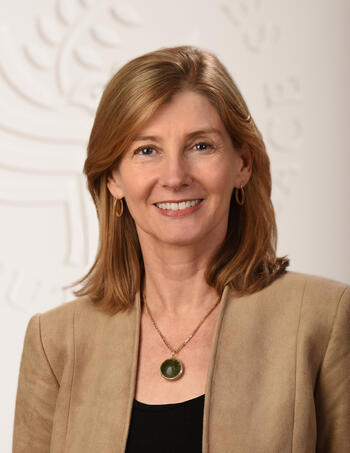
Barack Obama is not the first U.S. president to deal with the problem of overcommitment abroad.  How does his record compare with earlier cases?  Can the past help us understand the foreign policy debate of 2016?  Can it tell us how, when—and whether—today’s retrenchment will end?


Stephen Sestanovich is a professor of international diplomacy at Columbia University's School of International and Public Affairs and a senior fellow at the Council on Foreign Relations. He is the author of Maximalist: America in the World from Truman to Obama (Knopf 2014). 

From 1997 to 2001, Sestanovich was the U.S. State Department's ambassador-at-large for the former Soviet Union.  In previous government assignments, he was senior director for policy development at the National Security Council, a member of the State Department’s policy planning staff, and legislative assistant to Senator Daniel Patrick Moynihan. He has also worked at the Carnegie Endowment for International Peace and the Center for Strategic and International Studies. 

Ambassador Sestanovich received his BA summa cum laude from Cornell University and his PhD from Harvard University. He has written for Foreign AffairsThe New York TimesThe Wall Street Journal and other publications. He is a member of the board of directors of the National Endowment for Democracy.     


Event co-sponsored by the Center for International Security and Cooperation

Stephen Sestanovich Columbia University
Lectures
-

Click below to view the recording:


Please join us for the upcoming Payne Distinguished Lecture, “NATIONAL SECURITY CHALLENGES FOR THE NEXT PRESIDENT," with R. Nicholas Burns, former Under Secretary of State for Political Affairs and the Roy and Barbara Goodman Family Professor of the Practice of Diplomacy and International Relations, Harvard Kennedy School of Government. 

The lecture will take place on Friday, April 29 at 12 noon in the Bechtel Conference Center, Encina Hall.  Please RSVP to Scott Nelson at snelson@stanford.edu.

Lectures
-


Event is Full. To be added to the waitlist please email Karen Haley: khaley@stanford.edu


Ilya Ponomarev is an opposition member of the Russian Parliament (State Duma). He is a Social Democrat representing Novosibirsk – the capital of Siberia, and chairs the Innovations and Venture Capital (formerly Hi-Tech development) subcommittee which has introduced legislation to support emerging innovation economy in Russia.

Ilya Ponomarev is one of leaders of anti-Putin opposition in Russia. He played key role in protests of 2012; during 2013-2014 he opposed antidemocratic legislation introduced in the country, was the only MP in Duma to vote against annexation of Crimea.

Mr Ponomarev serves as the Advisor on International Business Development, Commercialization and Technology Transfer for the President of Skolkovo Foundation – managing company of the project chaired by Pres. Medvedev. He is member of Society of Petroleum Engineers (IT), Council for Foreign and Defense Policies, Council for National Strategy, fellow at “Open Russia” foundation. Hon. Ponomarev is supervising innovation policies research at Institute of Contemporary Development (INSOR, think-tank chaired by Pres. Medvedev), and political studies at Institute of Globalization Studies (IPROG). Ilya Ponomarev is a member of Global Science and Innovations Council (GSIAC), chaired by Prime Minister of Malaysia.

Previously, Mr. Ponomarev held various positions in private companies, including Vice President of Yukos Oil Company, the largest Russian oil and gas corporation, and Director for CIS Business Development and Marketing for Schlumberger Oilfield Services.

He is an author of numerous research papers and magazine articles about new economy development, regional policies, education and international relations. 

Ilya Ponomarev Russian Parliament Member
Lectures
-
Stanford Journal of International Law

Annual Symposium

Saturday, April 30th 9am - 5pm

Breakfast

Procedure and Due Process in International Arbitration

Investor-State Arbitration: Here to Stay?

Lunch

Arbitration in Emerging Markets

Reception


Please RSVP here or contact Lbaker15@stanford.edu


This event is co-sponsored by The Europe Center.


Stanford Law School Room 290

Crown Quadrangle, 559 Nathan Abbott Way

Conferences
News Type
Q&As
Date
Paragraphs

"What do I do about the chickens?"

When assistant professor of medicine Eran Bendavid began a study on livestock in African households to determine impact on childhood health, he'd already anticipated common field problems like poorly captured or intentionally misreported data, difficulty getting to work sites, or problems with training local volunteers.

But he'd never gotten that particular question from a fieldworker before. It didn't occur to him that participating families, in reporting their livestock holdings, would completely omit the chickens running around at their feet, thereby skewing the data.

"They didn't consider chickens to be livestock," recalled Bendavid. Along with Scott Rozelle, the Helen F. Farnsworth Senior Fellow at FSI, and associate professor of political science and FSI senior fellow Beatriz Magaloni, Bendavid spoke to a full house last week on lessons learned from fieldwork gone awry. The return engagement of FSI's popular seminar, "Everything that can go wrong in a field experiment” was introduced by Jesper Sørensen, executive director of Stanford Seed, and moderated by Katherine Casey, assistant professor of political economy at the GSB. The seminar is a product of FSI and Seed’s joint Global Development and Poverty (GDP) Initiative, which to date has awarded nearly $7 million in faculty research funding to promote research on poverty alleviation and economic development worldwide.

Rozelle, co-director of the Rural Education Action Program, spoke of the obstacles to accurate data gathering, especially in rural areas where record-keeping is inaccurate and participants' trust is low. Arriving in a Chinese village to carry out child nutrition studies, said Rozelle, "we found Grandma running out the back door with the baby." The researchers had worked with the local family planning council to find the names of children to study, but the families thought the authorities were coming to penalize them for violation of the one-child policy.

Cultural differences make for entertaining and illuminating (if frustrating) lessons, but Beatriz Magaloni, director of FSI's Program on Poverty and Governance at the Center on Democracy, Development and the Rule of Law had a different story to tell. Over the course of three years, her GDP-funded work to investigate and reduce police violence in Brazil - a phenomenon resulting in more than 22,000 deaths since 2005 - has encountered obstacle after obstacle. Her work to pilot body-worn cameras on police in Rio has faced a change in police leadership, setting back cooperation; a yearlong struggle to decouple a study of TASER International’s body worn cameras from its electrical weapons in the same population; a work site initially lacking electricity to charge the cameras or Internet to view the feeds; and noncompliance among the officers. "It's discouraging at times," admitted Magaloni, who has finally gotten the cameras onto the officers' uniforms and must now experiment with ways to incentivize their use. "We are learning a lot about how institutional behavior becomes so entrenched and why it's so hard to change."

Experimentation is a powerful tool to understand cause and effect, said Casey, but a tool only works if it's implemented properly. Learning from failure makes for an interesting panel discussion. The speakers' hope is that it also makes for better research in the future.

The Global Development and Poverty Initiative is a University-wide initiative of the Stanford Institute for Innovation in Developing Economies (Seed) in partnership with the Freeman Spogli Institute (FSI). GDP was established in 2013 to stimulate transformative research ideas and new approaches to economic development and poverty alleviation worldwide. GDP supports groundbreaking research at the intersection of traditional academic disciplines and practical application. GDP uses a venture-funding model to pursue compelling interdisciplinary research on the causes and consequences of global poverty. Initial funding allows GDP awardees to conduct high-quality research in developing countries where there is a lack of data and infrastructure.


Hero Image
scott in field
All News button
1
-

About the Topic: Despite massive research and public policy efforts aimed at diversification, gender segregation of science, technology, engineering and mathematics remains extreme in affluent democracies. More surprising is evidence that women’s representation in many “STEM” fields is weaker in advanced industrial societies than in poorer, reputably gender traditional ones. The most obvious explanation is that broad-based existential security frees more women to realize aspirations for (less lucrative) non-STEM pursuits. I will discuss another piece of the puzzle by focusing on the aspirations themselves and how these vary with societal affluence. Over-time data on eighth-grade boys and girls in 32 countries provide strong evidence that the gender gap in aspirations for mathematically-related jobs increases with societal affluence, controlling for traits of individual students (parental education, affinity for school, mathematics test scores). This affluence effect is not attributable to cross-national differences in the gender-labeling of science, Internet access, or women’s educational or economic integration. Results are consistent with arguments suggesting that gender beliefs more strongly influence career aspirations in affluent, “postmaterialist” societies.


Maria Charles

About the Speaker:  Maria Charles is Professor and Chair of Sociology, Area Director for Sex and Gender Research, and an Affiliate Professor of Feminist Studies at U.S. Santa Barbara. She specializes in the international comparative study of social inequalities, particularly cross-national differences in women's economic, educational, and family roles. She has published extensively on gender segregation, most recently on the ideological and organizational factors that contribute to woman's underrepresentation in science, technology, engineering, and mathematics ("STEM") fields around the world. She has a Ph.D. in Sociology from Stanford University, and Bachelor’s degrees from UCSB in Environmental Studies and Political Science.

Philippines Conference Room

Encina Hall Central, 3rd floor

616 Serra St.

Stanford, CA 94305

Maria Charles Professor and Chair of Sociology, Area Director for Sex and Gender Research, Affiliate Professor of Feminist Studies U.C. Santa Barbara
Seminars
-

**This event is co-sponsored with CREES**

Abstract:

Twenty five years have passed since the dissolution of the Soviet Union (the USSR), when the fifteen new independent states of Eurasia started the process of regime transition and state- and nation-building. All of the former Soviet republics have the same departure point – the collapse of the USSR in 1991. Twenty five years later, in 2016, there is an enormous variation in the outcomes of regime transition across post-Soviet Eurasia: from autocracies (e.g., Belarus) to democracies (Baltic states). Thus, this experience of post-Soviet Eurasian states requires development of new theoretical approaches that would allow for better understanding of rapid dynamics in this part of the world and of the phenomenon of external dimension of regime transition in general.


Speaker Bio:

Image
anastasia
Anastassia V. Obydenkova is a regional fellow at Davis Center for Russian and Eurasian Studies Harvard University. From September 2016, she joins the Institute for Regional and International Affairs of the Princeton University. Dr. Obydenkova is also a senior researcher at Higher School of Economics (Moscow); previously she was a senior researcher (Ramon-y-Cajal) of the Ministry of Innovation and Science of Spain, a research fellow at the London School of Economics, and a Fox Fellow at Yale University.

Anastassia V. Obydenkova holds a Ph.D. in Political and Social Science from the European University Institute (2006, Florence, Italy), M.A. from Central European University (Budapest, Hungary), and a Summa Cum Laude Diploma in Political Science and International Relations from Moscow Lomonosov State University; Diploma Cum Laude in Foreign Languages from the Department of Foreign Languages of the Moscow State University. Her main research interests are autocracies, democratization and regime transition, federalism, decentralization, sub-national political regimes, international organizations, and area studies (former Soviet States of Eurasia).

Anastassia V. Obydenkova Regional Fellow at Davis Center for Russian and Eurasian Studies, Harvard University
Seminars
Authors
News Type
News
Date
Paragraphs

Stanford foreign policy experts discussed flashpoints around the world at an OpenXChange event this week.


Three of Stanford's most seasoned international affairs experts discussed foreign policy and diplomacy – and practiced a bit of it on stage, too – as they tackled the topics of refugees, Russia and other politically thorny issues at a campus forum March 1.

The event, "When the World Is Aflame," featured Condoleezza Rice, a Stanford political science professor and former U.S. secretary of state; Michael McFaul, director of Stanford's Freeman Spogli Institute for International Studies and former U.S. ambassador to Russia; and Jeremy Weinstein, a Stanford political science professor and former director for the National Security Council.

Janine Zacharia, a Stanford visiting lecturer in communication and former Jerusalem bureau chief and Middle East correspondent for the Washington Post, was the moderator.

The event was hosted by OpenXChange, a campus initiative to provide a forum for students and community members to focus on today's societal challenges.

"So you were resetting some of my policy?" Rice half-jokingly interjected, as McFaul discussed the objectives behind the U.S. trade talks with Russia a few years ago.

"It was not about making friends with the Russians – I want to make that clear," McFaul continued after the laughter in the audience died down. "And it wasn't that we needed to correct the wrongs from the previous period," he said, casting a quick glance over at Rice. "The Russians had an interest in giving the Iranians a nuclear weapon. Our answer was, no, and let's work with them to prevent that."

A series of trade sanctions with Russia were eventually accomplished, but as it turns out, McFaul noted, the political environment has since changed with Russia's aggression in Crimea, Ukraine and Syria.

Today's conflict in Syria was laid about four years ago, the panelists agreed, when the United States decided to aid the rebels and not overtly attack the current regime.

"There were reasons our president and others did not go down that path, but it was an invitation to others to play games in that environment," Weinstein said. "What their endgame is, we don't know."

Rice added that Russian President Vladimir Putin "does not mind countries that basically don't function." As such, "a stable, functioning Syria was never his definition of success."

Zacharia asked, "Are you saying we have yielded the endgame to the Russians in Syria? There is nothing we can do? And we're playing defense?"

"Yes," Rice answered.

"Wait, there is no endgame," McFaul said. "It's not that we yielded the endgame."

"Right," Rice replied.

Though the panelists' opinions differed at times, the trio of political science professors agreed on many points, including that international order is being tested, and that the refugee crisis is an overwhelming problem – one that the United States should help resolve.

"I'm a firm believer that America has a moral obligation to take [refugees]," Rice said. "But let's remember that we have to have a way to take them that is actually going to work within the system."

"We have a humanitarian architecture that simply isn't up to the task," Weinstein said. Securing congressional funding to reform the system will be a challenge.

What's more problematic, McFaul added, is that the current political rhetoric about how the United States should handle refugees is "based on fear."

"We're not having a rational debate about this in my opinion," McFaul said. "We have to fill the debate with empirical facts instead."

Public fears will continue as long as extreme Islamic State terrorist groups remain influential, "inspiring lone wolves like [those] in San Bernardino," Rice said, referring to the December 2015 terrorist attack there that killed 14 and injured 22 people.

"Somebody has got to defeat ISIS in its crib," Rice said. "They march in columns; they don't hide in caves like al-Qaeda. If CBS News can find them, then the American military can find them."

The tougher challenge, however, will be the task of influencing sectarian politics and creating a more stable state in the long term, Weinstein said.

Stanford – with its cache of expertise – should strive to shape the national dialogue with concrete facts and analyses, McFaul said. Inspiring students and giving them the foundational tools to become the new generation of policy leaders is also part of that, he said. Adding a course on Russian politics would also be an improvement, he said.

Weinstein is a senior fellow at the Freeman Spogli Institute. Rice, a former Stanford provost, is the Denning Professor in Global Business and the Economy at Stanford Graduate School of Business and the Thomas and Barbara Stephenson Senior Fellow at the Hoover Institution.

The panelists urged students to gain a deep knowledge of the areas and issues they care about.

"Know your facts," Rice emphasized.

"When you're making policy decisions at the table, the people who understand these places and understand the political dynamics – those are the people whose voices are second to none around the table," Weinstein said.

"And we need to get you prepared for that in a more robust way," McFaul said, inviting students to pass any ideas about this to him.

In terms of career choices, "there's nothing greater" than public service, he said. "Sometimes I would get goose pimples when I could stand in front of Russians with the American flag behind me, representing the United States of America."

Hero Image
16193 condi mike L.A. Cicero
All News button
1
-

This event is sponsored by the Freeman Spogli Institute for International Studies (FSI), the Shorenstein Asia-Pacific Research Center (APARC), the Center for Russian, East European, and Eurasian Studies (CREEES), and the Stanford Music Department.

Movie Screening: 7:30pm-8:35pm

FREE TO ROCK is a feature length documentary film telling the story of how western rock music contributed to ending the Cold War.  Prohibited by the Soviet and Eastern Bloc authorities as propaganda, the “soft power” of western rock music infected the youth behind the Iron Curtain, spreading like a virus.  This forbidden music was distributed and sold as “bone records” (etched on x-ray paper for 20 or fewer plays) and cassettes by Black market entrepreneurs and fledgling pop-culture capitalists.  In the eyes of the Soviet Ministry of Culture, western rock music combined the twin evils of spreading the English language - undermining a Russification initiative in the 15 Republics of the USSR extending from Kazakhstan to the Baltics - and encouraging illicit free enterprise.

The film, narrated by Kiefer Sutherland, features interviews with former President, Jimmy Carter, Mikhail Gorbachev (former Premier of the Soviet Union), Billy Joel, the Beach Boys, rock and roll pioneers from the Soviet Union, and is directed and produced by Jim Brown, four time Emmy Award winning director. 

Panel discussion, 8:35-9:30pm

Power of Music and Political Change

Moderator

Michael McFaul, Former Ambassador to Russia and Director of the Freeman Spogli Institute for International Studies

Panelists

Mark Applebaum, Associate Professor of Music, Stanford University

Nick Binkley, Free to Rock, Producer

Jim Brown, Free to Rock, Director

Valery Saifudinov, founder of the first Soviet Rock n' Roll band, the Revengers

Joanna Stingray, first American producer of Soviet Rock n' Roll

Kathryn Stoner, Director of the Ford Dorsey Program in International Policy Studies, Stanford University

Campbell Recital Hall471 Lagunita DriveStanford, CA 94305


Film Screenings
-

REGISTRATION FULL. No walk-ins, no substitutions. Door opens at 3:45pm for registered guests.


Ursula von der Leyen studied economics at the University of Göttingen, the University of Münster and the London School of Economics and Political Science. From 1980 to 1987 she attended Hanover Medical School (MHH). After obtaining her license to practise medicine, she worked at the Clinic for Obstetrics and Gynaecology. She obtained her Dissertation in Medicine in 1991 and was awarded the degree of Dr. med.. In 1992, Ursula von der Leyen and her family moved to the United States. She returned to Germany in 1996. From 1998 to 2002 she worked as a research assistant at the Department of Epidemiology, Social Medicine and Health System Research at Hanover Medical School and completed her Master’s degree in Public Health in 2001.

Ursula von der Leyen started her political activities in 1990 when she became a member of the Christian Democratic Union (CDU). From 2001 to 2003 she held various political offices at municipal level in the Hanover region. In 2003 she became a member of the Lower Saxony state parliament and was appointed State Minister of Social Affairs, Women, Family Affairs and Health. In 2005 Ursula von der Leyen started her career in federal politics as Federal Minister of Family Affairs, Senior Citizens, Women and Youth. In 2009 she became a Member of Parliament (Deutscher Bundestag) and was appointed as Federal Minister of Labour and Social Affairs. After her election as member of the CDU Executive Committee she was elected as party vice chairwoman in 2010. In 2013 she was appointed as Minister of Defense of the Republic of Germany.

Ursula von der Leyen was born in Brussels in 1958. She lives near Hanover. She is married with Professor Heiko von der Leyen and the couple has seven children.

Fisher Conference Center in the Arrillaga Alumni Center

326 Galvez St.

Stanford, CA 94305

Lectures
Date Label
Subscribe to Russia and Eurasia