Encina Hall, E111
616 Jane Stanford Way
Stanford, CA 94305-6055

0
CDDRL Predoctoral Fellow, 2025-26
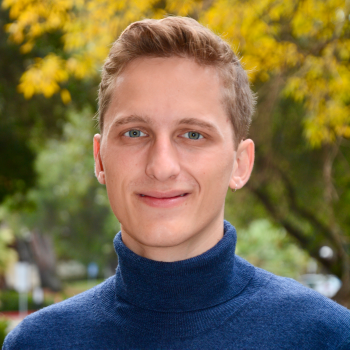
hanna_folsz_-_hanna_folsz.jpg

Hanna Folsz is a PhD candidate in Political Science at Stanford University. Her research focuses on opposition parties in authoritarian dominant-party regimes, with a particular focus on the challenges and opportunities they face in countering autocratization. More broadly, her work examines the causes and consequences of democratic backsliding, populism, media capture, and political favoritism — primarily in East-Central Europe and, secondarily, in Latin America. She uses a multi-method approach, including modern causal inference and text analysis techniques.

Her research has been supported by the National Science Foundation and the American Political Science Association, among others. She is the co-founder and co-organizer of EEPGW, a monthly online graduate student workshop on East European politics, and a co-founder and regular contributor to The Hungarian Observer, the most widely read online newsletter on Hungarian politics and culture. At Stanford, she is an active member of  CDDRL's Poverty, Violence, and Governance Lab (PovGov).

Date Label
0
CDDRL Research Affiliate, 2024
Visiting Scholar, Center for Russian, East European and Eurasian Studies, 2022-24
ganga-img_8189_-_paula_ganga.jpg

Paula Ganga is an assistant professor of political economy at Duke Kunshan University as well as a visiting fellow with the Center for Russian, East European and Eurasian Studies at Stanford University. She completed her Ph.D. in Government at Georgetown University, and was a postdoctoral fellow at the Harriman Institute at Columbia University, a postdoctoral fellow with the Skalny Center for Polish and Central Eastern European Studies and a George F. Kennan short-term scholar at the Woodrow Wilson Center for International Scholars. Her research focuses on the political determinants of switches between privatization and nationalization in Eastern Europe and beyond. This research bears directly on how we view the link between democracy and market capitalism, the economic consequences of populism, rising illiberalism in recent political transitions, and state capitalism. She is currently working on a book manuscript on populism and economic nationalism in Eastern Europe.

Paragraphs

East-Central Europe is at odds with itself regarding the response to the Russian invasion of Ukraine. Why are "post-communist" democracies not standing together as one with a fledgling democracy that is under attack by a dictatorship? The answer lies in the material and political benefits that individual politicians and political parties receive from Russia. Two consequences follow from this dynamic: the validation of "Russian imperial claims" and reduced support for Ukraine. This analysis shows that the immediate interests and profits of domestic politicians matter far more than the long shadows of history, leading to a complex tapestry of responses in the region. The diversity of these countries' approaches to Ukraine is just one reason why East-Central Europe is now more remarkable for its divisions and contrasts than a collective past or a common future.

All Publications button
1
Publication Type
Journal Articles
Publication Date
Journal Publisher
Journal of Democracy
Authors
Anna Grzymała-Busse
Number
Number 1
Authors
Nora Sulots
News Type
News
Date
Paragraphs

The Center on Democracy, Development and the Rule of Law proudly congratulates its graduating class of honors students for their outstanding original research conducted under CDDRL's Fisher Family Honors Program. Among those graduating are Adrian Scheibler, who has won a Firestone Medal for his thesis on regionalism and economic crisis in Europe, and Michal Skreta, winner of the CDDRL Outstanding Thesis Award for his study of the Family 500 cash benefit program in Poland.

Image
Adrian Scheibler

The Firestone Medal for Excellence in Undergraduate Research recognizes Stanford's top ten percent of honors theses in social science, science, and engineering among the graduating senior class. Scheibler's thesis is entitled Challenging the State: Western European Regionalism in the Era of Financial Crisis. Using an original dataset containing 8 countries, 35 regions, and 128 regionalist parties, he finds that voters did not increase their support for regionalist parties during the crisis and may have even turned their backs on these political actors. In addition, he considers the reactions of regionalist parties in three Spanish autonomous communities, Catalonia, the Basque Country, and Galicia, to the crisis. He finds evidence of regionalist mobilization on the issue and even some indications of radicalization of regionalist demands. Taken together, he notes, these findings raise interesting implications for the impacts of the financial crisis and the interaction between economic indicators, party competition, and voting patterns.


Image
Michal Skreta

Skreta's thesis is entitled Babies, Money, and Power: Estimating Causal Effects of the “Family 500+” Child Benefit Program in Poland using the Synthetic Control Method. He proposes using the synthetic control method as a causal identification strategy to empirically estimate country-level treatment effects of the program on fertility, poverty, and inequality. Treating 500+ as a natural experiment, he compares observational data from actual Poland with a synthetic counterfactual of Poland constructed from a weighted donor pool of other European countries through a data-driven selection procedure. His findings on fertility metrics are consistent with prior studies, being ambiguous and insignificant, indicating that the main short-term objective of the program has not been achieved. Meanwhile, he finds that the program causally reduced the rate of people at risk of poverty in Poland and that the child benefit has led to a significant reduction in income inequality.

Scheibler and Skreta are part of a cohort of ten graduating CDDRL honors students who have spent the past year working in consultation with CDDRL-affiliated faculty members and attending honors research workshops to develop their theses projects. Collectively, their topics documented some of the most pressing issues impacting democracy today in the US, India, Mexico, and Spain, among others.

"We are very proud of the CDDRL honors class of 2022," shared Didi Kuo, Senior Research Scholar and Associate Director for Research at CDDRL. "These students began their thesis projects remotely and were able to conduct research on important topics while also managing their return to campus and ongoing COVID disruptions. Their diverse intellectual backgrounds and thesis subjects reflect the talents and passions of our honors students."

These students began their thesis projects remotely and were able to conduct research on important topics while also managing their return to campus and ongoing COVID disruptions. Their diverse intellectual backgrounds and thesis subjects reflect their talents and passions.
Didi Kuo
Senior Research Scholar and Associate Director for Research, CDDRL

CDDRL's Fisher Family Honors Program trains students from any academic department at Stanford to prepare them to write a policy-relevant research thesis with global impact on a subject touching on democracy, development, and the rule of law. Honors students participate in research methods workshops, attend honors college in Washington, D.C., connect to the CDDRL research community, and write their thesis in close consultation with a faculty advisor to graduate with a certificate of honors in democracy, development, and the rule of law.

A list of the 2022 graduating class of CDDRL honors students, their thesis advisors, and thesis titles can be found here.

Read More

Phi Beta Kappa
News

CDDRL Congratulates Newly Elected Phi Beta Kappa Members

Sylvie Ashford (honors class of 2021) and Carolyn Chun (honors class of 2022) are among the newest members of this prestigious academic honors society.
CDDRL Congratulates Newly Elected Phi Beta Kappa Members
Hero Image
CDDRL honors class of 2022 with Steve Stedman, Sako Fisher, and Didi Kuo
All News button
1
Subtitle

Adrian Scheibler ('22) is a recipient of the 2022 Firestone Medal and Michal Skreta ('22) has won the CDDRL Outstanding Thesis Award.

-

Seminar Recording: https://youtu.be/7uGcI3qswDw


About the Event: As relations between the West and Russia have sharply deteriorated in recent years, Germany has taken a leading role in shaping Europe's policy response, particularly that of the European Union.  That has included a tougher approach toward Kremlin misbehavior, such as various economic and other sanctions.  At the same time, Berlin has sought to keep an open line of communication with Moscow.

Amb. Thomas Bagger will discuss how Berlin views the challenge posed by Russia and how the West should respond.


About the Speaker: Thomas Bagger holds the rank of ambassador and is Diplomatic and Foreign Policy Advisor to the President of the Federal Republic of Germany.  He joined the German diplomatic service in 1992 and has served abroad in Prague, Ankara and Washington.  Before taking up his current position, he headed the Foreign Ministry's Policy Planning Office.    

Thomas Bagger Ambassador Federal Republic of Germany
Seminars
-

Seminar Recording: https://youtu.be/BGjRsO0fKds


About this Event: Germany plays a key role in shaping European and Western policy toward Russia.  Berlin is a leading voice within the European Union on Russian issues, and Chancellor Angela Merkel co-chairs with the French president the "Normandy" effort that seeks to broker a setttlement between Ukraine and Russia to the conflict in Donbas.  Emily Haber, the German ambassador to the United States, will join us for a conversation on how Berlin sees the Russian challenge and how the West should respond.


About the Speaker: Emily Margarethe Haber has been German Ambassador to the United States since June 2018. 

Immediately prior to this, Haber, a career foreign service officer, was deployed to the Federal Ministry of the Interior, serving as State Secretary overseeing security and migration at the height of the refugee crisis in Europe. In this capacity, she worked closely with the US administration on topics ranging from the fight against international terrorism to global cyberattacks and cybersecurity. In 2009, she was appointed Political Director and, in 2011, State Secretary at the Foreign Office, the first woman to hold either post. 

Emily Haber is married to Hansjörg Haber. The couple has two sons. 

Emily Margarethe Haber German Ambassador to the United States
Seminars

Encina Hall
616 Jane Stanford Way
Stanford, CA  94305

0
Visiting Postdoctoral Scholar at The Europe Center, 2019-2020
Fulbright Postdoctoral Fellow, 2019-2020
photo_anghel.jpg

Veronica Anghel is a Postdoctoral Fulbright Fellow and Visiting Postdoctoral Scholar at The Europe Center. Her research focuses on the challenges to democratic state building and party politics in post-communist Europe. Her project is centered on the clashes between the intrinsic effects of formal and informal institutions and elite agency as critical junctures that lead to different outcomes of democratization. Her main area of study is the countries of Central and Eastern Europe. Currently, she engages in the academic debate regarding the perceived democratic ‘backlash’ of CEE post-communist states. Previously, Dr. Anghel held fellowships at the Johns Hopkins University – School of Advanced International Studies, the Institute for Human Sciences Vienna, the Institute for Central Europe Vienna, the University of Bordeaux and the Institute for Government in Vienna. Following her Stanford appointment, Dr. Anghel will join the European University Institute in Florence on a Max Weber Scholarship (2020 – 2021).

Dr. Anghel received her PhD summa cum laude from the University of Bucharest in co-direction with the University of Bordeaux. Her thesis ‘The Formation of Coalition Governments in Romania: Patterns Behind the Drift’ was awarded the prize of the best dissertation defended in 2018. Research based on this work was published in East European Politics and Societies, Government & Opposition and edited volumes. She is an analyst for the Economist Intelligence Unit and Oxford Analytica on issues related to CEE countries. She is also an editorial fellow for Government & Opposition. Dr. Anghel also worked as a foreign affairs advisor for the Romanian Presidential Administration (2015) and the Romanian Senate (2012 - 2015).

Authors
News Type
Commentary
Date
Paragraphs

In Aug. 2019, Bobby Chesney (from Strauss Center at the University of Texas at Austin) and Max Smeets (from ETH Zurich and also Stanford University’s Center for International Security and Cooperation (CISAC)) convened a workshop in Amsterdam focusing on military operations in the cyber domain, from a transatlantic perspective. The “Transatlantic Dialogue on Military Cyber Operations—Amsterdam” gathered experts from military, civilian, and academic institutions hailing from a range of countries, including the United States, United Kingdom, Germany, the Netherlands, Denmark, Estonia, and France.


Read the Rest at Lawfare Blog

Hero Image
screen shot 2019 12 18 at 8 32 53 am
All News button
1
Subscribe to Central Europe