-
The Taiwan Relations Act (TRA) was enacted by Congress on April 10, 1979, and has served as the formal basis for U.S.-Taiwan relations ever since. In this talk, Professor Goldstein will provide an assessment of the TRA’s influence on America’s foreign policy in Asia as we approach the 40th anniversary of its adoption.
 
SPEAKER:
Image
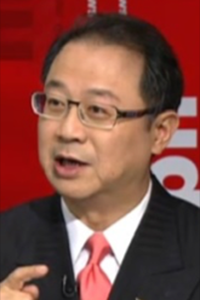
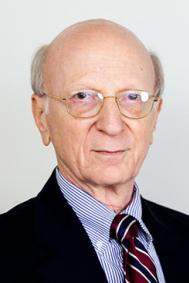
Photograph of Steven M. Goldstein
Steven M. Goldstein was the Sophia Smith Professor of Government at Smith College from 1968 to 2016. He is now an Associate of the Fairbank Center and the director of the Taiwan Studies Workshop at Harvard University. He has been a visiting faculty member at the Fletcher School of Law and Diplomacy, Columbia University and United States Naval War College. Goldstein's research interest has been largely related to issues of Chinese domestic and foreign policy. He has published studies of Sino-American relations; Sino-Soviet relations; and the emergence of a Chinese Communist view of world affairs. His current research focus is on the relations between the mainland and Taiwan as well as the evolution of U.S.-Taiwan relations.

Philippines Conference Room
Encina Hall, 3rd Floor
616 Serra Mall, Stanford, CA 94305

Steven M. Goldstein <i>Director of the Taiwan Workshop at the Fairbank Center, Harvard University</i>
Lectures
-

From Within and Without: Taiwan’s New Security Challenges

Since 2016, Beijing’s pressure campaign on Taiwan has threatened the island’s international space and domestic tranquility. Few, if any, areas of politics have gone untouched. Whether through attempts to pick off Taiwan’s diplomatic partners or lure away the island’s talent, the full range of PRC statecraft is on display. Taiwan’s political dynamics — especially the solidification of Taiwanese identity and collapse of the Kuomintang — also appear to have driven an aggressive shift in Beijing’s approach to political influence operations to include pressure on international companies. The shift in intensity and tactics raises important questions about Taiwan’s future and dealing with an increasingly powerful PRC.

Image
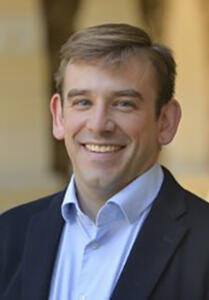
Peter Matis
Peter Mattis is a Research Fellow in China Studies at the Victims of Communism Memorial Foundation and a contributing editor at War on the Rocks. He was a Fellow in the China Program at The Jamestown Foundation, where he also served as editor of the foundation’s China Brief, a biweekly electronic journal on greater China, from 2011 to 2013. Mr. Mattis also worked as a counterintelligence analyst at the Central Intelligence Agency. He received his M.A. in Security Studies from Georgetown University's School of Foreign Service and earned B.A.s in Political Science and Asian Studies from the University of Washington in Seattle. Mr. Mattis’s analysis of China and intelligence has appeared in The National Interest, China Brief, Sydney Morning Herald, The Hill, Jane’s Intelligence Review, Taipei Times, the East-West Center’s Asia-Pacific Bulletin, The Diplomat, War on the Rocks, the Asia Society’s ChinaFile, Cipher Brief, the International Journal of Intelligence and Counterintelligence, and Studies in Intelligence.  Mr. Mattis is the author of Analyzing the Chinese Military: A Review Essay and Resource Guide on the People’s Liberation Army (2015) and co-author of a forthcoming handbook on Chinese intelligence.

Peter Mattis <i>Research Fellow, China Studies, at Victims of Communism Memorial Foundation</i>
Lectures
-

The Republic of China on Taiwan spent nearly four decades as a single-party state under dictatorial rule (1949-1987) before transitioning to liberal democracy. This talk is based on an ethnographic study of street-level police practices during the first rotation in executive power following the democratic transition (i.e. the first term of the Chen Shui-bian administration, 2000-2004). Summarizing the argument of a forthcoming book, Dr. Jeffrey T. Martin focuses on an apparent paradox, in which the strength of Taiwan's democracy is correlated to the weakness of its police powers. Martin explains this paradox through a theory of "jurisdictional pluralism" which, in Taiwan, is  organized by a cultural distinction between sentiment, reason, and law as distinct foundations for political authority. An overt police interest in sentiment (qing) was institutionalized during the martial law era, when police served as an instrument for the cultivation of properly nationalistic political sentiments. Martin's fieldwork demonstrates how the politics of sentiment which took shape under autocratic rule continued to operate in everyday policing in the early phase of the democratic transformation, even as a more democratic mode of public reason and the ultimate power of legal right were becoming more significant.


Image
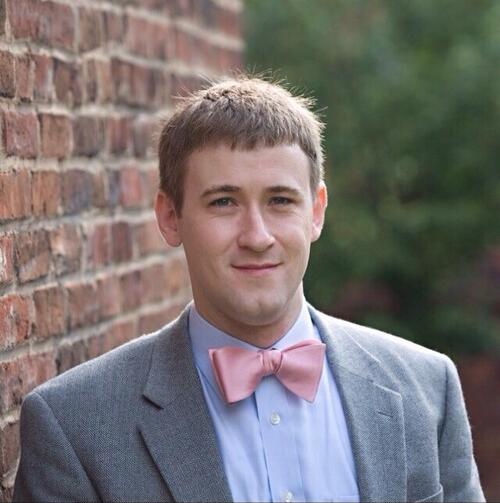
jmart
Jeffrey T. Martin is an assistant professor in the Departments of Anthropology and East Asian Languages and Cultures at the University of Illinois at Urbana Champaign. He specializes in the anthropological study of modern policing, and has conducted research in China, Taiwan, Hong Kong, and the USA. His research interests focus on historical continuity and change in police culture, especially as this culture reflects specific changes in the legal, bureaucratic, or technical dimensions of police operations. Prior to joining the University of Illinois, Dr. Martin taught in the Sociology Department at the University of Hong Kong, and in the Graduate Institute of Taiwan Studies at Chang Jung Christian University.


Jeffrey T. Martin <i>Assistant Professor, Anthropology and East Asian Languages and Cultures, University of Illinois at Urbana Champaign</i>
Seminars
-

Over the last dozen years, Taiwan’s democracy has deepened in important ways. Executive power has rotated twice, from the DPP’s Chen Shui-bian to the KMT’s Ma Ying-jeou in 2008, and from Ma to the DPP’s Tsai Ing-wen in 2016. The majority in the legislature also changed for the first time in 2016, from the KMT to the DPP. Taiwan’s most recent overall Freedom House ranking is 93/100, significantly higher than the United States. Its freedom of the press ranking is the highest in all of Asia, ahead of Korea and even Japan, and its rule of law and anti-corruption scores are trending in a positive direction as well.

To be sure, serious concerns remain about the practice of democracy in Taiwan, including a poorly institutionalized and often chaotic lawmaking process, incomplete legislative oversight of executive branch actions, and a partisan and increasingly fragmented media environment. Nevertheless, the greatest threat to Taiwan’s continued place among the world’s liberal democracies now appears to be external, not internal. The People’s Republic of China (PRC) has always posed an existential threat to Taiwan, but its growing economic influence, rapid military modernization, assertive territorial claims in the region, and aggressive global efforts to isolate Taiwan have accelerated in recent years. Put simply, Taiwan’s long-term future as a democracy is imperiled by China’s rise.

The PRC’s growing power presents difficult security challenges for most of the countries in the Asia-Pacific region, not just for Taiwan. But these challenges are rarely considered from a multi-lateral perspective—most analyses of regional security issues instead tend to focus on bilateral or trilateral (US-China-Country X) relationships. This pattern is particularly common in discussions of Taiwan’s security, where the dominant focus is on Cross-Strait and US-Taiwan relations to the neglect of Taiwan’s other relationships in the region.

The goals of this workshop, then, are to place Taiwan’s security challenges in a broader, regional context, to consider possible obstacles to and opportunities for greater regional cooperation on security issues, and to devise a set of recommendations for Taiwan and its partners and allies. Workshop participants will include experts on a wide array of economic, diplomatic, and security topics from Taiwan, the United States, and elsewhere in the Asia-Pacific region.


Remarks are Off-the-Record.  Recording, reporting and citation of remarks is strictly prohibited.

AGENDA

Monday, March 5 - Koret-Taube Conference Center, John A. and Cynthia Fry Gunn Building

9:00-9:30am CONTINENTAL BREAKFAST

9:30-9:45am OPENING REMARKS
Larry Diamond, Senior Research Fellow, Center on Democracy, Development, and the Rule of Law
Karl Eikenberry, Director, U.S.-Asia Security Initiative, Asia-Pacific Research Center

9:45am – 11:30am: PANEL I.
Assessment of US Alliances and the Political and Military Situation in the Western Pacific
Chair: Tom Fingar (APARC, Stanford)
• Overview of Military Trends and US Strategy in Region. Karl Eikenberry (APARC, Stanford)
• US-Taiwan Relations. Robert Wang (Center for Strategic and International Studies)
• US-Japan Relations. TJ Pempel (UC Berkeley)
• US-Korea Relations. Kathy Stephens (APARC, Stanford)

11:30am-1:00pm LUNCH
Keynote Speaker: Robert Sutter (George Washington University) - "Will Trump administration advance support for Taiwan despite China's objections?"

1:15pm-3:00pm: PANEL II.
Trade and Economic Relations in the Western Pacific
Chair: Phillip Lipscy (APARC, Stanford)
• Regional Trade Agreements after TPP: RCEP vs TPP-11. Barbara Weisel (former Assistant US Trade Representative for SE Asia and the Pacific)
• China’s Institution-Building: OBOR, Maritime Silk Road, AIIB. Amy Searight (Center for Strategic and International Studies)
• Taiwan’s New Southbound Policy. Russell Hsiao (Global Taiwan Institute)

3:15-5:00pm: PANEL III.
Maritime Security Issues: The South and East China Seas
Chair: Karl Eikenberry (APARC, Stanford)
• Interpreting Chinese Maritime Strategy in the South China Sea, Don Emmerson (APARC, Stanford)
• China’s Maritime Militia. Andrew Erickson (Naval War College)
• Evolution of US Policy: FONOPS and Beyond. Dale Rielage (Captain, US Navy)
• Taiwan’s Role in Maritime Security Issues. Yeong-Kang Chen, (Admiral (Ret.), ROC Navy)


Tuesday, March 6 - McCaw Hall, Stanford Alumni Center

9:00-9:30am CONTINENTAL BREAKFAST

9:30-11:15am: PANEL IV.
Taiwan’s Key Asian Relations
Chair: Kharis Templeman (APARC, Stanford)
• A Taiwanese Perspective on Asian Relations. Lai I-chung (Prospect Foundation)
• NE Asia, Yeh-chung Lu (National Chengchi University)
• SE Asia, Jiann-fa Yan (Chien Hsin University of Science and Technology)

11:30-1:15pm: PANEL V.
Cross-Strait Relations
Chair: Larry Diamond
• The Domestic Politics of Security in Taiwan. Kharis Templeman (APARC, Stanford)
• Beijing’s Taiwan Policy after the 19th Party Congress. Alice Miller (Hoover Institution)
• US Role in the Trilateral Relationship. Raymond Burghardt (former chairman, American Institute in Taiwan)

1:15am-2:15pm LUNCH

March 5: Koret-Taube Conference Center, Gunn–SIEPR Building, 366 Galvez Street, Stanford, CA 94305

March 6: McCaw Hall, Frances C. Arrillaga Alumni Center, 326 Galvez St, Stanford, CA 94305

Conferences
-

Making Money: How Taiwanese Industrialists Embraced the Global Economy is a record of a thirty-year research project that Gary G. Hamilton and Kao Cheng-shu began in 1987.  A distinguished sociologist and university administrator in Taiwan, Kao and his research team (which included Prof. Hamilton during his frequent visits to Taiwan) interviewed over 800 owners and managers of Taiwanese firms in Taiwan, China, and Vietnam.  Some were re-interviewed over ten times during this period.  The length of this project allows them a vantage point to challenge the conventional interpretations of Asian industrialization and to present a new interpretation of the global economy that features an enduring alliance between, on the one hand, American and European retailers and merchandisers and, on the other hand, Asian contract manufacturers, with Taiwanese industrialists becoming the most prominent contract manufacturers in the past forty years.


Image
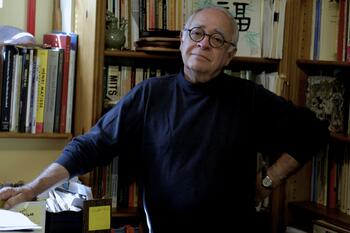
Gary Hamilton
Gary G. Hamilton is a Professor Emeritus of International Studies and Sociology at the University of Washington.  He specializes in historical/comparative sociology, economic sociology, with a special emphasis on Asian societies. He is an author of numerous articles and books, including most recently Emergent Economies, Divergent Paths, Economic Organization and International Trade in South Korea and Taiwan (with Robert Feenstra) (Cambridge University Press, 2006), Commerce and Capitalism in Chinese Societies (London: Routledge, 2006), The Market Makers: How Retailers Are Changing the Global Economy (co-editor and contributor, Oxford University Press, 2011; paperback 2012), and Making Money: How Taiwanese Industrialists Embraced the Global Economy (with Kao Cheng-shu, Stanford University Press, 2018).


This event is organized by the Taiwan Democracy and Security Project, part of the U.S.-Asia Security Initiative at Shorenstein APARC. Formerly the Taiwan Democracy Project at CDDRL.

Gary G. Hamilton <i>Professor Emeritus of International Studies and Sociology, University of Washington</i>
Lectures
-

Abstract

Speculation about the course of cross-Strait relations after the upcoming 19th Chinese Communist Party Congress ranges from greater PRC flexibility to substantially increased pressure on Taiwan. The Mainland’s persistent suspicion about President Tsai Ing-wen’s motives has only deepened with her appointment of avowed independence supporter Lai Ching-te as premier, especially because of the prospect that Lai could eventually become president. As a result, once the internal tugging and hauling leading up to the Party Congress has been settled, some people predict that Beijing will resort to military intimidation or even actual use of force to bring Tsai to heel. What are the PRC’s goals? What are Taipei’s? What role can and should the United States play in seeking not only to avoid conflict but to reestablish a reliable level of stability in cross-Strait relations and to prevent Taiwan from once more becoming a highly divisive issue in U.S.-PRC relations? Alan Romberg will address these issues in his talk on October 30th.


Bio

Image
Alan Romberg

Alan Romberg is a Distinguished Fellow and the Director of the East Asia program at Stimson. Before joining Stimson in September 2000, he enjoyed a distinguished career working on Asian issues including 27 years in the State Department, with over 20 years as a U.S. Foreign Service Officer. Romberg was the Principal Deputy Director of the State Department's Policy Planning staff, Principal Deputy Assistant Secretary of State for Public Affairs and Deputy Spokesman of the department. He served in various capacities dealing with East Asia, including director of the Office of Japanese Affairs, member of the Policy Planning staff for East Asia, and staff member at the National Security Council for China. He served overseas in Hong Kong and Taiwan.

Additionally, Romberg spent almost 10 years as the CV Starr Senior Fellow for Asian Studies at the Council on Foreign Relations, and was special assistant to the secretary of the navy.

Romberg holds an M.A. from Harvard University, and a B.A. from the Woodrow Wilson School of Public and International Affairs at Princeton University.

This event is co-sponsored by the Taiwan Democracy Project in the Center on Democracy, Development, and the Rule of Law (CDDRL) and the U.S.-Asia Security Initiative in the Shorenstein Asia-Pacific Research Center (APARC), both part of the Freeman Spogli Institute for International Studies.

Alan Romberg Distinguished Fellow Stimson Center
Lectures
-

Abstract 

Scholars have credited a model of state-led capitalism called the developmental state with producing the first wave of the East Asian economic miracle. Using historical evidence based on original archival research, this talk offers a geopolitical explanation for the origins of the developmental state. In contrast to previous studies that have emphasized colonial legacies or domestic political factors, I argue that the developmental state was the legacy of the rivalry between the United States and Communist China during the Cold War. Responding to the acute tensions in Northeast Asia in the early postwar years, the United States supported emergency economic controls in Japan, South Korea, and Taiwan to enforce political stability. In response to the belief that the Communist threat would persist over the long term, the U.S. strengthened its clients by laying the foundations of a capitalist, export-oriented economy under bureaucratic guidance. The result of these interventions was a distinctive model of state-directed capitalism that scholars would later characterize as a developmental state.

I verify this claim by examining the rivalry between the United States and the Chinese Communists and demonstrating that American threat perceptions caused the U.S. to promote unorthodox economic policies among its clients in Northeast Asia. In particular, I examine U.S. relations with the Chinese Nationalists on Taiwan, where American efforts to create a bulwark against Communism led to the creation of an elite economic bureaucracy for administering U.S. economic aid. In contrast, the United States decided not to create a developmental state in the Philippines because the Philippine state was not threatened by the Chinese Communists. Instead, the Philippines faced a domestic insurgency that was weaker and comparatively short-lived. As a result, the U.S. pursued a limited goal of maintaining economic stability instead of promoting rapid industrialization. These findings shed new light on the legacy of statism in American foreign economic policy and highlight the importance of geopolitics in international development.


Bio

Image
James Lee

James Lee is a Ph.D. Candidate in the Department of Politics at Princeton University. He specializes in International Relations with a focus on U.S. foreign policy in East Asia and relations across the Taiwan Strait. James also serves as the Senior Editor for Taiwan Security Research, an academic website that aggregates news and commentary on the economic and political dimensions of Taiwan's security.


This event is co-sponsored by the Taiwan Democracy Project in the Center on Democracy, Development, and the Rule of Law (CDDRL) and the U.S.-Asia Security Initiative in the Shorenstein Asia-Pacific Research Center (APARC), both part of the Freeman Spogli Institute for International Studies.

James Lee Ph.D. Candidate Princeton University
Lectures
-


For this special theme panel, the Taiwan Democracy Project has invited presentations that examine important changes in Taiwan’s party politics and cross-Strait relations since the election of President Tsai Ing-wen and a DPP majority in the legislature in Taiwan in January 2016. The event will be held in San Francisco, CA, directly following the conclusion of the American Political Science Association annual conference there, and is open to the public. Conference attendees with an interest in Taiwan are especially encouraged to attend.


The event will include two panels followed by open discussion:


12:00-1:30pm  

Panel I. Party Politics after the 2016 Elections

1.     Nathan Batto, “The KMT Party Organization”

2.     Austin Wang, “The DPP Party Organization”

3.     Da-chi Liao, “New Party Organizations”

Chair: Larry Diamond, Stanford University

Discussant: Kharis Templeman, Stanford University


2:00-3:30pm  

Panel II. Cross-Strait Relations and Taiwan’s Foreign Policy after the 2016 Elections

4.     Dalton Lin,  “Beijing’s Taiwan Policy after the 2016 Elections”

5.     Shirley Lin,  “Taiwan and the High Income Trap”

Chair: Kharis Templeman

Discussant: Larry Diamond 


The Taiwan Democracy Project is a research program affilated with the Center on Democracy, Development, and the Rule of Law at the Freeman Spogli Insitute for International Studies, Stanford University. This event is made possible by generous support from the Taipei Economic and Cultural Office in San Francisco.

Taiwan Politics after the 2016 Election
Download pdf
Beijing's Taiwan Policy after the 2016 Elections
Download pdf
The DPP after 2016
Download pdf

2nd Floor, Olympic Room

Westin St. Francis Union Square, 

335 Powell St.

San Franciso, CA 94102

Nathan Batto Assistant Research Fellow, Institute of Political Science Academia Sinica
Austin Wang Doctoral Candidate Duke University
Da-Chi Liao Professor, Institute of Political Science National Sun Yat-sen University
Dalton Lin Assistant Professor of International Affairs Georgia Tech
Shirley Lin Professor of Political Science University of Virginia and Chinese University of Hong Kong
Panel Discussions
Paragraphs

The most dangerous impact of North Korea’s long-range missile test this past week may not have been the one in the Sea of Japan, felt in Washington, Seoul and Tokyo. It was in Moscow where Chinese leader Xi Jinping and Russian President Vladimir Putin locked arms in a united front on how to respond to the growing North Korea crisis. The target of this front was not, however, North Korea. It was the United States, who the Sino-Russian axis accused of pursuing a military “buildup” in the region.

All Publications button
1
Publication Type
Commentary
Publication Date
Journal Publisher
Tokyo Business Today
Authors
Daniel C. Sneider
News Type
Commentary
Date
Paragraphs

South Korean President Moon Jae-in and U.S. President Donald Trump recently held a summit in Washington, their first face-to-face meeting in a time of heightened tensions on the Korean Peninsula. Experts from the Shorenstein Asia-Pacific Research Center offered insights in a series of publications and press interviews.

In advance of the summit, William J. Perry Fellow Kathleen Stephens spoke on Bloomberg television about the challenges facing the United States and South Korea, and how those challenges would be prioritized during the bilateral meeting.

Moon would be bringing the message that the U.S.-South Korea alliance is a “strong one and that he remains committed to it,” and that, “only by working transparently and closely together” could the two countries address areas of concern, Stephens said.

“Only when Washington and Seoul are able to talk very frankly to each other and come up with a coordinated plan do we have any chance of making some progress on North Korea,” she added.

Stephens joined the program from Seoul, where a group of Shorenstein APARC faculty and fellows participated in a public seminar and the Korea-U.S. West Coast Strategic Forum, a biannual conference that seeks to foster dialogue about issues affecting the Korean Peninsula and the U.S.-South Korea alliance.

The seminar, held in conjunction with The Sejong Institute, received press coverage; such articles can be read on the Voice of America website (in Korean) and Sisa Journal website (in Korean).

In an analysis piece for Tokyo Business Today, Associate Director for Research Daniel Sneider assessed the outcomes of the summit between Moon and Trump, suggesting that their meeting was satisfactory – without signs of major discord.

“For the most part, this display of calculated pragmatism worked well. There was no visible daylight between the two leaders over how to handle the North and THAAD totally disappeared from the summit talk, at least in public and in the joint statement issued by the two governments.”

The summit, however, may prove to be a “temporary gain,” Sneider added. “Beneath the smiles, there was plenty of evidence of the gaps, and even the tensions, that exist between a progressive government in Seoul, one that echoes the views of its ideological predecessors of a decade ago, and a nationalist, conservative regime in Washington.”

Read the piece in English and Japanese.

Days after the summit, North Korea test-launched an intercontinental ballistic missile (ICBM), which the United States and South Korea followed by hosting joint military exercises.

Stephens spoke on WBUR radio about the ICBM test launch and the initial reactions of the Trump administration.

“If [President Trump’s] agenda is to take stronger defensive measures against North Korea, I think he will find strong partners in Japan and South Korea,” she said, noting that other measures, such as diplomacy and economic sanctions, have also been used to affect pressure on the regime.

Responding to a question about China’s relationship with North Korea, Stephens said Beijing has not exhausted all possible tools in its efforts to persuade Pyongyang to slow or abandon its nuclear and missile activities. This is because China fears a collapse of the regime and “takes a long view” in its calculus, she said.

This news item has been updated.

Hero Image
trump moon summit
U.S. President Donald Trump and South Korean President Moon Jae-in come out from the Oval Office to deliver joint statements in the Rose Garden at the White House on June 30, 2017, in Washington, DC.
Getty Images - Alex Wong
All News button
1
Subscribe to Taiwan