-

Abstract:

One of Taiwan's leading political scientists and most widely quoted authorities on Taiwan politics and cross-Strait relations, Professor Chu will address five issues in his talk:

   First, how should we interpret the outcome of the January election and the nature and extent of President Ma's renewed mandate?

   Second, to what extent has the 2012 election enhanced the overall quality of Taiwan's democracy?

   Third, what can we expect in terms of President Ma's domestic agenda for the next four years?

   Fourth, how much further and faster can the warming of cross-Strait relations proceed during President Ma's second term?

   Fifth, what are the challenges and opportunities for the US-Taiwan relationship in the coming year?

 Speaker Bio:

Yun-han Chu is Distinguished Research Fellow of the Institute of Political Science at Academia Sinica and Professor of Political Science at National Taiwan University. He also serves concurrently as President of Chiang Ching-Kuo Foundation for International Scholarly Exchange. Professor Chu joined the faculty of National Taiwan University in 1987. He was a visiting associate professor at Columbia University in 1990-1991 and has held a visiting professorship at Peking University since 2007. Professor Chu specializes in politics of Greater China, East Asian political economy, international political economy, and democratization. He is the Coordinator of Asian Barometer Survey, a regional network of survey on democracy, governance and development covering more than seventeen Asian countries. He currently serves on the editorial board of Pacific Affairs, International Studies Perspective, China Review, Journal of Contemporary China, Journal of East Asian Studies and Journal of Democracy. He is the author, co-author, editor or co-editor of thirteen books. Among his recent English publications are Consolidating Third-Wave Democracies (Johns Hopkins University Press, 1997), China Under Jiang Zemin (Lynne Reinner, 2000), The New Chinese Leadership: Challenges and Opportunities after the 16th Party Congress (Cambridge University Press 2004) and How East Asians View Democracy (Columbia University Press, 2008).

Philippines Conference Room

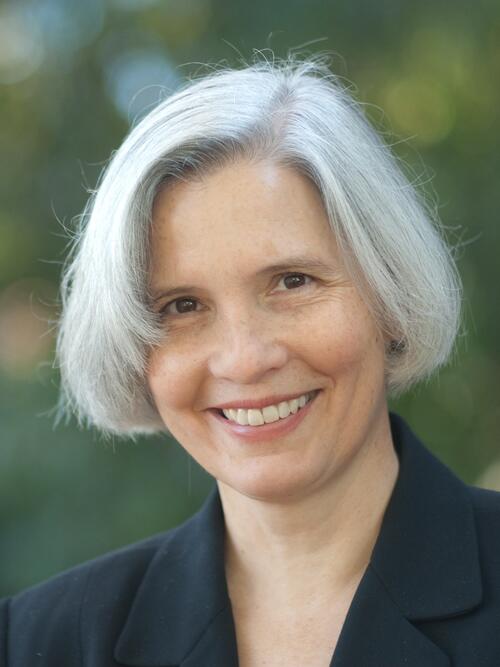
Yun-han Chu Distinguished Research Fellow at Academia Sinica; Professor of Political Science Speaker National Taiwan University
Seminars
-

Life expectancy at aged 65 is remarkably similar in the three Chinese cities of Hong Kong, Shanghai, and Taipei, even though the cities differ in levels of socioeconomic development, health systems, and other factors. Edward Jow-Ching Tu will discuss research that aims to understand this phenomenon. Despite unprecedented increases in life expectancy and attainment of similar current levels of life expectancy, the cities differ in the contributions of changes in major causes of death to the improvements in life expectancy among the elderly. Tu and colleagues have explored several possible determinants of these different patterns and trends in the three cities, including socioeconomic development, health service delivery systems, cause-of-death classification systems, and competing risks from cardiovascular disease and other diseases. Their analysis suggests that the effect of equity of health service delivery has become more important over time.

Edward Jow-Ching Tu is a senior lecturer of demography in the Division of Social Science at Hong Kong University of Science and Technology. His work is focused on the impact of fertility, mortality, and migration on socio-economic changes in East Asia countries with special emphasis on nations experiencing a transition from planned economy to market economy; on causes and impacts of mortality changes and health transition on aging societies; and on the causes of lowest-low fertility in many East Asia countries. He has several active research projects ongoing in China, Japan, Taiwan, Hong Kong, and Singapore. He holds graduate degress from West Virginia University, the University of Pennsylvania, and the University of Tennessee (Knoxville). Tu has worked extensively in Asia, and has served as an adjunct professor and taught in many universities in China, including Peking University, Peoples University, Nankai Univerity, and Fudan University. He had served as a senior research scientist at the New York State Health Department and as a research fellow (full professor) at the Institute for Social Sciences and Philosophy at Academia Sinica. Tu has also taught at the State University of New York in Albany.

Philippines Conference Room

Edward Jow-Ching Tu Senior Lecturer of Demography at the Division of Social Science Speaker Hong Kong University of Science and Technology
Seminars

Walter. H. Shorenstein
Asia-Pacific Research Center
616 Serra St C332
Stanford University
Stanford, CA 94305-6055

(650) 725-0938 (650) 723-6530
0
Visiting Associate Professor
YuanFangchen_WEB.jpg MA, PhD

Fangcheng Yuan joins the Walter H. Shorenstein Asia-Pacific Research Center (Shorenstein APARC) during the 2011–12 academic year from the Institute of Political Science at Central China Normal University where he serves as an associate professor.

His research interests encompass Sino-foreign local governance; current reforms and innovations in contemporary rural China; and a comparative study of rural governance in Mainland China and Taiwan. During his time at Shorenstein APARC, Yuan will conduct research on community reconstruction: current reforms and innovations in China’s rural primary-level management system. He will contribute to a forthcoming research report on the subject.

Yuan is an editor of the Journal of Socialist Research, and contributes articles regularly to publications including CASS Journal of Political Science and Journal of Public Administration. He is also the author of Making Service Work (2008); Breakthrough: Xian’an Reform and the Transformation of China's Rural Grass-roots Governance (2009); and Working in Grass-Roots: A Close Observation of the Reforming of Rural China (2011).

Yuan holds a PhD and an MA in Chinese and foreign political systems from the Institute of Political Science at Central China Normal University, and a BA in political science from Wuhan University.

-

Abstract:

The 2012 Republic of China presidential and legislative elections to be held on January 14th mark the fifth presidential and seventh national legislative direct elections in Taiwan. Incumbent ROC President Ma Ying-jeou of the Kuomintang (KMT) enjoyed a landslide victory in 2008 over Democratic Progressive Party (DPP) candidate Hsieh Chang-ting, winning by over 2.2 million votes. Subsequent revelations of corruption by former President Chen Shui-bian of the DPP and various members of his administration further damaged the DPP's public image and electoral prospects.

In the intervening years, however, current DPP candidate Tsai Ing-wen and other members of the DPP have worked to revitalize their party's image, and as chairperson of the DPP Tsai established a special internal investigative committee to root out corruption in the party. A potentially complicating new factor in the race is the first-ever presidential bid by the People's First Party (PFP), led by candidate James Soong. Polling results to date have indicated the potential for a very close race between Ma and Tsai, with Soong also pulling a substantial portion of the vote that may affect the electoral outcome.

On the legislative side, the KMT won 81 out of 113 total seats in the Legislative Yuan in the 2008 elections, a circumstance that has facilitated the passage of various controversial measures supported by the Ma administration, including in particular the Economic Cooperation Framework Agreement (ECFA) with mainland China, and a significant shift in the composition of this body is likely to have a pronounced impact.

Regardless of the outcome, the results of the 2012 elections promise to offer much insight into the popular attitudes of the Taiwanese people and the prospects for future democratic consolidation and development in Taiwan. Ten days following the elections, Professors Shelly Rigger and Eric Chen-hua Yu will join us for a panel discussion to analyze the outcomes of these elections and discuss their relevance to the US and the world.

Speaker Bios:

Image
Shelley Rigger is the Brown Professor of East Asian Politics and Chair of Political Science at Davidson College in Davidson, North Carolina. She has a PhD in Government from Harvard University and a BA in Public and International Affairs from Princeton University. She has been a visiting researcher at National Chengchi University in Taiwan (2005) and a visiting professor at Fudan University in Shanghai (2006). Rigger is the author of two books on Taiwan’s domestic politics, Politics in Taiwan: Voting for Democracy (Routledge 1999) and From Opposition to Power: Taiwan’s Democratic Progressive Party(Lynne Rienner Publishers 2001). In 2011 she published Why Taiwan Matters: Small Island, Global Powerhouse, a book for general readers. She has published articles on Taiwan’s domestic politics, the national identity issue in Taiwan-China relations and related topics. Her current research studies the effects of cross-strait economic interactions on Taiwan and Mainland China. Her monograph, “Taiwan’s Rising Rationalism: Generations, Politics and ‘Taiwan Nationalism’” was published by the East West Center in Washington in November 2006.

Image

Eric Chen-hua Yu is an assistant research fellow of the Election Study Center and

jointly appointed as an assistant professor of political science at National Chengchi University in Taiwan. Before he returned to Taiwan to serve in his Alma mater in 2009, he has been a research fellow and program manager of Center on Democracy, Development, and the Rule of Law at Stanford’s Freeman Spogli Institute for International Studies since 2006. His research interests include public opinion, electoral politics, quantitative methods, and American politics. He also participates in a number of joint survey projects such as Taiwan Election and Democratization Studies (TEDS) and World Value Survey. Yu recently published academic articles on Taiwan’s domestic politics in
Taiwan Political Science Review, Journal of Electoral Studies, Review of Social Sciences, and Japanese Journal of Electoral Studies. Yu received a MS (2000) in Public Policy Analysis from the University of Rochester, and a Ph.D. in political science (2006) from Columbia University.

CISAC Conference Room

Shelly Rigger Professor of East Asian Politics and Chair of Political Science Speaker Davidson College

616 Serra St.
Encina Hall
Stanford, CA 94305

1
3x4200dpi[2]_self.JPG MS, PhD

Eric Yu was a research fellow and program manager for the Democracy in Taiwan program at CDDRL. His research interests included public opinion, electoral politics, federalism, and quantitative methods. He worked with Election Study Center at National Chengchi University (Taiwan) on a multi-year research project examining the relationship between public opinion and policy output at the local level in Taiwan. This project aimed to explore the extent to which local policy-makings respond to public opinions across a variety of policy dimensions. His recent studies also include the development of Taiwanese public attitudes toward cross-strait relations, the emergence of the third force under the new "single-district, two-ballot" electoral system for Taiwan's legislative elections, and mass policy preferences and their implications for political parties in Taiwan.

Yu received a BA (1995) in Political Science from the National Chengchi University in Taiwan, a MS (2000) in Public Policy Analysis from the University of Rochester, and a Ph.D. (2006) in Political Science from Columbia University.

Research Fellow and Program Manager for the Democracy in Taiwan Program
Eric Chen-hua Yu Assistant Research Fellow and Assistant Professor of Political Science Speaker Election Study Center; National Chengchi University
Panel Discussions
-

Abstract:

     While the reelection of Taiwan’s president, Ma Ying-jeou, relieved concerns about an immediate deterioration in cross-Strait relations, the future of ties between Beijing and Taipei remain uncertain. Much will depend on the PRC’s policy. Moreover, calls in the United States either to abandon Taiwan or, conversely, to embrace it ever more closely as a hedge against the Mainland’s growing strength, have yet to play themselves out. Alan D. Romberg will address the implications of the election for these issues, as well as for Sino-American relations and for the region.

Speaker Bio:

     Alan Romberg is the director of the East Asia program at Stimson. 

     Before joining Stimson in September 2000, he enjoyed a distinguished career working on Asian issues, both in and out of government, including twenty years as a US Foreign Service Officer. Romberg was the principal deputy director of the State Department's Policy Planning staff and deputy spokesman of the department. He served in various capacities dealing with East Asia, including director of the Office of Japanese Affairs, member of the Policy Planning staff for East Asia, and staff member at the National Security Council for China. He served overseas in Hong Kong and Taiwan. 

     Additionally, Romberg spent almost ten years as the CV Starr Senior Fellow for Asian Studies at the Council on Foreign Relations, and was special assistant to the Secretary of the Navy. 

     Romberg holds an MA from Harvard University, and a BA from the Woodrow Wilson School of Public and International Affairs at Princeton University.

CISAC Conference Room

Alan Romberg Distinguished Fellow Speaker the Stimson Center
Seminars
Authors
News Type
News
Date
Paragraphs

More than 100 delegates gathered in Taipei on December 14th to attend the 2011 ITRI-SPRIE Forum on “Interdisciplinary Collaboration for Smart Green Innovation”, jointly organized by Industrial Technology Research Institute (ITRI) and the Stanford Program on Regions of Innovation and Entrepreneurship (SPRIE). Industrial Economics & Knowledge Center (IEK) of ITRI and SPRIE have collaborated since 2004 to conduct research and convene policymakers, executives and researchers at international forums in Taipei, Beijing, and at Stanford creating a platform between Taiwan, mainland China, and Silicon Valley to advance innovation and economic growth.

Focusing on strategies for commercialization of green technologies, the one-day Forum, sponsored by Taiwan’s Department of Industrial Technology (DoIT) at Ministry of Economic Affairs (MOEA), attracted a crowd of senior executives of large enterprises and clean-energy startups in Taiwan, local government officials, think-tank experts and academics from local research institutions and universities. The discussion included the importance of information technologies in reducing carbon emissions and the opportunities this presented to Taiwan given its strengths in IT.

The event follows SPRIE’s international forum on Innovation Beyond Boundaries: Partnerships for Advancing Smart, Green Living, held on June 29th and 30th, 2011 at Stanford University.

Executive Yuan Minister without Portfolio Jin-fu Chang opened the Forum at Taipei International Convention Center. The keynote address was delivered by Professor Dan Reicher, executive director of Stanford University’s Steyer-Taylor Center for Energy Policy and Finance, former Department of Energy assistant secretary under the Clinton administration and member of President Obama's transition team. In his keynote presentation entitled “Clean Energy: The Intersection of Technology, Policy and Finance”, Professor Reicher pointed out the importance of government support of energy technology commercialization, including new financial models for technology application and smart standards for energy efficiency.

The invitation-only morning panel discussion, chaired by MOEA Vice Minister Jung-Chiou Huang, covered a range of issues, including public-private partnerships for technology innovation and market applications, policies to boost smart green innovative competitiveness, and central/local collaboration schemes to achieve smart green city and industry development.

During the afternoon session open to the public, Stephen Su, General Director of IEK, argued that Taiwan holds enormous potential to become an innovation base for smart green technologies, with its strong foundation in the ICT industry and advanced supply chain management. He noted this could be a new potential industry for Taiwan and Silicon Valley to collaborate after the semiconductor industry to extend the advantages of regional competitiveness.

SPRIE faculty co-directors William F. Miller and Henry S. Rowen also shared their views and experience on public-private partnerships for green growth and strategies for innovation at the Forum.

The Forum concluded that transferring technologies to industry for society’s use and benefit is in the common interest of government, research institutions and enterprises. It will also continue to act as the engine of knowledge-based economies and innovative growth. Low-carbon economic development will rely on integration of interdisciplinary innovation, and the implementation of technology commercialization, in order to amplify the benefit of R & D investment.

Major Taiwan media outlets such as the United Daily News, Central News Agency and Mechanical Tech. Magazine all covered the event.

All News button
1
Authors
News Type
Q&As
Date
Paragraphs

As the world reacts to the death of Kim Jong Il, Stanford’s Gi-Wook Shin talks about the transition of power in North Korea. He discusses what’s in store for relations between Pyongyang and Washington, and what to expect of what is perhaps Kim’s most troubling legacy: his nuclear weapons program.

Shin is a senior fellow at Stanford's Freeman Spogli Institute for International Studies, and director of FSI's Shorenstein Asia-Pacific Research Center and its Korean Studies Program. The sociology professor is also the Tong Yang, Korea Foundation, and Korea Stanford Alumni Chair of Korean Studies.

Kim Jong Il’s son, Jong Un, is set to take over North Korea’s leadership. What do we know about him, and what can we expect from his leadership?

Unlike his father, who had been groomed as a successor for many years, Kim Jong Un was designated as a successor only recently. As a result, it is questionable whether he is ready to take over the failing regime. Kim Jong Il’s death was not entirely unexpected, but still came sooner than many experts had thought.

Jong Un is only 28 years old without much experience in politics and governance and has not yet been able to consolidate his power. Although his status as a new leader is not likely to be challenged, it won’t be easy at all to establish himself as a strong leader like his father, let alone like his grandfather, Kim Il Song. 

In the years to come, his in-laws—such as Jang Seong Taek—will play an important role behind Kim. The military will also be a key player in the post-Kim Jong Il era.

You were in South Korea when Kim Jong Il died. What was the mood and reaction to the news?

People were taken by surprise but there was no panic. The government is handling the situation well, while many citizens wonder what will happen to North Korea with the passing of Kim Jong Il.

How can the United States deal with this transition in power? Will there be any change in relations between Washington and Pyongyang?

Representatives of North Korea and the U.S. recently met in Beijing to discuss food aid and nuclear issues. There was some optimism with the prospect to improve the bilateral relations. However, any direct talks between the two countries to discuss major issues will be on hold for a while as the northern regime mourns the loss of its leader and focuses on internal stability. The U.S. should pay keen attention to the transitional process and needs to support a smooth transition in power. That should entail close collaboration with neighboring countries, especially South Korea and China. And it should include providing food aid that the U.S. has been considering.

How does Kim Jong Il's death fit in with other key political transitions happening throughout the world in the coming year?

There is a great deal of uncertainty on the Korean peninsula. Besides this transition in power in North Korea, there will also be power transitions in China and Russia next year. And there will also be presidential elections in the U.S., South Korea, and Taiwan in 2012. Japan may have a new prime minister too, adding more uncertainty to the situation. 

On the other hand, uncertainty does not necessarily mean a crisis—it is unlikely that the North will provoke tensions on the peninsula. The coming year is a very important one for North Korea as it celebrates itself as a “mighty, prosperous nation.” But it faces many challenges.

I don’t expect any significant change in inter-Korean relations until perhaps 2013, when South Korea elects a new administration and North Korea is stabilized with a new political leadership. 

What does Kim Jong Il’s death mean for North Korea’s nuclear program?

North Korea has nuclear weapons and an enriched uranium program that could produce nuclear bombs. Very few expect the North to give up its nuclear bombs. Added uncertainty over the transition of power and heightened concern about regime survival will only increase the value that North Korea sees in possessing nuclear weapons. 

Hero Image
RTR2VFWS
People read an extra edition of a newspaper reporting the death of North Korean leader Kim Jong Il in Seoul.
Reuters
All News button
1
-

Ten years into the war in Afghanistan, Payne Distinguished Lecturer Lt. Gen. Karl W. Eikenberry, the former U.S. Ambassador to Afghanistan and the former Commander of the American-led Coalition Forces there, set out to examine the transition to Afghan sovereignty.   Eikenberry laid out  three broad sets of questions: How well are we doing in the campaign in Afghanistan, what are the significant challenges we’ll face in achieving our goals and objectives, and what are the implications for American power and influence in the 21st century.

Watch the video below.

Bechtel Conference Center

Karl Eikenberry Payne Distinguished Lecturer; Retired United States Army Lieutenant General; Former United States Ambassador to Afghanistan Speaker
Lectures
-

Abstract:

What explains the success and failure of institution-building under foreign occupations? Reo Matsuzaki, post-doctoral fellow at the Center on Democracy, Development, and the Rule of Law, examines this question by comparing the Japanese colonization of Taiwan and the American colonization of the Philippines, which produced contrasting institutional legacies despite the presence of similar initial conditions. He argues that two variables jointly play a significant role in determining variation in institution-building outcomes: the degree of discretionary power afforded to the occupational administration by its home government; and the strength of resistance to the institution-building effort by local elites in the occupied territory. He will present his research on foreign-imposed police reform in colonial Taiwan and the Philippines, and discuss the implications of his findings for contemporary state-building missions. 

Speaker Bio:

Reo Matsuzaki is a 2011-2012 post-doctoral fellow at CDDRL with a PhD in political science from Massachusetts Institute of Technology. His dissertation examines variation in institution-building outcomes within foreign occupations, particularly in the areas of police and education, through a comparison of the Japanese occupation of Taiwan (1895-1945) and the American occupation of the Philippines (1898-1941). While at CDDRL, he will be working to turn his dissertation into a book manuscript, as well as on a project examining the role of community policing in counter-insurgency campaigns.

Encina Ground Floor Conference Room

Reo Matsuzaki Post-doctoral Fellow, 2011-2012 Speaker CDDRL
Seminars
Subscribe to Taiwan