
-

The Shorenstein Asia-Pacific Research Center at Stanford University, the Center for Pacific and Asian Studies at The University of Tokyo and the Department of Area Studies at The University of Tokyo will present a 3 part discussion comparing the formation of divided memories in Japan, China, South Korea, Taiwan and the United States.

The aim of this research is that it puts Japanese textbooks in a comparative framework, and changes the nature of the dialogue about these issues as a result. We will NOT focus on Japanese textbooks per se but rather on the comparative analysis.

Part 1. Comparative Analysis of High School History textbooks in China, Japan, South Korea, Taiwan and the United States

  • Professor Gi-Wook Shin (Director, Shorenstein APARC): an overview of our project
  • Professor Peter Duus (Stanford University): the comparative analysis of historical narratives presented in the textbooks of China, Japan and the U.S.
  • Professor Jae-Jung Chung (The University of Seoul) : the comparative analysis of textbooks in South Korea and Japan
  • Dr. Weike Li (Editor, Peoples Education Press, Beijing): on Chinese textbooks
  • Professor Haruo Tohmatsu (Tamagawa University): the comparative analysis of Japanese textbooks with other textbooks

Part 2. Textbooks as an International Relations issue

  • Dr. Daniel Sneider (Shorenstein APARC): the history of textbooks as an international issue and the different approaches to solving it
  • Professor Hiroshi Mitani (The University of Tokyo): the personal experiences with Sino-Japanese and Korean-Japanese historical Dialogue
  • Professor Shinichi Kitaoka (The University of Tokyo, former ambassador to UN): the experience of official joint committee between Japan and China

Part 3. General Discussions

  • Professor Tatsuhiko Tsukiashi (The University of Tokyo, Korean history)
  • Professor Shin Kawashima (The University of Tokyo, Chinese history)

The University of Tokyo
Komaba Hall 1F, 18th bldg.

Shorenstein APARC
Encina Hall E301
616 Jane Stanford Way
Stanford, CA 94305-6055
(650) 724-8480 (650) 723-6530
0
Senior Fellow at the Freeman Spogli Institute for International Studies
Professor of Sociology
William J. Perry Professor of Contemporary Korea
Professor, by Courtesy, of East Asian Languages & Cultures
Gi-Wook Shin_0.jpg PhD

Gi-Wook Shin is the William J. Perry Professor of Contemporary Korea in the Department of Sociology, senior fellow at the Freeman Spogli Institute for International Studies, and the founding director of the Korea Program at the Walter H. Shorenstein Asia-Pacific Research Center (APARC) since 2001, all at Stanford University. In May 2024, Shin also launched the Taiwan Program at APARC. He served as director of APARC for two decades (2005-2025). As a historical-comparative and political sociologist, his research has concentrated on social movements, nationalism, development, democracy, migration, and international relations.

In Summer 2023, Shin launched the Stanford Next Asia Policy Lab (SNAPL), which is a new research initiative committed to addressing emergent social, cultural, economic, and political challenges in Asia. Across four research themes– “Talent Flows and Development,” “Nationalism and Racism,” “U.S.-Asia Relations,” and “Democratic Crisis and Reform”–the lab brings scholars and students to produce interdisciplinary, problem-oriented, policy-relevant, and comparative studies and publications. Shin’s latest book, The Four Talent Giants, a comparative study of talent strategies of Japan, Australia, China, and India to be published by Stanford University Press in the summer of 2025, is an outcome of SNAPL.

Shin is also the author/editor of twenty-seven books and numerous articles. His books include The Four Talent Giants: National Strategies for Human Resource Development Across Japan, Australia, China, and India (2025); Korean Democracy in Crisis: The Threat of Illiberalism, Populism, and Polarization (2022); The North Korean Conundrum: Balancing Human Rights and Nuclear Security (2021); Superficial Korea (2017); Divergent Memories: Opinion Leaders and the Asia-Pacific War (2016); Global Talent: Skilled Labor as Social Capital in Korea (2015); Criminality, Collaboration, and Reconciliation: Europe and Asia Confronts the Memory of World War II (2014); New Challenges for Maturing Democracies in Korea and Taiwan (2014); History Textbooks and the Wars in Asia: Divided Memories (2011); South Korean Social Movements: From Democracy to Civil Society (2011); One Alliance, Two Lenses: U.S.-Korea Relations in a New Era (2010); Cross Currents: Regionalism and Nationalism in Northeast Asia (2007);  and Ethnic Nationalism in Korea: Genealogy, Politics, and Legacy (2006). Due to the wide popularity of his publications, many have been translated and distributed to Korean audiences. His articles have appeared in academic and policy journals, including American Journal of Sociology, World Development, Comparative Studies in Society and History, Political Science Quarterly, Journal of Asian Studies, Comparative Education, International Sociology, Nations and Nationalism, Pacific Affairs, Asian Survey, Journal of Democracy, and Foreign Affairs.

Shin is not only the recipient of numerous grants and fellowships, but also continues to actively raise funds for Korean/Asian studies at Stanford. He gives frequent lectures and seminars on topics ranging from Korean nationalism and politics to Korea's foreign relations, historical reconciliation in Northeast Asia, and talent strategies. He serves on councils and advisory boards in the United States and South Korea and promotes policy dialogue between the two allies. He regularly writes op-eds and gives interviews to the media in both Korean and English.

Before joining Stanford in 2001, Shin taught at the University of Iowa (1991-94) and the University of California, Los Angeles (1994-2001). After receiving his BA from Yonsei University in Korea, he was awarded his MA and PhD from the University of Washington in 1991.

Director, Korea Program at the Walter H. Shorenstein Asia-Pacific Research Center (APARC)
Director, Stanford Next Asia Policy Lab at APARC
Date Label
Gi-Wook Shin Speaker

Stanford University
Encina Hall, Room E301
Stanford, CA 94305-6055

0
Lecturer in International Policy at the Ford Dorsey Master’s in International Policy
2011_Dan_Sneider_2_Web.jpg MA

Daniel C. Sneider is a lecturer in international policy at Stanford's Ford Dorsey Master’s in International Policy and a lecturer in East Asian Studies at Stanford. His own research is focused on current U.S. foreign and national security policy in Asia and on the foreign policy of Japan and Korea.  Since 2017, he has been based partly in Tokyo as a Visiting Researcher at the Canon Institute for Global Studies, where he is working on a diplomatic history of the creation and management of the U.S. security alliances with Japan and South Korea during the Cold War. Sneider contributes regularly to the leading Japanese publication Toyo Keizai as well as to the Nelson Report on Asia policy issues.

Sneider is the former Associate Director for Research at the Walter H. Shorenstein Asia-Pacific Research Center at Stanford. At Shorenstein APARC, Sneider directed the center’s Divided Memories and Reconciliation project, a comparative study of the formation of wartime historical memory in East Asia. He is the co-author of a book on wartime memory and elite opinion, Divergent Memories, from Stanford University Press. He is the co-editor, with Dr. Gi-Wook Shin, of Divided Memories: History Textbooks and the Wars in Asia, from Routledge and of Confronting Memories of World War II: European and Asian Legacies, from University of Washington Press.

Sneider was named a National Asia Research Fellow by the Woodrow Wilson International Center for Scholars and the National Bureau of Asian Research in 2010. He is the co-editor of Cross Currents: Regionalism and Nationalism in Northeast Asia, Shorenstein APARC, distributed by Brookings Institution Press, 2007; of First Drafts of Korea: The U.S. Media and Perceptions of the Last Cold War Frontier, 2009; as well as of Does South Asia Exist?: Prospects for Regional Integration, 2010. Sneider’s path-breaking study “The New Asianism: Japanese Foreign Policy under the Democratic Party of Japan” appeared in the July 2011 issue of Asia Policy. He has also contributed to other volumes, including “Strategic Abandonment: Alliance Relations in Northeast Asia in the Post-Iraq Era” in Towards Sustainable Economic and Security Relations in East Asia: U.S. and ROK Policy Options, Korea Economic Institute, 2008; “The History and Meaning of Denuclearization,” in William H. Overholt, editor, North Korea: Peace? Nuclear War?, Harvard Kennedy School of Government, 2019; and “Evolution or new Doctrine? Japanese security policy in the era of collective self-defense,” in James D.J. Brown and Jeff Kingston, eds, Japan’s Foreign Relations in Asia, Routledge, December 2017.

Sneider’s writings have appeared in many publications, including the Washington Post, the New York Times, Slate, Foreign Policy, the New Republic, National Review, the Far Eastern Economic Review, the Oriental Economist, Newsweek, Time, the International Herald Tribune, the Financial Times, and Yale Global. He is frequently cited in such publications.

Prior to coming to Stanford, Sneider was a long-time foreign correspondent. His twice-weekly column for the San Jose Mercury News looking at international issues and national security from a West Coast perspective was syndicated nationally on the Knight Ridder Tribune wire service. Previously, Sneider served as national/foreign editor of the Mercury News. From 1990 to 1994, he was the Moscow bureau chief of the Christian Science Monitor, covering the end of Soviet Communism and the collapse of the Soviet Union. From 1985 to 1990, he was Tokyo correspondent for the Monitor, covering Japan and Korea. Prior to that he was a correspondent in India, covering South and Southeast Asia. He also wrote widely on defense issues, including as a contributor and correspondent for Defense News, the national defense weekly.

Sneider has a BA in East Asian history from Columbia University and an MPA from the John F. Kennedy School of Government at Harvard University.
Daniel C. Sneider Speaker
Conferences
-

This talk will examine the phenomenon of anti-Americanism in the Republic of Korea (South Korea).  Contrary to widespread perception, the speaker argues that anti-Americanism in South Korea has a deep-rooted history, the expression of which was suppressed during decades of authoritarian rule.  Anti-Americanism in South Korea involves a sophisticated ideology, constituting a kind of belief system.  Kim will trace the history of such anti-Americanism from 1945 until the present.

Hakjoon Kim is a Distinguished Practitioner at Center for East Asian Studies at Stanford.  He is Chairman of the Dong-A Ilbo, one of South Korea's largest and most influential newspapers with a circulation of over two million.  He has served as President of the University of Inchon, the Korean Political Science Association, and the Korean Federation of Teachers' Associations.  He was a scholar at the Alexander-von-Humboldt Foundation in Germany and a guest scholar at the Woodrow Wilson International Center for Scholars in Washington, D.C.  He received his B.A. from Seoul National Univeristy, M.A. from Kent State Universiy, and Ph.D. from University of Pittsburgh.


This event is supported by the generous grant from Academy of Korean Studies in Korea.

Philippines Conference Room

No longer in residence.

0
Distinguished Practitioner, 2008-09

Hakjoon Kim was a Distinguished Practitioner at Center for East Asian Studies at Stanford. He is chairman of the Dong-A Ilbo, one of South Korea's largest and most influential newspapers with a circulation of over two million. He has served as president of the University of Inchon, the Korean Political Science Association, and the Korean Federation of Teachers' Associations. He was a scholar at the Alexander-von-Humboldt Foundation in Germany and a guest scholar at the Woodrow Wilson International Center for Scholars in Washington, D.C.

Hakjoon Kim Distinguished Practitioner Speaker Center for East Asian Studies, Stanford University
Seminars
-

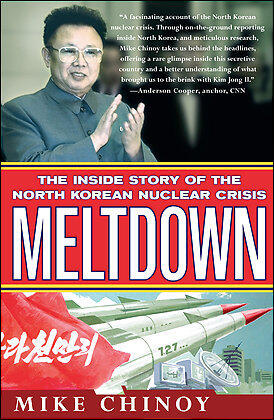
Mike Chinoy, the Pacific Council’s Edgerton Senior Fellow for Asia and author of the just-published and critically-received book, Meltdown: The Inside Story of the North Korean Nuclear Crisis will discuss the main themes in his book, update us on the recent developments in the Bush administration’s policy toward North Korea and assess what other policy options the next U.S. president might pursue.

Image
MELTDOWN The Inside Story of the North Korean Nuclear Crisis
Drawing on over 200 interviews conducted in Washington, Seoul, Tokyo and other Asian capitals – as well as insights gained from Mr. Chinoy’s 14 trips to Pyongyang – Meltdown provides a detailed account of the behind-the-scenes policy debates within the Bush administration and other governments that drove the recent confrontation over North Korea’s nuclear weapons program.  It also offers important new details of the impact the crisis had on U.S. relations with its key regional allies – Japan and South Korea – and on Washington’s fraught relationship with Beijing. 

» Washington Post’s review of the "Meltdown: The Inside Story of the North Korean Nuclear Crisis"

Mike Chinoy is one of America’s keenest observers of Asian affairs, having reported on the most important events in the region for almost thirty years. He previously served as CNN’s senior Asia correspondent (2000-06), its Hong Kong bureau chief (1996-2000), and Beijing bureau chief (1987-95).  Earlier, he spent four years as a reporter with NBC’s Hong Kong Bureau, and from 1975-78 he was a Hong Kong-based freelance reporter, contributing to CBS News as well as Newsday, The Far Eastern Economic Review and other publications.

Mr. Chinoy received an Emmy Award, an ACE Award, a Dupont Award and a Peabody Award for his coverage of the 1989 Tiananmen Square crisis.  His critically-acclaimed reporting during those weeks has been credited with strengthening CNN as an authoritative force in international news coverage. Mr. Chinoy has also covered North Korea extensively, traveling there 14 times since 1989.  In April 1994, he became the first broadcaster to file live TV reports from North Korea, and was the only journalist to travel with former U.S. President Jimmy Carter on his historic trip to Pyongyang in June of that year.

Philippines Conference Room

Mike Chinoy Edgerton Senior Fellow Speaker Pacific Council on International Policy
Seminars

Shorenstein APARC
Stanford University
Encina Hall E301
Stanford, CA 94305-6055

(650) 724-5648 (650) 723-6530
0
POSCO NGO Fellow, 2008-09
Hye-Jeong_Kim.JPG

Hey-jeong Kim joined Korea Federation for Environment Movement in 1989 and worked for 18 years in establing the grass root environmental NGO in South Korea. She became the Secretary General of the organization, and has been working as a committee member of the Ministry of Environment in Korea.

-

This talk will examine the challenges and problems that South Korea faces on its way to full-fledged democracy. The ideological composition of Korean society, the role of political parties, civil society and media as well as the attitude of public intellectuals will be assessed.

Se Il Park is a 2008-09 visiting scholar at APARC’s Korean Studies Program, and a professor of law and economics in the Graduate School of International Studies at Seoul National University. He is the founder and the chairman of the board of Hansun Foundation for Freedom and Happiness, an independent, non-partisan think tank based in Seoul devoted to providing innovative and practical public policy recommendations to South Korean society at large.

Park is the author of many books, including Communitarian Liberalism (2008); National Strategy for Sunjinwha in Korea (National strategy to make Korea a world-class nation) (2006); Blueprint for Tertiary Education Reform in Korea (2003); Strategy for Presidential Success: Authority, Role, and Responsibility (2002); Growth, Productivity, and Vision for Korean Economy (2001); Reforming Labor Management Relations: lessons from the Korean experience: 1996-1997 (2000); and Law and Economics (2000).

Park served as Senior Secretary to the President for policy planning and social welfare in the Office of the President of the Republic of Korea from 1995 to 1998, and was a member of National Assembly of the Republic of Korea from 2004 to 2005. He also worked at the Korea Development Institute as a Senior Fellow from 1980 to 1985. Park received his B.A. from Seoul National University and his M.S. and Ph.D. from Cornell University.

This event is supported by the generous grant from Academy of Korean Studies in Korea.

Philippines Conference Room

Shorenstein APARC
Stanford University
Encina Hall,Room E301
Stanford, CA 94305-6055

(650) 724-5668 (650) 723-6530
0
Visiting Scholar, 2008-09
Seil_Park.JPG PhD

Park, Se-Il is a professor of law and economics in the Graduate School of International Studies at Seoul National University. He is the founder and chairman of the board of Hansun Foundation for Freedom and Happiness, which is an independent, non-partisan think tank based in Seoul devoted to high-quality public policy research. The Foundation works to provide innovative and practical policy recommendations to the South Korean government.

Dr. Park is the author of many books including Communitarian Liberalism (2008); National Strategy for Sunjinwha in Korea (National strategy to make Korea to become a world class nation)(2006); Blueprint for Tertiary Education Reform in Korea (2003); Strategy for Presidential Success: Authority, Role, and Responsibility (2002); Growth, Productivity, and Vision for Korean Economy (2001); Reforming Labor Management Relations: lessons from the Korean experience: 1996-1997 (2000); Law and Economics
(2000).

Park is currently writing a book on globalization in which he plans to research several important political, social, and economic challenges, stemming from globalization. Based on that research he hopes to make comprehensive strategic recommendations for Korea to become a successful advanced nation in the age of globalization. The tentative title is Creative Globalization: Korean strategy for globalization.

Park has taught for more than 20 years at Seoul National University, College of Law and Graduate School of International Studies. He served as Senior Secretary to the president for policy planning and social welfare in the Office of the President of the Republic of Korea
from 1995 to 1998, and was a member of National Assembly of the Republic of Korea from 2004 to 2005. He also worked at the Korea Development Institute as a Senior Fellow from 1980 to 1985. He received the Chung-Nam Award from the Korean Economic Association in 1987 for his outstanding publications in economics. He served as President of the Korean Labor Economic Association (2001-2002), President of the Korean Law and Economic Association (2000-2003), and President of the Korean Institutional Economic Association (2002-2003). Park received his BA from Seoul National University and his MS and PhD from Cornell University.

Se-Il Park Visiting Scholar, APARC Speaker
Seminars

Shorenstein APARC
Stanford University
Encina Hall,Room E301
Stanford, CA 94305-6055

(650) 724-5668 (650) 723-6530
0
Visiting Scholar, 2008-09
Seil_Park.JPG PhD

Park, Se-Il is a professor of law and economics in the Graduate School of International Studies at Seoul National University. He is the founder and chairman of the board of Hansun Foundation for Freedom and Happiness, which is an independent, non-partisan think tank based in Seoul devoted to high-quality public policy research. The Foundation works to provide innovative and practical policy recommendations to the South Korean government.

Dr. Park is the author of many books including Communitarian Liberalism (2008); National Strategy for Sunjinwha in Korea (National strategy to make Korea to become a world class nation)(2006); Blueprint for Tertiary Education Reform in Korea (2003); Strategy for Presidential Success: Authority, Role, and Responsibility (2002); Growth, Productivity, and Vision for Korean Economy (2001); Reforming Labor Management Relations: lessons from the Korean experience: 1996-1997 (2000); Law and Economics
(2000).

Park is currently writing a book on globalization in which he plans to research several important political, social, and economic challenges, stemming from globalization. Based on that research he hopes to make comprehensive strategic recommendations for Korea to become a successful advanced nation in the age of globalization. The tentative title is Creative Globalization: Korean strategy for globalization.

Park has taught for more than 20 years at Seoul National University, College of Law and Graduate School of International Studies. He served as Senior Secretary to the president for policy planning and social welfare in the Office of the President of the Republic of Korea
from 1995 to 1998, and was a member of National Assembly of the Republic of Korea from 2004 to 2005. He also worked at the Korea Development Institute as a Senior Fellow from 1980 to 1985. He received the Chung-Nam Award from the Korean Economic Association in 1987 for his outstanding publications in economics. He served as President of the Korean Labor Economic Association (2001-2002), President of the Korean Law and Economic Association (2000-2003), and President of the Korean Institutional Economic Association (2002-2003). Park received his BA from Seoul National University and his MS and PhD from Cornell University.

Professor Thompson builds on Barrington Moore's insight that there are different "paths to the modern" world. Thompson's manuscript explores alternatives to the familiar South Korean-and Taiwan-based model of "late democratization." According to that model, political pluralism follows a formative period of economic growth during which labor is demobilized and big business, religious leaders, and professionals depend upon and are co-opted by the state.

The Vietnamese government legalized strikes in 1995. Since then Vietnamese workers have gone on strike more than 1,500 times. Most of these actions have erupted in factories established by capital investments from South Korea and Taiwan. Far fewer have been reported in factories relying on private investments from other countries or in publicly funded and state-owned enterprises (SOEs). When labor protests do occur in SOEs, they tend to be less confrontational, involving petitions and letters of complaint sent to local labor newspapers and relevant officials.

Authors
Donald K. Emmerson
News Type
News
Date
Paragraphs

As a 2007-08 Shorenstein Fellow at Shorenstein APARC, John D. Ciorciari pursued a full and varied agenda of research and writing on Southeast Asia.

Fellowships are more often won on the promise of completing a book than books are finished before the fellowships end. Dr. John Ciorciari broke this “rule” by completing his book manuscript in Spring 2008 and submitting it to a university press for possible publication.

Based on his Oxford dissertation, the work is provisionally entitled “Hedging: Using Southeast Asian States as Case Studies.” In it, he examines the range of options that secondary states possess between outright alignment with and neutrality toward the great powers. He argues that secondary states normally seek to "hedge" by limiting their alignments. They do so to avoid the risks of tight security cooperation with the great powers, including diminished autonomy and entrapment, while reaping sufficient rewards in the form of protection. He presented his findings at a Southeast Asia Forum seminar on May 28, 2008 titled “Dating but Not Married: Southeast Asian Security Responses to the Rise of China.” See the link below for an audio file of the seminar.

In addition to finishing his book on hedging, Ciorciari used his fellowship period to pursue his research interest in Asian financial cooperation, which is increasingly central to broader political relations in the region. He focused on the Chiang Mai Initiative (CMI), an effort by China, Japan, South Korea, and the ten members of the Association of Southeast Asian Nations (ASEAN) to develop economic resilience by establishing regional mechanisms for balance-of-payments support.

Ciorciari collaborated on this study with Jennifer Amyx, a professor of political science at the University of Pennsylvania and herself a former Shorenstein Fellow and speaker for the Southeast Asian Forum (SEAF) at Shorenstein APARC. Ciorciari and Amyx acknowledge that establishing an effective financing mechanism under the CMI has proven to be a challenging task. Nevertheless, by fostering regular interaction among Asian central bankers and finance ministry officials, the CMI has begun to yield a range of spillover benefits conducive to regional financial resilience. (Schedules permitting, Ciorciari and Amyx may present some of their findings at a SEAF seminar at Stanford in the upcoming academic year.)

As a Shorenstein Fellow in 2007-08 Ciorciari also worked on two projects on Cambodia: a book chapter on the international politics surrounding the long-delayed and finally ongoing Khmer Rouge Tribunal, and an article on China’s relations with the Khmer Rouge regime during the late 1970s. The article argues that the Pol Pot regime effectively punched above its weight in an otherwise asymmetrical relationship by exploiting China's rigid conception of its security interest in Indochina. In studying the Sino-Cambodian alliance, Ciorciari was able to test and illustrate some of the arguments in his book manuscript as to how small states pursue leverage and autonomy in their relations with major powers.

All News button
1
News Type
News
Date
Paragraphs

In 2007 Shorenstein APARC and The Asia Foundation chose Dennis Arroyo to be the first Shorenstein APARC/Asia Foundation Visiting Fellow.  Arroyo spent the 2007-08 academic year researching and completing a monograph on "The Political Economy of Successful Reform:  Asian Stratagems."  An edited abstract follows:

Major economic reforms are often politically difficult, causing pain to voters and provoking unrest.  They may be opposed by politicians with short time horizons. They may collide with the established ideology and an entrenched ruling party.  They may be resisted by bureaucrats and by vested interests.  Obstacles to major economic reform can be daunting in democratic and autocratic polities alike.
 
And yet, somehow, past leaders of today's Asian dragons did implement vital economic reforms. "The Political Economy of Successful Reform:  Asian Stratagems" recounts the political maneuvers used by Asian leaders of economic reform in these countries at these pivotal times:  Thailand under General Prem Tinsulanonda; Vietnam during Doi Moi (or Renovation); Singapore under Lee Kuan Yew; China under Deng Xiaoping; India in the 1990s; and South Korea under Park Chung Hee.


The paper classifies these maneuvers as responses to the main political barriers to reform and develops a "playbook" of tactics for economic reformers.  To overcome ideological obstacles, for example, the reformers packaged and presented reforms as ways of strengthening the party in power. Reformers proceeded gradually.  Initially they sought win-win compromises. They blessed pro-market violations as pilot projects. They even created new provinces in order to dilute the anti-reform vote.

The full text of Arroyo's monograph has been published by the Stanford Center for International Development in its working paper series.

Arroyo came to Stanford well qualified to study economic reform techniques.  In 2005 he was named director for national planning and policy at the National Economic and Development Authority (NEDA) of the Philippines.  His duties included building public support for the economic reforms championed by NEDA.  He has consulted for the World Bank, the United Nations, and the survey research firm Social Weather Stations, and has written widely on socioeconomic topics.  His critique of the Philippine development plan won a mass media award for "best analysis."  He has degrees in economics from the University of the Philippines.

In May 2008 Arroyo presented his findings in a SEAF lecture entitled "The Foxy Art of Herding Dragons: How Sly Asian Leaders Pulled off Politically Difficult Economic Reforms."

All News button
1
Subscribe to South Korea