News Type
News
Date
Paragraphs

Image
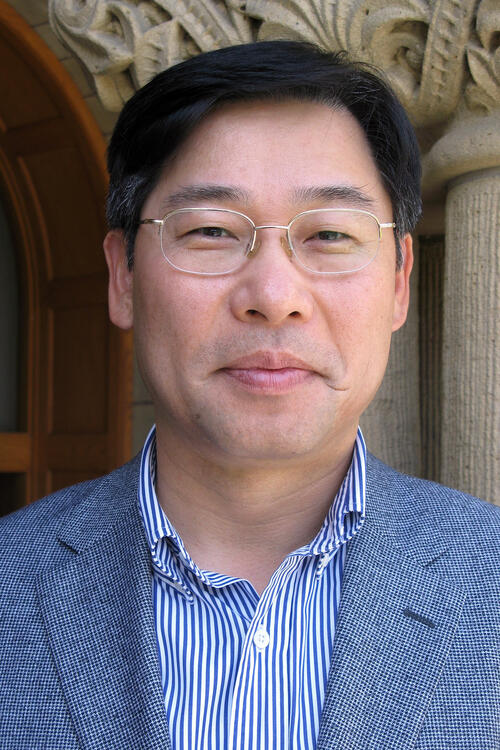
Earn Key Joo, a vice president with the Human Resources Development Center of Samsung Electronics, is a current fellow with the Corporate Affiliates Program of the Walter H. Shorenstein Asia-Pacific Research Center (Shorenstein APARC) at Stanford University. Joo, who has worked with Samsung for 25 years, is based at the company's headquarters in Seoul, South Korea. He has extensive auditing experience, including evaluating the management and operational business units and investigating the illegal activities of employees.

While Samsung's headquarters are based in Seoul, the larger research and development and operational offices are located in Suwon, a city in close proximity to Seoul. Samsung is the current leader of the global electronics market, manufacturing everything from televisions to refrigerators, and semiconductors to mobile phones. It is especially strong in the LED television, color monitor, memory chip, and LCD panel product sectors. Samsung is now trying to advance in the mobile phone market with the introduction of its Galaxy S smartphone, which is available in the United States.

Joo is currently researching ways for Samsung to maintain its market lead. Even as the current leader, he said, market changes could affect the company's success. Joo is studying the case of Sony, a previous electronics market leader, and the factors that led to the loss of its position. His advisor for the project is Gi-Wook Shin, director of Shorenstein APARC and the Korean Studies Program.

In addition to his research project, Joo is taking advantage of his time at Stanford University to improve his English-language skills. He is proficient at reading English, and is using the opportunity to strengthen his speaking ability. He also hopes in the coming months to attend more events, especially in order to learn about the systems of other companies. Joo has already participated in site visits to Cisco, the Federal Reserve Bank of San Francisco, and Palo Alto Utilities.

Joo, who has previously not had the experience of living abroad and has had few opportunities to engage with people from other countries, says, "This is a very good time for me to widen my global perspective." He wants to interact as much as possible with the other fellows-who come from diverse work sectors and different countries in Asia-to exchange information, including best practices, based on each fellow's unique professional experience.

After he returns to Korea, Joo plans to take some of the information he has gained from his research and his exchange of knowledge with other fellows and share it with different development and marketing teams at Samsung, in addition to applying it in his own job. Samsung, Joo believes, is in need of creativity now and he is exploring ways it can develop this in its employees.

In between research and company visits, Joo has been able to spend valuable time with his family, which has traveled with him from Korea. They are planning to visit as many places as possible in the United States and have already visited Yellowstone National Park and are planning a trip to Alaska.


Hero Image
JooEarnKey2
All News button
1

616 Jane Stanford Way
Encina Hall, C332
Stanford, CA 94305-6060

(650) 725-1480 (650) 723-6784
0
jonas_edman.jpg

Jonas Edman is a Curriculum Writer for the Stanford Program on International and Cross-Cultural Education (SPICE). In addition to writing curriculum, Jonas coordinates SPICE’s National Consortium for Teaching About Asia (NCTA) professional development seminars on East Asia for middle school teachers, and collaborates with FSI and other Stanford colleagues on developing curricula for community college instructors as part of Stanford Human Rights Education Initiative (SHREI). Prior to joining SPICE in 2010, Jonas taught history and geography in Elk Grove, California, and taught Theory of Knowledge at Stockholm International School in Stockholm, Sweden.

Jonas' professional interests lie in curriculum and instruction and teacher professional development, with a special interest in online education development. He received his Single Subject Teaching Credential in Social Science from California State University, Sacramento in 2010, and a bachelor degree in History from Stockholm University in 2008. He graduated high school from the American School in Japan in 1996.

Jonas has presented teacher seminars nationally for the National Consortium for Teaching about Asia in Omaha, Nebraska; the California Council for Social Studies in Anaheim and Burlingame, California; the National Council for the Social Studies in Washington D.C.; the Midwest Conference on Asian Affairs in East Lansing, Michigan; and the National Association for Multicultural Education in Oakland, California. He has also presented teacher seminars internationally for the East Asia Regional Council of Overseas Schools in Kota Kinabalu, Malaysia, and Bangkok, Thailand; and the European Council of International Schools in Nice, France.

Instructor, Stanford e-Tottori
Instructor, Stanford e-Yamaguchi
Instructional Designer
Date Label
News Type
News
Date
Paragraphs

As the new academic year is about to get underway, the Corporate Affiliates Program of Shorenstein APARC welcomes its new class of fellows for the 2010-2011 academic year:

  • Minoru Aosaki, Ministry of Finance, Japan; 
  • Wataru Ishii, Shizuoka Prefecture, Japan; 
  • Earn Key Joo, Samsung Electronics, Republic of Korea; 
  • Toshifumi Kadowaki, Sumitomo Corporation, Japan; 
  • Takeshi Kondo, Mitsubishi Electric, Japan; 
  • Yuichi Moronaga, Ministry of Economy, Trade and Industry, Japan; 
  • Makoto Murata, Kansai Electric Power Company, Japan; 
  • Pradnya Palande, Reliance Industries, India; 
  • Seung Gun Park, Samsung Electronics, Republic of Korea; 
  • Puangthong Pawakapan, the Asia Foundation / Chulalongkorn University, Thailand; 
  • Oshie Sato, Sumitomo Corporation, Japan; 
  • Naoki Takeuchi, Development Bank of Japan, Japan; 
  • Hirofumi Takinami, Ministry of Finance, Japan; 
  • Sonya Vasudeva, Reliance Industries, India; and 
  • Eiichi Yamamoto, Japan Patent Office, Japan.

During their stay at Stanford University, the fellows will audit classes, study English, and conduct individual research projects, which they will then present about at the end of the year. They will have the opportunity to consult with Shorenstein APARC's scholars and attend events featuring visiting experts from around the world. The fellows will also participate in special events and site visits to gain a first-hand understanding of business, society, and culture in the United States.

The Corporate Affiliates website will feature interviews with of each of the 2010-2011 fellows throughout the coming year.

Hero Image
Encina1Logo
All News button
1
-

How will population aging impact the economies and social protection systems of Japan, South Korea, China, and India? This colloquium showcases research addressing that question by contributors to a new Shorenstein APARC book, Aging Asia, co-edited by Karen Eggleston and Shripad Tuljapurkar. Dr. Bloom discusses how aging of the baby boom generation, declines in fertility rates, and an increase in life expectancy imply several changes for the economies of the region. Notwithstanding the potential challenges, Bloom argues that population aging may have less of a negative effect on economic growth than some have predicted. Bloom will also discuss the longitudinal aging study in India.

David Bloom is Clarence James Gamble Professor of Economics and Demography at Harvard University, Chair of the Department of Global Health and Population at the Harvard School of Public Health, and Director of Harvard University’s Program on the Global Demography of Aging (funded by the National Institute of Aging). He is Research Associate at the National Bureau of Economic Research, where he serves as a member of three research programs: Labor Studies, Aging, and Health Economics. He co-chairs the Public Policy Committee of the American Foundation for AIDS Research. Bloom received a B.S. in Industrial and Labor Relations from Cornell University in 1976, an M.A. in Economics from Princeton University in 1978, and a Ph.D. in Economics and Demography from Princeton University in 1981.

Philippines Conference Room

David Bloom Clarence James Gamble Professor of Economics and Demography Speaker Harvard University
Seminars

Shorenstein APARC
Stanford University
Encina Hall, Room E301
Stanford, CA 94305-6055

(650) 725-6773 (650) 723-6530
0

Joyce Lee joined the Walter H. Shorensein Asia-Pacific Research Center (Shorenstein APARC) in June 2010. Her research currently focuses on the rethinking of Asian multiculturalism, as well as on the official development assistance (ODA) in education sector.
 
Prior to joining Shorenstein APARC, Lee gained several years of research experience at the United States Congress, the Asia Foundation's Center for U.S.-Korea Policy in Washington, DC, and the Ministry of Foreign Affairs and Trade of the Republic of Korea in Seoul. During the 2008 presidential election season, Lee worked as a political intern for Hillary Clinton's campaign at its headquarters in Arlington, VA.

During her four years of college, Lee studied political science at Seoul National University, Chinese language and literature at Peking University, and graduated from the University of Washington with a double bachelors degree in political science and psychology. Lee received a master's degree in public policy from Cornell University. She speaks fluent Korean and conversational Mandarin Chinese.

Research Project Manager
News Type
News
Date
Paragraphs

The fourth Korea-U.S. West Coast Strategic Forum was held on June 18th at Stanford to discuss current developments in North Korea and North Korea policy, the future of the U.S.-South Korean alliance, and a strategic vision for Northeast Asia. Former senior government officials and other leading experts from the United States and South Korea participated. The forum agenda and the executive summary available.

Participants from the United States included:

  • Michael H. Armacost, Shorenstein Distinguished Fellow, Shorenstein Asia-Pacific Research Center (APARC), Stanford University
  • Michael Chinoy, Senior Fellow, University of Southern California, U.S.-China Institute; former CNN foreign correspondent
  • Siegfried S. Hecker, Co-Director of Center for International Security and Cooperation (CISAC), Stanford University; and Professor (Research), Department of Management Science and Engineering; FSI Senior Fellow
  • David C. Kang, Professor of International Relations and Business, University of Southern California; Director, USC Korean Studies Institute
  • Stephen D. Krasner, Professor of International Relations and Business, Deputy Director of Freeman Spogli Institute, Stanford University
  • John W. Lewis, William Haas Professor of Chinese Politics, Emeritus, Stanford University; CISAC Faculty Member; FSI Senior Fellow, by courtesy
  • Kyung-Ae Park, Associate Professor, Korea Foundation Chair, Institute of Asian Research, University of British Columbia
  • William J. Perry, Michael and Barbara Berberian Professor (at FSI and Engineering) and Co-director of the Preventive Defense Project at CISAC; FSI Senior Fellow
  • Gi-Wook Shin, Director, Shorenstein APARC; Director, Korean Studies Program and Tong Yang, Korea Foundation, and Korea Stanford Alumni Chair of Korean Studies; Professor of Sociology; FSI Senior Fellow
  • David Straub, Associate Director, Korean Studies Program, Shorenstein APARC; former Director, Office of Korean Affairs, U.S. State Department
  • Philip W. Yun, Vice President for Resource Development, The Asia Foundation
    Participants from South Korea
  • Yun Young Cho, Associate Professor, Chung-Ang University
  • Ro Myung Gong, Chairman, The Sejong Foundation; former Foreign Minister
  • Young Sun Ha, Professor, Seoul National University
  • Yong Ho Kim, Professor, Inha University; former President of Korea Political Science Association
  • Sangho Lee, Research Fellow, The Sejong Institute (Program Coordinator)
  • Yong Ok Park, Governor, South Pyongan Province; former Vice Minister of Defense
  • Sang Woo Rhee, Head, Presidential Commission for National Security Review; former President, Hallym University
  • Gi Woong Son, Senior Research Fellow, Korea Institute for National Unification
  • Dae Sung Song, President, The Sejong Institute
Hero Image
IMG 7563 43
All News button
1

Speaking on June 17, 2010 in a television interview in South Korea, Dr. Gi-Wook Shin, Director of the Walter H. Shorenstein Asia-Pacific Research Center (APARC) at Stanford University, said, “No one can now ignore or overlook the importance of Asia.” He spoke of the rise of Asian countries in the past 50 years, particularly in the area of economics, and the world’s growing awareness of Asia. Dr. Shin discussed the important role that Shorenstein APARC and its Korean Studies Program (KSP) play in the field of Asian studies, noting that Shorenstein APARC’s unique focus on research, policy, and the social sciences distinguishes it from most academic Asian studies centers in the United States. He explained that not only do scholars from Shorenstein APARC carry out academic research, but they also “produce some policy reports for the American government and…try to promote dialogue between the U.S. and Asian countries.”

In his interview with Heart to Heart (Arirang TV) host Kolleen Park, Dr. Shin discussed the history of the field of Asian studies, noting the growing importance of Korean studies in the past 15 years. Dr. Shin said that in the past 100 years of Korean history are found “the key elements that we talk about in the social sciences.” He then asked, “How can we use the Korean experience to generate a general model or theoretical experience for the rest of the world?”

Dr. Shin’s interview took place during his visit to South Korea for the POSCO Asia Forum where he was a keynote speaker. The theme of the 2010 Forum was the “Globalization of Asian Culture.” “Looking back, Asia had a great contribution to human society and human civilization,” Dr. Shin said. His motivation in addressing the attendees of the Forum, he explained was, “I felt that it was time to take Asia more seriously and think about how Asia can continue to make contributions to human society and civilization.”

Highlights from the POSCO Asia Forum, a summary of Dr. Shin’s new book One Alliance, Two Lenses: U.S.-Korea Relations in a New Era (Stanford University Press 2010), and Dr. Shin’s thoughts on relations between the two Koreas are also covered in the interview.

Shorenstein APARC
Encina Hall E301
616 Jane Stanford Way
Stanford, CA 94305-6055
(650) 724-8480 (650) 723-6530
0
Senior Fellow at the Freeman Spogli Institute for International Studies
Professor of Sociology
William J. Perry Professor of Contemporary Korea
Professor, by Courtesy, of East Asian Languages & Cultures
Gi-Wook Shin_0.jpg PhD

Gi-Wook Shin is the William J. Perry Professor of Contemporary Korea in the Department of Sociology, senior fellow at the Freeman Spogli Institute for International Studies, and the founding director of the Korea Program at the Walter H. Shorenstein Asia-Pacific Research Center (APARC) since 2001, all at Stanford University. In May 2024, Shin also launched the Taiwan Program at APARC. He served as director of APARC for two decades (2005-2025). As a historical-comparative and political sociologist, his research has concentrated on social movements, nationalism, development, democracy, migration, and international relations.

In Summer 2023, Shin launched the Stanford Next Asia Policy Lab (SNAPL), which is a new research initiative committed to addressing emergent social, cultural, economic, and political challenges in Asia. Across four research themes– “Talent Flows and Development,” “Nationalism and Racism,” “U.S.-Asia Relations,” and “Democratic Crisis and Reform”–the lab brings scholars and students to produce interdisciplinary, problem-oriented, policy-relevant, and comparative studies and publications. Shin’s latest book, The Four Talent Giants, a comparative study of talent strategies of Japan, Australia, China, and India to be published by Stanford University Press in the summer of 2025, is an outcome of SNAPL.

Shin is also the author/editor of twenty-seven books and numerous articles. His books include The Four Talent Giants: National Strategies for Human Resource Development Across Japan, Australia, China, and India (2025); Korean Democracy in Crisis: The Threat of Illiberalism, Populism, and Polarization (2022); The North Korean Conundrum: Balancing Human Rights and Nuclear Security (2021); Superficial Korea (2017); Divergent Memories: Opinion Leaders and the Asia-Pacific War (2016); Global Talent: Skilled Labor as Social Capital in Korea (2015); Criminality, Collaboration, and Reconciliation: Europe and Asia Confronts the Memory of World War II (2014); New Challenges for Maturing Democracies in Korea and Taiwan (2014); History Textbooks and the Wars in Asia: Divided Memories (2011); South Korean Social Movements: From Democracy to Civil Society (2011); One Alliance, Two Lenses: U.S.-Korea Relations in a New Era (2010); Cross Currents: Regionalism and Nationalism in Northeast Asia (2007);  and Ethnic Nationalism in Korea: Genealogy, Politics, and Legacy (2006). Due to the wide popularity of his publications, many have been translated and distributed to Korean audiences. His articles have appeared in academic and policy journals, including American Journal of Sociology, World Development, Comparative Studies in Society and History, Political Science Quarterly, Journal of Asian Studies, Comparative Education, International Sociology, Nations and Nationalism, Pacific Affairs, Asian Survey, Journal of Democracy, and Foreign Affairs.

Shin is not only the recipient of numerous grants and fellowships, but also continues to actively raise funds for Korean/Asian studies at Stanford. He gives frequent lectures and seminars on topics ranging from Korean nationalism and politics to Korea's foreign relations, historical reconciliation in Northeast Asia, and talent strategies. He serves on councils and advisory boards in the United States and South Korea and promotes policy dialogue between the two allies. He regularly writes op-eds and gives interviews to the media in both Korean and English.

Before joining Stanford in 2001, Shin taught at the University of Iowa (1991-94) and the University of California, Los Angeles (1994-2001). After receiving his BA from Yonsei University in Korea, he was awarded his MA and PhD from the University of Washington in 1991.

Director, Korea Program at the Walter H. Shorenstein Asia-Pacific Research Center (APARC)
Director, Stanford Next Asia Policy Lab at APARC
Date Label
Gi-Wook Shin Speaker
Seminars
News Type
Q&As
Date
Paragraphs

Speaking on June 17, 2010 in a television interview in South Korea, Dr. Gi-Wook Shin, Director of the Walter H. Shorenstein Asia-Pacific Research Center (APARC) at Stanford University, said, "No one can now ignore or overlook the importance of Asia." He spoke of the rise of Asian countries in the past 50 years, particularly in the area of economics, and the world's growing awareness of Asia. Dr. Shin discussed the important role that Shorenstein APARC and its Korean Studies Program (KSP) play in the field of Asian studies, noting that Shorenstein APARC’s unique focus on research, policy, and the social sciences distinguishes it from most academic Asian studies centers in the United States. He explained that not only do scholars from Shorenstein APARC carry out academic research, but they also “produce some policy reports for the American government and…try to promote dialogue between the U.S. and Asian countries.”

In his interview with Heart to Heart (Arirang TV) host Kolleen Park, Dr. Shin discussed the history of the field of Asian studies, noting the growing importance of Korean studies in the past 15 years. Dr. Shin said that in the past 100 years of Korean history are found “the key elements that we talk about in the social sciences.” He then asked, “How can we use the Korean experience to generate a general model or theoretical experience for the rest of the world?”

Dr. Shin’s interview took place during his visit to South Korea for the POSCO Asia Forum where he was a keynote speaker. The theme of the 2010 Forum was the “Globalization of Asian Culture.” “Looking back, Asia had a great contribution to human society and human civilization,” Dr. Shin said. His motivation in addressing the attendees of the Forum, he explained was, “I felt that it was time to take Asia more seriously and think about how Asia can continue to make contributions to human society and civilization.”

Highlights from the POSCO Asia Forum, a summary of Dr. Shin’s new book One Alliance, Two Lenses: U.S.-Korea Relations in a New Era (Stanford University Press 2010), and Dr. Shin’s thoughts on relations between the two Koreas are also covered in the interview. Watch the entire interview online here at the Shorenstein APARC website and learn more about the activities of Shorenstein APARC and KSP.

All News button
1
News Type
News
Date
Paragraphs

Shorenstein APARC is pleased to announce that Leif-Eric Easley has been awarded the %fellowship1% for 2010-2011. This fellowship is made possible through the generosity of the Northeast Asian History Foundation in Korea. The fellowship supports a scholar to conduct research and writing on a historical subject that has an impact on modern and contemporary Northeast Asia.
 While at Shorenstein APARC, Leif will engage in research and writing for a book manuscript on nationalism and strategic trust in Northeast Asia. He will also teach a course addressing issues of national identity and contested history, with focus on implications for the international relations of Japan, China, South Korea, and the United States.

Sookyung Kim, a Ph.D. candidate at Stanford University, has been selected as the 2010-2011 Takahashi Fellow. She currently is completing a dissertation titled "Renationalizing the Nation: Securing Korean National Identity in the Era of Global Migration." Before entering graduate school, Kim pursued a career in journalism, working as a staff writer in the Dong-A Daily, one of the most widely circulated newspapers in South Korea. She has written articles on social affairs and arts. She also briefly worked as a translator in Newsweek Korean Edition. Kim received her B.A. in linguistics from Seoul National University. She was born in Seoul, South Korea.

The %fellowship2% supports a Stanford University predoctoral student's research within a broad range of topics related to the political economy of contemporary East Asia. Fellows whose main focus is Japan are called Takahashi Fellows, in honor of the Takahashi family, whose generous gift has made this fellowship possible.

All News button
1
Subscribe to South Korea