News Type
Commentary
Date
Paragraphs

In a recent interview with Business Insider, David Straub, associate director of the Korea Program, says South Koreans are "confused" and "deeply concerned" about Trump's statements about U.S. policy toward the Korean Peninsula.

All News button
1
News Type
Commentary
Date
Paragraphs

Alliances serve an important purpose in international relations, but the attention given by each country to each other is rarely equal. This kind of asymmetry is apparent in the U.S.-South Korea alliance; however, South Korea as the weaker ally can work to garner greater attention from the United States by leveraging the news media, according to Stanford professor Gi-Wook Shin and Yonsei University professor Rennie Moon.

Their co-authored editorial can be viewed on the AIIA blog. More on the subject can be found in an extended journal article by Shin, Moon and Hilary Izatt in the Australian Journal of International Affairs, and the Stanford University Press book One Alliance, Two Lenses: U.S.-Korea Relations in a New Era.

Hero Image
obama parkgeunhye flickr whitehouse
U.S. President Barack Obama and South Korean President Park Geun-hye walk around Blue House in Seoul, April 2014. | Flickr/White House - Pete Souza
All News button
1
-

Left-center parties in South Korea and Taiwan recently defeated their conservative opponents amid a surge in turnout by younger voters. What are the underlying causes of these developments? Do they signal the beginning of a political transformation in these vibrant democracies? Booseung Chang will discuss the role of growing voter anger over socio-economic disparities and the rise of new nationalisms in potentially changing the political party systems of South Korea and Taiwan, along with the implications for the United States.

Image
bchang5x5
Booseung Chang is the 2015-16 Shorenstein Postdoctoral Fellow at Stanford’s Shorenstein Asia-Pacific Research Center. His research focuses on domestic developments and foreign relations of Japan, South Korea, and Taiwan, as well as North Korean nuclear issues. Chang received a doctorate in international relations from Johns Hopkins University. Previously, he served as a South Korean foreign service officer for fifteen years.

Booseung Chang <i>2015-16 Shorenstein Postdoctoral Fellow</i>, Stanford University
Seminars
News Type
Commentary
Date
Paragraphs

In early May, North Korea held its first Workers’ Party Congress in over three decades. Kathleen Stephens, Stanford distinguished fellow and former ambassador to South Korea, told CNBC’s “Squawkbox” that the meeting was an effort by North Korea to demonstrate consolidated rule under Kim Jong-un. Stephens said she did not anticipate any major announcements at the meeting, but recognized that North Korea faced a “new challenge” in its ally China joining the bid for tougher U.N. sanctions against it in response to its latest nuclear and missile tests.

The interview can be viewed here.

Hero Image
squawkbox interview headline
All News button
1
-

South Korea has relied on its export-oriented development model to become an economic powerhouse, but has now reached the limits of this model. Indeed, Korea’s phenomenal growth has incubated the seeds of its own destruction. Learning from the Korean developmental experience, China has adopted key elements of the Korean development model and has become a potent competitor in electronics and the heavy industries. Meanwhile, the organizational and institutional legacies of late industrialization have constrained Korean efforts to move into technology entrepreneurship and the service sector. These strategic challenges are compounded by a demographic bomb, as social development has led to collapsing birthrates in Korea, much like other developed countries in Europe and Asia. Within the next few years, the Korean workforce will start diminishing in size and aging rapidly, straining the country’s resources and curtailing its growth. In this seminar, Joon Nak Choi, 2015-16 Koret Fellow at Stanford's Shorenstein Asia-Pacific Reserach Center, will discuss innovations in business strategy, educational policy and social structure that are directly relevant to these problems, and that would alleviate or perhaps even reverse Korea’s economic malaise.

Image
joon nak choi 7 cropped
A Stanford graduate and sociologist by training, Choi is an assistant professor of management at the School of Business and Management, Hong Kong University of Science and Technology. His research and teaching areas include economic development, social networks, organizational theory, and global and transnational sociology, within the Korean context. He coauthored Global Talent: Skilled Labor as Social Capital in Korea (Stanford University Press, 2015).

This public event is made possible through the generous support of the Koret Foundation.

Shorenstein APARC
Encina Hall
Stanford University
Stanford, CA 94305-6055

0
joon_nak_choi_7_cropped.jpg

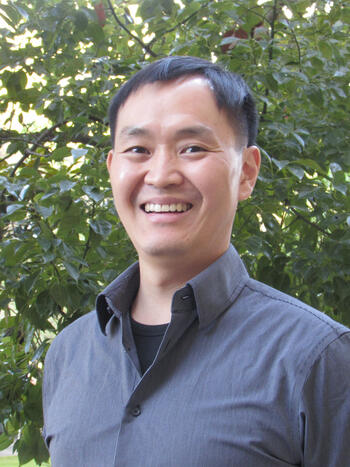
Joon Nak Choi is the 2015-2016 Koret Fellow in the Korea Program at Stanford University's Walter H. Shorenstein Asia-Pacific Research Center (Shorenstein APARC). A sociologist by training, Choi is an assistant professor at Hong Kong University of Science and Technology. His research and teaching areas include economic development, social networks, organizational theory, and global and transnational sociology, within the Korean context.

Choi, a Stanford graduate, has worked jointly with professor Gi-Wook Shin to analyze the transnational bridges linking Asia and the United States. The research project explores how economic development links to foreign skilled workers and diaspora communities.

Most recently, Choi coauthored Global Talent: Skilled Labor as Social Capital in Korea with Shin, who is also the director of the Korea Program. From 2010-11, Choi developed the manuscript while he was a William Perry postdoctoral fellow at Shorenstein APARC.

During his fellowship, Choi will study the challenges of diversity in South Korea and teach a class for Stanford students. Choi’s research will buttress efforts to understand the shifting social and economic patterns in Korea, a now democratic nation seeking to join the ranks of the world’s most advanced countries.
 
Supported by the Koret Foundation, the Koret Fellowship brings leading professionals to Stanford to conduct research on contemporary Korean affairs with the broad aim of strengthening ties between the United States and Korea. The fellowship has expanded its focus to include social, cultural and educational issues in Korea, and aims to identify young promising scholars working on these areas.


2015-2016 Koret Fellow
Visiting Scholar
<i>2015-16 Koret Fellow, Shorenstein APARC, Stanford University</i>
Seminars
Authors
News Type
News
Date
Paragraphs

From atomic bombs to harsh military occupations in the World War II period, the past is very much the present in the Asia Pacific region.

Stanford scholars are striving to help heal these wounds from yesteryear. Helping old enemies better understand each other today is the aim of the Divided Memories and Reconciliation project, a multi-year comparative study of the formation of historical memory regarding the wartime period in countries such as China, Japan, South Korea, Taiwan and the United States.

Left unattended, misguided wartime narratives may exacerbate current disputes to the point of armed conflict, said Daniel Sneider, associate director of research at Stanford's Shorenstein Asia-Pacific Research Center. He leads the Divided Memories project along with Gi-Wook Shin, a Stanford sociology professor and the Shorenstein center director.

Sneider points out the critical importance of textbooks and what is taught in schools – especially given the rise of nationalism among youth in China, Japan, Taiwan and South Korea.

"Dialogue among youth of the different nations is needed, along with an appreciation for the diversity of views and the complexity of history," he said.

Shin said, "Each nation in northeast Asia and even the U.S. has selective or divided memories of the past, and does not really understand the views of the other side."

Education and history

Launched in 2006, the Divided Memories project has published research findings, issued recommendations and convened conferences. In the early days, the researchers examined high school history textbooks in China, Japan, Korea, Taiwan and America.

Image
divided memories 1
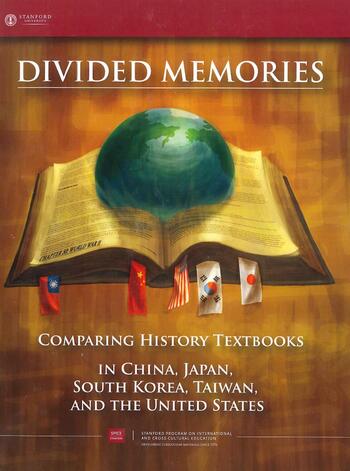
The outcome was the project's first book in 2011, History Textbooks and the Wars in Asia: Divided Memories, which suggests that an "introspective effort" to understand national narratives about WWII has the potential to bring about historical reconciliation in the region. Sneider describes it as the first comparative study of textbooks in the countries involved; it soon evolved into a classroom supplemental textbook published by the Stanford Program on International and Cross-Cultural Education.

"Formal education is a powerful force in shaping our historical understandings," Sneider noted. "We wanted to look at the textbooks that have the most impact and usage."

A 2014 book, Confronting Memories of World War II: European and Asian Legacies, which was co-edited by Shin, Sneider and Daniel Chirot, a sociologist with the University of Washington, compared successful European WWII reconciliations with lagging Asian efforts. Another book, Divided Lenses, published earlier this year, examined the impact of dramatic film and other forms of popular culture on wartime memory. A new book is due out this summer, Divergent Memories: Opinion Leaders and the Asia-Pacific War, which focuses on leaders in politics, the media and academia in Japan, China, South Korea and the U.S.

The Divided Memories project aims to generate discussions and collaborations among those who create "historical memories" – educators, policymakers and government leaders. One report that grew out of such dialogues included suggestions for reconciliation:

  • Create supplementary teaching materials on the issue. 
  • Launch dialogues among Asian, American and European historians. 
  • Offer educational forums for journalists, policymakers and students. 
  • Conduct museum exchanges and create new museums, such as one wholly dedicated to WWII reconciliation in Asia. 
  • Increase student exchanges among all the countries involved. 

History is reflected in today's geopolitics, as noted in the revived disputes by these nations over rival claims to islands in the South China Sea and elsewhere. Without resolution, these disagreements can flare up into military conflicts, Sneider wrote.

"The question of history taps into sensitive and deeply rooted issues of national identity," he noted.

Whether recounting Japanese atrocities in China, China's exaggerated account of its Communist fighters' role in World War II, or the U.S. decision to drop atomic bombs on Japan, no nation is immune to re-creating the past to further its own interests today, Sneider wrote.

For example, Divided Memories research on Chinese textbooks shows how the Chinese government in recent decades embarked on a "patriotic education" campaign to indoctrinate young people by exaggerating its role in Japan's WWII defeat. This narrative suits the nationalistic desires of a Chinese government no longer exclusively motivated by communist ideology, Sneider said.

One project of APARC and its Japan Program that was also an outgrowth of Divided Memories involved Stanford scholars urging Japanese Prime Minister Shinzo Abe to show "clear, heartfelt remorse" in a 2015 speech on the 70th anniversary of the end of WWII. A 15-page report featured hypothetical statements suggesting what Abe might say to make amends for Japanese actions in China and Korea.

"While we cannot claim to have directly influenced the prime minister, his statement did go further in the direction of an expression of remorse over the war and the need to continue to look clearly and honestly at the past than many expected," said Sneider.


Image
divided memories 2

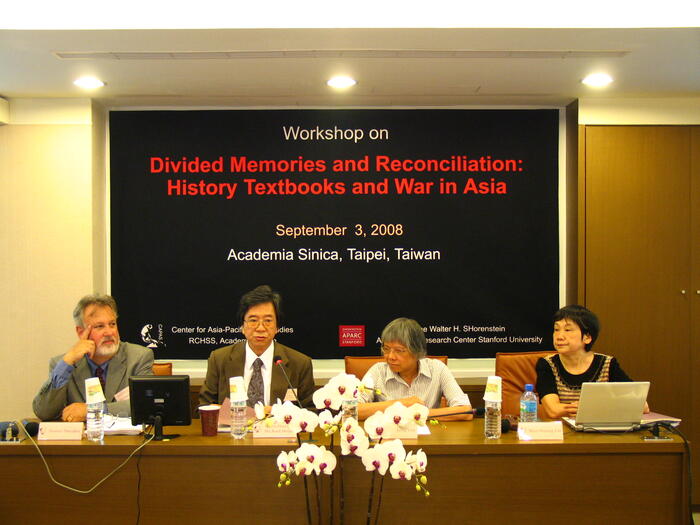
A workshop on history textbooks co-hosted by Shorenstein APARC and Academia Sinica's Center for Asia-Pacific Area Studies takes places in Taipei, Sept. 3, 2008.


Generations and grievances

Consciousness-raising on other fronts, however, is getting results, thanks to Stanford's Divided Memories project. A 2015 landmark agreement between Japan and South Korea over the WWII "comfort women" dispute was reached due to extensive U.S. involvement. Comfort women were women and girls who were forced into sexual slavery by the Imperial Japanese Army in occupied territories before and during World War II.

In an article, Sneider explained how the U.S. perceived that the dysfunctional relationship between South Korea and Japan over this issue, among others, threatened to undermine American strategic interests in Asia. 

Shin highlights the importance of U.S. involvement. "The U.S. is not just an outsider to historical and territorial disputes in the region," he said. "From a geopolitical perspective, the U.S. has done a wonderful job in reviving the devastated region into a prosperous one after 1945, but from a historical reconciliation perspective, the U.S. has done a poor job."

He suggests that America should "play a constructive role in promoting historical reconciliation" among the countries involved. And so, the Divided Memories project has included the United States in its efforts.

According to Sneider, Divided Memories is unique among all reconciliation projects for its emphasis on the inclusion of the U.S.; comparative analyses across countries; and real-world policy impacts. As part of the Shorenstein research center, it is housed within Stanford's Freeman Spogli Institute for International Studies.

"This project reflects what Stanford, our center and the Freeman Spogli Institute are all about – true interdisciplinary research and engagement," Sneider said.

Clifton Parker is a writer for the Stanford News Service.

Hero Image
divided memories reconciliation headline
Japanese soldiers in Shanghai, March 23, 1927 | A Stanford project encourages World War II reconciliation and historical accuracy about the conflict and its consequences in Japan, China, Korea, Taiwan and the United States. Progress has been made on classroom textbooks and scholarly discussions and exchanges. | Getty Images
All News button
1
Paragraphs

An analysis of the foundations and future of the trilateral relationship from a U.S. perspective, highlighting the critical role the United States has played in mediating tensions between the Republic of Korea and Japan.

The essay is also part of an expanded NBR Special Report with co-authors Yul Sohn and Yoshihide Soeya that offers insights into both the past and future of trilateral cooperation and provides recommendations for leaders in all three nations to move relations foward.

All Publications button
1
Publication Type
Policy Briefs
Publication Date
Journal Publisher
National Bureau of Asian Research (NBR)
Authors
Daniel C. Sneider
-

As the keynote for Shorenstein APARC's 8th annual Koret Workshop, Se Young Ahn, one of South Korea's leading public intellectuals, will analyze the Korean experience of utilizing global talent and immigration in the context of an extremely rapidly aging society.

Image
ahn 2
Ahn is the chairman of the National Research Council for Economics, Humanities and Social Sciences in South Korea. He oversees 23 national think tanks including Korea Institute for Industrial Economics and Trade, Korea Development Institute, Science and Technology Policy Institute, Korea Institute for International Economic Policy, Korea Labor Institute, and Korea Institute for Health and Social Affairs. He also chairs the National Advisory Committee for Trade Negotiation, and is a professor at the Graduate School of International Studies at Sogang University. Ahn's research areas include trade policy and economic integration in the Asia-Pacific region as well as the China-Korea Free Trade Agreement and Japan-Korea Free Trade Agreement. A graduate of Seoul National University, Chairman Ahn received a doctoral degree from the Pantheon-Sorbonne (Paris I) University in France.

The Koret Workshop is made possible through the generous support of the Koret Foundation.

Se Young Ahn <i>Chairman, National Research Council for Economics, Humanities and Social Sciences</i>, Korea
Seminars
News Type
Commentary
Date
Paragraphs

A recent review published in International Migration Review (IMR) lauded “Global Talent: Skilled Labor as Social Capital in Korea,” by Stanford professor Gi-Wook Shin and Joon Nak Choi. IMR reviewer Keumjae Park said the book makes an important contribution to the literature on foreign skilled workers and the problems that countries like South Korea face with demographic and economic change.

Park said the book “offers provocative policy questions” about how South Korea can encourage the development of social and cultural ties in its highly skilled labor markets, which in turn, support local and transnational markets through spread of information, innovation and trust.

Park also highlights the book’s approachability, saying it “offers theoretical lessons for general research” while it “invites attention of policy makers and business strategists.”

“Global Talent” is a part of Korea’s Global Talent, an ongoing research project at the Shorenstein Asia-Pacific Research Center. The project analyzes the potential benefits of transnational bridges between South Korea and the United States, and aims to provide insights that could be applied to other Asian countries.

Read the full review below and on the IMR website.

Hero Image
gettyimages 515156526
Getty Images
All News button
1
Subscribe to South Korea