-

Abstract:

Authoritarian ruling parties are expected to resist democratization, often times at all costs. And yet some of the strongest authoritarian parties in the world have not resisted democratization, but have instead embraced it. This is because their raison d’etre is to continue ruling, though not necessarily to remain authoritarian. Put another way, democratization requires ruling parties hold free and fair elections, but not that they lose them. Authoritarian ruling parties can thus be incentivized to concede democratization from a position of exceptional strength. This alternative pathway to democracy is illustrated with Asian cases – notably Taiwan – in which ruling parties democratized from positions of considerable strength, and not weakness. The conceding-to-thrive argument has clear implications with respect to “candidate cases” in developmental Asia, where ruling parties have not yet conceded democratization despite being well-positioned to thrive were they to do so, such as the world’s most populous dictatorship, China.


Bio:

Joseph Wong is the Ralph and Roz Halbert Professor of Innovation at the Munk School of Global Affairs, University of Toronto, and Professor of Political Science and Canada Research Chair in Democratization, Health and Development. Professor Wong was the Director of the Asian Institute at the Munk School from 2005 to 2014. In addition to academic articles and book chapters, Professor Wong has published four books: Healthy Democracies: Welfare Politics in Taiwan and South Korea (2004) and Betting on Biotech: Innovation and the Limits of Asia’s Developmental State (2011), both published by Cornell University Press, as well as Political Transitions in Dominant Party Systems: Learning to Lose, co-edited with Edward Friedman (Routledge, 2008), and Innovating for the Global South: Towards a New Innovation Agenda, co-edited with Dilip Soman and Janice Stein (University of Toronto Press, 2014). He is currently working on a book monograph with Dan Slater (University of Chicago) on Asia’s development and democracy, which is currently under contract with Princeton University Press. Professor Wong earned his Hons. B.A from McGill University (1995) and Ph.D. from the University of Wisconsin-Madison (2001). 

Philippines Conference Room, 3rd Floor, Encina Hall

616 Serra St., Stanford, CA

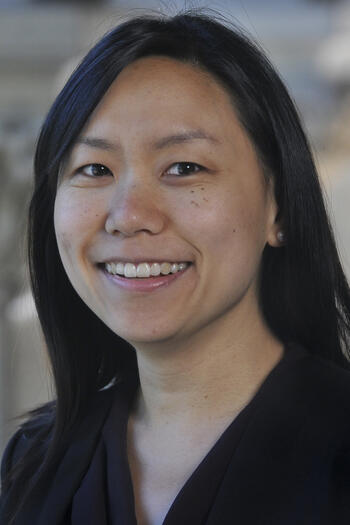
Joe Wong Professor and Canada Research Chair in Political Science University of Toronto
Seminars
-

Abstract: This paper contributes to a burgeoning literature on civilian targeting in civil war by arguing that rebel war aims can offer critical insight into who targets civilians, and when.  Specifically, I argue that secessionists are less likely than non-secessionist rebel groups to target civilians in civil war, for two reasons.  First, secessionists, who have the greatest military capacity in their claimed region, are unlikely to target civilians meant to comprise the population of their desired state. And second, secessionists are especially, and increasingly, aware of and concerned with their reputation with respect to the international community.  I test these claims using an original data set on civil wars from 1816 to 2007, as well as a case study of the South Moluccan separatist movement.


About the Speaker: Tanisha Fazal is Associate Professor of Political Science and Peace Studies at the University of Notre Dame. Her research focuses on questions around sovereignty, international law and norms, and political violence. Her book, State Death: The Politics and Geography of Conquest, Occupation, and Annexation won the 2008 Best Book Award of the American Political Science Association's Conflict Processes Section. Additional work has been published in journals such as the British Journal of Political Science, International Organization, International Security, International Studies Review, and Security Studies. She is currently completing a book manuscript on belligerents' historical and strategic use of the laws of war. More information can be found on Professor Fazal's website: http://www.tanishafazal.com/

Secessionism and Civilian Targeting
Download pdf

Encina Hall (2nd floor)


Tanisha Fazal Associate Professor of Political Science and Peace Studies Speaker University of Notre Dame
Seminars
Authors
News Type
News
Date
Paragraphs

Hunger touches the lives of people throughout the world, from the affluent Bay Area to the most impoverished regions of rural Africa. Food security – the availability of plentiful, nutritious, and affordable food – is a pressing issue for rich and poor countries alike as the world population moves toward 9 billion by mid-century.

In her new book The Evolving Sphere of Food Security (Oxford University Press, August), Professor Rosamond Naylor takes a holistic approach to the question of how to feed the world. Naylor, a professor of environmental earth system science and director of the Center on Food Security and the Environment (FSE), convened 18 colleagues from across Stanford’s diverse disciplines to shed light on the interdependent issues that affect global food security.

Throughout its 14 chapters, and a foreword by former United Nations Secretary-General Kofi Annan, the book takes up two important questions: How does the challenge of achieving food security change as countries develop economically? And how do food and agriculture policies in one country affect nutrition, food access, natural resources and national security in other countries?

Collaboration across disciplines

Naylor, who edited the volume and co-authored several chapters, explained that The Evolving Sphere of Food Security is the first book of its kind to engage faculty and scholars from across Stanford’s campus on issues of global hunger.

Professor Rosamond Naylor

“This book grew out of a recognition by Stanford scholars that food security is tied to security of many other kinds,” said Naylor, who is also William Wrigley Senior Fellow at the Freeman Spogli Institute for International Studies and the Stanford Woods Institute for the Environment. “Food security has clear connections with energy, water, health, the environment and national security, and you can’t tackle just one of those pieces.”

Stanford has a long history of fostering cross-disciplinary work on global issues. It is in this spirit that the idea for the book was born, Naylor said. The book weaves together the expertise of authors from the fields of medicine, political science, engineering, law, economics and climate science.

“Stanford was the ideal place for this project. A book like this exemplifies how collaborative, interdisciplinary research can be greater than the sum of its parts,” Naylor said. “We have painted a much more inclusive picture of food security than if we had approached these questions from only one discipline.”

Rooted in field research

Another unique feature of the book is that each author’s insights are shaped by years of hands-on research and policymaking experience around the world.

Several authors, for example, have been instrumental in shaping U.S. and global food policy for decades. Walter Falcon, professor emeritus of economics and the deputy director of FSE, traces his career as an agricultural economics advisor to the Indonesian government, where he witnessed the country’s dramatic improvements in combating hunger and poverty since the 1960s.

Political science professor Stephen Stedman recounts his experience as a security policy advisor to the United Nations during the 2000s. Recognizing that food insecurity can exacerbate civil conflict, weaken governments and threaten international stability, Stedman worked to integrate food security into traditional security agendas.

Other authors have spent many years working in East Asia, Africa, South America, the Middle East and Europe. As a whole, said Naylor, the team has conducted well over a hundred years’ worth of field research all over the world.

Challenges evolve as countries develop

A recurring theme throughout the book – also reflected in its title – is the evolving nature of the food security challenges countries face as they move through stages of economic growth. At low levels of development, countries struggle to meet people’s basic needs. For example, Naylor’s chapter on health, co-authored with Eran Bendavid (medicine), Jenna Davis and Amy Pickering (civil and environmental engineering), describes a recent study showing that poor nutrition and rampant disease in rural Kenya is closely tied to contaminated, untreated drinking water. Addressing these essential health and sanitation issues is a key first step toward food security for the poorest countries.

As nations rise above the bottom rungs of development, they encounter new challenges. Scott Rozelle, director of the Rural Education Action Program, warns that middle income countries like China now face a “second food security crisis” of widespread micronutrient deficiency. Recent rapid economic and agricultural advancements have largely solved the problem of supplying sufficient calories. But this progress masks what Rozelle describes as “hidden hunger,” or a lack of vitamins and minerals that impedes kids’ school performance and could slow China’s long-term growth. Even in rich countries like the U.S., said Naylor, malnutrition can be a drag on educational and economic performance.

Developed countries face other unique tradeoffs in the use of resources for food production. In his chapter on water institutions, Buzz Thompson, professor of law and co-director of the Woods Institute, explains that conflicts over water increase between smallholder and industrial users as countries develop. Eric Lambin, professor of environmental earth system science, and Ximena Rueda, research associate in earth sciences, offer the paradox that as countries grow wealthier, changing patterns of agricultural land use may actually worsen food security by fueling the spread of obesity and diabetes.

At its core, said Naylor, The Evolving Sphere of Food Security is about more than economic and policy trends. “The book puts a human face to food security, because hunger is an intensely human experience,” she said. “This book tells an integrated story about people’s lives, and how they are shaped by resource use and the policy process around global food security.”

Hero Image
img 0529
All News button
1
Authors
News Type
News
Date
Paragraphs

Eyes remain focused on Indonesia as votes for candidates Joko Widodo and Prabowo Subianto are counted in the country’s landmark presidential election.

On Wednesday, the polls reflected a precariously even divide between Widodo, also referred to as "Jowoki," the governor of Jakarta, and Prabowo, an ex-general and son-in-law of the country’s former dictator Suharto. Initial polls show Jowoki holds a slight lead, but the government has yet to declare an outright winner, with neither side conceding at the moment. 

Donald Emmerson, director of the Southeast Asia Forum at Shorenstein APARC, answers a few questions about the election and what it could mean for Indonesia’s fledging democracy.

This election will transfer power from incumbent president Susilo Bambang Yudhoyono, the first to lead the country since its democratic transition. Is this election a turning point for Indonesia?

It is. It is only the third direct presidential election in the history of Indonesia. The first two, in 2004 and 2009, yielded landslide victories for Susilo Bambang Yudhoyono (SBY), giving him two consecutive presidential terms as president. His large margins of victory were, in effect, incontestable. In contrast, the presidential election on 9 July is being sharply contested, based on various "quick count" estimates of who won and by how much. Some of those estimates say that Joko Widodo ("Jokowi") has won. A smaller number of estimates assign victory to his opponent, Prabowo Subianto. These estimated margins of "quick count" success by one candidate over the other are typically small: the differences run between 1 and 5 percent.

These small margins asserted on behalf of contradictory outcomes have politicized the voting-and-counting procedure and stimulated fears of fraud. Prabowo in particular appears to be challenging the legitimacy of a possible win by Jokowi when the official result is announced. That announcement is scheduled to be made by the General Elections Commission on 22 July.

If the official margin of victory is very slender, whether for Jokowi or for Prabowo, the losing campaign could request a ruling on the matter by the Constitutional Court. If the request is taken up by the court, another month could elapse before a legal judgment is issued. Under this alarming if hypothetical scenario, Indonesia's political future could remain in a prolonged limbo conducive to major unrest. 

Given that the polls reflect a tightly contested race, will the losing party accept defeat?

Who knows? It will depend on what happens. That said, there are powerful reasons to believe that the loser, whoever he is, will think twice before taking his case to the streets. The onus on such vengeance as endangering Indonesia's fledgling democracy would be great. We also need to remember that if, as many expect, the election commission (and perhaps, later, the Constitutional Court) validates Jokowi as the next president, he is likely to face a parliamentary majority that supported Prabowo. Indeed, only 37 percent of the seats in the main national legislature are occupied by members of parties that endorsed Jokowi. If Prabowo is declared the loser, and the evidence of electoral malfeasance is absent or minor, Prabowo may accept having lost if he knows he can retain substantial influence over national policy while preparing for another presidential run in 2019. 

Both candidates campaigned on widespread platforms that called for reform in many areas ­– from energy to anti-corruption. What issues are Indonesians most concerned about?

Basically, poverty and corruption. But many Indonesians allocate their votes based less on policy distinctions than on the personalities of the candidates. Prabowo's ability to catch up with Jokowi in popularity during the campaign reflects in no small measure his more charismatic and commanding personality in contrast to Jokowi's relatively lackluster performance.

What steps can the next administration take to keep Indonesia from slipping back to its authoritarian past?

The two candidates are very different in this regard. Prabowo is a former general. He has been implicated in major violations of human rights. He is linked to the autocratic regime that preceded Indonesia's current democratic experiment. One can imagine many steps that Prabowo could take as president to nudge Indonesia back onto its former authoritarian track. He has already said that direct elections are not good for Indonesia.  

As for Jokowi, were he to become president, his task would be to achieve a level of probity and progress in Indonesia sufficient to convince the country that democracy can be effective not just in theory but in practice as well.


Emmerson also spoke about the election with Deutsche Welle on 16 July, and the Voice of America on 9 July.

Hero Image
indonesia elections reuters
Indonesian presidential candidates Prabowo Subianto (2nd Left) and Joko Widodo, gesture with their running mates Hatta Rajasa (Left) and Jusuf Kalla, after drawing their ballot numbers at the Election Commission in June 2014. | Reuters/Stringer
All News button
1
Authors
News Type
News
Date
Paragraphs

Over 215 million Muslims live in the Asia-Pacific region, but despite their number and proximity to record growth and opportunity in greater Asia, their experience has been one of persistent, widespread socioeconomic and political decline. 

A new book, Modes of Engagement: Muslim Minorities in Asia, published by the Walter H. Shorenstein Asia-Pacific Research Center (APARC) and distributed through The Brookings Institution, offers leading research on this topic and places it in a geographic perspective. Edited by Rafiq Dossani, a senior researcher at the RAND Corporation and Professor at the Pardee RAND Graduate School of Public Policy, the book paves new paths to understanding the paradox of Muslim minorities in Asia. 

Dossani was at Stanford University for nearly fifteen years as a senior research scholar at Shorenstein APARC and as the executive director of the South Asia Initiative, studying the plight of Muslims and higher education in India, among other topics. The book is a result of a seminar series with the book’s contributors.

“Since the 1970s, especially in China, Asia’s growth rate has been unprecedented within Asia’s own history,” Dossani says. Mainstream Asia has seen a rise in job opportunities and income levels, and as a result, an individual ability to accumulate wealth and commit resources to long-term investments, such as education and innovation activities.

However, not all people have found benefit from this modern, economic transformation. Most notably, Muslims have seen a severe decline in their social and political space, as well as a narrowing of their identity.

Analysts find this surprising because history reflects a narrative that says Muslims should have profited along with the rest. “It wasn’t expected that Muslims would lose out in the countries in which they were minorities,” he says.

The volume investigates this puzzle through three case studies: the Philippines, India, and China. In each country, Muslims are at least 5 percent of the population, the largest number being in India. Dossani weaves together common threads that define the Muslim minority experience. Similarities include the impact of state-led ethnic nationalism and forced assimilation. He also writes that Muslims have been unable to use protest to secure any significant, long-term gains.

Given this dire reality, what prospects lie ahead for Muslim minorities? In conversation, Dossani suggests a few policy priorities gathered from the case studies featured in the volume.

Democracy is not the answer

Democracy, a form of governance that is often championed for its equal civic participation, has not facilitated a level playing field for Muslims when theory dictates it should.

“Democracy is not the answer to handling these problems,” says Dossani, emphasizing, “it is a most inadequate answer.”

This situation is evident in the case of India where Muslims have probably done the worst, compared to the Philippines, which also shares a legacy of colonial rule and transition to democracy.

Muslims in India, who have attempted to elevate their interests on the national stage, are stopped by coalition politics. Larger interests of the group can subsume their own, encroached upon further by caste issues, language barriers and other dividing factors. China’s Hui have found a significantly better experience than the Uyghurs, who were separated from mainland China early on and excluded from opportunities afforded there (the Uyghurs reside in a northwest region, Xinjiang). In the case of India, Muslims make up only ten to fifteen percent of the population in almost every state, thus their voice fails to find leverage in the political sphere, and effectively lose out.

Furthermore, democracy is not a panacea when states are vulnerable.

“When you have very weak and fragile states, where intuitions are subject to capture easily, democracy doesn’t work,” Dossani explains. Muslim minorities are unable to gain clout because the majorities, and elites attempting to fill a power vacuum, crowd them out.

Thus, collective interest and concerted efforts on the part of governmental and non-governmental organizations – a larger nexus of individuals working toward common goals – are essential to create momentum and staying power behind Muslim issues.

“You need civil society where it explicitly deals with the issues of minority populations and tries to convince the national government and state governments that improving the lots of minorities should be a national project with commitment to their improvement,” he says.

Development as a way forward

Some national projects were developed to openly address Muslim issues, but this led other internal ethnic and religious groups to ask, “Why are you appeasing the Muslims?”

Especially since 9/11, governments have increasingly come under pressure. Stigmas that narrow Muslim identity into “extremists” and “terrorists” are more progressively shared, making it near impossible for governments to explicitly offer a helping hand to Muslims without domestic backlash. 

But even with the odds against them, Muslim minorities still have a way forward.

In the three countries studied, Muslims have found traces of success, and in other Asian nations such as Sri Lanka and Nepal, there has been considerable accommodation of Muslims. Across all circumstances, “Muslims have done best in countries where the state has focused on education for all,” Dossani says.

Instead of providing ethnic-based aid, governments should focus on resource availability as a main qualifier for assistance. State-sponsored education and health care initiatives that capture the poorest populations help Muslims who inherently fall into this category. 

“Any wise government would say ‘look we want to connect education to development and focus on the poorest, no matter who they are.’ If they do that, Muslims will automatically get their fair share,” he says. The Philippines has already recognized this reality, and begun to implement development projects that naturally include Muslims.

Regime change can also motivate Muslim accommodation, either directly or indirectly, as is likely in the case of India.

Newly appointed Prime Minister Narendra Modi, although said to have an anti-Islamic stance in the past with the Bharatiya Janata Party, may in fact create policies that favor Muslims because it fits in with a grander vision of national growth. 

Referring to Prime Minister Modi, Dossani says, “It’s not clear that he cares about Muslims, but in some ways, he cares about development.

“At some point, any development-conscious person will realize that no country can progress if 15 percent of the country hangs behind.”

Diaspora matters

The swell of migration in the globalized era has made the formation of diaspora communities, dispersed populations outside of country of origin, a common phenomenon. Muslim minorities are a large part of this movement, seeking opportunity and using their ethnic or religious connections to establish a new life elsewhere.

Muslims of Asian origin are located beyond Asia – in the Middle East, North Africa and Southern Europe, among other areas. But despite being removed from their native soil, an allegiance and interest in the homeland typically remains.

“Diaspora exists in a very big way,” Dossani explains. Their influence should not be underestimated, both financially and politically. The Muslim diaspora provides an important channel of support that helps struggling Muslim populations.

Remittances from relatives overseas can bring in substantial transfers of money and support to populations that may not otherwise have enough resources, or be supported by the government. For several years now, one of the single largest inflows of money into the Philippines has been from these outside sources. India’s Muslim diaspora has a strong diasporan foundation with codified institutions set-up to organize relations. China’s experience is less documented, Dossani says, although he conjectures that some diasporan support exists, whether formally or informally.

Diaspora organizations, often led and supported by expatriates, appear to be growing worldwide, and can play a crucial role in the formation of Muslims’ global identity and network of support. Neighboring countries with Muslim majorities, such as Malaysia and Indonesia, have also offered themselves as diplomatic partners in resolving conflicts over Muslims’ conditions, given their own long histories of addressing them internally.

Hero Image
india muslim children tehelka
Muslim children read the Quran at an Indian madrassa. | Vijay Pandey
All News button
1

616 Serra Street
Encina Hall E301
Stanford, CA 94305-6055

0
Visiting Scholar
PhD
Risa J. Toha is a Visiting Scholar at the Walter H. Shorenstein Asia-Pacific Research Center (Shorenstein APARC). She is a Fellow at the Ash Center for Democratic Governance and Innovation at the Harvard Kennedy School, and starting from Fall 2014, she will be a Visiting Professor at Wheaton College, IL. 
 
Her research encompasses questions about democracy, development, ethnicity, and violence, with an area focus on Southeast Asia. At Shorenstein APARC, she will complete a few manuscripts on democratic transition, political inclusion, and riots in Indonesia, as well as participate actively in various interdisciplinary forums at the Center. 
 
Dr. Toha holds a Ph.D. and an MA in Political Science from the University of California, Los Angeles, and an AB in the Woodrow Wilson School of Public and International Affairs from Princeton University.
Authors
News Type
News
Date
Paragraphs

Nearly forty-four percent of Indonesia’s population is living on less than $2 a day, making it near impossible for some to seek proper health treatment. One way to improve this situation is through Indonesia’s conditional cash transfer (CCT) programs, Margaret Triyana says.

The CCT program, first piloted by the World Bank in 2007 and expanded from 2009–10, encourages Indonesia’s most destitute to pursue health-seeking behaviors by reducing barriers to health care through cash incentives. Payment is given for receiving treatments at a local clinic. Essentially, the poor are reimbursed simply for “showing up” for health services.

Image
triyana margaret crop 113015a 4x6
Triyana, a Jakarta native and postdoctoral fellow in the Asia Health Policy Program, has been in residence at the Shorenstein Asia-Pacific Research Center in the Freeman Spogli Institute for International Studies studying the effects of the CCT program on Indonesia’s poor. She has been evaluating the household CCT program’s two-year implementation, focusing on the maternal and child health initiatives.

She plans to produce multiple papers that focus on issues related to CCT interventions and its impact on mothers and children. Triyana will continue this research after leaving Shorenstein APARC this July, accepting an academic teaching position at Nanyang Technological University in Singapore. 

Recently, Triyana discussed her research with Shorenstein APARC. 

What types of health initiatives does the CCT program sponsor, and for whom?

The CCT program targets Indonesia’s most poverty-stricken by selecting approximately the bottom 30 percent of the poorest households, with preference toward households with pregnant women or school-aged children. Eligibility depends on socioeconomic factors per district such as expenditure, education and asset ownership. The program stretches the rural-urban divide, covering people in and off Java (this is the main island where 60 percent of the population resides). Many initiatives in the household CCT program are focused on child and maternal health. For mothers, they include a series of prenatal care visits, an iron tablet prescription, childbirth assistance and postnatal care. For children, they cover vaccinations, monthly height and weight measurements at the clinic and vitamin A pills. Overall the CCT program is a combination of poverty reduction and human capital investments, attempting to induce good behavior that instills long-term health in low resource settings.

Who is the typical primary care provider in Indonesia?

The primary care provider is often a midwife. This is because Indonesia doesn’t have enough trained doctors to support the growing demand. Clinics operate at the sub-district level, which comprise of 10-15 villages each. Every village is assigned one midwife. Midwives can perform most procedures just short of surgery. For example, midwives offer typical delivery services but refer patients to a district-level hospital for a Caesarean section. This system, for the most part, functions well, but midwives do have an expanded scope of care that can be unsettling. Children have their cuts taken care of by midwives; adults can get antibiotics through them. This diffused system is perhaps more efficient, but it can call into question the legitimacy of their authority. Midwives receive only three years of training for their certification. This is something the Indonesian government intends to inspect and will likely restructure.

What behavior changes do you see as a result of the CCT program?

My initial findings show there is increased utilization of health care programs. The CCT program incentivizes certain behaviors – attending the clinic for a test or retrieving medication – which then, in theory, leads to better health. “Showing up” doesn’t automatically correlate with improved health, but if we think about the population at hand, it would in most cases. People who weren’t using health services before now are. Everyone that was offered the program signed up. Monthly attendance to CCT-linked programs is reported at a rate of 85 percent. In particular to maternal health, I noted a 10 percent increase in delivery fees. This trend follows what we would expect to see – because of increased utilization, there is a natural rise in price for the service. On the demand-side, I found a 40 percent increase in the use of midwives, and a rise in fees paid to providers for maternal and child services. These factors indicate with a high level of certainty that the CCT program lowers barriers to health care. 

Since health is effectively its own market, will increased demand for services cause a rise in price?

Yes, health care is its own market so the supply-demand relationship is relevant. My research looks at the local market because it depends upon the price being offered at the local clinic. Indonesia’s health care system is a public-private mixture, therefore public fees are regulated while private fees are less so. Indonesia now offers universal care, but people can pay a few for services beyond basic coverage. I saw a change in the private domain in terms of demand for services. The “demand shock” caused a bit of a higher price for services. It costs about $80 to meet all of the program requirements. Payment to midwives increased, while a slight decrease occurred for traditional birth attendants. I find no significant change in birth outcomes, and the quality provided by midwives does not appear to be affected by the program. These outcomes are exactly what we’d expect to see; it is consistent with the puzzle in the literature and economics, showing more women and children in the CCT program are seeking care from health care providers, but no change in health outcomes.

Can we expect increased utilization of health services in the long-run?

I anticipate there will be long-term increased utilization. The CCT program seeks to create habit formation by focusing on youth and pregnant mothers. For example, we can see this when expectant mothers attended the clinic for prenatal care, delivery assistance and postnatal care. With cost and travel barriers eliminated or reduced, participants should find it easier to initially come and then return. I did see repeat visits in my research as a positive outcome of the CCT program. A technique used to encourage commitment is a public education program as part of the program. Participants get a group briefing on how the program works, so that they are fully introduced to the incentives and guarantees of the program. 

Does Indonesia plan to extend this into a national program?

Yes, the CCT program is planned to go national later this year. The research shows that the benchmark of high attendance was met, program participants did “show up.” Next steps are to analyze health outcomes in maternal and child health, and then look at policy implications. Indeed, the Indonesian government is seeking ways to better target and deliver health services; it will be interesting to see the long-term effects of this program.

Hero Image
worldbank indonesia nurse training 2011
Nursing students are trained in Yogyakarta, Indonesia, part of the World Bank's Health Professional Education Quality Project. | Flickr/WorldBank
All News button
1
News Type
News
Date
Paragraphs

Shorenstein Asia-Pacific Research Center faculty and scholars have published a variety of publications in early 2014, covering topics from the Japanese fiscal condition to disability policy in North Korea. 

Publications are often products of long-standing research projects led by Center affiliates. New Challenges for Maturing Democracies in Korea and Taiwan, coedited by Shorenstein APARC Director Gi-Wook Shin and Center on Democracy, Development and Rule of Law Director Larry Diamond, emerged from the Stanford Korea Democracy Project, which seeks to understand social movements in South Korea.

Postdoctoral fellows who reside at Shorenstein APARC for a year of vigorous study and engagement in Center activities also support research publications. Former visiting scholar Dominik Müller, now at Goethe-University Frankfurt, published Islam, Politics and Youth in Malaysia: The Pop-Islamist Reinvention of PAS. Müller examined the religious bureaucracy of Malaysia at Shorenstein APARC in 2013.

Shorenstein APARC manages an active publishing program with Stanford University Press and the Brookings Institution Press. Center affiliates also publish extensively in external peer-reviewed academic journals and books, as well as in a working paper series led by the Asia Health Policy Program.

Publications released in recent months include: 

Comparative Institutional Analysis: Theory, Corporations and East Asia. Selected Papers of Masahiko Aoki, Masahiko Aoki, Edward Elgar Publishing, 2014

The volume is a collection of 22 articles that span the course of Aoki’s 45-year academic career. The essays cover a wide range of topics from the comparative perspective including corporate governance, institutional change and mechanism design in Japan, China and South Korea. The articles suggest policy responses for industry and governments.


Confronting Memories of World War II: European and Asian Legacies, Eds. Daniel Chirot, Gi-Wook Shin, Daniel C. Sneider, University of Washington Press, 2014

Comparing the European and Asian legacies, the book provides insight into the influence that World War II continues to have on contemporary politics and attitudes. The collection gathers a variety of perspectives that compare how Europe and Asia handle memories and reflections of guilt, and how wartime experiences are reinterpreted and used for domestic and international purposes.


“Defying Gravity: How Long Will Japanese Government Bond Prices Remain High?” Takeo Hoshi, Takatoshi Ito, Economic Policy, January 2014

The article examines the fiscal regime of Japan and considers if the country can withstand its high debt to GDP ratio. The paper shows that Japan’s fiscal situation is unsustainable through various simulations, and suggests that sufficiently large tax increases and/or expenditure cuts would put government debt on a sustainable path.


“Facts, Minds, and Formats: Scholarship and Political Change in Indonesia,” Donald K. Emmerson, Cornell University Press, March 2014

Indonesia has changed dramatically in recent decades, and a wealth of literature highlights divergent interpretations and perspectives surrounding those dynamics. The article considers the demise of liberal democracy, the rise of President Sukarno in 1959, and the latter’s replacement by General Suharto in 1965. The essay is part of the larger volume, Producing Indonesia: The State of the Field of Indonesian Studies.


“The Fukushima Nuclear Disaster and the DPJ: Leadership, Structures, and Information Challenges During the Crisis,” Kenji E. Kushida, Japanese Political Economy, Spring 2014

The Fukushima nuclear disaster was a critical event that shook Japan’s political economy, society and national psyche, as well as the world’s perspectives on nuclear energy policy. The article examines how the nuclear disaster unfolded and analyzes the response undertaken by the Democratic Party of Japan under Prime Minister Naoto Kan. Kushida is the Takahashi Research Associate at Shorenstein APARC.


“Japan-Korea Relations: Time for U.S. Intervention?” Daniel C. Sneider, National Bureau of Asian Research, January 2014

The paper describes current relations between South Korea and Japan, recognizing that their relationship has noticeably deteriorated in recent months. While the United States has attempted to promote dialogue, its hesitant intervention is unlikely to change the overall dynamic of the Japan-Korea relationship. Sneider suggests that a more active U.S. mediation role could encourage reconciliation and normalization of relations.


“People with Disabilities in a Changing North Korea,” Katharina Zellweger, Shorenstein APARC, 2014 

The working paper details the environment that people with disabilities face in the Democratic People’s Republic of North Korea. Despite its reputation as a repressive, closed society where human rights are routinely abused, there are in fact a number of institutions that work to address the needs of the disabled. Zellweger writes from a perspective of a senior aid worker with over thirty years of experience in Asia; she was the Pantech Fellow at Shorenstein APARC from 2011­–13.


To view the full listing of publications, as well as reviews and purchasing information, please consult the Publications page on Shorenstein APARC's website.

Hero Image
aparc publications
Shorenstein APARC affiliates frequently produce and disseminate research. | Shorenstein APARC
All News button
1
-

China’s giant automobile market continues to grow robustly, but its once thriving domestic producers have lost ground recently to global auto giants such as Volkswagen and GM. The excessive optimism of the past, however, has given birth to unwarranted pessimism about the future. The tangled legacy of China’s automotive policy has created numerous dilemmas, but it has also helped to create significant capabilities. A comparison of developments in China with those of other developing economies in East Asia suggests that institutions for promoting industrial upgrading have played a significant role in enabling some countries, such as China and South Korea, to deepen their industrial bases, while others either remain limited to assembling foreign models (as in Thailand and now Indonesia) or have failed to develop a sustainable automobile industry at all (as in the Philippines and even Malaysia). China faces tough policy choices, but it is likely to move, however reluctantly, in a more liberal and competitive direction.

Gregory W. Noble’s specialty is the comparative political economy of East Asia. His many publications include “The Chinese Auto Industry as Challenge, Opportunity, and Partner” in The Third Globalization (2013); “Japanese and American Perspectives on Regionalism in East Asia,” International Relations of the Asia-Pacific (2008); “Executioner or Disciplinarian: WTO Accession and the Chinese Auto Industry,” Business and Politics (co-authored, 2005); The Asian Financial Crisis and the Architecture of Global Finance (co-edited, 2000); and Collective Action in East Asia: How Ruling Parties Shape Industrial Policy (1999). After receiving his Ph.D. from Harvard University’s Department of Government, he taught at the University of California and the Australian National University before moving to Tokyo.

China Drives into the Future: Automotive Upgrading in East Asia Today
Download pdf

Daniel and Nancy Okimoto Conference Room

Gregory W. Noble Professor, Institute of Social Science Speaker University of Tokyo
Seminars
Subscribe to Indonesia