Lee Jong-Seok served as vice-secretary of South Korea’s National Security Council and as its unification minister under the Roh Moo-Hyun administration (2003–08). After Roh’s tragic death in 2009, Lee resolved to present a record of the so-called participatory government’s achievements and failures in the realm of unification, foreign affairs, and national security.
Peace on a Knife’s Edge is the translation of Lee’s 2014 account of Roh’s efforts to bring peace to the Korean Peninsula in the face of opposition at home from conservative forces and abroad from the Bush administration’s hard stances of “tailored containment” and its declaration of the North as part of the “axis of evil.” Lee’s narrative will give American readers rare insights into critical moments of Roh’s incumbency, including the tumultuous Six-Party Talks; the delicate process of negotiating the relocation and reduction of United States Forces Korea; Roh’s pursuit of South Korea’s “autonomous defense”; conflicts with Japan over history issues; and the North’s first nuclear weapons test.
The Oksenberg Lecture, held annually, honors the legacy of Professor Michel Oksenberg (1938–2001). A senior fellow at Shorenstein APARC and the Freeman Spogli Institute for International Studies, Professor Oksenberg served as a key member of the National Security Council when the United States normalized relations with China, and consistently urged that the United States engage with Asia in a more considered manner. In tribute, the Oksenberg Lecture recognizes distinguished individuals who have helped to advance understanding between the United States and the nations of the Asia-Pacific.
Image
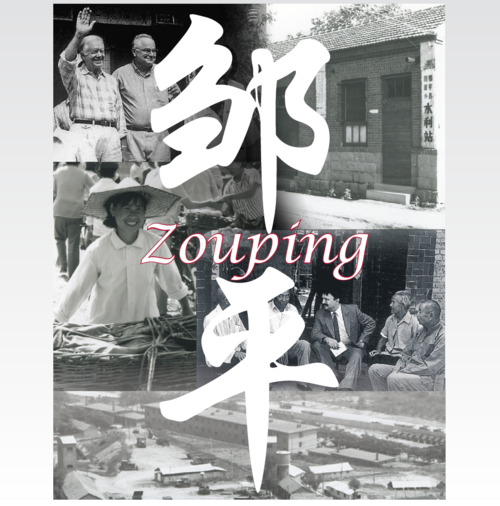
This year, the Oksenberg Conference will be organized around the publication of Zouping Revisited: Adaptive Governance in a Chinese County that has just been published by Stanford University Press. The rural Chinese county of Zouping was a place and topic very dear to Professor Michel Oksenberg’s heart. In 1984, Professor Oksenberg achieved a milestone--obtaining official access for foreign scholars to do research in a rural site in China—the first after Opening and Reform. Since its opening, eighty-seven U.S. academics have conducted fieldwork in Zouping, generating waves of serious scholarship, resulting in numerous books and articles. This new volume includes the extensive research notes of Michel Oksenberg, which he sadly was unable to use before he passed away. These notes were used to complete this volume, supplemented with new research by a number of Oksenberg’s own students and his “academic grandchildren.” It provides a big and clear window onto the surprising changes that have taken place in China over the last two decades of reform.
The conference will convene a panel of China specialists with deep personal and scholarly connections to Zouping who will provide insights into the unfolding history of doing research and fieldwork in China. The panel will also assess through this rural Shandong county the breathtaking as well as surprising changes China has experienced from the 1980s until the present.
For directions to the Jen-Hsun Huang Engineering Center, please click here.
Agenda
2:00-2:15 PM: Welcome and Introduction
2:15-3:35 PM: Panel I: Doing Fieldwork in China: How We Got There and Its Impact
Chair: Prof. Steven Goldstein (Smith College)
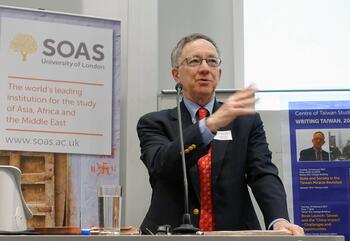
· Prof. Mary Brown Bullock (Committee on Scholarly Communication with the PRC) · Prof. Thomas Gold (U.C. Berkeley) · Prof. Thomas Bernstein (Columbia University) · Prof. Andrew Walder (Stanford University)
3:35-4:55 PM: Panel II: A Window onto China: Understanding Continuity and Change
Chair: Prof. Jean Oi (Stanford University)
· Prof. Jean Oi (Stanford University) · Dr. Douglas Grob (Albright Stonebridge Group) · Prof. Charlotte Lee (Berkeley City College)
5:00-5:30 PM: Book signing and sale of Zouping Revisited: Adaptive Governance in a Chinese County
Speakers
Image
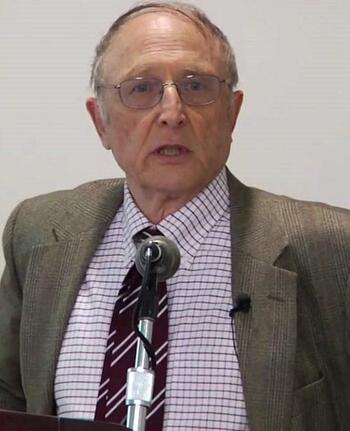
Thomas P. Bernstein taught Chinese politics and comparative communism at Indiana, Yale, and Columbia from 1966 to 2007. After retirement, he moved to Irvine, California with an affiliation at University of California, Irvine. He has published on Chinese and Soviet collectivization of agriculture, the Great Leap Forward famine and its Soviet counterpart, Chinese youth and education, and on reform era rural politics. He did research in Zouping in 1985. Most recently he co-edited (with Hua-yu Li) China Learns from the Soviet Union, 1949-Present (2010).
Image
Mary Brown Bullock, president emerita of Agnes Scott College, is an educator and scholar of U.S. – China relations. She served as the founding executive vice-chancellor of Duke Kunshan University from 2012-2015. Previous positions include distinguished visiting professor Emory University, director of the Asia Program of the Woodrow Wilson Center, and director of the Committee on Scholarly Communication with the People’s Republic of China.She is vice-chair of the Asia Foundation, a trustee of the Henry Luce Foundation, and a member of the Schwarzman Academic Advisory Committee and the Council on Foreign Relations. She received her M.A. and Ph.D. in Chinese history from Stanford University. Her most recent publications include The Oil Prince’s Legacy: Rockefeller Philanthropy in China (2011) and as co-editor of Medical Transitions in Twentieth Century China (2014).
Image
Thomas B. Gold is Professor of Sociology at the University of California, Berkeley. He also served as Associate Dean of International and Area Studies. From 2000-2016 he was Executive Director of the Inter-University Program for Chinese Language Studies. His research addresses issues of social and political change on both sides of the Taiwan Strait. He was a member of the first group of American government-sponsored exchange students to China, spending February 1979-February 1980 at Fudan University. He spent a month in Fengjiacun/Zouping County in 1986 looking at sprouts of private entrepreneurship.
Image
Steven M. Goldstein was the Sophia Smith Professor of Government at Smith College from 1968 to 2016. He is now an Associate of the Fairbank Center and the director of the Taiwan Studies Workshop at Harvard University. He has been a visiting faculty member at the Fletcher School of Law and Diplomacy, Columbia University and United States Naval War College. Goldstein's research interest has been largely related to issues of Chinese domestic and foreign policy. He has published studies of Sino-American relations; Sino-Soviet relations; and the emergence of a Chinese Communist view of world affairs. His current research focus is on the relations between the mainland and Taiwan as well as the evolution of U.S.-Taiwan relations.
Image
Douglas Grob is a Senior Vice President at Albright Stonebridge Group. He previously served as head of the Asia Section of the Congressional Research Service. Prior to that, he served at the U.S. Department of State as a senior advisor on East Asia to the Under Secretary for Civilian Security, Democracy, and Human Rights. He also served as Staff Director of the U.S. Congressional-Executive Commission on China, established by statute as the United States and China normalized trade relations prior to China’s accession to the WTO. Prior to entering public service, he was on the faculty at the University of Maryland, a senior research scholar at the School of Law of Peking University, and a research fellow at the Asia-Pacific Research Center of Stanford University.
Image
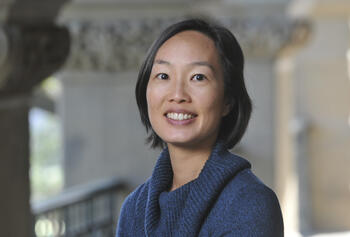
Charlotte Lee is the faculty coordinator of the Global Studies Program at Berkeley City College. Prior to that she was the associate director of the China Program at the Walter H. Shorenstein Asia-Pacific Research Center (Shorenstein APARC) at Stanford University and was an assistant professor in the Department of Government at Hamilton College. From 2012-14, she was Minerva Chair in the Department of Political Science at the U.S. Air Force Academy. As Minerva Chair, she conducted research and briefings on issues in U.S.-China relations. In 2013, she was a visiting assistant professor at Shorenstein APARC. Her book, Training the Party: Party Adaptation and Elite Training in Reform-Era China, was released by Cambridge University Press in 2015. She has taught classes on Chinese politics, international relations, geopolitics and comparative politics. She holds a doctorate and master’s degree in political science from Stanford where she was an NSF Graduate Research Fellow. Her bachelor’s degree is in Asian studies and political economy from the University of California, Berkeley.
Jean C. Oi, director of the Stanford China Program
Jean C. Oi is the William Haas Professor of Chinese Politics in the department of political science and a Senior Fellow of the Freeman Spogli Institute for International Studies (FSI) at Stanford University. She is the founding director of the Stanford China Program at Shorenstein APARC. Professor Oi also is the founding Lee Shau Kee Director of the Stanford Center at Peking University. Her work focuses on comparative politics, with special expertise on political economy and the process of reform in transitional systems. Oi has written extensively on China’s political economy. Her most recent works include, Zouping Revisited: Adaptive Governance in a Chinese County, with Steven Goldstein (2018); Challenges in the Process of China’s Urbanization, with Karen Eggleston and Yiming Wang (2017); Going Private in China: The Politics of Corporate Restructuring and System Reform (2011); and Growing Pains: Tensions and Opportunity in China’s Transformation, with Scott Rozelle and Xueguang Zhou (2010).
Image
Andrew G. Walder is the Denise O’Leary and Kent Thiry Professor in the School of Humanities and Sciences at Stanford University, where he is a member of the Department of Sociology and a Senior Fellow at FSI. He has previously taught at Columbia, Harvard, and Hong Kong University of Science and Technology. He has published widely on political economy, social structure, inequality, social mobility, and political conflict under state socialism and afterwards, with a special emphasis on contemporary China. He is an elected member of the American Academy of Arts and Sciences, former Fellow of the Center for Advanced Study in the Behavioral and Social Sciences, and a past recipient of a Guggenheim Fellowship. His most recent books are Fractured Rebellion: The Beijing Red Guard Movement (2009), and China Under Mao: A Revolution Derailed (2015).
Charlotte Lee was the associate director of the China Program at the Walter H. Shorenstein Asia-Pacific Research Center at Stanford University. Prior to that she was an assistant professor in the Department of Government at Hamilton College. From 2012-14, she was Minerva Chair in the Department of Political Science at the U.S. Air Force Academy. As Minerva Chair, she conducted research and briefings on issues in U.S.-China relations. In 2013, she was a visiting assistant professor at Stanford’s Shorenstein Asia-Pacific Research Center.
Her research on China has been published in peer-reviewed journals. She recently completed a book manuscript on reforms taking place in the Chinese Communist Party entitled Training the Party: Party Adaptation and Elite Training in Reform-Era China (forthcoming, Cambridge University Press).
She has taught classes on Chinese politics, international relations, geopolitics and comparative politics. She holds a doctorate and master’s degree in political science from Stanford, where she was an NSF Graduate Research Fellow. Her bachelor’s degree is in Asian studies and political economy from the University of California, Berkeley.
<i>Faculty Coordinator, Global Studies Program, Berkeley City College</i><br><br>
Department of Political Science
Stanford University
616 Serra Street
Stanford, CA 94305-26044
(650) 723-2843
(650) 725-9401
0
joi@stanford.edu
Senior Fellow at the Freeman Spogli Institute for International Studies
William Haas Professor in Chinese Politics
jean_oi_headshot.jpg
PhD
Jean C. Oi is the William Haas Professor of Chinese Politics in the department of political science and a Senior Fellow of the Freeman Spogli Institute for International Studies at Stanford University. She is the founding director of the Stanford China Program at the Walter H. Shorenstein Asia-Pacific Research Center. Professor Oi is also the founding Lee Shau Kee Director of the Stanford Center at Peking University.
A PhD in political science from the University of Michigan, Oi first taught at Lehigh University and later in the Department of Government at Harvard University before joining the Stanford faculty in 1997.
Her work focuses on comparative politics, with special expertise on political economy and the process of reform in transitional systems. Oi has written extensively on China's rural politics and political economy. Her State and Peasant in Contemporary China (University of California Press, 1989) examined the core of rural politics in the Mao period—the struggle over the distribution of the grain harvest—and the clientelistic politics that ensued. Her Rural China Takes Off (University of California Press, 1999 and Choice Outstanding Academic Title, 1999) examines the property rights necessary for growth and coined the term “local state corporatism" to describe local-state-led growth that has been the cornerstone of China’s development model.
She has edited a number of conference volumes on key issues in China’s reforms. The first was Growing Pains: Tensions and Opportunity in China's Transformation (Brookings Institution Press, 2010), co-edited with Scott Rozelle and Xueguang Zhou, which examined the earlier phases of reform. Most recently, she co-edited with Thomas Fingar, Fateful Decisions: Choices That Will Shape China’s Future (Stanford University Press, 2020). The volume examines the difficult choices and tradeoffs that China leaders face after forty years of reform, when the economy has slowed and the population is aging, and with increasing demand for and costs of education, healthcare, elder care, and other social benefits.
Oi also works on the politics of corporate restructuring, with a focus on the incentives and institutional constraints of state actors. She has published three edited volumes related to this topic: one on China, Going Private in China: The Politics of Corporate Restructuring and System Reform (Shorenstein APARC, 2011); one on Korea, co-edited with Byung-Kook Kim and Eun Mee Kim, Adapt, Fragment, Transform: Corporate Restructuring and System Reform in Korea (Shorenstein APARC, 2012); and a third on Japan, Syncretism: The Politics of Economic Restructuring and System Reform in Japan, co-edited with Kenji E. Kushida and Kay Shimizu (Brookings Institution, 2013). Other more recent articles include “Creating Corporate Groups to Strengthen China’s State-Owned Enterprises,” with Zhang Xiaowen, in Kjeld Erik Brodsgard, ed., Globalization and Public Sector Reform in China (Routledge, 2014) and "Unpacking the Patterns of Corporate Restructuring during China's SOE Reform," co-authored with Xiaojun Li, Economic and Political Studies, Vol. 6, No. 2, 2018.
Oi continues her research on rural finance and local governance in China. She has done collaborative work with scholars in China, including conducting fieldwork on the organization of rural communities, the provision of public goods, and the fiscal pressures of rapid urbanization. This research is brought together in a co-edited volume, Challenges in the Process of China’s Urbanization (Brookings Institution Shorenstein APARC Series, 2017), with Karen Eggleston and Wang Yiming. Included in this volume is her “Institutional Challenges in Providing Affordable Housing in the People’s Republic of China,” with Niny Khor.
As a member of the research team who began studying in the late 1980s one county in China, Oi with Steven Goldstein provides a window on China’s dramatic change over the decades in Zouping Revisited: Adaptive Governance in a Chinese County (Stanford University Press, 2018). This volume assesses the later phases of reform and asks how this rural county has been able to manage governance with seemingly unchanged political institutions when the economy and society have transformed beyond recognition. The findings reveal a process of adaptive governance and institutional agility in the way that institutions actually operate, even as their outward appearances remain seemingly unchanged.
Shorenstein APARC
Stanford University
Encina Hall E301
Stanford, CA 94305-6055
(650) 723-4560
(650) 723-6530
0
walder@stanford.edu
Senior Fellow at the Freeman Spogli Institute for International Studies
Denise O'Leary and Kent Thiry Professor
walder_2019_2.jpg
PhD
Andrew G. Walder is the Denise O'Leary and Kent Thiry Professor at Stanford University, where he is also a senior fellow in the Freeman Spogli Institute for International Studies. Previously, he served as Chair of the Department of Sociology, Director of the Walter H. Shorenstein Asia-Pacific Research Center, and Head of the Division of International, Comparative and Area Studies in the School of Humanities and Sciences.
Walder has long specialized in the sources of conflict, stability, and change in communist regimes and their successor states. His publications on Mao-era China have ranged from the social and economic organization of that early period to the popular political mobilization of the late 1960s and the subsequent collapse and rebuilding of the Chinese party-state. His publications on post-Mao China have focused on the evolving pattern of stratification, social mobility, and inequality, with an emphasis on variation in the trajectories of post-state socialist systems. His current research is on the growth and evolution of China’s large modern corporations, both state and private, after the shift away from the Soviet-inspired command economy.
Walder joined the Stanford faculty in 1997. He received his Ph.D. in sociology at the University of Michigan in 1981 and taught at Columbia University before moving to Harvard in 1987. From 1995 to 1997, he headed the Division of Social Sciences at the Hong Kong University of Science and Technology.
Walder has received fellowships and grants from the Guggenheim Foundation, the National Science Foundation, the National Academy of Sciences, the Henry Luce Foundation, the Ford Foundation, the Social Science Research Council, and the Center for Advanced Study in the Behavioral Sciences. His books and articles have won awards from the American Sociological Association, the Association for Asian Studies, and the Social Science History Association. He is an elected member of the American Academy of Arts and Sciences.
His recent and forthcoming books include Fractured Rebellion: The Beijing Red Guard Movement (Harvard University Press, 2009); China Under Mao: A Revolution Derailed (Harvard University Press, 2015); Agents of Disorder: Inside China’s Cultural Revolution (Harvard University Press, 2019); and A Decade of Upheaval: The Cultural Revolution in Feng County (Princeton University Press, 2021) (with Dong Guoqiang); and Civil War in Guangxi: The Cultural Revolution on China’s Southern Periphery (Stanford University Press, 2023).
His recent articles include “After State Socialism: Political Origins of Transitional Recessions.” American Sociological Review 80, 2 (April 2015) (with Andrew Isaacson and Qinglian Lu); “The Dynamics of Collapse in an Authoritarian Regime: China in 1967.” American Journal of Sociology 122, 4 (January 2017) (with Qinglian Lu); “The Impact of Class Labels on Life Chances in China,” American Journal of Sociology 124, 4 (January 2019) (with Donald J. Treiman); and “Generating a Violent Insurgency: China’s Factional Warfare of 1967-1968.” American Journal of Sociology 126, 1 (July 2020) (with James Chu).
This event is sponsored by: Stanford University Libraries, East Asia Library, History Department, Center for East Asian Studies, Shorenstein Asia-Pacific Research Center, Department of East Asian Languages and Cultures
Interventions designed to improve primary care management of diabetes and reduce avoidable hospital admissions show promise for saving healthcare resources without compromising quality of care. These are the findings made by an international research team’s study of four East Asian sites.
With a fourfold increase in global diabetes prevalence over the past thirty-five years (2016 Lancet report), countries are increasingly experiencing the dual health challenges of chronic noncommunicable diseases and aging populations. An estimated 12 percent of global health expenditures in 2015 was for diabetes-related services.
The study, published in the November issue of Health Affairs, examined policy interventions in Japan, Singapore, Hong Kong, and rural and peri-urban Beijing; by increasing access and adherence to effective outpatient management, the interventions potentially improved health outcomes while realizing cost savings from reduced avoidable hospital admissions.
“This article represents the first publication in a series of research collaborations under the Stanford AHPP-led comparative diabetes net value project,” said Karen Eggleston, Asia Health Policy Program Director and one of the article’s authors. “We are assembling and analyzing rich patient-level datasets, using diabetes as a lens to explore ‘value for money’ in chronic disease management. “
Eggleston also noted that additional research teams have joined since the publication. The authors look forward to contributing evidence for improved health policy in different institutional contexts and for health systems adapting to rapidly aging populations.
616 Serra StreetEncina Hall E301Stanford, CA94305-6055
0
yuansong@stanford.edu
song_yuan.jpg
Ph.D
Song Yuan joins the Walter H. Shorenstein Asia-Pacific Research Center (Shorenstein APARC) during the 2018-2019 academic year from the college of Law and Political science at Zhejiang Normal University. His research interests focus on the transformation of rural politics and peasants’ daily lives in the urbanization process of China. Yuan will conduct a comparative study of rural governance in different regions and locations of China against the background of urbanization and land development. Yuan conducted fieldwork investigating various regions in China including Henan, Hubei, Guangxi, Sichuan, Hunan, Jiangxi, Shandong, Anhui, Guangdong and Zhejiang province since 2008. The accumulative time that he stayed in villages has exceeded 400 days.Yuan holds a PhD and a MA in Sociology from the Center for Research on Rural Governance (CRRG) at Huazhong University of Science & Technology, where the Central China School of Rural Studies is mainly based, and a dual BA in Engineering and Journalism from Wuhan University.
616 Serra StreetEncina Hall E301Stanford, CA94305-6055
0
huashan@stanford.edu
huashan_chen.jpg
Ph.D
Huashan Chen joins the Walter H. Shorenstein Asia-Pacific Research Center as visiting scholar. He currently serves as Associate Professor at the National Institute of Social Development, Chinese Academy of Social Sciences. He is also the Director of Social Development and Evaluation Lab and Vice Director of the Research Center for Social Climate. He will be conducting research on Chinese state bureaucracy and personnel flows.
616 Serra StreetEncina Hall E301Stanford, CA94305-6055
0
gaoyan@stanford.edu
gao_yan.jpg
Yan Gao joins the Walter H. Shorenstein Asia-Pacific Research Center for the 2017-2018 year as a visiting scholar. He is the Deputy Director of the Unirule Institute of Economics, China, and will be conducting research on Asia-Pacific innovation, and the development of the Chinese economy and entrepreneurship. He is available at gaoyan@stanford.edu.
Johanna Rickne is an Associate Professor in Economics at the Swedish Institute for Social Research, Stockholm University, and an affiliated researcher at the Uppsala Center for Labor Studies (Uppsala University), the Stockholm China Economic Research Center (Stockholm School of Economics), and the Research Institute for Industrial Economics.
Her research is in labor economics, political economics, and gender economics. She has a special interest in Asia in general, and China in particular.
This seminar is part of the Comparative Politics Workshop in the Department of Political Science and is co-sponsored by the Munro Lectureship Fund and The Europe Center.
Johanna Rickne
Associate Professor of Economics
speaker
Stockholm University
While much of the existing literature examines vote buying in the context of party systems, including both competitive and hegemonic party systems, this talk, based on a study coauthored by Professor Susan Whiting, addresses vote buying in a context in which no political party effectively structures electoral competition—village elections in China. This study argues that the lure of non-competitive rents explains variation over time and space in the phenomenon of vote buying. It tests this hypothesis, derived from an in-depth case study, in a separate sample of 1200 households in 62 villages in five provinces, using villagers’ reports of vote buying in elections and survey data on land takings as an indicator of available rents. While the literature views the introduction of elections as increasing accountability of village leaders to voters, vote buying likely undermines accountability. This study suggests that the regime has tolerated vote buying as a means of identifying and coopting influential economic elites in rural communities.
Image
Susan Whiting is Associate Professor of Political Science and Adjunct Associate Professor of Law and International Studies at the University of Washington in Seattle. She specializes in Chinese and comparative politics, with particular emphasis on the political economy of development. Her first book, Power and Wealth in Rural China: The Political Economy of Institutional Change, was published by Cambridge University Press in 2001. She has contributed chapters and articles on property rights, fiscal reform, governance, contract enforcement and dispute resolution to numerous publications. She has done extensive research in China and has contributed to studies of governance, fiscal reform, and non-governmental organizations under the auspices of the World Bank, the Asian Development Bank, and the Ford Foundation, respectively. She, along with colleagues in the law school, is participating in a project on access to justice and legal aid provision in rural China. Professor Whiting’s current research interests include property rights in land, the role of the courts in economic transition, as well as the politics of fiscal reform in transition economies. Among her courses, she teaches Comparative Politics, Chinese Politics, Qualitative Research Methods, and Law, Development, & Transition, a course offered jointly in the Department of Political Science, the Jackson School of International Studies, and the Law, Societies and Justice Program.
China has undergone historic economic, social and cultural transformations since its Opening and Reform. Leading scholars explore expanding repertoires of control that this authoritarian regime – both central and local – are using to manage social fissures, dislocation and demands. What new strategies of governance has the Chinese state devised to manage its increasingly fractious and dynamic society? What novel mechanisms has the state innovated to pre-empt, control and de-escalate contention? China Program’s 2018 Winter Colloquia Series highlights cutting-edge research on contemporary means that various levels of the Chinese state are deploying to manage both current and potential discontent from below.
Susan Whiting
<i>Associate Professor of Political Science, Adjunct Associate Professor of Law and International Studies, University of Washington</i>
Who watches over the party-state? In this talk, Maria Repnikova examines the uneasy partnership between critical journalists and the state in China. More than a passive mouthpiece or a dissident voice, the media in China also plays a critical oversight role, one more frequently associated with liberal democracies than with authoritarian systems. Chinese central officials cautiously endorse media supervision as a feedback mechanism, as journalists carve out space for critical reporting by positioning themselves as aiding the agenda of the central state. By comparing media politics in the Soviet Union, contemporary Russia and China, her talk will highlight the distinctiveness of Chinese journalist-state relations, as well as renewed pressures facing journalists in the Xi era.
[[{"fid":"229579","view_mode":"crop_870xauto","fields":{"format":"crop_870xauto","field_file_image_description[und][0][value]":"","field_file_image_alt_text[und][0][value]":false,"field_file_image_title_text[und][0][value]":false,"field_credit[und][0][value]":"","field_caption[und][0][value]":"","thumbnails":"crop_870xauto","alt":"","title":""},"type":"media","field_deltas":{"7":{"format":"crop_870xauto","field_file_image_description[und][0][value]":"","field_file_image_alt_text[und][0][value]":false,"field_file_image_title_text[und][0][value]":false,"field_credit[und][0][value]":"","field_caption[und][0][value]":"","thumbnails":"crop_870xauto","alt":"","title":""}},"link_text":null,"attributes":{"style":"margin-left: 0px; margin-right: 15px; padding: 0px; float: left; height: 350px; width: 250px;","class":"media-element file-crop-870xauto","data-delta":"7"}}]]Maria Repnikova is a scholar of political communication in illiberal contexts, with a focus on Chinese media politics. She is currently an Assistant Professor of Global Communication and a Director of the Center for Global Information Studies at Georgia State University. Maria's work examines critical journalism, political propaganda, cyber nationalism, and global media branding in China, drawing on comparisons to Russia. Her work appeared in the China Quarterly, New Media & Society, Journal of Contemporary China, as well as in Foreign Affairs and Foreign Policy, amongst other venues. Her book, Media Politics in China: Improvising Power Under Authoritarianism, was just published by Cambridge University Press. Maria was a post-doctoral fellow at the Annenberg School for Communication. Maria holds a PhD in Politics from Oxford University, where she was a Rhodes Scholar.
China has undergone historic economic, social and cultural transformations since its Opening and Reform. Leading scholars explore expanding repertoires of control that this authoritarian regime – both central and local – are using to manage social fissures, dislocation and demands. What new strategies of governance has the Chinese state devised to manage its increasingly fractious and dynamic society? What novel mechanisms has the state innovated to pre-empt, control and de-escalate contention? China Program’s 2018 Winter Colloquia Series highlights cutting-edge research on contemporary means that various levels of the Chinese state are deploying to manage both current and potential discontent from below.
Maria Repnikova
<i>Assistant Professor in Global Communication, Director, Center for Global Information Studies, Georgia State University</i>





 Jean C. Oi, director of the Stanford China Program