-

* Please note all CISAC events are scheduled using the Pacific Time Zone.


Seminar Recording: https://youtu.be/TV8ye_OVdzY


About the Event: Proof that France had become the world’s fourth nuclear power exploded above the Algerian Sahara in February 1960, during the Algerian War for Independence (1954–62). Sixteen more blasts would take place before France abandoned its Saharan test sites in 1966, which had continued to host French explosions underground during the first years of Algerian Independence. Well before the first airborne detonation, and even after French testing went below ground, the likelihood that radioactive debris (known as fallout) would contaminate the desert environment and its human inhabitants animated an international controversy. Saharan fallout loomed at once as a new threat to Algerian and African sovereignty and to Cold War negotiations that promised to limit weapons testing, revealing historical intersections between African decolonization and the nuclear arms race.


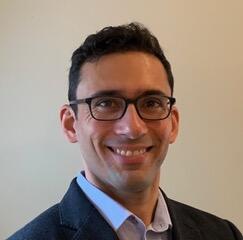
About the Speaker: Austin Cooper is a Predoctoral Researcher at Stanford University’s Center for International Security and Cooperation and a PhD Candidate in History and Sociology of Science at the University of Pennsylvania.

Virtual Seminar

0
cooper.jpg

Austin R. Cooper is a Stanton Nuclear Security Fellow in the Security Studies Program at the Massachusetts Institute of Technology. He completed his PhD in History and Sociology of Science at the University of Pennsylvania. He has held fellowships at Stanford University’s Center for International Security and Cooperation and SciencesPo’s Nuclear Knowledges Program.

Affiliate
Austin Cooper Predoctoral Researcher Stanford University
Seminars
-

Please join us for our winter seminar series of four lectures given by multidisciplinary faculty who are leading experts on China's economy and institutions. These lectures will cover discussion topics ranging from rural livelihood and environmental sustainability in China to talent and firm creation in China and will be moderated by Stanford Center on China's Economy and Institution co-directors Scott Rozelle and Hongbin Li.


Seminar 3: Tuesday, March 9, 2021 | 11:00 - 12:15 am Pacific Time

The Political Genesis of Local Government Debt in China with Professor Jean Oi, Stanford University

China’s rapidly growing local government debt (LGD) is now branded a “grey rhino,” a known threat that has received little attention.  Why did Beijing let LGD get so out of hand?  What are the sources of LGD?  Oi will argue that LGD stems from a grand bargain between the center and the localities that was made to secure support for the 1994 fiscals reforms.  This series of policy decisions institutionalized backdoor financing, creating a “win-win” solution that recentralized tax revenues to Beijing while countering the downsides of fiscal recentralization for the localities.  The cost, however, was that China’s economic growth model was increasingly undergirded by mounting LGD, with little transparency and control by the center.  


Image
Jean C. OI
About the Speaker

Jean C. Oi is the William Haas Professor of Chinese Politics in the Department of Political Science and a Senior Fellow of the Freeman Spogli Institute for International Studies (FSI) at Stanford University.  She also directs the China Program at the Walter H. Shorenstein Asia-Pacific Research Center at FSI and is the founding Lee Shau Kee Director of the Stanford Center at Peking University.  Oi has published extensively on political economy and the process of reform in China.  Recent books include Fateful Decisions: Choices That Will Shape China's Future, co-edited with Thomas Fingar (2020); and Zouping Revisited: Adaptive Governance in a Chinese County, co-edited with Steven Goldstein (2018).  Recent articles include “China’s Challenges: Now it Gets Much Harder,” co-authored with Thomas Finger, The Washington Quarterly (Spring 2020); and “After COVID-19: Rebooting Business in China,” co-authored with Jennifer Choo, Christopher Thomas, and Xue (Xander) Wu, The Diplomat (July 2020).  Her current research continues to explore central-local relations, including local government debt.  She is also in the early stages of a project on China’s Belt and Road Initiative.   


Seminar Series Moderators:

Image
Headshot of Dr. Scott Rozelle

Scott Rozelle holds the Helen Farnsworth Endowed Professorship at Stanford University and is Senior Fellow in the Food Security and Environment Program and the Shorenstein Asia-Pacific Research Center, Freeman Spogli Institute (FSI) for International Studies. For the past 30 years, he has worked on the economics of poverty reduction. Currently, his work on poverty has its full focus on human capital, including issues of rural health, nutrition and education. For the past 20 year, Rozelle has been the chair of the International Advisory Board of the Center for Chinese Agricultural Policy, Chinese Academy of Sciences (CAS). In recent years Rozelle spends most of his time co-directing the Rural Education Action Project (REAP). In recognition of this work, Dr. Rozelle has received numerous honors and awards. Among them, he became a Yangtse Scholar (Changjiang Xuezhe) in Renmin University of China in 2008. In 2008 he also was awarded the Friendship Award by Premiere Wen Jiabao, the highest honor that can be bestowed on a foreigner. 

Image
hongbin li headshot
Hongbin Li is the James Liang Director of the China Program at the Stanford King Center on Global Development, and a Senior Fellow of Stanford Institute for Economic Policy Research (SIEPR). Hongbin obtained his Ph.D. in economics from Stanford University in 2001 and joined the economics department of the Chinese University of Hong Kong (CUHK), where he became full professor in 2007. He was also one of the two founding directors of the Institute of Economics and Finance at the CUHK. He taught at Tsinghua University in Beijing 2007-2016 and was C.V. Starr Chair Professor of Economics in the School of Economics and Management. He founded the Chinese College Student Survey (CCSS) in 2009 and the China Employer-Employee Survey (CEES) in 2014.

Hongbin’s research has been focused on the transition and development of the Chinese economy, and the evidence-based research results have been both widely covered by media outlets and well read by policy makers around the world. He is currently the co-editor of the Journal of Comparative Economics.


Register Here

Register once to receive the Zoom meeting link that will be used for all lectures in this series.

Seminars
-

Please join us for our winter seminar series of four lectures given by multidisciplinary faculty who are leading experts on China's economy and institutions. These lectures will cover discussion topics ranging from rural livelihood and environmental sustainability in China to talent and firm creation in China and will be moderated by Stanford Center on China's Economy and Institution co-directors Scott Rozelle and Hongbin Li.


Seminar 3: Tuesday, February 23, 2021 | 11:00 - 12:15 am Pacific Time

Entrepreneurial Reluctance: Talent and Firm Creation in China with Professor Ruixue Jia, UC San Diego

An influential theoretical literature has long noted that talent can be used in both the entrepreneur and non-entrepreneur sectors and its allocation depends on the reward restructure. We test this insight by linking administrative college admissions data for 1.8 million individuals with information on firm registration records in China. I will open discussion on the findings of our study including who is more likely to create firms, which firms are more successful, and the overall association between entrepreneurial ability and college entrance exam scores.


Image
Headshot of Dr. Ruixue Jia.
About the Speaker

Ruixue Jia is an associate professor of economics at the School of Global Policy and Strategy at UC San Diego. Jia is interested in the interplay of economics, history and politics. One stream of her research focuses on understanding elite formation and elite influence, in both historical and modern contexts. A second focus of her work is the deep historical roots of economic development. More recently, she started following the ongoing transformation of the manufacturing sector in China and expanded her interest to labor and technology issues.


Seminar Series Moderators:

Image
Headshot of Dr. Scott Rozelle

Scott Rozelle holds the Helen Farnsworth Endowed Professorship at Stanford University and is Senior Fellow in the Food Security and Environment Program and the Shorenstein Asia-Pacific Research Center, Freeman Spogli Institute (FSI) for International Studies. For the past 30 years, he has worked on the economics of poverty reduction. Currently, his work on poverty has its full focus on human capital, including issues of rural health, nutrition and education. For the past 20 year, Rozelle has been the chair of the International Advisory Board of the Center for Chinese Agricultural Policy, Chinese Academy of Sciences (CAS). In recent years Rozelle spends most of his time co-directing the Rural Education Action Project (REAP). In recognition of this work, Dr. Rozelle has received numerous honors and awards. Among them, he became a Yangtse Scholar (Changjiang Xuezhe) in Renmin University of China in 2008. In 2008 he also was awarded the Friendship Award by Premiere Wen Jiabao, the highest honor that can be bestowed on a foreigner. 

Image
hongbin li headshot
Hongbin Li is the James Liang Director of the China Program at the Stanford King Center on Global Development, and a Senior Fellow of Stanford Institute for Economic Policy Research (SIEPR). Hongbin obtained his Ph.D. in economics from Stanford University in 2001 and joined the economics department of the Chinese University of Hong Kong (CUHK), where he became full professor in 2007. He was also one of the two founding directors of the Institute of Economics and Finance at the CUHK. He taught at Tsinghua University in Beijing 2007-2016 and was C.V. Starr Chair Professor of Economics in the School of Economics and Management. He founded the Chinese College Student Survey (CCSS) in 2009 and the China Employer-Employee Survey (CEES) in 2014.

Hongbin’s research has been focused on the transition and development of the Chinese economy, and the evidence-based research results have been both widely covered by media outlets and well read by policy makers around the world. He is currently the co-editor of the Journal of Comparative Economics.


Register Here

Register once to receive the Zoom meeting link that will be used for all lectures in this series.

Seminars
-

Please join us for our winter seminar series of four lectures given by multidisciplinary faculty who are leading experts on China's economy and institutions. These lectures will cover discussion topics ranging from rural livelihood and environmental sustainability in China to talent and firm creation in China and will be moderated by Stanford Center on China's Economy and Institution co-directors Scott Rozelle and Hongbin Li.


Seminar 2: Tuesday, February 9, 2021 | 11:00 - 12:15 am Pacific Time

A Study of Confucius Institute Teachers Around the World with Professor Jennifer Pan, Stanford University

Confucius Institutes (CI) have been accused of extending Chinese government censorship and propaganda around the world, but there are few systematic studies of how these organizations operate. By combining survey and experimental methods with qualitative analyses, we study the behavior of CI teachers with a focus on how the Chinese government imposes control over teachers and its consequences. 


Image
Headshot of Dr. Jennifer Pan
About the Speaker

Jennifer Pan is an Assistant Professor of Communication at Stanford University. Her research focuses on political communication and authoritarian politics. Pan uses experimental and computational methods with large-scale datasets on political activity in China and other authoritarian regimes to answer questions about how autocrats perpetuate their rule. How political censorship, propaganda, and information manipulation work in the digital age. How preferences and behaviors are shaped as a result.

Her book, Welfare for Autocrats: How Social Assistance in China Cares for its Rulers (Oxford, 2020) shows how China's pursuit of political order transformed the country’s main social assistance program, Dibao, for repressive purposes. Her work has appeared in peer reviewed publications such as the American Political Science Review, American Journal of Political Science, Comparative Political Studies, Journal of Politics, and Science.

She graduated from Princeton University, summa cum laude, and received her Ph.D. from Harvard University’s Department of Government.


Seminar Series Moderators:

Image
Headshot of Dr. Scott Rozelle

Scott Rozelle holds the Helen Farnsworth Endowed Professorship at Stanford University and is Senior Fellow in the Food Security and Environment Program and the Shorenstein Asia-Pacific Research Center, Freeman Spogli Institute (FSI) for International Studies. For the past 30 years, he has worked on the economics of poverty reduction. Currently, his work on poverty has its full focus on human capital, including issues of rural health, nutrition and education. For the past 20 year, Rozelle has been the chair of the International Advisory Board of the Center for Chinese Agricultural Policy, Chinese Academy of Sciences (CAS). In recent years Rozelle spends most of his time co-directing the Rural Education Action Project (REAP). In recognition of this work, Dr. Rozelle has received numerous honors and awards. Among them, he became a Yangtse Scholar (Changjiang Xuezhe) in Renmin University of China in 2008. In 2008 he also was awarded the Friendship Award by Premiere Wen Jiabao, the highest honor that can be bestowed on a foreigner. 

Image
hongbin li headshot
Hongbin Li is the James Liang Director of the China Program at the Stanford King Center on Global Development, and a Senior Fellow of Stanford Institute for Economic Policy Research (SIEPR). Hongbin obtained his Ph.D. in economics from Stanford University in 2001 and joined the economics department of the Chinese University of Hong Kong (CUHK), where he became full professor in 2007. He was also one of the two founding directors of the Institute of Economics and Finance at the CUHK. He taught at Tsinghua University in Beijing 2007-2016 and was C.V. Starr Chair Professor of Economics in the School of Economics and Management. He founded the Chinese College Student Survey (CCSS) in 2009 and the China Employer-Employee Survey (CEES) in 2014.

Hongbin’s research has been focused on the transition and development of the Chinese economy, and the evidence-based research results have been both widely covered by media outlets and well read by policy makers around the world. He is currently the co-editor of the Journal of Comparative Economics.


Register Here

Register once to receive the Zoom meeting link that will be used for all lectures in this series.

Seminars
-

Watch the Recorded Seminar

Please join us for our winter seminar series. Moderated by SCCEI Directors Scott Rozelle and Hongbin Li, the four-part series features leading experts on China, speaking on topics ranging from China's aspirations to build an ecological civilization, to talent and firm creation in China.


Image
Headshot of Dr. Gretchen Daily.
Seminar 1: Tuesday, February 2, 2021 | 11:00 - 12:15 am Pacific Time

China’s Dream: Science, Economics, and Policy for an Ecological Civilization with Professor Gretchen Daily, Stanford University

China’s efforts to build an “ecological civilization” constitute the most comprehensive strategy to achieve inclusive, sustainable development by any major economy. The aspiration is to weave the values of nature into the fabric of the economy and society.  How?  I will open discussion of the transformation being attempted and the arc of their development, both in China and globally, focusing on natural capital and economic dimensions.  These include (i) valuing nature’s contributions to people; (ii) determining where and how much nature to protect or restore, in cities and across the country; (iii) aligning livelihood security and investments in nature; and (iv) tracking progress through Gross Ecosystem Product.


Seminar Series Moderators:

Image
Headshot of Dr. Scott Rozelle

Scott Rozelle holds the Helen Farnsworth Endowed Professorship at Stanford University and is Senior Fellow in the Food Security and Environment Program and the Shorenstein Asia-Pacific Research Center, Freeman Spogli Institute (FSI) for International Studies. For the past 30 years, he has worked on the economics of poverty reduction. Currently, his work on poverty has its full focus on human capital, including issues of rural health, nutrition and education. For the past 20 year, Rozelle has been the chair of the International Advisory Board of the Center for Chinese Agricultural Policy, Chinese Academy of Sciences (CAS). In recent years Rozelle spends most of his time co-directing the Rural Education Action Project (REAP). In recognition of this work, Dr. Rozelle has received numerous honors and awards. Among them, he became a Yangtse Scholar (Changjiang Xuezhe) in Renmin University of China in 2008. In 2008 he also was awarded the Friendship Award by Premiere Wen Jiabao, the highest honor that can be bestowed on a foreigner. 

Image
hongbin li headshot
Hongbin Li is the James Liang Director of the China Program at the Stanford King Center on Global Development, and a Senior Fellow of Stanford Institute for Economic Policy Research (SIEPR). Hongbin obtained his Ph.D. in economics from Stanford University in 2001 and joined the economics department of the Chinese University of Hong Kong (CUHK), where he became full professor in 2007. He was also one of the two founding directors of the Institute of Economics and Finance at the CUHK. He taught at Tsinghua University in Beijing 2007-2016 and was C.V. Starr Chair Professor of Economics in the School of Economics and Management. He founded the Chinese College Student Survey (CCSS) in 2009 and the China Employer-Employee Survey (CEES) in 2014.

Hongbin’s research has been focused on the transition and development of the Chinese economy, and the evidence-based research results have been both widely covered by media outlets and well read by policy makers around the world. He is currently the co-editor of the Journal of Comparative Economics.

Seminars
-

This is a virtual event. Please click here to register and generate a link to the talk. 
The link will be unique to you; please save it and do not share with others.

The past decade has witnessed a great digital transformation in China. In 2006, China’s online retail sales were merely 3% of U.S. sales. China now hosts the world’s largest e-commerce retail market with a 40% share of global sales. Mobile pay has taken the country by storm so that even beggars are accepting alms through QR codes. What accounts for the leapfrog development in China’s e-commerce market? What are the larger implications of the rise of this 700-million-user online market? This talk will discuss the institutional foundation of China's giant e-commerce market, as well as its political and economic effects.

This event is part of Shorenstein APARC's winter webinar series "Asian Politics and Policy in a Time of Uncertainty."


Image
Portrait of Lizhi Liu
Lizhi Liu is an Assistant Professor in the McDonough School of Business and a faculty affiliate of the Department of Government. Her research specializes in the politics of trade, technology and innovation, and the political economy of China. Her work has been published by American Economic Review: Insights and Minnesota Law Review, and has been funded by numerous institutions, including the Bill and Melinda Gates Foundation, Weiss Family Program Fund, and the Stanford Institute for Innovation in Developing Economies. She received the 2020 Ronald H. Coase Best Dissertation Award from the Society for Institutional and Organizational Economics (SIOE), and the 2019 Best Dissertation Award in the area of Information Technology and Politics by American Political Science Association (APSA). 

Via Zoom Webinar. Register at: https://bit.ly/38yUFdn

Lizhi Liu Assistant Professor, McDonough School of Business, Georgetown University
Seminars
Paragraphs

Because higher education serves both public and private interests, the way it is conceived and financed is contested politically, appearing in different forms in different societies. What is public and private in education is a political–social construct, subject to various political forces, primarily interpreted through the prism of the state. Mediated through the state, this construct can change over time as the economic and social context of higher education changes. In this paper, we analyze through the state’s financing of higher education how it changes as a public/private good and the forces that impinge on states to influence such changes. To illustrate our arguments, we discuss trends in higher education financing in the BRIC countries—Brazil, Russia, India, and China. We show that in addition to increased privatization of higher education financing, BRIC states are increasingly differentiating the financing of elite and non-elite institutions.

All Publications button
1
Publication Type
Journal Articles
Publication Date
Journal Publisher
Higher Education
Authors
Prashant Loyalka
Paragraphs

Assessing student learning outcomes has become a global trend in higher education. In this paper, we report on the validation of the Chinese HEIghten® Critical Thinking assessment with a nationally representative sample of Electrical Engineering and Computer Science students from 35 institutions in China. Key findings suggest that there was a test delivery mode effect favoring the paper tests over the online tests. In general, the psychometric quality of the items was satisfactory for low-stakes, group-level uses but there were a few items with low discrimination that awaits further investigation. The relationships between test scores and various external variables such as college entrance examination scores, university elite status and student perceptions of the test were as expected. We conclude with speculations on the key findings and discussion of directions for future research.

All Publications button
1
Publication Type
Journal Articles
Publication Date
Journal Publisher
Higher Education Research & Development
Authors
Huan Wang
Prashant Loyalka
Paragraphs

This paper empirically estimates the return to education using twins data that the authors collected from urban China. Our ordinary least-squares estimate shows that one year of schooling increases an individual's earnings by 8.4%. If we use a within-twin fixed effects model, the return is reduced to 2.7%, but rises to 3.8% after the correction of measurement error. These results suggest that a large portion of the estimated returns to education is due to omitted ability or the family effect. We further investigate why the true return is low and the omitted ability bias high, and find evidence showing that it may be a consequence of China's education system, which is highly selective and exam oriented. More specifically, we find that high school education may mainly serve as a mechanism to select college students, but as a human capital investment per se it has low returns in terms of earnings. In contrast, both vocational school education and college education have a large return that is comparable to that found in the United States.

All Publications button
1
Publication Type
Journal Articles
Publication Date
Journal Publisher
Journal of Development Economics
Authors
Hongbin Li
Paragraphs

This paper examines the impact of entrepreneurship on economic growth by using a panel data set of 29 provinces in China over 20 years. Two indicators of entrepreneurship are defined and introduced into the traditional growth regression framework that is estimated using the system generalized method of moments. We also use the ratio of staff and workers of state-owned enterprises and per capita sown land area as the instrumental variables to identify the causal effect of entrepreneurship on economic growth. Our results suggest that entrepreneurship has a significant positive effect on economic growth and this finding is robust even after we control for other demographic and institutional variables. Our study provides some evidence that may be used as a basis for evaluating the effect of China’s policy on private business which has been increasingly relaxed since the late 1970s.

All Publications button
1
Publication Type
Journal Articles
Publication Date
Journal Publisher
China Economic Review
Authors
Hongbin Li
Subscribe to China