Authors
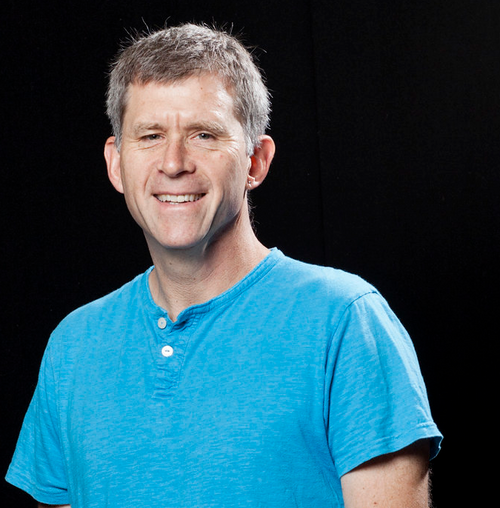
Herbert Lin
News Type
Commentary
Date
Paragraphs

I have struggled to find something with which I disagree in Michael Fischerkeller’s response to my thought experiment adopting the 2018 U.S. Cyber Command (USCC) Command Vision. A couple of such points are addressed below, but for the most part I agree with him. He does make one claim that I find surprising. He writes: 

Read the rest at Lawfare Blog

Hero Image
Herb Lin Rod Searcey
All News button
1
Subtitle

I have struggled to find something with which I disagree in Michael Fischerkeller’s response to my thought experiment adopting the 2018 U.S. Cyber Command (USCC) Command Vision. A couple of such points are addressed below, but for the most part I agree with him. He does make one claim that I find surprising.

-

For winter quarter 2021, CISAC will be hosting hybrid events. Many events will offer limited-capacity in-person attendance for Stanford faculty, staff, fellows, visiting scholars, and students in accordance with Stanford’s health and safety guidelines, and be open to the public online via Zoom. All CISAC events are scheduled using the Pacific Time Zone. 

SEMINAR RECORDING

This event is virtual only. This event will not be held in person.

David Sloss Professor of Law Santa Clara University
Seminars
News Type
News
Date
Paragraphs

The Economist included SCCEI Co-Director Scott Rozelle's newest book in their lineup of the best books of 2021. Here's what they had to say:

"Invisible China. By Scott Rozelle and Natalie Hell. University of Chicago Press; 248 pages; $27.50 and £22

The biggest obstacle to China’s development is that rural children—two-thirds of the total—do terribly in school, argues this stunningly researched book. Many are malnourished, lack reading glasses or suffer from energy-sapping intestinal worms. If these basic problems are not fixed, say the authors, China will struggle to reach its goal of broad prosperity."

See the full list: https://www.economist.com/books-and-arts/2021/12/11/the-best-books-of-2021 

Hero Image
Graphic of books lined up. GettyImages
All News button
1
Subtitle

On December 11, 2021 The Economist published their list of the best books of 2021. Scott Rozelle's newest book, "Invisible China" was listed third on the line up!

Paragraphs

Stanford Center on China's Economy and Institutions 2021 Annual Report is now available. 

Learn about the research, impact, student engagement, and more that we have achieved during our inaugural year as a Center. Download your copy or read it online.


Image
SCCEI Annual Report 2021 cover


Image
SCCEI by the numbers.
      

All Publications button
1
Publication Type
Annual Reports
Publication Date
Subtitle

At SCCEI, we aim to shed some light on what actually is happening in China, and exactly how these happenings might affect the rest of the world. 2021 was an active and busy year for our team. Take a look at our 2021 Annual Report to see all of the incredible work and accomplishments we have achieved together. Download your copy or read it online.

-

This is a virtual event. Please click here to register and generate a link to the talk. 
The link will be unique to you; please save it and do not share with others.


At the end of 2021 China Evergrande Group—one of China’s biggest property developers—finally defaulted on its bonds. The default didn’t spark a Lehman Moment—as widely prophesied—or any significant market upheaval, but it’s increasingly clear that Evergrande’s problems mark the start of a momentous shift in how China’s economy grows. Over the past 18 months, Beijing has induced a slowdown of the property sector with the goal of better ensuring financial sector stability and the sustainability of property sector growth. However, it has resulted in defaults, restructuring, and consolidation among China’s largest developers, and has implication for local government finance and the pace of economic growth. This talk will discuss the challenges posed by Evergrande’s decline and imminent restructuring, what Beijing is trying to achieve by reining in the property sector, and what risks are involved.


Portrait of Dinny McMahonDinny McMahon is the author of “China's Great Wall of Debt: Shadow Banks, Ghost Cities, Massive Loans, and the End of the Chinese Miracle,” a ground up look at the mechanics of China’s political economy, which he wrote while a fellow at the Woodrow Wilson Center for International Scholars. He later moved to MacroPolo, the Paulson Institute’s think tank in Chicago, where he researched China’s efforts to clean up its financial system. Dinny started his career as a financial journalist in China, spending six years in Beijing with The Wall Street Journal, and four years with Dow Jones Newswires in Shanghai, where he also contributed to the Far Eastern Economic Review. Dinny is currently working on a project for the Wilson Center on China’s efforts to reduce its reliance on the US dollar. He also provides independent research on China’s financial system for financial services firms.


Image
Chinese 100 yuan bills

This event is part of the 2022 Winter webinar series, The Future of China's Economy, sponsored by the APARC China Program.


Via Zoom Webinar. Register at: https://bit.ly/3pkTQfE

Dinny McMahon Global Fellow, Woodrow Wilson International Center for Scholars
Seminars
Paragraphs

Following the 2021 Taihe Civilizations Forum, the Taihe International Communications Center hosted an online discussion on October 8 that captures the candid and profound reflections of senior officials whose actions have shaped the course of ties between China and the United States.

Dr. Thomas Fingar, Shorenstein APARC Fellow in the Freeman Spogli Institute for International Studies at Stanford University, former Chairman of the National Intelligence Council, and former Assistant Secretary of State, and Senior Colonel Zhou Bo (ret.), Senior Fellow at Center for International Security and Strategy at Tsinghua University, China Forum Expert, and former Director of Center for Security Cooperation of the Office for International Military Cooperation of Ministry of National Defense, were invited to join this dialogue.

During their conversation, Dr. Fingar and Senior Colonel Zhou exchanged ideas on important topics such as the current state of China-U.S. relations, the future development of the two countries' bilateral ties, the rationale behind the US foreign policy and the American alliance system, as well as the "extreme competition" that China and the U.S. are trapped in. 

All Publications button
1
Publication Type
Commentary
Publication Date
Subtitle
A Dialogue between Dr. Thomas Fingar and Senior Colonel Zhou Bo (ret.) on the Current State of China-U.S. Relations
Authors
Thomas Fingar
All Publications button
1
Publication Type
Journal Articles
Publication Date
Subtitle

Many countries have undertaken large and high-profile payment-for-ecosystem-services (PES) programs to sustain the use of their natural resources. Nevertheless, few studies have comprehensively examined the impacts of existing PES programs. Grassland Ecological Compensation Policy (GECP) is one of the few pastorally focused PES programs with large investments and long duration, which aim to improve grassland quality and increase herder income. Here we present empirical evidence of the effects of GECP on grassland quality and herder income. Through a thorough and in-depth econometric analysis of remote sensing and household survey data, we find that, although GECP improves grassland quality (albeit to only a small extent) and has a large positive effect on income, it exacerbates existing income inequality among herders within their local communities. The analysis demonstrates that the program has induced herders to change their livestock production behavior. Heterogeneity analysis emphasizes the importance of making sure the programs are flexible and are adapted to local resource circumstances.

Journal Publisher
Nature Communications
Authors
Scott Rozelle
Authors
News Type
News
Date
Paragraphs

Taiwan. Hypersonic missiles. The South China Sea. In the last few months, China’s activities have grabbed headlines and fueled speculation about its intentions. But how much of this action is posturing, and how much should U.S. policymakers and strategists take seriously?

To help explain what’s going on with our biggest competitor, FSI Center Fellow Oriana Skylar Mastro, a specialist on China’s military and an active member of the United States Air Force Reserves, joins Michael McFaul on World Class to debunk some of the myths that persist about China’s capabilities and reframe how the U.S. needs to think about strategic competition with Beijing. Listen to their full episode and read highlights from the conversation below.

Click here for a transcript of “We Need To Rethink Our Assumptions about China’s Strategic Goals”

Where China Was in the 1990s


Twenty years ago, the Chinese-Taiwan invasion plan was to take a couple of fishing vessels and paddle their way across the strait. In the 1990s, China had very limited, and often no ability to fly over water, or at night, or in weather, and their ships had no defenses.

For many, many years we knew that China was willing to fight if Taiwan declared independence. Fighting a war in any country that is big and resolved is problematic. But it was never the case that the United States was going to lose that war; it was always a matter of, “How many days?” How many days is it going to take us to win?

Where China Is Now


In the intervening years, China's military has changed both quantitatively and qualitatively. Now they have the largest navy in the world, and those ships are some of the most advanced surface ships that can be comparable to those of the United States. Same with their fighters; they have fifth generation airplanes and the largest airforce in the region. They’ve put all these capabilities online, and at the same time, they [have also] started developing capabilities to reach out and touch the United States with.

They developed the capability to hit moving ships at sea, which is something the United States doesn’t have the capability to do. They have a huge cruise and ballistic missile program that basically can take out a U.S. base like Kadena  in the region in a matter of hours, should they ever be willing to make a direct hit on the U.S.

This doesn't mean that China is more powerful than the United States; China still can’t project power outside the Indo-Pacific region, and even there it’s mostly through space, cyber, and nuclear weapons. But most of the contingencies we're talking about are really close to China, so it doesn’t really matter that they can’t project power. So, on the conventional side, I’m very concerned.

Why Taiwan Matters


The whole goal of the Communist Party, since its founding in 1949, has been to resolve this Taiwan issue.

Now they have the ships, the aircraft, and they’ve reorganized their whole military so that they can do joint operations, so that the navy and the air force can do an invasion of Taiwan. And a lot of those efforts came to a successful conclusion at the end of 2020. And that's why people like myself, not because of  the capabilities, but because when I was in Beijing and talked to the Chinese military and government officials, they said, “We could do this now, and maybe we should think about it.”

We know from behavioral economics that countries and people are much more willing to take risks to not lose something that they think is theirs, versus when they are trying to get something which they don't think is theirs. In the Chinese mindset, Taiwan, the South China Sea, East China Sea, etc. is already theirs, and the United States is trying to take it from them. That makes the situation even more problematic. 

What the United States Should Do


The Biden administration is doing a lot of political maneuvering to show that the United States is willing to defend Taiwan. And I think it’s just upsetting Beijing, because they think we’re changing the political status quo. It also does nothing to enhance our deterrence, because it doesn't signal anything about our capability to defend Taiwan.

The Chinese basically assume the United States will intervene. Their big question is, can they still win? We need to show China that they cannot win, and that’s about showing out capabilities in the region. It’s about aggressively negotiating new host arrangements, more access for the U.S. military, and new international institutions and treaties that constrain the ways China leverages power.

I'm a military person, but I'm totally on board with leading with diplomacy. But I don't see those types of efforts coming out of the Biden administration. They seem to want to double down and do the same things, just with more allies and partners.  I'm supportive of it, but I just don't think it's enough.

Read More

An Island that lies inside Taiwan's territory is seen with the Chinese city of Xiamen in the background.
Commentary

The Taiwan Temptation

Why Beijing Might Resort to Force
The Taiwan Temptation
Oriana Skylar Mastro testifies to the U.S.-China Economic and Security Review Commission on Taiwan deterrence.
News

Oriana Skylar Mastro Testifies on Deterring PRC Aggression Toward Taiwan to Congressional Review Commission

China may now be able to prevail in cross-strait contingencies even if the United States intervenes in Taiwan’s defense, Chinese security expert Oriana Skylar Mastro tells the U.S.-China Economic and Security Review Commission. Changes must be made to U.S. military capabilities, not U.S. policy, she argues.
Oriana Skylar Mastro Testifies on Deterring PRC Aggression Toward Taiwan to Congressional Review Commission
Taiwan Wall
Commentary

Would the United States Come to Taiwan's Defense?

On CNN's GPS with Fareed Zakaria, APARC Center Fellow Oriana Skylar Mastro shares insights about China's aspirations to take Taiwan by force and the United States' role, should a forceful reunification come to pass.
Would the United States Come to Taiwan's Defense?
Hero Image
Chinese military propaganda depicting the Second Taiwan Strait Crisis of 1958.
Getty Images
All News button
1
Subtitle

On the World Class podcast, Oriana Skylar Mastro argues that in order to set effective policy toward China, the United States needs to better understand how and why China is projecting power.

Paragraphs

Drawing on insights from recent economic theories of incomplete contracts, we develop a theoretical model on authority relationships in the Chinese bureaucracy by conceptualizing the allocation of control rights in goal setting, inspections, and provision of incentives among the principal, supervisor, and agents. Variations in the allocation of these control rights give rise to different modes of governance and entail distinct behavioral implications among the parties. The proposed model provides a unified framework and a set of analytical concepts to examine different governance structures, varying authority relationships, and the specific principal-agent problems entailed in a bureaucratic setting. We will illustrate this through a case study of authority relationships and ensuing behavioral patterns in the environmental protection arena over a five-year cycle of policy implementation.

All Publications button
1
Publication Type
Journal Articles
Publication Date
Journal Publisher
The China Journal
Authors
Xueguang Zhou
Subscribe to China