-

Chinese Politics & Society: Public Lecture Series


This weekly lecture series provides an in-depth exploration of current issues in Chinese politics and society. Each week features an expert lecture from world-renowned China scholars. Topics covered include China's political economy, the Chinese Communist Party, reforms post-1980s, urban-rural divide, environmental challenges, media freedom, student movements, and higher education in China. This lecture series is open to the public and is run in conjunction with a course taught by Professor Yiqing Xu


About the Speaker

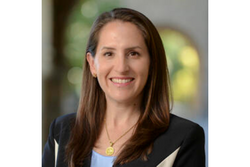
Headshot of Dr. Chenggang Xu.

Chenggang Xu is a Senior Research Scholar at the Stanford Center on China's Economic and Institutions, and a Visiting Fellow at the Hoover Institution at Stanford University, and a Visiting Professor, Department of Finance, Imperial College London. Chenggang received his PhD in Economics from Harvard University in 1991. He was the President of the Asian Law and Economics Association. He was a first recipient of China Economics Prize (2016) and a recipient of the Sun Yefang Economics Prize (2013). Xu's research is in political economics, institutional economics, law and economics, development economics, transition economics and the Chinese political economy.


Chenggang Xu, Senior Research Scholar, Stanford Center on China's Economic and Institutions; Visiting Fellow, Hoover Institution, Stanford University
Lectures
Paragraphs
Debating China - The Washington Quarterly, Vol 46, Issue 4.

In this article, authors Thomas Fingar and David M. Lampton discuss US policies to manage relations with China, and argue that they cannot succeed if they are based on a distorted understanding of PRC politics.

The authors provide critiques of the flawed characterizations of PRC politics and policymaking that often prevail in Washington, then offer their own explanation of what has driven the shift in PRC behavior. Concluding with recommendations for policy and approach, the authors thereby suggest realistic and modest measures to avoid unmitigated hostility and pave the way toward a future guided by the search for coexistence, bounded competition, and productive cooperation.

All Publications button
1
Publication Type
Journal Articles
Publication Date
Journal Publisher
The Washington Quarterly
Authors
Thomas Fingar
David M. Lampton
Number
4
Authors
News Type
News
Date
Paragraphs
Street in China with rows of lit paper lanterns overhead.

Here’s a look back at the many policy-relevant topics the SCCEI China Briefs covered in 2023, organized according to viewer popularity.

Stay with us in 2024 for more insights drawn from data-rich research on China!


Read More

Albert Park speaks at event on China's economy and Asia's rise.
News

ADB's Chief Economist Shares Insights on China’s Economy and Asia’s Rise

On November 15, 2023 Albert Park, Chief Economist of the Asian Development Bank (ADB), joined SIEPR, SCCEI, and the King Center on campus for a timely discussion on China’s economy and Asia’s rise.
ADB's Chief Economist Shares Insights on China’s Economy and Asia’s Rise
Lessons of History: The rise and fall of technology in Chinese history event on Thursday, 9/28/23 at 4:30pm with MIT prof. Yasheng Huang.
News

Lessons of History: The Rise and Fall of Technology in Chinese History

MIT Professor Yasheng Huang joined SCCEI and Stanford Libraries to deliver a talk examining the factors behind the rise and the fall of Chinese historical technology and lessons for today’s China.
Lessons of History: The Rise and Fall of Technology in Chinese History
Two people shake hands behind US and China flags.
News

Scott Rozelle Joins Track Two Diplomacy Efforts on Scholarly Exchange between the United States and China

SCCEI Co-Director Scott Rozelle joined a select group of ten academics from the U.S. to participate in a Track Two diplomacy effort between the U.S. and China. Together, they traveled to Beijing where they met with 12 scholars from China to discuss the current state of scholarly exchange between the two countries, as well as strategies to improve it.
Scott Rozelle Joins Track Two Diplomacy Efforts on Scholarly Exchange between the United States and China
All News button
1
Subtitle

A look back at the policy-relevant topics covered by the SCCEI China Briefs series in 2023

All Publications button
1
Publication Type
Journal Articles
Publication Date
Subtitle

Breastfeeding self-efficacy (BSE), defined as a mother’s confidence in her ability to breastfeed, has been confirmed to predict the uptake of exclusive breastfeeding (EBF). Early experiences during the birth hospital stay, especially in-hospital formula feeding (IHFF), can impact both EBF and maternal breastfeeding confidence. Therefore, our objective was to examine the association between IHFF and EBF outcomes and investigate whether this association is influenced by BSE. The study included 778 infants from a larger cohort study conducted in 2021, with a one-year follow-up in rural areas of Sichuan Province, China. We used a causal mediation analysis to estimate the total effect (TE), natural direct (NDE), and nature indirect effects (NIE) using the paramed command in Stata. Causal mediation analyses revealed that IHFF was negatively associated with EBF (TE odds ratio = 0.47; 95% CI, 0.29 to 0.76); 28% of this association was mediated by BSE. In the subgroup analysis, there were no significant differences in the effects between parity subgroups, as well as between infant delivery subgroups. Our study found that IHFF hindered later EBF and that BSE mediated this association. Limiting the occurrence of in-hospital formula feeding or improving maternal breastfeeding self-efficacy is likely to improve exclusive breastfeeding outcomes.

Journal Publisher
Nutrients
Authors
Scott Rozelle
All Publications button
1
Publication Type
Journal Articles
Publication Date
Subtitle

The objective of the current study is to examine the impact of an in-school computer-assisted learning (CAL) intervention on the math achievement of rural students in Taiwan, including a marginalized subgroup of rural students called Xinzhumin, and the factors associated with this impact. In order to achieve this, we conducted a cluster randomized controlled trial involving 1,840 fourth- and fifth-grade students at 95 schools in four relatively poor counties and municipalities of Taiwan during the spring semester of 2019. While the Intention-To-Treat (ITT) analysis found that the CAL intervention had no significant impacts on student math achievement, the Local Average Treatment Effect (LATE) analysis revealed significant associations with the math performance of the most active 20% of students in the treatment group. LATE estimates suggest that using CAL for more than 20 minutes per week for ten weeks corresponds to higher math test scores, both in general (0.16 SD–0.22 SD), and for Xinzhumin students specifically (0.3 SD–0.34 SD). Teacher-level characteristics were associated with compliance rates.

Journal Publisher
Journal of Research on Educational Effectiveness
Authors
Heather Rahimi
News Type
News
Date
Paragraphs

On November 15, 2023 Albert Park, Chief Economist of the Asian Development Bank (ADB), joined SIEPR, SCCEI, and the King Center for a timely discussion on China’s Economy and Asia’s Rise.

Dr. Park shared insights on the economic prospects for Asia and China, geopolitical fragmentation, and China’s regional importance. Beginning with Asia and China’s economic prospects, Dr. Park noted that Asia continues to be the most dynamic region in the world, however, within the region dynamism is shifting from China to other countries and China’s growth has dropped below the growth rate for the region at-large. He also highlighted how China’s weak property sector is contributing negatively to its growth, but despite the economic decline, the country is not close to a recession.

Dr. Park expanded on how Asia’s regional economic integration has continued to deepen and that there isn’t significant evidence of a shift away from China. Trade is fairly steady in Asia, and China’s role in global value chains has increased - making them even more important globally, despite talks of the U.S. decoupling from China. Dr. Park concluded his talk by emphasizing that forcing countries to decouple often hurts the less-powerful, poorer countries the most. He encouraged the U.S. and China to not force countries to choose sides, arguing that this will benefit the poorer countries and reduce global cost overall.

To hear Dr. Albert Park’s full talk, watch the recording here:

Read More

Lessons of History: The rise and fall of technology in Chinese history event on Thursday, 9/28/23 at 4:30pm with MIT prof. Yasheng Huang.
News

Lessons of History: The Rise and Fall of Technology in Chinese History

MIT Professor Yasheng Huang joined SCCEI and Stanford Libraries to deliver a talk examining the factors behind the rise and the fall of Chinese historical technology and lessons for today’s China.
Lessons of History: The Rise and Fall of Technology in Chinese History
A busy train station in Shenzhen, Guangdong Province, China.
News

Common Prosperity Should Start Early

Dorien Emmers, former SCCEI Postdoc, and Scott Rozelle, SCCEI Co-Director, wrote a piece featured in China Daily and The China Story highlighting the challenges of inequality and a possible path towards common prosperity.
Common Prosperity Should Start Early
Two people shake hands behind US and China flags.
News

Scott Rozelle Joins Track Two Diplomacy Efforts on Scholarly Exchange between the United States and China

SCCEI Co-Director Scott Rozelle joined a select group of ten academics from the U.S. to participate in a Track Two diplomacy effort between the U.S. and China. Together, they traveled to Beijing where they met with 12 scholars from China to discuss the current state of scholarly exchange between the two countries, as well as strategies to improve it.
Scott Rozelle Joins Track Two Diplomacy Efforts on Scholarly Exchange between the United States and China
Hero Image
Albert Park speaks at event on China's economy and Asia's rise. SIEPR
All News button
1
Subtitle

On November 15, 2023 Albert Park, Chief Economist of the Asian Development Bank (ADB), joined SIEPR, SCCEI, and the King Center on campus for a timely discussion on China’s economy and Asia’s rise.

All Publications button
1
Publication Type
Journal Articles
Publication Date
Subtitle

Introduction: The high incidences of both the developmental delay among young children and the mental health problems of their caregivers are major threats to public health in low-income and middle-income countries. Parental training interventions during early childhood have been shown to benefit early development, yet evidence on strategies to promote caregiver mental health remains limited. In addition, evidence on the optimal design of scalable interventions that integrate early child development and maternal mental health components is scarce.

Methods and analysis: We design a single-blind, factorial, cluster-randomised controlled, superiority trial that will be delivered and supervised by local agents of the All China Women’s Federation (ACWF), the nationwide, government-sponsored social protection organization that aims to safeguard the rights and interests of women and children. We randomise 125 villages in rural China into four arms: (1) a parenting stimulation arm; (2) a caregiver mental health arm; (3) a combined parenting stimulation and caregiver mental health arm and (4) a pure control arm. Caregivers and their children (aged 6–24 months at the time of baseline data collection) are selected and invited to participate in the 12-month-long study. The parenting stimulation intervention consists of weekly, one-on-one training sessions that follow a loose adaptation of the Reach Up and Learn curriculum. The caregiver mental health intervention is comprised of fortnightly group activities based on an adaptation of the Thinking Healthy curriculum from the WHO. Primary outcomes include measures of child development and caregiver mental health. Secondary outcomes include a comprehensive set of physical, psychological and behavioural outcomes. This protocol describes the design and evaluation plan for this programme.

Ethics and dissemination: This study received approval from the Institutional Review Board of Stanford University (IRB Protocol #63680) and the Institutional Review Board of the Southwestern University of Finance and Economics in Chengdu, Sichuan, China. Informed oral consent will be obtained from all caregivers for their own and their child’s participation in the study. The full protocol will be publicly available in an open-access format. The study findings will be published in economics, medical and public health journals, as well as Chinese or English policy briefs.

Journal Publisher
BMJ Open
Authors
Scott Rozelle
Authors
Melissa Morgan
News Type
Commentary
Date
Paragraphs

If you had five minutes to speak with the president of the United States, what would you say? That’s the question Michael McFaul, director of the Freeman Spogli Institute for International Studies, posed to FSI scholars at a Stanford 2023 Reunion Homecoming event.

The discussion, “Global Threats Today: What's At Stake and What We Can Do About It,” centered around five major challenges currently facing the world: political dissatisfaction and disillusionment at home, tensions between China and Taiwan, the consequences of climate change, the ongoing war between Russia and Ukraine, and the conflict between Hamas and Israel.

Speaking to each of these areas of concern and how they overlap, FSI scholars Didi Kuo, Larry Diamond, Marshall Burke, Michael McFaul, and Amichai Magen offered their perspectives on what can be done. You can listen to their full conversation on the World Class podcast and browse highlights from their policy ideas below.

Follow the link for a full transcript of "Global Threats: What's at Stake and What We Can Do About It."


Reform the Electoral College |  Didi Kuo


One of the major problems people feel right now in American politics is that their voices aren’t heard. We live in what my colleague Francis Fukuyama calls a "vetocracy," meaning there are a lot of veto points in our system.

In a lot of other democratic institutional configurations, you have rule by the majority. But in the United States, we have an institutional configuration that allows a very small group — for example, 15 people in the House of Representatives — to hold up government in various ways. We see this in dramatic examples on the national level, but it also trickles down to the local level where you see it in issues like permitting hold-ups.

Reforming the Electoral College would be a very direct way of changing that vetocracy. The United States is one of the only advanced democracies that has this indirect system of elections. If all the votes counted equally and all the presidential candidates had to treat all of us the same and respond to us equally in all 50 states, it would do a lot to show the power of the popular vote and realign us more closely to the principle of majoritarianism that we should seek in our institutions.

Didi Kuo

Didi Kuo

Center Fellow at the Freeman Spogli Institute
Full Profile


Allow Taiwan to License Weapons Production |  Larry Diamond


My recommendation is deterrence, deterrence, deterrence. It is not inevitable that the People's Republic of China is going to launch an all-out military assault on Taiwan. But if the United States does not do more to make that a costly decision, the likelihood it will happen are exponentially higher.

Deterrence works. The United States deterred the Soviet Union from moving against West Berlin and much of Europe for decades. But it only works if you have a superior force.

To that end, the United States needs to pre-position more military force in the region. There's now a $12 billion backlog of weapons that Taiwan has ordered and paid for but hasn't received yet. That’s because the American defense production system is completely broken. This is the same reason why we can’t get weapons to Ukraine at the pace we need there.

This issue could be fixed, at least in part, if we licensed the production of some of these weapon systems directly to Taiwan. Their ability to build plants and produce these systems is much more agile than our own, and so licensing the rights to production would dramatically increase the deterrence factor against China, in addition to deepening our cooperation with allies throughout the region.

Professor Larry Diamond

Larry Diamond

Mosbacher Senior Fellow in Global Democracy at FSI
Full Profile


Pursue Climate Mitigation AND Adaptation |  Marshall Burke


There are three things we can do in response to climate change: we can mitigate, we can adapt, or we can suffer. We’re off to a good start, but we have decades of long slog ahead of us to get that right. And it's not just us; even if we do a good job, we depend on other countries to also do a good job. The Biden administration has already been engaged on some of that front, but there’s more work to do there.

And even with our best efforts, we are not going to be able to move as fast as we want or mitigate our greenhouse gas emissions as quickly as we need to avoid climate change. So, we're going to have to live with some climate change, which means adaptation. And if we can't adapt, then we're going to suffer. 

The key point is that we are very poorly adapted to today's climate, much less the climate we're going to have 30 or 50 years from now. The West Coast and California are prime examples of this. There have been monumental wildfire seasons there the last few years, and there are significant negative health impacts from smoke exposure. I see it in my own home, even as someone who studies this and should know better and do more to reduce those risks.

The point is, we're really poorly adapted to the current climate, and things are going to get a lot worse. We need to focus on mitigation; it’s still really important and we need to get it done. But at the same time, we need to figure out how to adapt and live with the changing climate that we're going to experience.

Marshall Burke

Marshall Burke

Deputy Director of the Center on Food Security and the Environment
Full Profile


Weapons for Ukraine, Sanctions on Russia |  Michael McFaul


When I was in Kyiv this September, I had a chance to meet with President Zelenskyy, and he pointed out an absolutely crazy reality. Companies in the United States and Europe are still making tens of thousands of dollars in profits from selling various technologies that ultimately end up in Russia. It’s getting in through places like Hong Kong and Kazakhstan and Belarus and Georgia, and it allows Russia to keep waging its horrific war.

At the same time, the United States is spending millions of dollars to arm Ukraine with systems to shoot down the Russian rockets that were built using the components they got from the West. That’s completely illogical, bad policy. I know it’s hard to control technology, but we have to find a better way than what we’re doing right now. If you're an American taxpayer, that is your money being wasted.

That means more and better weapons for Ukraine, faster. And that means more and better sanctions on Russia, faster. That is the way to speed the end of this war.

Michael McFaul

Michael McFaul

Director of the Freeman Spogli Institute
Full Profile


Be Confident in America |  Amichai Magen


Just a few short years ago, we were all talking about the decline of the United States. I think that is far from inevitable. People speak about the 20th century as the “American Century.” The 21st century can also be the American Century. It's in our hands.

Be bullish on America. Be confident in America. Rediscover the spirit of America for adaptation and innovation and entrepreneurship. We need to wake up from the break we’ve taken from history in the post-Cold War era and rally once again in our spirit, our research, and our intellect.

We need to find new solution structures to the great challenges of our era: environmental challenges, AI, biotechnological challenges, nuclear challenges. And we can do it. China is on the verge of demographic decline and economic decline. Russia is a very dangerous international actor, but it is not a global superpower. We must reinvent the institutions and the alliances that we need for the 21st century in order to make sure that we continue a journey towards greater peace and prosperity for all of mankind.

Amichai Magen

Amichai Magen

Visiting Fellow in Israel Studies at the Freeman Spogli Institute
Full Profile


The entire discussion, including the audience Q&A, is available to watch on FSI's YouTube channel. To stay up to date on our content, be sure to like, subscribe, and turn on notifications.

Read More

Family and friends of May Naim, 24, who was murdered by Palestinians militants at the "Supernova" festival, near the Israeli border with Gaza strip, react during her funeral on October 11, 2023 in Gan Haim, Israel. (Getty Images)
News

FSI Scholars Analyze Implications of Hamas’ Terror Attack on Israel

Larry Diamond moderated a discussion between Ori Rabinowitz, Amichai Magen and Abbas Milani on the effects of Hamas’ attacks on Israel and what the emerging conflict means for Israel and Middle Eastern geopolitics.
FSI Scholars Analyze Implications of Hamas’ Terror Attack on Israel
Michael McFaul poses with a Stanford University flag in front of a group of Ukrainian alumni during a reunion dinner in Kyiv.
Blogs

On the Ground in Ukraine: A Report from Michael McFaul and Francis Fukuyama

A trip to Kyiv gave FSI Director Michael McFaul and Olivier Nomellini Senior Fellow Francis Fukuyama the opportunity to meet with policymakers, military experts, and Ukrainian alumni of FSI's programs and fellowships.
On the Ground in Ukraine: A Report from Michael McFaul and Francis Fukuyama
Democracy Day 2023 light up marquee letters
News

Democracy Day sweeps Stanford

Thousands turned out for the student-run, campuswide event, which has grown significantly since launching in 2021.
Democracy Day sweeps Stanford
Hero Image
Amichai Magen, Marshall Burke, Didi Kuo, Larry Diamond, and Michael McFaul onstage for a panel discussion at Stanford's 2023 Reunion and Homecoming
Melissa Morgan
All News button
1
Subtitle

FSI scholars offer their thoughts on what can be done to address political polarization in the United States, tensions between Taiwan and China, climate change, the war in Ukraine, and the Israel-Hamas war.

Date Label
-

Big Data China 2nd Annual Conference (Virtual)


Prospects for China’s Growth and Foreign Relations in an Era of Competition


The event will be broadcast live from this webpage.

Big Data China logo

Tune in on December 5th to watch our annual conference! China experts in the policy and academic communities will discuss the state of the Chinese economy, pathways to manage scholarly exchanges, and the future of Chinese foreign policy.


AGENDA
 

8:00 - 8:30 am: Keynote Speech: Kevin Stein, Chair, American Chamber of Commerce in Shanghai, and Co-Chair, China Public Policy Practice, Covington & Burling
 

8:45 - 9:45 am: Panel 1: Scenarios for Chinese Growth Over the Next Decade: Key Factors and Implications


Moderator: Scott Kennedy, CSIS

Panelists:
Zhiguo He, University of Chicago Booth School of Business
Bert Hofman, NUS Lee Kuan Yew School of Public Policy
Zongyuan Zoe Liu, Council on Foreign Relations

10:00 - 11:00 am: Panel 2: Charting a Path for Scholarly Exchange in an Era of Strategic Competition


Moderator: Scott Rozelle, Stanford Center on China’s Economy and Institutions

Panelists:
Li Chenjian, Stanford University
Molly Roberts, UC San Diego
Deborah Seligsohn, Villanova University

11:15 - 12:15 pm: Panel 3: Between Backlash and Balancing: The State of China’s Foreign Relations


Moderator: Ilaria Mazzocco, CSIS

Panelists:
Yunnan Chen, Overseas Development Institute
Carla Freeman, United States Institute of Peace
Francesca Ghiretti, Adarga Research Institute


FEATURING
 

Image
Kevin Stein 2023 keynote speaker


Image
Big Data China conference panelists listed by panel.

EVENT PARTNERS
 

Image
SCCEI and CSIS logos
Conferences
Subscribe to China