News Type
News
Date
Paragraphs

Image
teachertraining
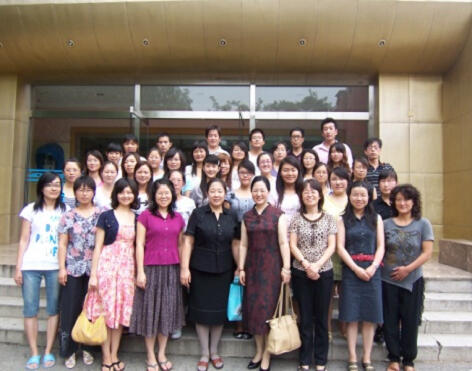
The Summer "Fresh" English Teacher Training Program, held from July 20, 2009 to August 9, 2009, aimed to raise the educational quality of migrant schools by improving the English knowledge and teaching skills of migrant school English teachers. The training team for this program consisted of English teachers from the United States, English teachers trained in China and volunteers from various universities and institutions—from both China (Renmin University and PKU) and the United States (Stanford University). The training focused on English proficiency, English teaching skills and English conversational skills. After three weeks intensive training courses, almost all of the students successfully graduated from Summer Fresh and achieved progress in different aspects.

To honor their hard work, some were awarded Certificates of Distinction.

Image
summer fresh teacher diao
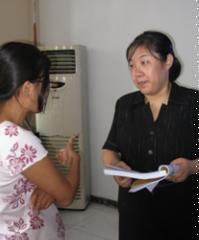
Shuqin Diao, who was the grammar teacher for Summer Fresh, started with 6 lessons of grammar and vocabulary per day. When she sensed the students were mastering the content, she accelerated to 8 lessons per day. With homework to boot, students did not have much night life. Students had a final grammar test at the end of the class which served to evaluate their work during the three weeks. According to the ranking from test, Shaofang Cheng, Youwei Li and Guocun Xiao were awarded *1st Place, 2nd Place* and *3rd Place* in their "English Grammar" Class.

Image
summer fresh teacher 1
Lisa Yiu, a Stanford Ph.D. student and former teacher from Los Angeles, lit up the days of the students as their English conversation instructor. She had them playing Bingo, doing Skits and Singing Songs. "Itsy Bitsy Spider" and many other songs were heard up and down the halls of the training facility. Not only did students improve their English conversation skills, but they also made friends with each other. In the end, three of them- Kequan Hou, Hui Huang and Li Zhang- were awarded *Excellence in English Pronunciation* for the "English Pronunciation" Class.

Image
summer fresh teacher ma
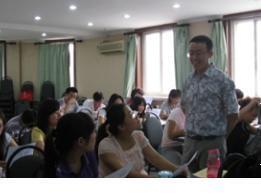
Last, but not least, Adam Ma opened the student's eyes to the world of the Theory and Practice of Being a Teacher. One of the most interesting lessons was one that divided the students into 5 groups to present a group "Lesson Plan" during the last week. During their hour "on stage," each groups presented a joint "lesson plan." Because of their impressive presentations, 3 students namely Jinyan Bu, Feng Li and Si Gao were awarded *Excellence in Teaching*, the *Greatest Potential* and *Best Teacher Presenter *for the "Theory and Practice of Teaching English" Class.

As Summer Fresh ended, the students and teachers and volunteeres all agreed, the goal of improving the English proficiency of the migrant teachers was achieved. In addition, teachers learned invaluable lessons in English teaching skills. But, perhaps most importantly, the entire class made new friends and have acquired a deeper grasp of English knowledge which we hope will make a difference in the lives of their migrant students.


Hero Image
screen shot 2014 08 22 at 3 42 33 pm
All News button
1
-

Born in Tunis in 1957, Laurent Cohen-Tanugi is a Paris-based international lawyer, policy adviser and public intellectual.

A member of the Paris and New York Bars, his practice focuses on cross-border mergers and acquisitions, international arbitration, competition law, and policy advisory work. In the fall of 2007, he was appointed by the French government to lead a task force on the future of the European Union's Lisbon Strategy, ahead of the French Presidency of the EU ("Beyond Lisbon: A European Strategy For Globalisation", Peter Lang, 2008, www.euroworld2015.eu).

He was previously a partner of Skadden, Arps, Slate, Meagher & Flom LLP (2005-2007), Senior Vice President and General Counsel of Sanofi-Synthélabo, a European pharmaceutical group (2004), and a partner of Cleary, Gottlieb, Steen & Hamilton (1991-2003). In recent years, he was involved in substantial cross-border mergers such as Vivendi Universal, Sanofi-Aventis and Alcatel-Lucent.

Mr Cohen-Tanugi is an alumnus of the Ecole Normale Supérieure and holds an agrégation in French literature from the University of Paris and a degree from the Institute of Political Studies of Paris.  He graduated from the University of Paris Law School in 1981 and received an LL.M. degree from the Harvard Law School in 1982. 

He is the author of numerous influential books, including Le Droit sans l'Etat (PUF, 1985), a comparative essay on the French and American legal and political traditions, prefaced by Professor Stanley Hoffmann of Harvard University; La Métamorphose de la Démocratie (Odile Jacob, 1989), on the changes affecting the French and European democratic cultures since the late sixties; L'Europe en danger (Fayard, 1992), anticipating the current crisis of political Europe; Le Choix de l'Europe (Fayard, 1995), on the future of European unification, and Le Nouvel ordre numérique (Odile Jacob, 1999), a multi-disciplinary analysis of the communications and information technology revolution. 

His latest English-language works include An Alliance At Risk, The United States And Europe After September 11 (Johns Hopkins University Press, September 2003), exploring the present state and future prospects of transatlantic relations, and The End of Europe? (Foreign Affairs, November/December 2005, Volume 84., No. 6), an analysis of the state of the EU following the French and Dutch rejections of the EU constitutional treaty, and most recently, The Shape of the World to Come, on the geopolitics of globalization (Columbia University Press, 2008), which will also be published in China.

Laurent Cohen-Tanugi is a regular columnist in French newspapers Les Echos and Le Monde, and lectures on a variety of subjects internationally. A director of Notre Europe, a think-tank founded by former EC Commission President Jacques Delors, he is actively involved in European policy-making. He is also a member of the French Academy of Technologies and a director of several think-tanks, including the Fondation pour l'innovation politique. A frequent consultant to the French government, he sat on the Commission on Judicial Reform set up by President Chirac in 1997, and on the Commission on the Intangible Economy set up by the French government in 2006. He is also a member of the Policy Advisory Council of the French-American Foundation.

Mr. Cohen-Tanugi taught a seminar in European affairs at the Ecole Normale Supérieure in Paris from 2005 to 2008 and will be teaching a course on Transatlantic Merger and Acquisitions at the Harvard Law School in the spring of 2009. Laurent Cohen-Tanugi is the advisor to the Polish government in preparation for his upcoming presidency of the EU in 2011.

Rm. 280A
Stanford Law School

Laurent Cohen-Tanugi International Lawyer; Chair of the French government's "Europe and Globalization" Task Force Speaker
Lectures
-

A well-known puzzle in the study of Asian democratization is the inverse relationship between the level of democracy and the support for the "D" word. According to the latest Asian Barometer survey, Thailand, China, Vietnam, Mongolia, and Cambodia have a much higher level of overt support for democracy than those well-recognized democracies such as Japan, South Korea, and Taiwan. To unravel this puzzle, the authors develop a new regression method for the two-dimensional typological analysis including the "D" word and the liberal democratic attitude. Four ideal types of democratic orientation are defined and analyzed: Consistent Democrats (high support for democracy, high liberal democratic value), Critical Democrats (low support for democracy, high liberal democratic value), Non-Democrats (low support for democracy, low liberal democratic value), and Superficial Democrats (High support for democracy, low liberal democratic value). Different from most of the regression methods, the dependent variables in typological regression include the radius and the azimuth and therefore transform the categorical nature of the two-by-two typology into distinctive types with a continuous character. The preliminary result indicates the high support rate of the "D" word in those less democratic countries is associated with a phenomenon that the word "democracy" has lost its distinctive semantic meaning and could embrace all desirable political values, covering any variety of political systems in the world.

Professor Min-hua Huang received his Ph.D. in Political Science from University of Michigan, and his B.A. in Business Administration from National Taiwan University. He is currently teaching at the Department of Political Science, Texas A&M University. In this special seminar, he will address the above issues, leading us to reconsider democracy and democratization in Asia.

Philippines Conference Room

Min-hua Huang Assistant Professor Speaker Department of Political Science, Texas A&M University
Seminars
-

Since the 2001 anthrax attacks, members of the biosecurity community and US government officials have expressed a growing sense of alarm at the threat of a biological attack.  The Commission on the Prevention of Weapons of Mass Destruction Proliferation and Terrorism recently predicted that a terrorist attack involving WMD is likely to take place by 2013 and identified biological terrorism as the most likely contingency.  To counter this threat, increasing emphasis has been placed on the role of microbial forensics in deterring an attack. New infrastructure has been established by the US government to develop capabilities to identify the source of a pathogen used in an attack and identify the perpetrators. However, many open questions remain about the potential efficacy of this approach both from a technological capabilities standpoint and from a deterrence perspective.

Existing technologies can be borrowed from molecular biology to identify elements in a pathogen's DNA, which could help investigators trace it back to a specific source strain. However, these tools are limited, and new methods should be developed to increase confidence in microbial forensics analyses. Moreover, a comprehensive genome database of pathogen strains is necessary for an effective investigation in the event of an attack. Who will cover the costs of sequencing pathogen genome strains to generate such a database? Will there be obstacles to gaining cooperation from academic and government facilities within the United States and internationally?  In the best-case scenario, advances in microbial forensics could enable us to identify the source of a biological attack; would these capabilities effectively deter non-state actors? These questions must be addressed to determine the extent to which microbial forensics programs can meet their stated goals.

Jaime Yassif is a doctoral candidate in the Biophysics Group at UC Berkeley. She is conducting her thesis research in the Liphardt lab, where she studies the dynamics of RNA-binding proteins using a single-molecule technique called plasmon rulers.

Prior to her graduate work, Ms. Yassif worked for several years in science and security policy and arms control.  She began as a research assistant at the Federation of American Scientists, where she contributed to the writing of Senate Foreign Relations Committee testimony on radiological weapons and authored a piece on radiological decontamination in Defense News. She then worked as a program officer at the Nuclear Threat Initiative, where she provided support for the organization's four key program areas-Russia/New Independent States, Biological, Regional and Communications-and managed the organization of an international workshop on Global Best Practices in Nuclear Materials Management. This was followed by a fellowship to study the Chinese nuclear posture at Tsinghua University in Beijing.

Ms. Yassif holds an MA in Science and Security from the War Studies Department at King's College London, where she wrote her thesis on verification of the Biological Weapons Convention.  She received her bachelor's degree in Biology from Swarthmore College. Ms. Yassif is former president of the student-run Science, Technology and Engineering Policy group at UC Berkeley and a member of Women in International Security.

Martha Crenshaw is a senior fellow at the Center for International Security and Cooperation and the Freeman Spogli Institute, and professor of political science (by courtesy). Her current research focuses on why the United States is the target of terrorism, the effectiveness of counter terrorism policies, and mapping terrorist organizations. Professor Crenshaw served on the Executive Board of Women in International Security and chaired the American Political Science Association (APSA) Task Force on Political Violence and Terrorism. She was a Guggenheim Fellow in 2005-2006. Her edited book, The Consequences of Counterterrorism in Democracies, is being published by the Russell Sage Foundation.

Reuben W. Hills Conference Room

Jaime Yassif PhD candidate, UC Berkeley Biophysics Graduate Group Speaker
Martha Crenshaw Professor of Political Science (by courtesy) and Senior Fellow at CISAC and FSI Commentator
Seminars
Authors
Jeremy Carl
News Type
Commentary
Date
Paragraphs
Jeremy Carl argues that despite India’s lack of a concrete binding target for significant CO2 emissions reductions, India’s climate commitments come through on other fronts.

Sometimes in diplomacy what is not announced is more revealing than what is. Such is certainly the case in India's recent climate and energy negotiations with the US, as both countries prepare to head to global climate talks in Copenhagen. The occasion of Manmohan Singh's state visit to the US brought the announcement of a flurry of energy and climate-related initiatives. These initiatives were a combination of substance and political theatre, with potentially important initiatives on environmental and regulatory capacity-building and technology partnerships buried under a deep layer of bureaucratic niceties.

What was more noticed was what was not announced: any agreement for India to have a binding target for CO2 emissions reductions, something US and European environmentalists have long claimed is necessary as part of a global effort to stave off severe climate change. And while the Indian government has eventually announced a targeted reduction in what is known as "emissions intensity", CO2 emissions per unit of GDP, that wasn't a big stretch, given India's current annual efficiency improvements. Furthermore, Minister for Environment and Forests Jairam Ramesh has made it abundantly clear in Parliament that such targets would be voluntary and not part of a binding international agreement.

With more than 60 world leaders in attendance, we can be assured that Copenhagen will not end in public failure. But the better question is whether the announced success in Copenhagen will have any practical meaning other than determining that diplomats can spin a "success" out of any actual events. Some Indian commentators have seemed to hope for a "success" of that sort - fretting about India being outmanoeuvred on the public stage by China and other developing countries that may be able to strike a more cooperative posture.

While from a tactical standpoint, such concerns are understandable (there is little reason for India to not commit to doing things it would like to do anyway, such as developing more efficient power plants or cars), from the perspective of actually taking leadership in addressing the climate problem, they mean little. In some ways, India is emulating the example of the US from the previous Kyoto climate round: while the US certainly should have been more proactive and engaged, at least the Americans had the integrity not to ratify an agreement that they couldn't keep. Many other nations could not claim that; they either missed their targets entirely, or resorted to bogus accounting tricks to meet their goals.

That India is showing its seriousness by not making climate commitments it won't live by should actually be seen as a mature and responsible decision, not an intransigent one. Does anyone think that China won't walk away from its promise if they have trouble meeting their emissions reduction goals?

As an alternative to the hot air that is likely to come out of Copenhagen, it is instructive to look at the potentially useful energy and climate agreements the US and India did sign during the PM's recent visit. The fact that clean energy was the second item listed behind security issues in the joint communiqué announced by Singh and Obama is clear evidence that both India and the US place a high importance on this aspect of their relationship.

India and the US announced numerous programmes, from the joint deployment of solar electricity in Indian cities to the strengthening of India's environmental regulatory and monitoring capacity - which is sure to be a critical step if India is to make serious and verifiable long-term commitments to emissions reductions. Perhaps most important, at least symbolically, was the announcement of joint scientific R&D work for renewable energy technologies. The Indo-US Clean Energy Research and Deployment Initiative, which promises joint development of new energy technologies and the development of a joint research centre with a public-private funding model, is one such initiative.

Ultimately, despite the bluster of diplomats in Delhi, Washington or Copenhagen, the solutions to the climate change problem must come through a technological revolution in the world's energy infrastructure. And it is here that India, with its burgeoning corps of bright young engineers, could make the biggest impact on climate change mitigation. Circumstances may not permit

India to lead the deal-making in Denmark, but if the Indian government gets serious about turning more of India's brightest young minds towards solving the clean energy problem, then India's contribution to solving the climate change conundrum may be significant indeed.

All News button
1
-

When discussing Korea's "Chinese Decade," roughly defined as the dozen or so years prior to the Sino-Japanese War of 1894-1895, most of the attention is focused on the heavy-handed activities of Yuan Shikai in Seoul.  Less well known is that part of this Chinese effort to bind Korea more closely to China involved the absorption of Korea's newly-formed Maritime Customs Service.  Several scholars have looked at this period and the actions of some of the key players such as Sir Robert Hart, Li Hongzhang, Henry F. Merrill, and Paul Georg von Mollendorff.  Using the recently-discovered correspondence of the first commissioner of customs in Pusan, this talk will discuss some heretofore unknown aspects of this attempted takeover by China.

Wayne Patterson received his undergraduate degree in history from Swarthmore College, and his graduate degrees in history and international relations from the University of Pennsylvania.  He has authored or edited eleven books on modern Korea, including The Korean Frontier in America: Immigration to Hawaii, 1896-1910 (1994) and The Ilse: First-Generation Korean Immigrants in Hawaii, 1903-1973 (2000).  He has taught Korean history at a number of institutions in the United States, including Harvard University, the University of Chicago, the University of Wisconsin-Madison, the University of South Carolina, the University of Kansas, and the University of Pennsylvania.  He has also taught Korean history abroad, including Ewha University, Korea University, Yonsei University, as Fulbright Distinguished Lecturer, and most recently, at the University of the Philippines, as Korea Foundation Visiting Professor.  His home institution is St. Norbert College in Wisconsin, where he is professor of history.  He is currently teaching Korean history as a visiting professor at the University of California - Berkeley.

Philippines Conference Room

Wayne Patterson Visiting Professor of Asian Studies, University of California - Berkeley Speaker
Seminars
-

Gang He and Richard Morse examine one of the biggest controversies in the global carbon market - the additionality of Chinese wind power in the Clean Development Mechanism (CDM).   Addressing and moving beyond the binary question of whether such projects do or do not represent "real" CO2 reductions, they use insights drawn from detailed analysis of the entire Chinese wind CDM portfolio to argue that the current legal and economic structure of additionality is unworkable in the Chinese power sector when one takes into account how regulation and policy in those markets actually function. 

Therefore under the current CDM additionality regime, additionality cannot be credibly verified for Chinese wind - a problem that extends to multiple types of energy projects in numerous developing countries.  In short, the controversy over Chinese wind illustrates the need for large-scale reforms of how the world validates carbon credits in developing world power sectors.  In a post-Kyoto world that envisions a greatly expanded role for international carbon offsets, ensuring the integrity of carbon markets through smarter policy engagement with countries like China is more important than ever.

Richard and Rhoda Goldman Conference Room

616 Serra St.
E420 Encina Hall
Stanford, CA 94305

(650) 725-4249 (650) 724-1717
0
Research Associate
Gang.jpg

Gang He's work focuses on China's energy and climate change policy, carbon capture and sequestration, domestic coal and power sectors and their key role in both the global coal market and in international climate policy framework.  He also studies other issues related to energy economics and modeling, global climate change and the development of lower-carbon energy sources. 

Prior to joining PESD, he was with the World Resources Institute as a Cynthia Helms Fellow.  He has also worked for the Global Roundtable on Climate Change of the Earth Institute at Columbia University. With his experiences both in US and China, he has been actively involved in the US-China collaboration on energy and climate change. 

Mr. He received an M.A. from Columbia University on Climate and Society, B.S. from Peking University on Geography, and he is currently doing a PhD in the Energy and Resources Group at UC Berkeley.

Gang He Speaker
Richard K. Morse Speaker
Seminars

Some 700,000 Koreans, 40,000 Chinese and 35,000 Allied POWs performed forced labor for private companies within Japan during the Asia Pacific War. Kyushu coal mines were a wartime center of this injustice and Fukuoka is a major locus of ongoing redress efforts, which the presenter has closely observed. A front-row account of the interaction between community activists in Japan, Korea, China and North America will be provided and key results will be discussed. The Japanese government has been prodded into sending the remains of Korean labor conscripts to South Korea and handing over the long-suppressed records that Seoul needs to fully implement its own compensation program. Lawsuits in Japanese courts stemming from forced labor by Chinese proved partially successful, raising expectations that more Japanese firms may voluntarily settle the especially strong Chinese claims. Amid the controversy surrounding former Prime Minister Aso's admission that there were POWs at Aso Mining, Japan issued new official apologies and is expanding a POW reconciliation program. Fluid networks of independent researchers and Internet-empowered activists continue to influence developments within Japan's changing political landscape. This transnational grassroots activism also faces barriers and limitations.

Mr. Underwood's doctoral research at Kyushu University analyzed the reparations movement for Chinese forced labor in Japan during World War Two, locating it within the global trend toward repairing historical injustices. His articles for The Asia-Pacific Journal: Japan Focus (www.japanfocus.org) provide the fullest descriptions of forced labor redress activities involving Chinese as well as Korean victims. He played a key role in forcing former Japanese Prime Minister Aso Taro to admit there were Allied POWs at Aso Mining during the war. His Web site is www.williamunderwood.org.

Philippines Conference Room

William Underwood Speaker Independent Researcher
Seminars
-

The Stanford China Program in cooperation with the Center for East Asian Studies will host a special series of seminars to mark 60 Years of the People's Republic of China (PRC). Over the course of the winter and spring terms, we will have six leading scholars, each examining one of the six decades of the PRC's history. Our premise is that history matters. The speaker on each decade will characterize their decade, note shifts within that time, identify the pivotal events, and discuss how the decade shaped what happened afterwards.

Jospeh Fewsmith is the author of four books: China Since Tiananmen: The Politics of Transition (2001), Elite Politics in Contemporary China (2001), The Dilemmas of Reform in China: Political Conflict and Economic Debate (1994), and Party, State, and Local Elites in Republican China: Merchant Organizations and Politics in Shanghai, 1980-1930 (1985). He is very active in the China field, traveling to China frequently and presenting papers at professional conferences such as the Association for Asian Studies and the American Political Science Association. His articles have appeared in such journals as Asian Survey, Comparative Studies in Society and History, The China Journal, The China Quarterly, Current History, The Journal of Contemporary China, Problems of Communism, and Modern China. He is also a research associate of the John King Fairbank Center for East Asian Studies at Harvard University.

Philippines Conference Room

Joseph Fewsmith Director of East Asian Studies Program; Professor of International Relations and Political Science Speaker Boston University
Seminars
-

The Stanford China Program in cooperation with the Center for East Asian Studies will host a special series of seminars to mark 60 Years of the People's Republic of China (PRC). Over the course of the winter and spring terms, we will have six leading scholars, each examining one of the six decades of the PRC's history. Our premise is that history matters. The speaker on each decade will characterize their decade, note shifts within that time, identify the pivotal events, and discuss how the decade shaped what happened afterwards.

Barry Naughton is an authority on the Chinese economy, with an emphasis on issues relating to industry, trade, finance, and China's transition to a market economy. Recent research focuses on regional economic growth in the People's Republic of China and the relationship between foreign trade and investment and regional growth. He is also completing a general textbook on the Chinese economy. Recently completed projects have focused on Chinese trade and technology, in particular, the relationship between the development of the electronics industry in China, Taiwan and Hong Kong, and the growth of trade and investment among those economies. His book, Growing Out of the Plan: Chinese Economic Reform, 1978-1993, which was published in 1995, is a comprehensive study of China's development from a planned to a market economy that traces the distinctive strategy of transition followed by China, as well as China's superior growth performance. It received the Ohira Memorial Prize in 1996. Naughton is the author of numerous articles on the Chinese economy and is editor or co-editor of three other books: Reforming Asian Socialism: The Growth of Market Institutions, Urban Spaces in Contemporary China, and The China Circle: Economics and Technology in the PRC, Taiwan and Hong Kong. Naughton joined IR/PS in 1988 and was named to the Sokwanlok Chair in Chinese International Affairs in 1998.

Philippines Conference Room

Barry Naughton Sokwanlok Chair of Chinese International Affairs at the Graduate School of International Relations and Pacific Studies Speaker UC San Diego
Seminars
Subscribe to China