-

This is a virtual event. Please click here to register and generate a link to the talk. 
The link will be unique to you; please save it and do not share it with others.

October 18, 4-5:00 p.m. California time/ October 19, 8-9:00 a.m. Japan time

The recent LDP Presidential Election ended with Fumio Kishida defeating Taro Kono in the final round to become the LDP President and then Prime Minister of Japan, succeeding Yoshihide Suga, who stepped down amidst mounting political challenges dealing with COVID and its economic consequences. This was a closer election than most other LDP Presidential elections with a great deal of intrigue about how the publicly popular Kono might fare against Kishida, who the senior LDP leadership preferred. What does this election process tell us about Japanese politics today, and how will LDP fare in the upcoming House of Representatives Election? Will Kishida last longer than Suga as Prime Minister, and what do opposition parties have to do to stop the dominant LDP to change Japanese politics? In this webinar, two leading experts on the topic, Rieko Kage (University of Tokyo) and Dan Smith (Columbia University), address these questions, moderated by Kiyoteru Tsutsui, Deputy Director of the Walter H. Shorenstein Asia-Pacific Research Center, where he is also Director of the Japan Program.

Panelists

Image
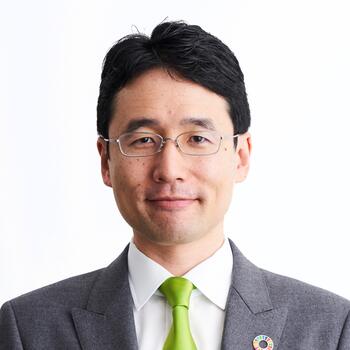
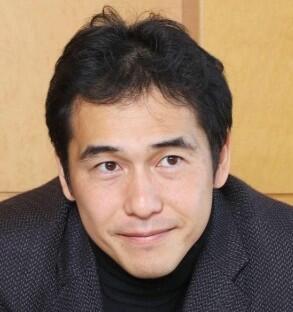
Photo of Rieko Kage
Rieko Kage is Professor of Political Science at the University of Tokyo.  She graduated from the Faculty of Law at Kyoto University and earned her Ph.D. from the Department of Government, Harvard University.  She is the author of Civic Engagement in Postwar Japan (2011) and Who Judges? Designing Jury Systems in Japan, East Asia, and Europe (2010), both of which have been published from Cambridge University Press, and she has published broadly on issues relating to judicial politics, political participation, and public opinion.  Her most recent article, "War, Democratization, and Generational Cohort Effects on Participation in Japan" is forthcoming from Electoral Studies.


Image
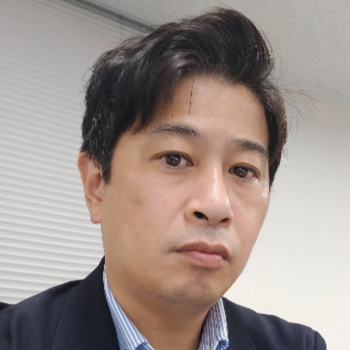
Photo of Dan Smith

Daniel M. Smith is the Gerald L. Curtis Visiting Associate Professor of Modern Japanese Politics and Foreign Policy in the Department of Political Science and School of International and Public Affairs at Columbia University. He is the author of Dynasties and Democracy (Stanford University Press, 2018), and numerous articles on Japanese politics, party politics, and elections. He is also a co-editor of the Japan Decides election series. From 2012 to 2013, he was a postdoctoral fellow at the Walter H. Shorenstein Asia-Pacific Research Center (APARC) at Stanford University.


Moderator

Image
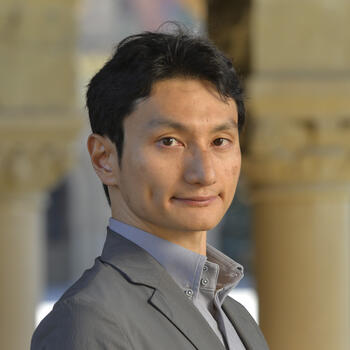
Kiyoteru Tsutsui
Kiyoteru Tsutsui is the Henri H. and Tomoye Takahashi Professor, Professor of Sociology, Senior Fellow at the Freeman Spogli Institute for International Studies, and Deputy Director of the Walter H. Shorenstein Asia-Pacific Research Center, where he is also Director of the Japan Program. He is the author of Rights Make Might: Global Human Rights and Minority Social Movements in Japan (Oxford University Press, 2018), co-editor of Corporate Social Responsibility in a Globalizing World (Oxford University Press, 2016) and co-editor of The Courteous Power: Japan and Southeast Asia in the Indo-Pacific Era (University of Michigan Press, forthcoming 2021). 

Via Zoom Webinar
Register: https://bit.ly/3icfq3j


Rieko Kage <br><i>Professor of Political Science at the University of Tokyo</i><br><br>
Dan Smith <br><i>Gerald L. Curtis Visiting Associate Professor of Modern Japanese Politics and Foreign Policy at Columbia University</i><br><br>
Kiyoteru Tsutsui <br><i>Director of the Japan Program and Deputy Director of Shorenstein APARC</i><br><br>
Seminars
Authors
News Type
News
Date
Paragraphs

Stanford e-Japan is an online course that teaches Japanese high school students about U.S. society and culture and U.S.–Japan relations. The course introduces students to both U.S. and Japanese perspectives on many historical and contemporary issues. It is offered biannually by the Stanford Program on International and Cross-Cultural Education (SPICE). Stanford e-Japan is supported by the Yanai Tadashi Foundation.

In Summer 2022, top students of the Spring 2021 Stanford e-Japan course will be honored through an event at Stanford University.

The three Spring 2021 honorees—Yura Amaya (Toyama Chubu High School, Toyama), Akira Fukutomi (Yaeyama High School, Okinawa), and Yuto Kimura (Waseda University Senior High School, Tokyo)—will be recognized for their coursework and exceptional research essays that focused respectively on “Organ Donation After Brain Death in Japan and the United States,” “Ambiguity and Clarity: Cultural Differences between Japan and the U.S.,” and “The U.S.–Japan Relationship: Consideration from the Perspective of U.S.–China Friction.”

Risei Ko (Ikeda Senior High School Attached to Osaka Kyoiku University) and Moe Shimizu (Shibuya Senior High School) received Honorable Mentions for their research papers that focused respectively on “The Metaverse & Human Relations: A New Approach to Tackle Racism in Japan and the U.S.” and “Mental Health Care for U.S. High School Students Under COVID-19.”

In the Spring 2021 session of Stanford e-Japan, all 28 students successfully completed the course. The students represented the following schools: Aichi Shukutoku Junior and Senior High School (Aichi); the Academy for the International Community in Japan (AICJ) High School (Hiroshima); Hachinohe St. Ursula Gakuin High School (Aomori); Hiroo Gakuen High School (Tokyo); Hiroshima Prefectural Hiroshima Senior High School (Hiroshima); Hokkaido Sapporo Minami High School (Hokkaido); Ikeda Senior High School Attached to Osaka Kyoiku University (Osaka); International Christian University High School (Tokyo); Kaijo Senior High School (Tokyo); Kaisei Academy (Tokyo); Kasugaoka High School (Osaka); Keio Girls Senior High School (Tokyo); Kyoto Gakuen High School (Kyoto); Kyoto Prefectural Rakuhoku Senior High School (Kyoto); Mita International School (Tokyo); Nagasaki Prefectural Isahaya High School (Nagasaki); Oin High School (Tokyo); Okayama Prefectural Joto High School (Okayama); Oshima High School (Kagoshima); Saitama Municipal Urawa High School (Saitama); Senior High School at Otsuka, University of Tsukuba (Tokyo); Shibuya Senior High School (Tokyo); Takada High School (Mie); Takamatsu High School (Kagawa); Toyama Chubu High School (Toyama); Waseda University Senior High School (Tokyo); Yaeyama High School (Okinawa); and Yatsushiro High School (Kumamoto).

For more information about the Stanford e-Japan Program, please visit stanfordejapan.org. The application period for Spring 2022 will begin November 15, 2021.


To stay informed of news about Stanford e-Japan and SPICE’s other programs, join our email list and follow us on Facebook, Twitter, and Instagram.


SPICE offers separate courses for U.S. high school students. For more information, please see the Reischauer Scholars Program (online course about Japan), Sejong Scholars Program (online course about Korea), and China Scholars Program (online course about China).

Read More

Japan Day honorees Zoom image
News

Japan Day: Recognizing Top Students in Stanford e-Japan and the Reischauer Scholars Program

Congratulations to the 2020 Stanford e-Japan and 2021 RSP honorees.
Japan Day: Recognizing Top Students in Stanford e-Japan and the Reischauer Scholars Program
John Roos
Blogs

Ambassador John Roos and the Importance of Student-to-Student Exchange

Just over ten years after becoming the first U.S. ambassador to Japan to participate in the Hiroshima Peace Memorial Ceremony in 2010, Ambassador John Roos spoke about his experiences with 26 high school students in Stanford e-Japan from throughout Japan.
Ambassador John Roos and the Importance of Student-to-Student Exchange
female student standing in front of Akamon in Japan
Blogs

Stanford e-Japan: A Turning Point in My Life

The following reflection is a guest post written by Hikaru Suzuki, a 2015 alumna and honoree of the Stanford e-Japan Program, which is currently accepting applications for Spring 2021.
Stanford e-Japan: A Turning Point in My Life
Hero Image
collage of honoree headshots
Yura Amaya, Akira Fukutomi, and Yuto Kimura
All News button
1
Subtitle

Congratulations to our newest student honorees.

Shorenstein APARC
Stanford University
Encina Hall, E312
Stanford,  CA  94305-6055

650-721-0302
1
Visiting Assistant Professor, Japan Program, 2021-2022
charles_crabtree.jpg PhD

Charles Crabtree joined APARC as a visiting assistant professor with the Japan Program for the 2021-22 academic year. Crabtree is an assistant professor in the Department of Government at Dartmouth College. During his time on campus, while on leave from Dartmouth, he researched fairness in politics, with applications to areas including the study of repression, human rights, policing, and immigration. 

Crabtree's research focuses on the politics, sociology, and economics of discrimination across countries in Asia, particularly in Japan, where out-group discrimination continues to mar the lived experiences of many. He examines the consequences of discrimination and evaluates various means of reducing it in politics, the workplace, and everyday life.  His book on this subject, Studying Discrimination: An Experimental Approach, is under contract with Cambridge University Press. He has published his research in various academic journals and regularly writes about American and Japanese politics for prominent national and international media outlets.

Crabtree holds a doctorate in Political Science from the University of Michigan and master's degrees from Pennsylvania State University and Northwestern University. 

News Type
News
Date
Paragraphs

Applications opened yesterday for the China Scholars Program (CSP), Sejong Korea Scholars Program (SKSP), and Reischauer Scholars Program (RSP) on Japan—three intensive online courses offered by SPICE, Stanford University, to high school students across the United States. All three applications can now be viewed at https://spicestanford.smapply.io/. Interested students must submit their completed application (including an essay and letter of recommendation) by the deadlines listed below.

Spring 2022 Online Course Application Deadlines
China Scholars Program: November 1, 2021
Sejong Korea Scholars Program: October 15, 2021
Reischauer Scholars Program on Japan: October 15, 2021

All three online courses are currently accepting applications for the Spring 2022 term, which will begin in February and run through June. Designed as college-level introductions to East Asia, these academically rigorous courses present high school students the unique opportunity to engage in a guided study of China, Korea, or Japan directly with leading scholars, former diplomats, and other experts from Stanford and beyond. High school students with a strong interest in East Asia and/or international relations are especially encouraged to apply.

“The students who enroll in our online courses are usually seeking an intellectual experience that goes beyond the normal classroom,” says Dr. HyoJung Jang, instructor of the Sejong Korea Scholars Program. “They have a hunger to learn. We’re blessed at Stanford to have access to renowned academics and practitioners who have expertise in Korea, Japan, and China, and are willing to share their expertise directly with high school students.”

Rising high school sophomores, juniors, and seniors in the United States are eligible to apply to any of the three programs. Students who are interested in more than one program can apply to two or three and rank their preferences on their applications; those who are accepted into multiple programs will be invited to enroll in their highest-preference course.

For more information on a specific course, please refer to its individual webpage at chinascholars.org, sejongscholars.org, or reischauerscholars.org. The CSP, SKSP, and RSP are part of SPICE’s online student programs


To be notified when the next application period opens, join our email list and follow us on Facebook, Twitter, and Instagram.

Read More

high school girl standing amidst park greenery
Blogs

Finding My Place in the RSP & the U.S.–Japan Relationship

The following reflection is a guest post written by Kristine Pashin, an alumna of the Reischauer Scholars Program, which will begin accepting student applications on September 6, 2021.
Finding My Place in the RSP & the U.S.–Japan Relationship
Santiago Calderon at Harvard University for debate tournament
Blogs

How SPICE’s China Scholars Program Accelerated My Love for International Relations

The following reflection is a guest post written by Santiago Calderon, an alumnus of the China Scholars Program, which is currently accepting applications for the Fall 2021 course.
How SPICE’s China Scholars Program Accelerated My Love for International Relations
High school student with a diploma standing in front of a banner
Blogs

My Experience with the Sejong Korea Scholars Program in the Midst of a Global Pandemic

The following reflection is a guest post written by Jason Lu, an alumnus of the Sejong Korea Scholars Program, which is currently accepting applications for the 2021 course.
My Experience with the Sejong Korea Scholars Program in the Midst of a Global Pandemic
Hero Image
Student riding bicycle on Stanford University campus
Student bicyclist on the Stanford Main Quad; photo courtesy Andrew Brodhead
All News button
1
Subtitle

Students with a strong interest in East Asia or international relations are especially encouraged to apply.

Authors
Rylan Sekiguchi
News Type
News
Date
Paragraphs

On August 23, 2021, a virtual award ceremony was held to recognize the eight honorees of SPICE’s 2020–2021 regional programs in Japan. These students performed at the highest levels in their respective courses. Their names, high schools, and final research project titles appear below.

Stanford e-Hiroshima (Instructor Rylan Sekiguchi)

  • Sara Arakawa (Hiroshima Prefectural Hiroshima Kokutaiji Senior High School), “Silicon Valley: Secrets Behind Success”
  • Chika Isone (Hiroshima Prefectural Hiroshima Senior High School), “Innovation by Design Thinking in Silicon Valley”


Stanford e-Kawasaki (Instructor Maiko Tamagawa Bacha)

  • Eric Silang (Kawasaki High School), “Humor and America”
  • Shunya Tani (Kawasaki High School), “Possible Ways to Promote Renewable Energy in Japan and the U.S.”


Stanford e-Oita (Instructor Kasumi Yamashita)

  • Hana Burkart (Hofu High School), “Social Discrimination Against Foreigners in Japan”
  • Yayano Okuda (Usa High School), “Environmental Education”


Stanford e-Tottori (Instructor Jonas Edman)

  • Eri Tamura (Tottori Nishi High School), “Teachers’ Treatment in the U.S.”
  • Hinata Yonemura (Yonago Higashi High School), “Veganism: How Japanese Society Can Promote It”
     

Image
The Honorable Toru Maeda, Consul General of Japan in San Francisco

The Honorable Toru Maeda, Consul General of Japan in San Francisco, made opening remarks and congratulated the honorees on their outstanding academic performances. Addressing the students directly, he said, “You have demonstrated strong initiative and deep understanding of various aspects of Japan and the United States.” He also expressed optimism in the future of the U.S.–Japan relationship. He continued, “With young people like you, I’m confident that Japan–U.S. relations—which are now firmly based on shared fundamental values and common strategic goals—will continue to grow for many years to come. A deeper understanding among young people on both sides will promote greater cooperation and collaboration between our two countries, which will enable us to meet the challenges lying ahead.”

With young people like you, I’m confident that Japan–U.S. relations—which are now firmly based on shared fundamental values and common strategic goals—will continue to grow for many years to come.
The Honorable Toru Maeda
Consul General of Japan in San Francisco

Consul General Maeda’s remarks were followed by introductions of the student honorees by their instructors Sekiguchi, Bacha, Yamashita, and Edman. The honorees then gave formal research presentations in English and responded to questions from the audience. Each honoree received an award plaque to recognize their achievement.

Although some of the students felt nervous about their presentations at the beginning of the event, once the ceremony ended, they felt a sense of accomplishment and renewed motivation. “I had a great time today,” commented Sara Arakawa. “My desire to study English is getting stronger each day, and I will practice hard to be a person who works globally in the future. I will never forget everything I learned in this program.”

My desire to study English is getting stronger each day, and I will practice hard to be a person who works globally in the future. I will never forget everything I learned in this program.
Sara Arakawa
Honoree of 2020–2021 Stanford e-Hiroshima Program

The SPICE instructors would like to express their gratitude to their key contacts at the Hiroshima, Oita, and Tottori Prefectural Boards of Education and the City of Kawasaki, who have helped make these regional programs a success. They would also like to thank Hiroshima Governor Hidehiko Yuzaki, Kawasaki Mayor Norihiko Fukuda, Oita Governor Katsusada Hirose, and Tottori Governor Shinji Hirai for their continued support of these regional programs.

SPICE’s regional programs are a subset of our local student programs in Japan.

To stay informed of news about SPICE, join our email list and follow us on Facebook, Twitter, and Instagram.

Read More

Honorees of SPICE’s regional programs in Japan
News

Ceremony Honors Top Students from SPICE’s Regional Programs in Japan

Congratulations to the eight honorees of SPICE’s 2019–2020 regional programs in Japan.
Ceremony Honors Top Students from SPICE’s Regional Programs in Japan
Victoria Tsai in Kyoto
Blogs

Stanford e-Kawasaki Guest Speaker: Victoria Tsai, Founder and CEO, Tatcha

The entrepreneur and businesswoman spoke to students about how certain key experiences in her life influenced her path.
Stanford e-Kawasaki Guest Speaker: Victoria Tsai, Founder and CEO, Tatcha
Hero Image
Photo of student honorees holding plaques
Honorees of SPICE’s 2020–2021 regional programs in Japan
All News button
1
Subtitle

Congratulations to the eight student honorees from Hiroshima Prefecture, Kawasaki City, Oita Prefecture, and Tottori Prefecture.

Authors
Gary Mukai
News Type
News
Date
Paragraphs

Stanford e-Entrepreneurship Japan is an online course offered to high school students from throughout Japan. It is offered annually in spring and fall by SPICE and the Japanese NPO e-Entrepreneurship, led by Yusuke Matsuda. The instructors are Maiko Tamagawa Bacha (spring) and Irene Bryant (fall).

On August 11, 2021, the top students in the 2020 spring and fall cohorts were honored in a virtual ceremony. They are listed below alphabetically.  

  • Naho Abe, The American School Foundation in Mexico City
  • Yasuko Kinoshita, graduate of Akita Senior High School, Akita Prefecture
  • Rion Kurihara, Shibuya Senior High School, Tokyo
  • Sungyeon “Sunny” Park, The British School in Tokyo

The goal of Stanford e-Entrepreneurship Japan is to foster creative thinking and problem-solving skills in students with a focus on innovation to address social issues. During the ceremony, the honorees made presentations that focused on history textbook controversies in Japan (Abe); aging communities in rural prefectures like Akita (Kinoshita); gun control in the United States (Kurihara); and poverty alleviation (Park).

While listening to the presentations, Bacha and Bryant were struck by the diversity represented by the honorees. Bryant, who is a former Coordinator of International Relations on the Japan Exchange and Teaching (JET) Program in Sendai, Miyagi Prefecture, reflected, “As an American who has lived outside of the United States for many years, I have no doubt that Naho’s attendance at a high school in Mexico City and Sunny’s attendance at The British School in Tokyo will have a profound effect on their college studies and possibly careers, just as my overseas experiences have had a profound effect on my life.” Bacha similarly reflected, “As a Japanese national who attended graduate school in California and also worked in San Francisco, I think it’s great that Yasuko, who is from the rural prefecture of Akita, will be enrolling at Minerva University in San Francisco this year, and hope that Rion will fulfill her dream of enrolling in a university in the United States as well.”

Bryant and Bacha are most grateful to the following educators in Japan for their support throughout the 2020 courses:

  • Mana Miura, Curriculum Designer, NPO e-Entrepreneurship
  • Roy Lee, former teacher at Seiko Jr. and Sr. High School
  • Sara Inoue, currently a student at Harvard University’s Graduate School of Education

The spring 2020 Stanford e-Entrepreneurship Japan course was generously supported by the Water Dragon Foundation. The fall 2020 Stanford e-Entrepreneurship Japan course was generously supported by Noriko Honda Chen and the Capital Group, Norman Chen, Andrew Ogawa, and Mako Ogawa.

For more information about SPICE’s online courses for students, visit our Student Programs page.

Read More

Stanford e-Entrepreneurship Japan student Naho Abe in Mexico City
Blogs

Stanford e-Entrepreneurship Japan: Fostering Innovative Ways to Address Social Issues

The following reflection is a guest post written by Naho Abe, an alumna of Stanford e-Entrepreneurship Japan.
Stanford e-Entrepreneurship Japan: Fostering Innovative Ways to Address Social Issues
Hero Image
Stanford e-Entrepreneurship Japan honorees with their instructors
All News button
1
Subtitle

On August 11, 2021, SPICE honored the top students in the 2020 Stanford e-Entrepreneurship Japan Program in a virtual ceremony.

Authors
Gary Mukai
News Type
News
Date
Paragraphs

On August 9, 2021, a virtual award ceremony was held to honor SPICE’s Spring and Fall 2020 Stanford e-Japan honorees and 2021 Reischauer Scholars Program honorees. The honorees performed at the highest levels of their courses as determined by Stanford e-Japan Instructors Waka Brown and Meiko Kotani, Reischauer Scholars Program Instructor Naomi Funahashi, and research paper review committees.

Spring and Fall 2020 Stanford e-Japan Program Honorees and Their Research Paper Topics

  • Coco Kawaguchi (Keio Girls Senior High School, Tokyo), “To Infinity and Beyond! National Survival in the Era of Venture Space Development”
  • Sotaro Kunieda (Suwa Seiryo High School, Nagano), “Fostering Social Enterprises in Japan: Lessons from the United States”
  • Yun-Tzu (Allison) Lin (Canadian Academy, Kobe), “Nuclear Deterrence Theory: An Evaluation of Its Effectiveness in Preventing Future Deployment of Nuclear Weapons”
  • Minami Matsushima (Senri & Osaka International Schools of Kwansei Gakuin, Osaka), “The Price We Pay for Men to Be Men: Toxic Masculinity in the United States”
  • Yuna Naoi (Tokyo Metropolitan Hibiya High School, Tokyo), “Online Secondary School Education in Japan and the U.S. Amid the COVID-19 Crisis”
  • Kenta Yoshii (Shukutoku Junior and Senior High School, Tokyo), “In Search of a Realistic Substitute for U.S. Extended Deterrence for Japan”

Honorable Mentions: Risako Nomura (Yokohama Senior High School of International Studies, Kanagawa); Satoru Uchida (Tokyo Metropolitan High School, Tokyo)

2021 Reischauer Scholars Program Honorees and Their Research Paper Topics

  • Erica Cai (The Harker School, San Jose, California), “The Darkness in Pursuing Lightness: Western Perspectives on Japanese Colorism”
  • Kristine Pashin (Notre Dame High School, San Jose, California), “The Rite of Rights: An Examination of Socio-Cultural Precedent in Japanese Law”
  • Kasha Tyranski (St. Petersburg High School, St. Petersburg, Florida), “Gastrodiplomacy: Examining the Soft Power of Food in U.S.–Japan Relations”

Honorable Mentions: Noah Kurima (Sage Creek High School, Carlsbad, California); Kalia Lai (The College Preparatory School, Oakland, California); Benjamin Thomas (Garfield High School, Seattle, Washington)

Image
Deputy Consul General Higuchi headshot

The Honorable Keiichi Higuchi, Deputy Consul General of Japan in San Francisco, made opening comments. “I commend each and every one of you for your hard work and dedication to complete your program in spite of your regular school responsibilities,” he remarked. “You have demonstrated your initiative and determination to further your understanding of Japan and the United States. However, this should not be the end but just the beginning of your journey. I strongly encourage you to continue your studies, and I hope that your experiences in these programs will inspire you to think about a career involving Japan and the United States. I look forward to the day when I hear that some of you will be actively engaged in furthering the Japan–U.S. relationship in your careers and in your lives.”

He continued, “I would like you to know that the special expertise and knowledge that you gained makes you uniquely qualified to take a leading role in promoting Japan–U.S. relations… With young people like you, I have full confidence that the Japan–U.S. relationship will continue to grow and thrive for many years to come.”

Following Deputy Consul General Higuchi’s comments, the student honorees made presentations based on their research papers and expertly fielded questions from the audience.

Yu Higashisawa, Osaka University North American Center for Academic Initiatives, commented, “It’s been a pleasure and honor to be invited to Japan Day for several years. It’s wonderful to see that SPICE has provided a platform for high school students in Japan and the United States to exchange ideas and build relationships remotely. The presentations by the honorees of the RSP and Stanford e-Japan always amaze me and open my eyes to new perspectives. They are ready to go out into the world and make changes in our future!”

Funahashi hopes that her students will someday have the opportunity to study abroad at universities like Osaka University, and Brown and Kotani hope that their students will someday have the opportunity to study abroad at universities like Stanford in the United States.  

The Yanai Tadashi Foundation is the current supporter of Stanford e-Japan, and Daisuke Kato represented the Yanai Tadashi Foundation during the ceremony. SPICE is grateful to Tadashi Yanai for his generous support and to Daisuke Kato and Chikano Shiroma of the Yanai Tadashi Foundation for their regular correspondence and encouragement. Naoaki and Yuka Mashita are the current supporters of the Reischauer Scholars Program, and SPICE is thankful to them for their generous support. These courses and the ceremony would not have been possible without them.

The Reischauer Scholars Program’s next application period will begin September 6, 2021. Stanford e-Japan’s next application period will begin mid-November 2021.

Read More

high school girl standing amidst park greenery
Blogs

Finding My Place in the RSP & the U.S.–Japan Relationship

The following reflection is a guest post written by Kristine Pashin, an alumna of the Reischauer Scholars Program, which will begin accepting student applications on September 6, 2021.
Finding My Place in the RSP & the U.S.–Japan Relationship
Japanese scholar and Ambassador Armacost chatting in a conference room
News

Four Stanford e-Japan Alumni Awarded Yanai Tadashi Foundation Scholarships

In 2015, SPICE launched the inaugural online course, Stanford e-Japan, for high school students in Japan.
Four Stanford e-Japan Alumni Awarded Yanai Tadashi Foundation Scholarships
Hero Image
Japan Day honorees Zoom image
Japan Day honorees with Deputy Consul General Higuchi and their instructors
All News button
1
Subtitle

Congratulations to the 2020 Stanford e-Japan and 2021 RSP honorees.

Authors
News Type
Blogs
Date
Paragraphs

At first, I almost didn’t apply to the Reischauer Scholars Program (RSP). As someone with primarily Eastern European heritage, I doubted that I had a unique perspective to add to a coalition of students dedicated to learning more about Japan’s rich culture, economics, history, and society. In my mind, my personal experience couldn’t have been further from the course’s content. However, as a recent graduate of the RSP, my experience has completely shattered my previous misconceptions. Stanford’s RSP isn’t just an online program that gives students a comprehensive, in-depth view of Japan—it brings together a community of academically and socially diverse individuals from across the United States, along with their manifold perspectives, to build future leaders in the U.S.–Japan relationship. 

My experience has completely shattered my previous misconceptions.

My path to the RSP began in Model United Nations (MUN) and my tenth-grade world history class that encouraged me to delve deeper into the political and ideological theories that govern and shape our society. Japan was a major focus for multiple of my MUN conferences, where I descended into multiple Wikipedia rabbit-holes on a wide range of topics, from Japan’s stance on sustainable development to socio-political effects on Japanese gender equality quotas. Furthermore, throughout my dual enrollment in a MicroMasters program in international jurisprudence and a course on East Asian culture and law, I learned more about the intricacies of Japan’s Eurocentric depiction in the geo-political sphere. In the international law resources I was exposed to, Japan was often portrayed as “lawless,” while the Western legal system was presented as the “key” to maintaining a proper rule of law in East Asia. Through the latter course which focused on the intersection between Japanese culture and law, Japanese law was accurately shown as an extension of the rich Japanese culture I had learned about in my history classes; in this regard, each cultural facet needed to be taken into account with the legal theory of the state. Since then, I’ve been hooked on understanding the role of implicit motives in shaping international policy and cultural precedent in jurisprudence. At the RSP, I have been able to pursue my passions alongside like-minded peers.

At the RSP, I have been able to pursue my passions alongside like-minded peers. 

From the first week of the RSP, the diversity of students was evident. Each of my fellow peers offered their own outlook on topics ranging from “Religions in Japan” to “The Power of Popular Culture.” Across online forums and virtual classrooms, complex concepts were thoroughly discussed through witty back-and-forth banter, new ideas were buttressed by comprehensive research, and interconnected themes were explored via collaboration. The RSP’s inclusive and dynamic environment was one of my favorite aspects of the program. Weekly Zoom meetings with our instructor, Ms. Naomi Funahashi, and my peers allowed me to grasp unfamiliar concepts and take a deep dive into the things I didn’t previously know through active engagement. Moreover, at each virtual classroom, we had the opportunity to meet government officials, business leaders, and scholars at the forefront of U.S.–Japan relations. Each speaker’s ideas will forever retain importance to my understanding of the Japanese American experience, which remains equally relevant in the modern day.

The RSP’s commitment to educating the future leaders of the U.S.–Japan relationship is shown in its culmination. Near the final months of the 20-week RSP, students are given the opportunity to explore a topic of their choosing related to Japan or the U.S.–Japan dynamic. In my final paper, titled “The Rite of Rights: An Examination of Socio-Cultural Precedent in Japanese Law,” I coalesced my RSP education with my interest in international and Japanese jurisprudence. Even after its conclusion, the RSP continues the discussion on U.S.–Japan relations for the years to come by compiling and sharing all the research papers written within that year’s program. 

Ultimately, I am grateful to the Reischauer Scholars Program for creating a mosaic of different experiences and cultures by bringing together my peers. Throughout my involvement in the RSP, I have strengthened my belief in the cross-cultural intersections that bind us all together. It is through these bonds, along with empathy and compassion, that the RSP helps students weave themselves into the U.S.–Japan international tapestry, shaping the world. 


The next session of the Reischauer Scholars Program will run from February to June 2022. The application will open September 6, 2021.

Read More

Brandon Cho at Todaiji Temple, Nara
Blogs

A Journey Through Time: The RSP as a Gateway from the Past to My Future

The following reflection is a guest post written by Brandon Cho, an alumnus of the Reischauer Scholars Program.
A Journey Through Time: The RSP as a Gateway from the Past to My Future
George Takei, Hosato Enterprises, Inc., Los Angeles
Blogs

Live Long and Prosper… and Stand Back

In his March 15, 2021 lecture for SPICE’s Reischauer Scholars Program, actor George Takei—who played Hikaru Sulu, helmsman of the USS Enterprise in Star Trek—added “and Stand Back” to the iconic Star Trek words, “Live Long and Prosper,” as he was greeting students.
Live Long and Prosper… and Stand Back
Hero Image
high school girl standing amidst park greenery
Kristine Pashin at the Farnam Memorial Gardens in New Haven, CT; photo courtesy Kristine Pashin
All News button
1
Subtitle

The following reflection is a guest post written by Kristine Pashin, an alumna of the Reischauer Scholars Program, which will begin accepting student applications on September 6, 2021.

Authors
Gary Mukai
News Type
Blogs
Date
Paragraphs

On March 18, 2021, the California Department of Education adopted the Ethnic Studies Model Curriculum. Chapter 3 of the Model Curriculum includes a section on “Native American Studies.” During a June 18, 2021 webinar, three Native and Indigenous scholars reflected on some of the key themes noted in the section and commented on the state of ethnic studies in their regions. The educators were:

  • Dr. Harold Begay, Superintendent of Schools, Navajo Nation
  • Dr. Sachi Edwards, Faculty Member, Soka University in Tokyo, Japan
  • Dr. Ronda Māpuana Fuji Shizuko Hayashi-Simpliciano, Vice Principal, Ke Kula Kaiapuni ʻo Ānuenue, Honolulu, Hawaiʻi
     

Kasumi Yamashita served as the moderator of the panel. The webinar was divided into three sections: (1) personal stories about the scholars’ Native and Indigenous identities and cultural backgrounds; (2) understandings of ethnic studies in the continental United States, Hawaiʻi, and Japan; and (3) insights and take-aways for K–12 educators to create more diverse, equitable, and inclusive learning environments for students.

In section one, the scholars commented on various factors that contributed to the formation of their identities. These factors ranged from being raised biculturally in the Navajo Nation bound by his traditional Dine’ (Navajo) culture and mainstream Western education in the United States (Begay); to ancestral ties to Ainu Moshir or Moshiri (“Land of the Ainu,” northern region of Honshu, Hokkaido, Kuril Islands, Sakhalin, and southern Kamchatka Peninsula) as well as Hawaiʻi (Hayashi-Simpliciano); and to being a fourth-generation settler in Hawaiʻi with ancestral ties to Japan, but not learning of her Ainu heritage until adulthood (Edwards).

In section two, the scholars placed importance upon epistemology when considering the field of ethnic studies and teaching in general. Begay also emphasized ontology in the Dine’ philosophy, which has shaped his teaching. Hayashi-Simpliciano underscored the importance of teacher education and professional development in preparing educators to be welcoming of various cultural identities in their classrooms. Edwards noted that in Japan ethnic diversity is primarily viewed through the presence of people from other countries, with the assumption that Japanese are ethnically homogeneous, which has shaped the teaching of ethnic diversity in Japan.

In section three, the scholars provided numerous insights and take-aways for K–12 educators. Begay noted that in their teaching, Navajo Nation educators keep the four sacred mountains in mind. Hayashi-Simpliciano reflected that in her Hawaiian language immersion school, the educators are not “doing ethnic studies” but rather “doing heritage restoration.” Edwards argued that Indigenous studies—whether in Japan, Hawaiʻi, or the U.S. mainland—should not be taught just in ethnic studies or relegated to a specific subject; rather Indigenous studies should be interwoven with all subjects.

Educators may find the webinar recording to be useful in their classrooms and may want to use some of the questions and topics provided here.

Following the webinar, many teachers from across the United States commented that the topics that were shared are relevant not only to teachers in California but also to those in other states as well. Reflecting on the webinar, Dr. Kristyn Nicole Mahealani Hara, Outreach & Academic Coordinator at Stanford Global Studies, stated, “I found the speakers very engaging and learned a lot from their inspiring insights on the linkages between their lived experiences, Indigenous ontologies and epistemologies, and ways of foregrounding diversity, equity, and inclusion in educational practice. I especially appreciated their wisdom on ways of honoring the cultural heritage of students so that classrooms—and, by extension, schools—can be safe spaces for self-expression, healing, and learning, and the importance of integrating Indigenous knowledge across diverse fields of study.” SPICE encourages educators to review the resources recommended below.

This webinar was a joint collaboration between the National Consortium for Teaching about Asia (NCTA), the Center for East Asian Studies, and SPICE.


—Additional Resources—
The following resources were recommended by the scholars.

Ethnic Studies Model Curriculum [website]
Native land acknowledgments and why they matter [article]
Appropriation of Marginalized Knowledge and Practice as Innovation [article by Dr. Sachi Edwards]

Navajo Nation
Harold Begay [bio]
Arizona State University Indigenous Land Acknowledgment [video]
When Geniuses Fail: Na-Dene’ (Navajo) Conception of Giftedness in the Eyes of the Holy Deities [book chapter by Harold Begay and C.J. Maker]

Native Hawaiian
Land Acknowledgement [website]
Hawaiian Culture, History, and Language Resources [website]
Indigenous Studies in the Elementary Curriculum: A Cautionary Hawaiian Example [article]

Ainu in Diaspora
Japanese American Memorial Pilgrimages: Ainu in Diaspora [videos including talks by Dr. Hayashi-Simpliciano and Dr. Edwards]
Charanke and Hip Hop [dissertation by Dr. Ronda Māpuana Shizuko Hayashi-Simpliciano]
The Ainu and Their Culture: A Critical Twenty-First Century Assessment [book]
The Fabric of Indigeneity: Ainu Identity, Gender, and Settler Colonialism in Japan [book]

Ainu (Japan)
The Centre for Environmental and Minority Policy Studies (CEMiPoS) [website]
Our Land Was a Forest: An Ainu Memoir [book]
Future in MINE: Ainu My Voice [video]

Hero Image
SPICE Instructor Kasumi Yamashita speaks with Native and Indigenous educators
Screenshot: SPICE Instructor Kasumi Yamashita speaks with Native and Indigenous educators
All News button
1
Subtitle

This article recaps a June 18, 2021 webinar that featured three Native and Indigenous scholars and includes recommendations for using the webinar recording in classrooms.

Authors
News Type
Q&As
Date
Paragraphs

This interview was first published by the Stanford News Service.


The 2020 Summer Olympics have begun this week but public support among the Japanese public for the games has been generally low and their mood can be articulated through the succinct question: “Why are we doing this now?” says Stanford sociologist and Japan Program Director Kiyoteru Tsutsui.

 
Here, Tsutsui discusses how the various challenges posed by the COVID-19 pandemic and other national scandals related to the games have led to a general dissatisfaction among the Japanese public towards their government and the International Olympic Committee. Despite low morale, the country’s mood may change once the Summer Games commence – barring any further complications or disruptions. But given that the games are pared down this year, it still may be hard to generate the same levels of excitement as in previous years, Tsutsui said.
 
Tsutsui is the Henri H. and Tomoye Takahashi Professor and director of the Japan Program at the Walter H. Shorenstein Asia-Pacific Research Center, which is part of the Freeman Spogli Institute for International Studies. Tsutsui is also a professor of sociology and his research focuses on social movements, globalization, human rights and Japanese society. He is the author of Rights Make Might: Global Human Rights and Minority Social Movements in Japan (Oxford University Press, 2018).
 

Polls among the Japanese public show mixed support for the games and meanwhile, major advertisers in the country are pulling out. As a sociologist, how do you see this mixed public sentiment affecting overall mood and morale?

There is no question that there is a strong headwind against the Olympics in the lead-up to the opening ceremony. Opinion polls are still against the games, although the numbers improved a little in recent weeks. The general public sentiment can be summed up as “Why are we doing this now?”

The road to the Tokyo Olympics has been a long and winding one complicated by COVID-19, first and foremost, and various scandals. The Japanese public has been fed up with the COVID-19-related emergency declarations and other restrictions as well as the slower pace of vaccination compared to other developed countries. The perception, right or wrong, is that the government is making decisions based on whether they help in hosting the Olympics successfully, when the focus should be on public health and economic rescue in the COVID environment.

Morale is low, but many are hoping that things will change quickly once the games begin. Whether that happens or not depends on a whole host of factors, most importantly whether major public health incidents and other unfortunate accidents happen or not, how Japanese athletes fare, who might emerge as global stars, and so on.

To what extent has the International Olympic Committee (IOC) helped or hindered support for the games among the Japanese public?

The Japanese public sees the IOC as simply pushing its economic interest without the proper regard for their safety and health. Many people do not understand that the Japanese government does not have the authority to cancel the Olympics and could have faced a lawsuit with a huge compensation at stake if it tried to do so. The IOC looks like the IMF/World Bank during the Asian economic crisis in affected countries or the EU in some European countries – an international entity that pushes its agenda without accountability to the citizens. The frustration has nowhere to go but to the Japanese government, which combined with overall COVID-19-related dissatisfaction, has led to the most recent polls showing the lowest approval rating for the government under Prime Minister Yoshihide Suga.

For Japan, hosting the 2020 Olympic Games initially symbolized the country’s rebound from the devastating Tōhoku earthquake, tsunami and Fukushima Daiichi nuclear accident in 2011 and was poised to boost their economy. Then COVID hit, and meanwhile, Olympic expenses ballooned. Are there any opportunities for the Olympic Games to help the country bounce back? 

The 2020 Olympics was initially framed as a symbol of recovery from the triple disaster in 2011, but that slogan is no longer central. The expenses were justified as a way to develop infrastructure for foreign visitors and increase inbound tourists, and the government’s goals for the number of visitors from abroad have been met already. With no spectators allowed, Japan will lose money on hosting the Olympics, but the economic damage is not irrecoverable. Once the world gets out of COVID-19, the Japanese economy will likely rebound and tourists will come back.

It will be interesting to follow how socially, in terms of the national psyche and its unity, Japan will respond to the Tokyo Olympics. Even when the games take place in other countries, the Olympics often serve as a moment of national unity, especially in Japan. With Japan being the host, many thought that it would serve as an enormous booster towards national confidence and unity. We have yet to see how the games will turn out, but these psychological impacts will likely be lessened as the games are scaled down and may not get as much global attention as typical Olympics do.

There’s still a chance for a better outcome though if the games go smoothly and offer many compelling moments. People in many countries are still more homebound than usual and the contents that the games offer could be attractive. And the Japanese public is known to swing from one side to the other very quickly and on a massive scale, so once the games begin, TV personalities who were questioning whether the games should happen will likely quickly turn around and support Japanese athletes and tout their accomplishments. That is, if no serious outbreak incidents occur.

The Olympics are often celebrated as a nonpolitical event that can unite the world. In a globally turbulent world, what do you make of that assessment? Can the Olympics be nonpolitical?

The Beijing Winter Olympics in 2022 is a case in point. Boycott of the games seems unlikely, but House Speaker Nancy Pelosi has already floated an idea of diplomatic boycott. There’s a lot at stake for the host country, and the Olympics will likely be politicized when countries like China, Russia or even the U.S. host it.

Another problem is that not many democracies would be eager to host the games anymore. Public support is needed for democracies to host the Olympics, but the growing cost of the games, combined with increasingly less clear benefits of hosting, has made it difficult to find democracies that are eager to be the host country. Meanwhile, non-democracies like China and Russia, and even smaller countries like Kazakhstan or Azerbaijan campaign to become host nations. The pattern of dictatorships hosting the Olympics and the world demanding a change in their human rights practices and, threatening a boycott, might be a recurring pattern in the coming decades.

 
Photo of Kiyoteru Tsutsui

Kiyoteru Tsutsui

Senior Fellow at FSI, Professor of Sociology, Director of the Japan Program
Full Biography

Read More

President Biden and President Suga walk through the Rose Garden colonnade at the White House
Commentary

China Looms Large, Despite a Strong US-Japan Alliance

From Taiwan and the Senkaku Islands to economics, trade, and human rights issues in Xinjiang and Hong Kong, the U.S.-Japan alliance has plenty to tackle with its policies towards China.
China Looms Large, Despite a Strong US-Japan Alliance
Logo of the New South Wales Ministry of Health's podcast Future Health
News

Robotics and the Future of Work: Lessons from Nursing Homes in Japan

On the Future Health podcast, Karen Eggleston discusses the findings and implications of her collaborative research into the effects of robot adoption on staffing in Japanese nursing homes.
Robotics and the Future of Work: Lessons from Nursing Homes in Japan
An Island that lies inside Taiwan's territory is seen with the Chinese city of Xiamen in the background.
Commentary

The Taiwan Temptation

Why Beijing Might Resort to Force
The Taiwan Temptation
Hero Image
A man cycles past a security fence outside the New National Stadium, the main stadium for the Tokyo Olympics, on June 23, 2021 in Tokyo, Japan
A man cycles past a security fence outside the New National Stadium, the main stadium for the Tokyo Olympics, on June 23, 2021 in Tokyo, Japan. | Yuichi Yamazaki/ Getty Images
All News button
1
Subtitle

While public support in Japan has been lackluster for the 2020 Tokyo Olympic Games, the mood may change once the games start – provided no major public health incidents and other unfortunate accidents occur, says Stanford sociologist Kiyoteru Tsutsui.

Subscribe to Japan