-

Abstract:

The recent surge in nationalism and tribalism brings renewed salience to questions of identity within and across borders. Notably, it exposes the tension between bounded social identities, on the one hand, and universalist yearnings and commitments, on the other. Liberal democracy—and the ostensible universalism on which it is based—is struggling to resolve this tension. I turn instead to the cosmopolitan tradition. I argue that cosmopolitanism—and a genuinely cosmopolitan (i.e., unbounded) social identity, in particular—represents not just an extension of scope from the national to the global, but a qualitative shift that permeates all identities, and serves to fundamentally protect and liberate particularist attachments from their otherwise inherent instabilities and contradictions. On this view, the promise of cosmopolitanism does not rest exclusively in what it can deliver beyond our borders, but also in its potential to fundamentally recast social identities within boundaries, resolving crises of identity at all levels of society.


Speaker Bio:

Image
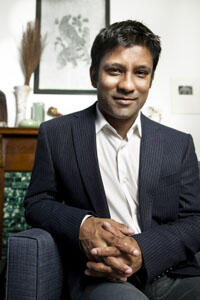
sabet headshot
Shahrzad Sabet's research spans politics, economics, psychology, and philosophy. She is a Fellow at the University of Maryland’s Bahá’í Chair for World Peace Program. Previously, she was a Senior Research Fellow at Princeton University’s Niehaus Center for Globalization and Governance and a Postdoctoral Fellow at Harvard, where she recently received her PhD in Government. Her work has been featured in outlets such as The Washington Post and The New York Times.

Shahrzad Sabet Fellow at the University of Maryland’s Bahá’í Chair for World Peace Program
Seminars
-

Abstract:

Venezuela finds itself mired in an unprecedented economic and political crisis. The economy has contracted nearly 50% since President Maduro took office in 2013, oil production has declined to levels below those last seen in 1950, and inflation has reached an estimated annual rate of over 1.3 million percent. Millions have fled abroad in search of a better life, making Venezuela’s migration crisis the second worst in the world after Syria’s. In 2019, the ruling Maduro regime faces new challenges at home from an opposition that has declared it illegitimate, and from abroad due to diplomatic non-recognition by over 50 governments and the imposition of U.S. sanctions on the Venezuelan oil industry. This talk will examine the apparently intractable political and economic crisis facing Venezuela, the role of the military in keeping the present government in power, and the impact of the latest domestic and international pressures on the Maduro regime


Speaker Bio:

Image
trankunas
Harold Trinkunas is the Deputy Director of and a Senior Research Scholar at the Center for International Security and Cooperation at the Freeman Spogli Institute for International Studies at Stanford University. Prior to arriving at Stanford, Dr. Trinkunas served as the Charles W. Robinson Chair and senior fellow and director of the Latin America Initiative in the Foreign Policy program at the Brookings Institution. His research focuses on issues related to foreign policy, governance, and security, particularly in Latin America. Trinkunas has written on emerging powers and the international order, ungoverned spaces, terrorism financing, borders, democratic civil-military relations, drug policy and Internet governance. He received his doctorate in political science from Stanford University in 1999. He was born in Maracaibo, Venezuela.

Harold Trinkunas Deputy Director of and a Senior Research Scholar at the Center for International Security and Cooperation at the Freeman Spogli Institute for International Studies at Stanford University
Seminars
-

Abstract:

This talk develops a framework to analyze how strategic politicians make tradeoffs and prioritize among six objectives (winning and staying in office, “good policy”, institutional power, career advancement, personal gain, and historical legacy) in particular situations. It focuses on the nature of the political vehicles (notably parties) within which politicians operate and broader political opportunity structures as determinants of how objectives are prioritized and strategic choices are made. While drawing evidence from a variety of political systems, the empirical focus will be on social policy choices in advanced industrial countries.


Speaker Bio:

Image
weaver photo

R. Kent Weaver is Professor of Public Policy and Government at Georgetown University and a Visiting Professor at Stanford University in winter and spring 2019. His research focuses on the strategic behavior of politicians, political institutions, and comparative social policy.

Professor of Public Policy and Government at Georgetown University and a Visiting Professor at Stanford University
Seminars
-
Abstract:


The most violent places in the world today are not at war. Brazil has had more violent death than Syria for the last three years. More people have died in Mexico in the last decade than in Iraq and Afghanistan combined. The world's worst violence is rooted in highly unequal, highly polarized democracies that are buckling under a maelstrom of gangs, organized crime, political conflict, and state brutality. Such devastating violence can feel hopeless, yet some places--from Colombia to the Republic of Georgia--have been able to recover. 

A Savage Order uncovers what makes these locales so bloody - including the U.S., which includes four of the world's fifty most violent cities. It then charts how they can get better. Based on years of research and field work around the world, A Savage Order overturns much conventional wisdom about the causes of bloodshed, and how the most violent places in the world can recover.


Speaker Bio:

Image
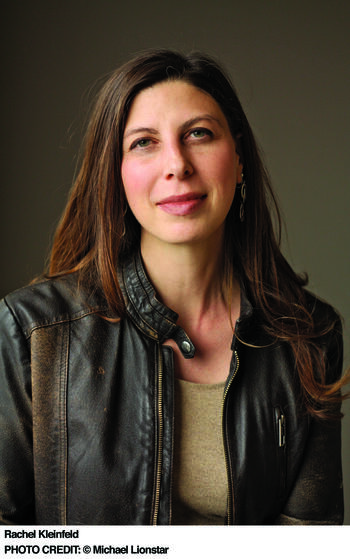
kleinfeld
Dr. Rachel Kleinfeld advises governments, philanthropists, and activists on how democracies make major social change. As a senior fellow at the Carnegie Endowment for International Peace, she particularly focuses on countries facing violence, corruption, and other problems of poor governance.

In 2010, Time magazine named her one of the top 40 political leaders under 40 in America for her decade of work as the founding CEO of the Truman National Security Project, which assisted scores of national, state, and local political campaigns, advocated for legislation, and fostered a new generation of military veterans and national security leaders to advance policies that would enhance global security, democracy, and human dignity. In 2011, former secretary of state Hillary Clinton appointed Kleinfeld to the Foreign Affairs Policy Board, which advises the secretary of state quarterly, a role she served through 2014. In 2015, she was named a Young Global Leader of the World Economic Forum.

Kleinfeld is the author of three books, including A Savage Order: How the World’s Deadliest Countries Can Forge a Path to Security (Knopf, 2018). Her previous book, Advancing the Rule of Law Abroad: Next Generation Reform (Carnegie, 2012), was chosen by Foreign Affairs magazine as one of the best foreign policy books of 2012. She appears frequently in the media, from the Wall Street Journal and the New York Times, to the BBC, Fox & Friends, and radio and television in the U.S. and overseas.

Kleinfeld received her B.A. from Yale University and her M.Phil. and D.Phil. from Oxford University, where she was a Rhodes scholar. She lives with her husband and two daughters in New Mexico and works in Washington, D,C., but hearkens often to the log house on a dirt road where she was raised in her beloved Fairbanks, Alaska


Ground Floor Conference room (E008)


Rachel Kleinfeld Senior fellow at the Carnegie Endowment for International Peace
Seminars
Authors
Thomas Holme
News Type
Commentary
Date
Paragraphs

Three years into the Trump administration, “the United States and the People’s Republic of China find their bilateral relationship at a dangerous crossroads,” write Orville Schell of the Asia Society and Susan Shirk of the University of California San Diego (UCSD), co-chairs of the Task Force on U.S.-China Policy, at the opening of a recently published report, Course Correction: Toward an Effective and Sustainable China Policy. The report features the second set of findings issued by the Task Force, a group comprising China specialists from around the United States, which is convened by Asia Society’s Center on U.S.-China Relations and UCSD’s 21st Century China Center and which includes Karl Eikenberry, director of APARC’s U.S.-Asia Security Initiative.

In its first report, issued in 2017, the Task Force identified the fundamental interests of the United States in its relationship with China. Since then, more stresses and strains have beset the bilateral relations between the two countries. But while “Beijing’s recent policies under Xi Jinping’s leadership are primarily driving this negative dynamic” and the “Trump administration is justified in pushing back harder against China’s actions, note Schell and Shirk, “pushback alone isn’t a strategy. It must be accompanied by the articulation of specific goals and how they can be achieved.” The new report propose a strategy to that end, which the Task Force calls “smart competition.”

APARC caught up with Ambassador Eikenberry to learn more about the report and its recommendations.

Note: the following has been edited for clarity.

How does the February 2019 report by the Task Force on U.S.-China Policy differ from its 2017 report? 

Since our Task Force’s first report was published in February 2017, the Trump Administration’s China policy has developed significantly, its defining characteristics being demonstrated in trade and economic policy and in security strategy. Our new Task Force study takes stock of the current state of U.S.-China relations and focuses on policy analysis and policy prescription. It seems clear that President Trump’s shift from a strategy of engagement to one of more explicit competition was overdue. This report suggests the best organizing principles for the management of what will likely be an increasingly competitive U.S.-China relationship in the coming years.

How does this report frame Sino-American relations?

The report underscores the fact that this is not a zero-sum game. Emphasis is placed on finding ways and means to cooperate with China when mutually advantageous—and there are many issue areas where this is or might be possible, such as climate change and denuclearization of the Korean Peninsula. But the report also makes clear that in the domains of economic exchange, security, and political values—such as individual freedom and the primacy of the rule of law—America needs to work with like-minded allies and partners to ensure the global system that has benefitted all for over seven decades is not overturned by those seeking unilateral advantage.

Several of the report’s Task Force members were also involved in the recent China report from the Hoover Institution, Chinese Influence and American Interests: Promoting Constructive Vigilance. Where do you think these two publications intersect and part ways?

There was some overlap among the contributors to the two reports—full disclosure, I had the opportunity to participate in both projects. I think the studies are actually complementary—the portion of Course Correction devoted to PRC overseas influence activities drew upon the findings published in Chinese Influence and American Interests.

What development is of greatest concern to you as you think about the future of Sino-American relations?

I’m most concerned about the blurring of the management of economic exchange (trade and investment issues) and security competition (which includes maintaining a technological advantage over one’s competitors). The proliferation of technologies with military applications is complicating efforts of those trying to maintain robust economic relations between China and the United States. If our economies decouple, we will have a new Cold War


Hero Image
U.S. Secretary Of State Mike Pompeo Meets with Chinese Foreign Minister Wang Yi
U.S. Secretary Of State Mike Pompeo Meets with Chinese Foreign Minister Wang Yi | Daisuke Suzuki /Pool/Getty Images
All News button
1
-

To listen to the audio recording of this talk, please visit our multimedia page.

 
Daniel Ziblatt will describe current dangers facing democracies around the world, including Europe and the United States and ways of preventing democracy's breakdown. He will draw lessons from the fateful missteps that have wrecked other democracies and from ways citizens have risen to meet the great democratic crises of the past.

Image
Portrait of Daniel Ziblatt, Harvard University

Daniel Ziblatt
is Eaton Professor of the Science of Government at Harvard University and Acting Director of Harvard's Center for European Studies.  Ziblatt's scholarship on democratization, democratic breakdown, and state-building include New York Times bestseller, How Democracies Die (2018), co-authored with Steven Levitsky; Conservative Parties and the Birth of Democracy (2017), winner of the American Political Science Association’s Woodrow Wilson Award for the best book published in the United States on government, politics, or international affairs; and Structuring the State: The Formation of Italy and Germany and the Puzzle of Federalism (2006).

Oksenberg Conference Room
Encina Hall -3rd floor
616 Serra Street, Stanford, California 94305

Daniel Ziblatt Eaton Professor of the Science of Government Speaker Harvard University
Lectures
News Type
Q&As
Date
Paragraphs

Isabelle Foster was an undergraduate student at Stanford who applied for the Ford Dosey Master's in International Policy (MIP) co-terminal program in her junior year. The co-term allowed her to take classes towards her master's degree in her senior year. Isabelle, who is now technincally a second-year master's student, will graduate from MIP in June.

Curious as to what our current students have to say about the MIP program? Check out the first #MIPFeatureFriday featuring our graduate student, Isabelle Foster! Stay tuned every Friday for features on our MIP students and alumni. Read more about Isabelle's time with the MIP program

Hero Image
1 msw3kloyzrkimtjyyve8gw
All News button
1
-

Abstract: Existing international relations scholarship on human rights focuses on international law and transnational advocacy to the exclusion of "human rights diplomacy" (HRD)---efforts by government officials to engage publicly and privately with their foreign counterparts---because diplomacy is often not publicly observable. We exploit an opportunity to assess the effectiveness of HRD: a campaign coordinated by the U.S. government to free twenty female political prisoners called #Freethe20. Our analysis of release outcomes for #Freethe20 women compared to two control groups (a longer list of women considered by the State Department for the campaign and a list of women imprisoned simultaneously in the same target countries) suggests the campaign was highly effective. While #Freethe20 was public-facing, we find little evidence that "naming and shaming" alone drove releases. Drawing on in-depth interviews with U.S. officials, we argue that foreign governments were most responsive when public pressure was matched with private, coercive diplomacy.  


Speaker Bio: Jeremy M. Weinstein is a Professor of Political Science and Senior Fellow at the Freeman Spogli Institute for International Studies. He is also a non-resident fellow at the Center for Global Development in Washington, D.C.

His research focuses on civil wars and political violence; ethnic politics and the political economy of development; and democracy, accountability, and political change. He is the author of Inside Rebellion: The Politics of Insurgent Violence (Cambridge University Press), which received the William Riker Prize for the best book on political economy. He is also the co-author of Coethnicity: Diversity and the Dilemmas of Collective Action (Russell Sage Foundation), which received the Gregory Luebbert Award for the best book in comparative politics. He has published articles in the American Political Science Review, American Journal of Political Science, Annual Review of Political Science, Journal of Conflict Resolution, Foreign Affairs, Foreign Policy, Journal of Democracy, World Policy Journal, and the SAIS Review.

Weinstein received the International Studies Association’s Karl Deutsch Award in 2013. The award is given to a scholar younger than 40 or within 10 years of earning a Ph.D. who has made the most significant contribution to the study of international relations. He also received the Dean’s Award for Distinguished Teaching at Stanford in 2007.

He has also worked at the highest levels of government on major foreign policy and national security challenges, engaging in both global diplomacy and national policy-making. Between 2013 and 2015, Weinstein served as the Deputy to the U.S. Ambassador to the United Nations and before that as the Chief of Staff at the U.S. Mission to the United Nations. As Deputy, Weinstein was a standing member of the National Security Council Deputies’ Committee – the sub-cabinet policy committee with primary responsibility for advising the National Security Council, the Cabinet, and the President on the full range of foreign policy issues, including global counterterrorism, nonproliferation, U.S. policy in the Middle East, the strategic rebalance to Asia, cyber threats, among a wide variety of other issues.

During President Obama’s first term, he served as Director for Development and Democracy on the National Security Council staff at the White House between 2009 and 2011. In this capacity, he played a key role in the National Security Council’s work on global development, democracy and human rights, and anti-corruption, with a global portfolio. Before joining the White House staff, Weinstein served as an advisor to the Obama campaign and, during the transition, as a member of the National Security Policy Working Group and the Foreign Assistance Agency Review Team.

Weinstein obtained a BA with high honors from Swarthmore College, and an MA and PhD in political economy and government from Harvard University. He is a member of the Council on Foreign Relations and serves on a number of non-profit boards and advisory groups.

Jeremy Weinstein Senior Fellow at the Freeman Spogli Institute for International Studies Professor of Political Science Stanford University
Seminars
Subscribe to The Americas