-

About the Seminar: Saumitra Jha and Steven Wilkinson's book project, Wars and Freedoms, makes the case that, throughout human history, external wars are common catalysts for political change at home, and they do so in large part because of their impact on the organizational capacity of the disenfranchised. It draws widely from across the social sciences and humanities: literature; history; biography; psychology; sociology; economics; and political science. The book draws upon these diverse ways of knowing to provide evidence from across time and around the world of the relevance of a simple framework for understanding which types of external wars are conducive to the emergence of broad-based freedoms, the building of states, and the shrinking of wealth inequalities on one hand, and when instead, others have led to the building of military castes, or an increased propensity for political polarization,  ethnic conflict, attempted coups, revolution and genocide on the other. In so doing, Wars and Freedoms provides a re-interpretation of the history of revolutions and political change, in order to make clear which lessons and episodes from history may be more germane for the future of democracy and freedoms in the twenty-first century.

Wars and Freedoms describes how there were historically three paths that connected organizational skills developed in external wars to the spread of democracy and democratic values: in the shadow of a crisis that threatened broad class conflict, through a more gradual process of state-building in response to ongoing external existential threats, and through the organizational efforts of committed military leaders. Of these, however, only the last, the most fragile and contingent, is still likely to emerge organically. Understanding the decline of other paths, however, can still help us understand both how political freedoms and democracy emerged, how our democracies may die, and what we may still be able to do about it.

Register Now

About the Speaker:

Image
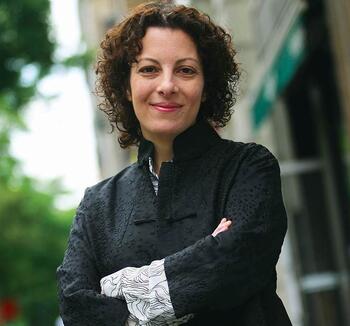
Headshot for Saumitra Jha
Saumitra Jha is Associate Professor of Political Economy at the Stanford Graduate School of Business, a Senior Fellow at the Center for Democracy, Development and the Rule of Law in Stanford's Freeman-Spogli Institute for International Affairs and convenes the Stanford Conflict and Polarization Lab. His work on the historical relationship between conflict and markets has been received the Michael Wallerstein Award for best article in political economy from the American Political Science Association, and has been published in the top journals in both Economics and Political Science, including The American Political Science Review, Econometrica, and The Quarterly Journal of Economics. His co-authored work on Heroes was awarded the Oliver Williamson Award from the Society for Institutional and Organizational Economics. Also an award-winning teacher, he has shown a particular interest in communicating the results of his research to broader audiences, in the press (such as the Indian Express and USA Today) and through online policy and social media outlets (VoxEU, VoxDev, Public Books, Broadstreet, Ideas for India, AOC), and to a range of student and practitioner audiences, including cadets at West Point, members of the US intelligence community, European Union diplomats, and entrepreneurs in Africa, India and the United States.  His work has been featured in the Economist, Financial Times and the Washington Post, among others, and he has provided commentary for television and radio news, including for the BBC, ABC and CBC.

Online, via Zoom.

Graduate School of Business 655 Knight Way Stanford, CA 94305
(650) 721 1298
0
Associate Professor of Political Economy, GSB
Associate Professor, by courtesy, of Economics and of Political Science
saumitra_jha.jpg

Along with being a Senior Fellow at the Freeman Spogli Institute for International Studies, Saumitra Jha is an associate professor of political economy at the Stanford Graduate School of Business, and convenes the Stanford Conflict and Polarization Lab. 

Jha’s research has been published in leading journals in economics and political science, including Econometrica, the Quarterly Journal of Economics, the American Political Science Review and the Journal of Development Economics, and he serves on a number of editorial boards. His research on ethnic tolerance has been recognized with the Michael Wallerstein Award for best published article in Political Economy from the American Political Science Association in 2014 and his co-authored research on heroes with the Oliver Williamson Award for best paper by the Society for Institutional and Organizational Economics in 2020. Jha was honored to receive the Teacher of the Year Award, voted by the students of the Stanford MSx Program in 2020.

Saum holds a BA from Williams College, master’s degrees in economics and mathematics from the University of Cambridge, and a PhD in economics from Stanford University. Prior to rejoining Stanford as a faculty member, he was an Academy Scholar at Harvard University. He has been a fellow of the Niehaus Center for Globalization and Governance and the Center for the Study of Democratic Politics at Princeton University, and at the Center for Advanced Study in the Behavioral Sciences at Stanford. Jha has consulted on economic and political risk issues for the United Nations/WTO, the World Bank, government agencies, and for private firms.


Senior Fellow at the Freeman Spogli Institute for International Studies
Dan C. Chung Faculty Scholar at the Freeman Spogli Institute for International Studies
Senior Fellow at the Stanford Institute for Economic Policy Research
Date Label
Associate Professor of Political Economy at the Stanford Graduate School of Business and Senior Fellow at the Center for Democracy, Development at the Rule of Law in the Freeman-Spogli Institute.
Seminars
-

About the Seminar: What are the defining traits of an autocracy? Leading works answer this question in negative terms: autocracies are non-democracies. We propose instead a substantive definition of autocracy, which we believe better captures what scholars actually mean when they invoke the term. We define autocracy as exclusive rule. Between substantive autocracy and electoral democracy, there is a residual space, of regimes that do not fit under either concept. We call these regimes “non-autocratic non-democracies” or NANDs.  A substantive understanding of autocracy has important theoretical and empirical implications. Theoretically, it ensures that claims about the population of autocratic regimes are ontologically coherent, and that we do not end up calling barely non-democratic regimes autocracies. Empirically, our measure reveals that the post-Cold War era has been even less autocratic than it is normally portrayed, and that concerns about a global turn toward "autocratization" are likely overblown.
 

Read the paper


About the Speakers:

Jason Brownlee

Image
Jason Brownlee

Jason Brownlee, a former post-doctoral fellow at CDDRL, is now a professor of Government at the University of Texas at Austin, where he researches and teaches about authoritarianism US foreign policy, and Southwest Asian politics.

Ashley Anderson

Image
ashley_anderson.jpg

Ashley Anderson is an Assistant Professor at the University of North Carolina - Chapel Hill. Her research interests are concentrated in the Middle East where she studies issues of contentious politics, political mobilization and regime change.

Killian Clarke

Image
Killian Clarke Headshot

Killian Clarke is an Assistant Professor at Georgetown University’s School of Foreign Service, where he is affiliated with the Center for Contemporary Arab Studies. His research and teaching focuses on protest, revolutions, and regime change in the Middle East.


Autocracy: A Substantive Approach
Download pdf

Online, via Zoom.

Jason Brownlee Professor, Department of Government, University of Texas at Austin
Ashley Anderson University of North Carolina, Chapel Hill
Killian Clarke Assistant Professor, Georgetown University, School of Foreign Service
Seminars
Paragraphs

A growing literature examines democratic backsliding, but there is little consensus on when, where, and why it occurs. Reviewing more than 100 recent articles and working papers, this research note argues that inattention to the measurement of backsliding and the underlying concept of democracy drives this disagreement. We propose three remedies. First, we outline several questions that help researchers navigate common measurement challenges. Second, we argue that conceptual confusion around backsliding is driven in large part by inconsistent definitions of democracy. We show how outlining a comprehensive concept of democracy enables researchers to better account for the diversity of instances of democratic backsliding. Our third contribution is drawing attention to a previously overlooked form of backsliding: when governments lose the effective power to govern or voters and elites increasingly disagree about truths and facts. The research note urges scholars to pay closer attention to the conceptualization and measurement of backsliding prior to empirical analysis.

All Publications button
1
Publication Type
Journal Articles
Publication Date
Subtitle

A growing literature examines democratic backsliding, but there is little consensus on when, where, and why it occurs.

Journal Publisher
Democratization
Authors
-

For winter quarter 2021, CISAC will be hosting hybrid events. Many events will offer limited-capacity in-person attendance for Stanford faculty, staff, fellows, visiting scholars, and students in accordance with Stanford’s health and safety guidelines, and be open to the public online via Zoom. All CISAC events are scheduled using the Pacific Time Zone. 

SEMINAR RECORDING

This event is virtual only. This event will not be held in person.

David Sloss Professor of Law Santa Clara University
Seminars
-

The REDI Task Force invites you to the next event in our Critical Conversations: Race in Global Affairs series; an exploration of the life of enslaved women. This panel discussion will feature experts of enslavement across the Atlantic including the U.S., Brazil, West Africa, and the West Indies.

What do we really understand about the lives and legacies of African enslaved women across the Atlantic? Enslavement is often rendered through a genderless lens, one in which the category of "race" trumps all else. However, research tells a very different story and one that requires an intimate analysis - enslaved women across the Atlantic held an experience that was shaped uniquely by their race and gender. This conversation will explore how Black women during the slave period acted and reacted to the material forces that shaped their lives in an attempt to not only survive the harsh conditions but to carve out a future for ancestors. This interdisciplinary discussion will draw from various archival sources ranging from Senegambia to Brasil's sugar plantations to articulating novel understandings of enslaved women's selfhood. 

The panel will feature perspectives from three historians to uncover the intimate lives of African women; their kinship, religious, and resistance practices. Tracing a path through different locales, from free to enslaved status, we will discuss not only the lives of enslaved women, but their legacies.

This event is free and open to the public. There will be time for a Q&A.

Note: This discussion will be recorded. 

Speaker bios:

Alexis Wells-Oghoghomeh is an Assistant Professor of Religious Studies whose teaching and research explores the intersections of race, religion, and gender in the United States. A historian of African-American religion, she specializes in the religiosity of enslaved people in the South, religion in the African Atlantic, and women’s religious histories.  Her first book The Souls of Womenfolk: The Religious Cultures of Enslaved Women in the Lower South (UNC 2021) offers a gendered history of enslaved people’s religiosity from the colonial period to the onset of the Civil War. She is currently at work on her second project, which traces the gendered, racialized history of phenomena termed “witchcraft” in the United States. Her work has been supported by the Ford Foundation, Mellon Foundation, and Forum for Theological Education, among others. She received her B.A. in English from Spelman College, and Master of Divinity and Ph.D. from Emory University.

Jessica Marie Johnson is an Assistant Professor in the Department of History at the Johns Hopkins University and a Fellow at the Hutchins Center for African and African American Studies at Harvard University. She is also the Director of LifexCode: Digital Humanities Against Enclosure. Johnson is a historian of Atlantic slavery and the Atlantic African diaspora. She is the author of Wicked Flesh: Black Women, Intimacy, and Freedom in the Atlantic World (University of Pennsylvania Press, August 2020), a winner of numerous awards including the 2021 Wesley-Logan Best Book in African Diaspora History Prize from the Association of American Historians and the 2021 Lora Romero First Book Publication Prize of the American Studies Association. Her work has appeared in Slavery & Abolition, The Black Scholar, Meridians: Feminism, Race and Transnationalism, American Quarterly, Social Text, The Journal of African American History, the William & Mary Quarterly, Debates in the Digital Humanities (2nd edition), Forum Journal, Bitch Magazine, Black Perspectives (AAIHS), Somatosphere and Post-Colonial Digital Humanities (DHPoco) and her book chapters have appeared in multiple edited collections. She is the Founding Curator of #ADPhDProjects which brings social justice and histories of slavery together. She is also Co-Kin Curator at Taller Electric Marronage.  She is also a Digital Alchemist at the Center for Solutions to Online Violence and a co-organizer of the Queering Slavery Working Group with Dr. Vanessa Holden (University of Kentucky). Her past collaborations include organizing with the LatiNegrxs Project. As a historian and Black Studies scholar, Johnson researches black diasporic freedom struggles from slavery to emancipation. As a digital humanist, Johnson explores ways digital and social media disseminate and create historical narratives, in particular, comparative histories of slavery and people of African descent.

Nohora Arrieta Fernández is a Presidential Postdoctoral Fellow at UCLA. She received her Ph.D. in Latin American Literature and Cultural Studies from Georgetown University in 2021. Her current research focuses on art history, visual studies, the history of commodities, and the intellectual traditions of the African Diaspora in the Americas. She has published essays and articles on Latin American literature and visual arts, comics, and the Afro-Latin American Diaspora, and is a collaborator of art magazines as Artishock and Contemporyand. She recently co-edited Transition. The Magazine of Africa and the Diaspora, 130. Her first co-translation project, Semantic of the World, the Poetry of Romulo Bustos, will be published by New Mexico Press (2022).



Online via Zoom

REGISTER

Alexis Wells-Oghoghomeh Assistant Professor of Religious Studies Stanford University
Jessica Marie Johnson Assistant Professor History Johns Hopkins University
Sonita Moss Research Associate Discussant REDI
Nohora Arrieta Fernandez Postdoctoral Fellow UCLA
Seminars
Authors
News Type
Commentary
Date
Paragraphs

Russia’s massing of military power near Ukraine was certain to dominate the December 7 video conference between Presidents Biden and Putin. A Russian assault would turn into a bloody affair (for Russians and Ukrainians alike) and plunge relations between Russia and the West deeper into crisis. Is Putin prepared to take that step?  Perhaps even he has not yet decided.

By all appearances, Biden did what he had to do. He spelled out for Putin the costs that would ensue if Russia attacked. These include more painful Western economic sanctions, more military assistance for Ukraine, and a bolstering of NATO’s military presence in the Baltic states and Poland. Moreover, he strengthened his hand by consulting the day before with the leaders of Britain, Germany, France and Italy.  That meant he could talk to Putin on the basis of a consolidated Western position.

Biden also described a way out of the crisis: de-escalation and dialogue, or dialogues, to address the Russia-Ukraine conflict in Donbas and broader European security questions. Neither of those discussions will prove easy. For example, NATO will not, and should not, accede to the Kremlin’s demand that the alliance renounce its "open door" policy on enlargement. But diplomacy is all about finding ways to defuse such difficult problems.

Did Biden succeed? That remains to be seen. One thing to watch is whether Moscow’s recent over-the-top rhetoric moderates. Of course, the more important signal would come from the movement of Russian troops away from Ukraine and back to their regular garrisons.

Read more views on what the Biden-Putin video call means for the regional security situation on Atlantic Council.

Hero Image
Joe Biden and Vladimir Putin shaking hands Peter Klaunzer - Pool/Keystone via Getty Images
All News button
1
Subtitle

US President Joe Biden and his Russian counterpart Vladimir Putin spoke via video link for around two hours on December 7 in a hastily arranged virtual summit to address international concerns over a major Russian military build-up along the country’s border with Ukraine.

Authors
News Type
Commentary
Date
Paragraphs

All eyes are on Ukraine (including ours). Steven Pifer, a William J. Perry Research Fellow at CISAC and former ambassador to Ukraine, joins co-host Tom Collina to discuss Putin’s motivations for Ukraine and more. 


Ploughshares Fund · Will Russia Invade Ukraine?


Hero Image
Man smiling
All News button
1
Subtitle

All eyes are on Ukraine (including ours). Steven Pifer, a William J. Perry Research Fellow at CISAC and former ambassador to Ukraine, joins co-host Tom Collina to discuss Putin’s motivations for Ukraine and more.

Authors
News Type
Commentary
Date
Paragraphs

President Joe Biden will hold a secure video call with Russian President Vladimir Putin December 7 against the backdrop of a menacing Russian military build-up near Ukraine. U.S. intelligence believes the Russians may amass 175,000 troops near its western neighbor early in 2022.

Does Putin intend to invade Ukraine? He could be bluffing. In April, the Russian army deployed a large force near Ukraine but did not act. On the other hand, given the scale of ongoing military preparations and the hostile rhetoric pouring out of Moscow, Putin may mean it this time.

It is also possible that Putin has not yet made a decision. He likes options and might hope the threat of force will secure concessions from Kyiv toward settling the simmering conflict in Donbas in eastern Ukraine on Moscow’s terms. In any case, the Biden-Putin conversation may offer one of the last best chances to affect Kremlin calculations of the costs of an assault on Ukraine.

Biden has said he would make it “very, very difficult” for Putin to attack. He should lay out the potential costs to ensure his Russian counterpart fully understands what would follow a Russian invasion. Those costs are substantial:

  • A West-Russia freeze. Small positive developments in the U.S.-Russia relationship have occurred since Biden and Putin met in June in Geneva, including a broadening of diplomatic contacts and a strategic stability dialogue that both sides report as constructive. Nothing would kill those prospects more quickly than a Russian invasion of its neighbor. The same is true of relations with other Western countries; Putin should anticipate pariah status.
  • New sanctions. Biden should explain that military action would trigger new Western sanctions targeting Russian state-owned enterprises, bans on holding Russian state debt, and visa bans and asset freezes on individuals and their families (let Russian oligarchs explain to their spouses why they cannot make their annual shopping trip to London). Even expulsion from the SWIFT international payment mechanism could be on the table. Biden should add that, if Germany and the European Union do not shut down the Nord Stream 2 pipeline project, he would not waive U.S. sanctions as he did in May, and that he would work with European countries in a concerted effort to expand their access to alternatives to Russian energy.
  • Bolstering NATO’s defenses. Following Russia’s seizure of Crimea in 2014, NATO deployed battlegroups to Poland and each of the Baltic states. Biden should remind Putin that each battlegroup numbers less than 1,500 soldiers and that NATO still abides by its 1997 assurance that it would not permanently deploy substantial combat forces on the territory of new members. However, if the Russian military assaults Ukraine, then the Baltic states, Poland, and others in Central and Eastern Europe will request more NATO military power and infrastructure on their territory — and Biden would consider such requests sympathetically.
  • Military assistance. Biden should note that individual NATO members have exercised restraint in the kinds and amount of assistance and equipment they have provided Ukraine’s military. That could change.
  • A potential military quagmire. Lastly, some in Moscow apparently believe the Russian army would be welcomed in Ukraine. Biden should note that the Ukrainians will fight and, even if losing, would extract a price from Russia. He might recall the experiences of the Soviet Union and United States in Afghanistan: getting in proved relatively easy; the real casualties and costs came later.

Biden should also tell Putin that Washington is prepared to engage more actively on diplomacy. He should offer to join the German and French leaders in the Normandy format process aimed at mediating a resolution between Russia and Ukraine. He should also reaffirm the U.S. position supporting the Minsk agreements.

Biden might offer two qualifiers regarding Minsk. First, all parties must implement the agreements, including Russia. Second, U.S. support does not mean acceptance of Russia’s desired interpretation of undefined Minsk provisions. For example, “special status” for Donbas should not include the right to veto national-level policies.

Questions about Europe’s security architecture and how Ukraine and Russia fit in underlie the Russia-Ukraine conflict. Biden should offer Putin a discussion on those issues, while noting that they cannot solve the questions over the heads of the Europeans. The Ukrainians, in particular, need to be at the table.

Biden can tell Putin there is no enthusiasm within NATO for putting Kyiv on a membership track now. But the alliance will not reverse its “open door” policy. Doing so would require consensus, and not many members — let alone all 30 — would agree to such a reversal. “Not now but not never” for Ukraine would defuse the question by kicking it down the road. If Russia genuinely worked with the United States and NATO members to mitigate the tensions that now divide Europe, its relationship with the alliance could well change.

Biden can also tell Putin that he would be ready to take due account of legitimate Russian security interests. For example, Putin expressed concern about deployment in Ukraine of U.S. missiles that could strike Moscow.  Biden can tell Putin that, in the right context, Washington would assure Moscow that it would not deploy offensive missiles on Ukrainian territory.

The U.S. president should aim to leave Putin with an understanding that military action would have painful costs for Russia but that U.S. diplomacy is prepared to engage more actively to resolve the problems at the root of the crisis. That just might help stop a war.

Originally for Brookings

Hero Image
President Biden and Vladimir Putin Pool/Getty Images
All News button
1
Subtitle

President Joe Biden will hold a secure video call with Russian President Vladimir Putin December 7 against the backdrop of a menacing Russian military build-up near Ukraine. U.S. intelligence believes the Russians may amass 175,000 troops near its western neighbor early in 2022.

-

Image
Sandra González-Bailón seminar flyer

Join us  Tuesday, December 7th from 12 PM - 1 PM PST for “Media Choices, Niche Behavior, and Biases in Online Information” featuring Sandra González-Bailón, Associate Professor at the Annenberg School for Communication at University of Pennsylvania. This seminar series is organized by the Cyber Policy Center’s Program on Democracy and the Internet and the William and Flora Hewlett Foundation’s Cyber Initiative.  

The quality of our democracies relies on the quality of the information that citizens consume but we still know very little about how citizens engage with the news “in the wild”. In this talk, I will discuss two papers that examine that question in different settings. The first paper analyzes the media choices of a representative panel of the U.S. population (N ~ 55,000) as they consume TV, web, and YouTube content over a period of 44 months. Less than 10% of the panelists (N ~ 5,300) view and browse news on the three platforms. This small group of news hyper-consumers is formed predominantly by older male users with higher education. We find no evidence of substitution effects in the time these users spend consuming news on each of the three platforms, but consuming news across the media landscape is a choice that only a small and unrepresentative slice of the population makes. These results help us characterize the digital equivalent of the ‘opinion leaders’ first proposed to understand the effects of mass media. The hyper-consumers we identify in our analyses create the elite of opinion leaders that have a disproportionate influence in how news content is selected, circulated, and (ultimately) algorithmically amplified. That this small group is far from representing the population at large is one of the ways in which online information may perpetuate important biases in the salience of some topics over others. The second paper analyzes news sharing in social media during one of the largest protest mobilizations in U.S. history to examine ideological asymmetries in the posting of news content. We extract the list of URLs shared during the mobilization period and we characterize those web sites in terms of their audience reach and the ideological composition of that audience. We also analyze the reliability of the sites in terms of the credibility and transparency of the information they publish. We show that there is no evidence of unreliable sources having any prominent visibility during the protest period, but we do identify asymmetries in the ideological slant of the sources shared, with a clear bias towards right-leaning domains. Our results suggest that online networks are contested spaces where the activism of progressive movements coexists with the narratives of mainstream media, which gain visibility under the same stream of information but whose reporting is not necessarily aligned with the activists’ goals.

About the speaker:

Sandra González-Bailón is an Associate Professor at the Annenberg School for Communication, and affiliated faculty at the Warren Center for Network and Data Sciences. Her research lies at the intersection of network science, computational tools, and political communication. She is the author of Decoding the Social World (MIT Press, 2017) and co-editor of The Oxford Handbook of Networked Communication (OUP, 2020). More information on her research can be found at https://sandragonzalezbailon.net/
 
Her articles have appeared in journals like PNAS, Nature, Science, Political Communication, The Journal of Communication, and Social Networks, among others. She is the author of the book Decoding the Social World (MIT Press, 2017) and co-editor of The Oxford Handbook of Networked Communication (OUP, 2020). She serves as Associate Editor for the journals Social Networks, EPJ Data Science, and The International Journal of Press/Politics, and she is a member of the Board of Reviewing Editors for Science. She leads the research group DiMeNet (/daɪmnet/) — acronym for Digital Media, Networks, and Political Communication.


Seminars
Authors
News Type
Blogs
Date
Paragraphs

SPICE has been working with the Navajo Nation for ten years. SPICE featured Dr. Harold Begay in a webinar called “Indigenous Voices: Educational Perspectives from Navajo, Native Hawaiian, and Ainu Scholars in the Diaspora” on June 18, 2021. On the occasion of National Native American Heritage Day, November 26, 2021, SPICE invited him to share reflections on his life.


The Journey from a Community Trash Dump Scavenger to U.C. Berkeley

There was a youngster, a scavenger at an early age who had to rummage through the community trash dump for winter firewood and other discarded household items. This youngster from a single-parent home living on a traditional livestock economy on the Navajo Reservation, speaking only his Navajo language, entered school in his elementary school years and was able to attain nationally normed test scores on the Iowa Test of Basic Skills in the upper 80s and 90s. He initially spent his kindergarten and first grade years as a student running away along with other local school kids from a U.S. government boarding school. He was transferred to the local state public school, and beginning in second grade, his homeroom teacher stayed with him grade-to-grade (looping) through his high school years. He dropped out of high school but came back, graduated, and was recommended by an Arizona State Senator, as required for admission, and by his high school teachers, counselors, and principal, to attend the U.S. Air Force Academy in Colorado Springs, Colorado. He instead enrolled at Arizona State University with “Honors at Entrance.” He dropped out of pre-med, enlisted in the U.S. Marine Corps, and spent time in the Vietnam War before being medevacked out of Vietnam during the Tet Offensive in 1968. He spent some four weeks in the Naval Hospital in Guam, another month in the Naval Hospital in San Diego, and was honorably discharged from the U.S. Marine Corps Recruit Depot Casualty Company and is a disabled veteran.

After Vietnam and work in construction as an iron worker, he returned to college, graduated in three years with a B.A. in psychology and earned an M.A. in counseling the following year from Northern Arizona University. He then earned a Ph.D. in school finance and education administration from the University of Arizona.

He began work at the University of Arizona for four years, then moved out to the most disenfranchised under-resourced rural school sites—school sites with the most persistent student academic underachievement state-wide. He began the local community college branch, then Navajo Community College, now Diné College, for his community and surrounding area wherein he taught for a couple years. He worked at the lowest achieving district with the second lowest per pupil wealth in the county. Within the past five years, in concert with Stanford University, his district high school exceeded all the eight school districts’ math achievement in the county, including the school district with the highest per pupil wealth.

He has been appointed as a Visiting Scholar at the University of California, Berkeley. He has published in refereed journals, and contributed chapters to two scholarly books. He has been honored by the Arizona State Department of Education with the “Certificate of Distinction Award” and “Stars of Arizona Education”; by the Arizona Gifted Education Association as “Gifted Administrator of the Year”; and by the North Central Association of Elementary and Secondary Schools with the “National Innovative Award.” He has turned down speaking engagements from several state education departments, school board organizations, and universities in countries including China, England, New Zealand, and Ecuador.

His school district has worked in collaboration with Stanford University for some 20 years and in the process has attained unprecedented academic achievement profiles for the school district. There is much more to this, but who is this person? The person is writing this brief bio for you so that you may get to know him a little better.
~Harold G. Begay, Ph.D.

Read More

SPICE Instructor Kasumi Yamashita speaks with Native and Indigenous educators
Blogs

Indigenous Voices: Educational Perspectives from Navajo, Native Hawaiian, and Ainu Scholars in the Diaspora

This article recaps a June 18, 2021 webinar that featured three Native and Indigenous scholars and includes recommendations for using the webinar recording in classrooms.
Indigenous Voices: Educational Perspectives from Navajo, Native Hawaiian, and Ainu Scholars in the Diaspora
headshots of eight high school students
Blogs

What Does It Mean to Be an American?: Reflections from Students (Part 5)

Reflections of eight students on the website "What Does It Mean to Be an American?"
What Does It Mean to Be an American?: Reflections from Students (Part 5)
sting of indifference
Commentary

The Sting of Indifference

Director Gary Mukai reaffirms SPICE’s commitment to racial and social justice.
The Sting of Indifference
Hero Image
image of professor in his office
Harold Begay; photo courtesy Harold Begay
All News button
1
Subtitle

Dr. Harold Begay, Navajo Nation Superintendent (Select) of Schools, Department of Diné Education, shares reflections on his life.

Subscribe to The Americas