


The New U.S. Role in Global Fossil Fuel Markets
Related Multimedia
The New U.S. Role in Global Fossil Fuel Markets
Related Multimedia
The New U.S. Role in Global Fossil Fuel Markets
Related Multimedia
The New U.S. Role in Global Fossil Fuel Markets
Related Multimedia
Asia’s Role in the Global Economy and Challenges in 2013
-
Forecasting is a difficult profession. International economist David Hale and writer Lyric Hughes Hale do not claim they can foretell the future. But as veteran observers of the Asian economies, they can envision scenarios that are contrary to current conventional wisdom, and trends that deserve more attention than they are given in the media. What if China and Japan actually engage in armed conflict? Could East Asia experience its own version of the Arab Spring? What would be the consequences of another major earthquake in Japan? When the United States was the dominant power in the Pacific, security interests and economic interests were aligned in the region. Now that China has become the largest trading partner for many ASEAN countries, a new Great Divergence is emerging, with potentially destabilizing consequences. While our national attention has been dominated by the Middle East for a decade now, in the coming era of energy self-sufficiency in the United States, we must shift our focus to the Far East.
Image

Global Economist & Chairman
David Hale Global Economics, Inc.
and
Image

Independent International Affairs Professional &
Board Director, The Japan America Society of Chicago
Philippines Conference Room
Seminars
(Un)Covering North Korea
-
North Korea, arguably the most isolated country in the world, poses unique challenges for journalists. Access to the country is severely limited and even when a journalist is able to gain entry, the secretive and repressive nature of the state significantly limits what can be learned. Still, despite these difficult conditions, the realities of North Korean life are increasingly finding their way into various media, from newspaper reporting and on-line media to thinly fictionalized accounts.
This panel will take a multi-faceted look at the coverage of North Korea through the journalist (represented by 2012 Shorenstein Journalism Award winner Barbara Demick), the editor, the development/relief worker, and the novelist.
Panelists include:
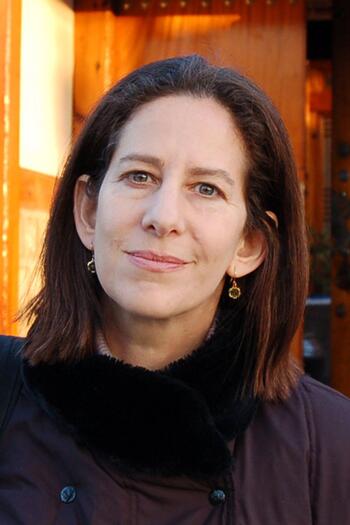
Barbara Demick, has been Beijing bureau chief for the Los Angeles Times since 2008. She has focused on human trafficking, corruption, and minorities, as well as North Korea. Demick is the author of two books -- Nothing to Envy: Ordinary Lives in North Korea and Logavina Street: Life and Death in a Sarajevo Neighborhood. Her work has won awards from the Asia Society, the Overseas Press Club, the American Academy of Diplomacy, among others. Her North Korea book, which has been translated into more than 20 languages, recently won the International Book Award on Human Rights. She is a graduate of Yale and taught a seminar on coverage of repressive regimes at Princeton University. She lives in Beijing with her son Nicholas.Image
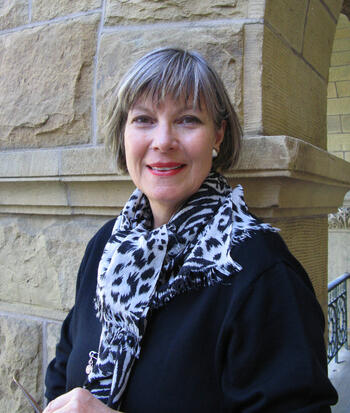
Susan Chira, was named assistant managing editor for news for the New York Times in September 2011. Previously, she had served as foreign editor (since January 2004), and as editorial director of book development (since September 2002). Before that, Chira was the editor of the "Week in Review" section at the Times (since October 1999), after having served as deputy foreign editor of the newspaper (since February 1997). Earlier, she served in a variety of reporting positions including national education correspondent, Tokyo correspondent (from October 1984 until February 1989), metropolitan reporter in the Albany and Stamford bureaus, and reporter for the "Business Day" section.Image

Image
Image
Bechtel Conference Center
Conferences
The 5th Annual Koret Conference: North Korea Policy
-
With new or newly re-elected leaderships in both North and South Korea and all of Korea’s neighbors and the United States, the year 2013 will see increased diplomatic movement regarding the Korean Peninsula. Accordingly, the fifth annual Koret conference will take the form of a policy workshop on North Korea policy. The workshop participants will examine the interests and policies of the new governments of North and South Korea and their neighbors toward the "North Korea problem" and consider what policy adjustments may have made possible by the leadership changes. They will consider initiatives that the concerned countries, individually and collectively, could take to begin a sustainable process of establishing permanent peace and security on the Korean Peninsula and realizing economic and political liberalization in North Korea.
The 5th Annual Koret Conference is made possible by the generous support of the Koret Foundation.
Bechtel Conference Center
Conferences
The World Bank and IFC's Doing Business Project: A Template for Promoting Economic Reforms?
-
Abstract:
The World Bank and IFC's Doing Business project has used indicators capturing important dimensions of the business environment to catalyze reforms in a large number of countries. In its tenth year of operation, this talk will focus on the methodological underpinnings of the project, the results obtained on the ground, the challenges ahead and why this matters for the goal of poverty reduction and economic convergence. For more information, please visit: www.doingbusiness.org
Speaker Bio:
Augusto Lopez-Claros became the director of global indicators and analysis in the World Bank–IFC Financial and Private Sector Development Vice Presidency in March 2011. Previously he was chief economist and director of the Global Competitiveness Program at the World Economic Forum in Geneva, where he was the editor of the Global Competitiveness Report, the Forum’s flagship publication, as well as a number of regional economic reports.
Before joining the Forum he was an executive director with Lehman Brothers (London) and a senior international economist. He was the International Monetary Fund’s resident representative in the Russian Federation during 1992–95. Before joining the IMF, Lopez-Claros was a professor of economics at the University of Chile in Santiago. He was educated in England and the United States, receiving a diploma in mathematical statistics from Cambridge University and a PhD in economics from Duke University. He is a much-sought-after international speaker, having lectured in the last several years at some of the world’s leading universities and think tanks. In 2007 he was a coeditor of The International Monetary System, the IMF, and the G-20: A Great Transformation in the Making? and The Humanitarian Response Index: Measuring Commitment to Best Practice, both published by Palgrave. He was the editor of The Innovation for Development Report 2009–2010: Strengthening Innovation for the Prosperity of Nations, published by Palgrave in November 2009.
Encina Ground Floor Conference Room
Augusto Lopez-Claros
Director of Global Indicators and Analysis
Speaker
The World Bank-IFC
Seminars
India's Energy [In]Security and Growing Competition from China
-
There is considerable optimism that India will continue to grow economically, address the crippling poverty that the majority of the population still faces and become a great nation. Dr. Gupta will first analyze India's energy security by examining the different energy sectors and evaluate to what extent it can meet its energy needs. Dr. Gupta will then analyze the economic, geographical and technology advantage that China holds over India and what India must do to address these challenges.
Dr. Rajan Gupta is a theoretical physicist at Los Alamos National Laboratory and a Laboratory fellow. He currently serves as Program Manager of the High Energy Physics Program an LANL and previously served as Group Leader of Elementary Particles and Field Theory. He obtained his Masters in Physics from Delhi University, India, and earned his Ph.D. in Theoretical Physics from The California Institute of Technology in 1982. The main thrust of his research is to understand the fundamental theories of elementary particle interactions. Dr. Gupta has also worked extensively on a project related to the mapping of global energy systems. He has published over 125 research papers and is a fellow of the American Physical Society. During 2007 he served as the chair of the LANL energy council, helped create a strategic plan for LANL's investment in energy R&D and advocated for energy security to be made a part of the core LANL mission.
CISAC Conference Room
Rajan Gupta
Speaker
Los Alamos National Laboratory
Seminars