News Type
News
Date
Paragraphs

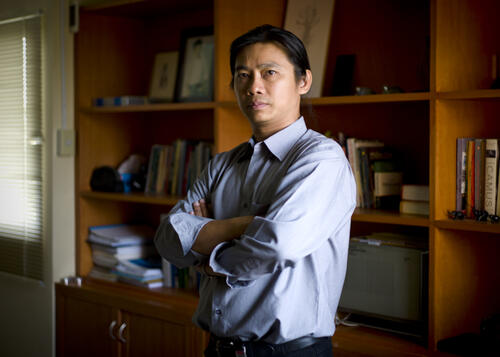
Mark Peattie, Ph.D., noted scholar of Japanese Imperial history, died peacefully, surrounded by family on January 22, 2014 in San Rafael, California; he was 83. 

Peattie was born in Nice, France, to expatriate writers Donald Culross and Louise Redfield Peattie on May 3, 1930. He returned to the United States with his parents and his two brothers, Malcom R. Peattie and Noel R. Peattie. He grew up in Santa Barbara, where he graduated from Laguna Blanca School. He went on to get a B.A. in history at Pomona College. He served in the U.S. Army from 1952 to 1954, including an assignment in counter-intelligence in Europe.

In 1955, after completing his M.A. in history at Stanford University, Peattie began his career as an American cultural diplomat with the U.S. Information Agency. He began his stint in Phnom Penh, Cambodia, where he served for two years. His nine years in Japan started in Sendai; in Tokyo he trained intensively in Japanese language before serving as director of the American Cultural Center in Kyoto.

In 1967, after serving a final year in diplomacy in Washington, D.C., his love of history called him to the world of academia. After earning his Ph.D. in modern Japanese history from Princeton University, he taught at Pennsylvania State University, the University of California – Los Angeles and the University of Massachusetts in Boston. For many years, Peattie was a research fellow at the Edwin O. Reischauer Institute of Japanese Studies at Harvard University. He was also a senior research staff member of the Hoover Institute on War, Revolution, and Peace, before becoming a visiting scholar at the Walter H. Shorenstein Asia-Pacific Research Center at Stanford University.

His publications include The Battle for China: Essays on the Military History of the Sino-Japanese War of 1937–1945, Stanford University Press; Sunburst: The Rise of Japanese Naval Air Power, 1909 –1941, Naval Institute Press; Nan'yō: The Rise and Fall of the Japanese in Micronesia, 1885–1945, University of Hawaii Press; Kaigun: Strategy, Tactics, and Technology in the Imperial Japanese Navy, 1887–1941 (with David C. Evans), U.S. Naval Institute Press; The Japanese Wartime Empire, 1931–1945 (with Peter Duus and Ramon H. Myers), Princeton University Press;The Japanese Colonial Empire, 1895-1945, Princeton University Press; and Ishiwara Kanji and Japan's Confrontation with the West, Princeton University Press.                                                                 

Peattie was married to the late Alice Richmond Peattie for 52 years and is survived by his daughters Victoria Peattie Helm of Mercer Island, Washington; Caroline Peattie of Mill Valley, California; son David Peattie of Berkeley, California; nieces Dana VanderMey and Hilary Peattie, both of Santa Barbara; and grandchildren, Brendan Shuichi, Marcus Takeshi, Kylie Max, Kai Schorske, and Jessica Susan.

Mark Peattie passionately believed in sensible handgun control laws to reduce deaths and injuries.  In lieu of flowers the family requests donations be directed to www.bradycampaign.org.

Services will be held at a later date. Please sign the online guestbook to see updated service information at www.cusimanocolonial.com.

Hero Image
Peattie LOGO
All News button
1
-

The opening up of Myanmar (Burma) and the steps undertaken taken toward political reform in that formerly isolated dictatorship have been among Asia's most dramatic and least expected events.  But the establishment of full democracy is still on the agenda and faces many challenges.  How willing is the current government in Burma to allow a full and free exercise of political rights, including media freedom?  A panel of experts, including Aung Zaw, the editor and founder of The Irrawaddy and this year's recipient of the Shorenstein Award for Journalism in Asia, will address that question in discussing "Burma's Democracy:  How Real?"

Stanford University’s Walter H. Shorenstein Asia-Pacific Research Center (Shorenstein APARC) is pleased to announce Aung Zaw as the 2013 recipient of the Shorenstein Journalism Award. Zaw has been selected for his leadership in establishing independent media in Myanmar (Burma) and his dedication to integrity in reporting on Southeast Asia.

Image
 Aung Zaw

Aung Zaw is the founding editor-in-chief and executive director of The Irrawaddy, an independent Burmese media organization operating in Myanmar and northern Thailand. Zaw has been an active campaigner for democratic reform in Burma/Myanmar over the last two decades. He was awarded the 2010 Prince Claus Fund Award for journalism along with two journalists from Iran and Cuba – and is recognized for his active dedication to achieving democratic governance in Burma and his work to uphold press freedom.

Zaw studied Botany at Rangoon University. As a student activist in Burma, he was part of the 1988 protests in Rangoon against the Burmese military regime of General Ne Win. He was arrested and detained for a week in Rangoon’s notorious Insein prison where he was severely tortured during interrogation about his pro-democracy activities. Upon release Aung Zaw continued to work with the resistance movement until the military staged a coup in September that year and he was forced to leave the country for neighboring Thailand.

Two years later, Aung Zaw founded the Burma Information Group (BIG) in Bangkok, to document human rights violations in Burma. He began to write political commentaries for national newspapers in Thailand and internationally, and in late 1993 launched The Irrawaddy News Magazine in Bangkok, covering Burma affairs. He worked in Bangkok for two years producing The Irrawaddy Magazine until relocating to the more secure position in Chiang Mai in the north of Thailand.

In February 2012, Aung Zaw was able to return to his homeland for the first time in more than 20 years for a temporary visit as an independent journalist. By the end of 2012, The Irrawaddy was able to establish a media and news office in central Yangon, returning to Burma/Myanmar to practice independent journalism, whilst retaining a regional office in Thailand.

In 2013, the government lifted ban on The Irrawaddy and other exiled websites, the Irrawaddy English magazine and the Irrawaddy Dateline Current Affairs TV program is available for audiences in Myanmar. Aung Zaw writes for New York Times, International Herald Tribune, Time, The Guardian, Bangkok Post, The Nation and several publications in the Europe. His interviews have also appeared on CN, BBC and Al Jazeera. He is the author of the Face of Resistance and is a recent Visiting Scholar at UC Berkeley, School of Journalism.

Bechtel Conference Center

Aung Zaw 2013 Journalism Prize Winner and Founder and Editor, The Irrawaddy News Magazine Panelist
Nayan Chanda Director of Publications and the Editor of YaleGlobal Online Magazine Panelist Yale Center for the Study of Globalization
0
Senior Fellow Emeritus at the Freeman Spogli Institute for International Studies
Affiliated Faculty, CDDRL
Affiliated Scholar, Abbasi Program in Islamic Studies
aparc_dke.jpg PhD

At Stanford, in addition to his work for the Southeast Asia Program and his affiliations with CDDRL and the Abbasi Program in Islamic Studies, Donald Emmerson has taught courses on Southeast Asia in East Asian Studies, International Policy Studies, and Political Science. He is active as an analyst of current policy issues involving Asia. In 2010 the National Bureau of Asian Research and the Woodrow Wilson International Center for Scholars awarded him a two-year Research Associateship given to “top scholars from across the United States” who “have successfully bridged the gap between the academy and policy.”

Emmerson’s research interests include Southeast Asia-China-US relations, the South China Sea, and the future of ASEAN. His publications, authored or edited, span more than a dozen books and monographs and some 200 articles, chapters, and shorter pieces.  Recent writings include The Deer and the Dragon: Southeast Asia and China in the 21st Century (ed., 2020); “‘No Sole Control’ in the South China Sea,” in Asia Policy  (2019); ASEAN @ 50, Southeast Asia @ Risk: What Should Be Done? (ed., 2018); “Singapore and Goliath?,” in Journal of Democracy (2018); “Mapping ASEAN’s Futures,” in Contemporary Southeast Asia (2017); and “ASEAN Between China and America: Is It Time to Try Horsing the Cow?,” in Trans-Regional and –National Studies of Southeast Asia (2017).

Earlier work includes “Sunnylands or Rancho Mirage? ASEAN and the South China Sea,” in YaleGlobal (2016); “The Spectrum of Comparisons: A Discussion,” in Pacific Affairs (2014); “Facts, Minds, and Formats: Scholarship and Political Change in Indonesia” in Indonesian Studies: The State of the Field (2013); “Is Indonesia Rising? It Depends” in Indonesia Rising (2012); “Southeast Asia: Minding the Gap between Democracy and Governance,” in Journal of Democracy (April 2012); “The Problem and Promise of Focality in World Affairs,” in Strategic Review (August 2011); An American Place at an Asian Table? Regionalism and Its Reasons (2011); Asian Regionalism and US Policy: The Case for Creative Adaptation (2010); “The Useful Diversity of ‘Islamism’” and “Islamism: Pros, Cons, and Contexts” in Islamism: Conflicting Perspectives on Political Islam (2009); “Crisis and Consensus: America and ASEAN in a New Global Context” in Refreshing U.S.-Thai Relations (2009); and Hard Choices: Security, Democracy, and Regionalism in Southeast Asia (edited, 2008).

Prior to moving to Stanford in 1999, Emmerson was a professor of political science at the University of Wisconsin-Madison, where he won a campus-wide teaching award. That same year he helped monitor voting in Indonesia and East Timor for the National Democratic Institute and the Carter Center. In the course of his career, he has taken part in numerous policy-related working groups focused on topics related to Southeast Asia; has testified before House and Senate committees on Asian affairs; and been a regular at gatherings such as the Asia Pacific Roundtable (Kuala Lumpur), the Bali Democracy Forum (Nusa Dua), and the Shangri-La Dialogue (Singapore). Places where he has held various visiting fellowships, including the Institute for Advanced Study and the Woodrow Wilson International Center for Scholars. 


Emmerson has a Ph.D. in political science from Yale and a BA in international affairs from Princeton. He is fluent in Indonesian, was fluent in French, and has lectured and written in both languages. He has lesser competence in Dutch, Javanese, and Russian. A former slam poet in English, he enjoys the spoken word and reads occasionally under a nom de plume with the Not Yet Dead Poets Society in Redwood City, CA. He and his wife Carolyn met in high school in Lebanon. They have two children. He was born in Tokyo, the son of U.S. Foreign Service Officer John K. Emmerson, who wrote the Japanese Thread among other books.

Selected Multimedia

Date Label
Donald K. Emmerson Senior Fellow at FSI, Emeritus; Affiliated Faculty, CDDRL; Affiliated Scholar, Abbasi Program in Islamic Studies and Director, Southeast Asia Forum Panelist Stanford University

Stanford University
Encina Hall, Room E301
Stanford, CA 94305-6055

0
Lecturer in International Policy at the Ford Dorsey Master’s in International Policy
2011_Dan_Sneider_2_Web.jpg MA

Daniel C. Sneider is a lecturer in international policy at Stanford's Ford Dorsey Master’s in International Policy and a lecturer in East Asian Studies at Stanford. His own research is focused on current U.S. foreign and national security policy in Asia and on the foreign policy of Japan and Korea.  Since 2017, he has been based partly in Tokyo as a Visiting Researcher at the Canon Institute for Global Studies, where he is working on a diplomatic history of the creation and management of the U.S. security alliances with Japan and South Korea during the Cold War. Sneider contributes regularly to the leading Japanese publication Toyo Keizai as well as to the Nelson Report on Asia policy issues.

Sneider is the former Associate Director for Research at the Walter H. Shorenstein Asia-Pacific Research Center at Stanford. At Shorenstein APARC, Sneider directed the center’s Divided Memories and Reconciliation project, a comparative study of the formation of wartime historical memory in East Asia. He is the co-author of a book on wartime memory and elite opinion, Divergent Memories, from Stanford University Press. He is the co-editor, with Dr. Gi-Wook Shin, of Divided Memories: History Textbooks and the Wars in Asia, from Routledge and of Confronting Memories of World War II: European and Asian Legacies, from University of Washington Press.

Sneider was named a National Asia Research Fellow by the Woodrow Wilson International Center for Scholars and the National Bureau of Asian Research in 2010. He is the co-editor of Cross Currents: Regionalism and Nationalism in Northeast Asia, Shorenstein APARC, distributed by Brookings Institution Press, 2007; of First Drafts of Korea: The U.S. Media and Perceptions of the Last Cold War Frontier, 2009; as well as of Does South Asia Exist?: Prospects for Regional Integration, 2010. Sneider’s path-breaking study “The New Asianism: Japanese Foreign Policy under the Democratic Party of Japan” appeared in the July 2011 issue of Asia Policy. He has also contributed to other volumes, including “Strategic Abandonment: Alliance Relations in Northeast Asia in the Post-Iraq Era” in Towards Sustainable Economic and Security Relations in East Asia: U.S. and ROK Policy Options, Korea Economic Institute, 2008; “The History and Meaning of Denuclearization,” in William H. Overholt, editor, North Korea: Peace? Nuclear War?, Harvard Kennedy School of Government, 2019; and “Evolution or new Doctrine? Japanese security policy in the era of collective self-defense,” in James D.J. Brown and Jeff Kingston, eds, Japan’s Foreign Relations in Asia, Routledge, December 2017.

Sneider’s writings have appeared in many publications, including the Washington Post, the New York Times, Slate, Foreign Policy, the New Republic, National Review, the Far Eastern Economic Review, the Oriental Economist, Newsweek, Time, the International Herald Tribune, the Financial Times, and Yale Global. He is frequently cited in such publications.

Prior to coming to Stanford, Sneider was a long-time foreign correspondent. His twice-weekly column for the San Jose Mercury News looking at international issues and national security from a West Coast perspective was syndicated nationally on the Knight Ridder Tribune wire service. Previously, Sneider served as national/foreign editor of the Mercury News. From 1990 to 1994, he was the Moscow bureau chief of the Christian Science Monitor, covering the end of Soviet Communism and the collapse of the Soviet Union. From 1985 to 1990, he was Tokyo correspondent for the Monitor, covering Japan and Korea. Prior to that he was a correspondent in India, covering South and Southeast Asia. He also wrote widely on defense issues, including as a contributor and correspondent for Defense News, the national defense weekly.

Sneider has a BA in East Asian history from Columbia University and an MPA from the John F. Kennedy School of Government at Harvard University.

Daniel C. Sneider Associate Director for Research, Shorenstein Asia-Pacific Research Center Moderator Stanford University
Panel Discussions
News Type
News
Date
Paragraphs

Microblogs, Youtube, and mobile communications. These are a few of the digital platforms changing how we connect, and subsequently, reshaping global societies. 

Confluence of technology and pervasive desire for information has in effect created widespread adoption. There is no doubt the Information Technology (IT) revolution is in full swing.

Comparing case studies across Asia and the United States, the fifth and final Stanford Kyoto Trans-Asian Dialogue (DISCONTINUED) considered opportunities and challenges posed by digital media. Experts and top-level administrators from Stanford and universities across Asia, as well as policymakers, journalists, and business professionals, met in Kyoto on Sept. 12-13, 2013.

Relevant questions asked included: What shifts have occurred in traditional versus digital media for how people get information, and how does this differ across countries? What is the potential for digital media in civil society and democratization? Is it a force for positive change or a source of instability?

In the presentations and discussion sessions, participants raised a number of key, policy-relevant points, which are highlighted in the Dialogue’s final report. These include:

Digital media does not, on its own, automatically revolutionize politics or foster greater democratization. While the Internet and digital media can play an instrumental role, particularly where traditional media is highly controlled by the government, participants cautioned against overemphasizing the hype. One conception is that the Internet can instead be viewed as a catalyst or powerful multiplier, but only if a casual chain of latent interest exists. That being said, greater exposure of youth to digital media, particularly in areas of tight media control, can open new areas of awareness.

The upending of traditional media business models has not been replaced by viable digital media business models. As media organizations struggle with their business models, the quality of reporting is threatened. For traditional organizations, maintaining public trust can be challenging, particularly during wars after disasters, while in areas with previously tightly controlled press, digital media may be perceived as more authentic. On the one hand, policy-driven agenda setting may be easier in some issue areas, but digital media may amplify interest in controversial issues, particularly with history issues in Asia.

As Cloud Computing platforms provided by a small group of mostly U.S. companies is increasingly the underlying platform for digital media—as well as our digital lives in general—issues of information security and privacy are at the forefront of much of the public’s mind. Revelations by former U.S. contractor Edward Snowden about the extent of the US government’s espionage activities raise concerns among journalists concerned with issues such as free speech of the press, media independence from government, and protection of sources. 

Previous Dialogues have brought together a diverse range of scholars and thought leaders from Japan, South Korea, China, Vietnam, Thailand, Indonesia, Singapore, India, Australia and the United States. Participants have explored issues such as the global environmental and economic impacts of energy usage in Asia and the United States; the question of building an East Asian regional organization; and addressing higher education policy and the dramatic demographic shift across Asia.

The annual Stanford Kyoto Trans-Asian Dialogue was made possible through the generosity of the City of Kyoto, the Freeman Spogli Institute for International Studies at Stanford University, and Yumi and Yasunori Kaneko.

All News button
1
News Type
News
Date
Paragraphs

The Freeman Spogli Institute for International Studies is accepting applications for six summer field research internships through March 3.

The trips are fully funded opportunities for rising juniors, seniors and co-terms with a minimum GPA of 3.3 to work closely with faculty while completing field research in rural Guatemala and Mexico.

Four spots are open for the Guatemala internships, where students will focus on global health, governance, underdevelopment and indigenous rights in the Lake Atitlan region. FSI senior fellows Paul Wise and Beatriz Magaloni will lead the trip in June. Wise is a professor of pediatrics at Stanford Medical School, and Magaloni is an associate professor of political science.

Two students will be chosen to travel to Chiapas with Magaloni and Alberto Diaz-Cayeros, also a senior fellow at FSI. The Mexico internship will focus on governance, rule of law, indigenous autocracy and public goods from June 21 to July 13.

Competitive candidates will have previous experience in service learning, poverty alleviation, or a similar pursuit, and will have Spanish language skills. The selection committee seeks applicants with diverse academic backgrounds from applied, natural and social sciences in order to assemble an interdisciplinary research team.

The program will cover roundtrip airfare between San Francisco International Airport and the international location, lodging, meals, insurance, visas, and incidentals for work abroad, plus provide a budget for the team's research materials and supplies. At Stanford, the team will be furnished with work space in Encina Hall to meet, prepare, and complete their final project.

An information session with past interns will be held from noon to 1 p.m. on Feb. 14.


All News button
1
-

The Freeman Spogli Institute for International Studies (FSI) seeks undergraduate applications for up to four research internships in Guatemala and two in Mexico that will include work abroad during summer quarter 2014. The internship program will support a multidisciplinary team of Stanford undergraduates to carry out field research projects that address chronic global underdevelopment. Working with an established research program in Guatemala and Mexico and supervised by Professors Beatriz Magaloni and Paul Wise, the undergraduate research team will spend approximately two weeks on location and four to six weeks planning and completing projects in the U.S. Travel, accommodations, insurance and incidentals will be fully funded.

Join us for an info session to find out more about the programs, ask questions, and chat with the faculty and past participants.

For specific information on the two programs and how to apply, please visit the following fellowship links:

Walter P. Falcon Lounge

Conferences
-

Ulrich Wilhelm will be giving a talk on the German and European reaction to the NSA spying revelations.  This will be followed by discussion on the US reaction to the disclosure and the impact to American-European relations.

Ulrich Wilhelm is the Director General of Bayerischer Rundfunk (Bavarian Broadcasting Corporation) in Munich, Germany. From 1991 to 2005, he held positions within various Bavarian ministries as well as within the State Chancellery of the German Federal State of Bavaria. In November 2005, Wilhelm assumed responsibility for the German Federal Government’s Press and Information Office and became the Government Spokesman in his new capacity as a Permanent State Secretary.  Ulrich Wilhelm was elected Director General of Bayerischer Rundfunk in May 2010 and took office in February 2011. He has also served as the representative of Germany’s ARD and ZDF public broadcasting services on the Executive Board of the EBU since 2013.

Oksenberg Conference Room

Ulrich Wilhelm Director General, Bavarian Broadcasting Speaker
Conferences
-

The third annual Hana-Stanford Conference on Korea for U.S. Secondary School Teachers takes place this summer, from July 28 to 30, at Stanford. It will bring together secondary school educators from across the United States as well as a cadre of educators from Korea for intensive and lively sessions on a wide assortment of Korean studies-related topics ranging from U.S.-Korea relations to history, and religion to popular culture. In addition to scholarly lectures, the teachers will take part in curriculum workshops and receive numerous classroom resources developed by Stanford Program on International and Cross-Cultural Education (SPICE).

During the conference, the Sejong Korean Scholars Program (SKSP), a distance-learning program on Korea, will also honor high school students for their exceptional performance in the SKSP program. The finalists will be chosen based on their final research papers, and their overall participation and performance in the online course. The SKSP honorees will be presenting their research essays at the conference. The SKSP program is generously supported by the Korea Foundation. 

For details of the application procedures for the teachers, please visit the SPICE website.

A video clip from the conference held in 2013 is available.

Paul Brest Hall West
555 Salvaterra Walk
Stanford University

Conferences
Subscribe to The Americas