News Type
News
Date
Paragraphs

B

Basic science aims to advance knowledge, not only develop new drugs or cure disease. Yet today's biomedical innovations are only possible because of fundamental research conducted decades ago. As national funding priorities shift toward applied research, young basic scientists face the most challenging funding landscape in 50 years, diverting many of them to new careers altogether. Though impossible to divine where the experiments of Stanford investigators and researchers will lead them, investing in their work — and in basic science in general — is crucial to keeping the next great discovery alive.

In this multimedia photo essay, Magnum photographer Peter van Agtmael and FSI digital media associate Kylie Gordon, shine light on the interdisciplinary medical and scientific research being conducted at Stanford — which could lead to the #NextGreatDiscovery.


Hero Image
vanagtmael stanford final 003
At her lab bench, postdoctoral fellow Pascale Guiton sets up a polymerase chain reaction to generate copies of Toxoplasma gondii DNA. T. gondii is one of the most common parasites, with an estimated one third of the global population infected.
Peter van Agtmael/Magnum Photos
All News button
1
-

The Program on American Democracy in Comparative Perspective is holding a conference on Democracy and its Discontents on October 8-10 in Budapest, Hungary. The conference, co-hosted with Central European University, will bring together scholars of American and European politics to examine topics such as democratic backsliding, inequality, and money in politics. Saskia Sassen of Columbia University will deliver the keynote address. 

Democracy and its Discontents Agenda
Download pdf
Conferences
News Type
News
Date
Paragraphs

In a recent piece in Stanford News, FSI Senior Fellow Larry Diamond expresses his thoughts on the ebbing of global democratic expansion, highlighting that not all countries have equal opportunities at achieving democracy and that democratic change should be approached multilaterally.

Hero Image
12011158 881826491904431 3526552461415235585 n
Larry Diamond speaks on his new book "In Search of Democracy," at the National Endowment for Democracy (NED) in Washington, D.C.
National Endowment for Democracy
All News button
1
Authors
Beth Duff-Brown
News Type
News
Date
Paragraphs

Most Americans will get at least one faulty diagnosis in their lifetime, sometimes with devastating consequences and “urgent change is warranted to address this challenge,” a panel of medical experts said Tuesday.

In a landmark report by the Institute of Medicine, the medical arm of the National Academies of Sciences, Engineering and Medicine, the experts said that despite dramatic improvements in patient safety over the last 15 years, diagnostic errors have been the critical blind spot of health-care providers.

Exact figures on diagnostic errors are hard to come by, as reporting is not required. Some medical experts have estimated that more than 12 million adults are misdiagnosed every year.

“Despite the pervasiveness of diagnostic error and the risk for patient harm, they have been largely unappreciated within the quality-safety movement in healthcare — and this cannot and must not continue,” said Dr. Victor Dzau, president of the Institute of Medicine, an independent organization of the country’s leading medical and health policy researchers.

“Diagnostic errors are a significant contributor to patient harm and have received too little attention until now,” he said at a public briefing in Washington, D.C., about the report, “Improving Diagnosis in Health Care.”

To address the challenge, the IOM convened the committee comprised of medical and health policy researchers to improve diagnosis in medicine. The Committee on Diagnostic Error in Health Care members include experts from Stanford, Harvard, Drexel, Tufts, the Memorial-Sloan Kettering Cancer Center, Kaiser Permanente and more than a dozen other universities and national medical organizations.

“We defined diagnostic error from a patient's perspective, and brought together the research so far that clearly shows the opportunity and grave need to improve the current situation,” said Kathryn M. McDonald executive director of Stanford’s Center for Health Policy/Center for Primary Care and Outcomes Research, and a member of the IOM committee.

“The report is packed with reasons and directions for action from all, in ways that support what patients deserve from the health-care system: freedom from worry about inattention to diagnostic errors,” McDonald said. “That's been the status quo for too long.”

The committee issued a set of goals to reduce diagnostic errors and improve medical outcomes. They recommend that the health-care community:

  1. Facilitate more effective teamwork in the diagnostic process among health-care professionals, patients and their families.

  2. Enhance health-care professional education and training in the diagnostic process.

  3. Ensure that health information technologies support patients and health-care professionals in the diagnostic process.

  4. Develop and deploy approaches to identify, learn from and reduce diagnostic errors and near misses in clinical practice.

  5. Establish a work system and culture that supports the diagnostic process and improvements in diagnostic performances.

  6. Develop a reporting environment and medical liability system that facilitates improved diagnosis through learning from diagnostic errors and near misses.

  7. Design a payment and care delivery environment that supports the diagnostic process.

  8. And provide dedicated funding for research on the diagnostic process and diagnostic errors.

The experts emphasized that medical education must include more of an emphasis on the diagnostic process. And new technologies, such as electronic health records, should be built on better collaboration among the IT vendors, users and the Office of the National Coordinator for Health Information Technology.

The new study was an extension of two benchmark reports by the institute released 15 years ago, which revealed the startling statistic that 100,000 Americans die in hospitals every year due to medical errors.

“These landmark reports from IOM reverberated throughout the healthcare community and were the impetus for system-wide improvement in patient safety and quality,” Dzau said.

The Department of Health and Human Services reported in December that there was a decline from 2010 to 2013 in hospital-acquired infections, which translated to 1.3 million patients and $12 billion in health spending avoided.

“You can see we have come a long way,” Dzau said. But, he added: “The critical element that has been absent from patient safety and quality is diagnostic error.”

In a video released at the public briefing, two patients talk about their own misdiagnosis and that of a loved one, and how those errors forever changed their lives. They were told they were overreacting and not to question their doctor. One said she was embarrassed at having wasted the valuable time of the hospital doctors and nurses.

“The video has two patients for whom things went poorly and one who had a first-class diagnostic experience because of excellent teamwork,” McDonald said. “And this is one of the key messages of the report. We need less of the old model of diagnosis from one expert to more of a teamwork approach to the diagnostic process.”

Dr. John Ball, chair of the committee and executive vice president emeritus of the American College of Physicians, said clinicians must work toward a culture where patients are central to the solution.

“Patients and families are first; diagnostics are second and those who support it, third,” said Ball. “This is an issue that matters to patients, and we’re shining a light on it.”

Ball said getting the right diagnosis is critical because it impacts every other health care decision that follows, as well as the quality of life for the patient.

The committee members were asked during the briefing why they were not recommending that misdiagnosis reporting be mandatory, something that likely will lead to controversy.

“The committee believes that given the lack of agreement on what constitutes a diagnostic error, given the complexity of hard data and the lack of valid measurement approaches, the time was not right to call for mandatory reporting,” Ball said. “Instead it was appropriate at this time to leverage the intrinsic motivation of health-care professionals to improve the diagnostic performance and to treat diagnostic error in the same way we treat other quality improvement efforts by health-care organizations.”

Hero Image
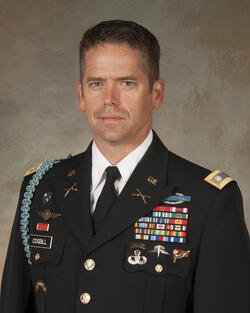
diagnostics photo U.S. Army
All News button
1
Authors
Beth Duff-Brown
News Type
News
Date
Paragraphs


The three women who are the first doctoral candidates in the School of Medicine’s new PhD in Health Policy program have one guiding belief:  economics, decision science and data are now key to improving health care.

Stanford Health Policy, through the Department of Health Research and Policy at the School of Medicine, launched the PhD program to educate the next generation of scholarly leaders in the field of health policy.

And the first crop of candidates is taking their backgrounds in science and economics to pursue health policy careers based on medical information technology, data and analytics.

“We live in an era where information in health care is more rapidly and readily available than ever before,” said Catherine Lei, who will focus on the industrial organization of health care, the effects of insurance costs and the impact of regulation on health insurance markets.

Image
catherinelei
“The burgeoning ‘big data’ revolution is beginning to collectively help researchers tackle long-standing issues of health care spread and quality, determinants of health, and how policies could best improve health,” said the recent Princeton University graduate who majored in economics and finance.

“Whether it be the digitization of medical records, the aggregation of pharmaceutical companies’ research into electronic databases, or the increased transparency of the health-care sector as a whole — stakeholders from every corner of the industry recognize that this is a critical turning point in health care,” said Lei.

Kyu Eun Lee, who worked as a research assistant at the Harvard Center for Health Decision Science before joining Stanford, intends to develop mathematical models for health interventions in Asia and other parts of the developing world.

“I am seeking advanced training in quantitative methodology and the application of those skills to support decision-making in a global health context,” said Lee, who graduated from Pohang University of Science and Technology in South Korea and then got her master’s of science at the University of Minnesota.

“I am particularly interested in model-based, cost-effectiveness analysis of cancer interventions in South or Southeast Asia, where the risks of communicable and noncommunicable diseases compete under limited resources,” she said.

The new program offers coursework in two tracks: Health Economics, including the economic behavior of individuals, providers, insurers and governments and how their actions affect health and medical care; and Decision Sciences, which uses quantitative techniques to assess the effectiveness and value of medical treatments.

“The new PhD program really developed because of our aim to offer premier educational programs that will train the next generation of health policy leaders,” said Laurence Baker, professor of Health Research and Policy and chief of Health Services Research in the department of Health Research and Policy.

“One of the real strengths of the program is its context at Stanford, with a rich set of opportunities for health policy students to interact with the clinicians and scientists from around the school of medicine and the university,” said Baker, who is also an affiliated faculty member at the Center for Health Policy/Center for Primary Care and Outcomes Research (CHP/PCOR).

Yiqun Chen, who will focus on the supply and demand of health care both in the United States and China, said her double major in economics and medicine at Peking University made her aware of the integral role that economics plays in providing an analytic framework for studying the meaty issues in health care today.Chen, who went on to get her master’s in economics at Duke University, has published several papers and intends to investigate whether Medicaid payment increases to nursing homes result in cost offsets.

“The utilization of hospital services is high among nursing home residents; yet a large proportion of stays are documented to be avoidable through provision of better quality of nursing home care,” Chen said.

Image

She will also research the recent consolidation of health insurers and of health care providers and how that is impacting the consumer.

“As a result of such consolidation, not only is there a potential loss of consumer choice, but it gives the pricing power to insurers and health-care service suppliers,” Chen said. And those who argue health-care and insurance consolidation results in greater efficiencies have yet to document these gains or losses — something she intends to do.

Faculty belonging to the health policy centers will advise the PhD candidates. The students will take courses in health economics, health insurance and government program operations, health financing, international health policy and economic development, as well as the cost-effectiveness analysis of new medical technologies.

“The PhD program enables us to train clinicians and non-clinicians in state-of-the-art methods of health policy analysis,” said Douglas K. Owens, director of CHP/PCOR within the Freeman Spogli Institute of International Studies.

Coursework in the new program will also cover relevant statistical and methodological approaches to public health concerns such as obesity and chronic disease.

"Our PhD students will learn from faculty across the University who bring perspectives from economics, medicine, law, decision science, business and other disciplines," said Michelle Mello, a professor of law and professor of health research and policy at the School of Medicine. "They will become truly cross-disciplinary thinkers and problem solvers."

Learn more here. 

Hero Image
worldle phd2
All News button
1

Encina Commons,
615 Crothers Way Room 182,
Stanford, California 94305-6006

(650) 498-7528
0
Associate Professor, Health Policy
MS in Health Policy Program Director
maria_4_-_copy.jpg PhD

Maria Polyakova, PhD, is Associate Professor of Health Policy at Stanford School of Medicine and Associate Professor (by courtesy) in the Department of Economics at Stanford University, where she is also a Senior Fellow at the Stanford Institute for Economic Policy Research (SIEPR). She is a Research Associate at the National Bureau of Economic Research (NBER) and serves as an Editor of the Journal of Health Economics. Her research spans many areas of health economics, including health insurance, healthcare labor markets, and individual decision-making in health and healthcare. A unifying thread is evaluating whether markets and government policy effectively serve individuals and families or introduce distortions. Her ongoing work focuses on how families navigate prolonged health shocks. Maria received her BA in Economics & Mathematics and German Studies (with a concentration in History) from Yale University in 2008 and her PhD in Economics from MIT in 2014.

Date Label
Authors
Larry Diamond
News Type
News
Date
Paragraphs

In an op-ed for The New York TimesLarry Diamond presents a timeline of democracy charting the spread, regression, and sometimes even collapse, of democracy in the last 40 years.

Hero Image
11115641744 973cd026aa k 2
Anti-government protesters wave national flags during a demonstration in Bangkok on November 25, 2013.
AFP Photo / Pornchai Kittiwongsakul
All News button
1
Authors
Beth Duff-Brown
News Type
News
Date
Paragraphs

An aspirin a day may keep heart attacks and cancer away, according to new recommendations by a medical panel. But that doesn’t mean everyone should run to the drugstore without talking to his or her doctor first.

The U.S. Preventive Services Task Force, an independent panel of medical experts from around the nation, said Monday that taking aspirin can help 50- to 59-year-olds who are at increased risk of cardiovascular disease prevent heart attacks and strokes.

The panel also said that taking aspirin for at least five to 10 years could help prevent colorectal cancer. Individuals 60 to 69 may also benefit from aspirin, but the benefit is smaller than in people 50 to 59.

Because heart attacks are caused by blood clots in the arteries, aspirin can help prevent heart attacks and strokes that are caused by these clots.

It is the first time the task force has included both the evidence on preventing cardiovascular disease and colorectal cancer in developing recommendations on aspirin use in patients at high risk of cardiovascular disease.

Stanford Professor of Medicine Douglas K. Owens, a member of the task force, cautioned the new recommendations come with a caveat: a daily dose of aspirin can cause stomach and brain bleeds. People with stomach and liver problems, bleeding disorders or who are taking blood thinners, are at greater risk of experiencing the side effects of aspirin.

And, he emphasized, the new recommendations are for older adults and those with substantially elevated risk of cardiovascular disease.

Douglas K. Owens

“It is nuanced,” said Owens, director of the Center for Health Policy/Center for Primary Care and Outcomes Research. “Our recommendation applies to people who are at increased risk of heart disease and who do not have increased risk of bleeding complications.

He added that those risk assessments by physicians are extremely important.

The task force, an independent panel of experts in prevention and primary care appointed by the Department of Health and Human Services, said a “pragmatic approach” consistent with the evidence is to prescribe 81mg per day, or one baby aspirin, which is the most commonly prescribed dose.

“Each person has only one decision to make — whether or not to take aspirin for prevention,” said Owens. “To help individuals and their clinicians make this decision, the task force integrated the evidence about the use of aspirin to prevent cardiovascular disease and colorectal cancer into one recommendation on the use of aspirin.”

But the task for also concluded that it doesn’t have enough to current evidence to assess the balance of benefits and harms of aspirin use in adults younger than age 50 and those older than 70.

The draft guidelines, which are open for public comment on the task force website, have provoked criticism by some cardiologists and physicians who are concerned that healthy Americans who start taking aspirin on a daily basis could expose themselves to the drug’s negative side effects, such as stomach bleeding and hemorrhagic strokes.

And the Food and Drug Administration wrote last year that it had reviewed studies on the use of aspirin for primary prevention of a heart attack “and did not find sufficient support for the use of aspirin.” The agency did say, however, it was awaiting results of additional clinical trials.

Owens said that while the FDA looked at aspirin to prevent an initial heart attack or stroke, “the task force looked at evidence for the broader benefits of aspirin to reduce heart attacks, strokes and colorectal cancer.”

In addition, Owens said, the evidence review for the task force included a wide variety of research, including meta-analyses, which may not have been included in the FDA review. The task force commissioned three systematic reviews, he said, as well as a sophisticated modeling study to help integrate the evidence about cardiovascular disease and cancer.

So what’s the bottom line? Consult your physician.

Because, as task force vice chair Dr. Kirsten Bibbins-Domingo said, “Taking aspirin is easy, but deciding whether or not to take aspirin for prevention is complex.”

Listen to Owens' interview on NPR's Morning Edition.


Hero Image
aspirin
All News button
1
-

Abstract:

Scholars of governance reforms in developing countries often argue that the surest way to address the maladies of the state—corruption, cronyism, inefficiency, and red tape—is swift, dramatic change enacted by political leaders during moments of upheaval. This research finds that a very different type of change is not only possible but also more effective and enduring. A comparison of attempts to increase accountability, transparency, and institutional strength in Brazil and Argentina demonstrates that incremental changes sequenced over time in response to failings in previous policy provide two crucial advantages over wholesale and rapid overhauls of the state: (1) continual adjustments and modifications benefit from learning; and (2) an incremental approach makes reform more durable and helps preserve bureaucratic autonomy.


Speaker Bio:

Image
bersch 1
Katherine Bersch is a Postdoctoral Fellow at the Center for Democracy, Development, and the Rule of Law at Stanford University. Her research is broadly focused on democratic quality in developing countries, with an emphasis on governance reform and state capacity in Latin America. She employs a range of research methods to understand the political conditions under which policies designed to reduce corruption, increase transparency, and enhance accountability are successful and durable. Bersch’s work has been published or is forthcoming in Comparative Politics, the European Journal of Development Research, Information Polity, and in Miguel Centeno, Atul Kohli, and Deborah Yashar's edited volume with Dinsha Mistree, States in the Developing World. Her research on state capacity with Sérgio Praça and Matthew M. Taylor recently won the LAPIS Best Paper Award from the Latin American Studies Association. Bersch received her PhD in Government from the University of Texas at Austin.

Katherine Bersch Postdoctoral Fellow at the Center for Democracy, Development, and the Rule of Law at Stanford University
Seminars
Subscribe to The Americas